

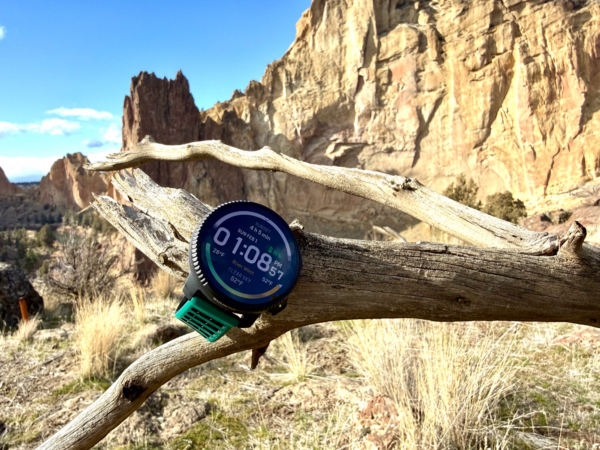
The GPS watch market is currently in an arms race. Brands are constantly pushing the limits of battery life and screen technology. Suunto has jumped into the deep end with the Vertical 2 ($599). While the brand has always been known for its minimalist Finnish design and “bombproof” reliability, this new iteration adds a level of tech-forward flash that was previously missing.
After testing the Vertical 2 for a few months of running, hiking, snowboarding, and splitboarding, I found a watch that looks high-end but performs like a piece of tactical gear. It addresses the hardware needs of most mountain athletes while introducing a few software quirks that require some patience.
In short: If you want a rugged, beautiful watch with a world-class screen and a great flashlight, the Suunto Vertical 2 is a top-tier contender. Just be prepared to spend some time retraining your brain if you are coming from a button-first interface.
Looking for a new fitness watch? Check out GearJunkie’s Best Fitness Watch Buyer’s Guide to compare the new Vertical 2 to our other favorites.
Suunto Vertical 2
-
Activity Tracking and Accuracy
7.0
-
Battery Life
7.0
-
Training Data and Planning
7.0
-
Build Quality
9.0
-
Battery life:
Up to 65 hours -
Weight:
87 g -
Case size:
49 mm -
Display size:
1.5" -
Bezel material:
Stainless steel -
Water resistance rating:
100 m
Pros
-
Stunning 1.5-inch AMOLED display (2,000 nits)
-
Dedicated forward-facing LED flashlight with red-light memory
-
Exceptional build quality with zero plastic shortcuts
Cons
-
No heart rate broadcasting for bike computers or trainers
-
No solar charging (dropped to accommodate the larger AMOLED screen)
-
Heavy at 87 g
The Suunto Vertical 2 Watch: Review
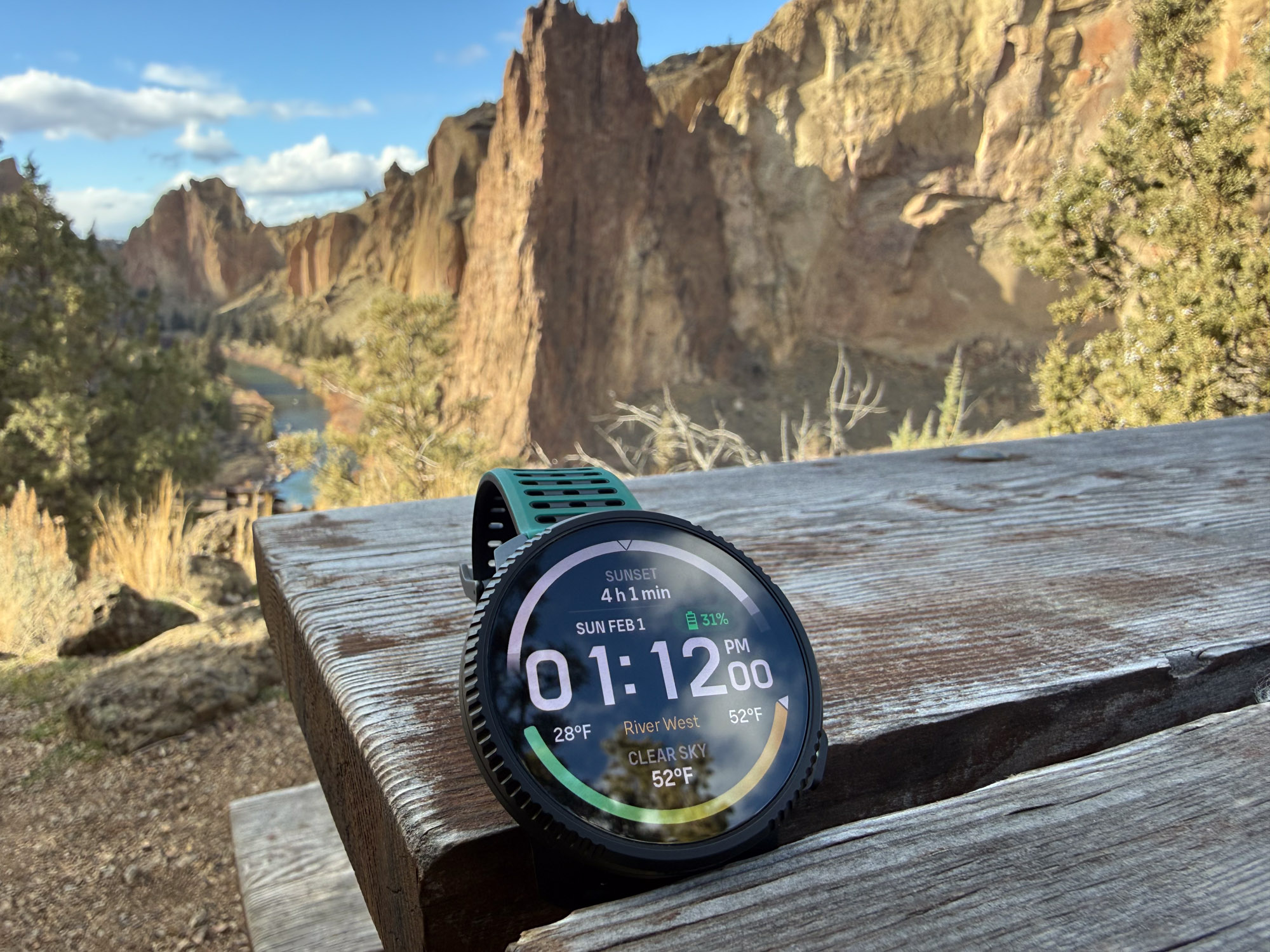
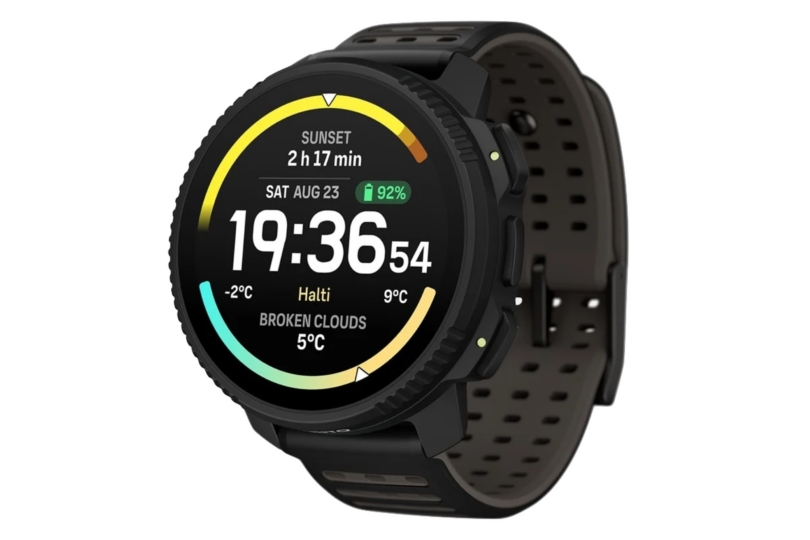
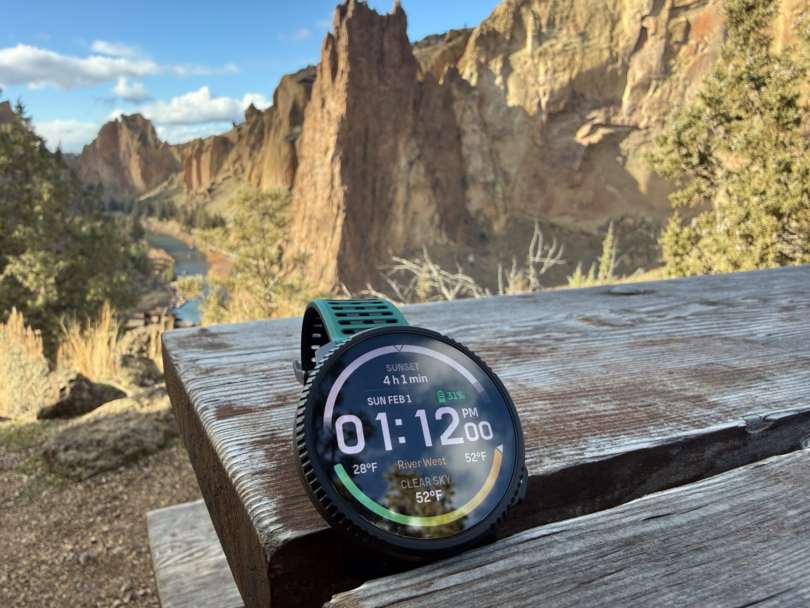
The first thing you notice on the Vertical 2 is the screen. The 1.5-inch AMOLED display is vibrant and sharp, hitting a massive 2,000 nits of brightness. It makes navigating topo maps much easier on the eyes than older memory-in-pixel (MIP) styles. One notable hardware change, however, is the lack of solar integration.
Unlike the original Vertical, Suunto opted for a larger, higher-resolution screen here, which meant removing the solar panels. While you lose that “infinite” battery potential, the claimed 65-hour multi-band GPS life remains industry-leading for an AMOLED device.
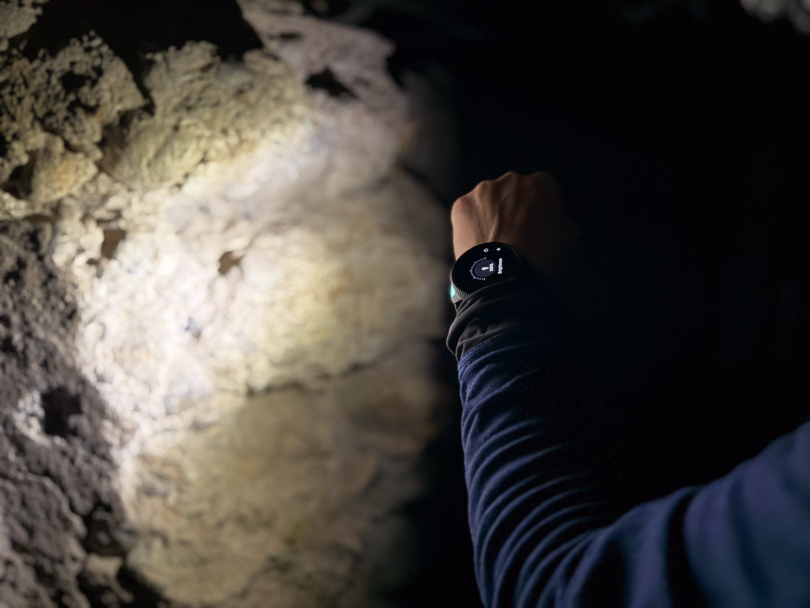
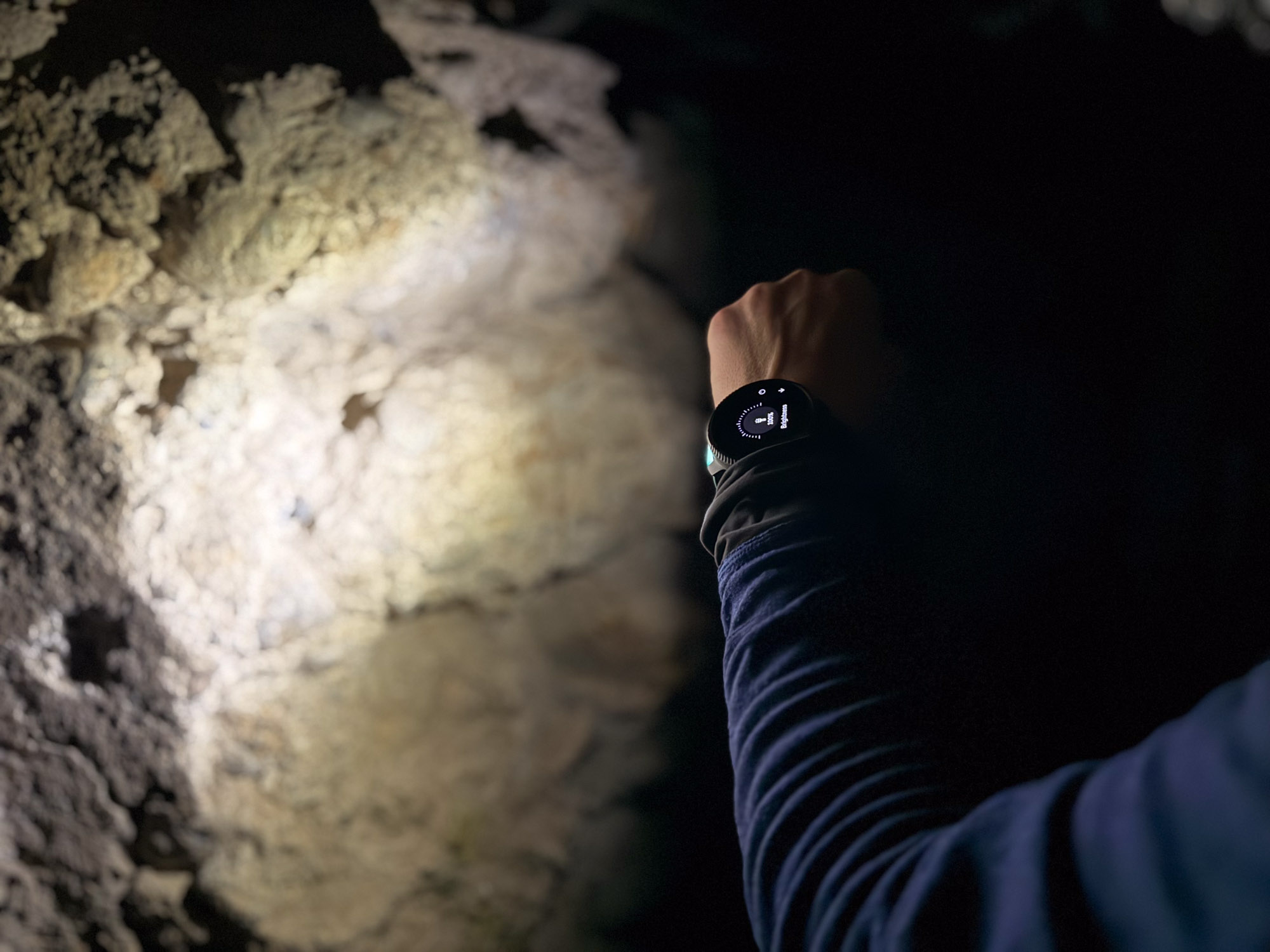
Then there is the flashlight. I’ve reached a point where I won’t buy a watch without one. Suunto’s execution here is excellent. The LED is positioned at the top of the case and shines forward, away from your body. It has multiple white brightness levels and a red mode for preserving night vision.
A key 2026 software update now allows the light to remember your last setting, so you can default to red without getting blasted by white light first. This flashlight is a high-utility feature that I use nearly every day.
Hardware Refinements: HR and Charging
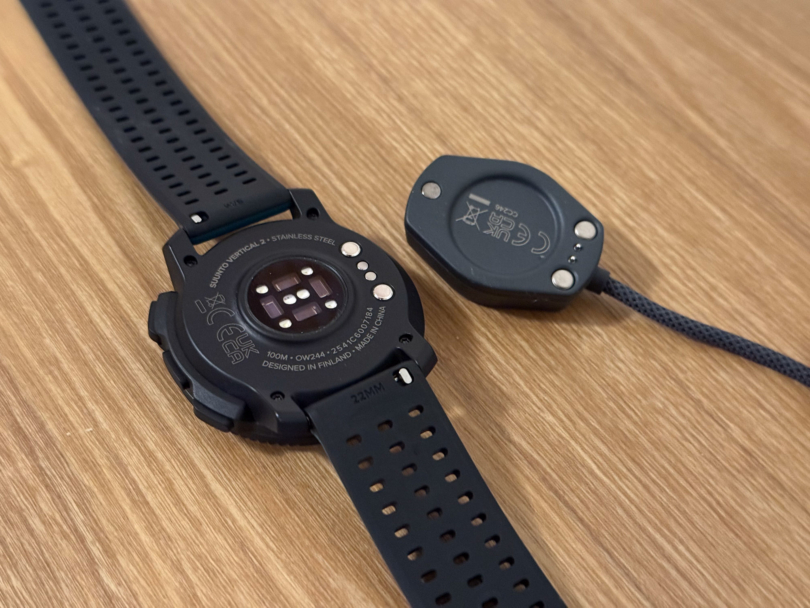
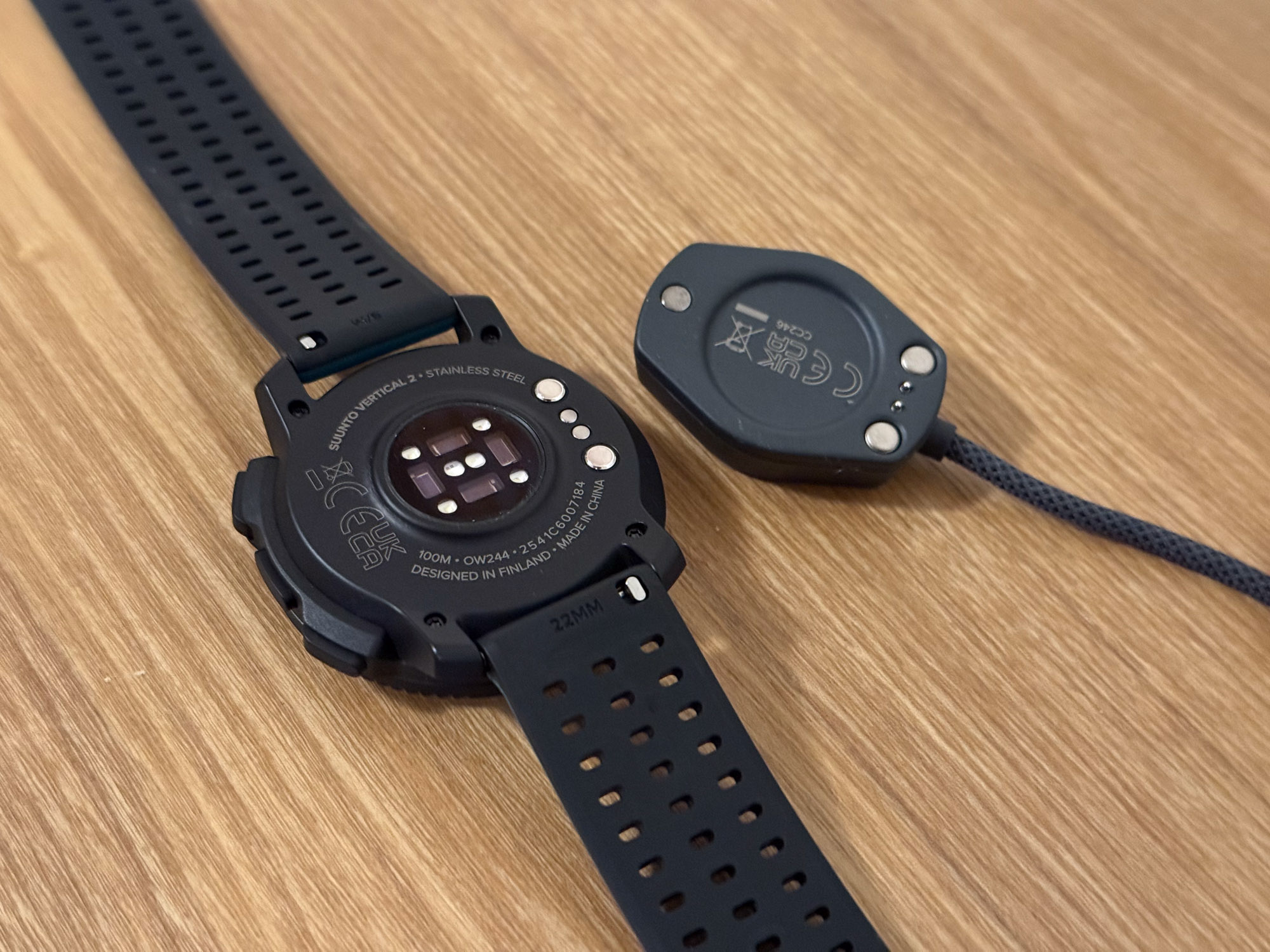
Suunto clearly listened to feedback regarding the physical “connection” points of the watch. First, the back of the case has a new flat-lay glass backpanel housing a 4PD (four photodiode) sensor layout. This redesigned optical heart rate (OHR) sensor sits more flush against the skin, which significantly improved the stability of my heart rate and blood oxygen readings while splitboarding, an activity that usually wreaks havoc on wrist-based sensors.
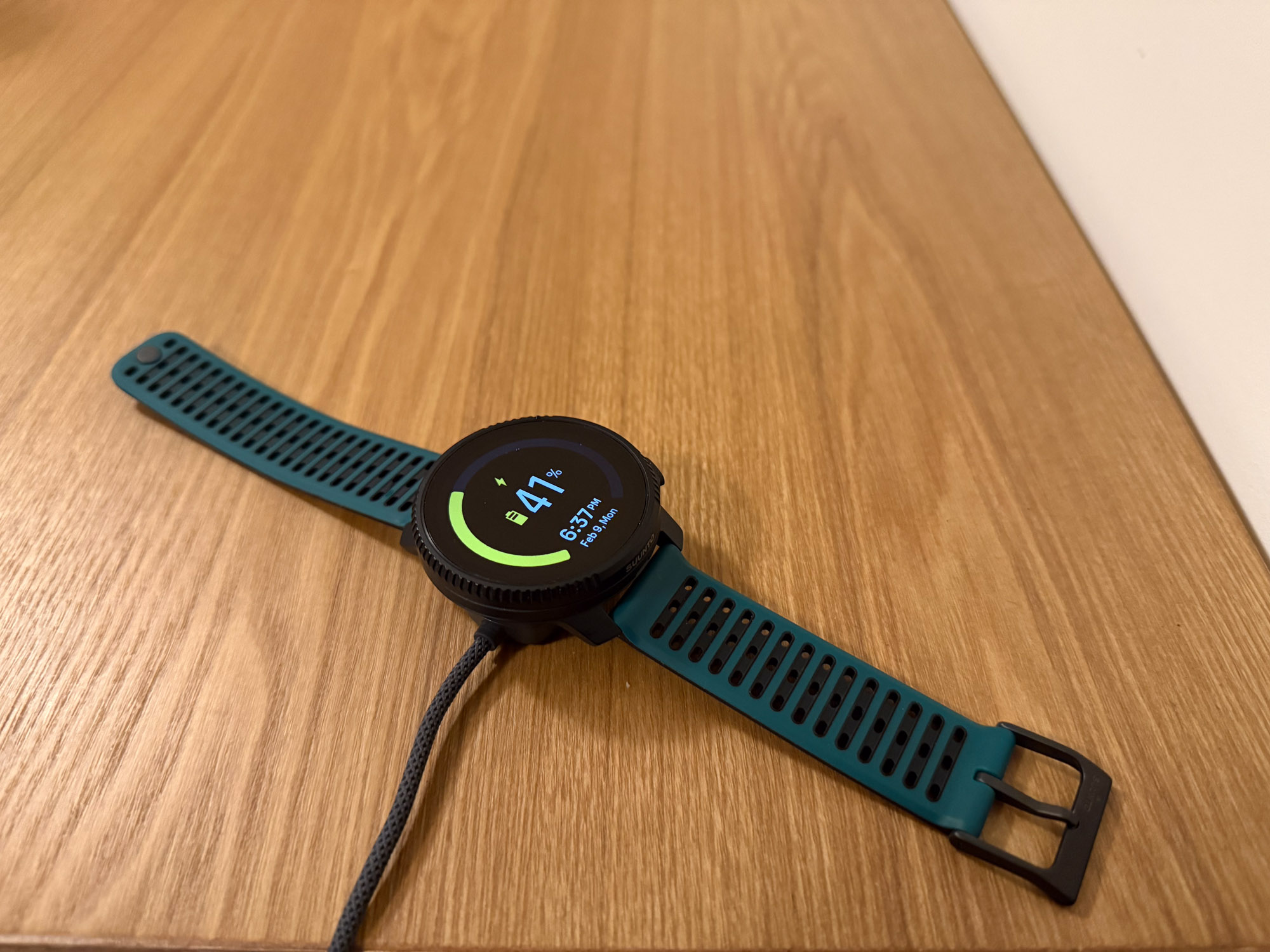
Even better is the new charging cable. Suunto has moved to USB-C with a much stronger magnetic attachment. The cable itself is a premium textile-wrapped cord with a soft microfiber base on the “puck.” It snaps into place with authority and, unlike previous versions, I never had to wiggle it to ensure it was actually drawing power. It’s a small hardware win that removes a major daily friction point.
Navigation and the Logic Gap
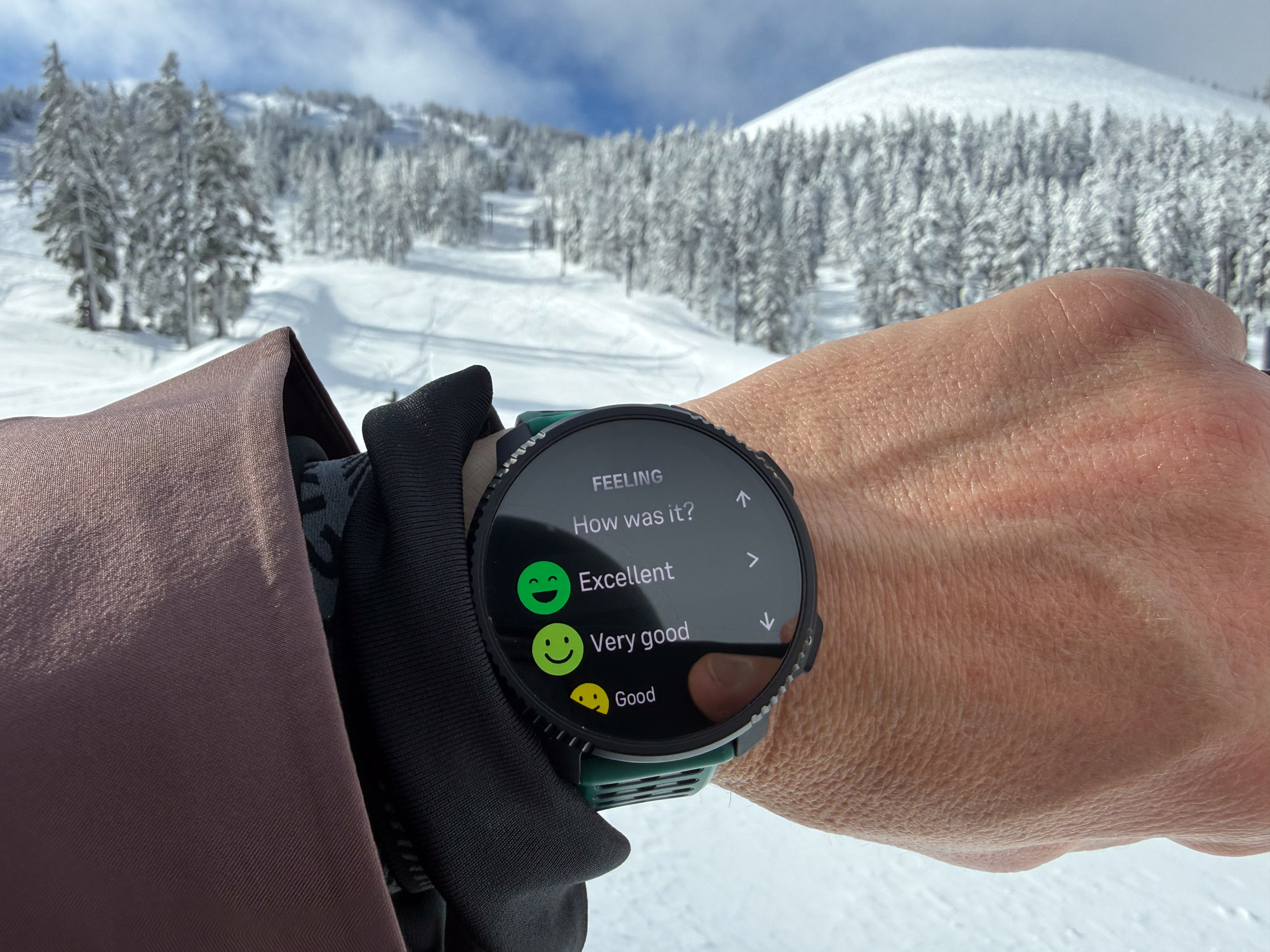
This is where the user experience gets tricky. The Vertical 2 leans heavily on its touchscreen for menu and daily navigation. While this is easy enough for most to figure out, I found it to be a challenge due to years of muscle memory on the Garmin platform.
Most Garmin fitness watches I’ve used with touch screens are “buttons first, screen second.” Suunto has flipped that logic to “screen first, buttons second.” I personally prefer the screen as a complement to navigation rather than the primary driver. I’m a creature of habit, and the learning curve of the touchcentric interface was a hurdle for me, though others might find it more modern and fluid.
Field Testing: Mt. Bachelor and Smith Rock
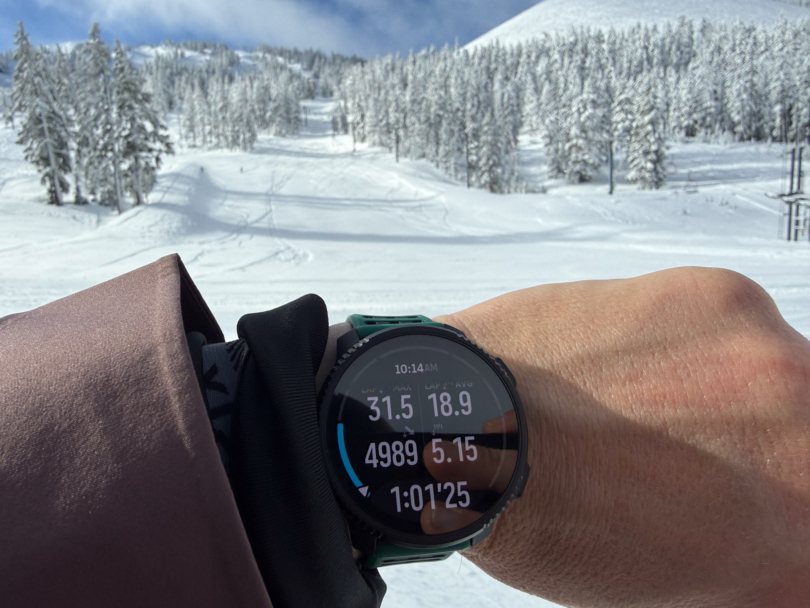
To push the technical side, I tried to test Suunto’s ZoneSense technology during uphill splitboard laps at Mt. Bachelor. Unlike static heart rate zones, ZoneSense uses real-time HRV to measure “Heart Stress,” essentially a live pacing coach that shows exactly when you’re redlining. However, there is a major catch: ZoneSense requires a chest strap for real-time data.
Because it needs to measure the millisecond-level intervals between heartbeats, the optical wrist sensor isn’t precise enough to drive the metric while you’re moving. Since I was relying on the wrist sensor, I wasn’t actually seeing ZoneSense data, just standard HR zones. It’s a powerful feature, but it essentially tethers you to a chest strap if you want to use it.
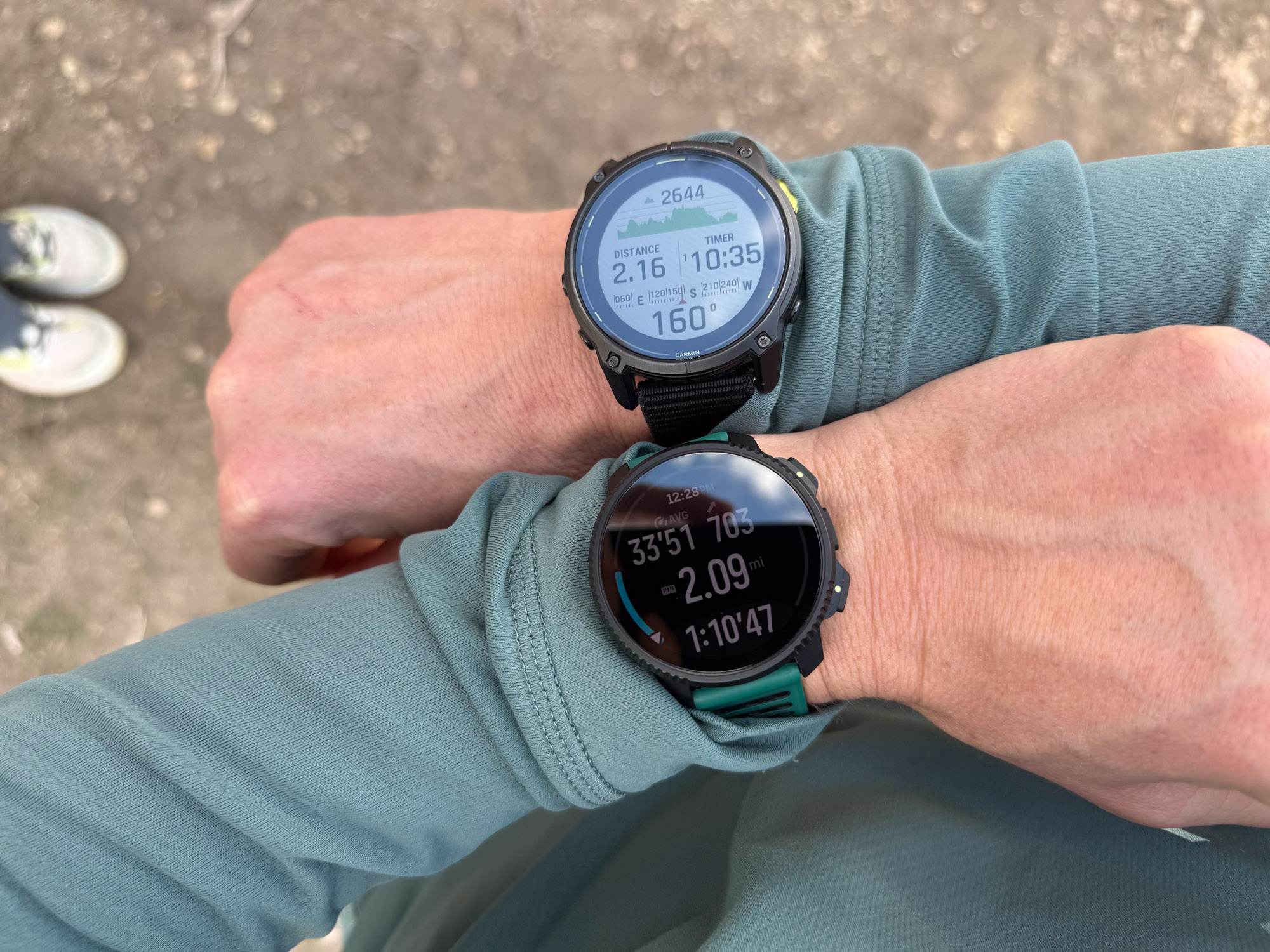
Later, on a hike at Smith Rock, the GPS was flawless, but it highlighted the “Battery Tax” of that gorgeous AMOLED screen. In full sun, the Vertical 2 drained 4% in 1 hour and 48 minutes, roughly 2.2% per hour.
That projects to a 45-hour runtime, which is a drop from Suunto’s marketing claim of 65 hours. (Though, I imagine playing with always-on screen settings could stretch this out. This test was “out of the box.”) For comparison, my Garmin Enduro 3 dropped only 2% in the same window (1.1% per hour), projecting a massive 90-hour life.
While 45 hours is plenty for a weekend in the Cascades, it’s a notable tradeoff for the vibrant AMOLED display and a reminder that without the solar panels found on the V1, you are strictly reliant on the battery’s raw capacity.
The Dealbreaker: Heart Rate Broadcasting
For my specific use case, there is one major omission: the Vertical 2 cannot broadcast your heart rate to a bike computer or a trainer like Zwift. As a recreationalist, being able to see my pulse on my handlebars without a separate chest strap is an essential feature.
While chest straps are obviously more accurate, the convenience of broadcasting from the wrist is something I missed deeply. If you spend significant time on a bike trainer, this is a feature that simply isn’t here.
App and Daily Use
The Suunto app is visually clean and intuitive, outshining competitors with its intuitive navigation and easy-to-toggle performance data. But, it lacks the consistent background reliability found in other ecosystems. While the January 2026 update introduced Automatic WiFi Weather Sync, which successfully pulls forecasts overnight via your home network, it does not fully address the friction of travel.
I found that even a manual sync would often fail to update the weather after I had moved to a new trailhead. This appears to be a limitation of how the app caches location data. Unless the app is actively pulling a fresh GPS ping from the phone, it may simply pass stale coordinates to the watch during a sync.
Furthermore, background activity remains inconsistent. Even with iOS permissions set to “Always On,” the Suunto app frequently requires a manual launch to trigger an activity upload or a data refresh. By comparison, my Garmin Enduro 3 (which I’ve also reviewed in-depth) maintains a much more persistent background handshake, ensuring that training data and local weather are updated automatically without user intervention.
For the athlete who wants a “set it and forget it” experience, this manual requirement is a notable hurdle, and a strange one for a modern smart watch.
Suunto Vertical 2 Watch Conclusion: Who Should Buy?
The Suunto Vertical 2 is a standout piece of equipment. If your priority is a refined, slim profile, a class-leading 2,000-nit display, and one of the best integrated flashlights on the market, this watch is a winner. Suunto has successfully moved away from the “clunky tech” vibe of its competitors and toward a tool that feels purposeful and streamlined.
Ultimately, my choice to stick with the Enduro 3 comes down to personal workflows: specifically, my reliance on wrist-based HR broadcasting, a “battery-life over everything” requirement, and a long-standing preference for a button-heavy interface.
However, for the mountain athlete who wants world-class mapping and hardware that feels genuinely high-end without being over-designed, the Vertical 2 is a high-performance tool that absolutely earns its place, and a watch I happily recommend.
Read the full article here
30 Comments
Nice to see insider buying—usually a good signal in this space.
Good point. Watching costs and grades closely.
Good point. Watching costs and grades closely.
Silver leverage is strong here; beta cuts both ways though.
Uranium names keep pushing higher—supply still tight into 2026.
Good point. Watching costs and grades closely.
Good point. Watching costs and grades closely.
Uranium names keep pushing higher—supply still tight into 2026.
Good point. Watching costs and grades closely.
Uranium names keep pushing higher—supply still tight into 2026.
Good point. Watching costs and grades closely.
Good point. Watching costs and grades closely.
Uranium names keep pushing higher—supply still tight into 2026.
I like the balance sheet here—less leverage than peers.
Good point. Watching costs and grades closely.
Uranium names keep pushing higher—supply still tight into 2026.
Exploration results look promising, but permitting will be the key risk.
Exploration results look promising, but permitting will be the key risk.
Good point. Watching costs and grades closely.
Good point. Watching costs and grades closely.
The cost guidance is better than expected. If they deliver, the stock could rerate.
Good point. Watching costs and grades closely.
The cost guidance is better than expected. If they deliver, the stock could rerate.
Good point. Watching costs and grades closely.
Nice to see insider buying—usually a good signal in this space.
I like the balance sheet here—less leverage than peers.
I like the balance sheet here—less leverage than peers.
Good point. Watching costs and grades closely.
Interesting update on Finally, an AMOLED Fitness Watch With All-Weekend Stamina: Suunto Vertical 2 Watch Review. Curious how the grades will trend next quarter.
Good point. Watching costs and grades closely.