

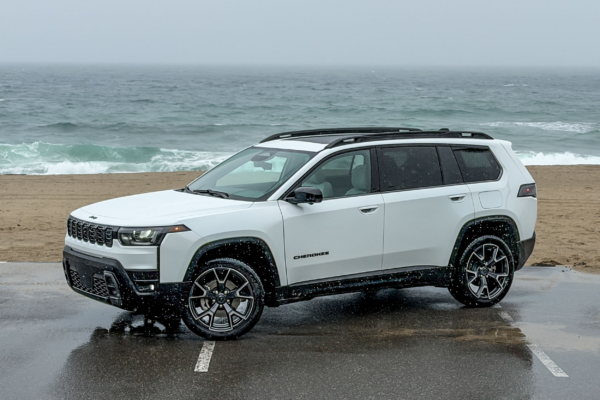
Jeep finally brings back the Cherokee, this time as its first traditional hybrid. The 2026 Jeep Cherokee is much bigger, much more fuel-efficient, and is overall a much better vehicle than its predecessor.
The compact utility vehicle segment is the largest in the U.S., and one Jeep has been absent from since the last generation (KL) Cherokee ended production in February 2023. For 2026, it has grown up in all the ways, especially in terms of size and refinement.
I got the chance to drive the new Cherokee around the Malibu canyons outside of Los Angeles, for a total of about 90 miles. Specifically, I was behind the wheel of a pre-production, top-spec Overland model. While my driving experience in it was on highways, back roads, around town, and through torrential rains, I wasn’t able to take it off-pavement — as the off-road driving course was flooded out.
In short: A distinct enough exterior and an impressive, spacious interior are what you get at first glance. Look further, and what you find with the 2026 Jeep Cherokee is a vehicle that offers comfort in both rows of seats and loads of cargo space. It also offers impressive fuel economy, towing, safety, and standard four-wheel drive. While it has some ergonomic quirks, the biggest current negative is that there is no off-road-focused version available.
2026 Jeep Cherokee
-
Powertrain:
1.6L turbo 4-cyl, 2 electric motors in ECVT, 400V/1.03 kWh/4.1 Ah/NCM-Graphite battery -
Power:
220 hp, 230 lb.-ft. -
Fuel tank:
13.7 gallons -
Range:
500+ -
Fuel economy (MPG):
39 city/35 hwy/37 comb, 26 as tested -
Dimensions:
188.1" L x 83.6" W (w/mirrors) x 67.5" H, 113.0" wheelbase -
Curb weight:
4,295 lbs. -
Cargo volume:
68.335 cu.-ft. behind 1st row, 33.622 cu.-ft. behind 2nd row -
Payload:
850 lbs. -
Towing:
3,500 lbs. -
Ground clearance:
8.0" -
Angles (degrees):
19.6 approach, 18.8 breakover, 29.4 departure -
Trims:
Cherokee, Laredo, Limited, Overland -
MSRP:
Starting at $36,995 (includes $1,995 destination), $45,990 as tested
Pros
-
Fuel economy
-
500+ miles of driving range
-
Interior passenger and cargo room
-
Passenger comfort
-
Interior design and tech
Cons
-
Acceleration is not inspiring
-
Digital gauge cluster and steering wheel ergonomics could be better
2026 Jeep Cherokee Review
The Cherokee nameplate entered the Jeep lexicon in 1974 with the SJ. But, the generation of SUV that really put the Cherokee on the world vehicle map as an off-road icon is the 1984 XJ.
While the 2026 Cherokee is far from an off-road icon, Jeep executives said they designed it to be the “one vehicle to do it all.” After my drive, I can say that it would be a very good one-vehicle quiver for someone who doesn’t need more than five seats and doesn’t need more than basic off-pavement capability.
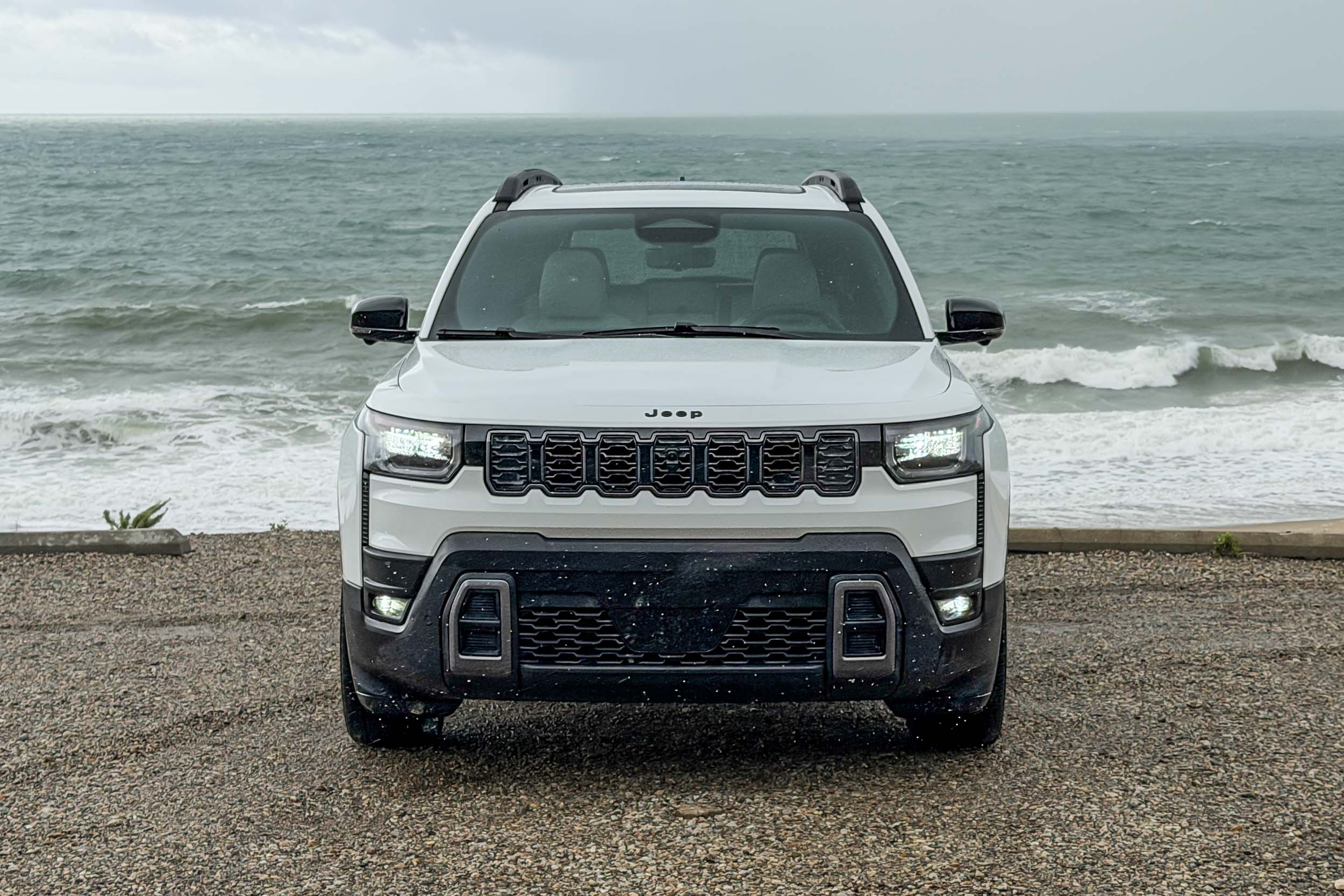
“From every angle, the 2026 Jeep Cherokee evokes the best of the brand’s rich design history,” said Vince Galante, vice president, Jeep global design. “These bold, upright shapes are complemented by Jeep’s iconic seven slot grille, boxy side profile and distinctive jerrican-inspired taillight design, giving it an instantly recognizable signature on the road.”
Power & Efficiency
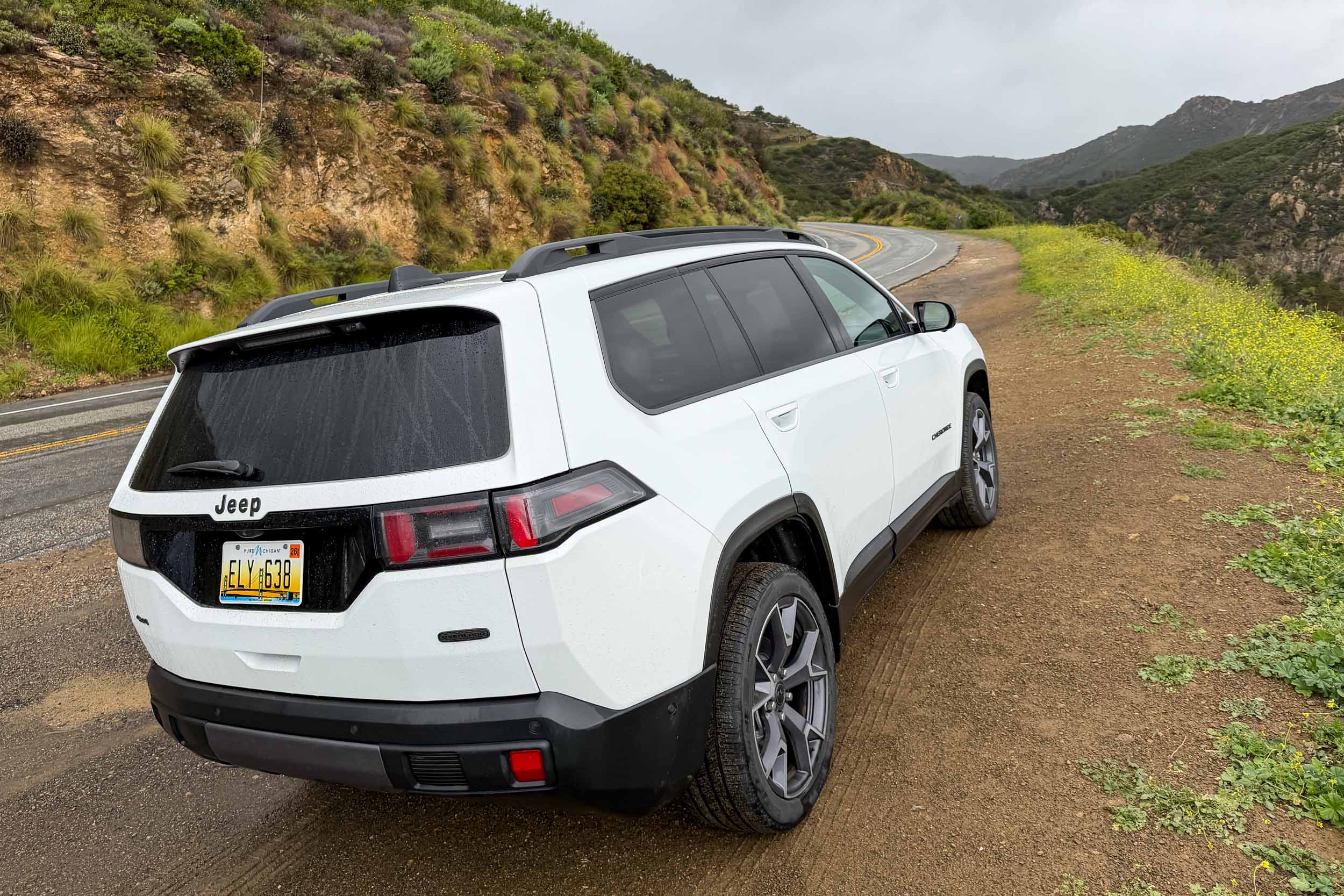
Of course, we first have to talk about the beating heart of this new SUV, its Hybrid drive system. It consists of a 1.6L turbocharged four-cylinder gas engine, two electric motors in a planetary-gear–style continuously variable transmission (ECVT), and a 1.03 kWh/4.1 Ah battery pack. It runs on regular 87 octane fuel.
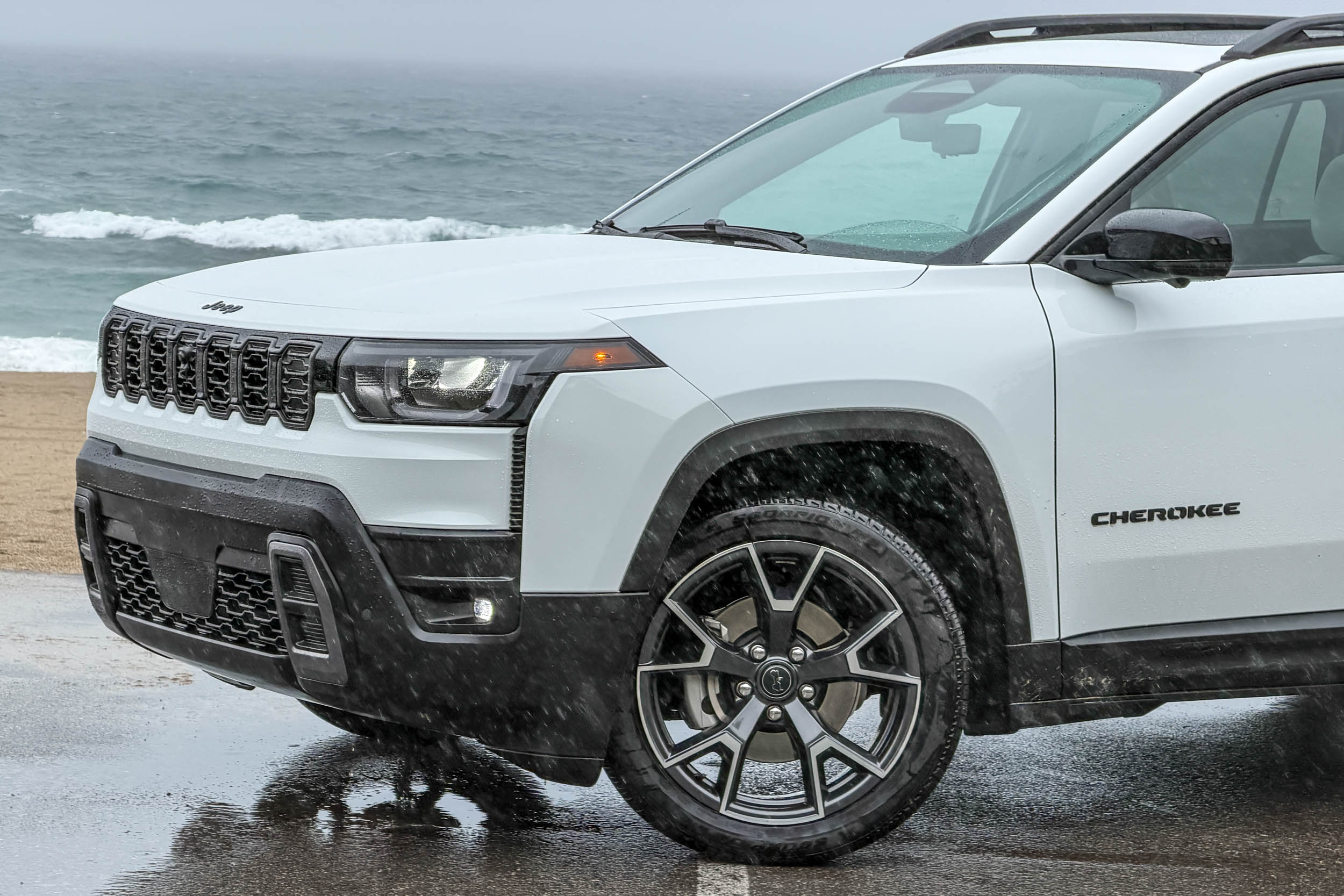
Jeep claims over 2.5 million miles of pre-launch validation in extreme environments. Whether or not that PR-speak holds up in the long run, the system felt polished and refined during my time with it.
The system produces a max, peak output of 220 horsepower and 230 pound-feet of torque. While it doesn’t feel all that fast or quick, it accumulates speed faster than it feels, and the power is appropriate for this type of vehicle.
The 2026 Cherokee is rated at 37 mpg combined, which is over a 50% improvement over the 2023 Cherokee. Over my 87.5-mile drive with my lead foot doing its usual damage, I averaged 26 mpg, which is still impressive and above the 25 mpg average of the last-gen Cherokee.
With a 13.7-gallon fuel tank, this new Cherokee has a range of just over 500 miles.
Drive Modes
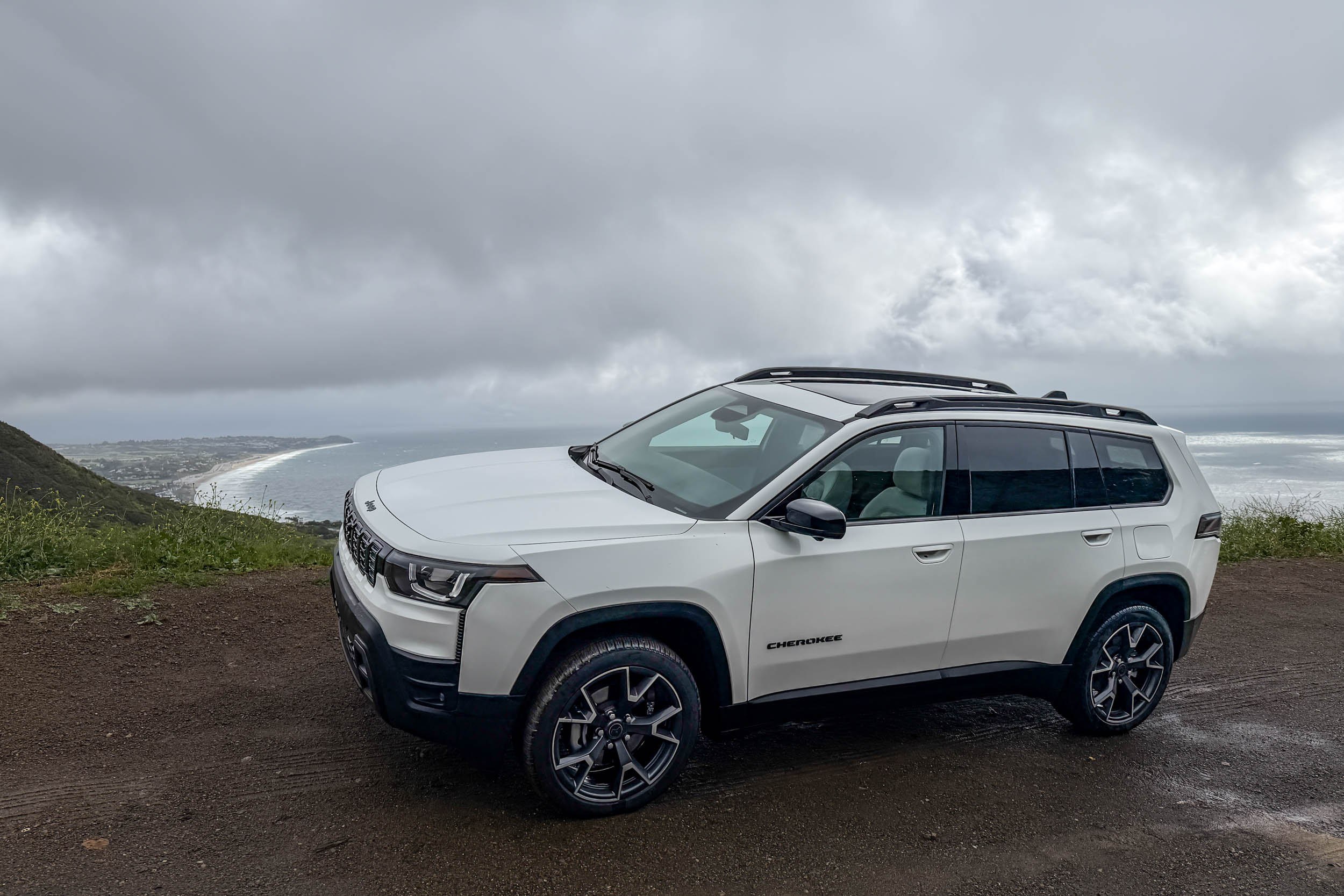
Four-wheel drive is standard on all ’26 Cherokees. While there is no center differential, there is a prop shaft physically connecting the front and rear axles. To improve fuel economy, the prop shaft can automatically disconnect the rear axle when in Auto drive mode.
Terrain Response traction management modes on offer are Auto, Sport, Snow, and Sand/Mud. While the vehicle is predominantly front-wheel drive, up to 50% of the torque can be sent to the rear wheels.
When you put it in sport mode, the digital dash tells you that the traction control is off. But, it’s not actually off at all, but the nannies are turned down a bit in the name of performance and fun.
Size & Space
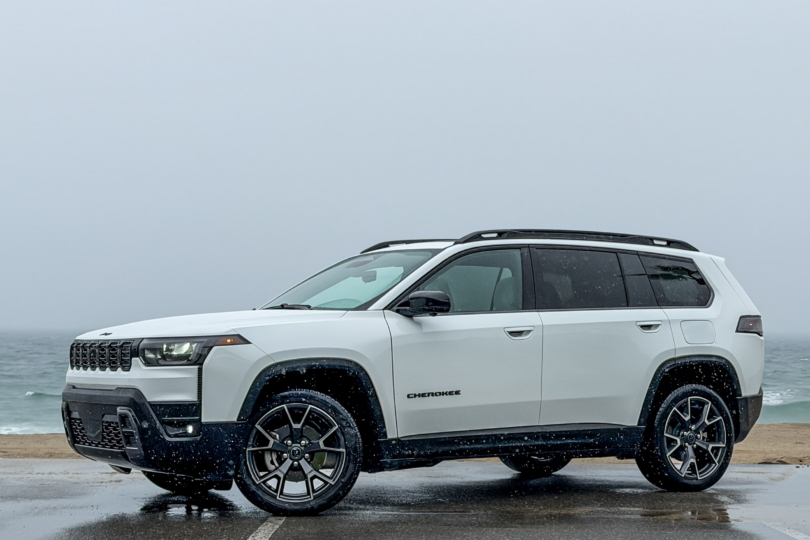
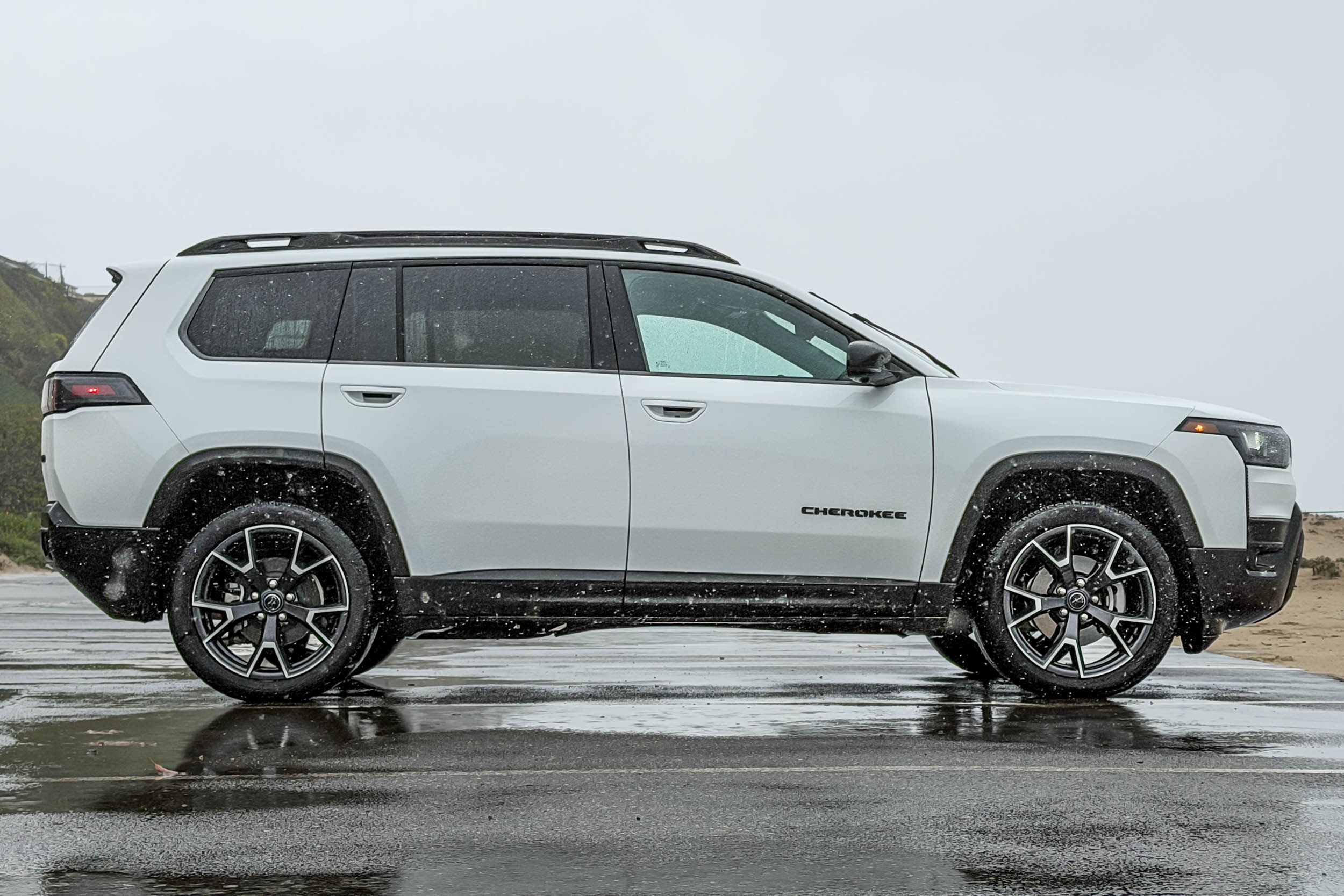
The new Cherokee has grown up in every dimension. It has about a 6.4-inch longer wheelbase and is 5 inches longer, 8 inches wider, and 1/2 inch taller.
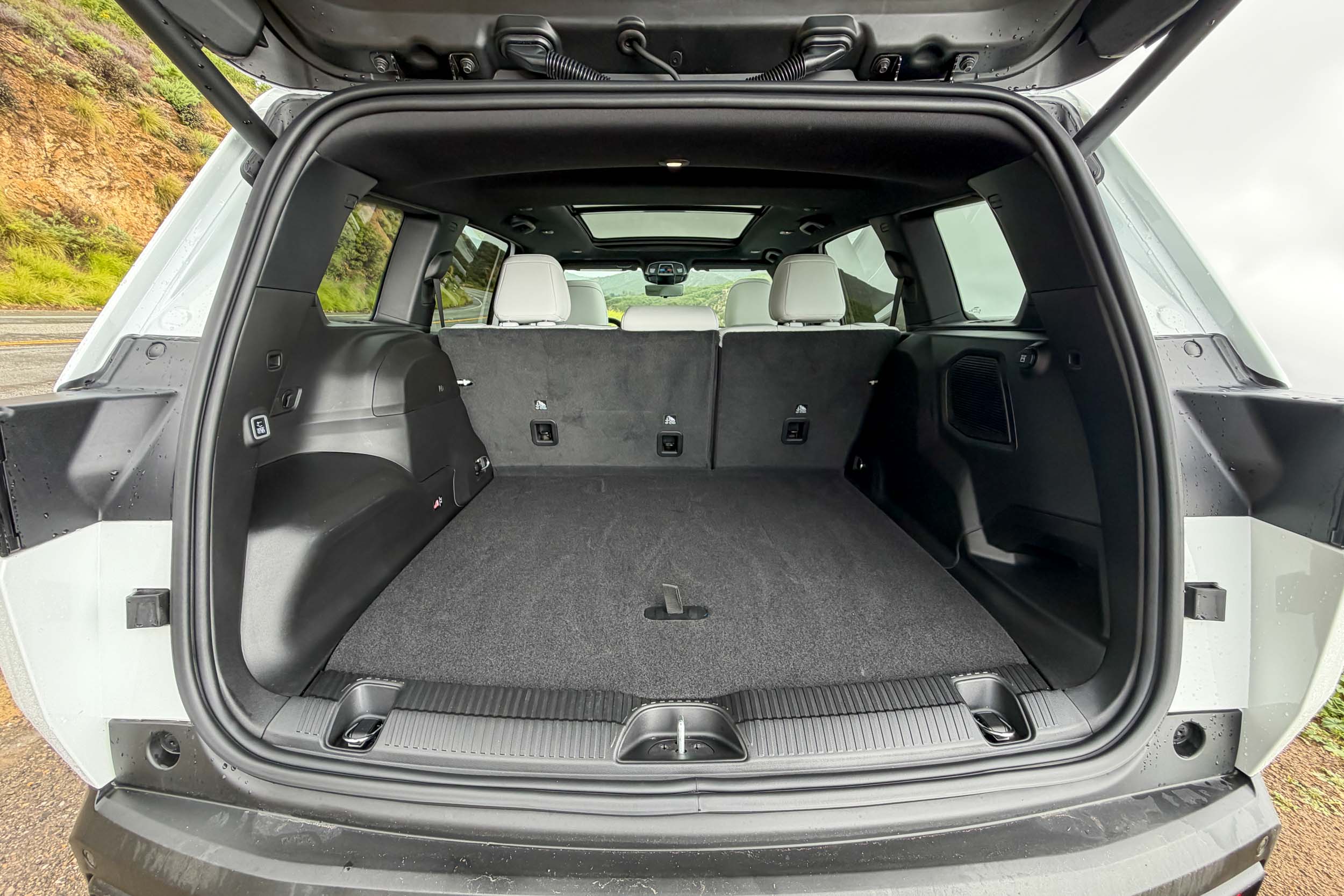
Cargo space has improved by over 30%, coming in at 68.3 cubic feet with the second row folded and 33.6 behind the second row.
Towing is rated up to 3,500 pounds. That should make short work of towing a small camper trailer, kayak fishing trailer, small sailboat, a few snowmobiles, or some dirtbikes.
Ground clearance is solid at 8 inches, but not overly impressive, with many competitors offering trims with slightly more. Best-in-class approach and departure angles speak to some genuine off-road intent, while the 18.8-inch breakover angle is sure to hang you up on even moderate off-road obstacles.
Visibility from the driver’s seat is good. The long hood and dash do create the sensation of sitting further back in the vehicle, but overall sightlines are fine for both urban maneuvering and getting a read on the trail ahead.
Jeep Tech
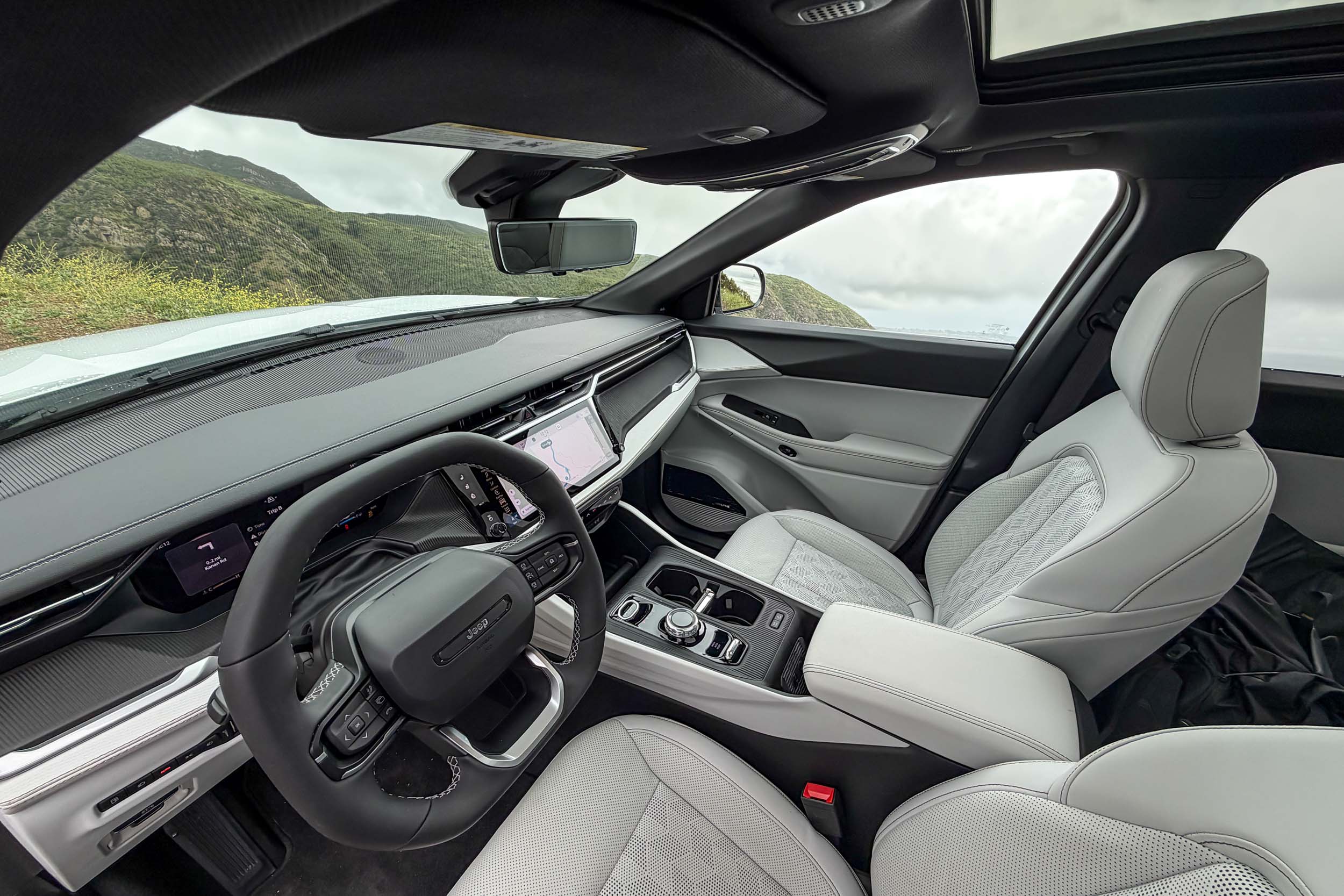
The Cherokee runs Jeep’s Uconnect 5 system on a 12.3-inch infotainment screen, paired with a 10.25-inch digital gauge cluster. The system is responsive and intuitive, and the audio sound quality is good.
Level 2 active driver assistance is standard on all trims, which includes lane centering, adaptive cruise, and the usual safety suite. The systems are tuned well and feel less intrusive than on many competitors.
Standard on all trim levels is the Connect One connected services package. It offers 10 years of over-the-air updates, the Jeep phone app to control vehicle functions, automatic SOS calls, and more. While that all comes at no cost, you can upgrade to the Connect WiFi Plus package to get unlimited data, Jeep Off-Road Pages Plus, and more.
No heads-up display is offered. On the higher trim levels, this seems like an omission worth noting.
One pre-production quirk: the low-speed EV warning sound (required by law for pedestrian safety) could be heard from inside the cabin, which was mildly annoying. Jeep’s team indicated that this should be resolved on production vehicles.
Interior
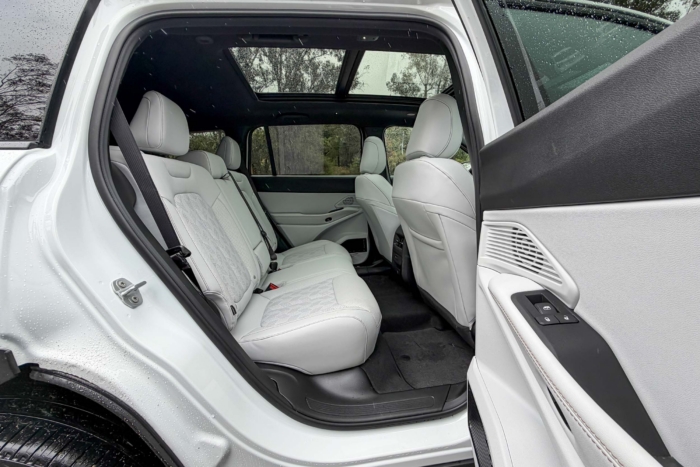
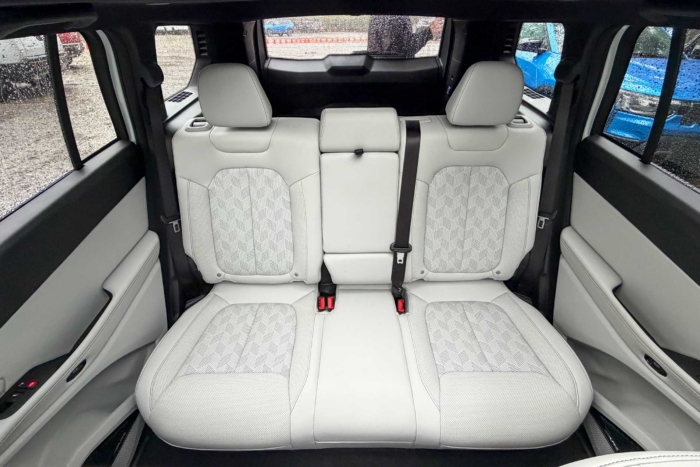
The interior goes with an eco-friendly, non-leather material approach, with recycled materials throughout. It can be had in Global Black or Arctic colorways.
The seats are quite comfortable and feel well-cushioned, even though they have plenty of support. I would think they would be quite good for long road trips and/or commutes, and they felt good for the few hours I spent in them.
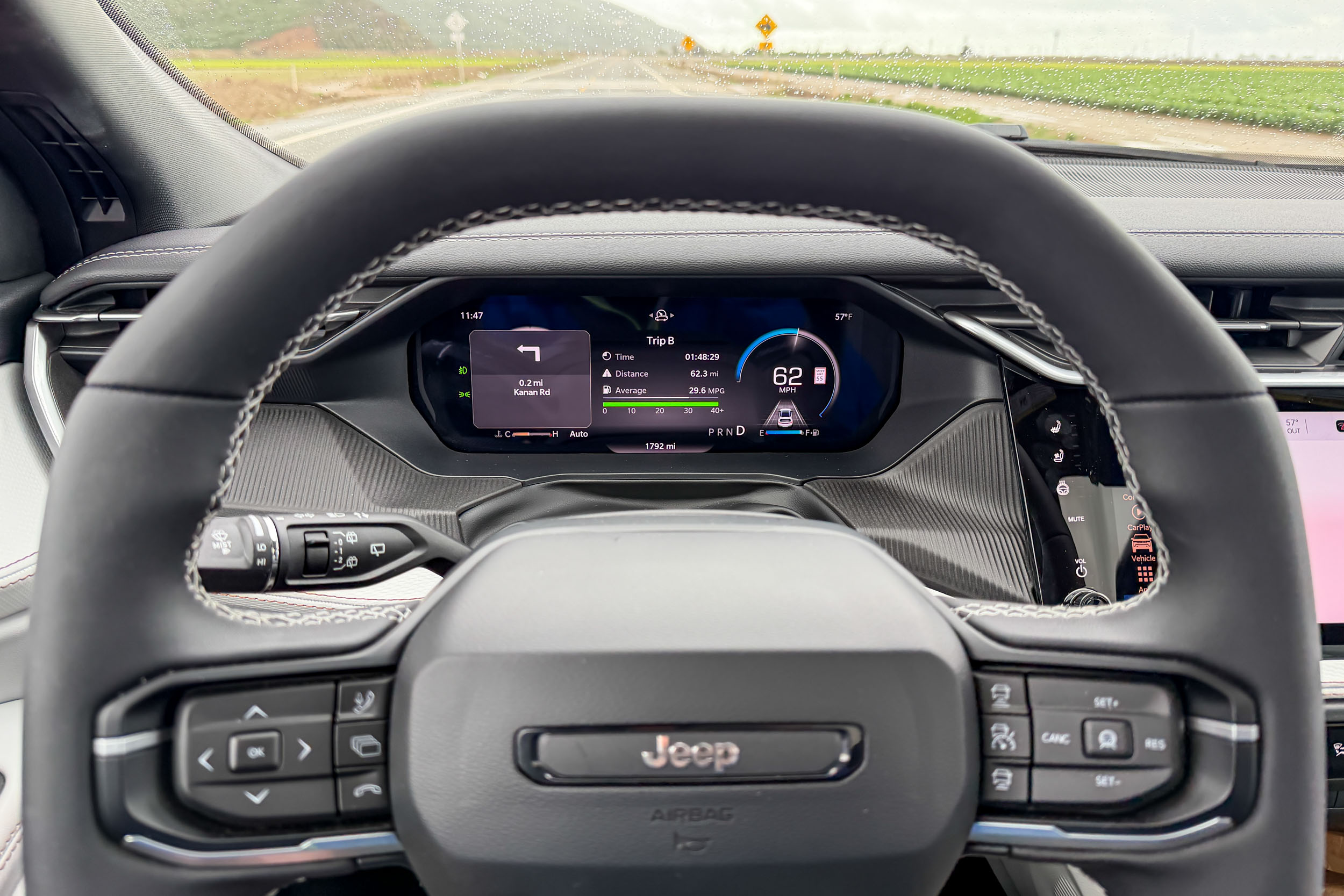
That said, a few ergonomic quirks are worth calling out. The gauge cluster is oriented vertically while the rest of the dash is angled rearward toward the driver. The two planes fight each other, making the cluster harder to read at a glance than it should be. A little more screen tilt toward the driver would solve it.
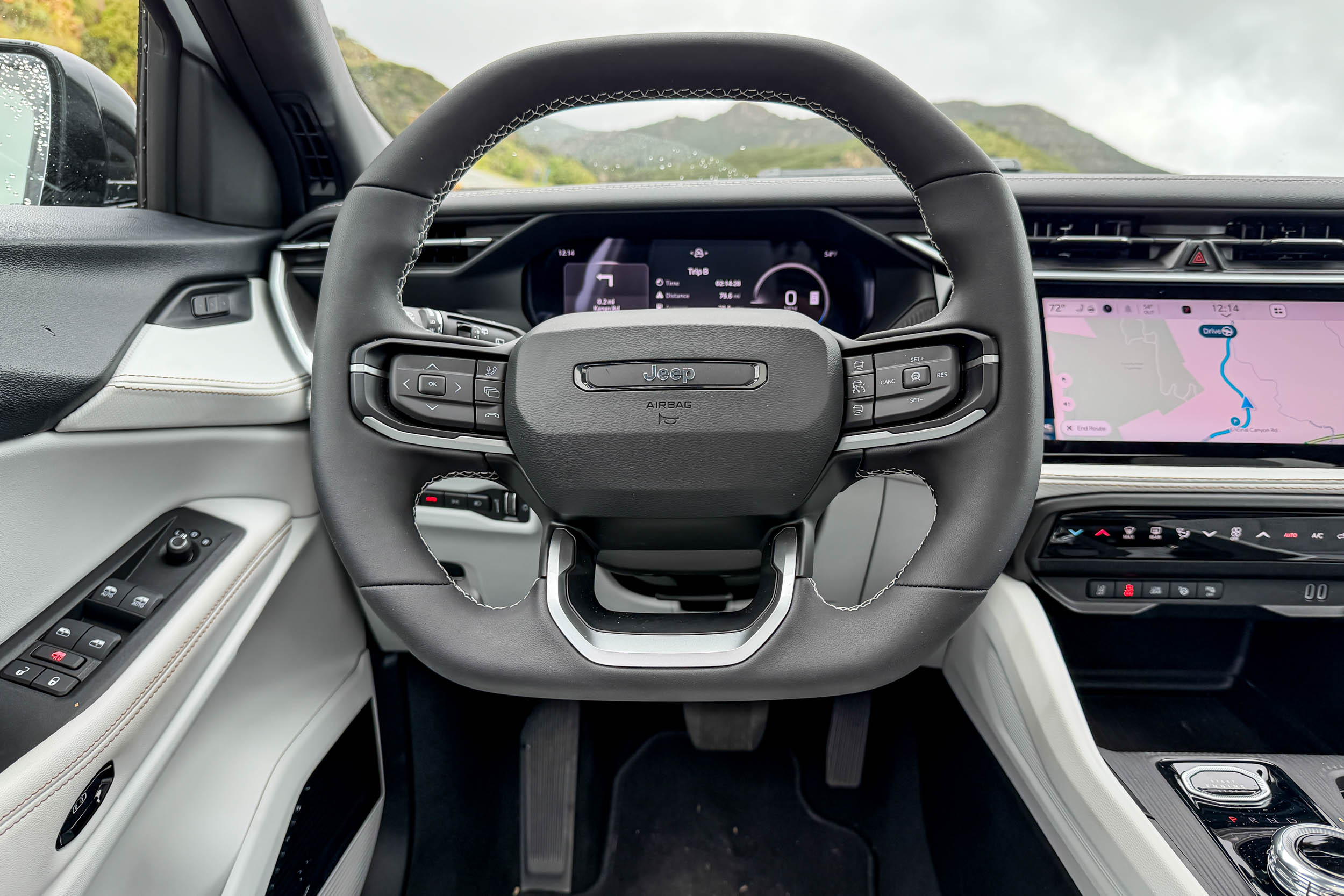
The telescoping steering wheel comes way back, a small but meaningful feature that is becoming quite rare. Its squircle design actually works quite well in this application, but it’s too thick in diameter to be comfortable in the hand.
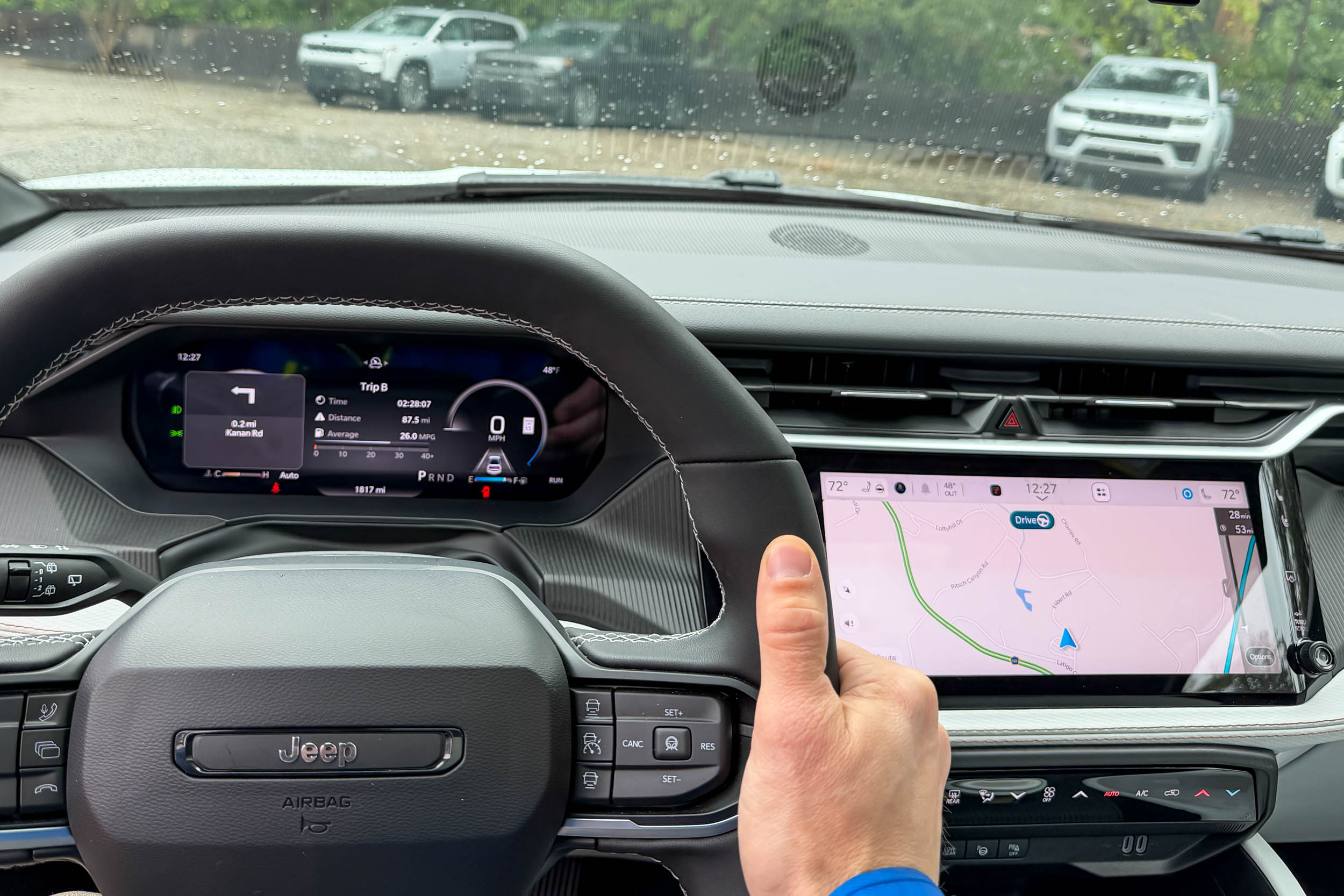
And, combined with the infotainment screen’s position, your right hand can block a portion of the infotainment screen. It’s not a dealbreaker, but it’s the kind of thing you will notice daily.
Tires Matter
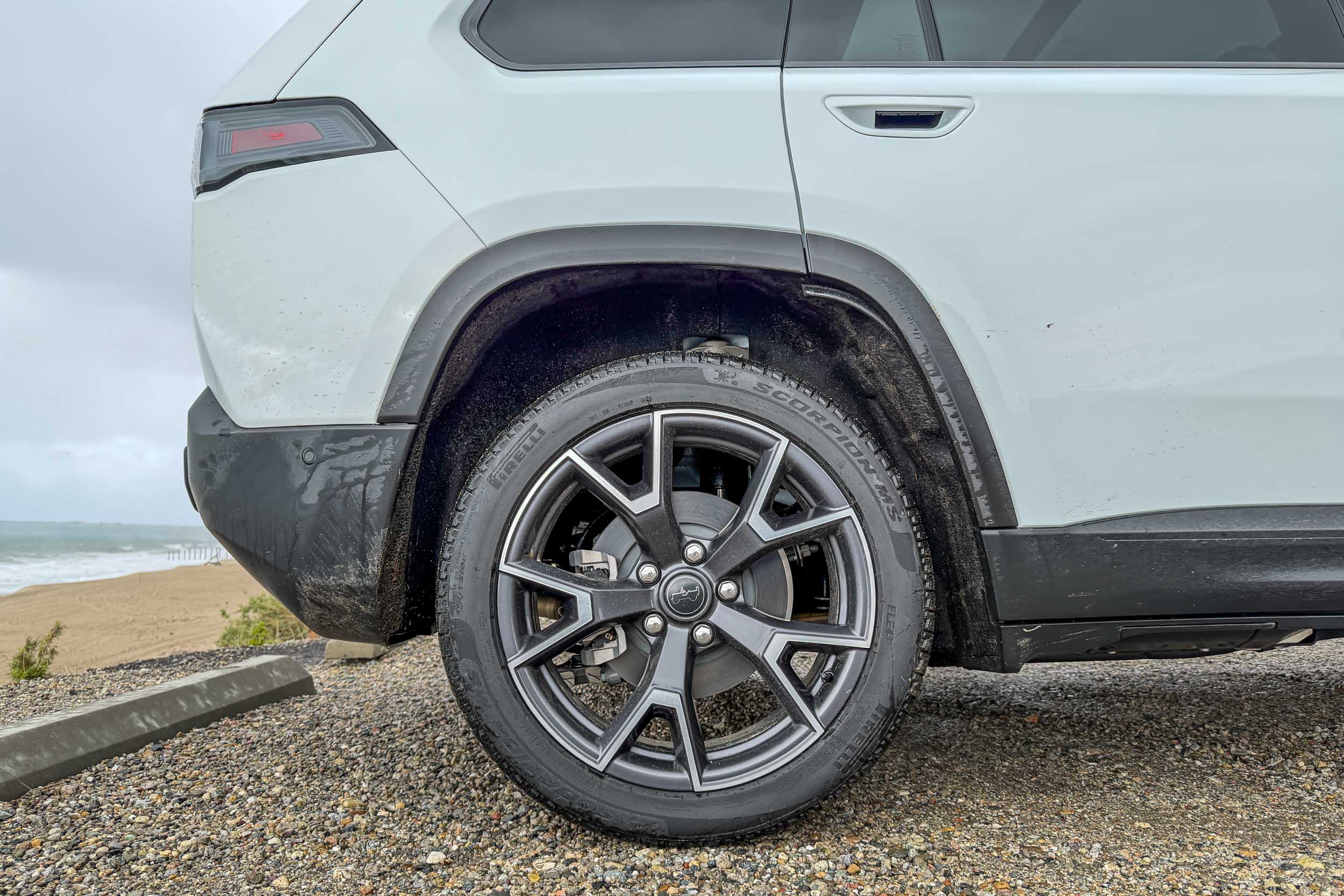
All 2026 Cherokees are fitted with all-season tires. The Overland model I tested is equipped with Pirelli Scorpion MS (235/50R20XL) tires, which equate to about a 9.3-inch footprint and a 29.3-inch diameter.
The low-rolling-resistance tires — chosen for maximized fuel efficiency — are not your friend in heavy rain. I experienced noticeable hydroplaning in the torrential downpour I drove through, which is something to be aware of if you live somewhere wet. They’ll also hold you back off-pavement, both in terms of traction and puncture resistance.
These are not unexpected trade-offs with efficiency-focused rubber, but worth noting depending on where your vehicle adventures take you.
Pricing & Availability
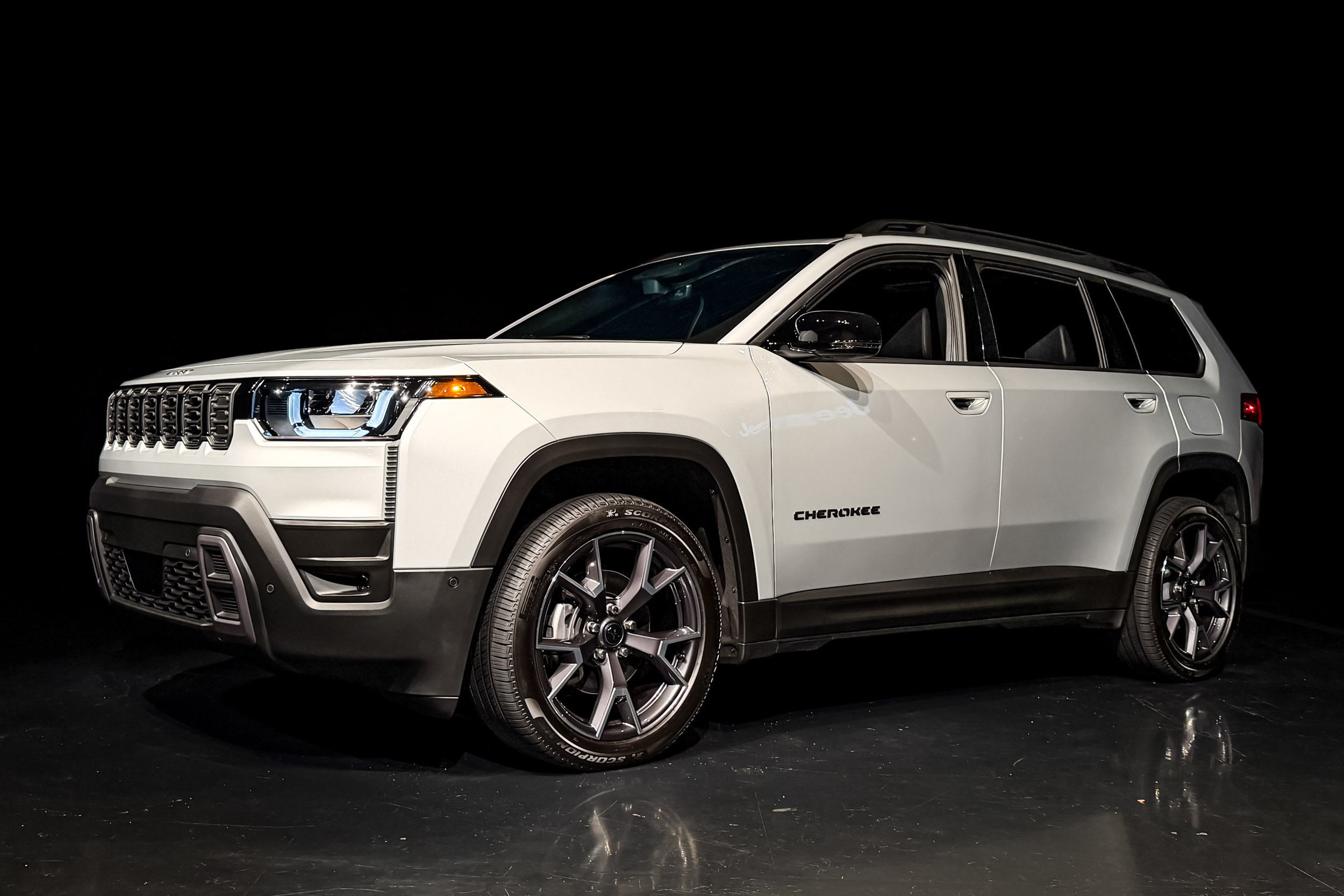
The 2026 Jeep Cherokee comes in Cherokee, Laredo, Limited, and Overland models.
Pricing starts at $36,995, which includes the mandatory $1,995 destination fee. The top-spec Overland model I drove has a sticker price of $45,990.
You might have noticed that there isn’t a Trailhawk model in the lineup, or any off-road–focused or Trail Rated version. While no announcements have been made, it was pretty clear to me and all the other journalists in attendance at this first drive event that one is very likely coming, based on Jeep representatives’ reactions to questions.
The 2026 Cherokee is being built in Mexico, and more than 2,000 have already hit dealer lots in North America. I’m going to predict that will sell well as people get behind the wheel, as it’s not only a compelling package on paper.
2026 Jeep Cherokee Review: Conclusions
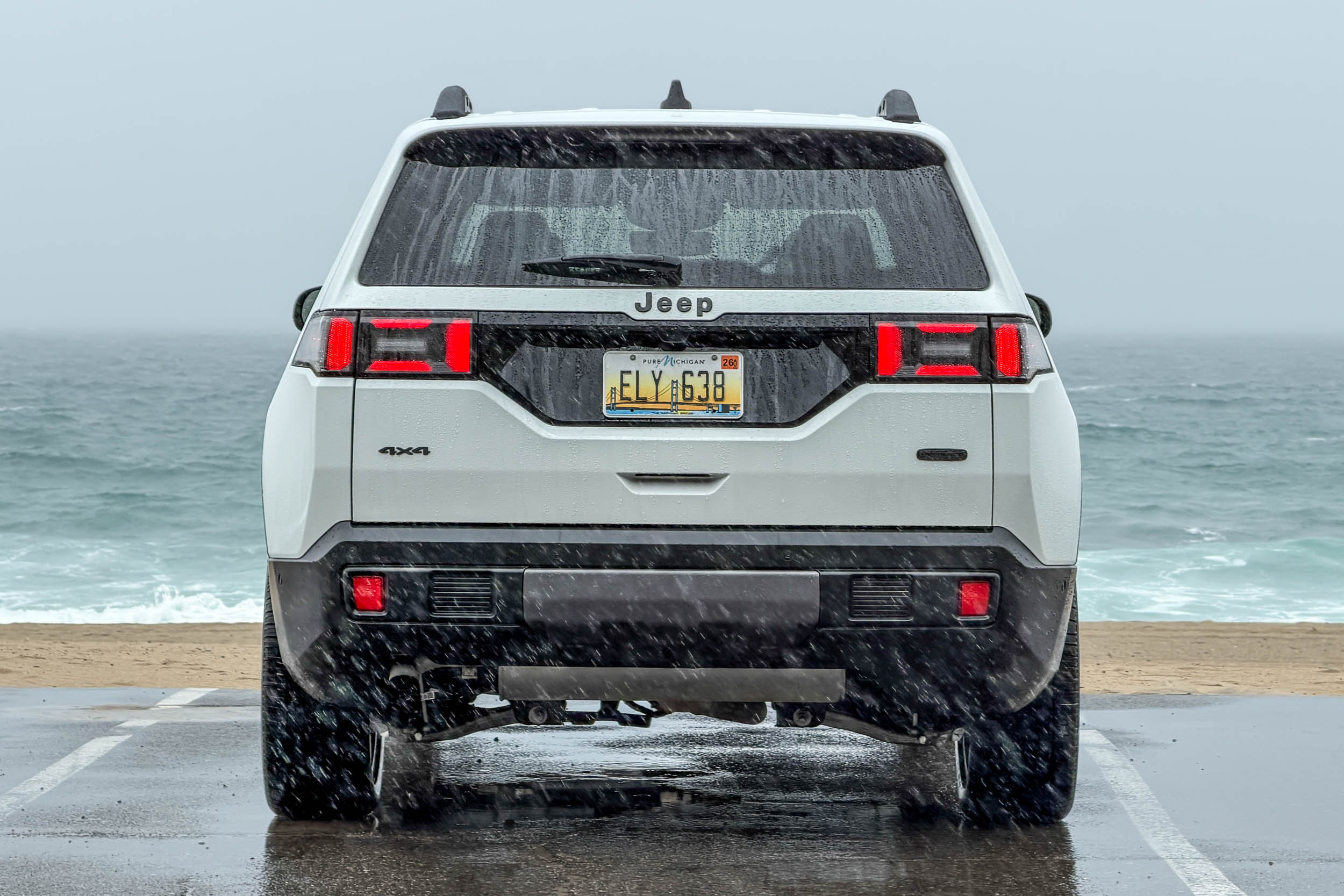
From behind the wheel, or any of the passenger seats, this SUV is comfortable and ready for everyday tasks and weekend adventures.
The 2026 Jeep Cherokee is a genuinely compelling return to form for a nameplate that’s been missed — maybe not the KJ, but for sure the XJ. It checks a lot of boxes: 500-mile range, standard 4WD, up to 3,500 pounds of towing, a comfortable two-row interior, loads of cargo space, and solid everyday fuel economy. The hybrid system is smooth, and the overall package is polished enough to compete seriously in the most crowded new vehicle segment in the country.
I sadly couldn’t test the off-road chops on this first drive, but the ground clearance, Jeep-engineered 4WD system, solid approach and departure angles, and good visibility from the driver’s seat suggest it should handle moderate off-pavement terrain. However, the low-rolling-resistance tires and breakover angle will no doubt let it down off-road.
A Trailhawk version, if and when it arrives, could be the one to really get excited about. But, for now, the Jeep Cherokee is back, and it’s worth your attention.
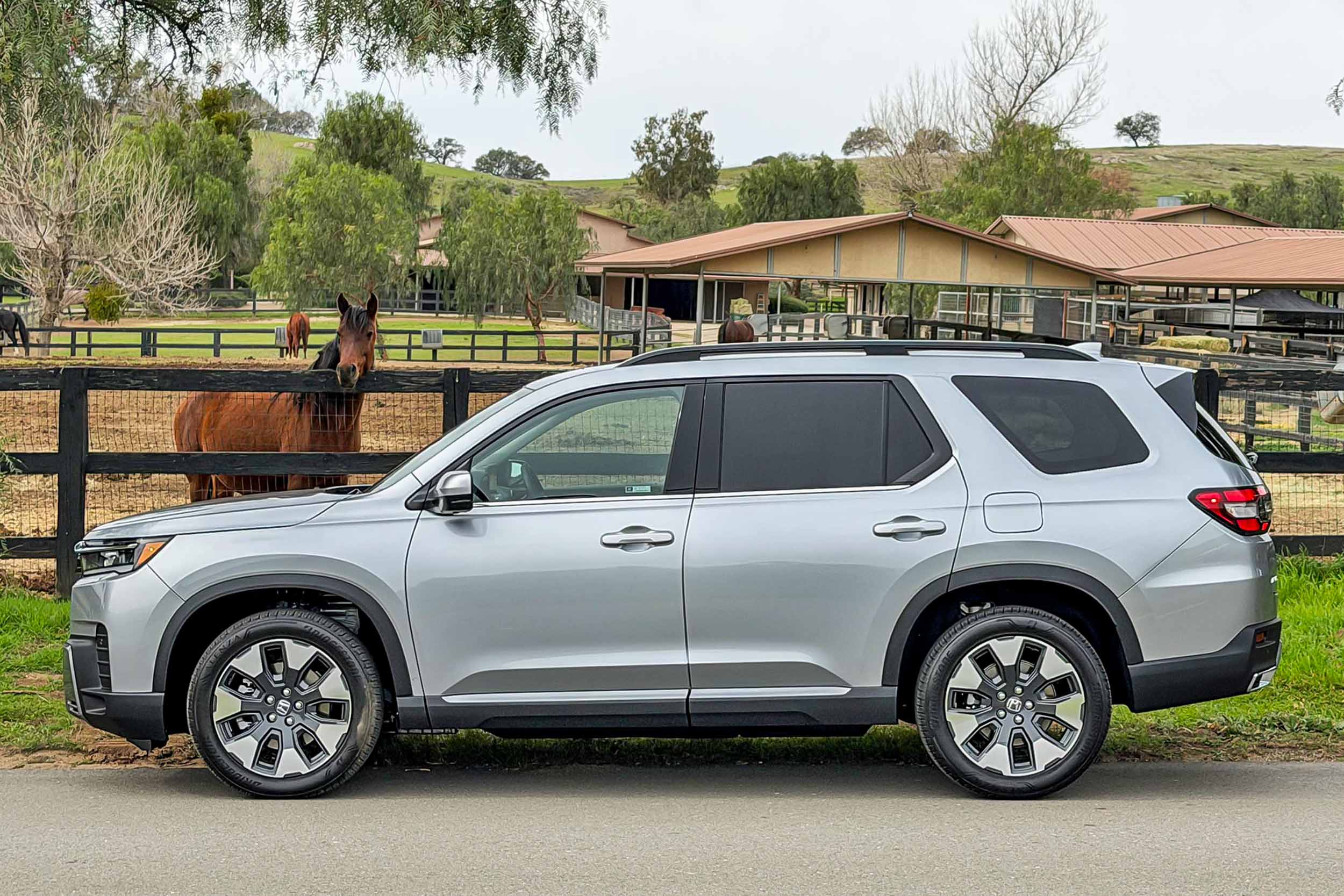
Read the full article here
22 Comments
Exploration results look promising, but permitting will be the key risk.
Good point. Watching costs and grades closely.
Good point. Watching costs and grades closely.
Production mix shifting toward Tactical & Survival might help margins if metals stay firm.
Good point. Watching costs and grades closely.
Exploration results look promising, but permitting will be the key risk.
If AISC keeps dropping, this becomes investable for me.
Good point. Watching costs and grades closely.
Nice to see insider buying—usually a good signal in this space.
Good point. Watching costs and grades closely.
Good point. Watching costs and grades closely.
I like the balance sheet here—less leverage than peers.
Nice to see insider buying—usually a good signal in this space.
Good point. Watching costs and grades closely.
Good point. Watching costs and grades closely.
If AISC keeps dropping, this becomes investable for me.
Good point. Watching costs and grades closely.
Good point. Watching costs and grades closely.
Exploration results look promising, but permitting will be the key risk.
Good point. Watching costs and grades closely.
I like the balance sheet here—less leverage than peers.
Good point. Watching costs and grades closely.