

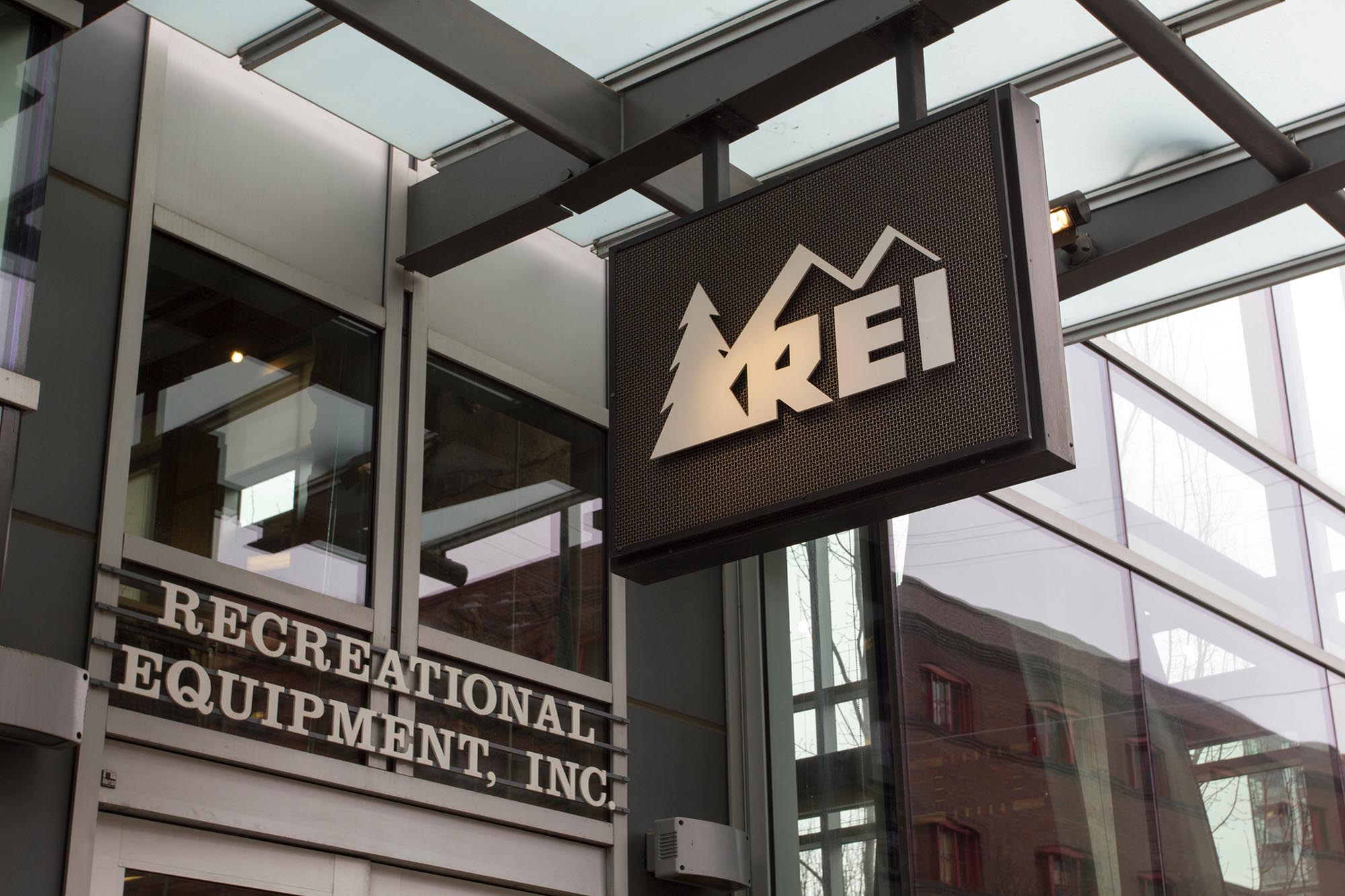
After several years of struggling to turn a profit, REI Co-op will reduce benefits for its employees. The retailer confirmed the news to GearJunkie last week, after Bloomberg reported on an internal memo from REI’s CEO.
Scaled-back benefits include slower accrual of vacation days, switching from guaranteed retirement contributions to a “company match,” and changing sick days from an across-the-board policy to one that “aligns” state by state with what is legally required, according to a memo from REI CEO Mary Beth Laughlin.
REI will also reduce wages for new employees, starting this summer, according to news reports and statements from unionized employees. GearJunkie asked REI to confirm the starting wage cuts, but did not receive a response.
The news prompted REI Union — a group representing 11 unionized REI stores — to announce a boycott of the retailer’s upcoming Anniversary Sale in May. Unionized employees said that REI “walked away” from negotiations in February, and that they would end the boycott if REI agreed to a contract.
An REI spokesperson called the union’s announcement “disappointing.”
“Actions like this aimed at weakening the business can have real, lasting consequences, and put the jobs, wages, benefits, and future opportunities employees depend on at risk,” the spokesperson told GearJunkie in an email. “This certainly seems to undermine the very outcomes the union says it is focused on.”
REI’s Financial Struggles
It’s not clear how much REI will reduce wages for new employees. According to an internal memo obtained by Bloomberg: “Effective July 1, 2026, the salary range will be reduced, which results in a lower starting hourly rate for new employees hired as of that date.”
REI did not immediately respond to GearJunkie requests asking to verify whether the retailer will reduce wages for new employees. Before explaining cuts to benefits, Laughton noted that Summit — an incentive program that increases pay based on performance reviews — would increase to quarterly payments in 2026.
However, Laughton did tell employees that REI’s “financial position remains challenging.”
“We’re still spending more than we bring in and expect continued economic pressure this year,” she wrote. “While we’ve taken significant steps already to manage costs, we’re still on the climb toward a healthy financial position. Getting there will require continued discipline and close attention to our largest expense areas.”
REI has been struggling to improve profitability for years. In January 2025, it shut down REI Experiences, its adventure travel division. The move laid off more than 400 employees, but was necessary because the company was barely breaking even, then-CEO Eric Artz said at the time.
In both 2024 and 2023, REI reported net losses resulting from declining sales. The loss was $156.4 million in 2024 and $311.1 million in 2023, according to REI’s financial reports.
Growing Conflict Between the Union and the Company
REI saw its first store unionize in 2022 — and the movement has been growing ever since. The retailer now has 11 unionized stores that have been in collective bargaining negotiations with company leaders for more than 6 months.
But those negotiations supposedly broke down this spring. The union is accusing company leaders of “broken promises.” That’s why REI Union workers voted to boycott the retailer. The unionized employees also have the support of U.S. Rep. Nikki Budzinski (D-IL), who said she was “proud to stand with REI workers as they fight for fair wages, good working conditions, and respect on the job.”
Some outdoor influencers have also asked supporters to join the boycott.
The union has shown influence in organizing efforts. In May 2025, an REI Co-op election for its board of directors ended without any seats filled. Despite REI’s nominating and governance committee approving three candidates put forth by co-op leadership (two incumbents and one new director) and leaving two union-backed candidates off the ballot, none of REI’s nominees received enough votes to win election to the board.
Regardless, REI slammed the union’s efforts to boycott its Anniversary Sale, which “the vast majority of our employees take pride in supporting,” REI’s spokesperson said. The retailer said that company leaders “strongly disagree with the union’s characterization of recent events.”
“REI believes that real progress comes from focused negotiations at the table and remains ready to continue bargaining in good faith,” the spokesperson said. “We’re waiting on the UFCW to make any counterproposal that might restart talks, given the current impasse that was reached after REI made a last, best, and final offer in January.”
Read the full article here
22 Comments
If AISC keeps dropping, this becomes investable for me.
Interesting update on REI Union Votes to Boycott Anniversary Sale in Response to Benefit Cuts. Curious how the grades will trend next quarter.
Nice to see insider buying—usually a good signal in this space.
Good point. Watching costs and grades closely.
Good point. Watching costs and grades closely.
Uranium names keep pushing higher—supply still tight into 2026.
Good point. Watching costs and grades closely.
The cost guidance is better than expected. If they deliver, the stock could rerate.
Good point. Watching costs and grades closely.
Good point. Watching costs and grades closely.
The cost guidance is better than expected. If they deliver, the stock could rerate.
Good point. Watching costs and grades closely.
Interesting update on REI Union Votes to Boycott Anniversary Sale in Response to Benefit Cuts. Curious how the grades will trend next quarter.
Exploration results look promising, but permitting will be the key risk.
Good point. Watching costs and grades closely.
Good point. Watching costs and grades closely.
Uranium names keep pushing higher—supply still tight into 2026.
Good point. Watching costs and grades closely.
Good point. Watching costs and grades closely.
If AISC keeps dropping, this becomes investable for me.
Good point. Watching costs and grades closely.
Good point. Watching costs and grades closely.