

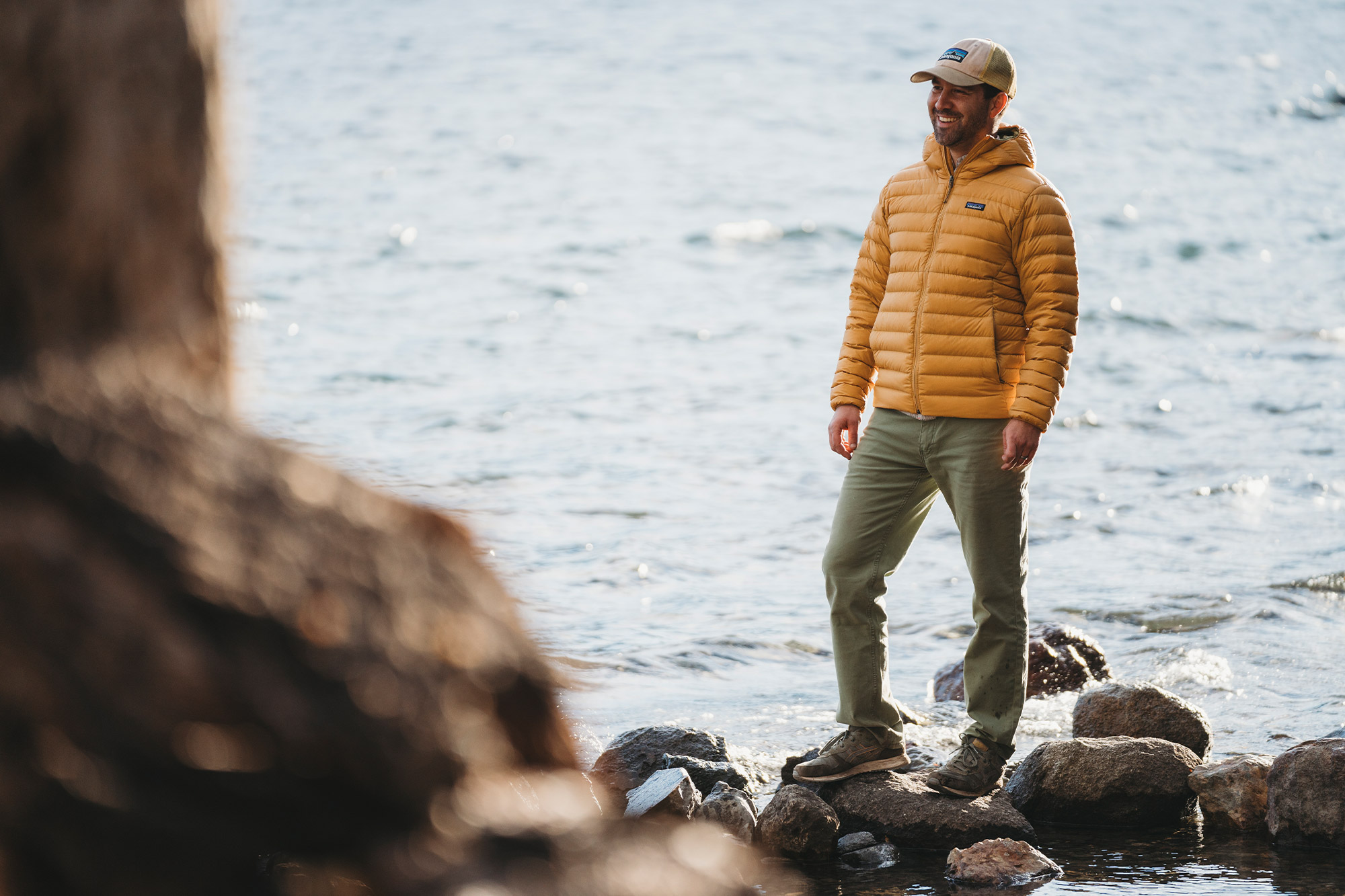
From frozen Teton trailheads to windblown Colorado fourteeners, a high-quality down jacket is a mandatory year-round essential. Spring weather is notoriously fickle; you can be hiking in a T-shirt one minute and facing a 20-degree temp drop the next. Your puffy needs to be light enough to live in a daypack, warm enough for sub-freezing mornings, and tough enough to handle shifting mountain forecasts.
Over the last five years, our team has tested more than 60 models to find the most versatile, adventure-ready options on the market. In the past year alone, authors Ryan Kempfer and Chris Kassar have put over 30 jackets through the ringer—from powder-filled ski tours to shoulder-season desert camps—to see which ones actually hold their loft when the conditions turn.
The Patagonia Down Sweater Hoody remains our gold standard for its near-perfect blend of warmth and durability, while the REI Co-op 650 Down Jacket offers the best value for budget-conscious hikers. Whether you’re chasing high-alpine summits or just need a reliable layer for crisp evenings around town, this guide identifies the best down jackets to keep your core warm in any season.
Editor’s Note: We refreshed this guide on March 8, 2026 by adding the Mountain Hardwear Storm Whisperer as our top pick for wet weather, rewrote every review to improve clarity and usefulness, and updated the comparison chart to help you more easily find the best down jacket for your needs.
The Best Down Jackets of 2026
Best Overall Down Jacket
9.3/10 Rating
Best Budget Down Jacket
6.5/10 Rating
Best Lightweight Down Jacket
7.8/10 Rating
Best Ultralight Down Jacket
8.5/10 Rating
Most Packable Down Jacket
8.2/10 Rating
Best Wind-Resistant Down Jacket
8.3/10 Rating
Best Waterproof Down Jacket
8.8/10 Rating
See more picks
-
Durable, weather-resistance -
Simple, classic style -
Comfortable fit -
Includes 5 total pockets
-
On the heavier side for a technical piece -
Hood snug over helmet
-
Affordable -
Quite durable given the price -
Simple and sleek design looks good around town
-
Somewhat heavy for the lack of features -
Not much adjustability
-
Hybrid insulation design is helpful in wet weather -
Solid warmth-to-weight ratio -
Comfortable, stylish fit
-
Expensive -
No integrated stuff sack
-
Legendary warmth-to-weight ratio -
Packs down ridiculously small -
Breathable -
Recycled fabrics -
Improved hood and cuffs
-
No chest pocket -
Ultralight shell feels delicate
-
Incredibly ultralight -
Very packable -
Impressive warmth in small package -
Pullover style works well
-
Expensive for such a specific jacket -
Delicate outer fabric -
No pockets
-
Exceptional wind and weather resistance -
Durable recycled materials -
Trim, articulated fit with comfortable hood and cuffs -
Warm yet breathable
-
Shell can soak through in sustained rain -
Slightly stiffer feel than standard Microlight
-
Fully waterproof down insulation -
Excellent breathability for a waterproof jacket -
Durable construction -
Functional features including pit zips and interior pockets
-
Expensive -
Not as bombproof as Gore-Tex in prolonged multi-day rain
More Down Jackets That Deliver
-
Lightweight & packable -
Comfortable -
Perfect fit -
Stellar warmth-to-weight ratio -
Solid weather-resistance
-
Excellent warmth-to-weight ratio -
Ultimate mobility -
Keeps you warm when slightly wet -
5 well-placed generous pockets keep necessities accessible -
Packable -
Extremely comfortable
-
Slim fit makes layering underneath difficult -
Soft outer material raises durability concerns -
Pricey
-
Incredible weather resistance -
Durable -
Responsible Down Standard (RDS) certified down -
Large amounts of storage
-
Cozy but not built for supreme warmth -
Not super packable
-
Extremely durable -
No stitches or glue to degrade or restrict movement -
Sheds water and resists winds like no other -
Versatile -
Zippered hand and chest pockets -
Super stylish
-
Heavy -
Not as packable as others
-
Comfortable, soft to the touch -
Stylish -
Perfect fit -
Versatile uses -
RDS-Certified Down
-
Soaked up more water than others -
Average warmth for the weight -
Outer fabric showing wear and tear with little use
-
Packs into its own pocket -
Increased bust circumference on women’s jacket for improved fit -
20-denier ripstop nylon liner
-
Not premium construction for rugged outdoor play
The Best Down Jackets Comparison Chart

How We Tested the Best Down Jackets
We evaluate down jackets based on warmth-to-weight efficiency, weather resistance, durability, packability, fit, and overall value. Each jacket is worn across multiple outings and layered in different systems to assess performance during both high-output movement and static cold. We examine loft retention, moisture management, wind resistance, and real-world usability — from pocket layout to hood function and long-term durability. This guide is continuously updated as new technologies and models emerge.
Our Expert Testers
This guide builds on years of testing. Editor-in-Chief Adam Ruggiero launched the original lineup in 2020, and Senior Editor Chris Carter expanded it through extensive thru-hiking and alpine testing beginning in 2022.
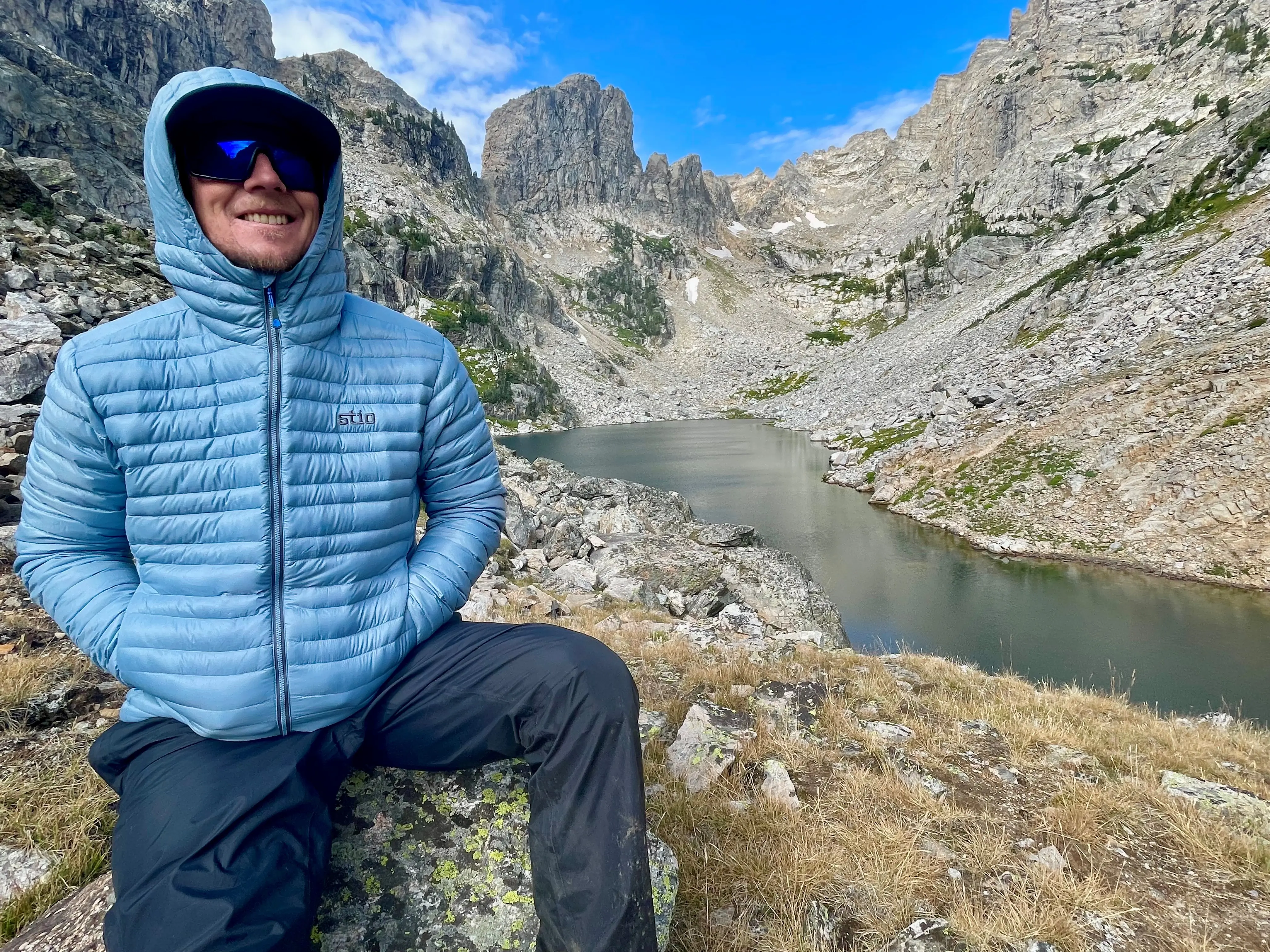
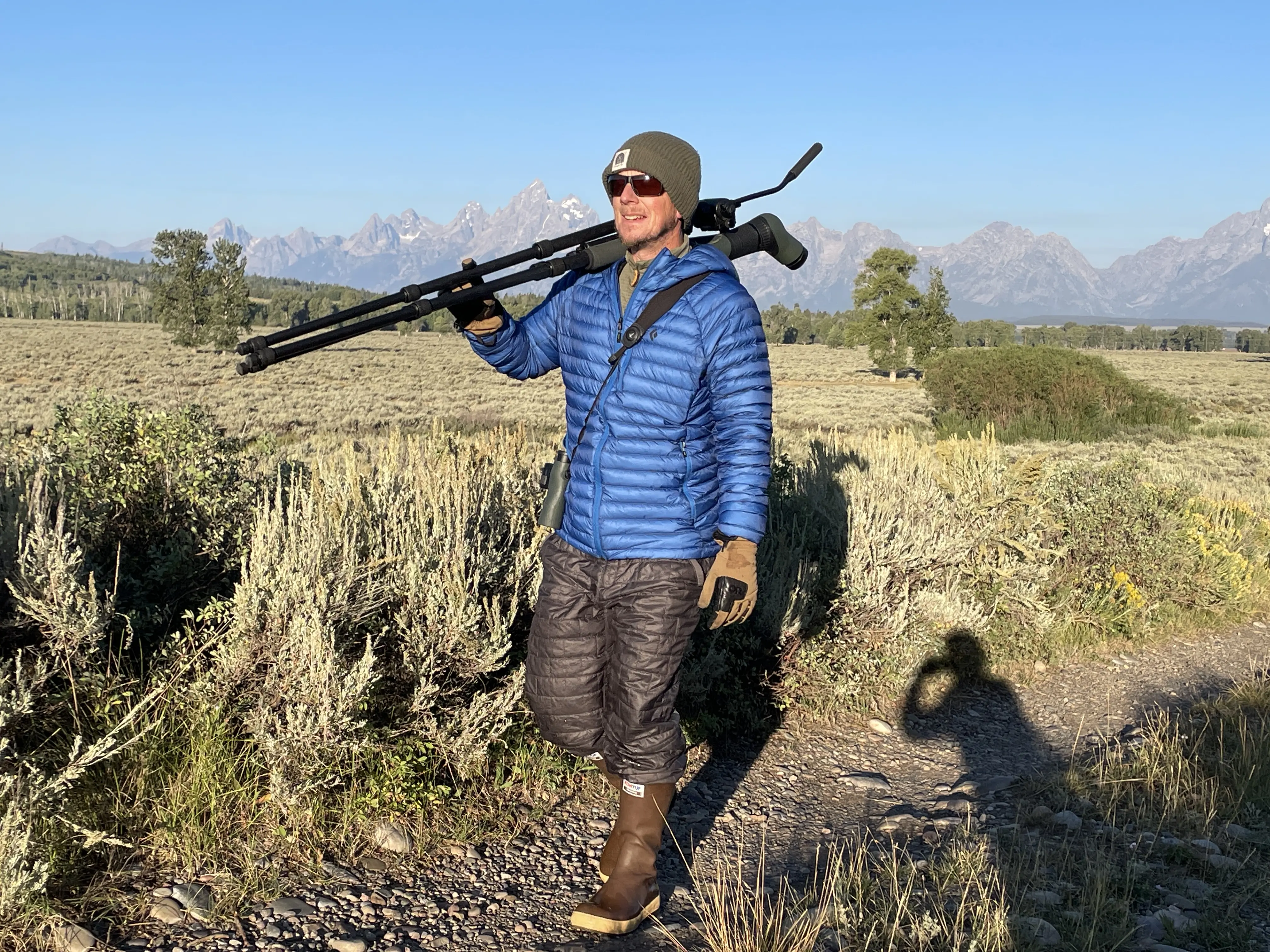
Since 2025, Senior Editor Chris Kassar and lead tester Ryan Kempfer have led the guide from their base in Jackson, Wyoming. As daily mountain users — ski touring, climbing, hiking, biking, and guiding — they evaluate each jacket in demanding, real-world conditions.
Our Testing Grounds & Process
Most of our testing happens in the Tetons and across the Greater Yellowstone Ecosystem. These jackets see storm skiing in wet snow, sub-zero dawn starts, wind-scoured ridgelines, wildlife tours, and shoulder-season hikes. If a jacket can handle a sleet-filled ski tour in Jackson or a windy summit push above 10,000 feet, it earns its place here.
Beyond Wyoming, we’ve tested these layers on Colorado peaks, desert shoulder seasons, and multiday backpacking routes across the West — pushing each model in real mountain weather to understand its strengths and limits. If you’re looking for women-specific recommendations, check out our guide to the best women’s down jackets. For wet climates, check out our guide to the best synthetic insulated jackets. If you’re in the market for something cozy, check out our guide to the best fleece jackets.
Our Down Jacket Rating System
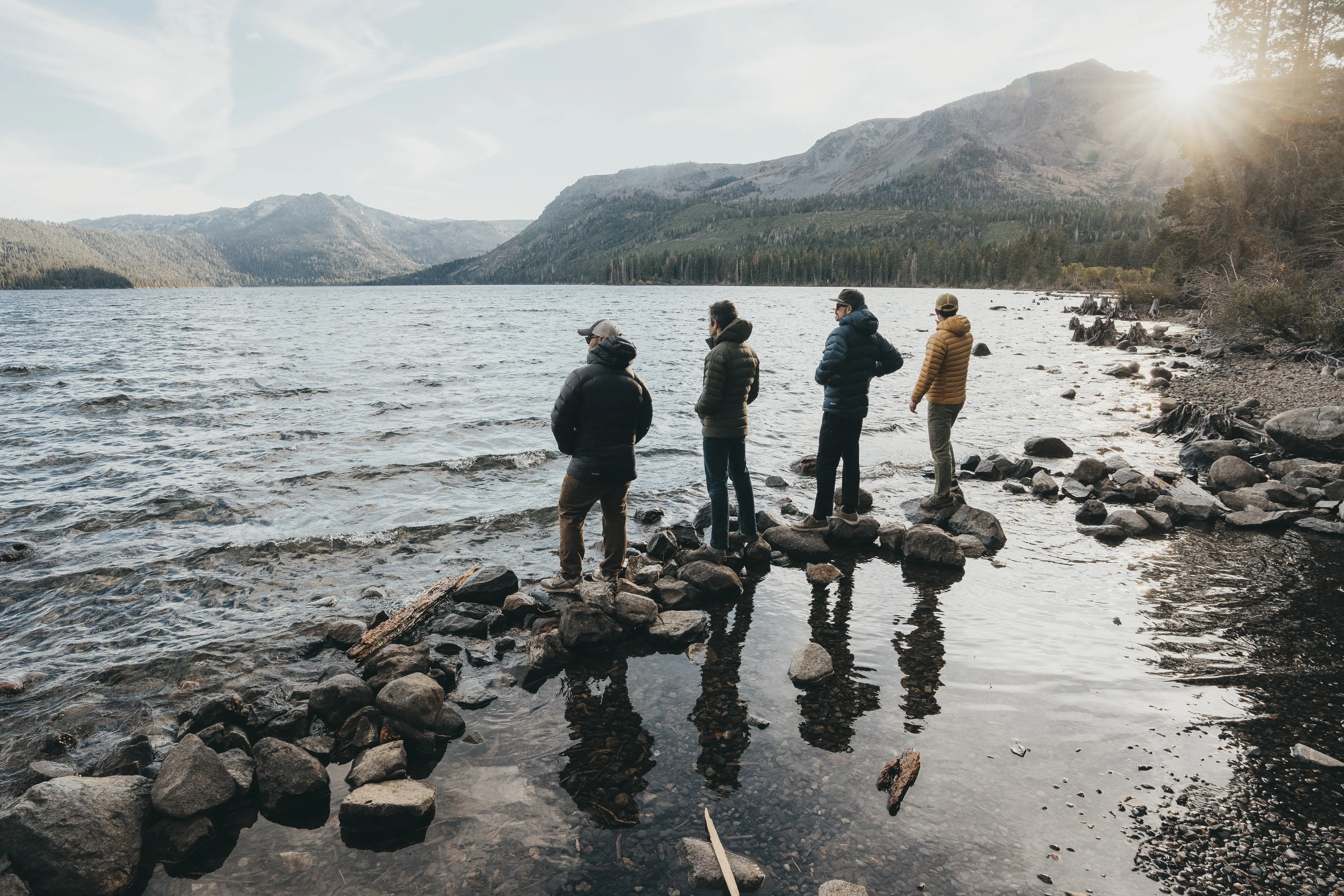
We rated each down jacket on a 1–10 scale for Warmth, Durability, Packability/Weight, and Weather Resistance, along with an Overall score that reflects our editorial judgment rather than an average of the other numbers.
Warmth measures how well a jacket traps heat in cold and windy conditions, factoring in fill power, fill weight, and baffle design.
Durability looks at fabric toughness, construction quality, and how well the jacket holds up over repeated use.
Packability/Weight considers how light the jacket feels and how small it compresses for travel or backcountry storage.
Weather Resistance reflects wind-blocking ability and water repellency, as well as how well the down stays protected from moisture. These ratings are based on extensive real-world testing in conditions ranging from alpine expeditions to shoulder-season hikes, paired with an in-depth review of design features and materials to highlight each jacket’s strengths and trade-offs.

Buyer’s Guide: How to Choose the Best Down Jacket
Understanding Down Warmth: Fill Power vs. Fill Weight
Unlike sleeping bags, down jackets don’t come with standardized temperature ratings, which makes comparing warmth tricky. Most people are familiar with fill power, a measure of down quality and loft, but fill weight is just as important when it comes to real-world warmth.
There are certainly other factors that contribute to a down jacket’s warmth, like baffle shape, design, construction, jacket materials, size, fit, and other features like hood, hem, or cuff closures. All things being equal, however, the down fill power and fill weight will have the most direct impact on a jacket’s warmth.

Fill Power
Fill power measures the loft of down in cubic inches per ounce. Higher fill power means fluffier, lighter, and more compressible insulation:
- 400–500: Fair
- 600: Good
- 700: Great
- 800: Excellent
- 900+: Premium
Higher fill power traps more air per ounce, offering better warmth for less weight. But, fill power is only part of the equation.
Fill Weight
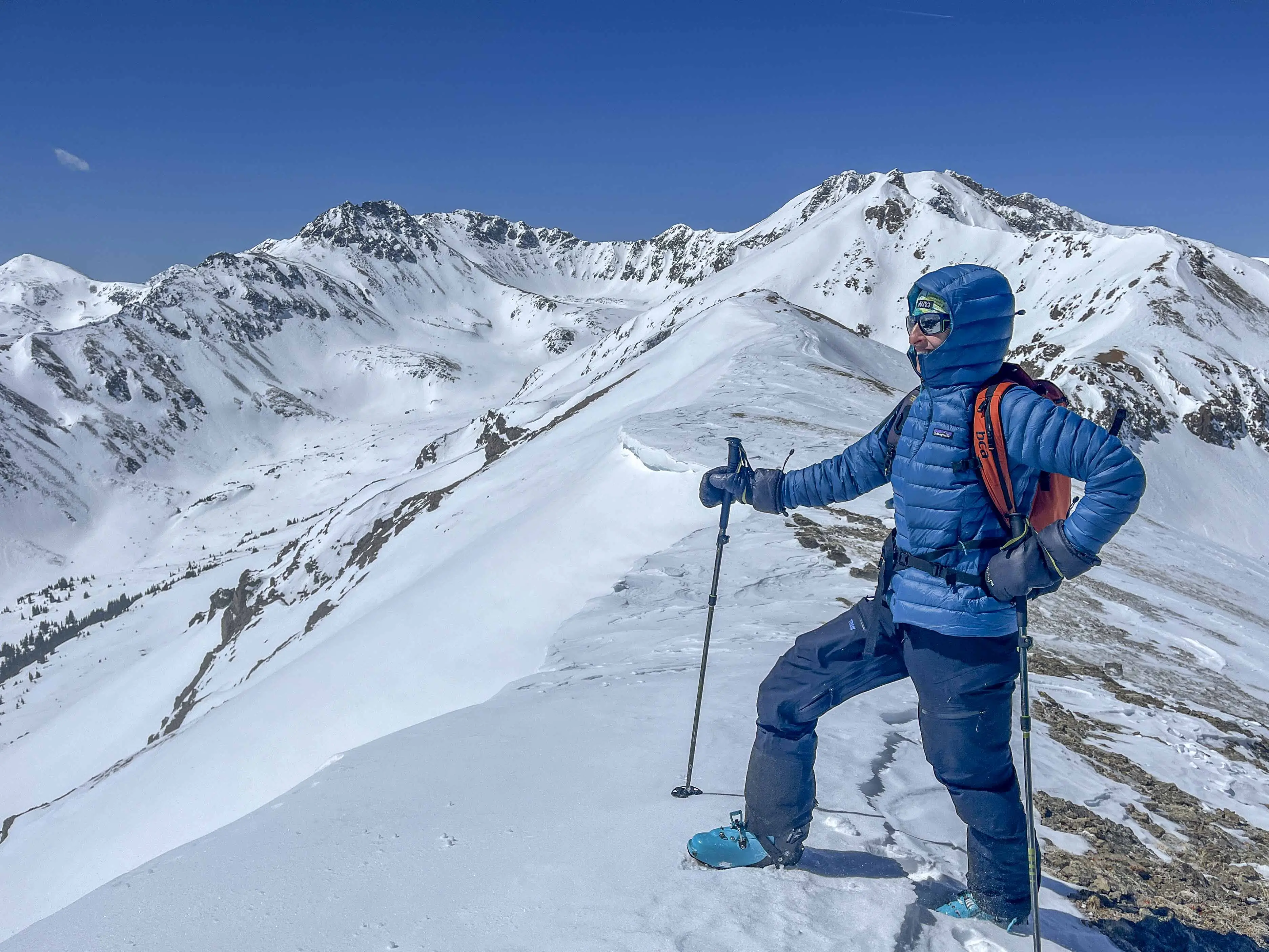
Fill weight is the total amount of down inside the jacket, measured in ounces or grams. To get a reasonable estimate of a jacket’s overall warmth, you can multiply the down’s fill power (expressed in cubic inches per ounce) by the jacket’s fill weight (expressed in ounces), which will yield a number that represents the three-dimensional volume of the jacket’s insulation, or loft, in cubic inches.
On paper, we can, therefore, estimate that the Patagonia Down Sweater Hoody (5.3 ounces of 800-fill-power down) will be warmer than the Feathered Friends Eos (4.0 ounces of 900-fill-power down). Even though the Eos has a higher fill power of 900, the Down Sweater has a higher fill weight of 5.3 ounces.
Patagonia Down Sweater Hoody: 800 cubic inches per ounce x 5.3 ounces = 4,240 total cubic inches of insulation
Feathered Friends Eos: 900 cubic inches per ounce x 4.0 ounces = 3,600 total cubic inches of insulation
While the Eos uses higher quality down, the Down Sweater is warmer overall due to more insulation.
Warmth-to-Weight
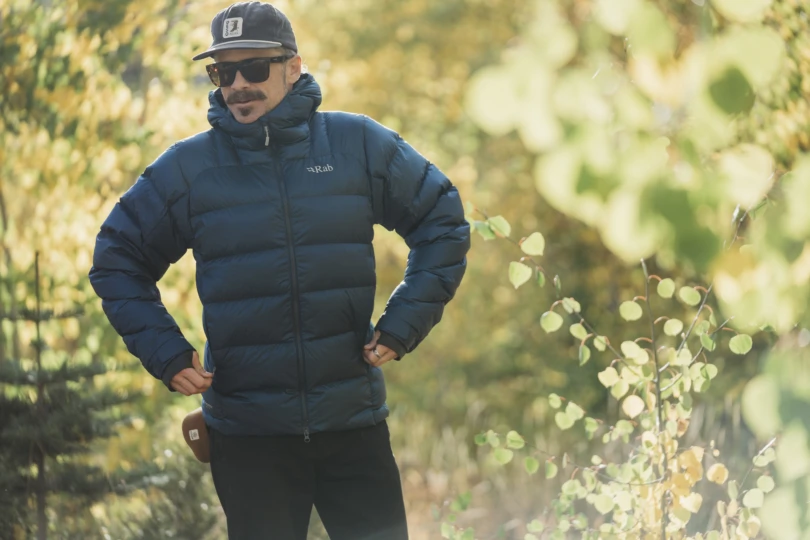
The Eos is lighter (10.8 versus 15.0 ounces), so it offers a better warmth-to-weight ratio. But if you’re prioritizing warmth alone, especially for long belays or cold alpine starts, heavier jackets like the Rab Neutrino Pro (7.5 ounces of 800-fill down) are the way to go.
Lighter jackets like the Mountain Hardwear Ghost Whisperer (3 ounces of 800-fill, total weight 8.8 ounces) are great for fast-and-light missions but fall short in prolonged cold or when you’re standing still.
Fill weight isn’t always advertised as readily as fill power. But, fill weight is — in our opinion — a much more crucial stat to consider when gearing up for any adventure. While other factors, such as face fabric, sewn-through seams versus box baffles, and other features, play a role in how warm a jacket is, a higher fill weight will almost always indicate a toastier puffy. Note: We would like to include fill weight in our specifications for each product, but have found it challenging to find for most products, even when asking brands.
Bottom line: Fill power tells you how efficient the down is. Fill weight tells you how much insulation you’re actually getting. Together, they’re your best indicators of how warm a jacket will be.
Durability
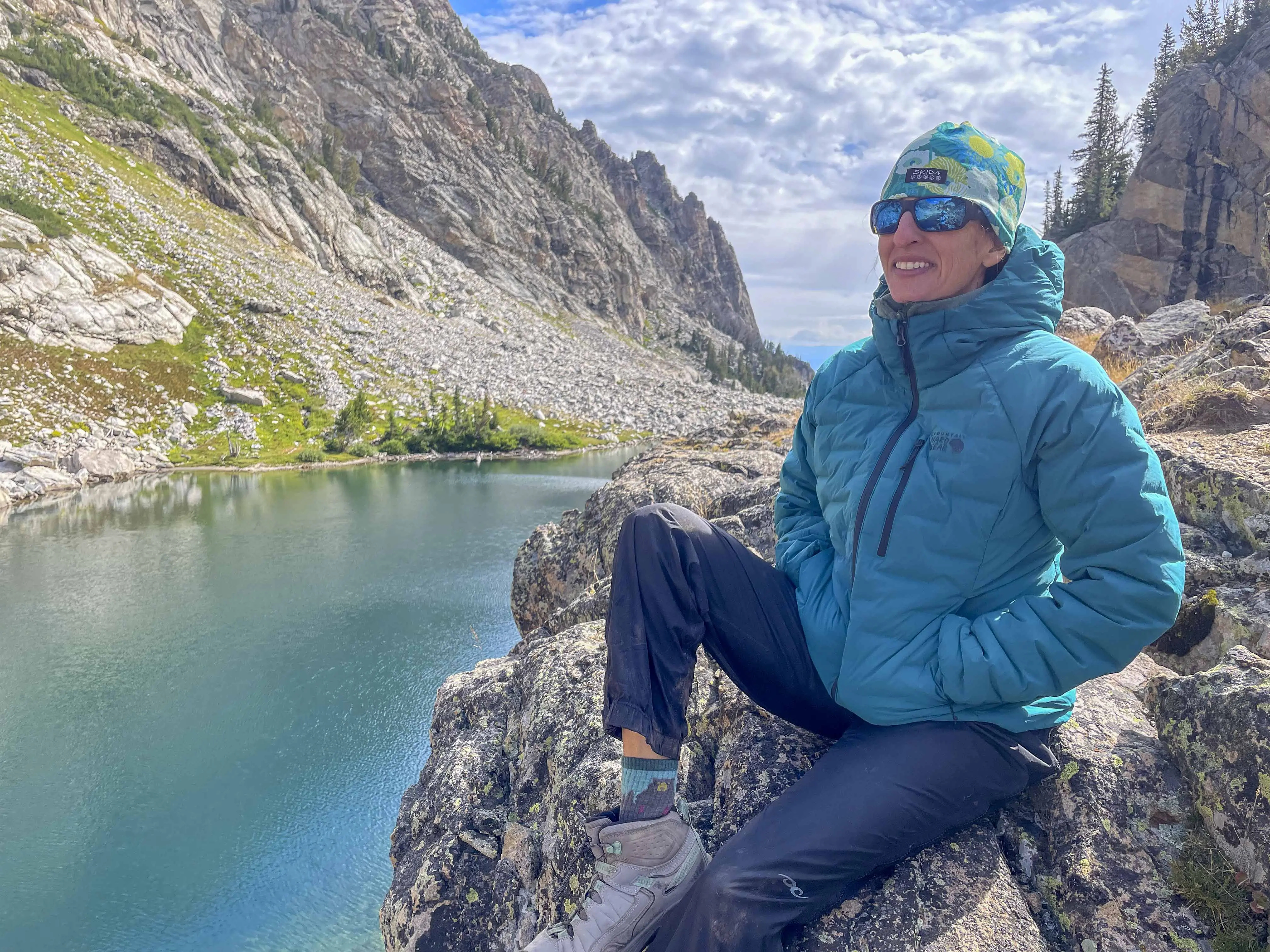
The shell fabric is an important factor for both durability and packability. Ultralight jackets tend to be made with a lighter, thinner shell material. Denier is the measurement used here. A lower denier rating means the outer fabric is lighter and, therefore, more prone to tears.
For backcountry excursions, the lower weight can be a worthy tradeoff. But for daily use, we recommend a higher denier like we see in the Mountain Hardwear Stretchdown Hoody. Most of the jackets we tested have a 10-denier or 20-denier shell fabric, with some 30-denier models. And if you do get a tear or campfire burn hole, there’s always the reliable duct tape, Tenacious Tape, or Noso Puffy Patch repair options.
Most of the jackets we tested have a 10-denier or 20-denier shell fabric, with some 30-denier models.
We categorize these into three distinct performance tiers:
- Ultralight (4D–10D): Includes fast and light pieces like the Black Diamond Deploy and Ghost Whisperer. These are incredibly light but require extreme care around sharp gear.
- Standard (15D–20D): Includes the Arc’teryx Cerium and Patagonia Down Sweater. This is the sweet spot for 90% of mountain users.
- Workhorse (30D): Includes rugged models like the OR Helium and Rab Windstopper, built to handle abrasion from rock and heavy brush.
Water Resistance & Hydrophobic Down
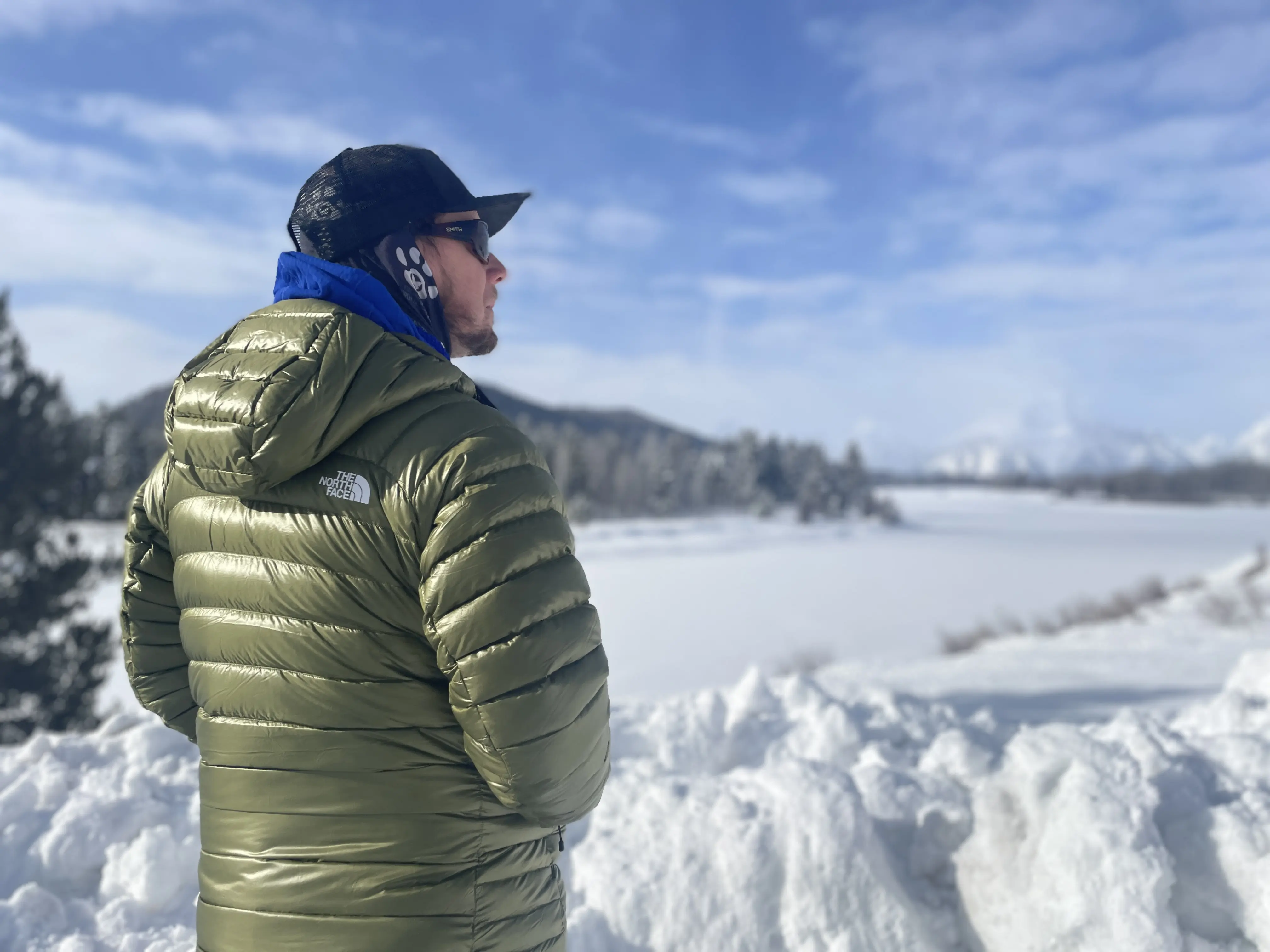
Down insulation has one clear weakness: it loses loft when wet. That’s where synthetic jackets traditionally have the edge. Over the past decade, most brands have moved toward hydrophobic down, coating the feathers with a water-resistant treatment to help them retain loft longer in damp conditions. While this improves performance in light precipitation, it still doesn’t match the moisture resilience of synthetic insulation.
For 2026, however, we’ve seen a meaningful evolution. Rather than relying solely on treated down, some brands are pairing insulation with fully waterproof shells. The Mountain Hardwear Storm Whisperer represents the most complete execution of this approach, combining 800-fill down with a fully seam-taped Pertex Shield shell. The result is a legitimately waterproof insulated jacket that can replace the traditional puffy-plus-hardshell combo in wet climates like the Pacific Northwest or during rain-soaked ski days in the Tetons.
Most down jackets still rely on DWR-treated face fabrics to shed light moisture. Models like the Patagonia Down Sweater use a durable water-repellent finish to block light snow or drizzle, while the he North Face Summit Series Breithorn Hoodie pairs water-resistant ProDown with a treated shell for improved wet-weather reliability. These designs handle passing showers well, but they are not substitutes for a true waterproof system.
Fit: Finding the Right Jacket for the Job
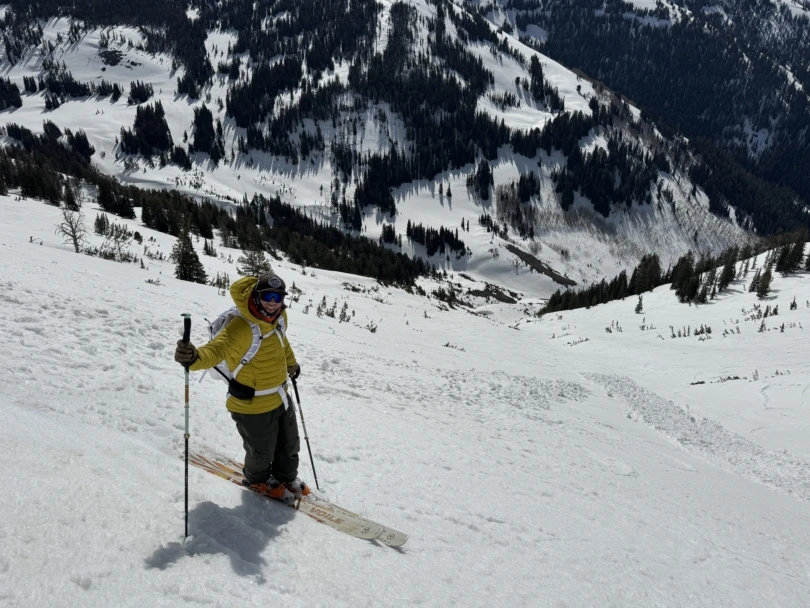
The way a down jacket fits should match how you plan to use it. Some are trim and athletic for layering and mobility, while others are boxier or longer for casual use and added coverage.
Technical Pursuits
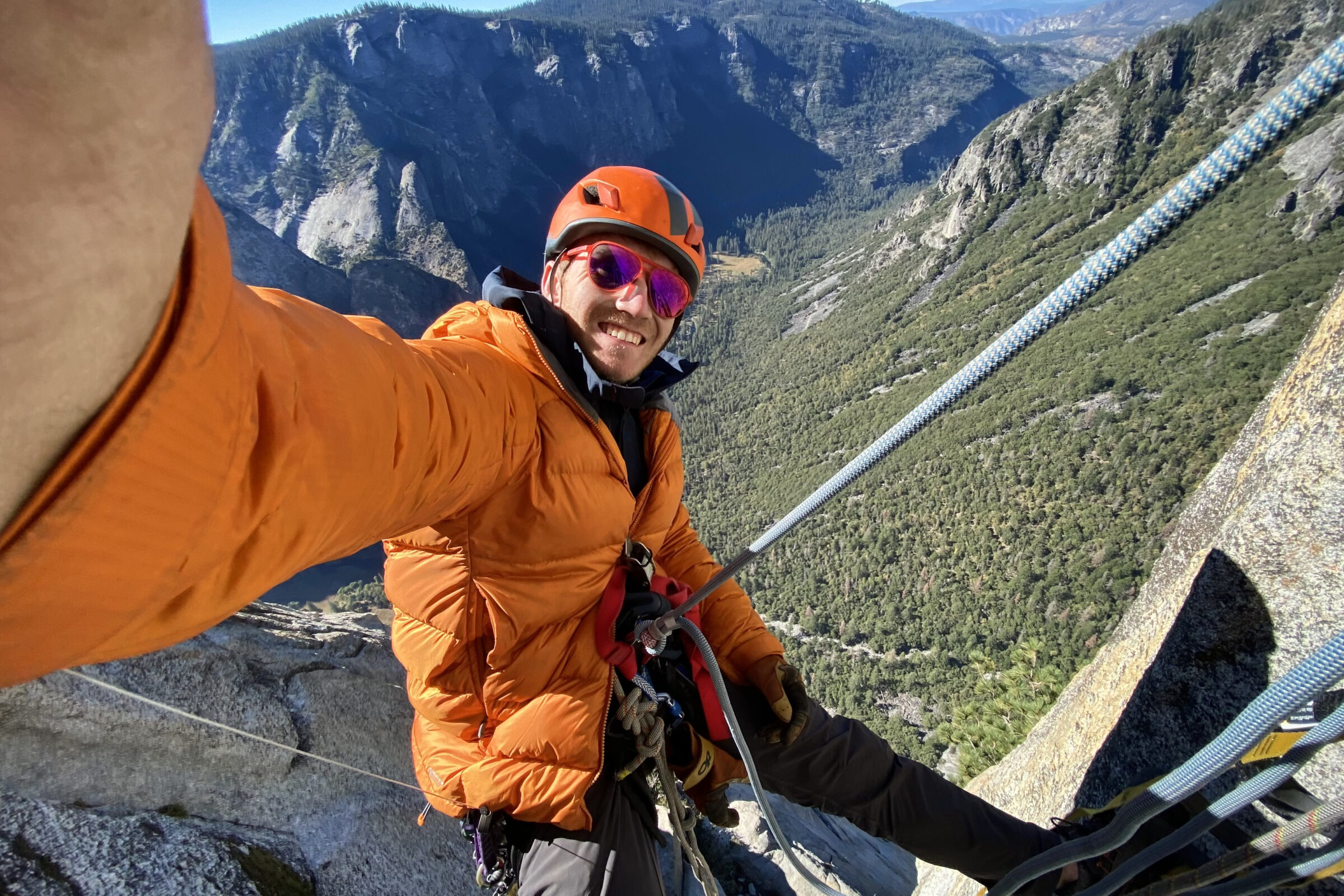
For technical pursuits like climbing, ski touring, or alpine travel, a trim, athletic fit works best. Jackets like the Rab Microlight Windstopper and Black Diamond Deploy Down Hoody are designed with movement in mind. The Mythic Alpine fits close to the body but still allows room for a midlayer, making it perfect for backcountry missions and high-alpine backpacking.
The Deploy Hoody is even more minimal, incredibly light, and form-fitting; it shines on fast-and-light peak pushes where every ounce matters. The ultralight Mountain Hardwear Ghost Whisperer is ideal for day hikes where you don’t want a ton of added weight, but need the protection of an extra layer.
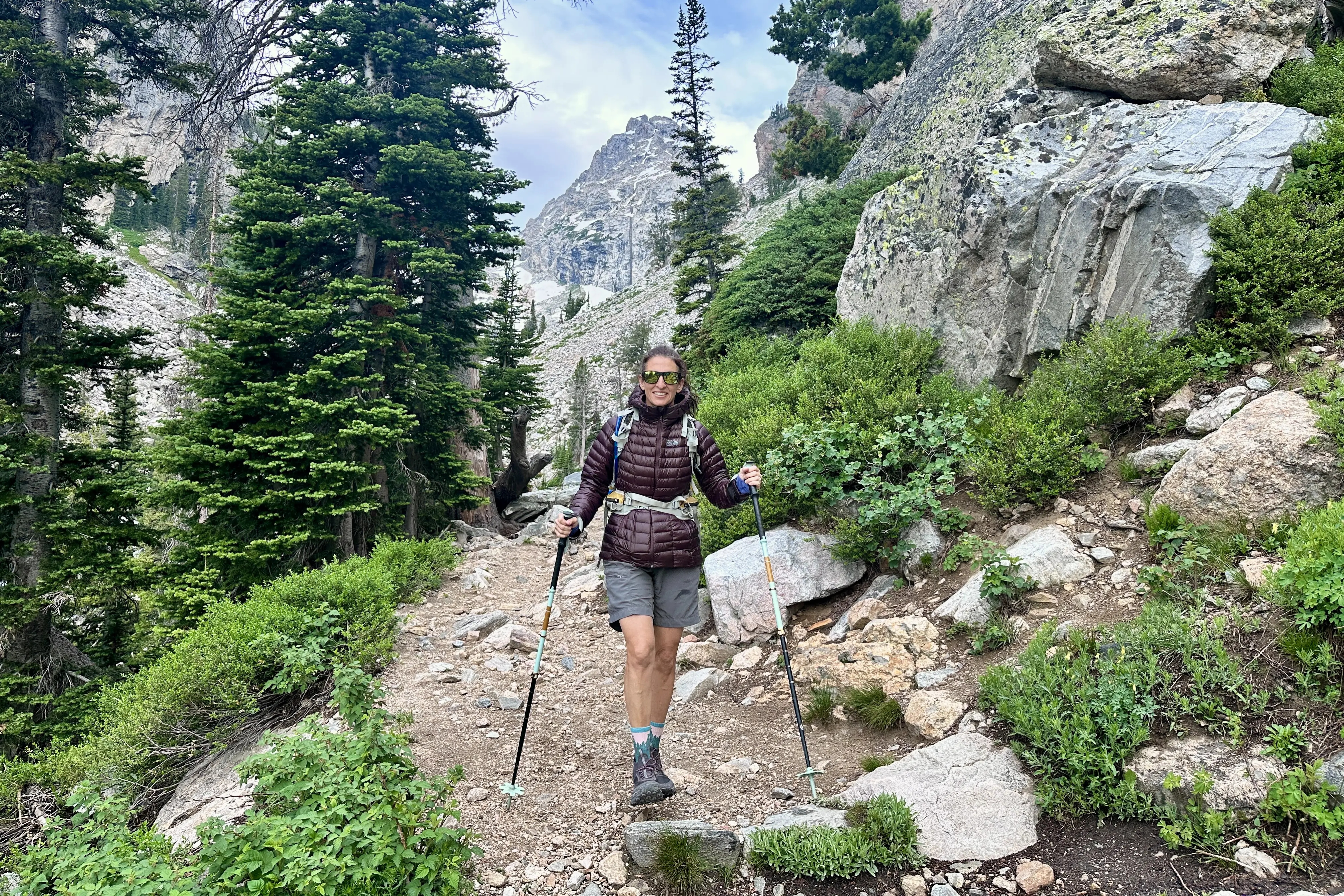
If comfort and mobility are a priority, the Mountain Hardwear Stretchdown Hoody stands out. With its flexible fabric and more forgiving cut, it moves effortlessly through big reaches, shoulder rotations, and scrambles. It’s ideal for hiking, climbing, and everyday wear where breathability and freedom of motion matter.
Trail-to-Town
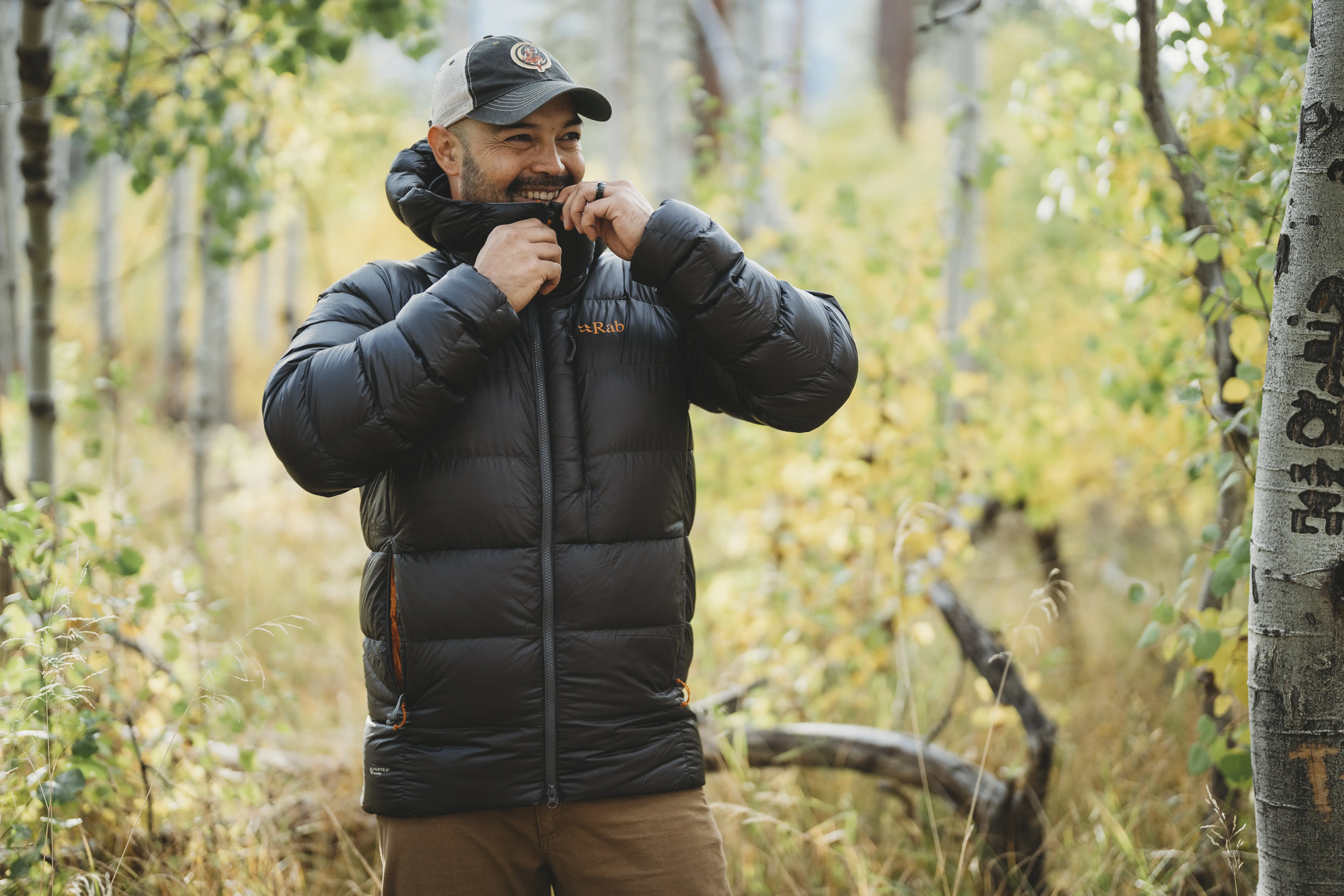
For more casual use or mixed urban-to-trail wear, the Stio Pinion Down Hoody and Cotopaxi Fuego offer relaxed fits with solid warmth and style. Both look good enough to wear around town but are built to handle shoulder-season hikes or winter campouts. The Patagonia Down Sweater Hoody also nails the balance, as it is more fitted than previous versions but still roomy enough to layer, and works equally well on snowy trails or under a shell at the resort.

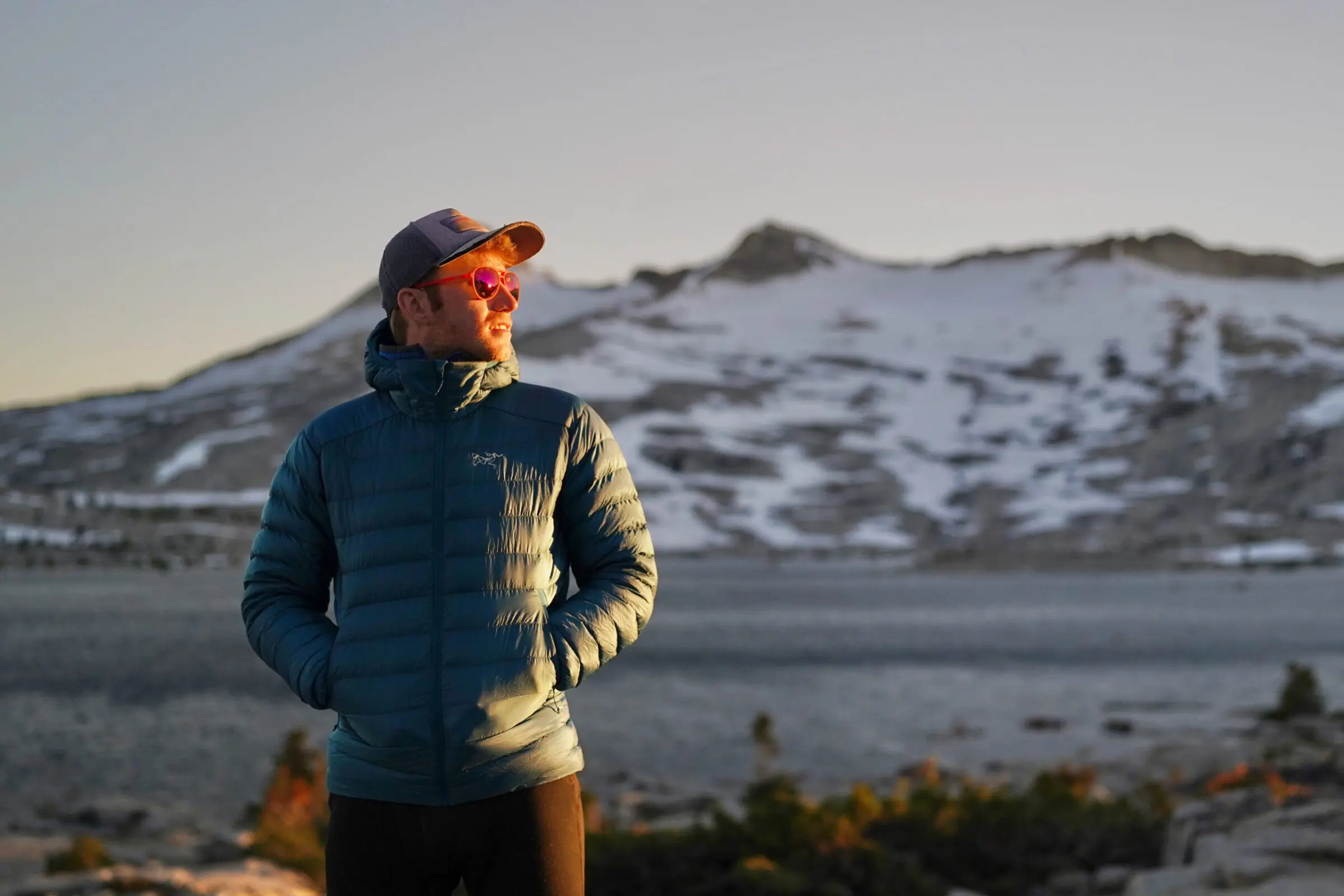
If you’re looking for maximum warmth and space to layer underneath, the Rab Neutrino Pro delivers. It has an expedition-ready fit with extra room in the torso and arms, making it a great belay jacket or outer layer in truly frigid conditions. On the flip side, the Arc’teryx Cerium Hoody has a much trimmer fit, ideal for high-output activities or minimal layering.
Why Fit Matters
Fit also impacts warmth. A jacket that’s too loose will let heat escape, while one that’s too tight might compress the down and limit mobility. Try to find the sweet spot for your body type and activity level, and if in doubt, check whether the jacket is designed as a midlayer, outer layer, or standalone insulator. Whether you’re hiking ridgelines, commuting by bike, or sipping coffee after a tour, choosing the right fit makes all the difference in comfort and performance.
Down vs. Synthetic
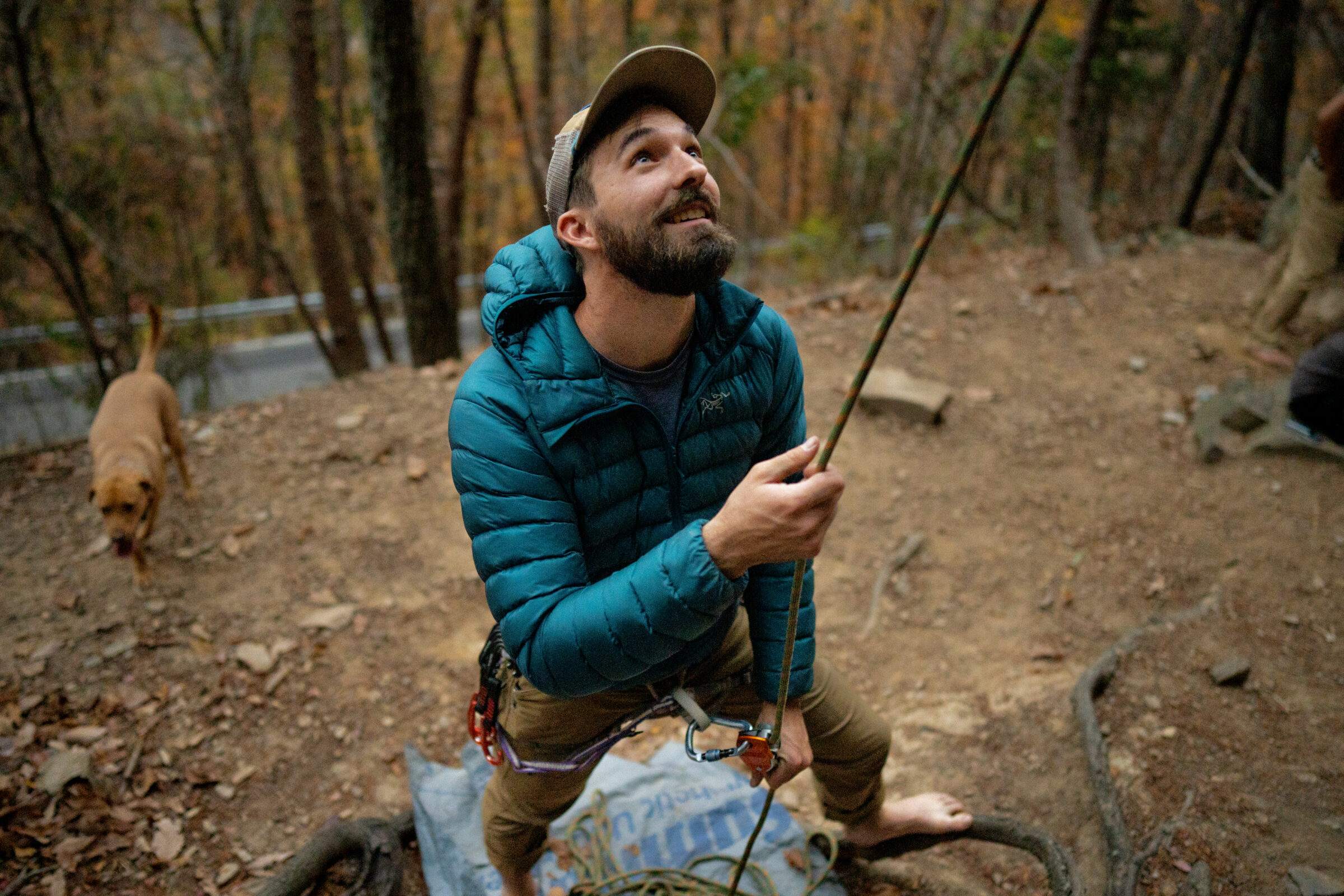
Most of the jackets in this guide are made with down, though a handful are filled with synthetic insulation that mimics down or a blend of the two. For example, both Arc’teryx models we tested, the Cerium and the Thorium, use synthetic insulation in places that tend to get wet, so they stay loftier and keep you warm even when you get wet.
Synthetic insulation, on the other hand, is made from polyester fibers and designed to imitate down clusters and properties with a few key differences. If you compare two jackets of equal weight, down is warmer than this alternative. But synthetic insulation retains warmth even when wet. It’s also easier to wash and usually comes at a lower price point.
- Pros of down: Excellent warmth-to-weight ratio, comfort, compressibility, lightweight, high inherent warmth
- Cons of down: Inability to insulate when wet, not super breathable, more difficult to wash, pricier
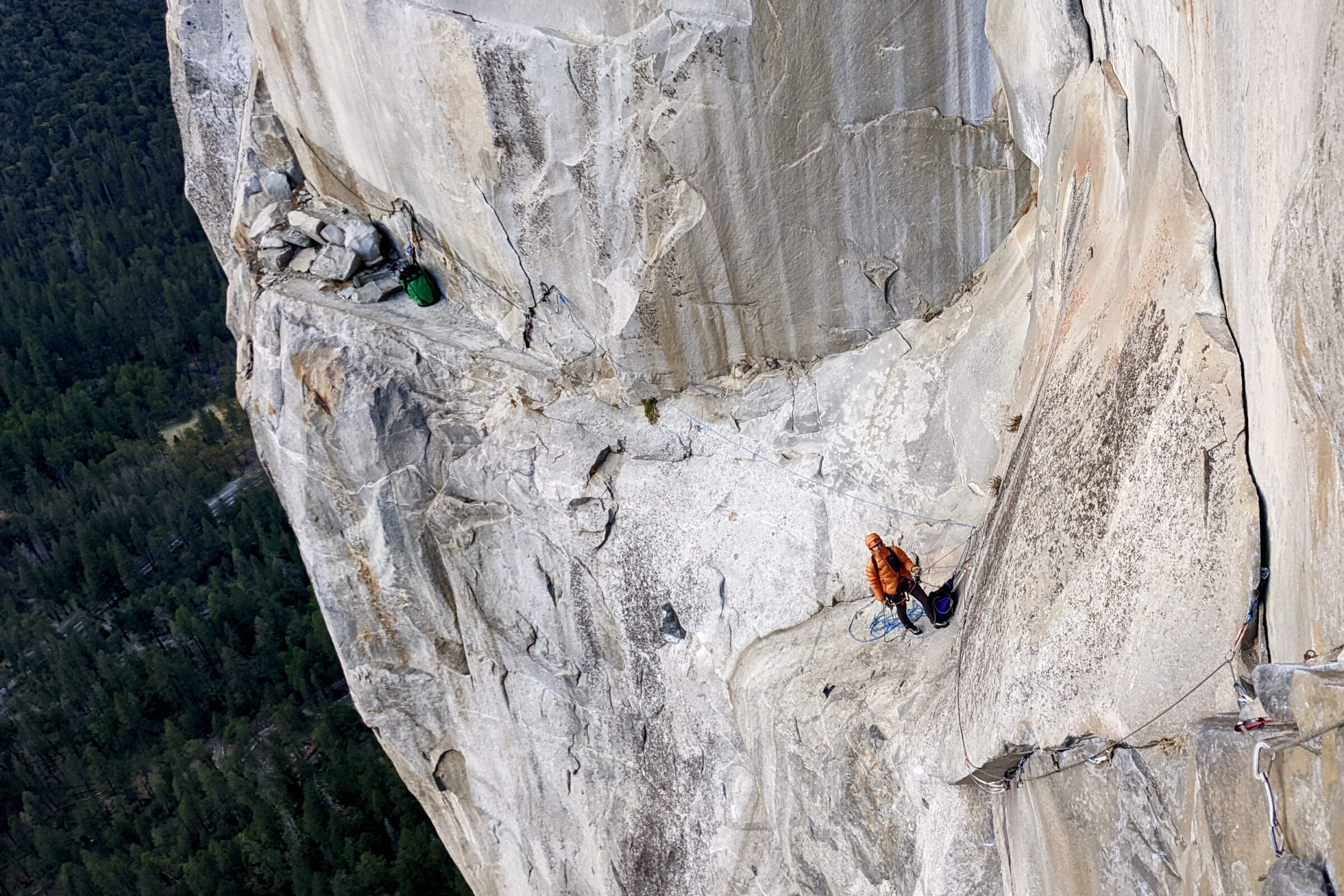
Within synthetic jackets, active insulation is another progressive subcategory to know. These technical garments are designed to dump extra heat and dry fast, so you don’t have to remove the jacket during vigorous activity. But these layers also need to be durable, warm, and wind-resistant. It’s a tricky balance.
Overall, synthetics can be a better, safer choice in wet or mixed weather and when weight isn’t an issue. Active insulation is best for high-output action. If it’s cold and dry, down is optimal despite its higher cost. This guide lists a wide variety of the best down jackets to keep you covered in the cold.
Sustainability
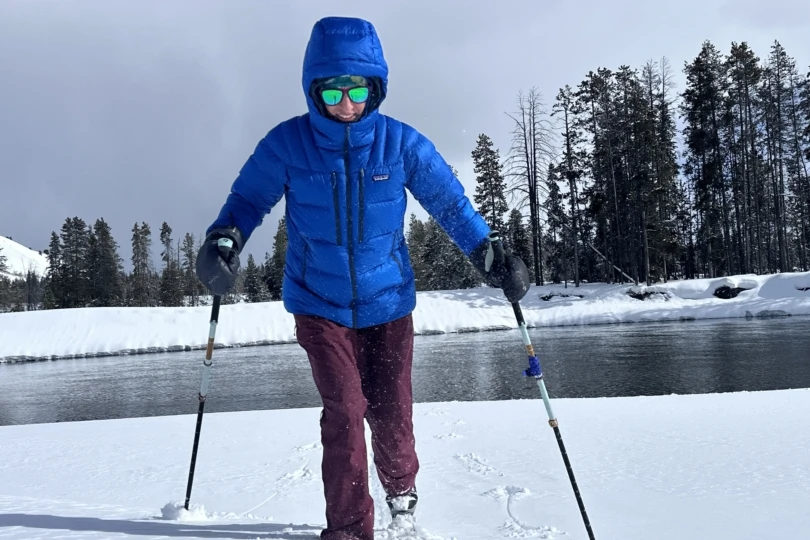
Many down jackets now balance performance with eco-conscious design. Look for certifications like the Responsible Down Standard (RDS) or Patagonia’s Traceable Down to ensure ethically sourced insulation. Without them, animal welfare in the supply chain isn’t guaranteed.
Brands are also stepping up with recycled fabrics, PFC-free DWR coatings, and Fair Trade Certified sewing. The Mountain Hardwear Ghost Whisperer uses fully recycled materials and RDS down, while the Patagonia Down Sweater and Fitz Roy use recycled down and responsible labor practices. These thoughtful choices make it easier to stay warm while minimizing environmental impact.
The biggest manufacturing shift in 2026 is the industry-wide move to PFC-free (or PFAS-free) DWR coatings. Legacy water-repellent chemicals are being phased out for more environmentally friendly alternatives. Brands like Patagonia and Rab are leading this charge. While these new coatings are better for the planet, they require slightly more frequent ‘re-upping’ with a technical wash like Nikwax to maintain that water-beading performance on your jacket’s shell
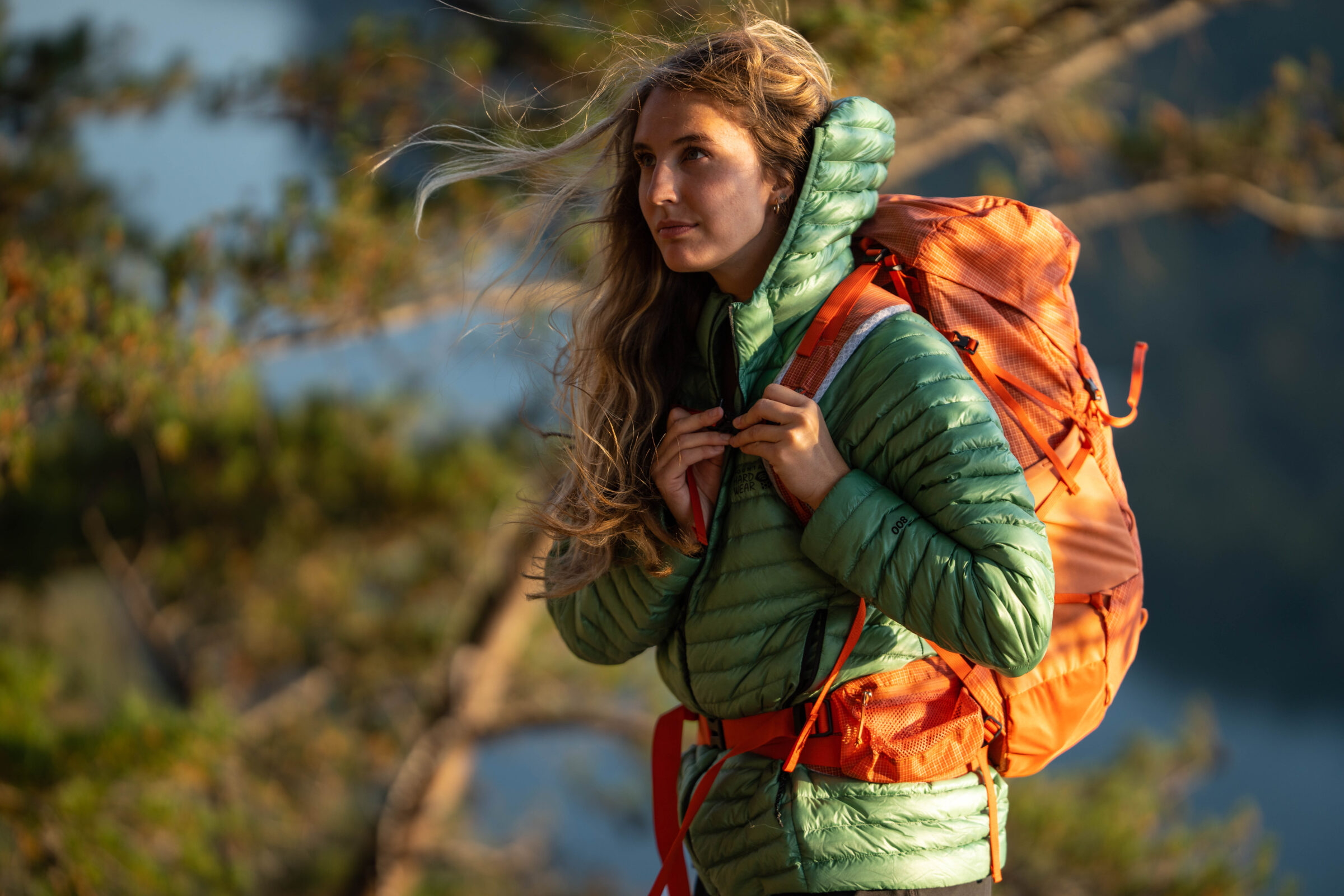
Weight
The down jackets in this guide range from 6.7 ounces at the low end to more than 30 ounces on the heavy side. The median weight is around 15 ounces, and the most common weight is closer to 20 to 23 ounces.
As you might expect, the warmest down jackets are typically also on the heavier end, as the down fill weight has a big impact on overall warmth. This is where fill power comes in. Jackets with a higher fill power can achieve an equivalent warmth level at a lighter overall weight.
The Rab Mythic Ultra, with its 900-fill-power down insulation, really stands out for its excellent warmth for the weight. We weighed the men’s size Large that we tested at 17.4 ounces — and this jacket is as warm or warmer than many others in the 20- to 23-ounce range.
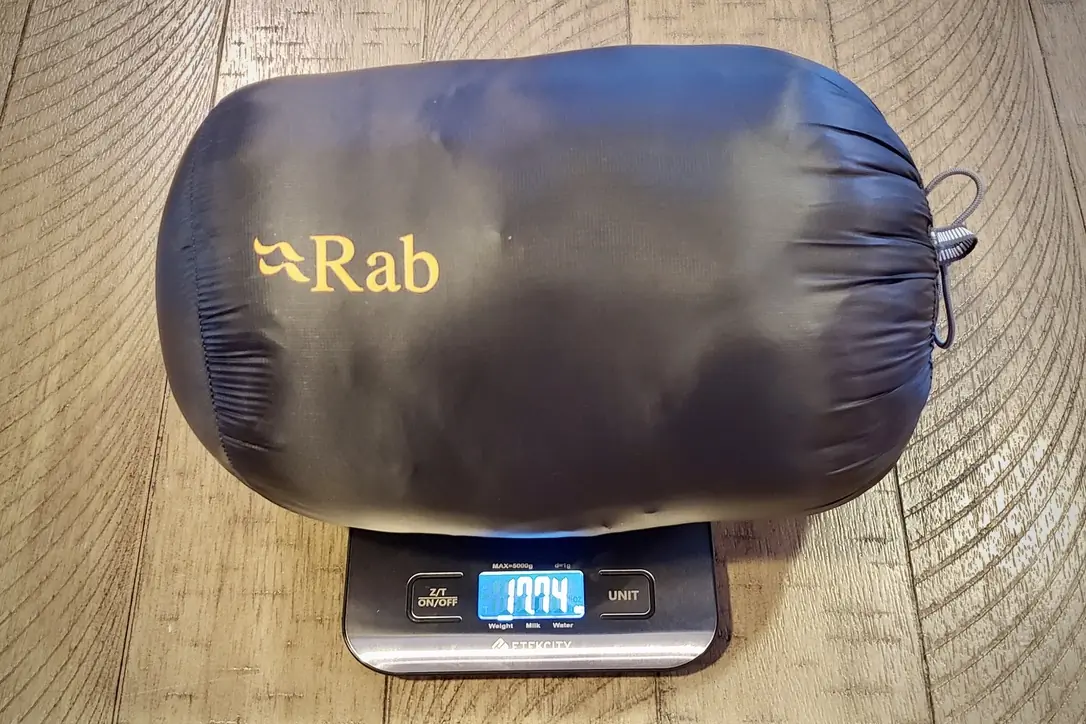
Super-lightweight down jackets typically come with a premium price tag, but the investment can be worthwhile for adventurers with limited space looking to trim ounces. Models like the Feathered Friends Eos strike a solid balance between lightweight simplicity and premium performance.
If speed and efficiency are of utmost importance, jackets like this won’t hold you back. Make sure to research the full range temperatures you will encounter on your trips before leaving, however, and don’t prioritize an ultralight base weight so much that you put yourself in danger.
Storing and Caring For Down Jackets
Some of these down jackets can compress to the size of a water bottle or smaller, while others are bulkier — influenced by the fill, face fabric, and overall design. A tiny pack size can allow you to carry a smaller, lighter load on lightweight excursions, but make sure to not leave your down jacket smushed up for long periods of time. This can greatly impact the down’s lofting and insulating abilities, and reduce the jacket’s overall lifespan.
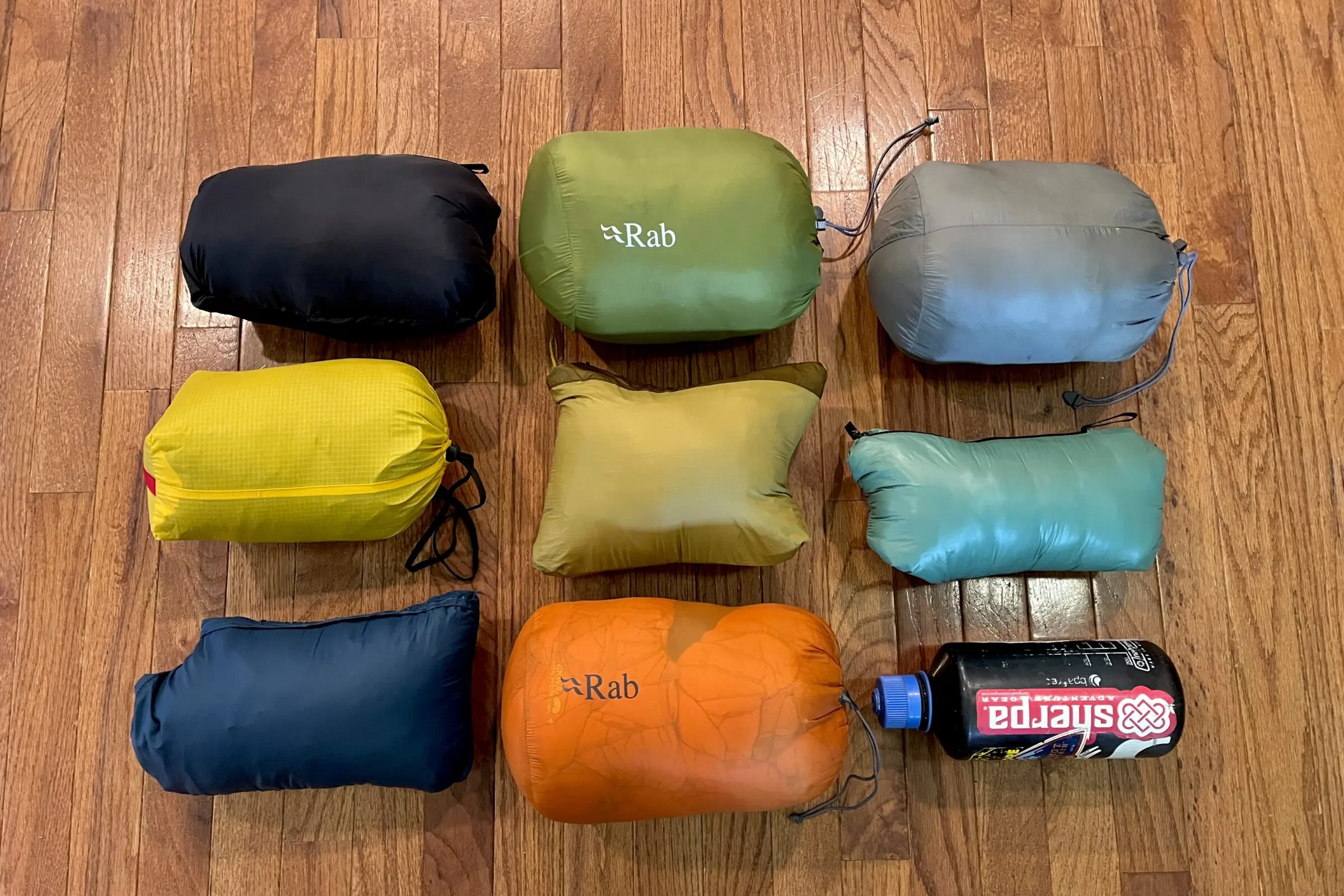
It’s fine to keep your jacket in its stuff sack for one or two days at a time, but try to pull it out of the sack regularly and let it loft up fully over the duration of your trip. When storing your jacket after you get home, hang it in your closet — and don’t mash it too tightly between your other clothes. Washing your jacket with down-friendly detergent can also prolong its life. We gravitate to Nikwax’s Down Wash Direct for this purpose.
Other Key Features
The finer details of a down jacket can have a big impact on performance. Look for helmet-compatible hoods or tall collars for weather protection, and wire-brimmed hoods for improved visibility in wind and snow. High-quality zippers (like YKK), adjustable hems, and secure cuffs — whether elastic, Velcro, or with thumb loops — help seal in warmth.
Most jackets include zippered hand pockets, often placed high for harness compatibility, along with chest or internal stash pockets. Some stuff into their own pocket for easy packing. Technical options may also offer pit zips, powder skirts, or two-way zippers for belaying.
These small features add up, especially when you’re active in the mountains or layering up for cold-weather missions.
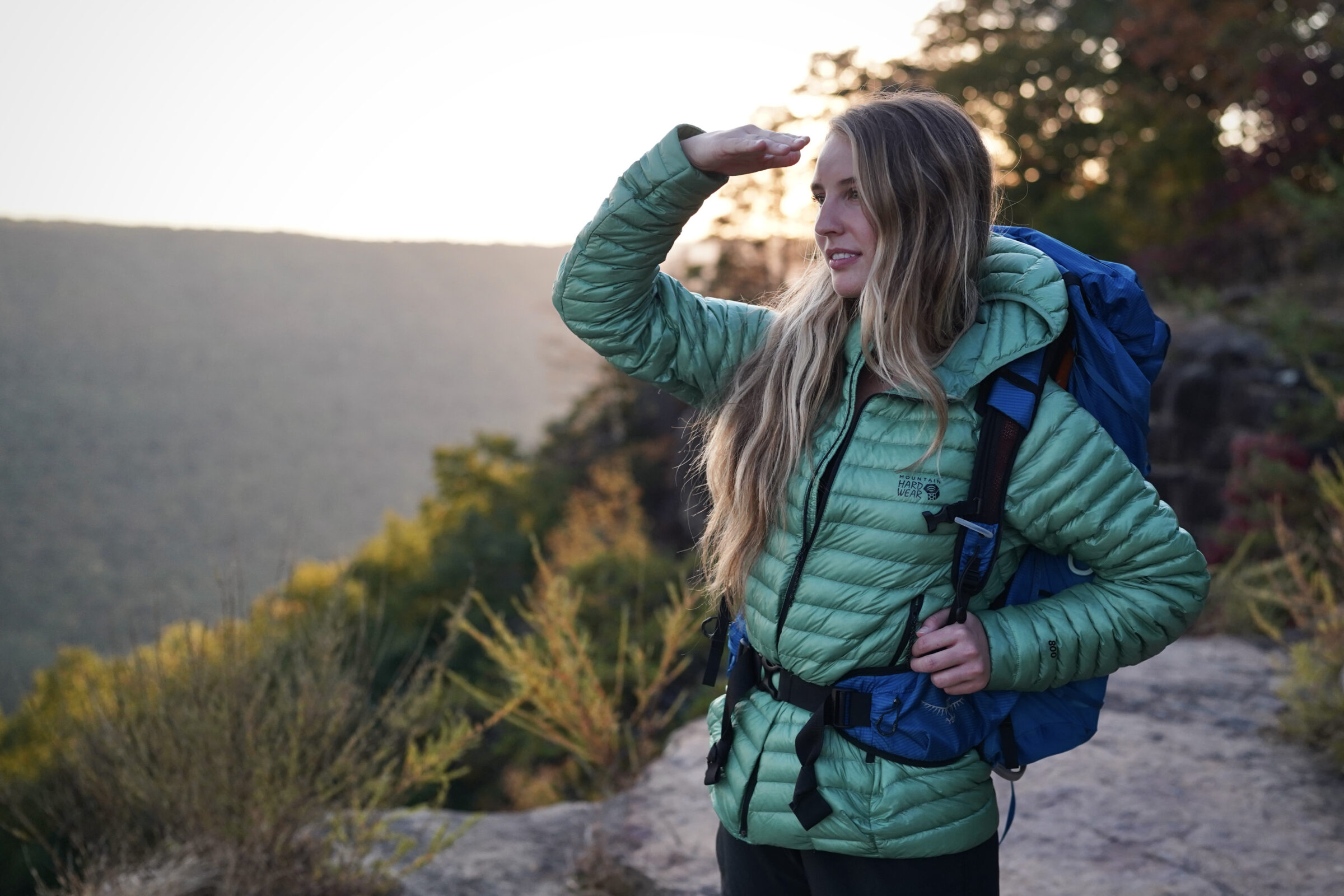
Price & Value
It’s easy to spend $300–$600 on a down jacket, and that’s no small investment. To help you navigate the cost, we’ve broken the market into three clear tiers:
Budget ($150 or less)
There aren’t many options in this category. If you’re regularly packing into the backcountry, an ultralight, super-packable, rather expensive jacket may be necessary. If you’ll mostly wear it around town or for light trail use, the REI 650 Down Jacket ($129) is the gold standard for value.

Mid-Tier ($250–$400)
This is the sweet spot where you find high-quality 800-fill down and technical shell fabrics. Top picks like the Patagonia Down Sweater ($329), Rab Microlight Windstopper ($340), and Outdoor Research Helium ($299) fall squarely in this range.
Premium
These are specialized tools designed for high-alpine efficiency or extreme weather. The Arc’teryx Cerium ($400), Black Diamond Deploy ($550), and our top waterproof pick, the Mountain Hardwear Storm Whisperer ($600), define this elite tier.
Frequently Asked Questions
A down jacket holds heat around your body’s core in order to maintain a comfortable level of warmth when the temperatures drop. A spectrum of down jackets exists from plush and stylish for everyday use to lighter, packable designs for year-round backcountry adventures.
A jacket’s fill power is the down’s quality and amount of loft. You’ll see jackets labeled as 600-fill or 800-fill, for instance. The fill weight, which we measure in ounces, reflects the density or amount of down stuffed inside the jacket.
So when two 700-fill jackets have different weights, we know the heavier one is warmer.
On the other hand, if two down jackets weigh the same with different fill power (two 15-ounce jackets with 650-fill and 800-fill), the higher fill jacket is going to be less bulky, lighter, and more compressible.
It’s tricky to compare jackets with differing fill power. But in general, the lower the fill power, the less loft and warmth.
Down jackets have a huge variance of warmth. Some jackets are constructed to withstand freezing or sub-zero temperatures, while others are a match for summer, spring, and fall backpacking trips. Here are the broad categories of jackets, depending on their fill weight:
- Lightweight: 3-4 ounces of down fill, three-season jacket, skiing midlayer
- Moderate weight: 5-6 ounces of down fill, more warmth for sub-freezing temperatures
- Heavyweight: More than 6 ounces of down fill, tenacious design for winter conditions
The combination of the fill weight and fill power, which is the loft and quality of the down, changes how warm a jacket is. The higher the fill power and higher the weight, the more heat the jacket retains.

The best down jacket for you is based on where and how you’ll use it. If the weather is relatively dry and super cold, a down jacket with greater down fill that will retain more heat could be worth the investment. If you’ll be in a really wet environment, a synthetic down jacket might be a better choice.
We tested the best women’s down jackets, from hefty technical layers to lightweight puffers, including Rab, Patagonia, Mountain Hardwear, Arc’teryx, and more.
We tested the best synthetic insulated jackets from Arc’teryx, The North Face, Patagonia, and more to help you find the best option for your needs and budget.
Read the full article here
20 Comments
If AISC keeps dropping, this becomes investable for me.
I like the balance sheet here—less leverage than peers.
Silver leverage is strong here; beta cuts both ways though.
Uranium names keep pushing higher—supply still tight into 2026.
Uranium names keep pushing higher—supply still tight into 2026.
Good point. Watching costs and grades closely.
Good point. Watching costs and grades closely.
Exploration results look promising, but permitting will be the key risk.
Good point. Watching costs and grades closely.
If AISC keeps dropping, this becomes investable for me.
Good point. Watching costs and grades closely.
Good point. Watching costs and grades closely.
Interesting update on The Best Down Jackets of 2026. Curious how the grades will trend next quarter.
I like the balance sheet here—less leverage than peers.
Nice to see insider buying—usually a good signal in this space.
Good point. Watching costs and grades closely.
Good point. Watching costs and grades closely.
Silver leverage is strong here; beta cuts both ways though.
Good point. Watching costs and grades closely.
Good point. Watching costs and grades closely.