


Nissan’s first plug-in hybrid Rogue might look familiar. We’ve known for some time that Nissan was planning a more fuel-efficient version of its bestseller.
We also knew that it would get its PHEV tech from its alliance with Mitsubishi. But, we did not realize just how much more the 2026 Nissan Rogue PHEV would get from that Mitsubishi plug-in hybrid model.
A Great Place to Start From
Yes, the elephant in the room is that this is a Mitsubishi Outlander with some Nissan badges. But it will bring a new choice to the market. And for Nissan, adding a PHEV to its lineup is a big deal. The more fuel-efficient models with a short electric range are becoming extremely popular as buyers want to spend less on fuel but don’t want the compromises of a fully electric model.
It’s not related to the gas Rogue at all, but the similarities between this Rogue PHEV and the Outlander are more than skin deep. The 2026 Nissan Rogue PHEV starts with a 2.4L engine and two electric motors. The motors drive the vehicle, with the engine only helping in limited situations.
38-Mile Range, Excellent AWD

This system makes for a very efficient drive. Nissan says it should deliver 38 miles of electric range. Run the gas tank and the battery both down to nothing, and you should have covered 420 miles.
It’s also very effective in bad weather conditions. The standard AWD system is incredibly capable on slippery roads thanks to the two-motor system.
Total power output is 248 horsepower and 332 pound-feet of torque. That should make it much quicker than the 201 horsepower and 225 pound-feet of torque of the gas-only Rogue and its 1.5L three-cylinder.
A 9-inch center screen is standard. It won’t have Google built in like the gas Rogue, but it will have wireless Apple CarPlay and Android Auto. A 12.3-inch digital dash is standard, while top trims add a 10-inch head-up display and Bose audio.
2026 Nissan Rogue PHEV Gets More Seats, Less Space
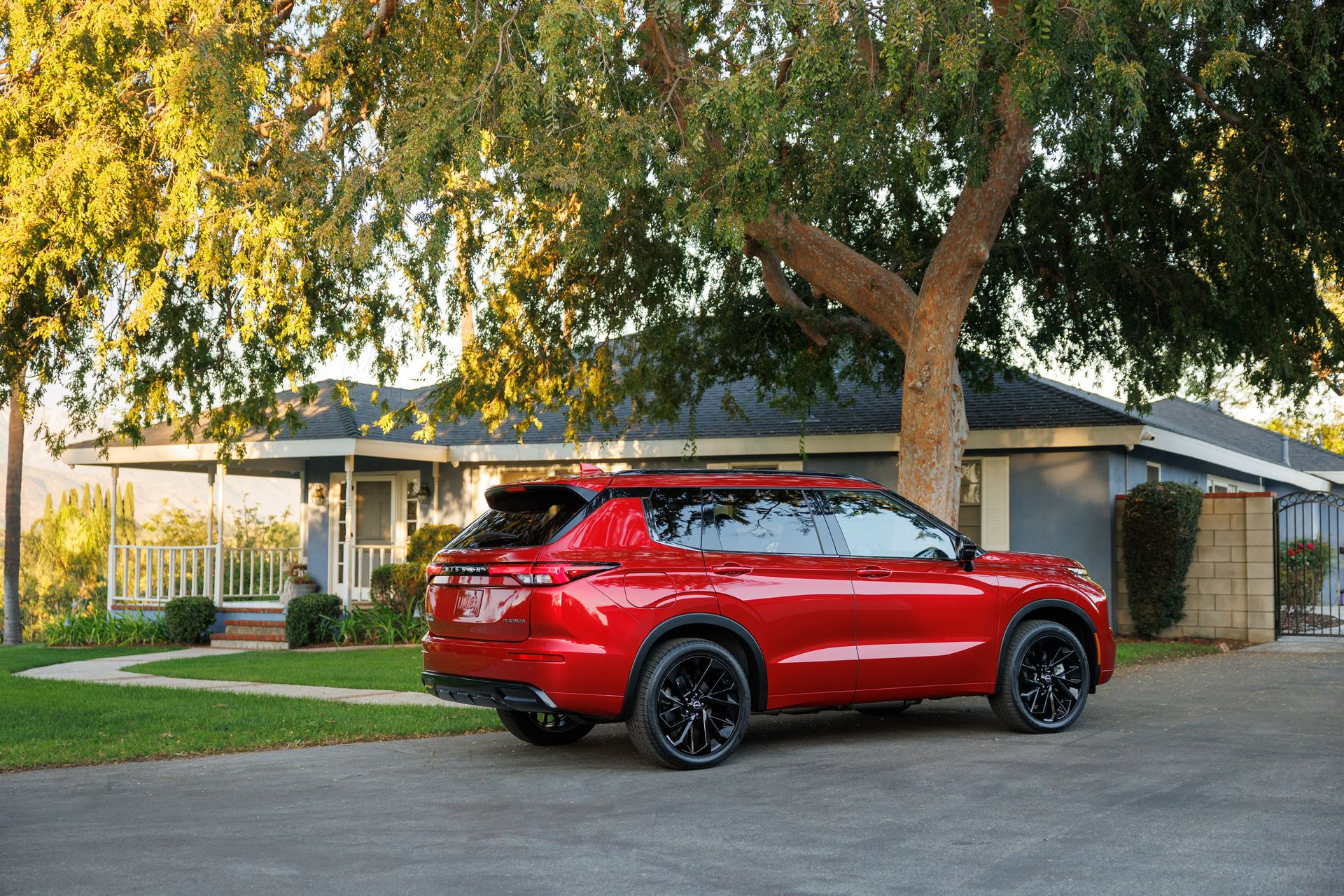
The 2026 Rogue PHEV will offer seating for seven in three rows, while the gas-only model only holds five. That seating, though, won’t let you haul more cargo inside. The Rogue PHEV can hold 12.8 cubic feet behind the third row or 30.8 with those seats folded. The gas Rogue holds 31.6 cubic feet. With the seats down, the PHEV holds 64.7 cubic feet, but the standard model holds 74.1.
Nissan says it is tall enough to hold a mountain bike inside, which is handy.
Nissan will offer two grades of Rogue PHEV for 2026. The SL model includes heated front seats and a leather wheel. Platinum adds a head-up display, Bose audio, leather seats, a heated wheel, and a panoramic roof. It will be sold alongside the non-hybrid 2026 Rogue, which will offer six grades and the option of front or all-wheel drive.
The 2026 Nissan Rogue PHEV will be revealed at the L.A. Auto Show this week. Expect it to arrive at Nissan dealers in early 2026. Nissan hasn’t announced pricing, but expect it to start well north of $40,000.
Read the full article here
23 Comments
While the design might be a turn-off, the technology inside could sway buyers. Will it be enough to boost sales?
If the Rogue PHEV borrows too much from the Outlander, will it affect Nissan’s brand identity? Nutrition It’s a risk worth taking if it improves efficiency.
The 2.4L engine plus electric motors sound like a tried-and-true setup. Hope the reliability holds up for Nissan buyers.
This feels like a stopgap solution. When will Nissan unveil a fully electric Rogue with advanced tech?
Clearly Nissan is playing catch-up here. Hopefully, they’ll invest heavily in their own tech soon.
Interesting to see Nissan leveraging Mitsubishi’s PHEV tech for the Rogue. Wonder how this will impact their long-term EV strategy.
The AWD system is a standout feature. With 38 miles of electric range, this could be a real contender in the hybrid market.
A PHEV Rogue could be a great middle ground for buyers unsure about going fully electric. Will this help Nissan catch up in the hybrid market?
Nissan seems to be prioritizing practicality over performance here. Is that what buyers actually want?
The claim of ‘more efficient’ driving is promising. Wish there was more data on energy consumption in mixed driving conditions.
38 miles of electric range is enough for most daily commutes. Hopefully, this pushes more people toward hybrid options.
The lack of similarities with the gas Rogue aside, how does this PHEV stack up against competitors like the Toyota RAV4 Prime?
Rebadging another brand’s model is a bold move. Will Nissan’s marketing differentiate it enough from the Outlander?
If Nissan is just rebadging the Outlander, why not focus on building their own PHEV tech first? Seems like a missed opportunity.
This hybrid tech from Mitsubishi might just be what Nissan needs to stay competitive. Good on them for moving fast.
Hybrids like this are the future for many buyers. Will this car appeal to those who already own a gas Rogue?
A 38-mile range is solid, but how does this PHEV handle charging times compared to fully electric models?
I’m skeptical about the long-term reliability of this setup. Anyone know Mitsubishi’s PHEV track record in the U.S.?
This is a smart move. By using Mitsubishi’s tech, Nissan can quicken its electrification efforts while consumers benefit from proven tech.
The 38-mile electric range is a decent compromise for those hesitant about full EVs. Curious how it handles in real-world driving.
Why not just bring in the Mitsubishi Outlander in the first place? Seems like a branding exercise more than anything.
The efficiency gains are clear, but does this PHEV come with a hefty price tag? Would love to see some numbers.
Not a huge fan of the design, but the efficiency gains are worth noting. Does anyone know if Nissan plans to tweak it further before launch?