

Last week, the White House delivered on its promise to spend several billion dollars for additional barriers in a national park along the Texas–Mexico border.
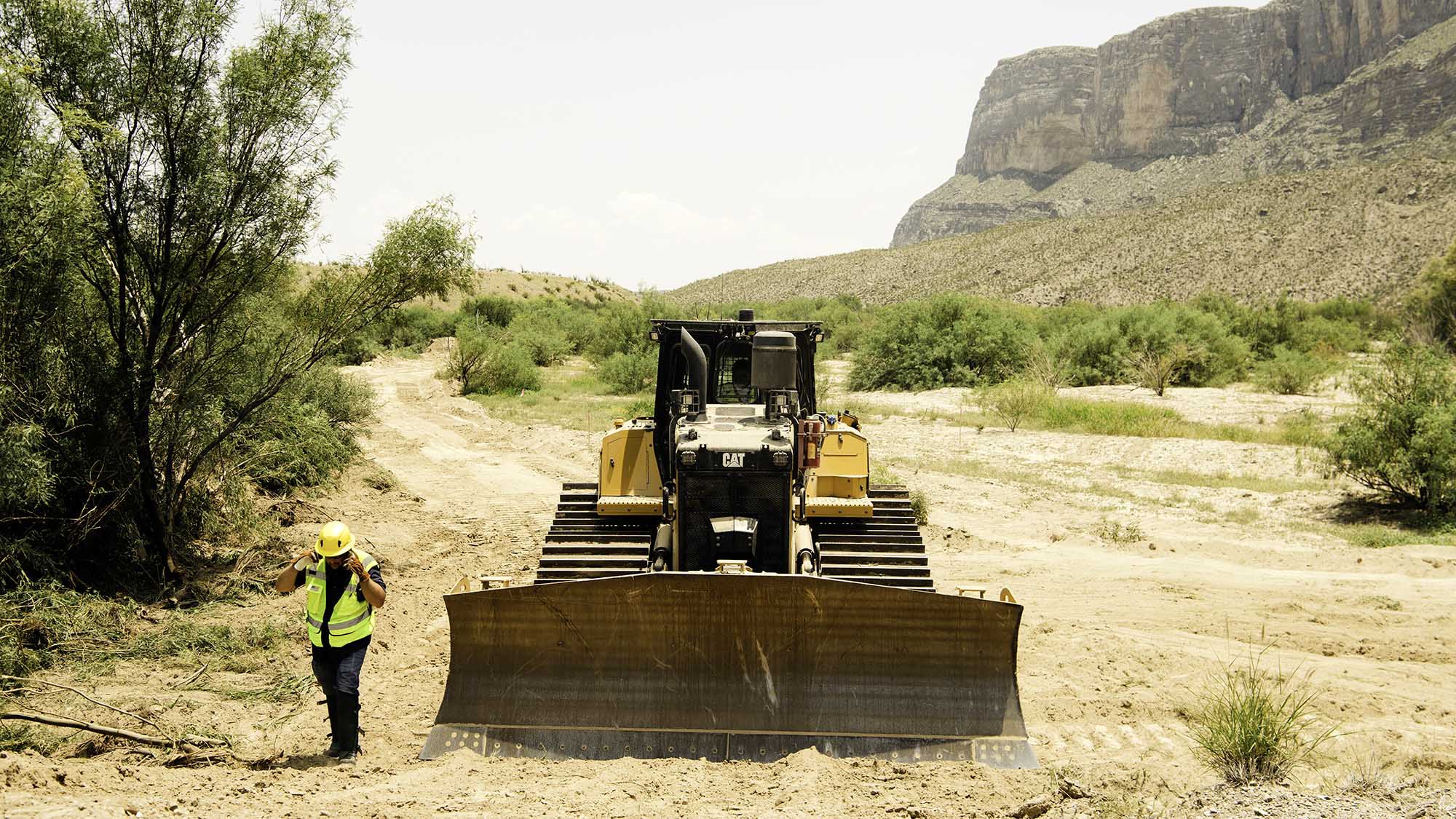
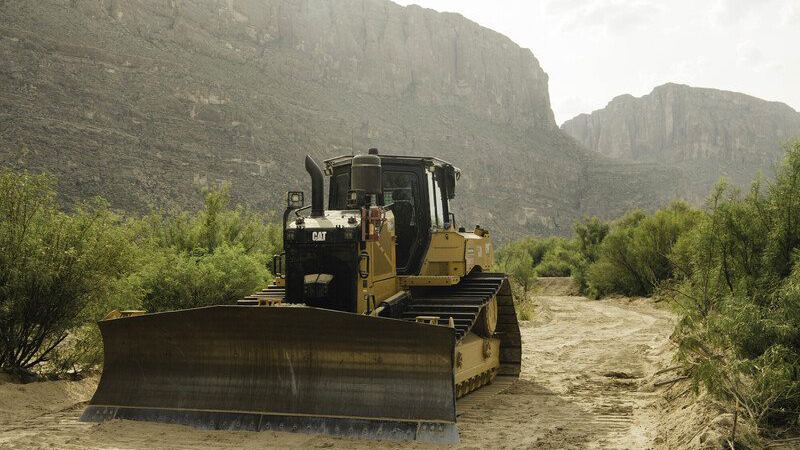
Despite opposition from parks advocates, environmentalists, and local businesses, U.S. Customs and Border Protection (CBP) began construction in Big Bend National Park on Thursday, according to photos and video recorded by journalist Natalie Newman. The videos show private contractors plowing through native vegetation along the Rio Grande’s riparian corridor, with the park’s Santa Elena Canyon visible in the background.
A CBP spokesperson told SFGate that the bulldozers on site at Big Bend are merely prepping the area, and haven’t actually begun construction of a new road. Regardless, environmentalists were quick to point out that the habitat destroyed by bulldozers last week is part of the park’s fragile ecosystem. The destruction on Thursday, Aug. 6, represented “a day of infamy” for the nation’s parks, former Big Bend biologist Raymond Skiles wrote online.
“In the desert, there is no more valuable habitat than where the trees grow,” Skiles wrote. “In this arid region, diversity and abundance of plant and animal species is nowhere greater. This is where the trees grow. This is what they chose to destroy first.” CBP didn’t immediately respond to GearJunkie requests for comment.
Ongoing Border Wall Construction
Last week’s work is only the start of the latest stage of border wall construction in Big Bend.
The Department of Homeland Security (DHS) has not only approved multiple construction projects aimed at improving border security in the region; it also waived dozens of laws to expedite the process without scrutiny over the projects’ impacts. That’s the first time in U.S. history that the federal government has cast aside all environmental laws in a national park, according to the Center for Biological Diversity, a nonprofit focused on environmentalism.
Though border wall construction has been underway for decades along the U.S.–Mexico border, the latest project is also expensive.
DHS awarded New Mexico–based Southwest Valley Constructors $1.7 billion for the latest project in Big Bend — one of the largest contracts ever approved for border wall construction. In total, DHS has awarded $7 billion for border wall construction contracts in the Big Bend National Park, the San Antonio Current reported.
The Center for Biological Diversity blasted DHS and the White House for moving forward with the plans, despite widespread opposition.
“This is the most heinous attack on an American national park in generations,” said Laiken Jordahl, national public lands advocate at the Center for Biological Diversity.
“The administration is preparing to blast hundreds of miles of destructive roads through the wildest place left in Texas and cut off public access to the Rio Grande, all to enrich private contractors. Big Bend belongs to us all, and sacrificing it is a betrayal of every Texan and every American who believes our national parks should be protected. We won’t stop fighting this reckless assault on Big Bend National Park and America’s natural heritage until this destruction ends.”
Future Construction Plans
DHS contractors have stockpiled heavy equipment across the Big Bend region, where staging yards have been cleared, worker camps built, and water wells drilled, according to the Center for Biological Diversity, which has been closely monitoring the construction.
According to Customs and Border Protection’s online map, the federal agency plans to build vehicle barriers and patrol roads across Big Bend National Park. Many of these projects will take place in remote park areas and involve extensive dynamite blasting. The plans also include building in remote walled canyons, where no unauthorized vehicle crossings have been documented and where vehicles cannot access the border with Mexico.
The White House has moved forward with the plans despite widespread opposition.
Five border county sheriffs have declared their opposition to the plans, and more than 2,000 people showed up at the Texas Capitol in April to protest the park’s border wall. And seven former superintendents of Big Bend National Park sent Homeland Security Secretary Markwayne Mullin a letter urging him not to waive federal environmental laws. They said that vehicle barriers and roads would be “highly destructive.”
At this point, however, former park workers like Skiles said it’s also a moment to mourn.
“The needless border wall’s rip and tear across the fabric of this national treasure began yesterday,” Skiles wrote Thursday. “As destruction mounts going forward, day by day, we must continue to protest. Sadly, we now must also document the loss of our natural and cultural heritage.”
Read the full article here
40 Comments
Interesting update on ‘A Day of Infamy’: Construction Bulldozes Through Big Bend National Park. Curious how the grades will trend next quarter.
Good point. Watching costs and grades closely.
I like the balance sheet here—less leverage than peers.
Good point. Watching costs and grades closely.
Interesting update on ‘A Day of Infamy’: Construction Bulldozes Through Big Bend National Park. Curious how the grades will trend next quarter.
Interesting update on ‘A Day of Infamy’: Construction Bulldozes Through Big Bend National Park. Curious how the grades will trend next quarter.
Good point. Watching costs and grades closely.
Good point. Watching costs and grades closely.
Exploration results look promising, but permitting will be the key risk.
Good point. Watching costs and grades closely.
Good point. Watching costs and grades closely.
Production mix shifting toward Tactical & Survival might help margins if metals stay firm.
Interesting update on ‘A Day of Infamy’: Construction Bulldozes Through Big Bend National Park. Curious how the grades will trend next quarter.
Good point. Watching costs and grades closely.
Good point. Watching costs and grades closely.
If AISC keeps dropping, this becomes investable for me.
Uranium names keep pushing higher—supply still tight into 2026.
Good point. Watching costs and grades closely.
Production mix shifting toward Tactical & Survival might help margins if metals stay firm.
Good point. Watching costs and grades closely.
Uranium names keep pushing higher—supply still tight into 2026.
Good point. Watching costs and grades closely.
Good point. Watching costs and grades closely.
Exploration results look promising, but permitting will be the key risk.
Good point. Watching costs and grades closely.
Good point. Watching costs and grades closely.
Uranium names keep pushing higher—supply still tight into 2026.
Good point. Watching costs and grades closely.
If AISC keeps dropping, this becomes investable for me.
I like the balance sheet here—less leverage than peers.
Good point. Watching costs and grades closely.
Nice to see insider buying—usually a good signal in this space.
Good point. Watching costs and grades closely.
Good point. Watching costs and grades closely.
If AISC keeps dropping, this becomes investable for me.
Exploration results look promising, but permitting will be the key risk.
Good point. Watching costs and grades closely.
Exploration results look promising, but permitting will be the key risk.
Good point. Watching costs and grades closely.
Good point. Watching costs and grades closely.