


The terms “banned substance” and “Olympics” likely conjure images of performance-enhancing drugs or famous examples of countries tricking anti-doping agencies. At the 2026 Games in Milano–Cortina, however, the illicit substances at the center of a debate have nothing to do with what athletes are putting into their bodies: It’s all about what they’re putting on their skis.
PFAS, also called forever chemicals for their inability to break down in nature, are a key component of certain waxes that winter athletes use. And it’s those waxes that have gotten three athletes disqualified from Olympic competition.
The Controversy
So far in the 2026 Games, three athletes have faced disqualification for allegedly using fluoro waxes. Japanese snowboarder Shiba Masaki was disqualified from the men’s parallel giant slalom, and two South Korean cross-country skiers, Han Dasom and Lee Eui-jin, were disqualified from the women’s sprint event.
So far, neither country has filed a formal protest over the ruling.
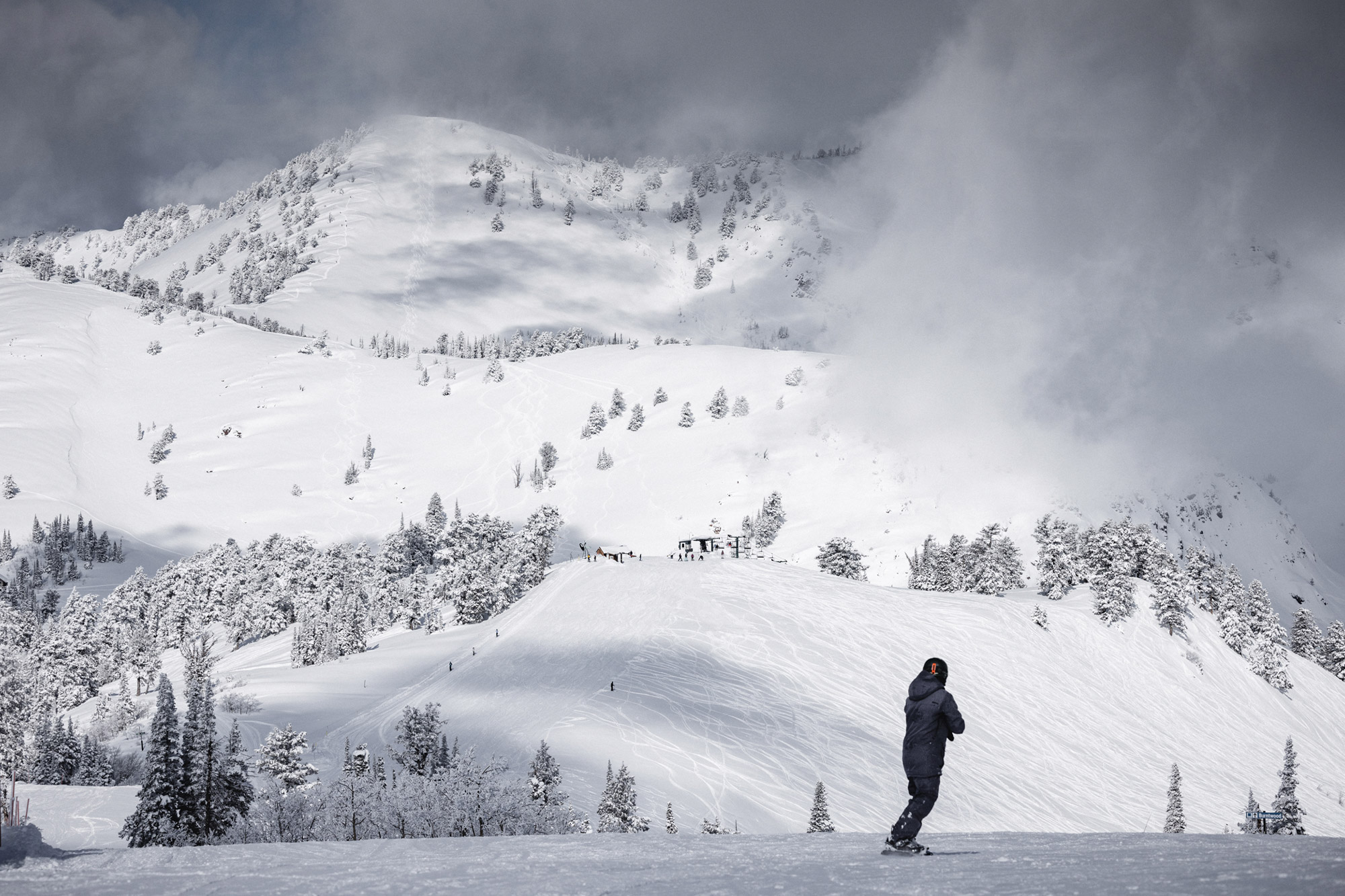
“I’ve been tested for fluoride every match for identical board and identical wax composition throughout the World Cup, but I’ve never tested positive,” Masaki said on Instagram. “When it comes to waxing, we do our own work during practice, but during competition we officially requested a professional serviceman to finish the board.”
In a statement to Grist, the Korean Olympic Committee claimed that the ski team only purchased and used fluoride-free waxes. Apparently, the issue was resolved by the Korean athletes’ next race, the 10-km freestyle event. Their equipment passed, and they were both able to compete.
According to the International Ski and Snowboard Federation (FIS), in the 2023/24 season, it completed over 60,000 tests, with fewer than 10 cases of equipment testing positive. There have been occasional issues with testing, however.
In that first season, a Norwegian athlete’s equipment failed the test. Subsequent analysis showed that the wax itself was free of PFAS, but the person applying it had used a tool that had touched fluoro waxes in the past.
The Waxes
Snowboarders and skiers regularly wax their equipment to reduce friction between the ski/board and the ground, and thus improve speed and glide.
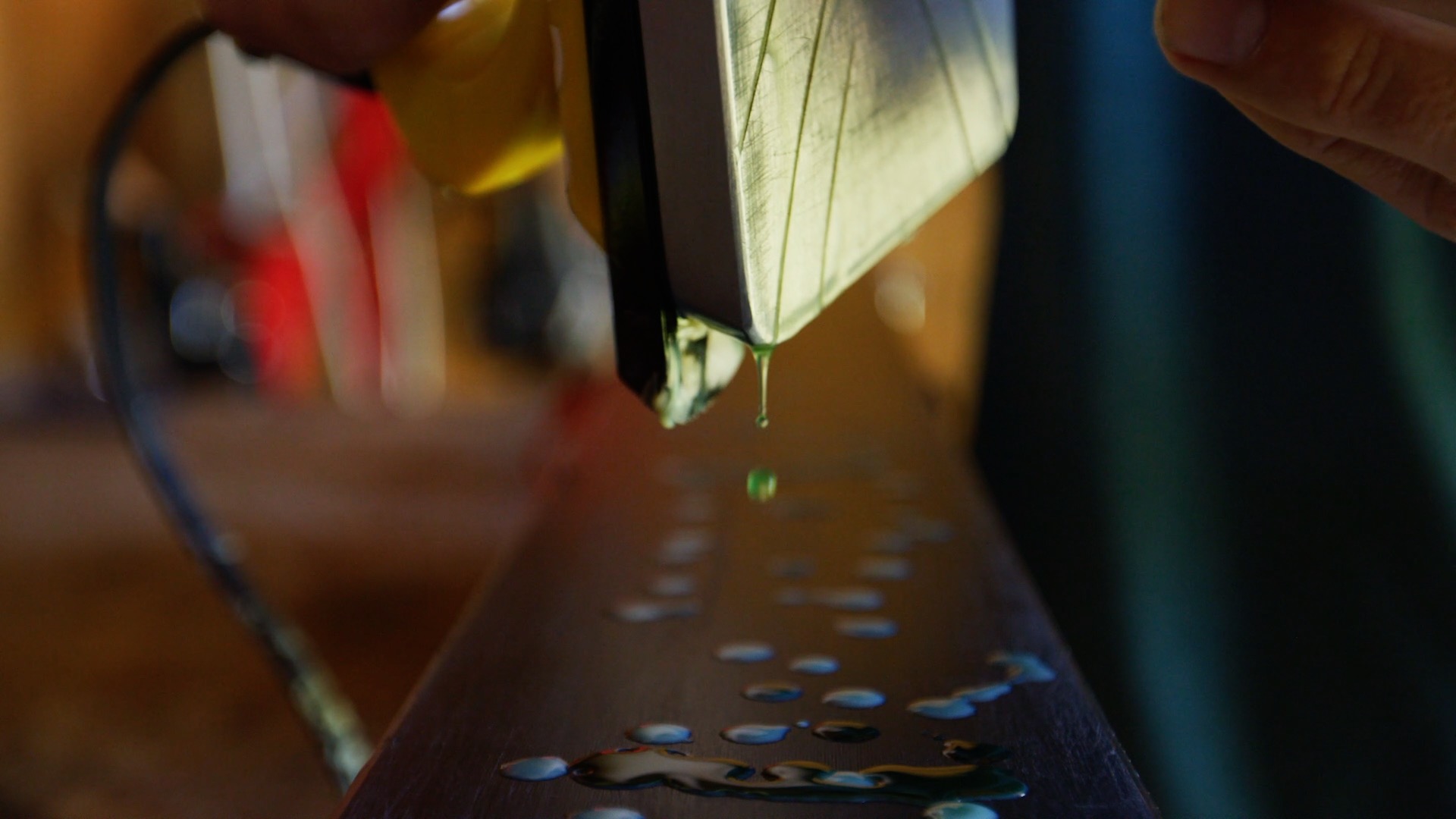
For years, Olympians and regular athletes alike have used fluorinated waxes, or fluoro waxes, aka waxes with PFAS. These are the same chemicals that helped make waterproof jackets waterproof, so the appeal they’d have for skis makes sense. PFAS waxes make skis more water-repellent, and thus faster.
The Ban
One of the major concerns with PFAS is the long-term effects they can have on human health and the environment. According to the Environmental Protection Agency, exposure to PFAS can cause various health issues, including decreased fertility, increased risk of certain cancers, and a weaker immune system.
There was particular concern over the people who apply the waxes and thus breathe in vaporized PFAS. Studies also show that PFAS easily get into nature and also harm wildlife; hundreds of skiers with fluoro waxes competing on a mountain could leave the chemicals behind.
In response to these concerns, FIS and the International Biathlon Union (IBU) first banned fluoro waxes in the 2023/24 season. The 2026 Games are the first Olympics with the ban in place.
To test if skiers are using fluoro waxes, officials use specialized equipment to take and analyze three samples from the ski. If all three samples show a high enough concentration of fluorinated chemicals, the skier is disqualified.
Read the full article here
37 Comments
Uranium names keep pushing higher—supply still tight into 2026.
Good point. Watching costs and grades closely.
Good point. Watching costs and grades closely.
If AISC keeps dropping, this becomes investable for me.
Good point. Watching costs and grades closely.
If AISC keeps dropping, this becomes investable for me.
Production mix shifting toward Tactical & Survival might help margins if metals stay firm.
If AISC keeps dropping, this becomes investable for me.
I like the balance sheet here—less leverage than peers.
If AISC keeps dropping, this becomes investable for me.
Good point. Watching costs and grades closely.
Good point. Watching costs and grades closely.
Uranium names keep pushing higher—supply still tight into 2026.
Good point. Watching costs and grades closely.
Good point. Watching costs and grades closely.
Uranium names keep pushing higher—supply still tight into 2026.
Good point. Watching costs and grades closely.
Good point. Watching costs and grades closely.
Nice to see insider buying—usually a good signal in this space.
Silver leverage is strong here; beta cuts both ways though.
Nice to see insider buying—usually a good signal in this space.
Interesting update on Banned Ski Wax Is Triggering DQs at the Olympics. Curious how the grades will trend next quarter.
The cost guidance is better than expected. If they deliver, the stock could rerate.
Good point. Watching costs and grades closely.
The cost guidance is better than expected. If they deliver, the stock could rerate.
I like the balance sheet here—less leverage than peers.
Good point. Watching costs and grades closely.
Good point. Watching costs and grades closely.
Exploration results look promising, but permitting will be the key risk.
Good point. Watching costs and grades closely.
Good point. Watching costs and grades closely.
If AISC keeps dropping, this becomes investable for me.
Good point. Watching costs and grades closely.
Good point. Watching costs and grades closely.
Nice to see insider buying—usually a good signal in this space.
Good point. Watching costs and grades closely.
Good point. Watching costs and grades closely.