


Standing at the top of the rope line, I waited excitedly for the ski patrol to flip the sign from closed to open. I was about to have the best day of my season catching the rope drop at the famous Teo 2 Bowl at Crested Butte Mountain Resort.
Not every day is the best day of my season. I was stoked to be riding the Burton Custom Flying V, a snowboard that slings fun across the mountain without needing to be ridden at its limit to unlock its potential.
Sure, for steep and deep performance, I want a hard-charging, unforgiving, performance-focused snowboard like the Jones Howler.
But the vast majority of my resort days, I’m not pushing myself to the best of my abilities or charging as hard as possible. The older I get, the more I care about having fun on my after-work laps or when conditions aren’t perfect.
In short: Enter the Burton Custom Flying V ($680), a versatile all-mountain snowboard that feels playful and fun across the entire mountain. The board is incredibly lightweight, which is part of its playfulness, thanks to a Super Fly 700G Core. You really notice the setup’s weight difference when paired with Burton’s proprietary Step On snowboard bindings.
The board is named after its profile, Flying V, with center rocker, camber underfoot, and a rockered tip and tail. It’s got enough pop underfoot for jumping off everything you want. At a 4.5-out-of-10 flex, it’s forgiving and perfect for progression. While it won’t shine in deep carves, high-speed chunder, or very aggressive riding, it reigns in the vast majority of conditions and ride styles.
Profile
Flying V: Rockered tip and tail, camber underfoot with rocker inbetween
Sizes (cm)
150, 154, 154W, 156, 158. 158W, 162, 162W, 166W 158W, 162, 162W, 166W
Pros
- Fun and forgiving ride
- Great one board quiver
- Rides great without needing to charge
Cons
- Jack of all trades, master of none
- Not a good choice for very aggressive carving or riding
- Channel board mount requires specific pucks to work with non-Burton bindings
- Lightweight feel and softer flex induce chatter in chunder
Burton Custom Flying V Review
Progressive, Playful, Fun Across the Resort
Throwing backflips at the park once you turn 30 is a much bigger commitment than when I first learned flips. Throwing that first trick after an 8-month summer hiatus almost feels like square one.
Thankfully, I was locked onto the Flying V — including a pair of Burton Step On Genesis EST snowboard bindings and Highshot X Pro Step On snowboard boots. This full combination was one of the lightest and most responsive setups I had ever ridden. That trio gave me the confidence that if I hucked, the board would come around with me.
The Flying V’s forgiving profile and mid-soft flex would help with my (most likely) imperfect landing — especially if I took too many speed checks going into the jump.
Throughout the season, I tested the Flying V in a range of conditions from proper powder days to icy days, chalky snow, warm spring snow, and even some nasty rain crust. The vast majority of my riding days this year were not on amazing snow, due to Colorado’s low snowpack and unseasonable warm temps.
This pushed me to remember my original love for snowboarding: riding for the fun of it, not for perfect conditions. And for this aim, the Flying V was an impeccable choice.
On groomers, its quick and responsive for edge changes. It lays down a good carve. Moguls are a blast with its lightweight twin flex. It offers responsive turns. The design handles the steeps and powder, as well — all without feeling unforgiving.
With this board, I continually aimed for side hits to pop and cat tracks to butter or 180. I also progressed again at the park after neglecting it for a few seasons. All in all, the Flying V provides a softer, more playful ride for all-mountain riding.
Profile, Shape, Flex
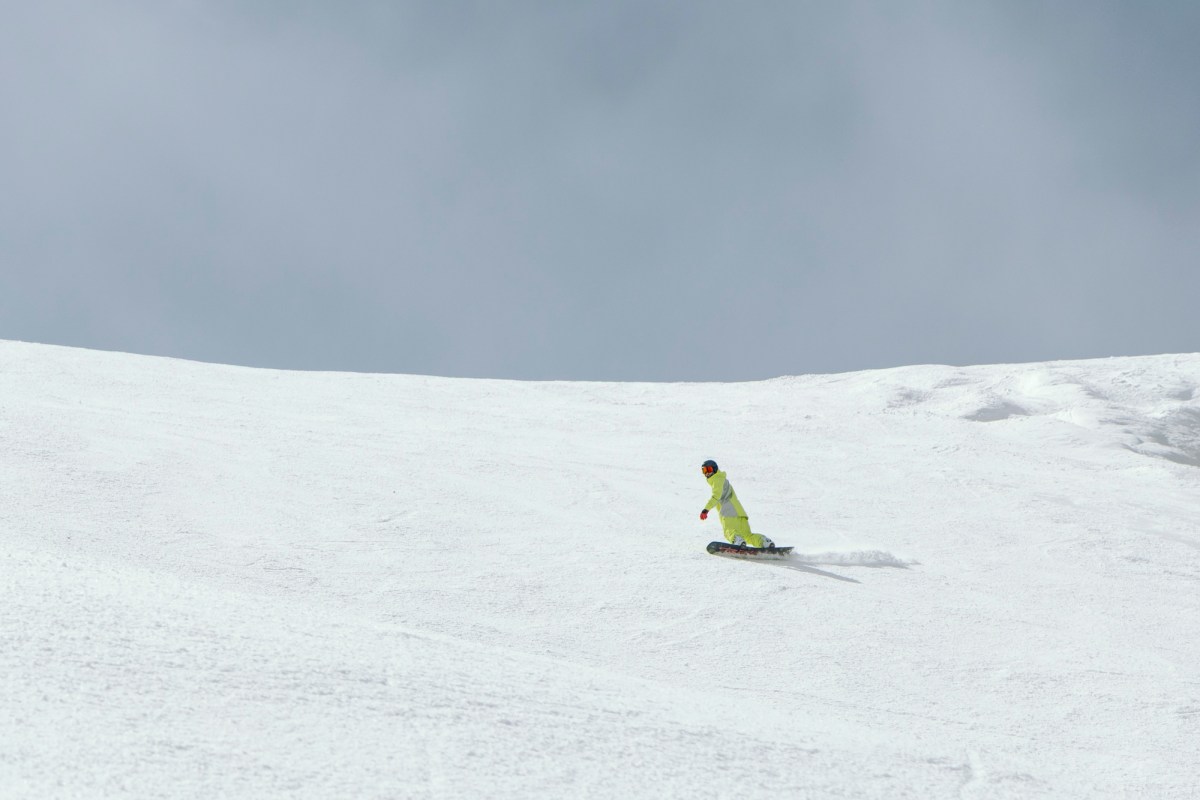
The Flying V is defined by its profile, literally. The V in flying V is at the center of the board: rocker. As you move underfoot, the board changes to camber for added pop. Then the profile goes back to more rocker for the tip and tail.
It’s a directional snowboard, but it feels like a directional twin, encouraging switch riding or landings. When it comes to flex, it’s a true medium-soft that I would rate as a 4.5 out of 10. It’s a twin flex, meaning from the center outward, the flex profile remains the same, which is part of why it feels like a directional twin.
Beyond the tech, I found that this board rides very well. With both rocker and camber, it offers float for powder, camber for pop, yet is quick and responsive. While it can ride switch, it rides better directionally: It’s perfect for carving, though it does dig a good 180.
This soft-flexing board loves to butter, especially with its twin flex pattern. At higher speeds, the board starts to chatter on one side of the center V-rocker, unless the rocker is fully flexed into a turn.
Core Construction and Base
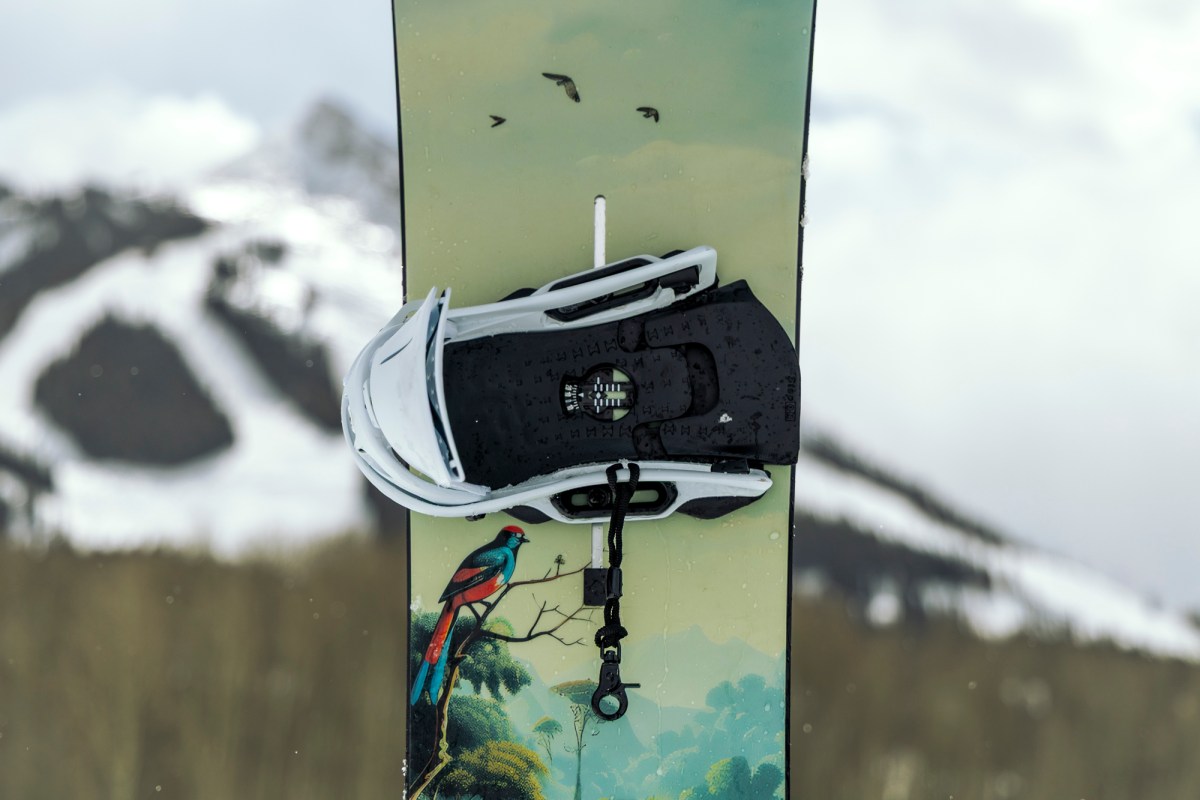
The Flying V uses Burton’s premium core: a Super Fly II 700G Core with Dualzone EGD. That core is specifically lightweight wood over traditional snowboards. That’s a large part of the lightweight feel and responsiveness of the snowboard.
The Dualzone “EGD” stands for Engineered Grain Direction. Essentially, along the toe and heel edge of the snowboard, the wood grain is positioned perpendicular to the rest of the core. This way of laying the grain helps bring a consistent hold to both edges.
This snowboard has a Sintered WFO base, Burton’s top-tier base for speed. Some other unique construction features on the board are Pro-Tip and Infinite Ride.
Pro-Tip refers to both the tip and tail of the snowboard being shaved down as thin as possible. This removes excess weight, helping that lightweight feel, and moves the weight to the center of the snowboard, which helps the board spin and butter better.
Infinite Ride refers to a machine that breaks in the snowboard. They essentially overbuild the snowboard, and then break it in for you, so on day one at the resort, the pop, flex, and overall feel of the snowboard will remain consistent for the life of the snowboard. After a season of testing, I can confirm the board feels just as good as day one.
Top and Bottom Art
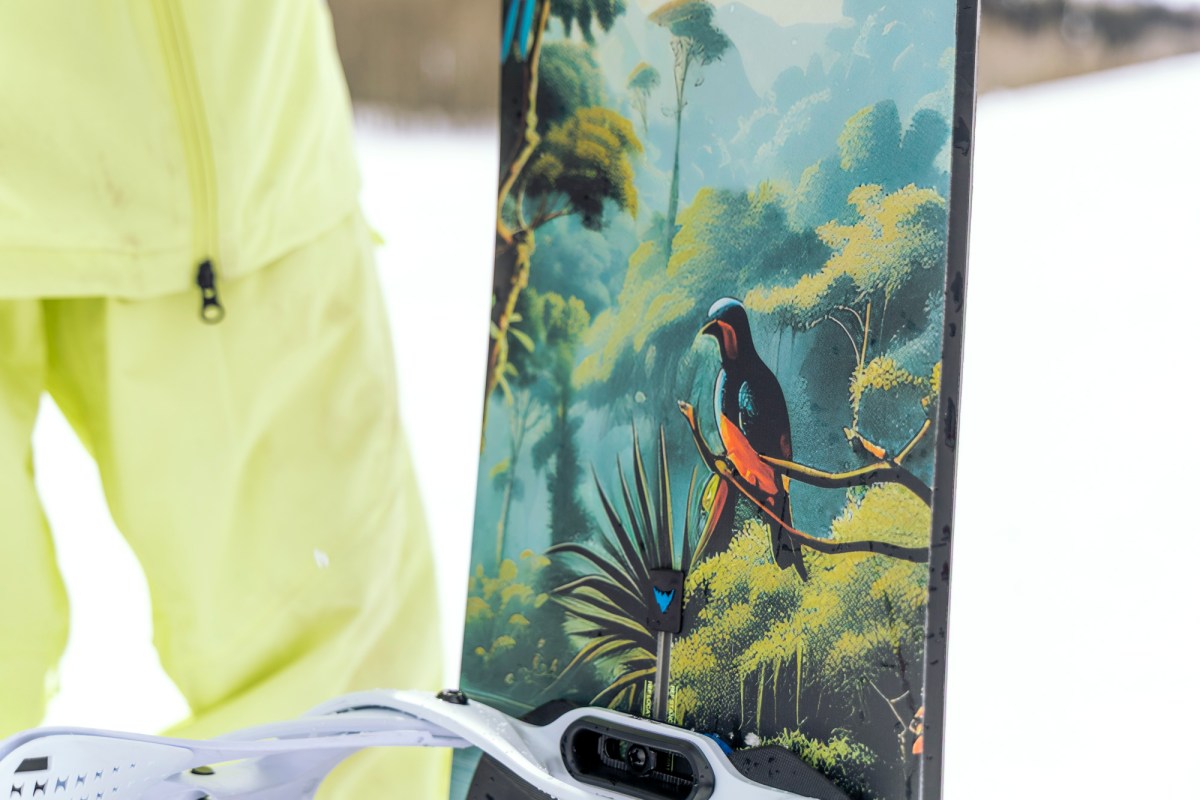
For 2026, the Flying V comes with Jungle-themed art. The topsheet shows a scene with a river and plant life on the tail, two prominent colorful birds between the bindings, and three birds silhouetted along a hazy skyline along the nose.
Overall, I like this very unique topsheet. But the nose feels like it’s essentially lacking color and a graphic. As it’s the main part of the board that I see when riding, I would love to see more of the colors and design flow into the nose, as well.
The base also boasts the Jungle theme. In my opinion, it captures the right amount of color, including a tasteful Burton logo in cursive and a dark jungle scene with poppy green and red flowers.
Critiques
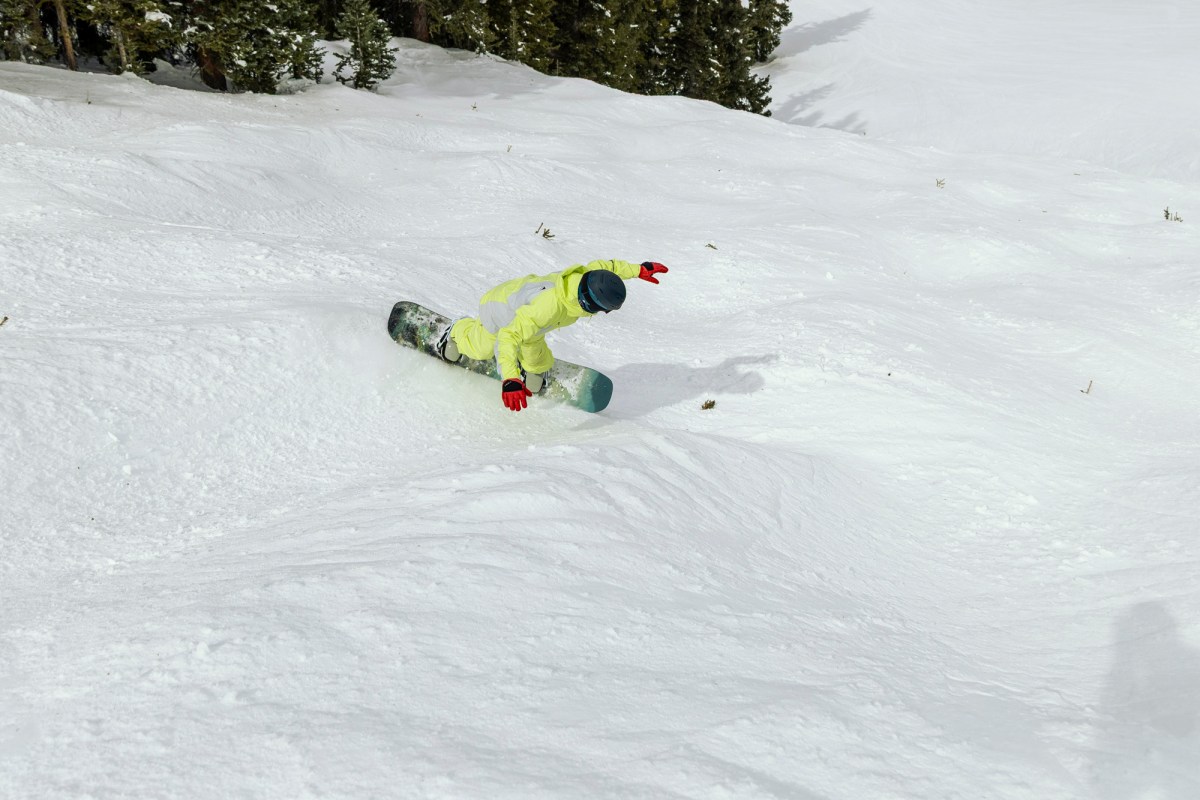
It’s hard to make the perfect snowboard, and the Custom Flying V has its flaws. Overall, the board is very versatile across a broad spectrum of conditions. The flip side of being a jack-of-all-trades is that it doesn’t do any conditions the best. It doesn’t lay trenches like a true carving-only board. It won’t flex or ride like a park-focused board. Its softer flex isn’t as aggressive for steep and deep charging.
This board is great as a one-board quiver. But once you get past that, getting a pow-specific board for powder days, or a stiff all-mountain board for riding steeps, is a better choice. While I love the lightweight feel and softer flex for most conditions, the board chatters at high speeds and going through chundery snow.
When you have to nail a cliff exit by straightlining, the board doesn’t feel as stable as other stiffer mountain snowboards.
Another minor gripe is that the board has channel binding mounts, which, when paired with Burton’s Step On snowboard bindings, are fantastic. But if you plan on riding non-Burton bindings, you might need to purchase different channel compatibility discs from your binding’s manufacturer.
Conclusion
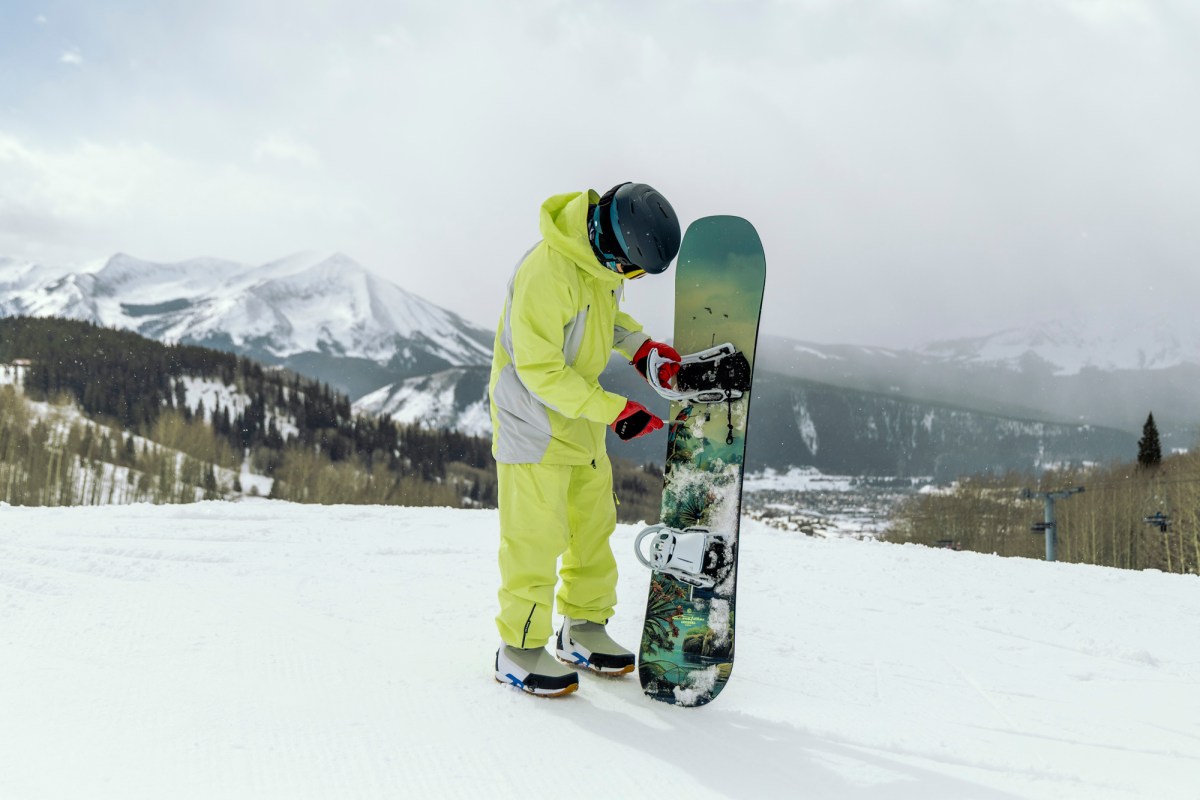
I own a quiver of niche snowboards in the hard-charging category. For casual resort days with the goal of turning the mountain into a playground and entering a childlike flow, I grab the Flying V.
The Burton Custom Flying V overall is one of the better snowboards I have ridden. It truly brings that playfeel feeling to the entire mountain.
This is a perfect snowboard for intermediate to advanced riders looking for a board that can do it all, especially if you want to use Burton’s Step On binding system. Expert riders can still enjoy the Flying V, but it’s not as hard-charging or aggressive riding as other all-mountain freestyle snowboards on the market — which is both a blessing and a curse.
Still, for one snowboard that will ride powder, steeps, groomers, switch, park, and more, the Flying V delivers. You don’t need to ride the board at your limit in order for it to be fun. The playful and light feel of the board shines at all speeds. For the vast majority of my testing conditions — during a less-than-ideal winter — the Flying V was the perfect fun-slinger across the mountain. It’s a board I will keep in my quiver forever.
Read the full article here
47 Comments
If AISC keeps dropping, this becomes investable for me.
Silver leverage is strong here; beta cuts both ways though.
Interesting update on Burton Custom Flying V Snowboard Review. Curious how the grades will trend next quarter.
Interesting update on Burton Custom Flying V Snowboard Review. Curious how the grades will trend next quarter.
Good point. Watching costs and grades closely.
Exploration results look promising, but permitting will be the key risk.
Good point. Watching costs and grades closely.
Good point. Watching costs and grades closely.
If AISC keeps dropping, this becomes investable for me.
Good point. Watching costs and grades closely.
Good point. Watching costs and grades closely.
The cost guidance is better than expected. If they deliver, the stock could rerate.
If AISC keeps dropping, this becomes investable for me.
Good point. Watching costs and grades closely.
Interesting update on Burton Custom Flying V Snowboard Review. Curious how the grades will trend next quarter.
Good point. Watching costs and grades closely.
Good point. Watching costs and grades closely.
I like the balance sheet here—less leverage than peers.
Good point. Watching costs and grades closely.
Nice to see insider buying—usually a good signal in this space.
Nice to see insider buying—usually a good signal in this space.
Good point. Watching costs and grades closely.
Good point. Watching costs and grades closely.
Exploration results look promising, but permitting will be the key risk.
Production mix shifting toward Tactical & Survival might help margins if metals stay firm.
Good point. Watching costs and grades closely.
Good point. Watching costs and grades closely.
Interesting update on Burton Custom Flying V Snowboard Review. Curious how the grades will trend next quarter.
Good point. Watching costs and grades closely.
Good point. Watching costs and grades closely.
Uranium names keep pushing higher—supply still tight into 2026.
Nice to see insider buying—usually a good signal in this space.
If AISC keeps dropping, this becomes investable for me.
Good point. Watching costs and grades closely.
Exploration results look promising, but permitting will be the key risk.
Good point. Watching costs and grades closely.
Good point. Watching costs and grades closely.
I like the balance sheet here—less leverage than peers.
Exploration results look promising, but permitting will be the key risk.
Production mix shifting toward Tactical & Survival might help margins if metals stay firm.
Good point. Watching costs and grades closely.
Silver leverage is strong here; beta cuts both ways though.
Good point. Watching costs and grades closely.
Good point. Watching costs and grades closely.
Exploration results look promising, but permitting will be the key risk.
Good point. Watching costs and grades closely.
Good point. Watching costs and grades closely.