

Normally, government commission meetings aren’t must-attend events, but yesterday’s meeting of the Colorado Parks and Wildlife (CPW) Commission certainly was. Hundreds of people showed up, the agency increased the size of the venue, and the meeting included extra security screenings.
The reason for the crowds was a proposed state ban on the commercial sale of fur from 16 animals. After hours of debate and public comment, the commission decided to take the middle road, advancing the ban to the rulemaking phase, but not adopting it outright.
The Proposal
The measure comes from the Center for Biological Diversity (CFBD), an active conservation and wildlife nonprofit. The group frequently petitions states for animal protections; it recently scored a big win in California when the state declared mountain lions an endangered species.
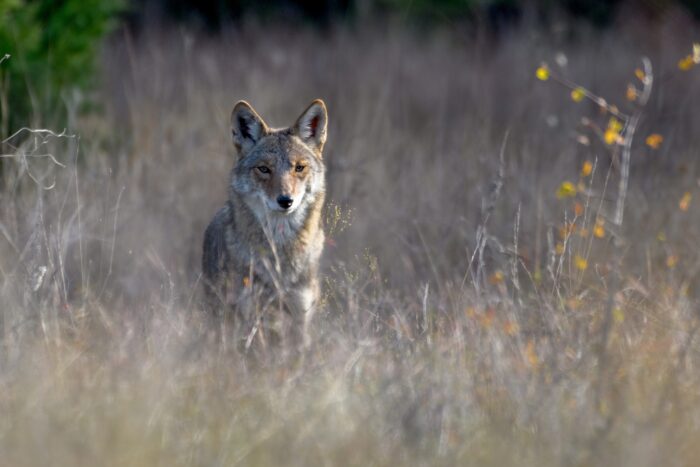
This petition focuses on banning “only the for-profit sale of furbearer parts, including hides, pelts, skins, claws, and similar items, with limited exemptions” of furbearers. The list of animals includes bobcats, beavers, coyotes, foxes, weasels, raccoons, skunks, mink, muskrats, pine martens, and badgers.
Currently, banned items for sale in the state already include “bear gall bladders, bighorn sheep ram skulls or horns, bighorn sheep capes and velvet antlers.”
Exemptions for the new rule would include hand-tied fishing flies, Western fur hats, and animal products sold for scientific and educational purposes.
The Rationale
In the petition, the CFBD cited historical examples of American fur trading decimating species, like the beaver in the 19th century. The group raised “the legitimate concern that unregulated fur sales may be contributing to overharvest of Colorado’s furbearers.”
It also stated that since traps intended for certain species can trap any animal, fur trading can harm many species, including threatened ones like the Canadian lynx.
In the CFBD’s mind, with animals already under threat from a host of other issues, capturing them for fur sales can only make the situation worse. “As climate change and biodiversity loss escalate, commercial exploitation of furbearers adds an unnecessary threat to species already under pressure from habitat fragmentation, temperature extremes, and drought,” it said.
The Meeting
On this issue, first, the Commission heard from Mark Vieira, CPW’s carnivore and furbearer program manager. He presented the agency’s current approach to furbearers, describing the harvest program as “regulated and highly restricted.” While he did mention drafting a daily bag limit, he did not endorse the petition.
“Statewide harvest for surveyed species is far below the most conservative estimates of allowable harvest,” he said. In other words, there is no evidence that the capture of these animals for fur trading is leading to population decline.

In the public comment section, 120 people signed up to speak for their allotted 1 minute on the issue. Support came from those concerned about the long-term effects of trapping on these animal populations, viewing the ban as a proactive measure.
Unsurprisingly, opposition came from hunters and trappers. Some cited the fact that this issue had already gone before voters. In 2024, Denver voters weighed in on Ordinance 308, which would have banned the sale of new fur products in the city. It did not pass, with 58% voting no.
Coloradans for Responsible Wildlife Management, a hunting advocacy group, also objected. “CPW already has the tools and authority to manage these species responsibly. Colorado Parks and Wildlife itself calls furbearer hunting a time-honored traditional hunt and a great starter hunt for new hunters. We agree — and we intend to keep it that way,” it said on Instagram.
“The extremists pushing these narratives aren’t interested in better data or responsible reform — they’re interested in one outcome: zero harvest, zero use, zero tolerance for anyone who disagrees,” Dan Gates, the group’s executive director, said.
“Colorado’s wildlife belongs to all of us — and CPW has a statutory obligation to manage it for everyone, not just those with an ideological ax to grind.”
The Result
The commission ultimately voted 6-4 to move the petition to the rulemaking phase. This essentially means that they will refine and edit the petition for potential approval in the future.
“Obviously, I know that some things need to change with the petition. The spirit of it I want to approve, and so it is just sending it to rulemaking to further flesh out what that looks like?” Commissioner Jessica Beaulieu explained.
The rollout and form of the revised petition are not yet clear, and there is no timeline.
Read the full article here
19 Comments
Nice to see insider buying—usually a good signal in this space.
Exploration results look promising, but permitting will be the key risk.
Good point. Watching costs and grades closely.
Interesting update on Colorado Commission Advances Petition to Ban Fur Sales. Curious how the grades will trend next quarter.
Good point. Watching costs and grades closely.
Good point. Watching costs and grades closely.
Production mix shifting toward Tactical & Survival might help margins if metals stay firm.
Good point. Watching costs and grades closely.
Silver leverage is strong here; beta cuts both ways though.
Good point. Watching costs and grades closely.
Uranium names keep pushing higher—supply still tight into 2026.
Good point. Watching costs and grades closely.
Good point. Watching costs and grades closely.
If AISC keeps dropping, this becomes investable for me.
The cost guidance is better than expected. If they deliver, the stock could rerate.
If AISC keeps dropping, this becomes investable for me.
If AISC keeps dropping, this becomes investable for me.
I like the balance sheet here—less leverage than peers.
Good point. Watching costs and grades closely.