

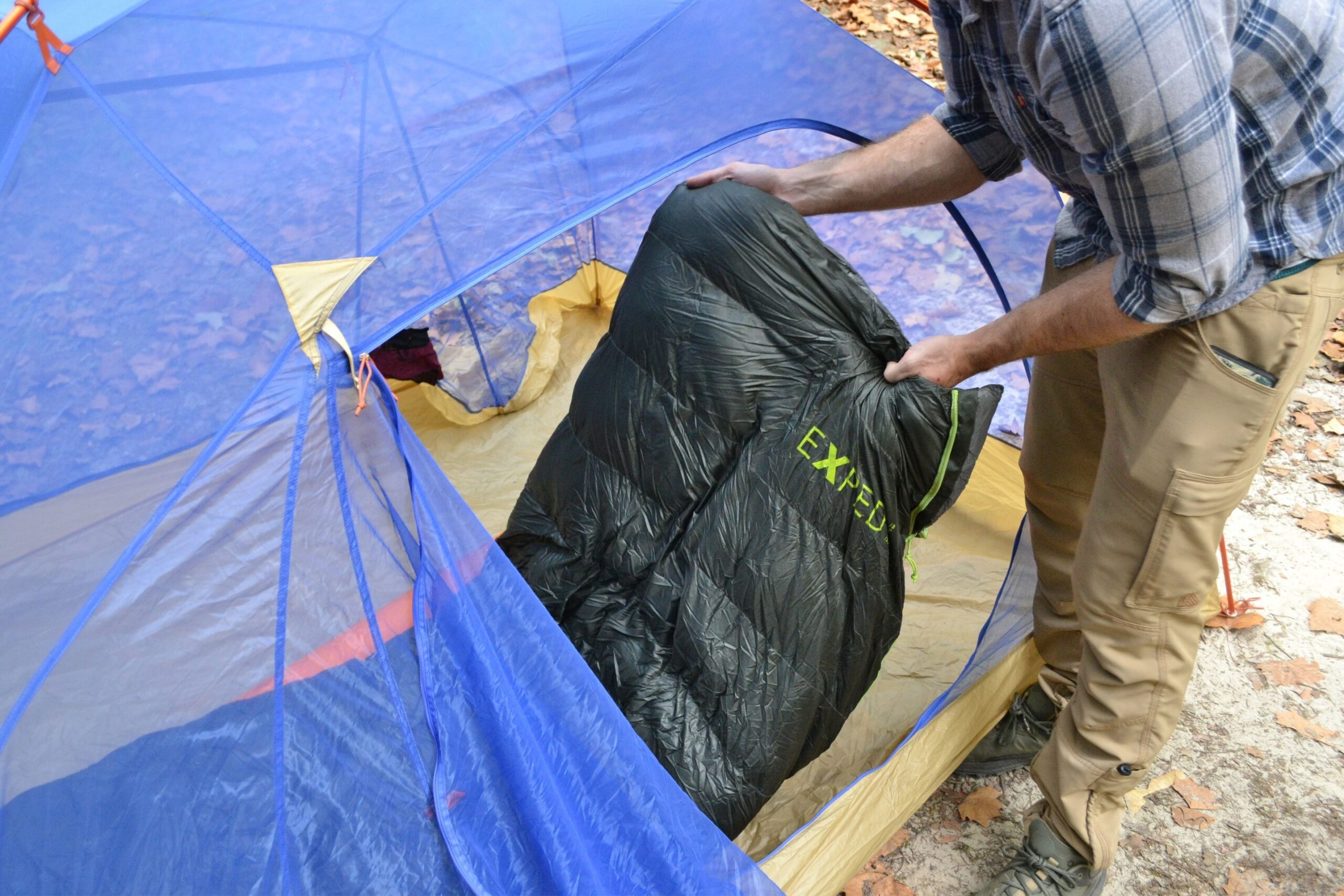
On a cold, rainy night camping in November, I was ready to go to bed. I blew up my inflatable sleeping pad, snuggled into my Exped Terra sleeping bag, and got comfortable. I turned over on my side and heard a distinctive “pop” before I slowly began sinking to the ground.
It was everyone’s worst nightmare: My sleeping pad somehow got punctured. I tried to patch it, but to no avail. I had no choice but to sleep on the cold, hard ground.
The only upside to this terrible situation was my sleeping bag. Without the insulation of a sleeping pad, I had to rely on my Exped Terra 0-degree bag ($320) to keep me warm, and it delivered. While it certainly wasn’t the best night’s sleep I’ve ever had in the outdoors, without this bag, it would’ve been far worse.
Exped’s Terra line of sleeping bags is the brand’s first real foray into backpacking sleeping bags. It says that the Terra bags (available in 0-, 15-, and 30-degree versions) are for the multisport outdoors person who wants one sleeping bag to do it all.
I tested the Terra for several camping, climbing, and backpacking trips in Illinois and Kentucky during the fall and spring. On numerous occasions, temperatures dipped below freezing.
In short: The Exped Terra bags are insulated with 650-fill duck down and deliver a balance between livability and weight savings. They’re offered in 0-, 15-, and 20-degree versions. Unlike other brands, Exped doesn’t charge extra for larger sizes, making this bag one of the best bargains around for those needing longer bags. The Terra could be more packable and lighter, but for a budget-friendly sleeping bag, this is a high-quality option.
Check out GearJunkie’s guides to the Best Backpacking Sleeping Bags and the Best Camping Sleeping Bags.
-
Amazing value for larger bodies -
Warm but breathable
-
Zipper pull can snag easily -
Not highly compressible -
No DWR coating
Exped Terra 0 Sleeping Bag Review
Design & Features
Exped prioritized sustainability when designing the Terra line of bags. The exterior and lining are made from a fully recycled nylon ripstop shell. The brand says that the bag is Oeko-Tex 100 certified, meaning that the whole bag is constructed from the same material, making it easier to recycle in the future. For insulation, the Terra relies on Responsible Down Standard 650-fill grey duck down.
The bags come in a classic mummy shape. Exped made the footbox a more voluminous, 3D shape for extra room for your feet, and also added extra down chambers there for warmth.
The hood includes a cinch to tighten around your face. A draft collar on the front also helps retain your heat. Other features include a glow-in-the-dark, anti-snag zipper and a large zippered pocket on the inside for your phone or headlamp.
Sizes & Weight
All three warmth ratings of the Exped come in three sizes: small, medium, and long. I tested the medium. As someone who is 5’6″, this was the right choice. I had enough room to turn and move, but not so much that there was a lot of space for cold air. The small size fits those under 5’6″, and the large size fits people up to 6’4″.
The medium and large sizes also come in wide versions, which add an extra 7 inches of shoulder room (67 inches for medium wide and 68 inches for long wide). I wear a size large in women’s jackets, and found the normal medium width to be plenty roomy.
When it comes to one of the most important stats — weight — the Exped does a respectable job at approaching an ultralight designation. The 0-degree medium normal width weighs 3 pounds, 11 ounces. The 15-degree version of that size clocks in at 2 pounds, 11.5 ounces.
Let’s compare that to some of GJ’s best backpacking sleeping bags of 2026. The regular size of Mountain Hardwear’s Bishop Pass 0-degree bag weighs 3 pounds, 2.1 ounces, and Nemo’s Sonic 0-degree bag weighs 3 pounds, 4 ounces. While not the lightest bag on the market, Exped’s Terra bags are certainly in the same ballpark as other leading lightweight bags.
Comfort & Warmth
I spent multiple cold, blistery nights cuddled up in the Exped Terra bag. Some mummy bags can feel like straitjackets, with almost no room to toss and turn (which will inevitably happen when sleeping outside). I appreciated that I could sit up slightly to read a book or stick my elbows out a bit while sleeping on my stomach.
One of my common issues with sleeping bags is the feel of the internal fabric on my skin. I can’t wear shorts while trying to sleep in my Nemo Disco 15 bag — I have to wear pants. Something about the fabric makes it stick to my skin like glue, no matter the temperature. I didn’t have that same issue with the Exped Terra. The internal fabric was soft and breathable, and caused zero issues against my bare skin.
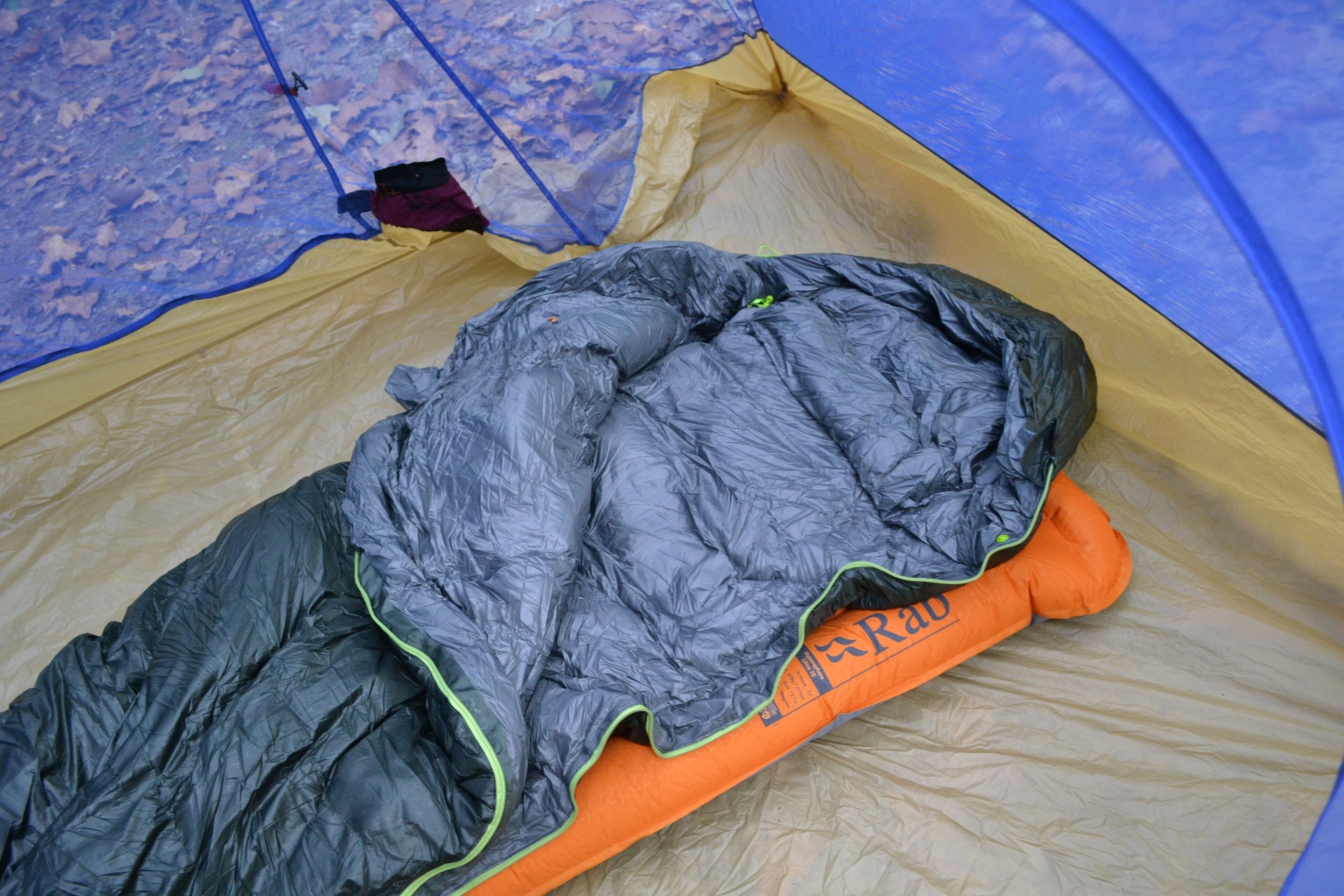
Obviously, if you’re investing in a 0-degree bag, it has to deliver on warmth, and the Exped Terra definitely did. On nights where temps dipped below freezing, I was absolutely comfortable inside the bag in just shorts and a T-shirt. The bag’s tested comfort level is 14 degrees; if it drops below that, adding long underwear and a light fleece would be enough to keep you warm.
A Note on Price
Equal Pricing
Essentially, every outdoor brand charges more for a larger-size sleeping bag. Typically, this is an additional $20 to $60. On some level, this makes sense: A larger bag uses more materials, so it would cost more to make.
Exped decided to throw this standard practice out the window, however. The largest, widest Terra costs the same as the normal size. No matter your size, the Terra 0 degree retails for $320.
This makes the larger sizes of the Terra an excellent value. If you’re someone with a larger, taller body and want a sleeping bag to fit, the Terra is a screaming deal.
Comparison to Other Brands
When you stack up the price tag of the Exped Terra 0 against other similar bags, it’s on the lower end of the spectrum. Its $320 retail value is cheaper than Mountain Hardwear’s Bishop Pass 0 ($385), Big Agnes’ Graystone 0 ($400), Sea to Summit’s Trek 0 ($474), and Rab’s Ascent 0 ($390).
While these bags are slightly lighter than the Terra, the difference is only a few ounces. Buying a 0-degree bag can be a big expenditure, but Exped shows that it doesn’t have to be. For its weight and warmth class, it’s one of the best values on the market.
Room for Improvement
Zipper Issues
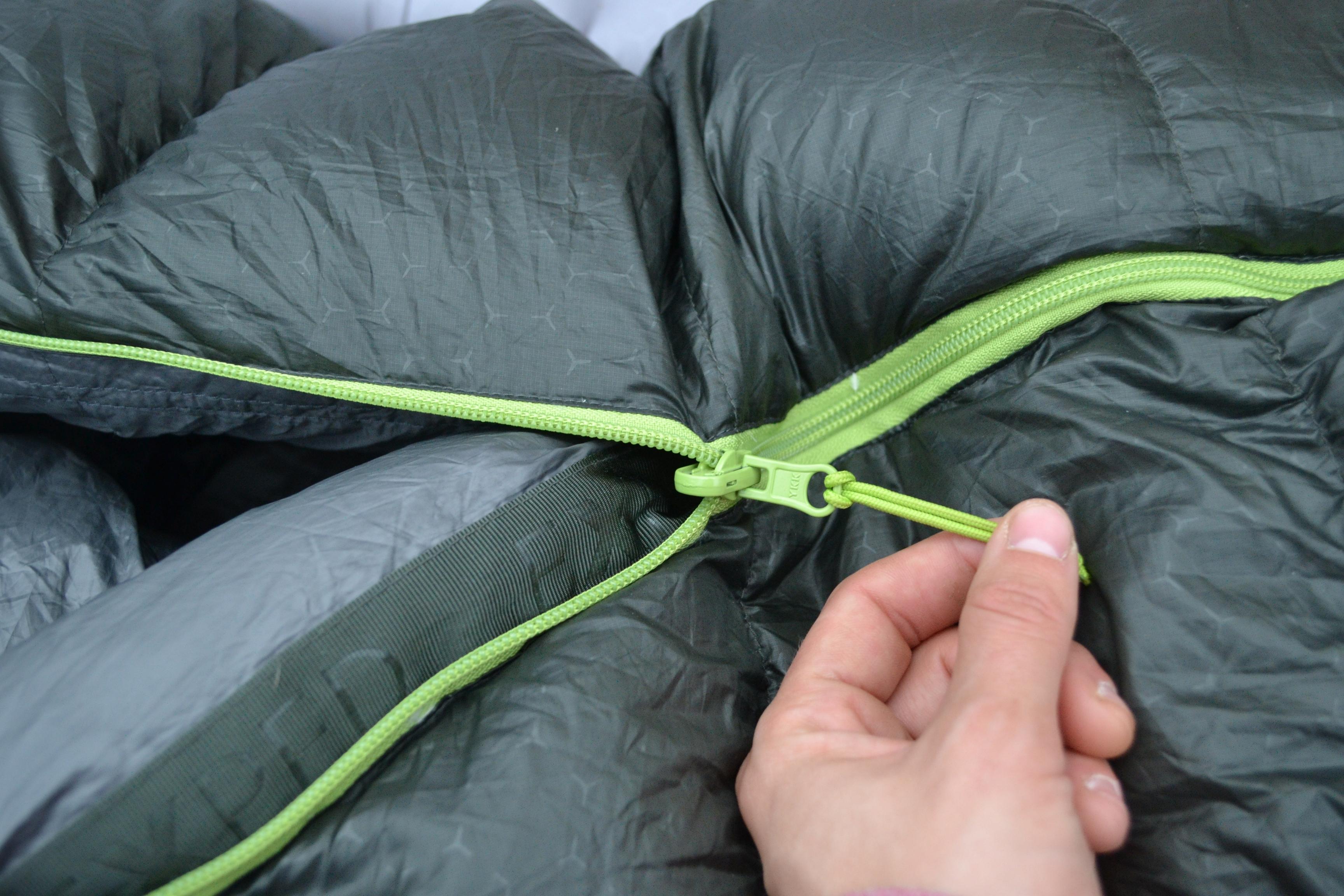
The supposedly anti-snag zipper seems to be the absolute opposite: It snagged relentlessly. No matter how I pulled it, the zipper fought back. On the inside, next to both zipper tracks, Exped added extra nylon for reinforcement. While this may help with durability, it’s likely the source of the zipper issues.
While not important to me, the glow-in-the-dark claim about the zipper is positively not true. I couldn’t see it in my tent at night. To give it a true test, I shut myself in a pitch-black closet in my house with the bag. Even with my eyes laser-focused on searching for the glowing zipper, I saw nothing.
Stuff Sack & Packed Size
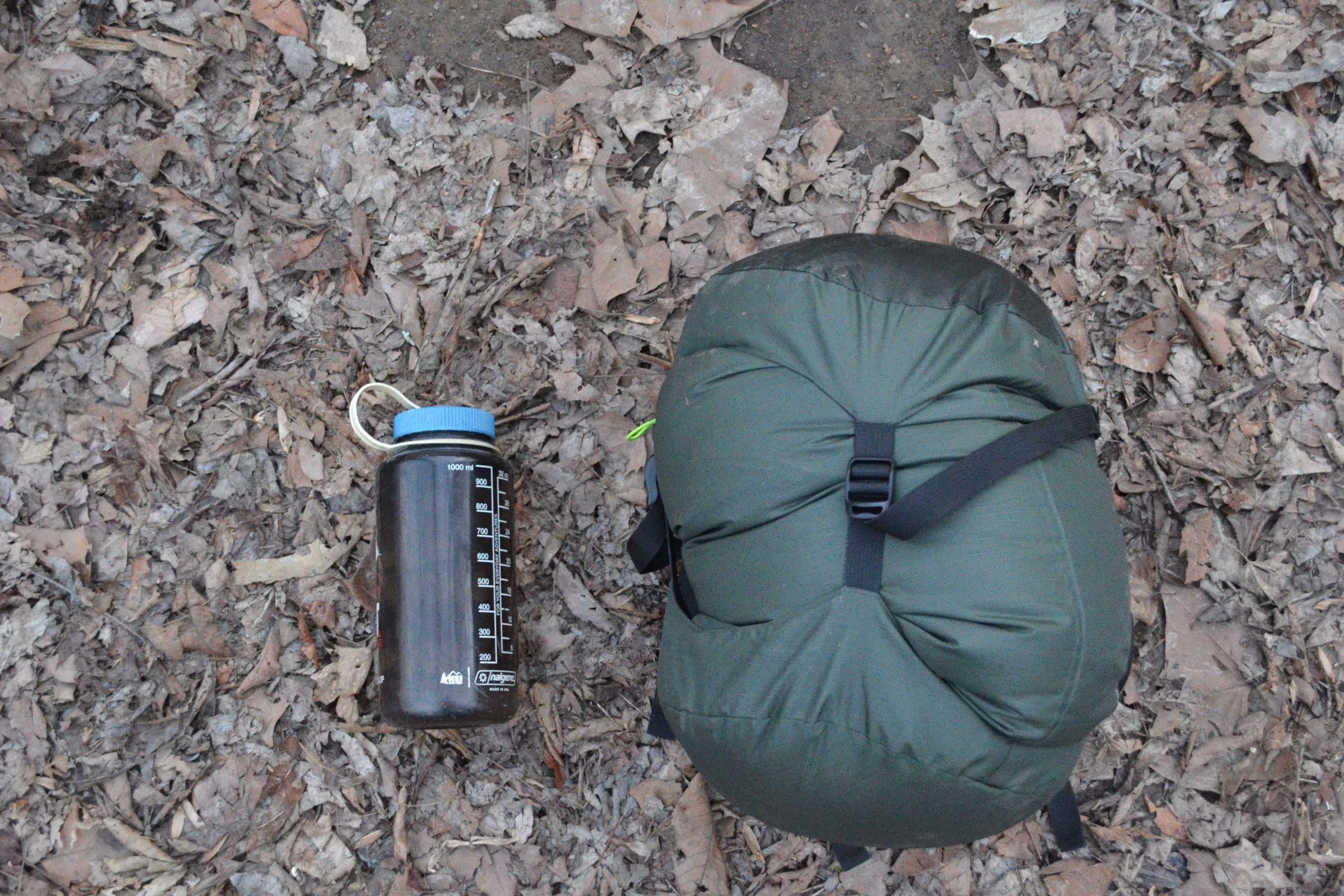
Exped claimed that it was aiming to make a do-it-all sleeping bag with the Terra, but in one key area, it failed to deliver. No matter what, sleeping bags take up a large portion of any backpacker’s pack — the smaller you can compress them, the better, making the stuff sack ultra-important.
The stuff sack that comes with the Terra doesn’t provide much compression. Unlike other lightweight, thin stuff sacks from brands like Nemo, the fabric is an ultra-rigid, thick nylon. Even when you tighten the straps on the sack all the way down, the sleeping bag doesn’t reduce much in size.
In the provided stuff sack, the Terra bag took up more than half the volume in my usual 60L Mariposa pack. In backpacking, space is at a premium, and hopefully future iterations of the bag take up less of it.
DWR Coating — Or Lack Thereof
The Terra also does not have a durable water repellent (DWR) coating. Exped didn’t add this likely for the sake of sustainability, to make it easier for the bag to be recycled, and to avoid adding PFAS. While that is a noble goal, it makes the bag more susceptible to condensation and rain, which is a problem because wet down does not work very well.
Like any tent, mine always builds up a bit of condensation overnight. Some of this did get on my bag, making it slightly damp. While it wasn’t enough moisture to interfere with the warmth of the bag, I would be concerned about what would happen if the Terra faced a leaky tent or any real precipitation.
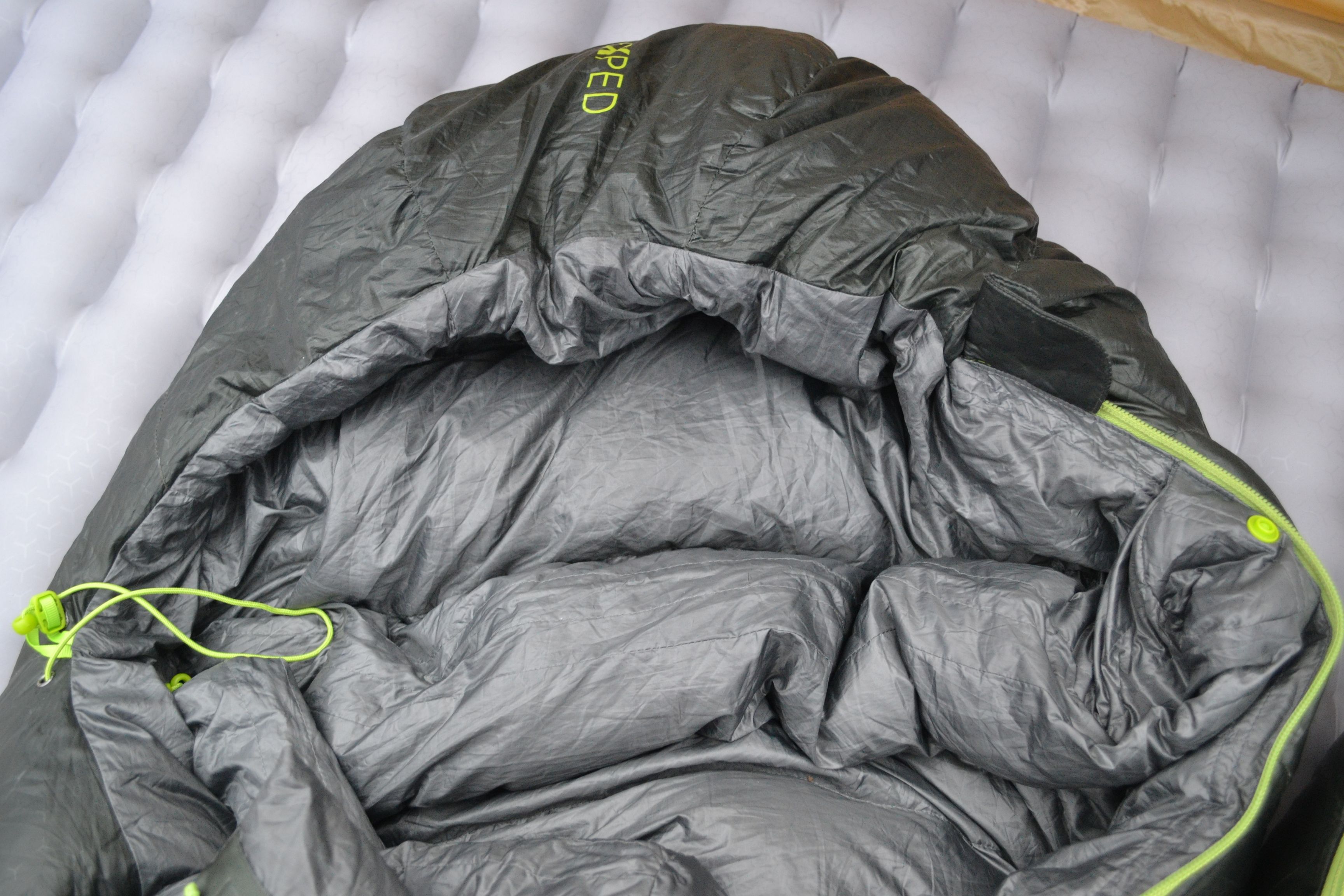
Hood
I also had trouble with the hood design on the Terra Sleeping Bag. It has a cord with a clasp so you can tighten it around your face. However, I found the loosest setting to be too snug on my head, and it was uncomfortable to lie on top of the cord. This might not bother others as much as it did me.
EXPED Terra 0 Sleeping Bag: Conclusions
For those who spend the night outdoors during the shoulder seasons in the mountains or the Midwest, a 0-degree bag is a must-have item. They can easily cost over $400, making Exped’s Terra one of the most budget-friendly bags on the market.
The Terra doesn’t excel at any one thing: it isn’t the lightest, the most compact, or the most technically designed. And yet, it delivers on its promise of warmth and comfort in an affordable package. With a tweak or two to the zipper and stuff sack, Exped could have a five-star bag on its hands.
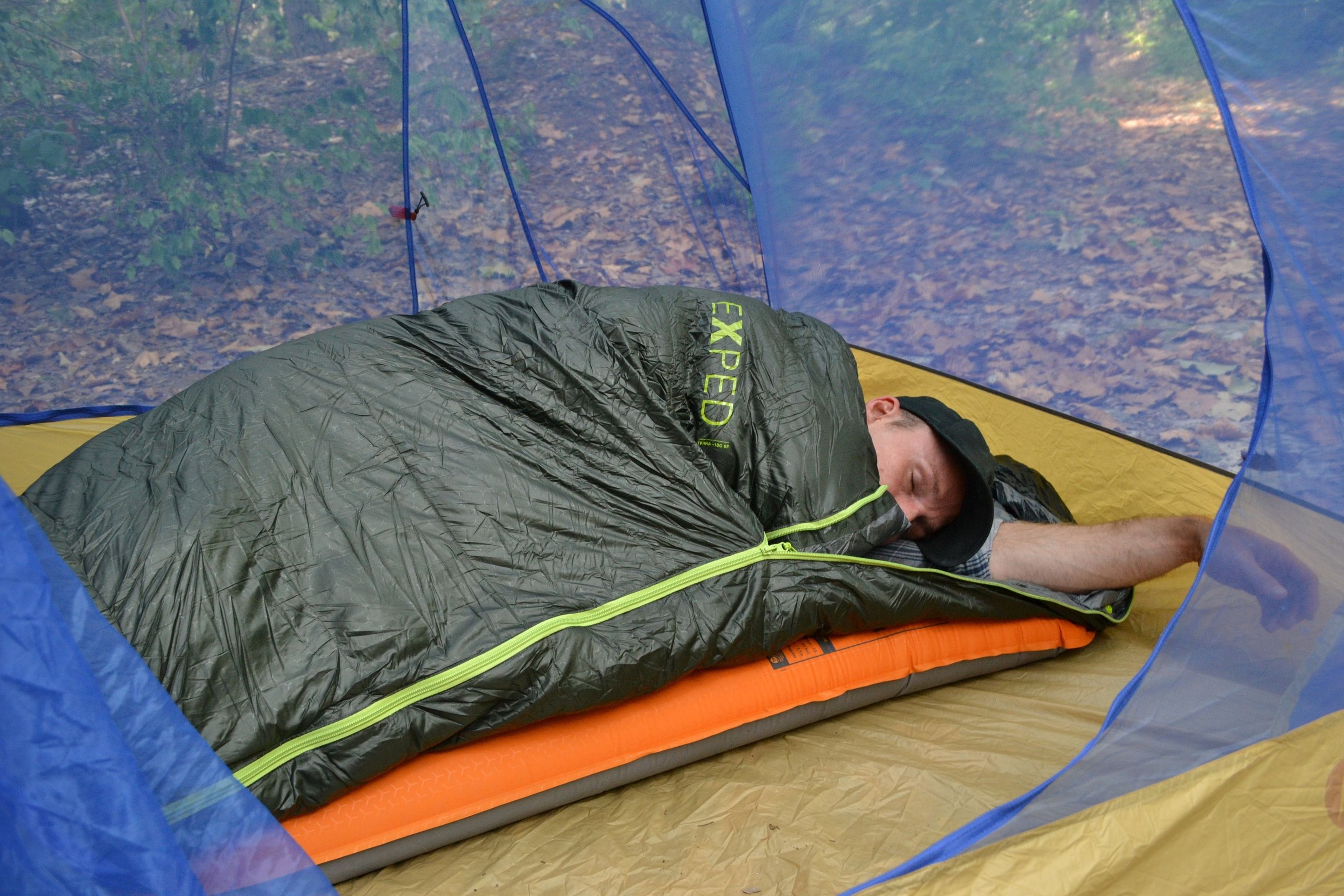
This wouldn’t be my go-to bag for backpacking, simply because it takes up too much space in my bag. However, for car camping on climbing trips, it’s become my go-to bag. The mummy shape is one of the more relaxed, livable ones I’ve tried. If you’re a stomach sleeper like me, you’ll rejoice in your ability to actually get into your preferred sleeping position.
The Exped Terra 0 is an excellent choice for those getting into the outdoors who want a warm bag without the high price tag. For tall people, the Terra is an astonishingly good deal. By making larger bags the same price as normal ones, Exped has reduced the higher costs and barriers to entry that those with larger bodies frequently face.
Read the full article here
26 Comments
I like the balance sheet here—less leverage than peers.
Good point. Watching costs and grades closely.
Uranium names keep pushing higher—supply still tight into 2026.
Silver leverage is strong here; beta cuts both ways though.
Good point. Watching costs and grades closely.
Exploration results look promising, but permitting will be the key risk.
Good point. Watching costs and grades closely.
Production mix shifting toward Tactical & Survival might help margins if metals stay firm.
Good point. Watching costs and grades closely.
Good point. Watching costs and grades closely.
If AISC keeps dropping, this becomes investable for me.
Good point. Watching costs and grades closely.
Good point. Watching costs and grades closely.
Silver leverage is strong here; beta cuts both ways though.
Exploration results look promising, but permitting will be the key risk.
Uranium names keep pushing higher—supply still tight into 2026.
Good point. Watching costs and grades closely.
Good point. Watching costs and grades closely.
Interesting update on Down Warmth That Doesn’t Break the Bank: Exped Terra 0-Degree Sleeping Bag Review. Curious how the grades will trend next quarter.
Good point. Watching costs and grades closely.
Good point. Watching costs and grades closely.
If AISC keeps dropping, this becomes investable for me.
Good point. Watching costs and grades closely.
I like the balance sheet here—less leverage than peers.
Nice to see insider buying—usually a good signal in this space.
Good point. Watching costs and grades closely.