

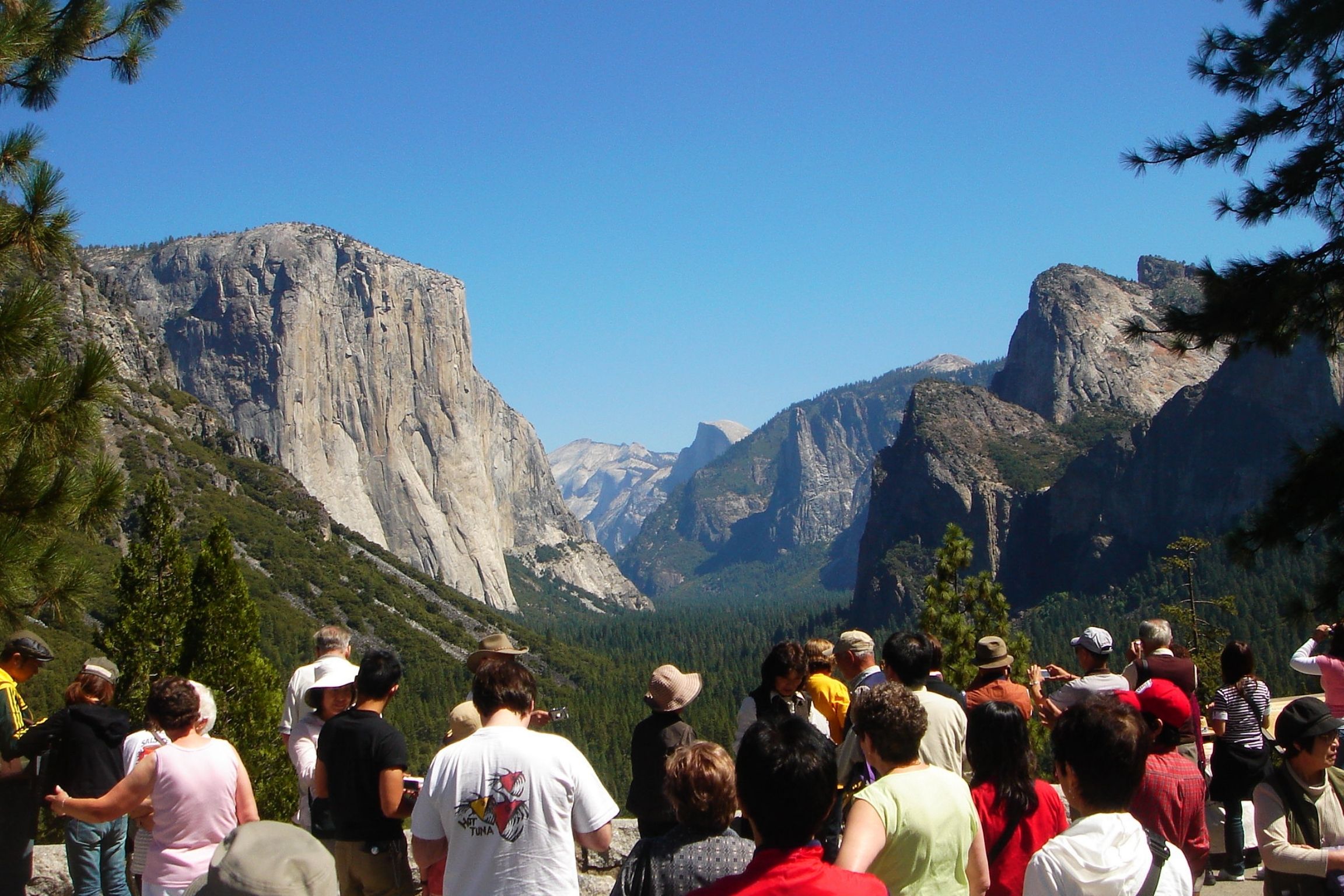
Yosemite National Park is famous for iconic sights like Half Dome and El Capitan, but in recent years, it’s become almost equally famous for massive crowds. Images of swarms of people and long lines of cars have blown up on the internet, and the data backs it up. In 2026, the park is on track to receive more visitors than ever before.
At the end of July, I became part of the problem, visiting the park during its peak summer tourist season. With a few key strategies, however, I managed to avoid most of the hordes of people and enjoy private moments of solitude in one of America’s most beautiful landscapes. Here’s how to avoid crowds in Yosemite and minimize the time you feel packed in like a sardine.
Avoid Weekends & Holidays
This piece of advice is the most obvious and easiest to implement. Several large cities — including San Francisco, Fresno, and Los Angeles — are within a 5-hour drive of the park, so it tends to swell with tourists on the weekends. Visiting Monday to Thursday means you’ll see less traffic, fewer lines, and less crowding on trails.
Holiday weekends almost always lead to big crowds in the park. On Memorial Day this year, Yosemite saw chaos as thousands poured into the park.
Go Outside the Yosemite Valley
Yosemite Valley is the most famous part of the park, and also the site of most non-camping lodging options, so it tends to be the most crowded. I stayed in a cabin at Curry Village for 2 nights, and waited in line for 50 minutes just to check in and get my key. Luckily, there are many other equally beautiful but less crowded parts of the park.
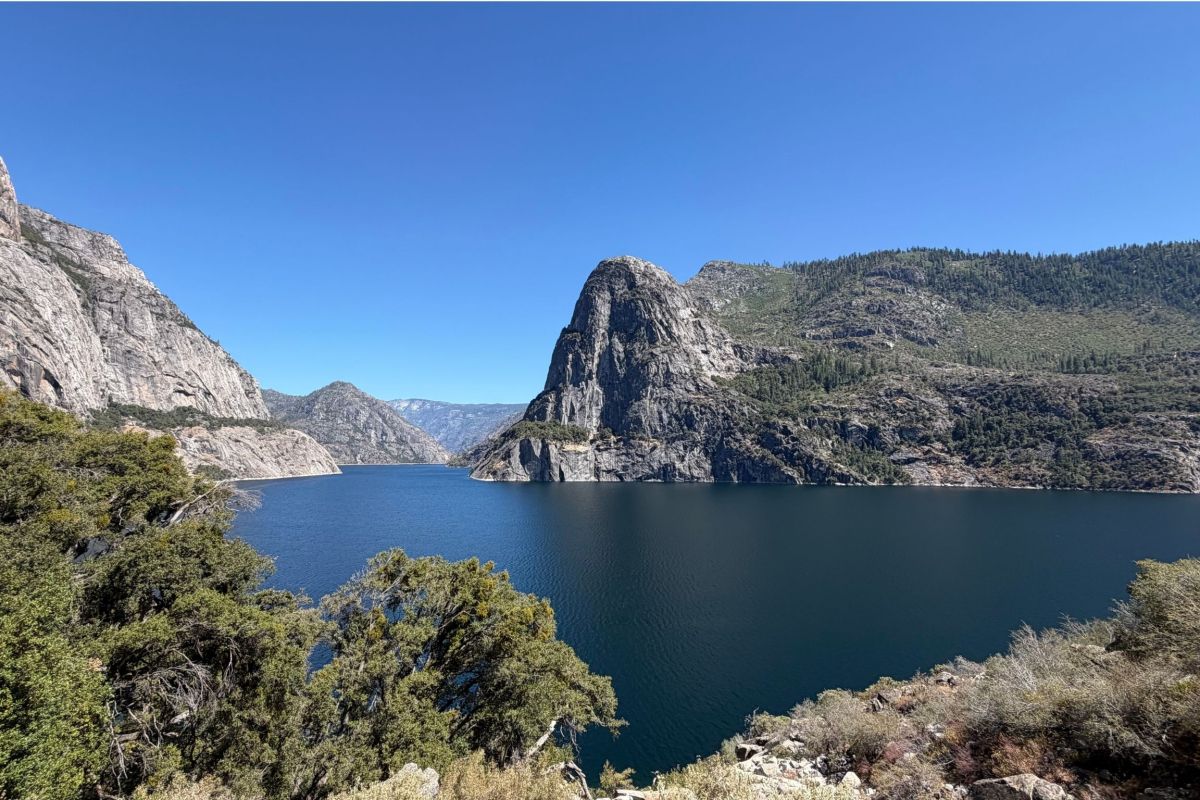
Both Hetch Hetchy and Tuolumne Meadows are part of Yosemite, but are about 1 to 1.5 hours away from the valley by car, and thus receive far fewer visitors. I visited Hetch Hetchy on a weekend, and only encountered about 20 people on the trail, with only about half a dozen cars in the parking lot.
This area is home to a large reservoir surrounded by scenic jagged peaks. I hiked the 5-mile trail to Tueeulala and Wapama Falls. At the second waterfall, I took a dip in a crystal-clear swimming hole, and had it to myself most of the time.
History buffs will enjoy learning about how the dam and reservoir came into existence in 1919, despite John Muir’s protests. Most of the other trails in Hetch Hetchy are for overnight backpacking, so if you can’t get a wilderness permit elsewhere in the park, this area is a good place to try.
I am going to say something controversial: I think Tuolumne Meadows is more gorgeous than Yosemite Valley. The High Sierras are an especially enchanting place, with alpine lakes, dark skies, and an unusual dome or mountain around every corner. At around 8,600 feet, it stands at nearly twice the elevation of the valley, so it’s also much cooler in the summer.
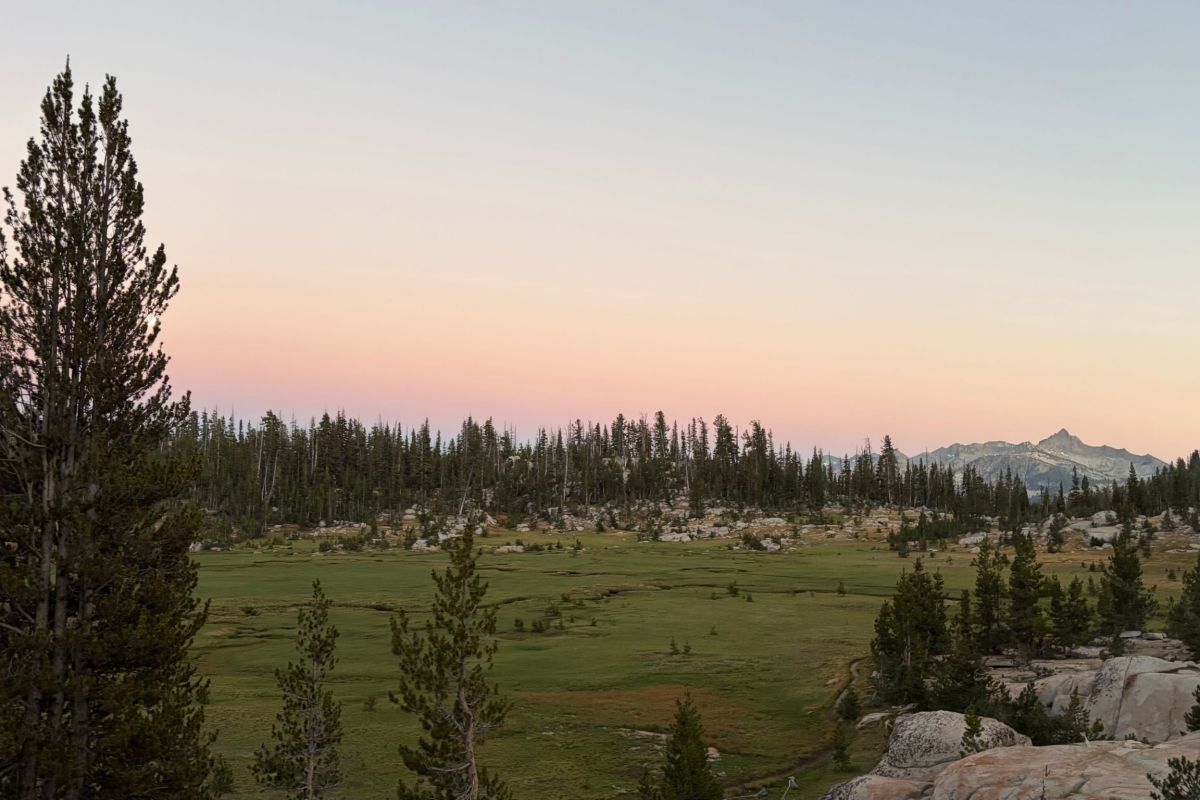
This area is home to so many trails that help disperse people in various locations. I was there on a Friday, and even then, there were only a moderate number of people around. If you’re down for a long but worthwhile day hike, embark on the 12-mile round-trip journey to Glen Aulin. You’ll see lush meadows, multiple cascades, and a mighty waterfall. For a shorter hike, try the 1-mile jaunt up Pothole Dome for sweeping vistas of the area.
Change Your Schedule
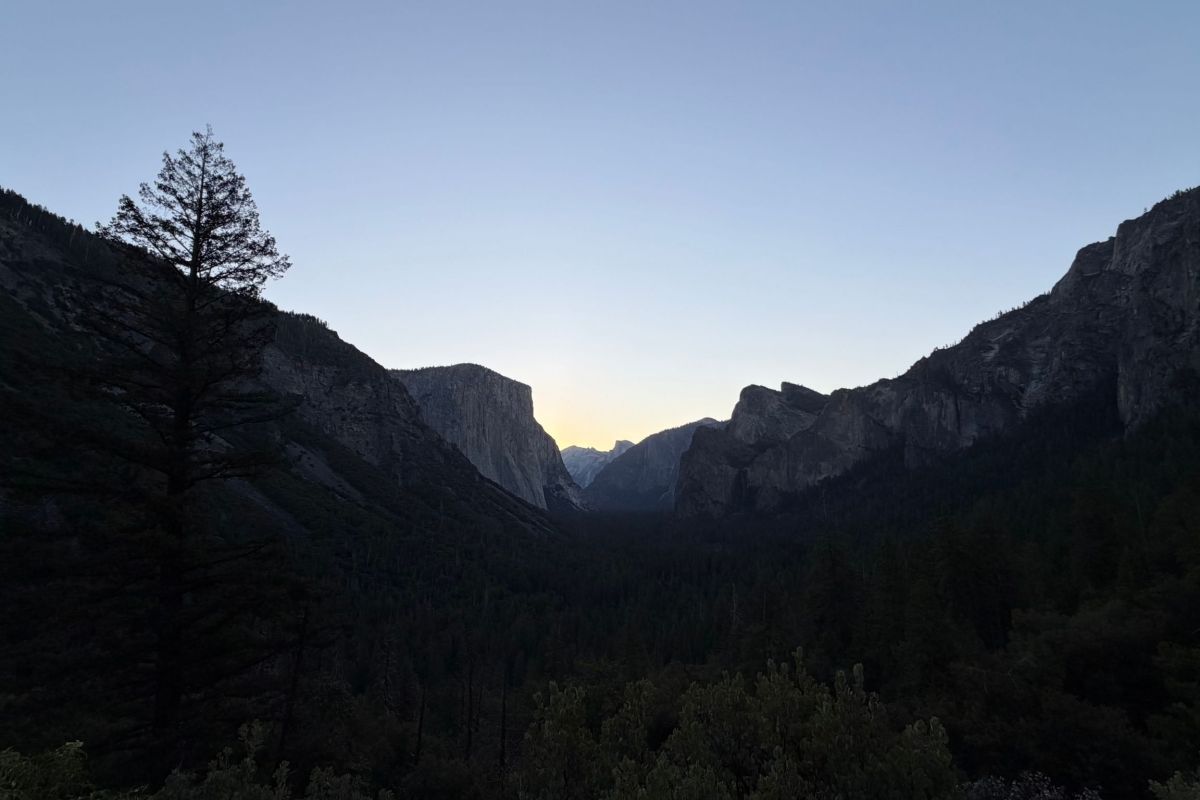
One of my bucket list items on my trip to Yosemite was to hike the famous Mist Trail, a 7-mile hike in the valley that takes visitors to the Vernal and Nevada falls. As the park’s preeminent trail, however, I knew it would be packed. So I did what any reasonable person does: Wake up at 3:30 a.m.
I packed my bag the night before, woke up, got dressed, chugged an energy drink, and then set off on the trail in the dark with my headlamp on. I timed it so I reached the first waterfall around sunrise at 5:30 a.m. The only other people on the trail were folks who were hiking to Half Dome to ascend the cables.
Getting up early also had another advantage. The National Park Service was doing repair work on the Mist Trail, so a large chunk of it was closed from 7 a.m. to 3:30 p.m. By getting up early, I was able to do the actual trail. Later in the day, I took the detour folks had to take instead, and it was 3 miles of grueling switchbacks, much more difficult than the actual trail. By this time — around 11 a.m. — the trail was absolutely packed.
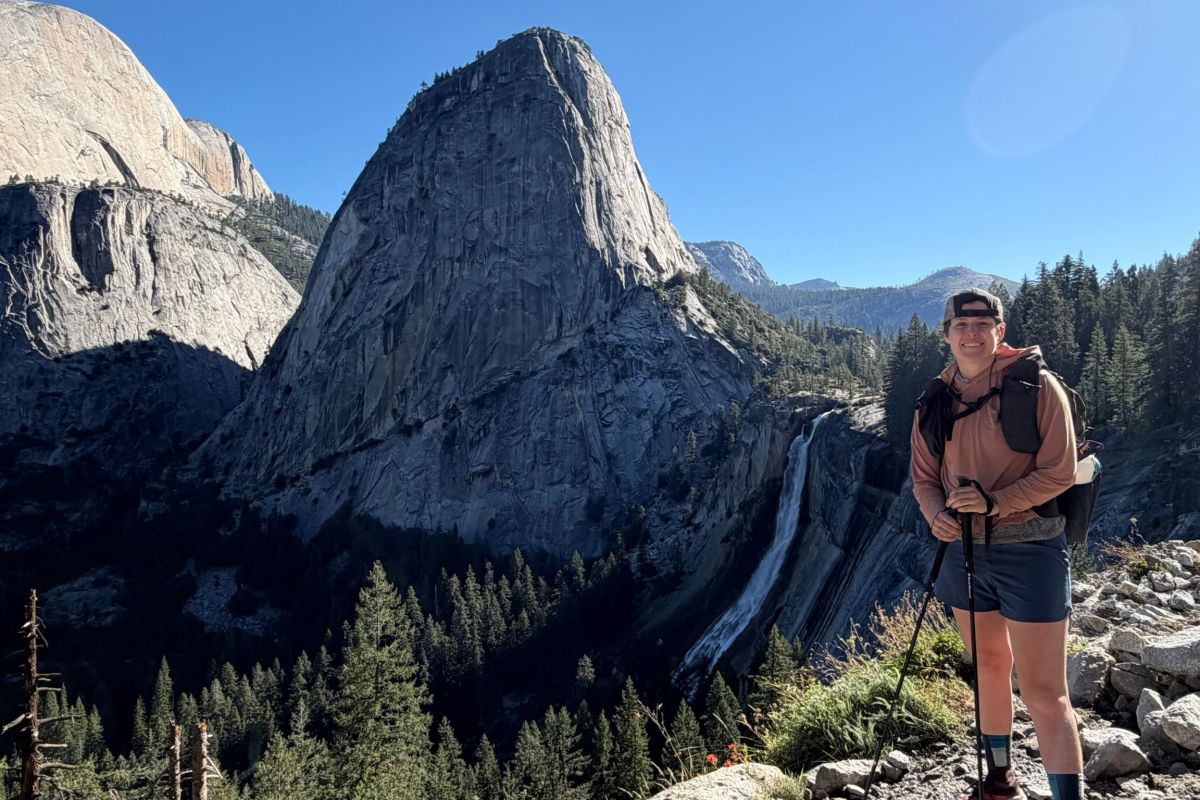
I then went back to my cabin, had a long lunch, took a nap, and then went back out for another hike around 3. This had the benefit of avoiding the hottest part of the day and the busiest times on the trail. I repeated this schedule when I visited Mariposa Grove, a popular area to see Giant Sequoias, and it worked well once again. While it may not be the most relaxing vacation itinerary, this system really worked for me. My days in the valley looked like this:
- 3:30 a.m.: Wake up.
- 4:00 a.m.: Out the door and on the way to the trailhead (by foot or car).
- 4:30 a.m.: Start hiking.
- 10:30 a.m.: Finish hiking, make way back to accommodations.
- 11:00 a.m. – 3:00 p.m: Lunch, shower, nap, read, and relax.
- 3-3:30 p.m.: Travel to trailhead.
- 3:30 p.m.-6 p.m.: Hike.
- 6 p.m.-7:30 pm.: Make way back to accommodations. Eat, shower, and prepare for the next day.
- 7:30 p.m.: Go to sleep.
If You’re in the Valley, Just Walk
Having a car in Yosemite was necessary in order to visit more distant parts of the park, like Hetch Hetchy, but I barely used it in the valley. Parking is as bad here in real life as it is on social media. Spots quickly fill up by 9 a.m. I parked once and kept my car there, which meant I got to avoid circling and scoping for spots all day.
There is a shuttle in the valley. It’s great that this public transportation tool exists, but it is massively inefficient. All the roads in the valley are a one-way loop, so if you want to get somewhere that’s behind you, you’ve got to ride the whole loop. And of course, it makes frequent stops and navigates the twisty, windy roads slowly (as it should).
So as much as you’re physically able, just walk. I’d bet that if you’re just wearing a day pack, you can probably beat the shuttle to most destinations.
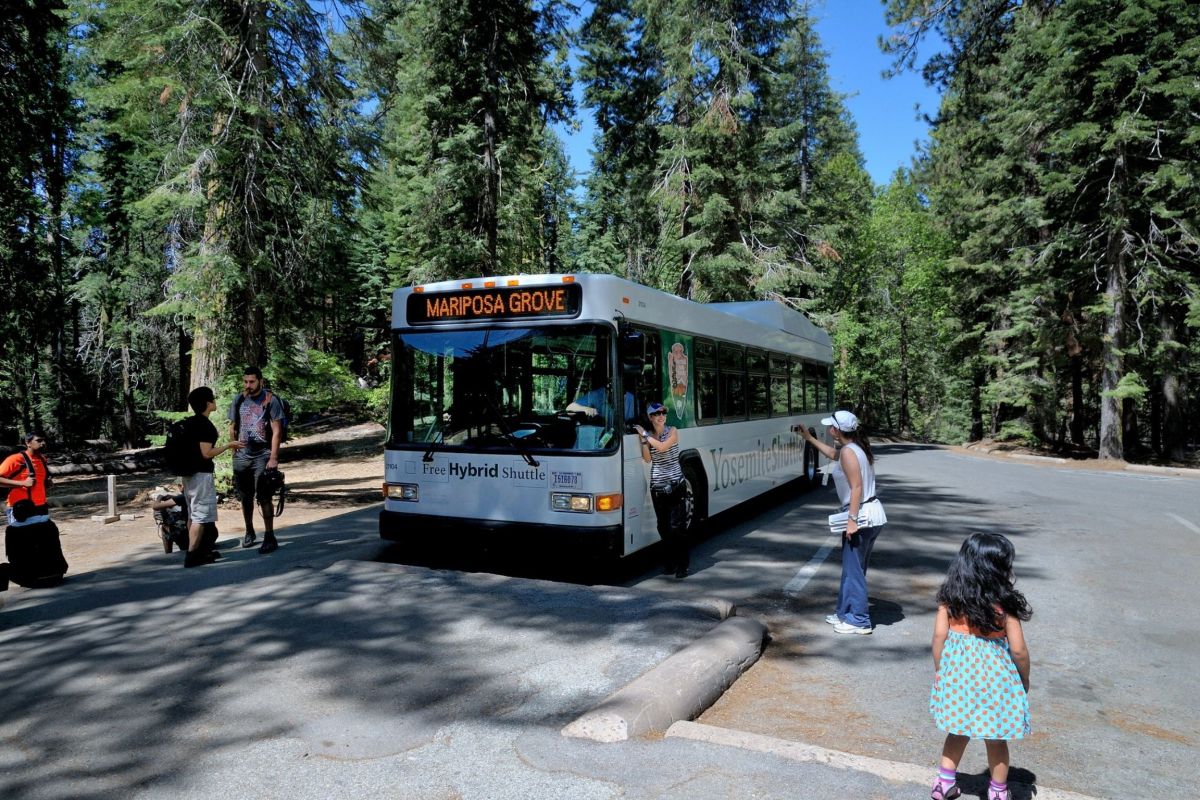
This also applies in Mariposa Grove. For this part of the park, there is a central parking plaza, and then to get to the grove, visitors can walk a 2-mile trail or take a free 10-minute shuttle bus. Only those with handicap placards may skip this and park in a location closer to the grove. I arrived in Mariposa at 7 a.m., before the shuttle started operating for the day, so I just hiked the 2-mile trail. It was relatively flat and easy.
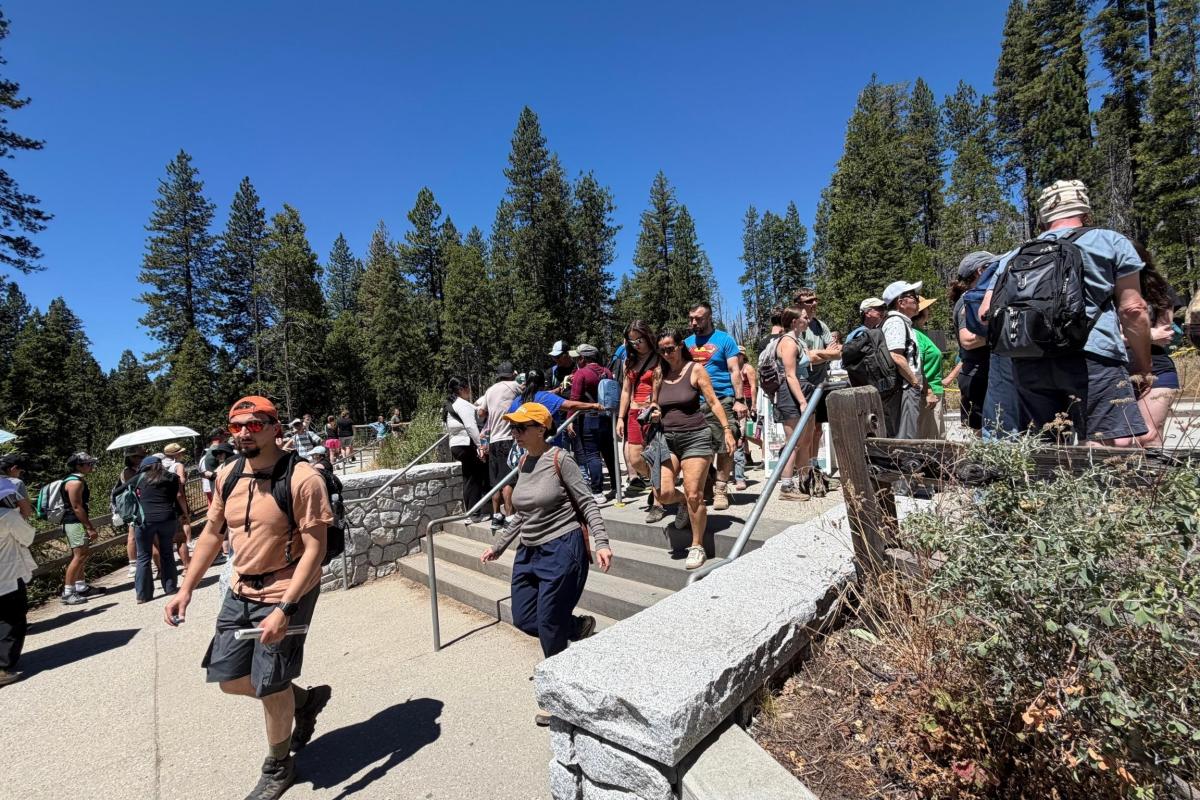
By the time I was done exploring this magical area of giant trees, it was around 11:30 a.m. I was tired, and there wasn’t a line to take the shuttle back to the plaza, so I hopped on. When I got back to the plaza, I was shocked. The line to take the shuttle to the grove was a long, twisting snake full of people that wrapped around itself multiple times. It felt like people were waiting to get on the Matterhorn ride at Disneyland.
The area was not shaded, so they were all standing in direct sun on a hot, 95-degree day. The hike, shaded in the forest, would’ve been a faster and less painful option. If you wear supportive footwear and just accept that your legs will get very tired, walking can save you a whole lot of headaches and time.
Go Long or Go Wild
It’s kind of a cliché, but it’s true: Most tourists to Yosemite aren’t going to hike more than a few miles. If you want some peace and quiet and feel equipped for the physical challenge, a long hike can be the key to solitude. Similarly, backpacking can be your ticket away from crowds.
I backpacked the 3-day High Sierra Camps loop, which issues permits via a lottery system, so, by definition, the number of people is capped. Backpacking permits in Yosemite can be tough to get, but if you’re lucky enough to nab one, you’re guaranteed some alone time with nature.
Read the full article here
36 Comments
Nice to see insider buying—usually a good signal in this space.
Good point. Watching costs and grades closely.
If AISC keeps dropping, this becomes investable for me.
Good point. Watching costs and grades closely.
I like the balance sheet here—less leverage than peers.
Good point. Watching costs and grades closely.
Production mix shifting toward Tactical & Survival might help margins if metals stay firm.
Interesting update on How to Avoid Crowds in Yosemite National Park. Curious how the grades will trend next quarter.
Good point. Watching costs and grades closely.
Good point. Watching costs and grades closely.
Nice to see insider buying—usually a good signal in this space.
Production mix shifting toward Tactical & Survival might help margins if metals stay firm.
Production mix shifting toward Tactical & Survival might help margins if metals stay firm.
Good point. Watching costs and grades closely.
Good point. Watching costs and grades closely.
Silver leverage is strong here; beta cuts both ways though.
Production mix shifting toward Tactical & Survival might help margins if metals stay firm.
Good point. Watching costs and grades closely.
Production mix shifting toward Tactical & Survival might help margins if metals stay firm.
Good point. Watching costs and grades closely.
Production mix shifting toward Tactical & Survival might help margins if metals stay firm.
Good point. Watching costs and grades closely.
I like the balance sheet here—less leverage than peers.
Uranium names keep pushing higher—supply still tight into 2026.
Good point. Watching costs and grades closely.
Exploration results look promising, but permitting will be the key risk.
Good point. Watching costs and grades closely.
Production mix shifting toward Tactical & Survival might help margins if metals stay firm.
Good point. Watching costs and grades closely.
I like the balance sheet here—less leverage than peers.
Good point. Watching costs and grades closely.
If AISC keeps dropping, this becomes investable for me.
Good point. Watching costs and grades closely.
Uranium names keep pushing higher—supply still tight into 2026.
Good point. Watching costs and grades closely.
Good point. Watching costs and grades closely.