

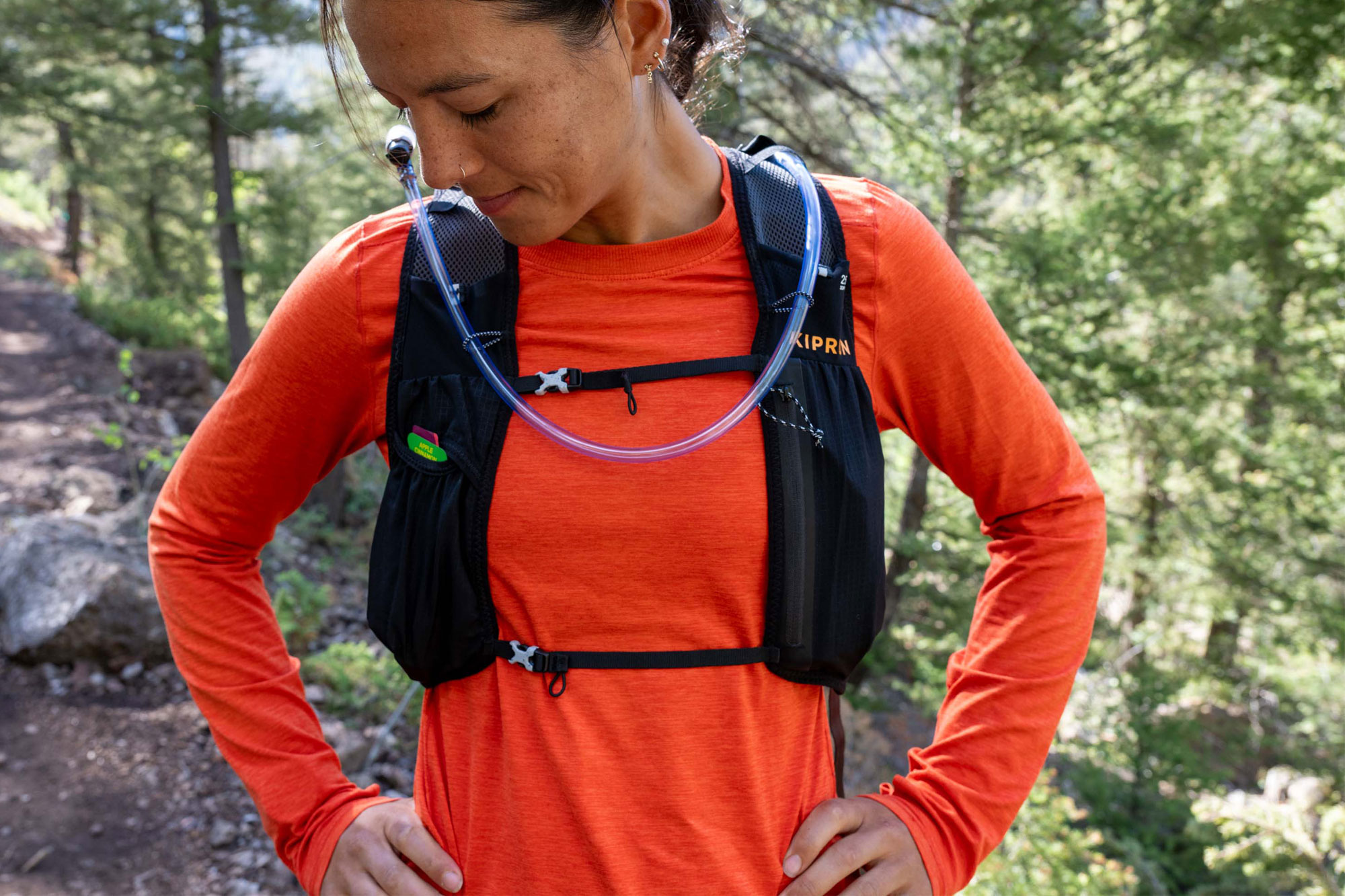
Running is often called a simple sport, but once you start adding hydration, layers, nutrition, navigation, and safety gear, the costs add up quickly. Kiprun, Decathlon’s premier running brand, focuses on making performance gear accessible. While Kiprun is still gaining traction in the U.S., the brand has a massive presence in Europe, where runners have relied on its products for years.
I tested the Kiprun 5L Trail Running Bag — yes, they call it a bag — over a month of training in Crested Butte, Colo. I logged long mountain days, hill repeats, and everything in between. During that time, I compared it against several higher-end hydration vests I’ve used from brands like Nathan, Salomon, and The North Face. I expected the biggest differences to show up in the materials and small details, but I was surprised by how much this vest actually delivers for the $75 price tag.
In short: The Kiprun 5L Trail Running Bag ($75) is a strong value option for everyday trail runners who want a comfortable vest with storage and hydration without the hefty markup. It works beautifully for shorter to mid-distance outings, especially if you prefer using a hydration bladder. However, ultrarunners needing maximum-capacity, heavy front-flask users, and those seeking highly customizable race setups should look elsewhere.
Looking for more options? Compare the Kiprun 5L with the best running hydration vests for your next trail adventure.
Materials
Polyester, elastane, and polyurethane
Best for
Short- to mid-distance runs, daily training miles, and budget-conscious trail runners
Pros
- Incredible value for a tough, comfortable build
- Highly adjustable for a secure, bounce-free fit
- Includes a clever, trim-to-fit 1L hydration bladder
- Sweat-resistant zippered pocket guards phones and valuables
Cons
- Limited front flask capacity (max 250mL)
- Back panel traps heat
- Gap at top compromises weather protection
Kiprun 5L Trail Running Bag Review
Fit & Comfort
The Kiprun 5L uses a one-size-fits-all design, which can be a gamble with running vests. Thankfully, Kiprun nailed the adjustability. The side tabs loosen enough to accommodate a wide range of runners while still cinching down securely for a bounce-free fit.
Smaller runners may end up with extra strap length hanging down, but you can trim the straps if needed. Just don’t cut them too short — you don’t want the strap end slipping completely through the adjustment tab.
The hardware is another area where Kiprun didn’t cut corners. The clips and adjustment points are the exact same style used on their more expensive vests. Once adjusted, the vest wraps comfortably around the torso and stays put even when loaded with water, fuel, and layers.
The biggest surprise was the material quality. I expected a compromise compared to high-end options, but despite being highly lightweight (the vest weighs just 180 g empty), the fabric feels tough, comfortable, and much more refined than a typical budget option. Both zippered front pockets are even sweat-resistant, a detail I don’t see on every high-end model I test.
Storage & Organization
The 5L packs a surprising amount of usable space into a relatively small vest. The pocket layout is easy to navigate and has enough room for nutrition and extra layers.
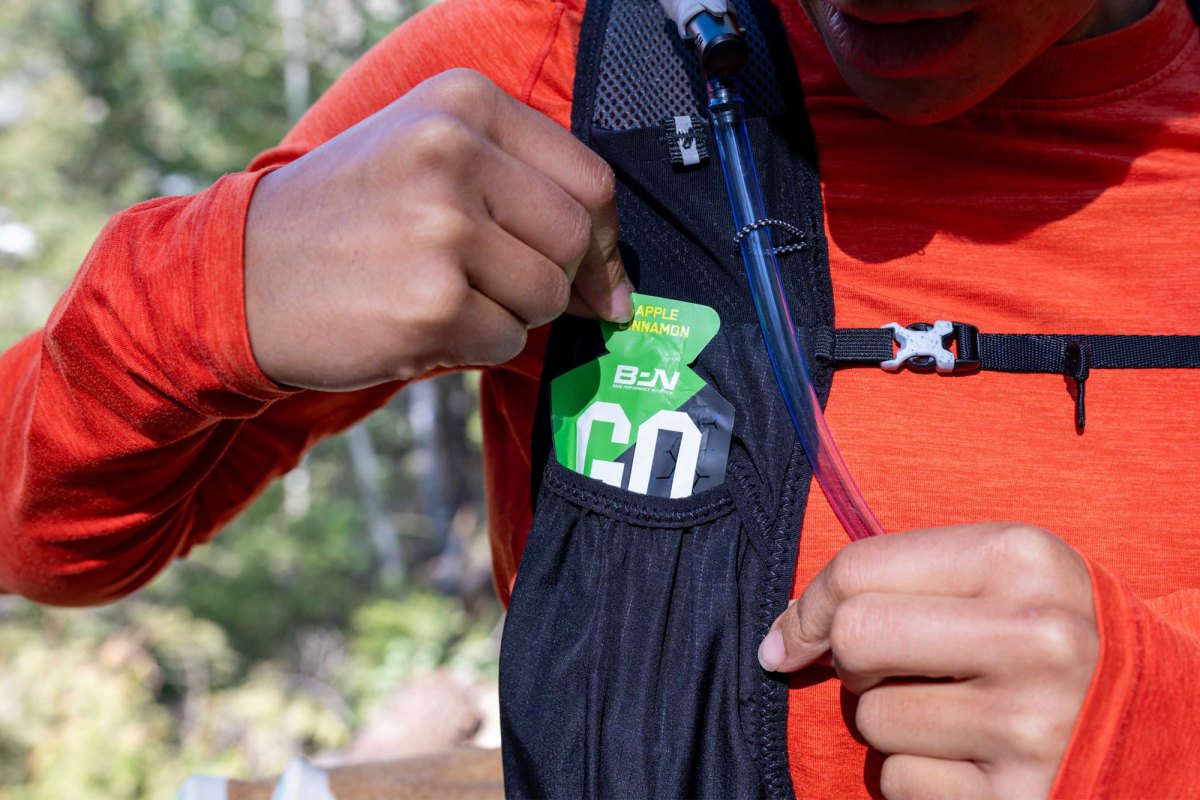
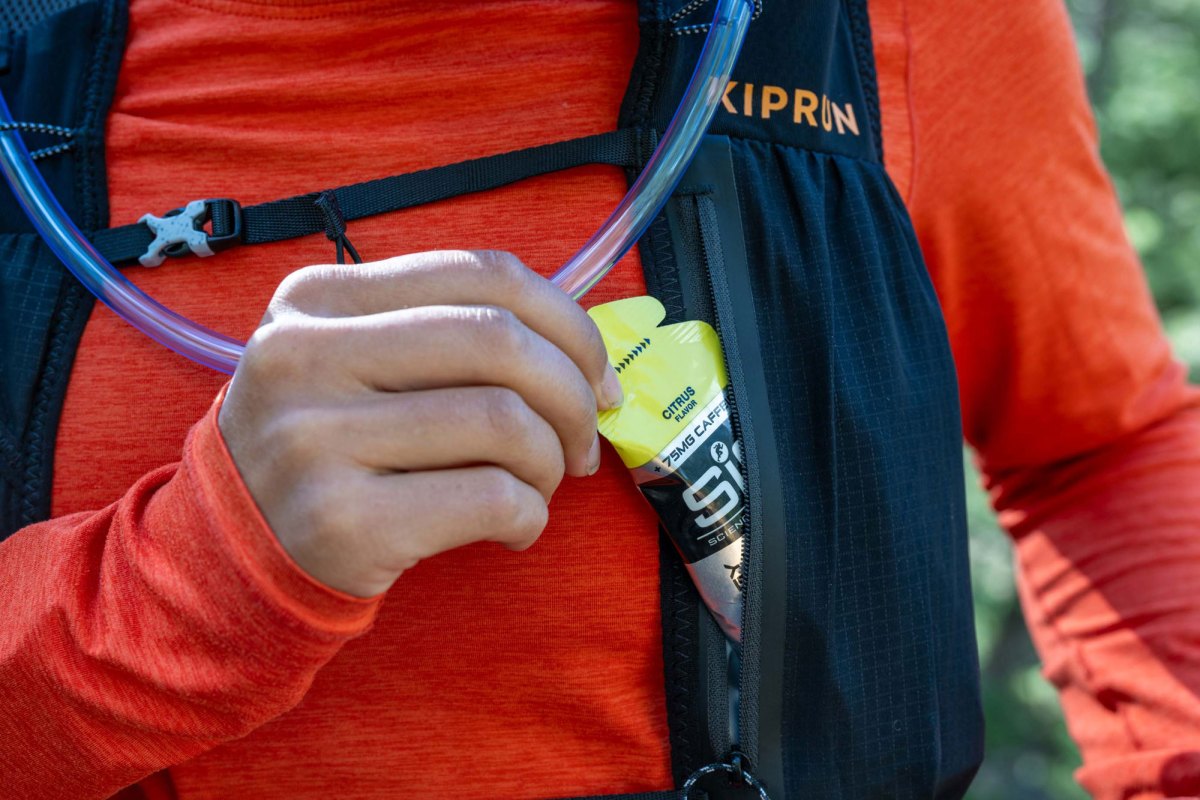
The left zippered pocket measures about 6 inches long and easily fits my iPhone 15 Pro (without its bulky OtterBox case) or my Garmin inReach. On the right, the matching envelope-style pocket perfectly holds gels and snacks I want to grab without slowing down.
The front pockets fit 250mL bottles (not included), and while they lack a top bungee or retention strap, the tapered shape prevents the bottles from sliding all the way down. That said, I wouldn’t use those flask pockets for small items. They are 6 inches deep, and the tapered middle makes digging out keys or lip balm more of a chore than I want while running.

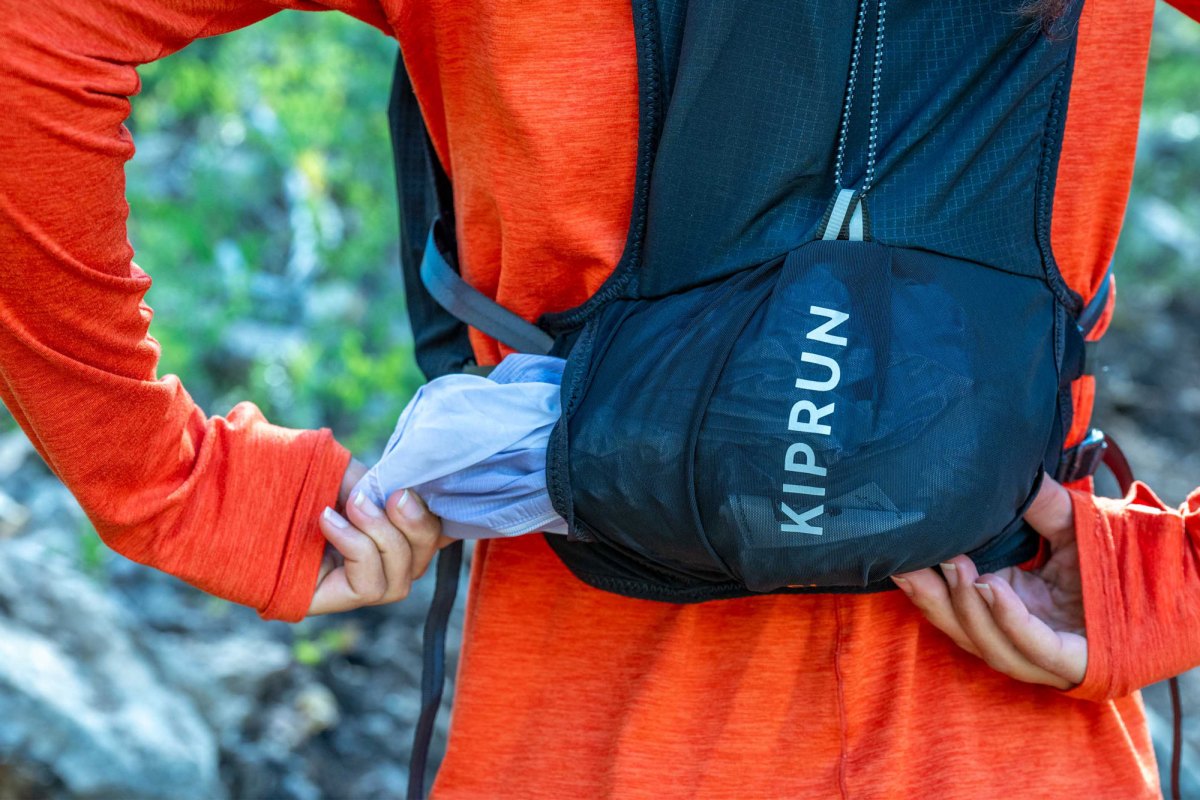
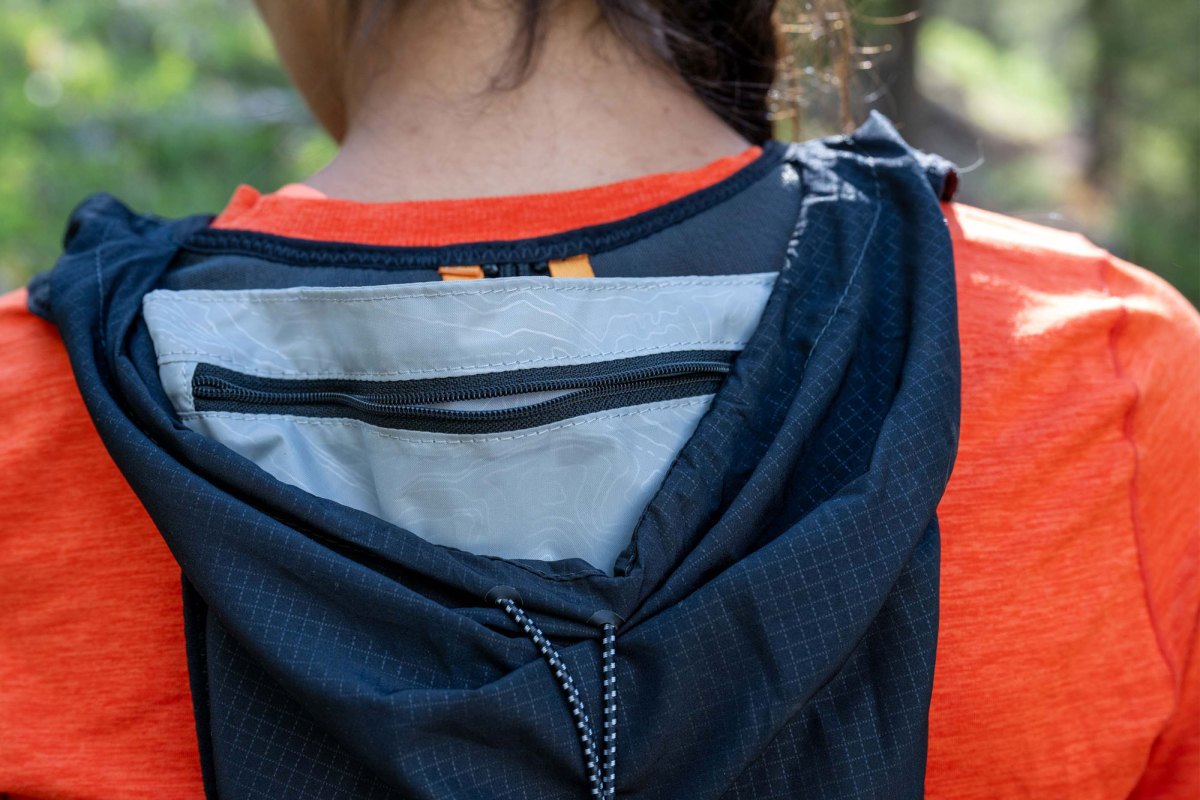
Rear storage centers on a massive 11-inch expandable pocket. With its open bungee closure, it easily swallowed a first-aid kit or a long-sleeve layer. Because there are no dedicated pole-carry loops, you just stash your running poles in the rear pocket. Without a tighter top closure, this essentially functions like a giant over-the-shoulder quiver, allowing you to blindly drop your folded poles in on the fly.
Inside that space sits a waterproof, zippered pocket measuring roughly 9 by 7 inches. This is the spot for things you absolutely cannot afford to lose or get wet — toilet paper, a first-aid kit, and keys. I even managed to fit my small HOVERAir drone inside.
Below the main compartment sits another 11-inch stretch-mesh pocket with envelope-style sides. It securely holds another layer for quick access without forcing you to take the vest off. I tried running with poles through it, but it was just too loose. If you have shorter poles (mine are 19 inches broken down), you might be able to squeeze them in.
Hydration
My 5L came with a 1L hydration bladder, which I prefer for longer mountain runs. It also holds two 250mL front flasks, though I couldn’t squeeze a 500mL bottle in there despite my best efforts.
The included bladder is incredibly well–thought-out. My first reaction was that the hose seemed ridiculously long, but I quickly learned you’re supposed to trim it to whatever length works best. That’s a clever touch I see increasingly often. The bite valve twists open and closed, so I never worried about leaks while tossing the vest in the back of my car.
One detail I especially appreciated was the elastic hose keeper. The inside has a grippy material that prevents the hose from slowly sliding down while you run. It’s a small touch, but many premium hydration vests still omit it.
The bladder itself worked seamlessly, but on all-day adventures, I still found myself wishing for more flask capacity. I like having electrolytes in my bottles, and as a salty sweater, 500mL of front-loaded hydration simply wasn’t enough.
Safety Features
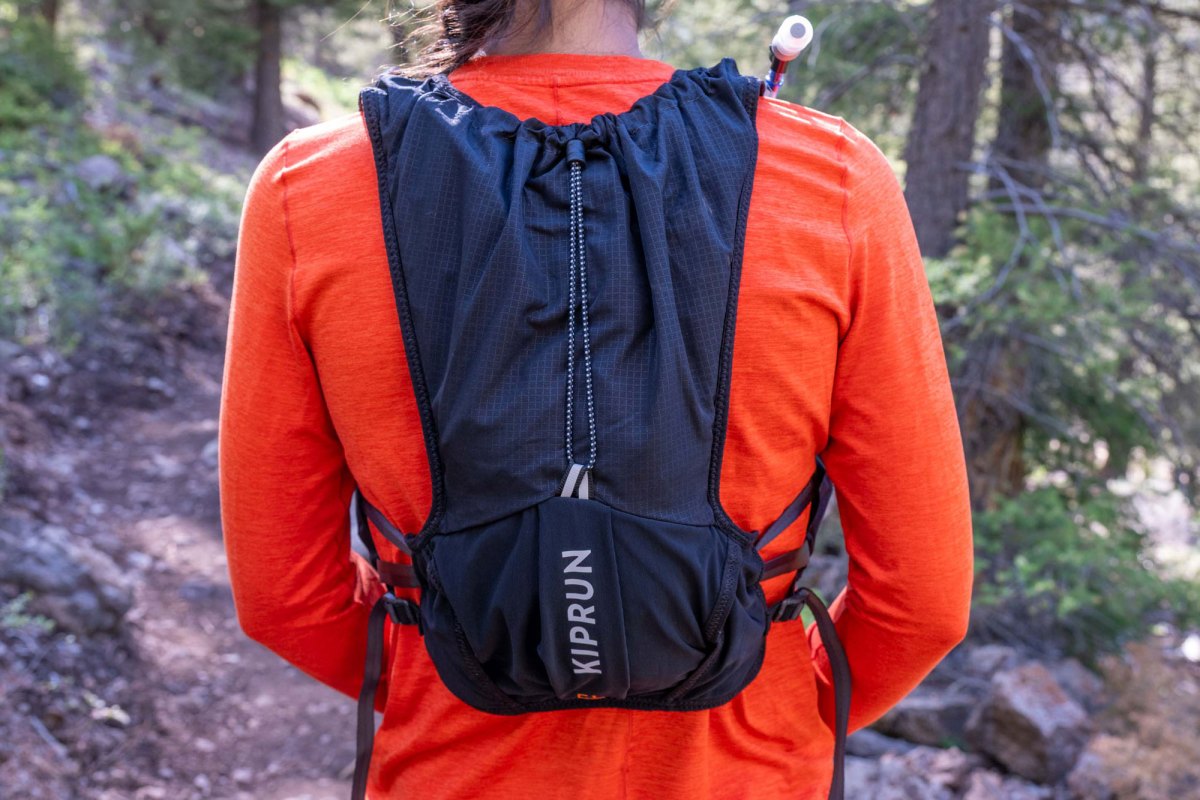
Kiprun included a few safety details that make this vest feel high-end. A whistle tucks neatly into the right pocket, reflective accents sit on the front, and a reflective Kiprun logo on the back adds visibility during early morning or evening runs.
Those are two of my biggest safety priorities when I’m out running: being seen and heard. Having both built right into the vest is a detail I deeply appreciate when heading out before sunrise or spending long days in the mountains.

Durability
The 5L feels ready for regular trail use rather than just entry-level jogging. After testing it for nearly 60 miles and comparing it against more expensive models, the biggest differences were not in durability — they were design choices.
The stitching, clips, and materials all feel capable of handling daily training miles. The rear compartment uses a bungee-style drawstring instead of a fully enclosed zipper. This helps compress gear but doesn’t offer much protection when the weather rolls in. That said, I view this as a design decision that keeps the price down, not a durability flaw.
I even threw mine in the washing machine (because trail gear gets gross), and it came out perfectly fine. It dried quickly, kept its shape, and fit exactly the same as it did before.
Room for Improvement
At $75, the 5L is impressive, but it isn’t perfect. My biggest complaint is the main rear storage pocket. Even when fully cinched down, there’s still a noticeable gap at the top, which makes me nervous about wearing it in anything outside of sunny weather.
The back panel is another area worth noting. I really liked the curved design that keeps the vest narrower against your back; it gives a closer, streamlined fit and helps it feel less bulky when loaded. But the material feels warm, and on hotter days, the reduced airflow was noticeable. During warm mountain runs, the back panel definitely held some heat and absorbed a lot of sweat.
The vest also won’t replace a larger pack for big, self-supported adventures. The 5L capacity is ideal for shorter to medium-length runs, but ultrarunners carrying lots of layers, food, and gear will definitely need more space.
Kiprun 5L Trail Running Bag: Who Is It For?
The Kiprun 5L Trail Running Bag is best for runners who want reliable hydration and storage without spending $150 or more. It’s an excellent option for newer trail runners, everyday training, races with aid stations, and anyone tired of watching the cost of trail gear climb.
It delivers exactly where it matters: comfort, storage, toughness, and thoughtful details. Experienced racers looking for an ultralight, fully customizable setup may prefer top-tier competitors, but most runners will find the Kiprun 5L does everything they need at a much more reasonable price.
Read the full article here
48 Comments
Nice to see insider buying—usually a good signal in this space.
Good point. Watching costs and grades closely.
The cost guidance is better than expected. If they deliver, the stock could rerate.
Uranium names keep pushing higher—supply still tight into 2026.
Good point. Watching costs and grades closely.
Good point. Watching costs and grades closely.
Nice to see insider buying—usually a good signal in this space.
Good point. Watching costs and grades closely.
The cost guidance is better than expected. If they deliver, the stock could rerate.
Good point. Watching costs and grades closely.
Production mix shifting toward Tactical & Survival might help margins if metals stay firm.
Good point. Watching costs and grades closely.
Good point. Watching costs and grades closely.
Uranium names keep pushing higher—supply still tight into 2026.
Good point. Watching costs and grades closely.
Nice to see insider buying—usually a good signal in this space.
Good point. Watching costs and grades closely.
Good point. Watching costs and grades closely.
I like the balance sheet here—less leverage than peers.
Good point. Watching costs and grades closely.
Silver leverage is strong here; beta cuts both ways though.
Good point. Watching costs and grades closely.
If AISC keeps dropping, this becomes investable for me.
Exploration results look promising, but permitting will be the key risk.
Good point. Watching costs and grades closely.
Nice to see insider buying—usually a good signal in this space.
Good point. Watching costs and grades closely.
Good point. Watching costs and grades closely.
Silver leverage is strong here; beta cuts both ways though.
Good point. Watching costs and grades closely.
Production mix shifting toward Tactical & Survival might help margins if metals stay firm.
Good point. Watching costs and grades closely.
Good point. Watching costs and grades closely.
I like the balance sheet here—less leverage than peers.
Nice to see insider buying—usually a good signal in this space.
Good point. Watching costs and grades closely.
If AISC keeps dropping, this becomes investable for me.
Good point. Watching costs and grades closely.
Good point. Watching costs and grades closely.
Production mix shifting toward Tactical & Survival might help margins if metals stay firm.
Production mix shifting toward Tactical & Survival might help margins if metals stay firm.
Good point. Watching costs and grades closely.
Good point. Watching costs and grades closely.
Uranium names keep pushing higher—supply still tight into 2026.
Good point. Watching costs and grades closely.
The cost guidance is better than expected. If they deliver, the stock could rerate.
Good point. Watching costs and grades closely.
Good point. Watching costs and grades closely.