

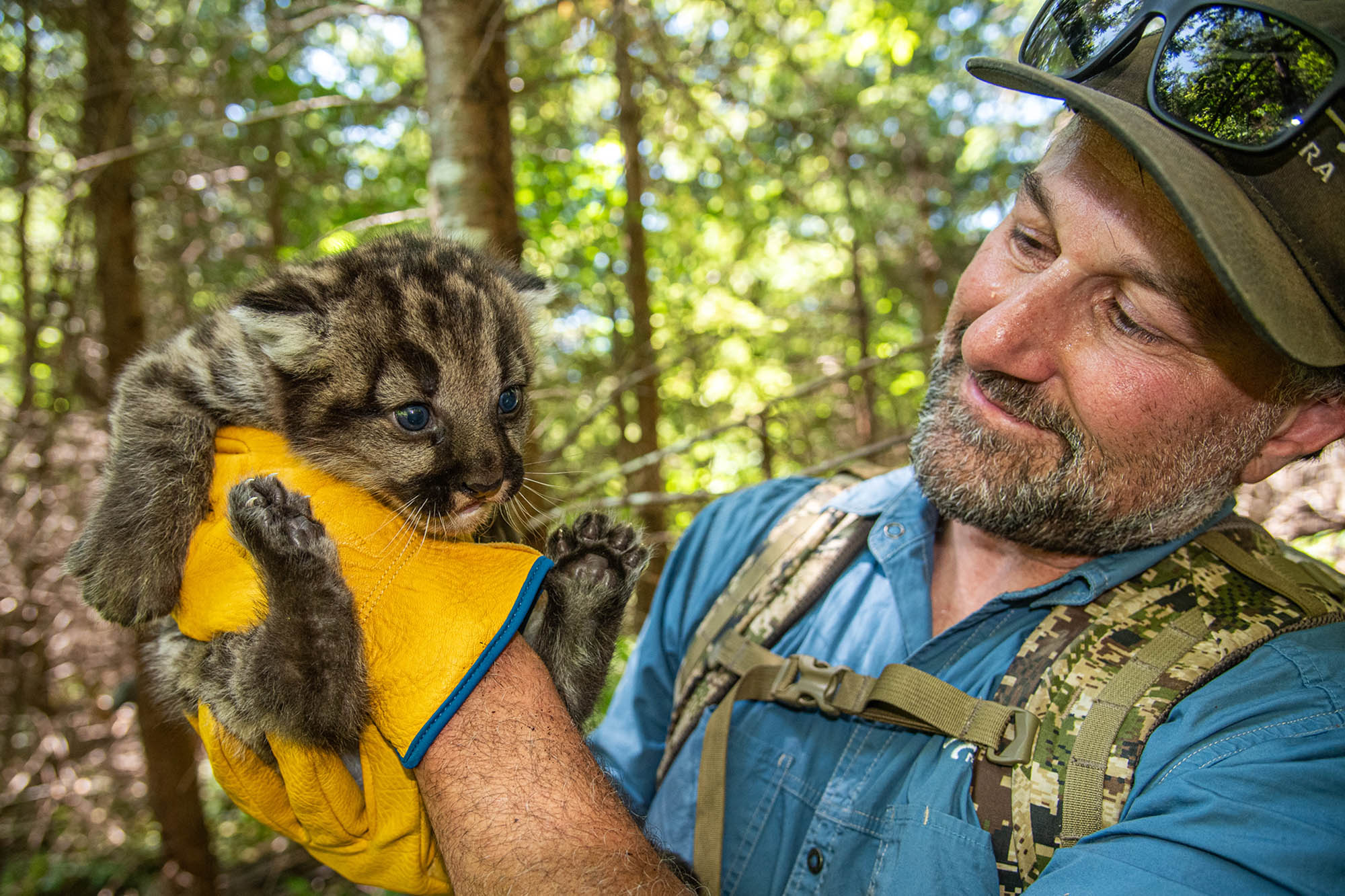
California officials have worked hard to make space for mountain lions — but not everyone is happy about it. In February, six groups of this apex predator received additional protections under the California Endangered Species Act. These specific populations live along California’s Central and Southern coasts, where development has increasingly isolated them from the rest of the state’s habitats.
But giving the lions more protection has drawn some pushback from ranchers and developers concerned about attacks on livestock. Even some California residents have expressed fear of conflicts with the animals, especially after a fatal attack in 2024.
The reality is that granting more habitat and legal protections to mountain lions doesn’t necessarily mean more conflicts with people. That’s according to a study published Tuesday in Current Biology. The study’s authors looked at movements of both lions and outdoor athletes in the Santa Cruz Mountains near San Francisco. By compiling data from GPS collars on the lions and Strava activities from runners and cyclists, they determined that mountain lions try to avoid people — even when their habitat is near popular trails.
“If you’re a hiker or mountain biker in these spaces, mountain lions already know you’re there, and they’re avoiding the area,” Chris Wilmers, a UC Santa Cruz Environmental Studies Professor and senior author of the study, said in a news release. “They know which trails are used, when, and how much, and they avoid places that are consistently busy, rather than just reactively getting out of there when someone comes down the trail. They are taking proactive steps to avoid people.”
Mountain Lion History in California
California has been slowly improving protections for mountain lions for over half a century. The state banned hunting of the animals in 1974. Voters designated them a “specially protected mammal” in a 1990 referendum. The law also made exceptions for the lethal removal of the big cats to protect private property and livestock.
This year, the California Fish and Game Commission voted unanimously to list six groups of Central Coast and Southern California mountain lions as “threatened” under the California Endangered Species Act. This population of lions, which represents roughly a third of the state’s population, is in particular need of help. Biologists have noted an increase in inbreeding among the animals, which could compromise their ability to thrive in the long term.
That’s part of why the state created the world’s largest wildlife crossing near the Santa Cruz Mountains. Two out of three mountain lions are killed by vehicles while attempting to reach habitat on the other side of busy highways running north and south of San Francisco.
“Every lion that crosses in either direction will significantly add to the gene pool,” Paul Edelman, deputy director of the Santa Monica Mountains Conservancy, told GearJunkie. “That’s how bad things are.”
Study’s Findings on Lion–Human Conflicts
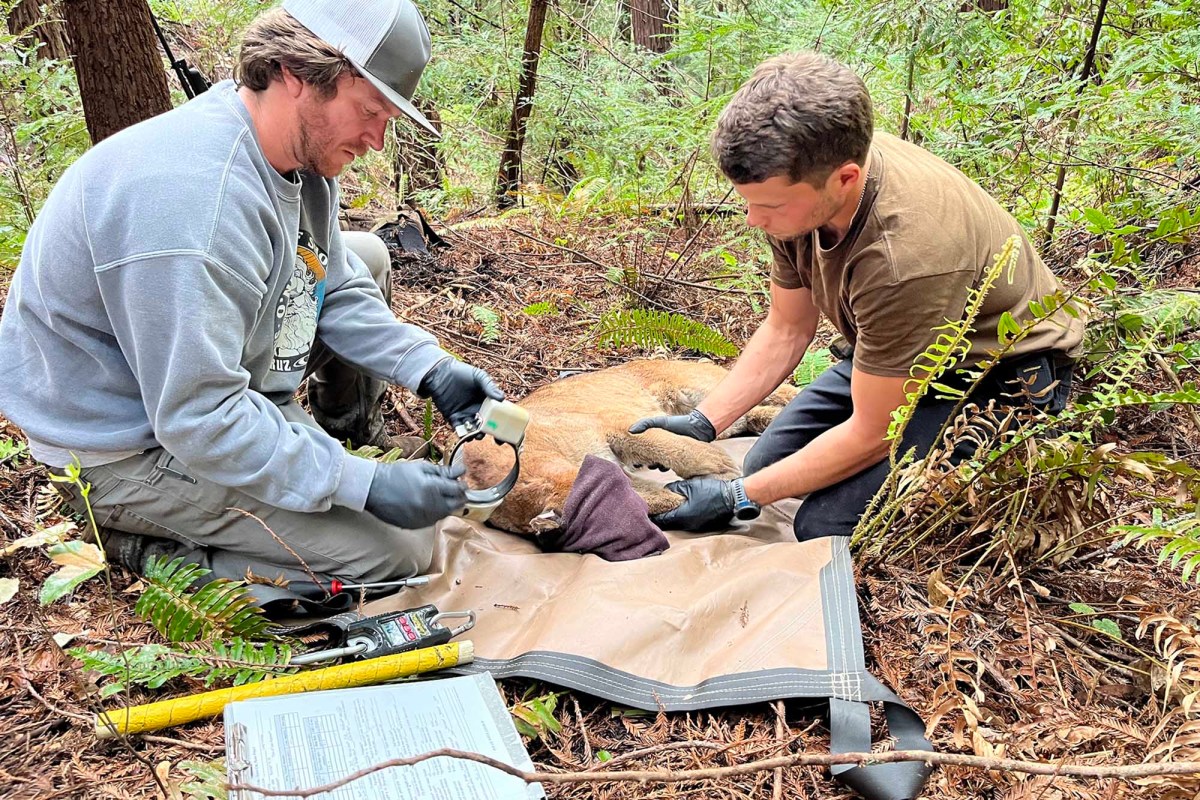
For this week’s study, researchers analyzed 6 years’ worth of data from 36 wild pumas fitted with GPS tracking collars. Most of these were in the Santa Cruz Mountains.
Researchers then compared the lions’ movements to those of runners and cyclists, recording their activities on the outdoor app Strava. They found that the animals were “clearly tuned in to long-term recreation use trends,” according to a release from the University of California, Santa Cruz, which participated in the study.
“Pumas were generally proactive in avoiding heavily trafficked trails, particularly areas within 100 feet of trail sections with the highest average hourly usage,” the university said. “That’s good news for outdoor enthusiasts.”
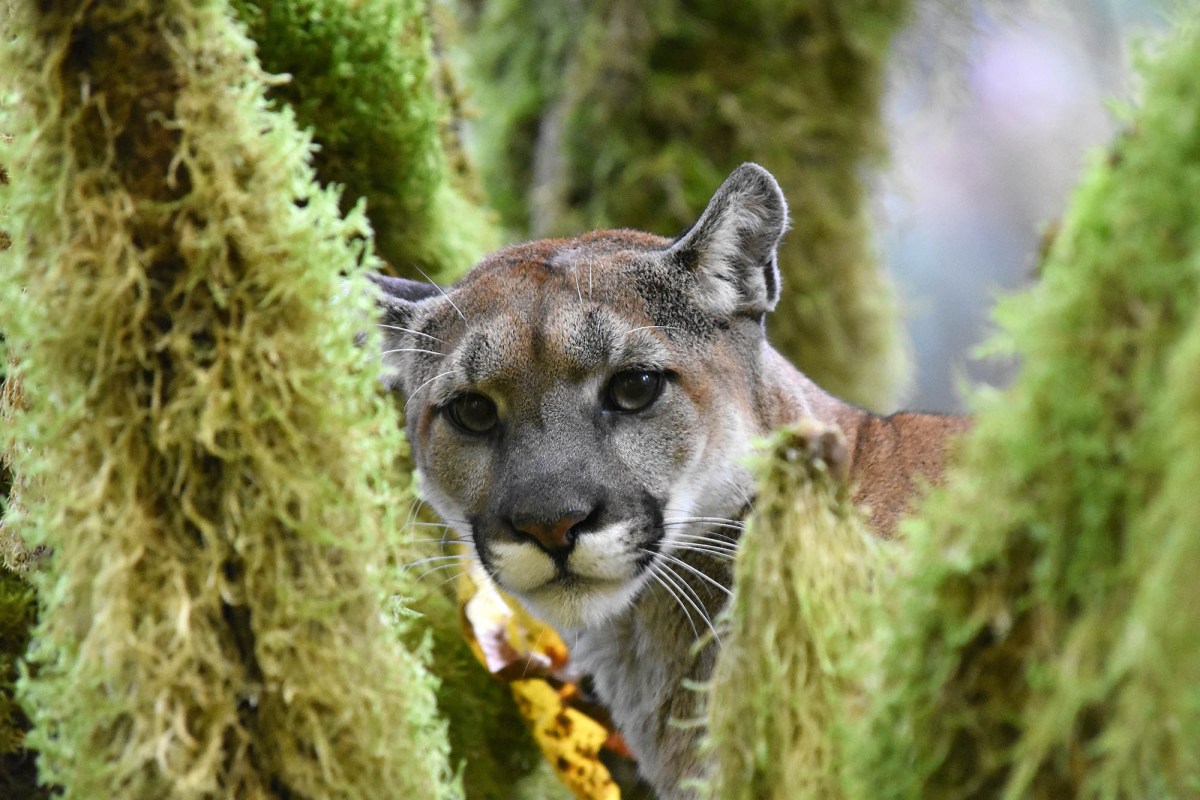
The study also analyzed the history of conflicts between mountain lions and people. Researchers mapped 678 human-puma conflict events reported in the Santa Cruz Mountains between 2018 and 2023. These incidents include puma sightings, attacks on pets or livestock, aggressive or unusual behavior, or rare attacks on humans.
The results? Mountain lions that frequently see humans are not necessarily more likely to approach them — in fact, quite the opposite. “The results showed that the conflict locations were generally avoided by all pumas, regardless of their level of human tolerance,” according to the study.
The findings suggest that land managers can reduce lion-human conflicts by managing human behavior, like nighttime trail closures and limits on backcountry access. Moreover, maintaining a healthy lion population isn’t just about reducing already rare attacks on humans. It’s also about improving the health of the ecosystem as a whole.
As a keystone species, lions play an important role, researchers said. “This research suggests that habituation shouldn’t be viewed as black and white, at least, and there may be a spectrum of habituation that is, in fact, supporting peaceful coexistence between people and these amazing animals.”
Read the full article here
37 Comments
Nice to see insider buying—usually a good signal in this space.
Silver leverage is strong here; beta cuts both ways though.
Good point. Watching costs and grades closely.
If AISC keeps dropping, this becomes investable for me.
Interesting update on Strava Data Shows Mountain Lions Take ‘Proactive Steps’ to Avoid People. Curious how the grades will trend next quarter.
Good point. Watching costs and grades closely.
Good point. Watching costs and grades closely.
Production mix shifting toward Tactical & Survival might help margins if metals stay firm.
Production mix shifting toward Tactical & Survival might help margins if metals stay firm.
Good point. Watching costs and grades closely.
Good point. Watching costs and grades closely.
Nice to see insider buying—usually a good signal in this space.
Good point. Watching costs and grades closely.
Uranium names keep pushing higher—supply still tight into 2026.
Good point. Watching costs and grades closely.
Interesting update on Strava Data Shows Mountain Lions Take ‘Proactive Steps’ to Avoid People. Curious how the grades will trend next quarter.
The cost guidance is better than expected. If they deliver, the stock could rerate.
Good point. Watching costs and grades closely.
Good point. Watching costs and grades closely.
Exploration results look promising, but permitting will be the key risk.
Good point. Watching costs and grades closely.
Good point. Watching costs and grades closely.
Uranium names keep pushing higher—supply still tight into 2026.
Good point. Watching costs and grades closely.
Uranium names keep pushing higher—supply still tight into 2026.
I like the balance sheet here—less leverage than peers.
The cost guidance is better than expected. If they deliver, the stock could rerate.
Good point. Watching costs and grades closely.
Silver leverage is strong here; beta cuts both ways though.
Good point. Watching costs and grades closely.
I like the balance sheet here—less leverage than peers.
Good point. Watching costs and grades closely.
Good point. Watching costs and grades closely.
The cost guidance is better than expected. If they deliver, the stock could rerate.
Interesting update on Strava Data Shows Mountain Lions Take ‘Proactive Steps’ to Avoid People. Curious how the grades will trend next quarter.
Good point. Watching costs and grades closely.
Good point. Watching costs and grades closely.