

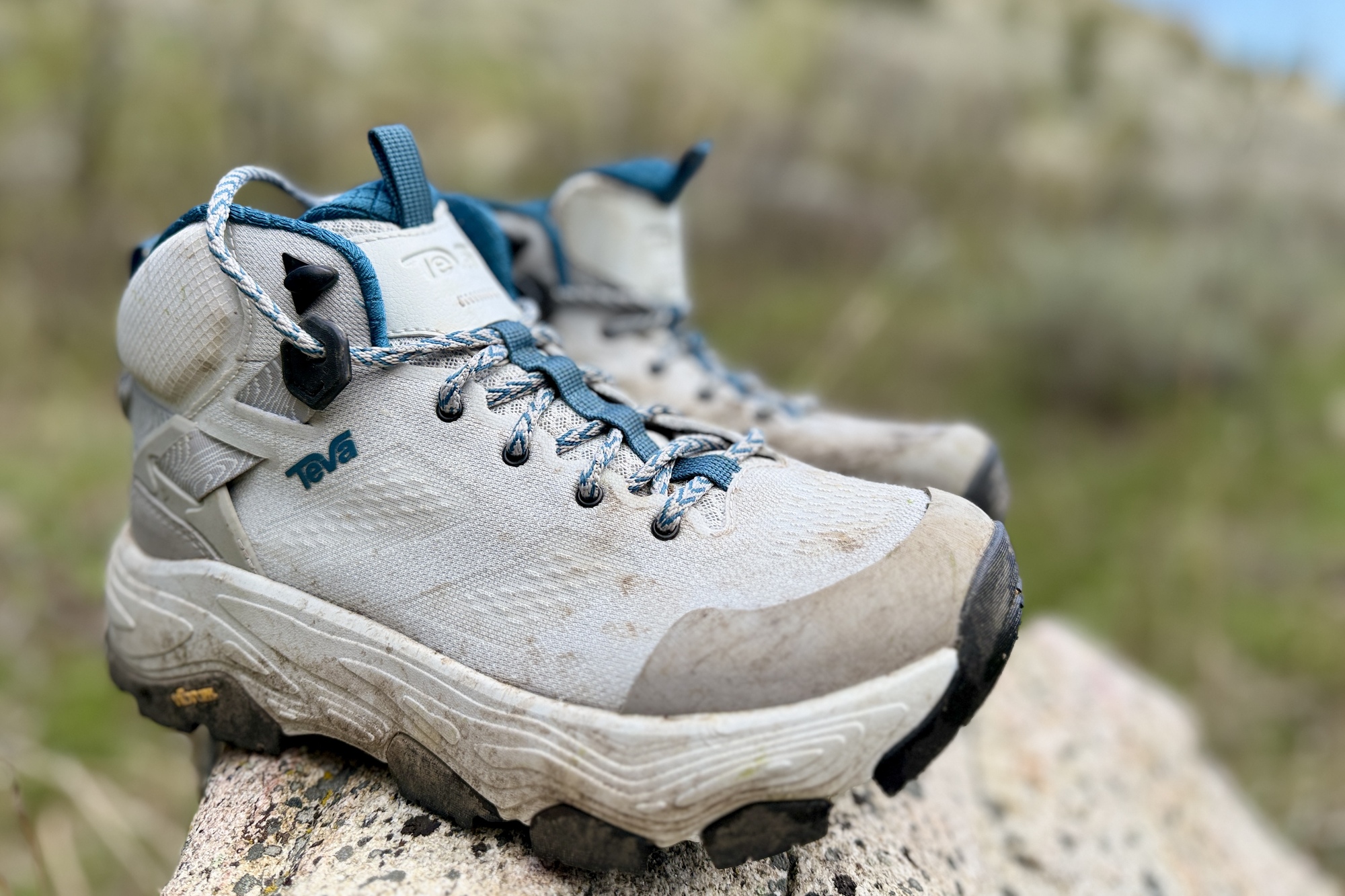
I was midway through a steep climb to the top of a waterfall high in the Tetons when I realized my feet weren’t sweaty. The sun was baking the trail, but heat wasn’t building inside the Teva Grandview Max Vent ($165) the way it often does in a waterproof boot. Its mono-mesh upper — a thin, single-layer mesh that lets heat escape — kept air moving.
Meanwhile, the wider forefoot let my feet stretch out instead of squishing my toes. Just to be sure, I took my boots off at the top, and guess what? My socks were completely dry despite the fact that the rest of me was boiling.
I tested the Grandview Max Vent for 4 months, putting over 150 miles on them during a cool spring that led to a so-far sweltering summer in Grand Teton National Park and the forests around Jackson, Wyo. I wore the boots across dry dust, slick mud, and trails with lingering snow. They felt light and comfortable right out of the box. Underfoot, Teva’s LITE-COMF midsole uses lightweight foam to soften each step without feeling bulky.
In short: The Teva Grandview Max Vent is a lightweight, highly breathable hiking boot with immediate comfort and generous space through the forefoot. It works best for hot-weather day hikes, though its relaxed fit feels loose on low-volume feet. Skip it if you need the weather protection required for consistently wet hikes or the precision for complex trail sections.
Compare the Teva Grandview Max Vent with the other models tested in our guide to the best hiking boots for men and the best hiking boots for women.
Weight (Pair)
1 lb., 12.2 oz.
Pros
- Excellent breathability for hot hikes
- Immediate comfort with a smooth, cushioned ride
- Roomy toe box and forgiving fit
- Handled muddy spring trails better than expected
Cons
- Not precise or locked in enough for technical terrain
- Not waterproof for consistently wet conditions
Lightweight Comfort From the First Step
Some hiking footwear needs several outings before the upper softens and the midsole begins to feel natural. But, not the Grandview Max Vent. These boots felt good and noticeably light underfoot as soon as I laced them up. The flexible mesh upper adds little bulk, while the LITE-COMF midsole provides soft cushioning and a smooth heel-to-toe transition.
It feels closer to a cushioned trail shoe with added ankle coverage than a stiff, traditional boot. I didn’t notice pressure points, rigid seams, or rubbing around the ankle. The upper flexed naturally from day one, and that lack of a break-in period is a major plus.
More Room Without Crunched Toes
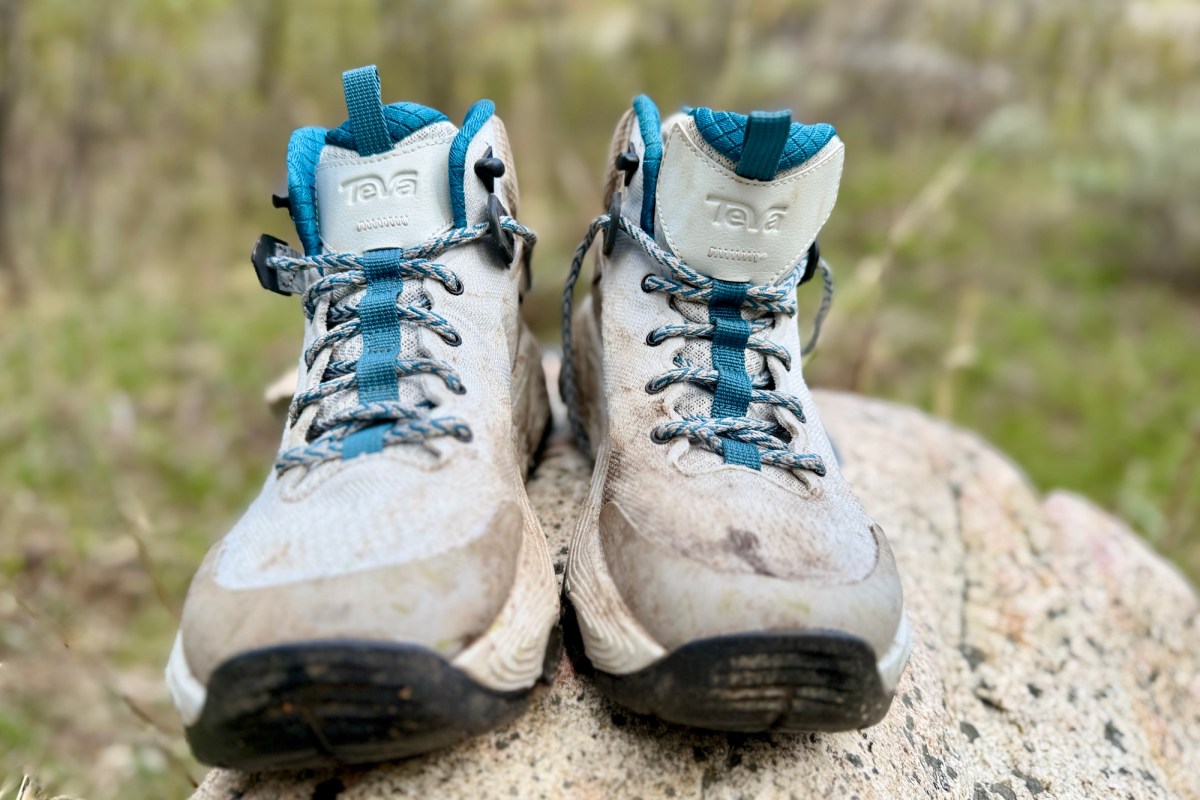
The broader shape contributes just as much to the comfort as the cushioning. The forefoot gave my toes plenty of space to splay naturally.
That extra width became more noticeable as the miles added up. My toes could flex on climbs and shift slightly on descents without hitting the front of the boot. I never experienced that cramped feeling common in narrower models.
Teva doesn’t offer this shoe in a dedicated wide size, but the standard fit is remarkably accommodating. Hikers who often find conventional footwear too restrictive will appreciate the extra space.
However, the roomy fit continues through part of the boot where I didn’t necessarily need or want it. Because I have a low-volume foot, the upper didn’t wrap tightly enough around my instep, resulting in a slightly sloppy feel.
Support for Day Hikes
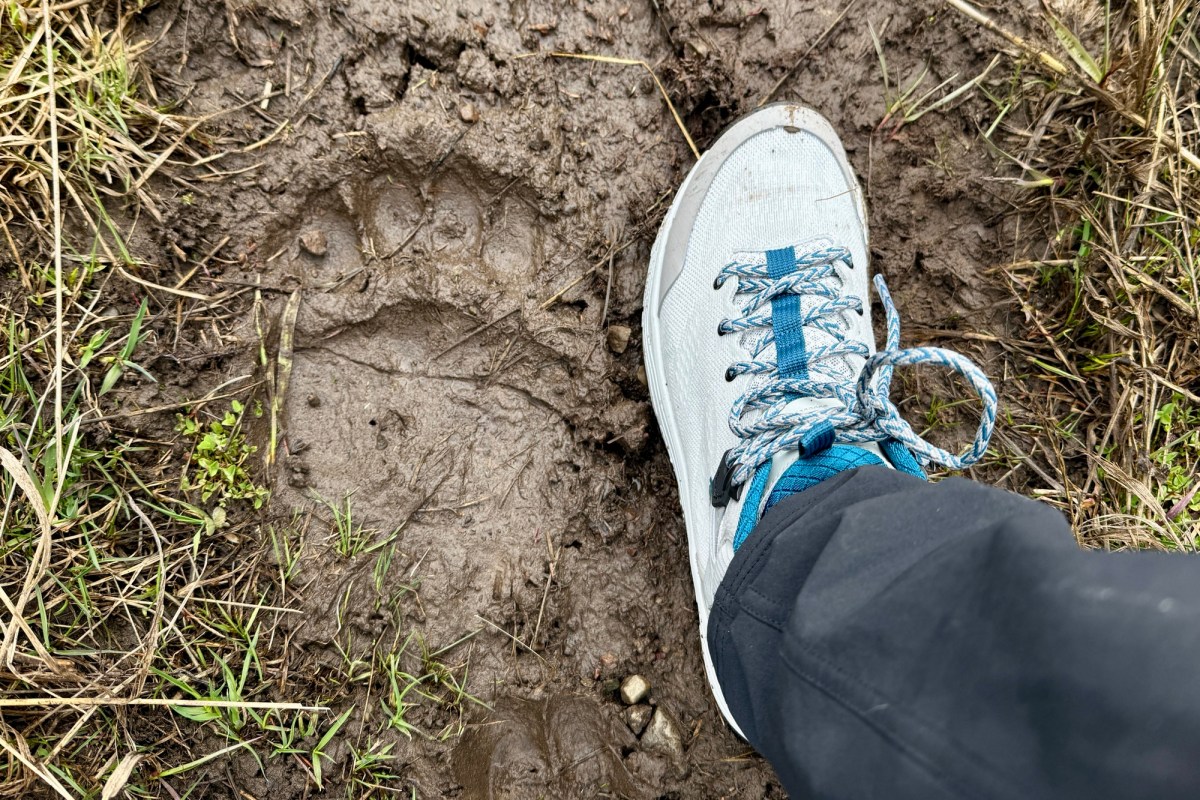
The broad platform creates a stable base, and the midsole provides ample support for day trips with light loads.
This isn’t a firm backpacking boot, though. Its flexible construction suits lighter outings rather than carrying a heavy pack or spending long days on rocky scrambling routes.
Compared with the Salomon X Ultra 5 Mid GTX, the Teva is softer, wider, and much cooler in warm weather. However, the Salomon holds my narrow foot far more securely and offers better control when the route gets tricky.
Better Grip Than Expected in Spring Mud
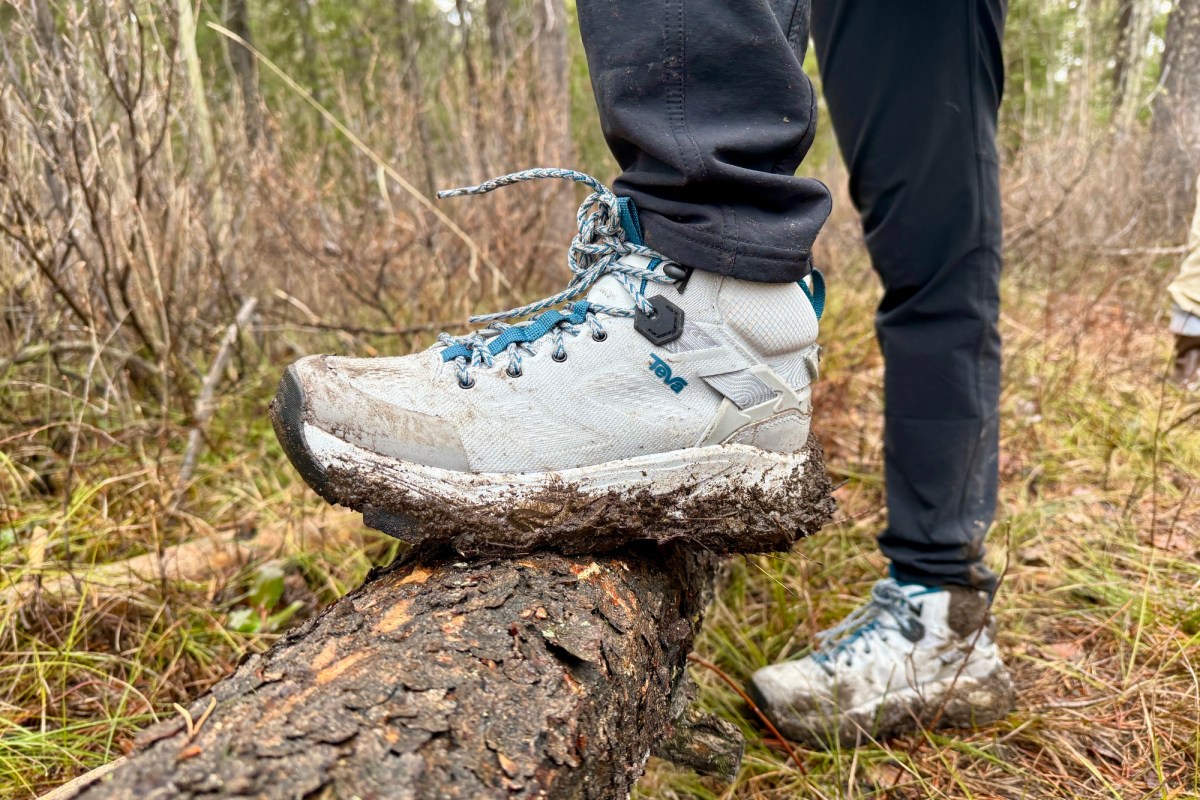
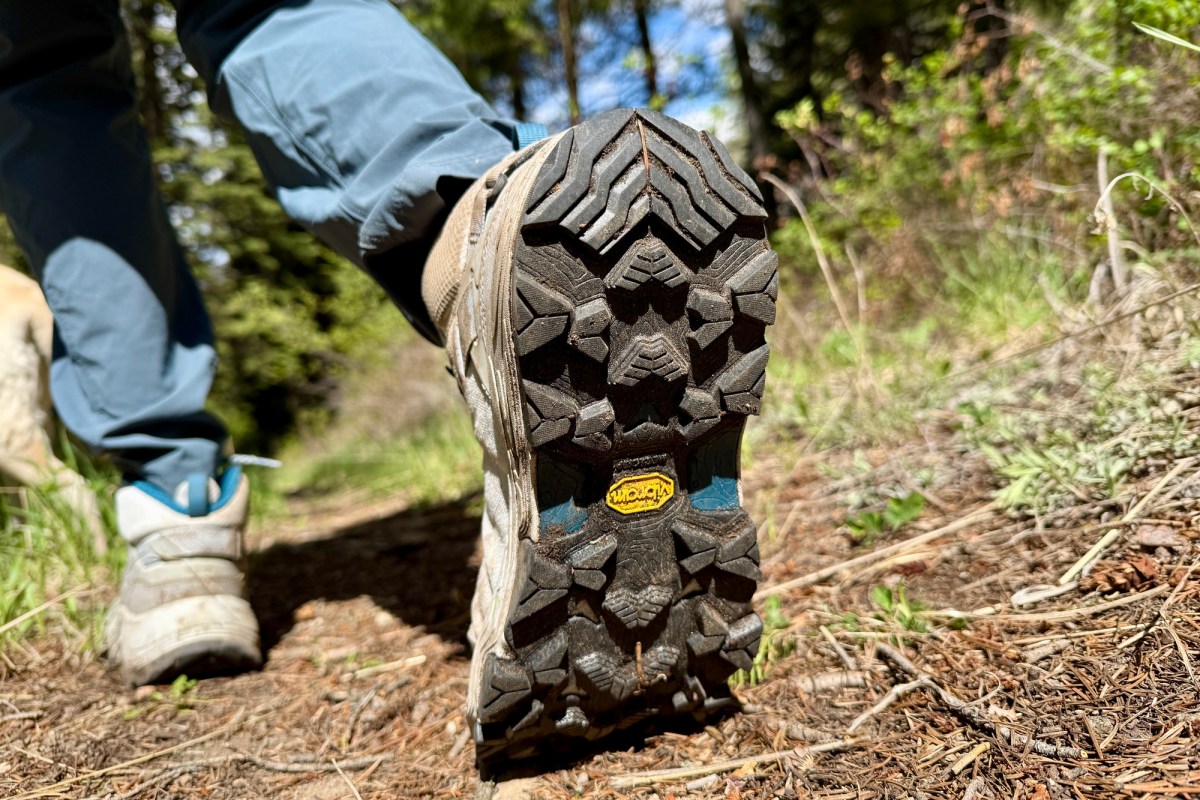
The Vibram Megagrip outsole handled sloppy spring conditions incredibly well. On partially melted-out trails around Jackson, it held firm on soft dirt, slick mud, and mixed sections of snow and exposed ground.
The generous footprint also helped the boots feel planted on ordinary trail surfaces. I could move confidently across messy sections without the outsole sliding or feeling vague underfoot.
Breathability Over Waterproofing
The Grandview Max Vent skips a waterproof membrane in favor of maximum ventilation. On exposed, sunny hikes, that tradeoff paid massive dividends. Heat escaped quickly, preventing the damp, clammy feeling common inside waterproof boots.
However, the mesh upper doesn’t repel water in downpours or river crossings. My feet stayed dry during brief trips through soggy meadows simply because the exposure was short and the thick midsole kept me elevated above the muck. However, when I intentionally walked straight into a creek to test them, my socks soaked through instantly. The upside? That same airy mesh allows them to dry out incredibly fast while you keep hiking.
Hikers who like this platform but need weather protection should look at the Teva Grandview Max GTX. That version offers a similar cushioned feel with a waterproof membrane, though it won’t release heat nearly as efficiently.
Room for Improvement
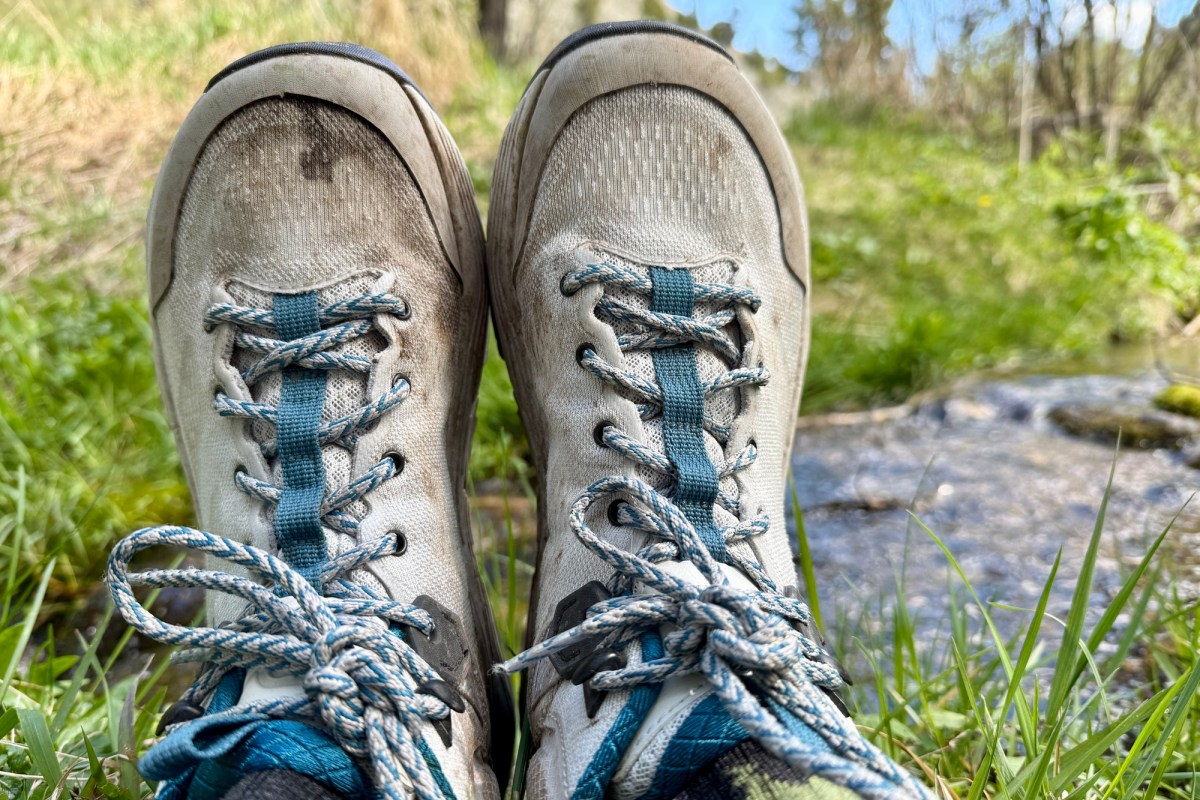
The relaxed fit left my foot shifting more than I wanted during descents. The lacing system uses standard eyelets and works fine mechanically — it never failed or slipped — but it simply cannot cinch down tight enough to secure lower-volume feet.
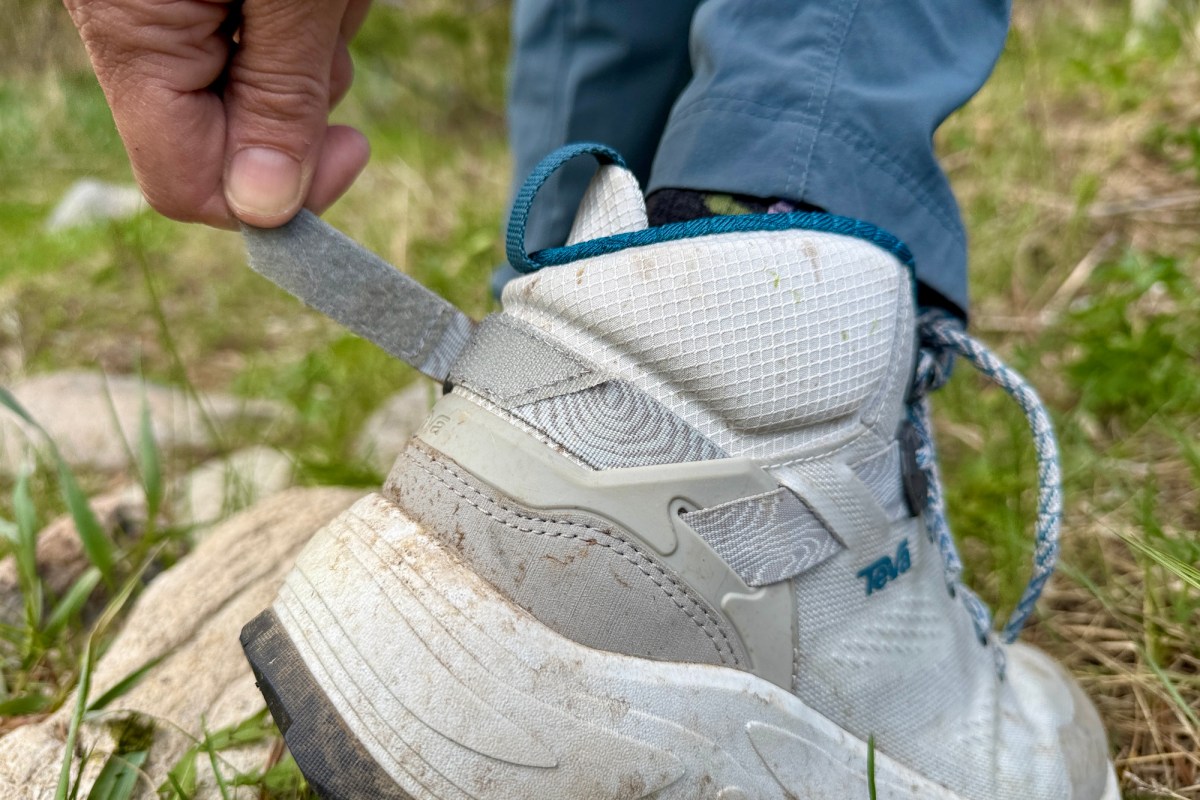
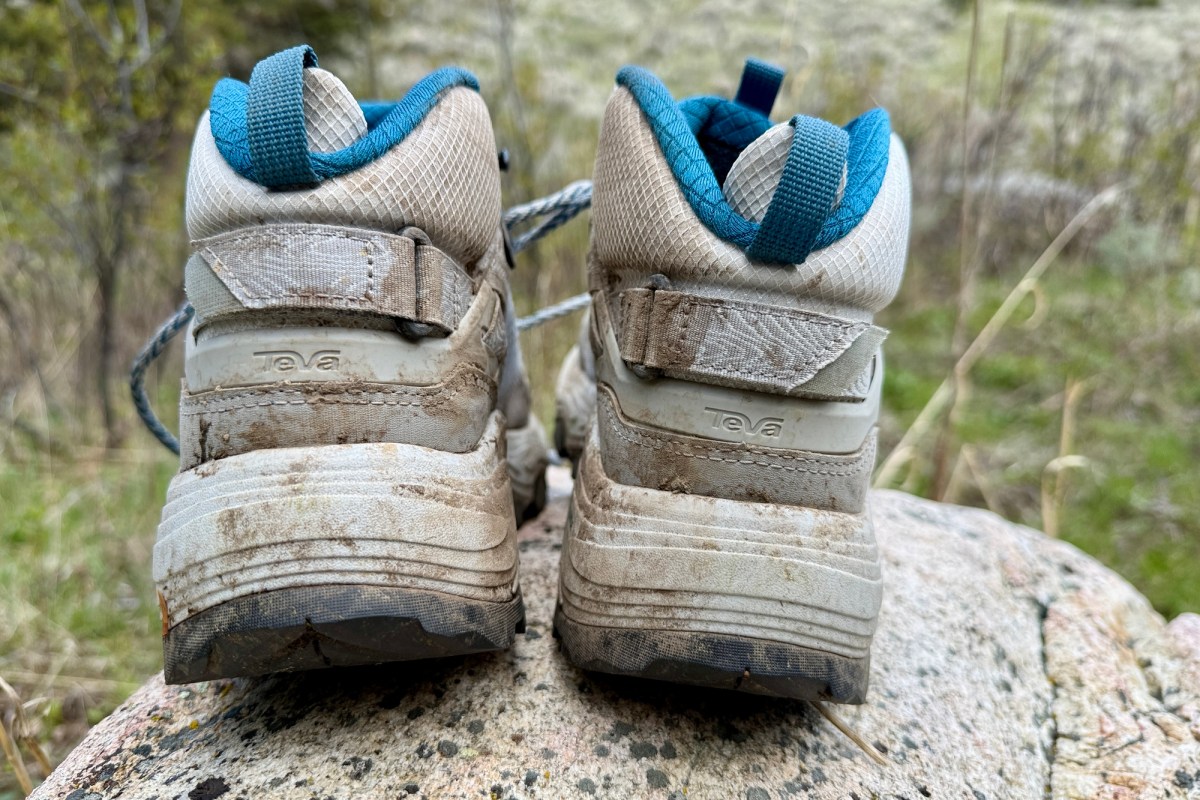
Teva adds a rear Velcro strap, which it calls a heel-lock system, to help secure the back of the foot. Unfortunately, I couldn’t get it to make a meaningful difference in stability.
Even after adjusting the laces and the rear strap, I still felt slight movement through the heel and midfoot. Hikers with medium- or high-volume feet will get a much better lockdown, but those with narrower profiles should try them on before committing.
Teva Grandview Max Vent: Who Is It For?
The Teva Grandview Max Vent is a strong option for warm-weather hikers who prioritize ventilation, low weight, immediate comfort, and room for their toes to spread. Its accommodating forefoot, flexible upper, and cushioned midsole excel on predictable terrain and casual day hikes.
Hikers who need a precise fit or more support for technical trails should consider the Salomon X Ultra 5 Mid GTX. For a similar feel with waterproof protection, the Teva Grandview Max GTX is the closest alternative.
If summer heat waves are making you miserable on the trail, the Grandview Max Vent delivers enough airflow and toe room to reignite your sense of adventure.
Read the full article here
46 Comments
Interesting update on Teva Grandview Max Vent Review. Curious how the grades will trend next quarter.
Good point. Watching costs and grades closely.
Good point. Watching costs and grades closely.
Nice to see insider buying—usually a good signal in this space.
Good point. Watching costs and grades closely.
I like the balance sheet here—less leverage than peers.
I like the balance sheet here—less leverage than peers.
Production mix shifting toward Tactical & Survival might help margins if metals stay firm.
Good point. Watching costs and grades closely.
Good point. Watching costs and grades closely.
Interesting update on Teva Grandview Max Vent Review. Curious how the grades will trend next quarter.
Good point. Watching costs and grades closely.
Good point. Watching costs and grades closely.
If AISC keeps dropping, this becomes investable for me.
I like the balance sheet here—less leverage than peers.
Interesting update on Teva Grandview Max Vent Review. Curious how the grades will trend next quarter.
Uranium names keep pushing higher—supply still tight into 2026.
Good point. Watching costs and grades closely.
Production mix shifting toward Tactical & Survival might help margins if metals stay firm.
Production mix shifting toward Tactical & Survival might help margins if metals stay firm.
Good point. Watching costs and grades closely.
The cost guidance is better than expected. If they deliver, the stock could rerate.
Production mix shifting toward Tactical & Survival might help margins if metals stay firm.
Good point. Watching costs and grades closely.
Uranium names keep pushing higher—supply still tight into 2026.
Good point. Watching costs and grades closely.
Good point. Watching costs and grades closely.
The cost guidance is better than expected. If they deliver, the stock could rerate.
Production mix shifting toward Tactical & Survival might help margins if metals stay firm.
Good point. Watching costs and grades closely.
Good point. Watching costs and grades closely.
The cost guidance is better than expected. If they deliver, the stock could rerate.
Nice to see insider buying—usually a good signal in this space.
Good point. Watching costs and grades closely.
Good point. Watching costs and grades closely.
Uranium names keep pushing higher—supply still tight into 2026.
Good point. Watching costs and grades closely.
I like the balance sheet here—less leverage than peers.
Good point. Watching costs and grades closely.
Good point. Watching costs and grades closely.
If AISC keeps dropping, this becomes investable for me.
Good point. Watching costs and grades closely.
Good point. Watching costs and grades closely.
Nice to see insider buying—usually a good signal in this space.
Exploration results look promising, but permitting will be the key risk.
Uranium names keep pushing higher—supply still tight into 2026.