

Camp shoes are all about relief. After a long day in hiking boots, ski boots, climbing shoes, or trail runners, the best pairs give tired feet room to breathe, recover, and stay comfortable around camp.
For this update, lead testers Chris Kassar and Ryan Kempfer tested 10 new pairs over 10 months on hut trips, backpacking trips, Teton campouts, and post-hike town stops. We focused on comfort, warmth, sock compatibility, packability, traction, and real camp use across snow-covered decks, muddy campsites, hut floors, wet grass, and quick trips outside in the dark.
The Teva ReEmber Camp Slip-On stands out as our top overall pick for its cozy insulation, easy step-in design, casual styling, and all-around usefulness from camp to town. For a simple, rinseable, and budget-friendly option, the Crocs Classic Clog remains a campsite staple that works with socks, handles wet ground, and slips on easily outside the tent.
Since 2021, our team of five expert testers has put more than 50 camp shoes to the test.
Editor’s Note: We updated this guide on May 14, 2026, with six new additions, including the snow-ready Stio Colter Mountain Slip, packable Rab Cirrus Hut Slippers, and minimalist . We also added new sandal and recovery options and refreshed reviews throughout.
The Best Camp Shoes of 2026
Best Overall Camp Shoes
9.2/10 RATING
Best Budget Camp Shoes
7.1/10 RATING
Most Packable Camp Shoes
8.5/10 RATING
Best Cold Weather Camp Shoes
8.2/10 RATING
Best Camp Sandals
7.9/10 RATING
Best Recovery Camp Shoes
7.6/10 RATING
See more picks
Weight
About 1 lb. per pair
Waterproof
No, water-resistant upper
Pros
- Easy to clean
- Collapsible heel
- Warm
Cons
- Not very compressible
- Not waterproof
Read Review: Warm, Comfy Camp Convenience: Teva ReEmber Slipper Review
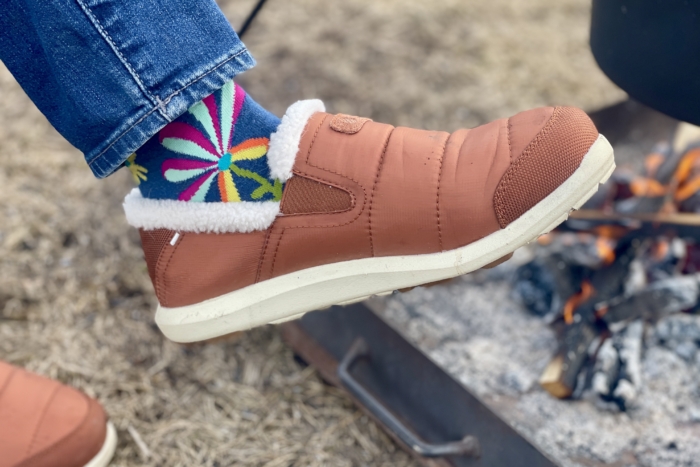
Car camping is all about luxuries, and the Teva ReEmber Camp Slip-On ($90) is the kind that becomes hard to go without once you’ve tried it. Part slipper, part shoe, and part mini sleeping bag, it’s versatile enough for hanging around the fire, padding through camp, driving home, and running errands in town.
Since its release, the ReEmber has quickly become a well-loved standard in campground footwear. Modern van-dwellers are rarely spotted without a pair on their feet, and it’s easy to see why. The quilted upper feels cozy without looking too much like a house slipper, and the simple shape works just as well at a brewery as it does beside a tent.
The collapsible heel counter is the key detail. With the heel down, the ReEmber becomes an easy slide for coffee runs, cold cabin floors, or kicking around camp without using your hands. Pull the heel up, and it feels secure enough for a short walk, mellow approach, or quick loop from the campsite. Sock compatibility is excellent, too. The roomy opening works well with midweight wool socks, adding warmth on chilly mornings.
The microfiber insulation provides noticeable warmth but never feels oppressively hot. As a defense against cold floors in the morning, the ReEmber is more than capable of keeping your toes happy. The rubber outsole is sturdy enough for gravel paths, hard-packed dirt, and dry campground loops, though it isn’t built for sloppy mud or wet grass. For rougher campsites, Teva also makes the Teva ReEmber Terrain Slip-ons ($90), which adds a grippier outsole and more trail-ready feel while keeping the same cozy, easygoing spirit.
Compared to the Stio Colter Mountain Slip, the ReEmber is less protective in snow but lighter, more casual, and easier to wear around town. It isn’t the best camp shoe for backpackers or thru-hikers. It doesn’t compress very well, it’s a little heavy, and it’s not waterproof. But for car camping, van life, travel, and post-hike lounging, the ReEmber is tough to beat.
Weight
About 14 oz. per pair
Waterproof
No, but Crocs don’t absorb water
Pros
- Durable
- Easy to put on and take off
- Heel straps add versatility
- Super comfortable with or without socks
- Plenty of color options
Cons
- Not very compressible
- May be a bit wide for those with narrow feet
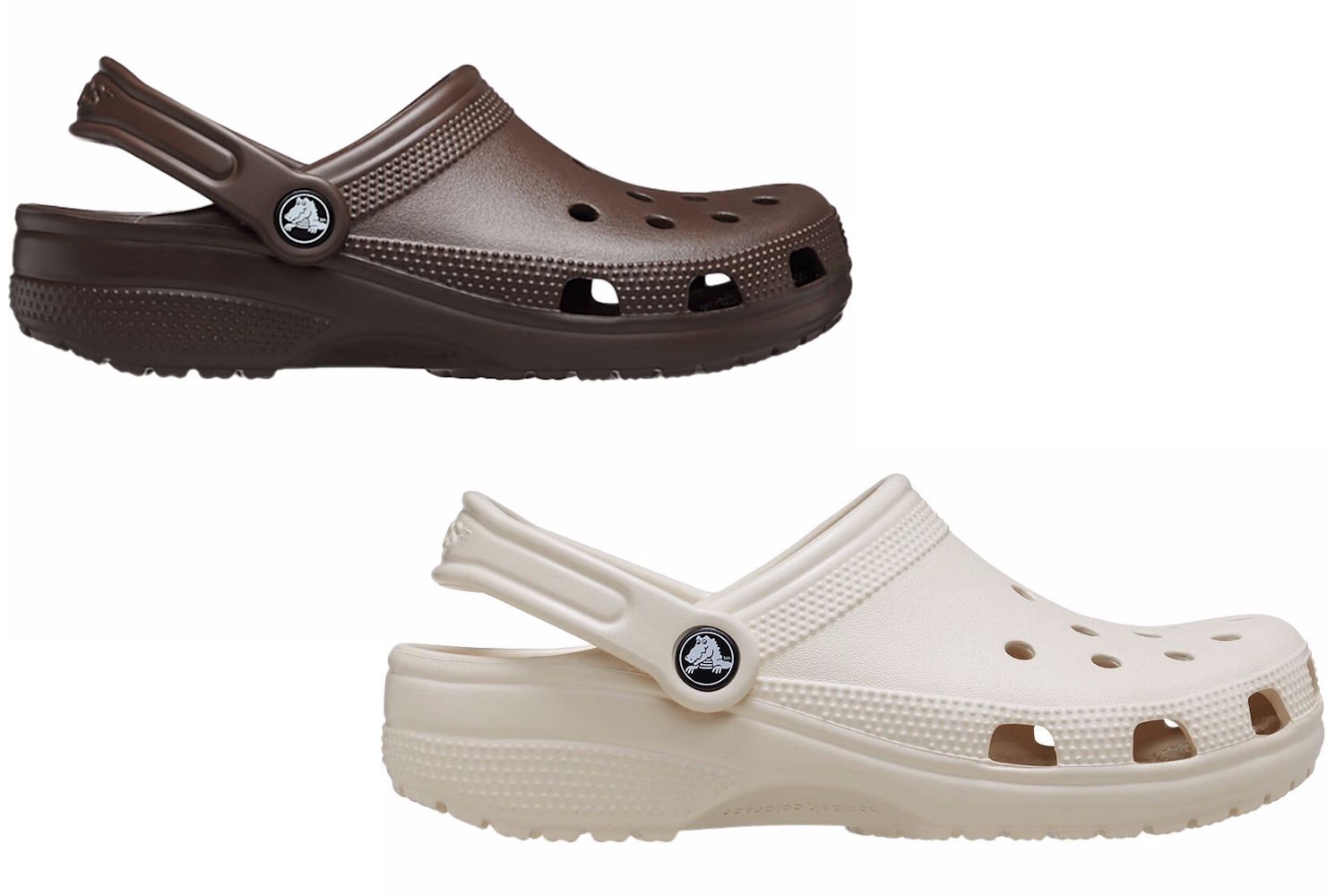
Most people are familiar with Crocs. Since 2002, Crocs has been making variations of its injection-molded EVA clogs. Though the brand’s Classic Clogs ($50) was originally developed as a boating shoe, it has since amassed a large following with backpackers and other outdoor recreation groups as the ultimate camp shoe.
On any thru-hiking trail, a pair of Crocs dangling off of the outside of someone’s pack is a common sight. The Classic Clog is lightweight, durable, and fully waterproof. If the Crocs get wet, simply wipe the water off with a rag or towel. Boom — instantly dry.
Crocs come with a heel strap that’s easily tucked out of the way when not in use. With the heel strap engaged, Crocs can easily handle short hikes without falling off. Without the heel strap in place, Crocs become a convenient source of slide-in foot protection.
Though Croc wearers often become the target of fashion-related jokes, we think they look pretty cool — especially when worn with pride. Crocs come in tons of different colors, and they are also available with an insulated liner.
Though many brands have developed high-tech camp shoes with all sorts of flashy features, the truth is that a pair of Crocs Classic Clogs remains hard to beat. And at just $50 per pair, they’re an excellent value.
Insulation
PrimaLoft® Silver Insulation Luxe
Weight
172 g (6.1 oz) per pair
Tread
Non-slip PU outsole
Waterproof
Water Resistant
Best use
Damp Huts / Sleeping Bags
Pros
- Warm for the weight
- Extremely packable
- Comfortable footbed
Cons
- Limited traction
- Minimal underfoot insulation
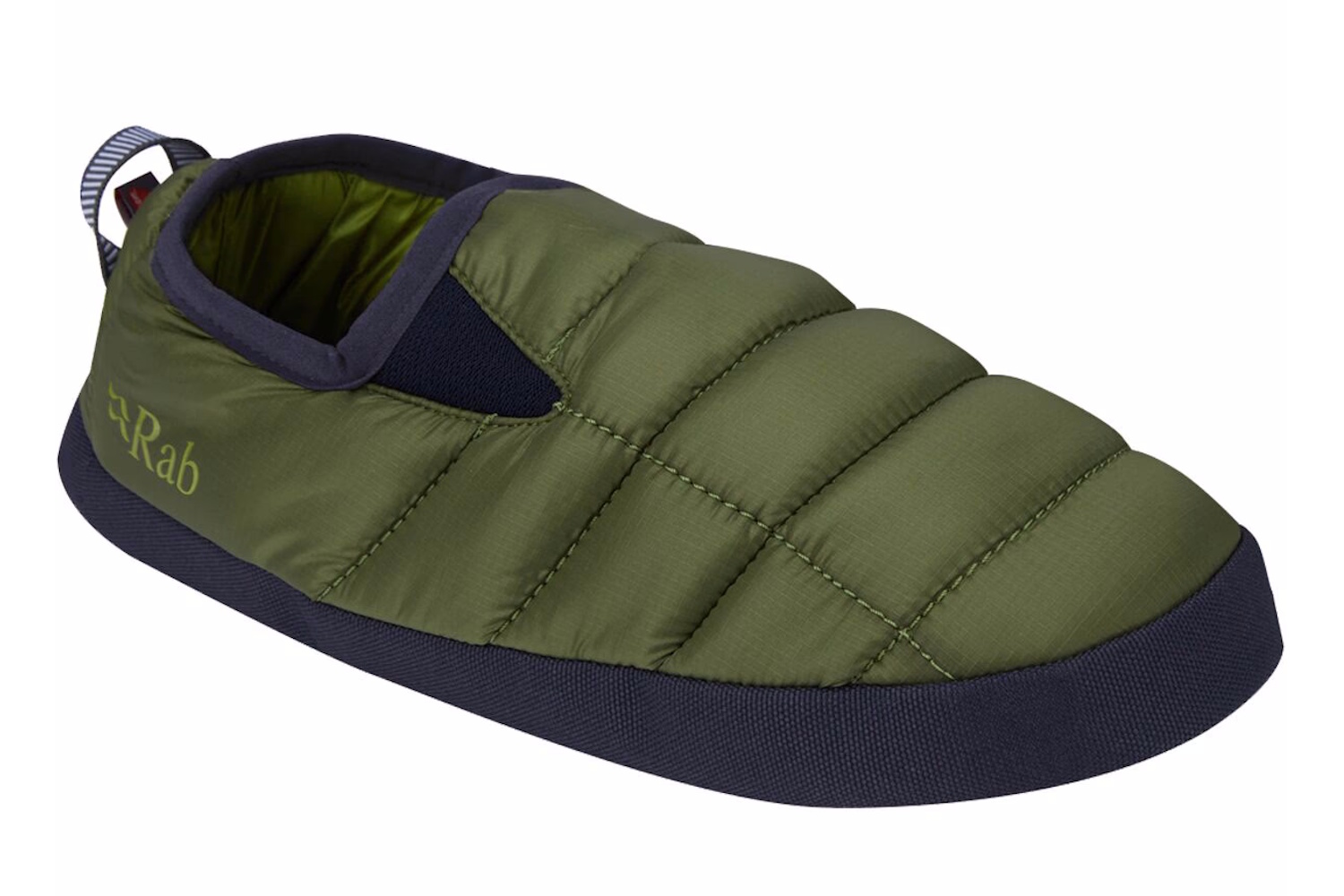
After long days in mountaineering boots, climbing shoes, or ski boots, the Rab Cirrus Hut Slippers ($65) feel like instant relief. They’re soft, warm, and purpose-built for giving tired feet a break without adding much weight or bulk to your pack.
At just 172 g per pair in a size medium, these are among the easiest camp shoes to justify bringing along. They compress well, tuck into the corners of a backpack, and take up far less room than foam clogs or structured slip-ons like the Stio Colter Mountain Slip. For hut trips, ski tours, travel, and backpacking routes where every ounce matters, that packability is the main draw.
Rab uses PrimaLoft Silver Insulation Luxe, a 100% recycled synthetic fill that delivers cozy warmth while staying breathable. The elastic entry and stretch inserts create a snug slip-on fit, and the rear pull loop helps when your hands are cold or you’re fumbling around in a dark bunkroom. Sock compatibility is excellent, too. These easily slide over thin or midweight wool socks, and the soft upper has enough give for thicker pairs.
Underfoot, the cushioned EVA foam footbed is comfortable on cabin floors, tent platforms, and dry camp surfaces. The flexible, non-slip sole is fine for padding across hut floors, stepping onto tent platforms, or making quick trips across packed dirt near camp. But, it isn’t built for sharp rocks, wet grass, or snowy approaches.
Compared to the Xero Shoes Pagosa Fireside, the Cirrus packs smaller and feels more like a true hut slipper, while the Pagosa offers a more secure outdoor sole and step-down heel. The tradeoff is outdoor durability and traction. But for warmth, recovery comfort, and barely-there pack size, the Cirrus is a smart luxury for cold nights, hut mornings, and tired feet.
Weight
9.3 oz. (per bootie in a men’s medium)
Insulated
Yes, 800+ fill goose down
Pros
- Super warm
- Lightweight
- Compressible
- Removable foam insoles
- Hardy enough to walk short distances
Cons
- Expensive
- Will wear out quickly if you walk in them often
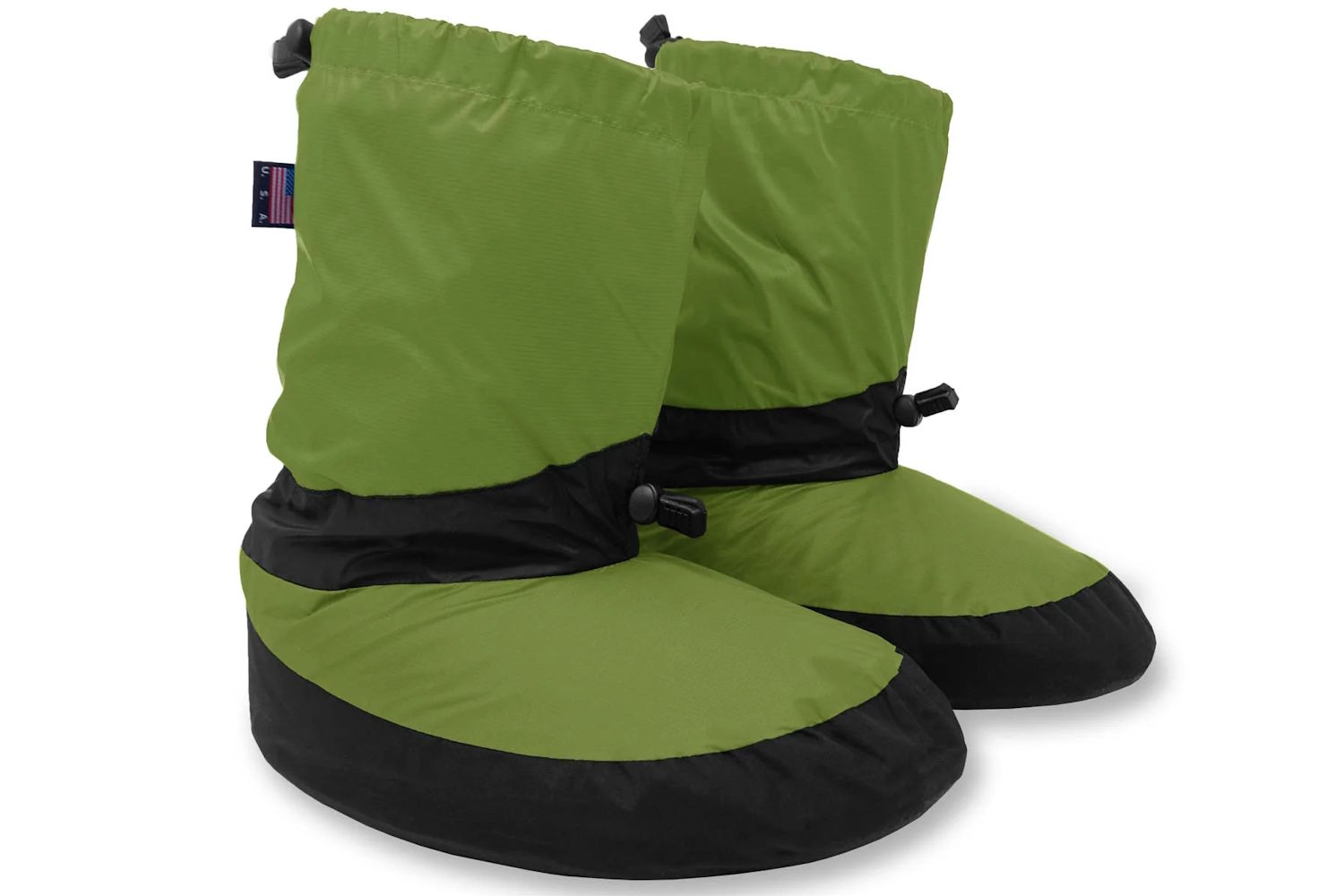
For cold-weather adventures, a plush pair of down booties can be the key to keeping your toes warm all through the night. Think of down booties as sleeping bags for your feet — insulation is their only job.
With ethically sourced 800-fill down and a soft inner liner, the Feathered Friends down booties ($119) ensure warm feet even when the temperature drops well below freezing. Mostly, these booties aren’t designed to be worn while strolling around, but they come with a fairly hardy shell that holds up to short walks through camp.
Wear these booties to bed, and you won’t have to take them off when you get up to walk outside and pee. But remember, they aren’t made to handle repeated abrasion. As Feathered Friends says, “They’re built for warmth, not a marathon.”
Removable foam insoles provide a little extra support when you want it but also add some extra weight that many backpackers will want to leave behind. The booties are highly compressible and easy to pack away, though they don’t come with a stuff sack upon purchase.
The Feathered Friends down booties are certainly a bit pricey. But for those willing to pay the price for warm toes, these booties won’t let you down. For winter camping, they’re beyond worth their 9.3-ounce weight.
Weight (per pair)
1 lb., 13.8 oz.
Arch Profile
High (3/8″ proud)
Outsole
1″ thick ChacoGrip rubber compound
Best For
Hiking, everyday use
Pros
- Secure
- Highly adjustable
- Solid performance
- Fun colorways
Cons
- Heavy
- Stiff, chunky outsole
- Learning curve adjusting straps
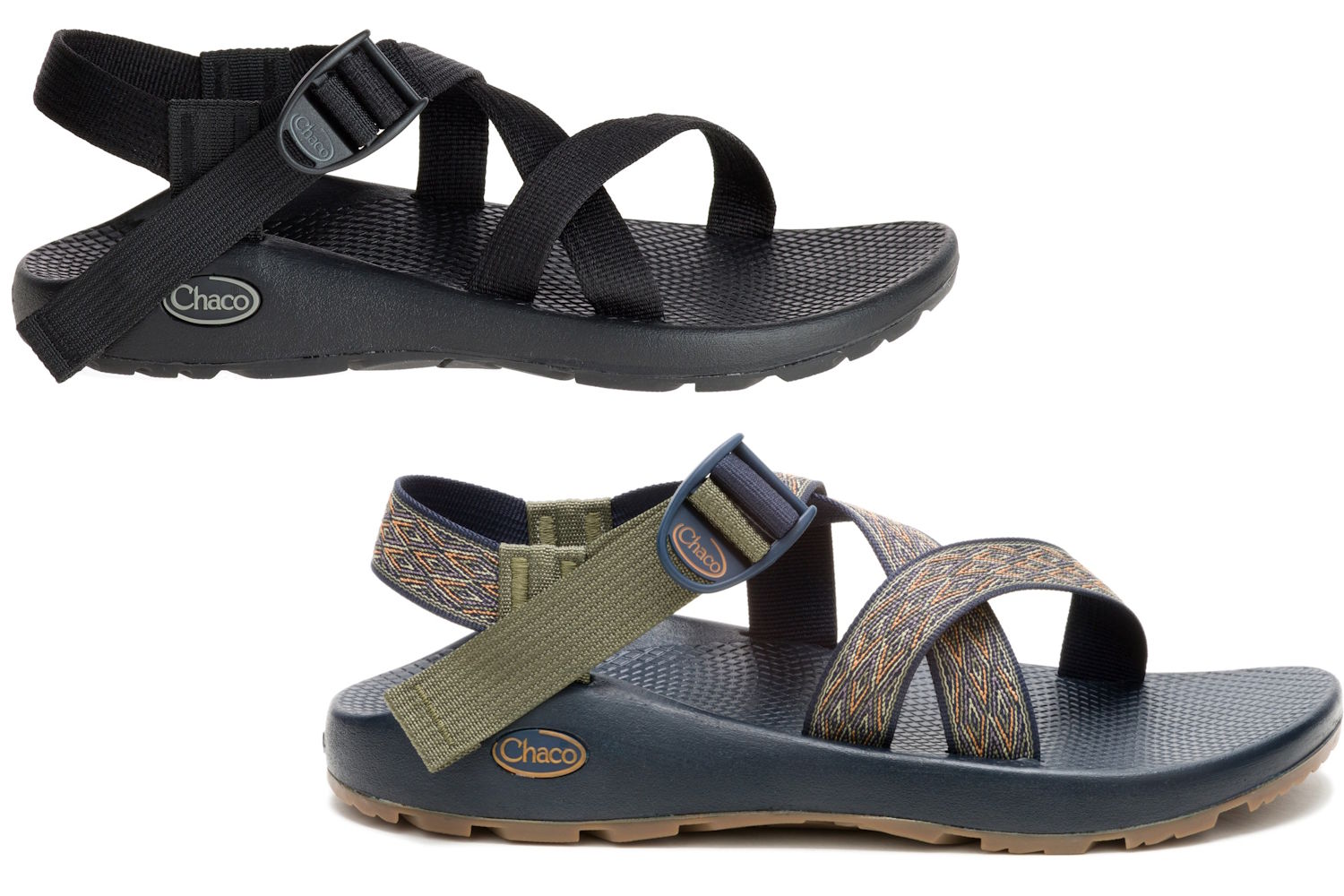
At camp, a good sandal should be easy to slip on, tough enough for sharp gravel, and useful for more than just shuffling around the tent. The Chaco Z/1 Classic Sandals ($95) check all three boxes, with a proven design that has barely changed since 1989.
We’ve been kicking around in Chaco Classics for actual decades, and Editor Andrew McLemore has worn some version of this sandal since he was 12, including while traveling around the globe. That long track record is part of the appeal. The Z/1 isn’t the lightest or most compact option here, but it’s one of the most dependable. It works as a camp shoe, river sandal, town sandal, and legitimate hiking sandal when you don’t want to bring separate footwear.
The open-toe design also gives the Z/1 a major advantage over the toe-loop Z/2 for camp use: socks. You can slide these over wool socks on cool evenings, which instantly makes them more useful around a campsite. The floating strap system takes a little trial and error to dial in, but once adjusted, it holds the foot securely. Underfoot, the LUVSEAT PU footbed feels firmer than the softer Z/Cloud, but remains supportive and predictable on rough ground.
The ChacoGrip outsole is impressively sticky for a non-Vibram sole and wears well over the years. Compared to minimalist sandals like the Luna Mono or Xero H-Trail, the Z/1 feels heavier and less packable, but it offers far more underfoot support, durability, and protection for rocky campsites or short hikes from camp.
The tradeoff is bulk. At close to 2 pounds per pair, this is not the sandal we’d bring for ultralight backpacking. But for car camping, river trips, basecamp, and hikers who want one sandal that can handle trails and camp, the Z/1 Classic is hard to beat.
Footbed
Proprietary OOfoam
Outsole
Proprietary OOfoam
Pros
- Largest range of sizes of the flip-flops we reviewed
- Easy to slide on
- Good for wide feet
- Machine washable
Cons
- Lighter colors show dirt easily
- Not the best for wearing in the water
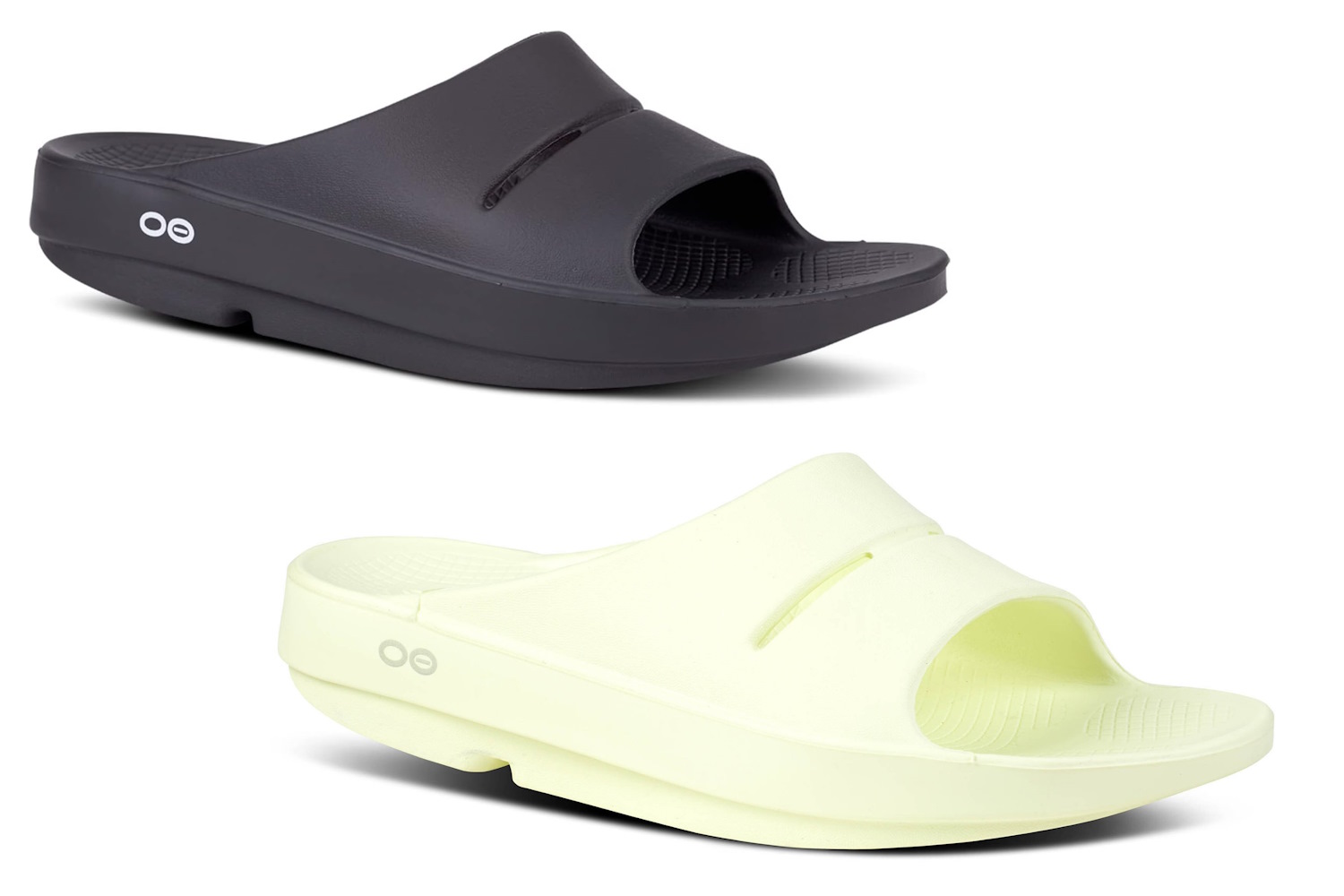
For recovery at camp, the OOFOS OOahh Slide ($60) delivers exactly what tired feet want: soft cushioning, easy entry, and a roomy fit that doesn’t pinch after long miles. Built with OOfoam, a proprietary material designed to absorb 37% more impact than traditional footwear, these slides are all about plush comfort.
We didn’t verify that impact stat, but we can confidently say the OOahh is incredibly comfortable and cushioned. Unlike standard flip-flops, it has a wide strap instead of a Y-strap, eliminating any irritation between the toes. That design also makes it much better with socks. You can wear these over camp socks or thicker wool socks without dealing with a toe post.
The footbed is soft and supportive and held up well even after being left in the sun. In fact, these stayed cooler than any other pair in our heat test. That made them especially pleasant around hot campsites, beach days, and post-hike lounging. The textured footbed helps with grip, but without a toe post or heel strap, they feel less secure during movement, especially on uneven ground.
These slides are ideal for wider feet, offering the largest size range of any flip-flop we tested. The strap has a bit of extra room, which made it slightly loose on narrow feet but perfect for those needing more width. Compared to the OOFOS Original, which uses the same foam and has a Y-strap for a more locked-in fit, the OOahh Slide is easier to wear with socks and more comfortable for pure recovery.
Both styles showed some dirt after yard work and beach walks, but a quick spin in the washing machine brought them back to life. Endorsed by the APMA, the OOahh Slide is a top pick for foot issues or anyone seeking a plush, recovery-focused camp sandal.
Other Great Shoes for Hanging Around Camp
The following camp shoes didn’t make the top of our list but have been field-tested by the happy campers at GearJunkie.
Insulation
150 gm synthetic insulation/fleece lining
Tread
Traction Rubber Outsole
Waterproof
No. Water-resistant.
Best Use
Winter camp wear, mountain town lounging, cold-weather cabin or van life
Pros
- Warm and weather-resistant
- Grippy sole with good structure
- Easy slip-on design
- Stylish enough for town wear
Cons
- Less warm than full down booties
- Bulky for backpacking
- Not ideal for extended walks or deep snow
Cold campsites, snowy decks, and pre-coffee dog walks are exactly where the Stio Colter Mountain Slip ($89) makes sense. It combines the cozy feel of an insulated slipper with the tougher build of a cold-weather camp shoe.
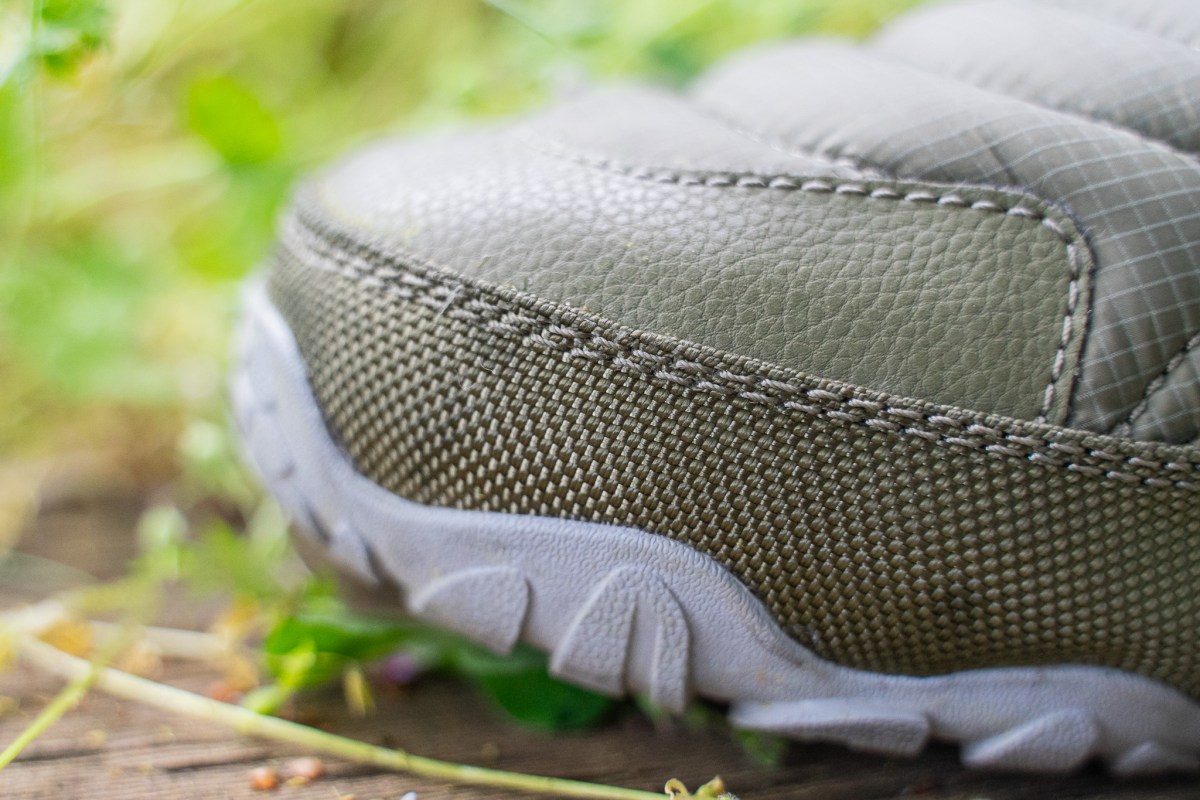
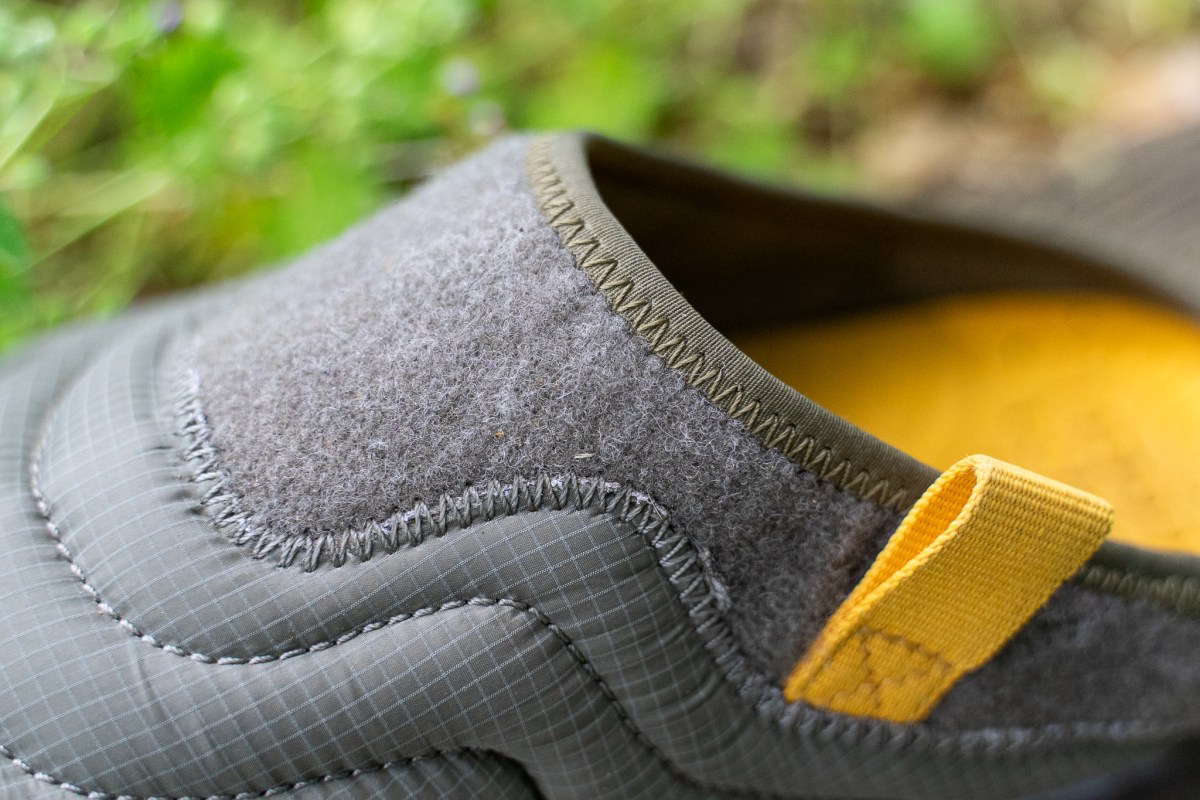
We wore the Colter Slip during snowy ski trips in Jackson and on cold mornings during summer camping trips in the Tetons. The PrimaLoft insulation kept our feet warm in sub-freezing temperatures, while the DWR-treated ripstop upper shed light snow and slush well. The step-in design also made these easy to pull on half-awake; super useful in the car, the bathroom, or out onto a frosty cabin deck.
The fit is snug and secure for a slip-on, and the heel holds its shape better than most collapsible camp shoes. That makes the Colter less floppy than a true slipper, though it also means it doesn’t pack as flat as minimalist sandals or softer hut booties. We’d stash these in a car-camping duffel or road-trip bag before trying to squeeze them into an already tight backpack.
The high-traction sole and structured midsole set the Colter apart from typical house slippers. We felt confident walking across icy driveways, packed snow, wet campground grass, and hard dirt around camp. It also works well with medium-to thick-wool socks, which give it a big warmth boost on cold mornings. Compared to the Teva ReEmber, the Colter feels more stable underfoot and better suited for cold, snowy conditions. The ReEmber is more casual and travel-friendly.
This isn’t the smallest or lightest camp shoe, and we wouldn’t choose it for backpacking or extended winter walks. But for anyone looking for a camp-to-town slipper with real insulation, dependable grip, and mountain-town style, the Colter Mountain Slip offers a warm, practical package for cold-weather comfort.
Insulation
200 g polyester synthetic
Tread
Yes, rubber outsole
Waterproof
Water resistant
Best use
All-season outdoor and indoor
Pros
- Warm for its weight
- Extremely lightweight
- Wide toe box
- Convertible slide or shoe wear
- Grippy outsole
Cons
- Minimal underfoot insulation
- Not built for long walks
- Very minimal structure
The line between slipper and camp shoe gets blurry with the ($95), a minimalist insulated slip-on built for indoor comfort, hut trips, and quick steps outside. With a nylon puffy upper, 200g insulation, and a full rubber outsole, it delivers reliable warmth in a lightweight package for camp hangouts, après-ski lounging, and low-key errands.
A standout design detail is the step-down heel, which lets you wear the Pagosa Fireside two ways. Step on the heel and it works like a slide for easy, half-awake entry when you’re heading to the outhouse or padding between hot springs. Pull the heel up and cinch the drawcord for a more secure fit for dog walks, camp chores, or cold mornings around the tent.
During testing, these slippers were ideal for moving from tub to tub at local hot springs, short dog walks, and hut trips in the Tetons, where they handled outhouse runs and quick outside chores with ease. The wide, foot-shaped toebox also pairs nicely with thick socks, giving the Pagosa more cold-weather range than its low-profile build suggests.
Built around Xero Shoes’ barefoot design principles, the Pagosa Fireside has a zero-drop platform and a thin, flexible sole. That makes it light, packable, and natural underfoot, but not especially protective on sharp rocks or frozen, uneven ground. Compared to the Stio Colter Mountain Slip, the Pagosa packs smaller and feels more flexible, while the Colter offers more structure, traction, and cold-weather confidence outside.
At just 4.8 ounces per size 7, the Pagosa Fireside is easy to travel with, and the drawcords let you bundle the pair together in a duffel or hut bag. For minimalist comfort, sock-friendly warmth, and quick camp use, it’s a cozy, highly packable pick.
Pros
- Relatively inexpensive
- Super lightweight
- Flexible body
- Adjustable, unlike regular slides
- Waterproof and washable
Cons
- Polarizing style
- A little noisy when wet
- Not good for trail hiking
Why reinvent a classic? The Birkenstock Arizona Essentials EVA ($50) keeps the familiar two-strap Arizona shape but turns it into a lighter, cheaper, and water-friendly camp shoe.
We were skeptical at first. As longtime fans of the original leather Arizona, we didn’t think it needed a reboot. But after slipping into the EVA version, we were pleasantly surprised. A few quick buckle adjustments dialed in the fit. From then on, they felt more like easy camp slides than structured sandals, just with that unmistakable Birkenstock look.
For campground life, the Arizona Essentials EVA makes a lot of sense. The one-piece EVA build handles wet grass, muddy shower-house floors, beach sand, and spilled coffee better than leather ever could. They rinse clean easily, dry fast, and don’t feel precious when they get tossed by the tent door. The open design also makes them easy to step into when you’re moving between the fire ring, picnic table, and car.
Despite the lightweight design, these sandals provide genuine support. The contoured footbed follows the shape of your feet, with a deep heel cup, solid arch support, and a spacious toe box. They’re not flimsy and are much more comfortable than basic slides or thongs. They also work well with socks, giving them more cool-evening camp range than toe-post sandals. At about half a pound and less than a third of the weight of the Chacos we tested, they’re much easier to pack for travel or car camping. The Chaco Z/1 Classic is better for hiking and rough campsites, but the Birkenstock is lighter, cleaner-looking, and easier around water.
The EVA foam does squeak when wet. And yes, they’re occasionally prone to “foot farts” when air gets trapped underfoot. Still, for a lightweight, colorful, easy-on-and-off camp slide that can head to town after the trip, the Arizona Essentials EVA delivers surprising comfort and value.
Weight
4.8 oz. (size Medium)
Waterproof
No, water-resistant upper
Pros
- Extremely lightweight
- Durable soles
- Comfortable on skin
- Ankle cuffs keep grime out
Cons
- Only four sizes available
If you’re packing light and are low on space, the Exped Camp Slipper ($60) is a solid choice. At 4.8 ounces (size Medium), you won’t even notice the addition to your pack, and they fold up so small you can fit them into a small pocket.
Over dirt and granite, the 4mm abrasion-resistant soles held up exceptionally well, and provided adequate grip when we scrambled up an outcrop for sunset (not that we’d recommend them as an approach shoe). They’re extremely flexible, providing a barefoot feel, and the insole is comfortable against the skin if you decide to lose the socks and go barefoot.
The cuff around the ankle serves well to keep the feet warm, making them a great three-season camp shoe option. The cuff also helps keep rocks, sand, and dirt from getting in. With a quick wipe to clean the soles, you can wear them inside your tent.
After a long hike, roomy slippers are ideal, and the space inside the Exped Camp Slipper is certainly freeing. Because they only come in four sizes, however, the fit can be a bit tricky. The XL size fit was comparable to a US men’s 12. We’d recommend trying them on in person if possible, or contacting Exped to get expert sizing advice.
Overall, we think these camp slippers are ideal for hikers and backcountry enthusiasts who like to keep it light and might experience colder evenings. The price is a bit steep, but the durability more than makes up for it. They’re on our list of best camp shoes for a reason.
Weight
About 11.3 oz. per pair
Waterproof
No, but absorbs very little water
Pros
- Lightweight
- Soft and supportive to soothe the feet
- Rockered outsole for anatomical support
- Waterproof
If you find your joints to be especially tired and achy after long running or hiking sessions, slipping into these plush beauties from HOKA may offer significant relief. Though they’re semi-bulky and perhaps not ideal for lightweight backpacking, the HOKA Restore TCs ($110) will surely be worth their weight to those who need a little extra recovery boost.
This is one of the most supportive options on this list, which is quite an impressive statement for a pair of shoes with a thin mesh upper. A soft UVA footbed soothes the feet, while stiffer rockered midsoles and outsoles offer structural support.
A closed-toe design offers more protection against stubbed toes when you have to leave the tent to pee in the middle of the night. Plus, the elastic mesh upper keeps the shoe in place, enabling short runs and rocky scrambles. We like how the design allows your feet to stretch out and breathe — with or without socks.
For such comfort-forward footwear, the HOKA Restore TCs are impressively durable. Semi-deep tread offers reasonable traction for hanging out at home or wandering around the campsite. At a price point of $110, these slip-ons aren’t cheap. Their value comes in the form of well-recovered feet.
Weight
17.9 oz. per pair (men’s size 10)
Waterproof
No, water-resistant upper
Pros
- Affordable
- Durable outsole
- Good traction on wet surfaces
- Easy to put on and take off
- Capable of active use
Cons
- Rocks and gravel can get stuck in the mesh
- Not as breathable as other options
Read Review: The Chaco Rambler Puff
The ($85) is the perfect shoe for cold-weather camping in the dry season. We primarily used this shoe while car camping near high-elevation climbing areas in Wyoming, and it offered the ideal combination of insulation and practical wearability.
The Ramble Puff is available in both men’s and women’s styles. The most eye-catching feature is the quilted and insulated upper. In chilly temps all the way down to about 30 degrees F, these shoes kept our toes warm and happy — especially when paired with a thick pair of wool socks. Thanks to the addition of a plush fleece lining, the Ramble Puff is a bonafide sleeping bag for your foot.
Water-resistant ripstop nylon helps to keep moisture out, but these shoes are definitely not fully waterproof. Chaco has outfitted the women’s with its signature LUVSEAT contoured footbed, which provides ample arch support. The rubber outsole, while not grippy or supportive enough for sustained hiking, is plenty capable on short walks around camp.
Overall, the Chaco Ramble Puff is an impressive addition to the brand’s increasingly diverse lineup. For the shoulder season car camping enthusiast, we highly recommend these warm and practical shoes.
Camp Shoe Comparison Chart
How We Tested the Best Camp Shoes
Our Expert Testers
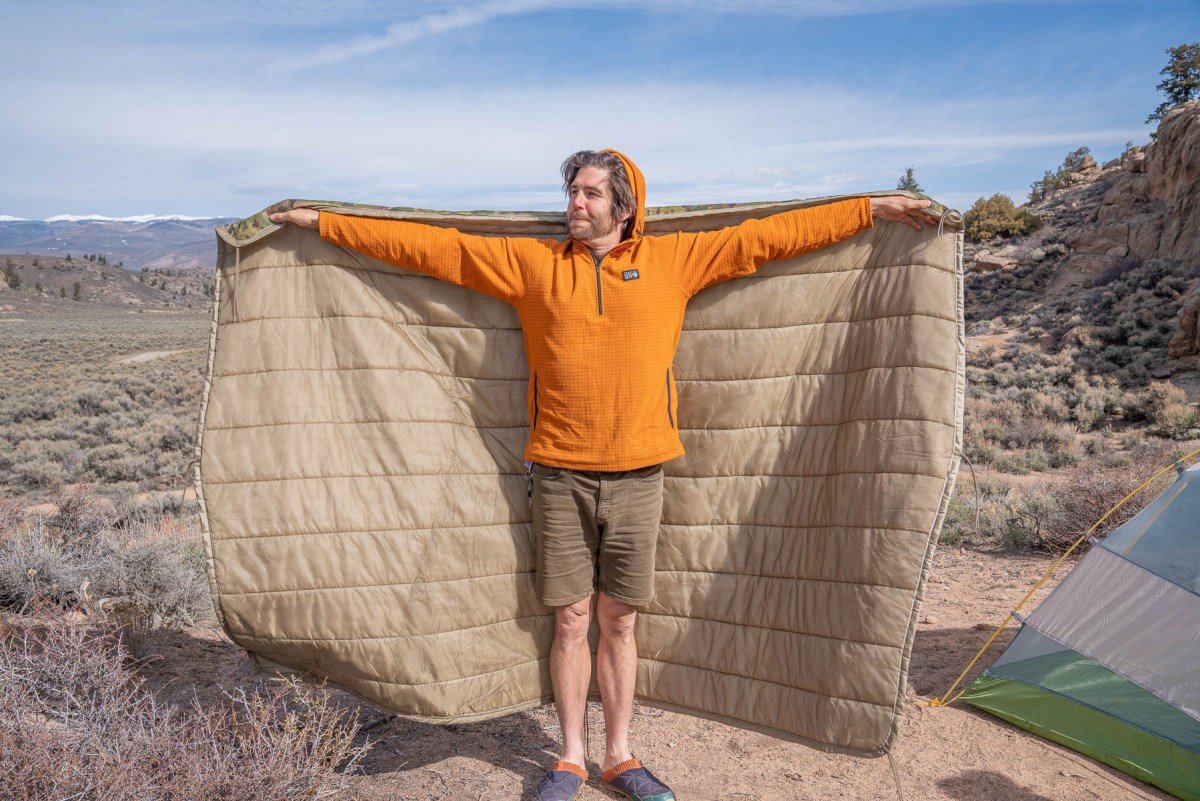
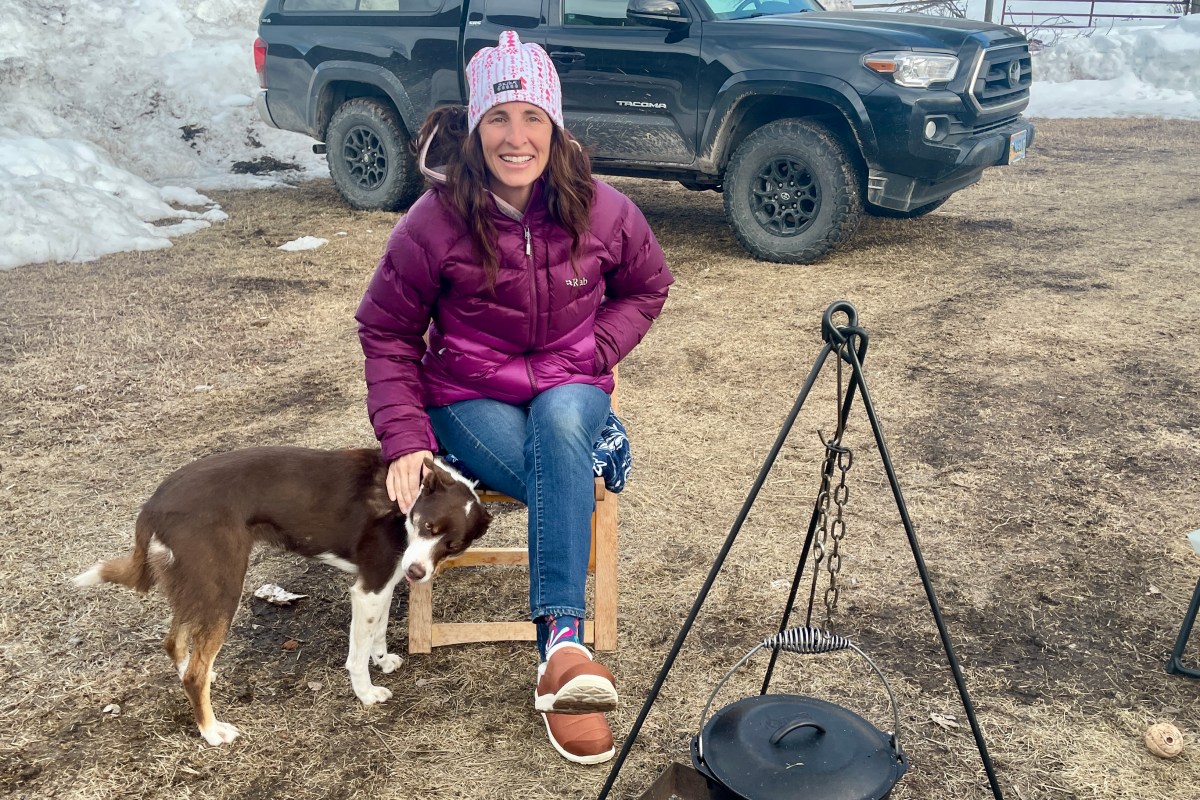
This guide is led by GearJunkie Editor Chris Kassar and longtime gear tester Ryan Kempfer. Together, they spent 10 months testing 10 new camp shoes. Building on years of collective testing from past contributors like Austin Beck-Doss and Andrew Potter, we evaluated options for everyone from luxury-minded car campers to ounce-counting backpackers. Since 2021, our team of five experts has tested more than 50 pairs of camp shoes.
Our Testing Process & Grounds
Each new shoe endured at least five outings before making the cut. Testing spanned Grand Teton and Yellowstone national parks, Colorado hut trips, and backcountry ski weekends. We wore these shoes across snow-covered decks, muddy campsites, wet grass, and slick hut floors to see how they handled real camp surfaces and late-night trips outside.
We focused heavily on how easily each shoe slipped onto tired feet, its compatibility with thick wool socks, and how much space it occupied in a pack or duffel. We also evaluated returning favorites—like the Crocs Classic Clog, Chaco Z/1 Classic, and Teva ReEmber—to gauge long-term durability. Testing is ongoing, and we update this guide seasonally as new models hit the market.
Our Camp Shoes Rating System
We rate camp shoes on a 10-point scale across four core categories:
Comfort: Cushioning, footbed shape, ease of entry, sock compatibility, and relief after long days in heavy boots.
Warmth: Insulation against cold hut floors, snow-covered decks, and chilly mornings.
Traction: Grip on wet grass, mud, gravel, slick wood, and packed snow.
Packability: Weight, volume, compressibility, and whether it needs to be clipped outside a pack.
Note: The overall score reflects real-world camp performance and is not a simple average. A bulky car-camping slipper, a packable hut shoe, and a water-friendly clog all serve different purposes, so we score each based on how well it performs its intended use.
If you really like hanging around in your camp shoes, check out GearJunkie’s guide to the best string lights, the best electric coolers, and the best canopy tents and upgrade your camping setup to a glamping setup.
Buyer’s Guide: How to Choose the Best Camp Shoes
Good camp shoes give you something to look forward to at the end of the day. Once you’ve identified the right pair, they’ll likely become an essential and non-negotiable part of your camping kit. That said, it’s important to understand the differences between the available options before deciding to make a purchase.
In this buyer’s guide, we cover comfort, weight, packability, support, durability, value, and other important factors for those looking to purchase a pair of camp shoes. If you really like hanging around in your camp shoes, check out GearJunkie’s guide to the best string lights and the best electric coolers to upgrade to a glamping setup.
Comfort
Comfort is an important consideration for any piece of gear you use regularly. Camp shoes are meant to offer respite after removing a sweaty and stiff pair of hiking boots, trail runners, climbing shoes, or other active footwear. For this reason, camp shoe comfort should be top priority.
While all of the shoes on this list are designed to be comfortable, certain shoes like the OOFOS OOahh Slide are made with a super-soft footbed to ease joint stiffness and maximum recovery. Other options, like the Rab Cirrus Hut Slippers offer a layer of insulation — which translates to comfort in cold weather.
Weight & Packability
For backpackers and thru-hikers, the importance of weight and packability is paramount. Some of the camp shoes on this list are lighter and more packable than others. The Feathered Friends Down Booties can pack down into tiny balls, and they only weigh 9 ounces per pair.
However, as is usually the case, these booties lose some durability as a tradeoff. For backpacking camp shoes that don’t compress, hanging them on the outside of your pack is an option too. Some backpackers even keep small items inside the shoes to maximize space and utility.
Support
Generally, camp shoes aren’t the most supportive shoes. They’re designed for recovery and comfort rather than support and performance.
Still, some camp shoes are more supportive than others. If you plan to also use your camp shoes in the gym or while hiking, it’s wise to choose some that are supportive enough to handle more than just hanging out. On this list, the offer moderate support and good traction.
Durability
A durable camp shoe should last many years, especially because it likely won’t accumulate nearly as many miles as active shoes will. Some camp shoes are more durable than others, which makes durability an important piece of a shoe’s overall value.
Some shoes on this list, like the Teva ReEmber Camp Slip-On have dense and sticky soles that hold up in the long haul. Other shoes, like the HOKA Restore TC, have very soft footbeds that tend to flatten over time.
Car Camping vs. Backpacking
When car camping, weight and space aren’t likely to be major concerns. For car camping, we recommend the Stio Colter Slip-Ons because their limited packability won’t be an issue when you have access to a car.
When backpacking, though, the ounces add up, so you’ll likely want lightweight camp shoes that don’t take up too much space. The Rab Cirrus Hut Slippers are light and easy to squeeze into an already stuffed pack.
Price & Value
Camp shoes range from simple $50 clogs and slides to insulated booties and recovery shoes that cost well over $100. The best value depends on whether you need something packable, warm, water-friendly, supportive, or comfortable enough to wear from camp to town.
Budget
In the $50-60 range, you’ll find simple camp shoes that are easy to slip on and useful in a wide range of settings. The Crocs Classic Clogs ($50) are our favorite budget pick because they’re waterproof, easy to clean, roomy enough for socks, and reliable around wet grass, campground showers, and dirt.
The Birkenstock Arizona Essentials EVA ($50) is another strong value. It’s lighter and more town-friendly than Crocs, with a supportive footbed and water-friendly build, though it offers less coverage and traction around rough campsites.
Mid-Tier
From about $60 to $95, camp shoes start to get more specialized, with better insulation, packability, or support. The Teva ReEmber Camp Slip-On ($90) sits in this range and remains our favorite all-around camp shoe thanks to its cozy upper, collapsible heel, sock-friendly fit, and easy camp-to-town style.
For backpackers and hut-trip regulars, the Rab Cirrus Hut Slippers ($65) offer excellent packability and warmth without much bulk. They’re not built for rough outdoor walking, but they’re easy to justify when space and weight matter.
Premium
Above $100, camp shoes tend to become more purpose-built. The Feathered Friends Down Booties ($119) are pricey, but their 800-fill down insulation makes them worth it for winter camping, hut trips, and anyone who struggles with cold feet.
The HOKA Restore TC ($110) also lands in the premium range, with a cushioned, recovery-focused design that’s best for post-hike comfort and protected campsite walking. It’s not the most packable option, but the support may be worth it for tired feet and achy joints.
Frequently Asked Questions
That depends. Camp shoes offer major relief at the end of the day when the activewear comes off and the comfortable gear goes on. In conditions where active shoes or boots get wet or sweaty during the day, having a pair of dry camp shoes is a crucial part of good foot care.
We recommend a good pair of camp shoes as an addition to any kit, for backpackers to car campers, and everyone in between. For those with achy joints and tired feet, camp shoes may be non-negotiable and totally essential.
We recommend it. After hiking all day with a heavy pack, you’ll be immensely glad to have camp shoes. Also, feet often become wet or sweaty while backpacking, and camp shoes offer ventilation and a relaxed fit, which will help your feet air out. Camp shoes are an important defense against feet issues like blisters, fungus, rashes, and more.
These two camp shoe options are similar but not exactly the same. Crocs have a slightly hardier outsole and include a heel strap, which helps them stay on during short walks or nontechnical hikes.
OOFOS OOriginal Sandals are designed to soothe aches and pains, but their plush footbed does tend to flatten over time. Also, the OOFOS OOriginals lack a heel strap and fall off more easily when walking around.
It’s good to have waterproof camp shoes. Wet camp shoes aren’t much help when you want to change out of wet active shoes at the end of the day. For this reason, we recommend waterproof camp shoes. Many of the options on this list are made of solid EVA or soft foam.
These materials don’t absorb water, and they can simply be wiped dry if they happen to get any water on them. Dry, comfortable shoes are a luxury that you’ll need and thoroughly deserve after a day of adventuring.
Read the full article here
42 Comments
Silver leverage is strong here; beta cuts both ways though.
Good point. Watching costs and grades closely.
Good point. Watching costs and grades closely.
I like the balance sheet here—less leverage than peers.
Silver leverage is strong here; beta cuts both ways though.
Interesting update on The Best Camp Shoes of 2026. Curious how the grades will trend next quarter.
If AISC keeps dropping, this becomes investable for me.
The cost guidance is better than expected. If they deliver, the stock could rerate.
Good point. Watching costs and grades closely.
Good point. Watching costs and grades closely.
If AISC keeps dropping, this becomes investable for me.
Good point. Watching costs and grades closely.
The cost guidance is better than expected. If they deliver, the stock could rerate.
Good point. Watching costs and grades closely.
Silver leverage is strong here; beta cuts both ways though.
Good point. Watching costs and grades closely.
Nice to see insider buying—usually a good signal in this space.
Exploration results look promising, but permitting will be the key risk.
Good point. Watching costs and grades closely.
Good point. Watching costs and grades closely.
The cost guidance is better than expected. If they deliver, the stock could rerate.
Production mix shifting toward Tactical & Survival might help margins if metals stay firm.
Nice to see insider buying—usually a good signal in this space.
Production mix shifting toward Tactical & Survival might help margins if metals stay firm.
Good point. Watching costs and grades closely.
I like the balance sheet here—less leverage than peers.
Good point. Watching costs and grades closely.
I like the balance sheet here—less leverage than peers.
Good point. Watching costs and grades closely.
Exploration results look promising, but permitting will be the key risk.
The cost guidance is better than expected. If they deliver, the stock could rerate.
Good point. Watching costs and grades closely.
Good point. Watching costs and grades closely.
Nice to see insider buying—usually a good signal in this space.
Good point. Watching costs and grades closely.
Silver leverage is strong here; beta cuts both ways though.
If AISC keeps dropping, this becomes investable for me.
Good point. Watching costs and grades closely.
Uranium names keep pushing higher—supply still tight into 2026.
Interesting update on The Best Camp Shoes of 2026. Curious how the grades will trend next quarter.
Good point. Watching costs and grades closely.
Good point. Watching costs and grades closely.