

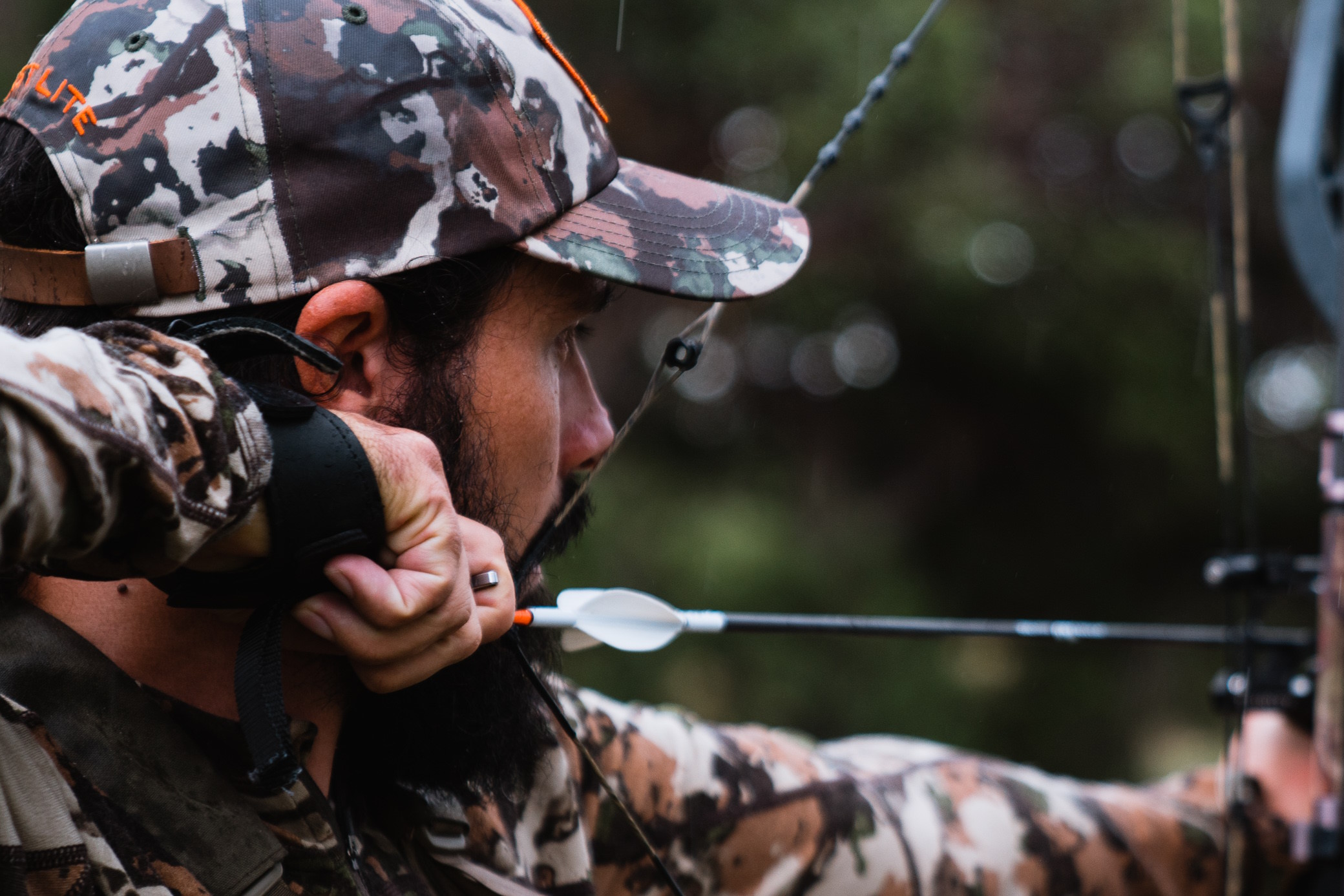
For centuries, hunting blinds have been used to conceal hunters. Be it piling sticks, logs, and rocks together or using a modern-day pop-up blind, these things work. And we can assure you, they aren’t stopping anytime soon.
We’ve been lucky enough to sit in our fair share of blinds and have taken away a few key ingredients in what makes a good blind. Our testers for this guide, Morgan Nowels and Josh Kirshner, are dedicated to chasing all manner of ungulates and birds throughout the year. Sometimes, that requires a blind.
This year, our team spent over 20 days hunting out of three different blinds. We’ve dialed in which are best for portability, comfort, concealment, and ease of setup. After a busy fall and spring, the Cabela’s Specialist XL Ground Blind sits atop the list as the best overall, and the Game Winner Bushwacker 2.0 HUB Blind is the top pick for hunters on a budget.
Editor’s Note: We updated this buyer’s guide on April 21, 2026, by adding the Browning Envy Tall Tent Hunting blind for bowhunters. We also created an in-depth rating system and an explanation of how blinds were rated.
The Best Hunting Blinds of 2026
Weight
25 lbs with screens and carrying bag
Material
Water Resistant, 300 denier brushed polyester
Pros
- Huge amount of room
- Highly adjustable large windows for different shooting setups
- Removable screens allow for maximized viewing while maintaining concealment
- Silent window operation
- Great value
Cons
- Weight
- Yellow hooks on exterior of blind
- Carrying bag has one strap, not backpack straps
The Cabela’s Specialist XL Ground Blind ($179) arguably offers the best value in the hunting blind world. There are blinds on the market with more advanced features, but they are considerably more expensive. The Specialist offers very similar features at a fraction of the cost, which is why it took the top blind award.
The first thing tester Morgan Nowels noticed when stepping into the blind was the vast amount of space inside. At 6 feet tall, he could stand upright and walk around. He, his 5-year-old, and his wife spent time together in the Specialist without feeling cramped.
Nowels especially loved the removable camo screens. This blind has full windows on three sides. By adding the screens, hunters can look out of the blind while staying hidden. The screens have noise-free attachment points, so you can simply unhook a small section to shoot through if needed.
With the massive floor plan and layout, this blind is heavy. However, it’s still lighter than some of the smaller blinds tested. So, the weight-to-size ratio is better than almost every blind tested, though. If you don’t need something that you can pack for miles, this blind is the perfect mix of roominess and weight.
Cabela’s got a ding for putting yellow hook clips on the exterior of the blind. They’re small, but they line every window, and putting any amount of bright yellow on a hunting blind isn’t exactly a great move. Nowels solved this by putting small strips of camo duct tape on the clips. The Cabela’s Specialist XL Ground Blind is a great option for those looking for either a semi-permanent blind or a roomy, packable blind.
Material
200 denier polyurethane coated polyester
Pros
- Price
- Large windows
- Zipper free windows
- Weight
- Great backpack style bag
Cons
- Window clips are noisier than those found on other blinds
- Door can be difficult to open and close
- No internal pockets
The Game Winner Bushwacker 2.0 HUB Blind ($119) isn’t built like a janky pop-up blind you’d find at a hardware store, but it’s priced like one. We loved the features and quality it provided for such a low price.
This blind endured the most extreme test of any of the blinds on this list. Tester Morgan Nowels had it set up in his backyard on his 3D archery course for practice. At three in the morning, he was awoken by a warning on his phone and tornado sirens sounding throughout his neighborhood. Wind was howling, and giant chunks of hail were slamming on his roof. Once it subsided, he went outside and was shocked to find that this $99 blind was not only still there, but had no rips, tears, or damage at all.
Clearly, the Bushwacker 2.0 passed the durability test, and it also offers other great features missing from most budget blinds. All of the windows are zipperless and controlled by a track system found on more expensive blinds.
It’s lightweight at just over 11 pounds and has a great backpack-style storage bag. Nowels packed it into some steep mountain country this past fall and spring. It’s not as ideal as a minimalist blind, but it does provide 360-degree coverage and wasn’t too much of a burden on a four-mile-long trek.
It is made of thinner material, and the door zipper can be a little temperamental. There are also no internal pockets, which can be annoying at times. However, if you need a low-cost blind or are looking for a lightweight blind for run-and-gun hunts, the Game Winner Bushwacker 2.0 HUB Blind is for you.
Material
UV-treated mold and rot-resistant 3D camo netting
Pros
- Fast and easy setup
- Lightweight
- Packs down small (great for on-the-go hunting)
Cons
- No back concealment
- No head cover unless sitting on the ground
Sometimes, less is more. The Camo Unlimited Quick Set Ground Blind ($50) is the perfect setup for a minimalist hunter looking to keep things simple and mobile.
The Quick Set Ground Blind from Camo Unlimited sets up quickly and easily via four collapsible fiberglass poles. The 3D fabric attached to those poles is 10′ long, has a rustle-free design, and is UV-treated. It’s also mold and rot-resistant. And at a measly 1.5 pounds, with an easy-to-carry design, you can stay on the go without getting dragged down by a heavy blind.
Of course, one of the downsides of this is that there is not really any head cover at just 38″ tall when set up. You can duck behind it, yes, but this is more of a sit-against-a-tree type of blind, not in a chair. And you really do need something behind you because this only offers front concealment, not back concealment.
Run and gun turkey hunters, predator callers, or even big game hunters looking for a quick, minimalist type of blind to keep in their pack at the ready will do well with the Camo Unlimited Quick Set Ground Blind.
Floor space
84″ x 37″
Material
Mesh face panel & aluminum frame
Pros
- Very roomy (Widening footprint casts less of a shadow)
- Insulated floor
- East cleanup and transport
Cons
- Harder to hide
- Takes up more storage space
We can’t talk about hunting blinds without covering the best layout blind for waterfowl hunting. For that, we landed on the First Lite Tanglefree Dead Zone ($300) blind.
This is an aluminum-framed layout blind that has First Lite Typha camo. It has an insulated floor, comfortable backrest, and supported see-through mesh doors that won’t rest on your face. At 19 pounds, it’s a big ‘un, but has a footprint that widens to cast less of a shadow and provide extra room inside — a much-appreciated feature.
You’ll also find a zippered footbag to make clean-up easy. And when you’re done hunting, the Dead Zone folds in half and has backpack straps for easy transport.
While this layout blind has a ton of space in it, more room means a bigger blind. And a bigger blind is going to be harder to hide from the birds. On that note, these will take up more storage space.
Whether you’re a weekend warrior or a waterfowl addict, the First Lite Tanglefree Dead Zone blind hits all of the marks and then some. It’s where comfort meets concealment.
Pros
- Easy to transport
- Simple and quick to set up and tear down
- Silent-Trac window system for any kind of hunting scenario
- Tall enough for traditional or recurve bows to be used while sitting
- Available in REALTREE EXCAPE or Mossy Oak Country DNA to match your environment
Cons
- $399 is steep for a hunting blind
- Difficult to conceal in open environments
- Windy days can be sketchy
Many bowhunters prefer shooting from a standing position. That tends to be a problem in a hunting blind. Fortunately, the Browning Envy Hunting Blind ($400) is built solely for the purpose of shooting a bow while standing.
Sitting at a whopping 6’10” tall, anyone outside of humans built like an NBA center can comfortably stand in the blind. That extra height isn’t just great for shooting; it also lets you get up and stretch your legs during especially long sits. You no longer have to get out of the blind to ease back pain and get good blood flow to your legs.
At 23 lbs, the Envy is fairly light, though it struggles as a true run-and-gun blind. It’s perfect for a hunter looking for a blind that they can move around on a farm property to different locations.
A few other standout features are spots to place cameras for filming, 180-degree, 74″shooting windows, and a durable 600 denier polyester construction. Additionally, the carrying case is roomy enough to fit the blind and other essentials, such as a stool and a heater.
With the added height, the blind does have a lot of extra movement on windy days, and it also makes brushing it in a bit more of a challenge. But, if you want to shoot your bow out of your blind exactly how you practice at the range, this blind is a winner.
Floor space
70″ x 70″
Pros
- Unparalleled protection from the elements (insulated)
- 360 degrees of shooting windows
- Secures human odor inside the blind; minimizes the risk of being winded
Cons
- Expensive
- Very heavy; need a trailer to haul around and hunt out of
Hunting doesn’t always have to mean “roughing it.” The Hardsided Buck Palace Platinum 360 (starting at $3,800) from Redneck Blinds is the next level in luxurious hunting blinds.
This is a 6×6 hard-sided hunting blind with every amenity you can imagine and superior protection from the elements. 360 degrees of shooting windows, an insulated interior, built-in shelves, gun holders, a green LED under-mount light, and the list goes on.
It’s also spacious, holding three adults — or two adults and two kids. And one of the coolest features is it minimizes the risk of being winded, especially with all of the windows closed. You can hunt with the blind virtually anywhere and not worry about scent escaping.
Right off the rip, the biggest con of the Buck Palace has got to be the price. This is an investment 100%, so if you’re not serious about your hunting, this might not be for you. With that, the blind weighs 375 pounds. It’s essentially a mobile room, which is great, but it means you’ll need a trailer at least to lug it around and hunt out of.
The Redneck Blinds Buck Palace Platinum 360° 6×6 will be the best fit for hardcore hunters who appreciate the finer things in life.
Floor space
33″ x 90″
Material
Waterproof tarpaulin floor, mesh face screen
Pros
- No assembly required
- Padded headrest
- Comfortable zero gravity chair for long sits
Cons
- Not the best option for bigger individuals
- The chair can be a pain to fold up
We couldn’t talk about layout blinds and not bring up the ALPS OutdoorZ Legend Layout Blind ($349). This thing is a first-class option that’s sure to get you into the birds.
This blind requires zero assembly, so you can get to hunting immediately. Inside, you’ll find a comfortable zero-gravity chair with a padded headrest, a waterproof floor, and a zippered door that gives access to a pit storage area for gear. And transporting the blind is a snap with the backpack carry straps.
The Legend Layout is a solid blind, no doubt, but it might not be the best option for larger individuals due to the lack of space inside. This means that not only will it be a tighter fit for some, but it also brings up the added difficulty of a lack of storage space. Along with that, the interior chair is very comfortable, but it can be a pain to fold up.
Anyone looking for a solid overall layout blind that isn’t too concerned about having a ton of room will have a good experience with the ALPS OutdoorZ Legend Layout Blind.
Floor space
73″ x 73″
Material
Grizzly rotomolded one-piece construction
Pros
- Ultimate protection from outside elements
- 360 degrees of shooting windows
- Double gasket sealed windows help keep human odor inside the blind
Cons
- Expensive
- Heavy and requires a trailer to move and hunt out of
Grizzly is most known for its high-end, quality coolers, but its hard-sided hunting blind ($3,995) is well worth the mention and holds its own in the hunting blind space.
This one-piece, rotomolded, 6×6, hard-sided hunting blind was constructed to withstand the harshest of conditions while keeping the hunter as comfortable as can be. The double-gasket-sealed windows keep your scent in the blind and away from the deer when closed. They also feature quiet one-hand operation and are installed around the whole blind. No shooting opportunity will go missed.
The Grizzly hunting blind is a bomber addition to any hardcore hunter’s kit, but it comes at a price. It also comes at a hefty weight, sitting at 500 pounds. So, in order to transport and hunt out of, you’re going to need a trailer.
Dedicated hunters looking for the ultimate protection from the elements without sacrificing hunting opportunities are going to mesh well with the Grizzly Hunting Blind.
Floor space
61″ x 60″
Material
Weather-resistant Durashell Plus fabric
Pros
- Easy and quick setup
- Built-in chair
- Carrying case with backpack straps
Cons
- Windows are zippered, which means more noise
- Potentially tight quarters for shooting a bow
A blind is a blind … is a blind. But a blind with a built-in chair? That’s pretty cool and exactly what the Ameristep Deluxe Tent Chair Blind ($229) is.
This innovative hunting blind has a built-in chair for two people and quite literally sets up in seconds. Undo an outer clip, expand the chair legs, sit down, and pull the back of the blind over yourself. You’re hunting. The front of the blind has a big zippered opening and a smaller zippered opening, depending on your needs. And the outside of the blind is made from a weather-resistant Durashell Plus fabric. All of those 17 pounds fit into a carrying case with backpack straps.
As cool as this blind is, the zipper thing is for sure unfortunate. Zipping and unzipping windows do not bode well for being stealthy. This also might be a little tight for shooting a bow, but it’s doable. So, I’d definitely say try shooting your bow out of it beforehand so you know what the parameters are inside.
The Ameristep Deluxe Tent Chair Blind is perfect for bringing a youngster out to accompany mom or dad or the casual hunter just looking for a quick blind to set up without carrying a separate chair.
Floor space
70″ x 70″
Material
600 denier and powder-coated steel frame
Pros
- No need to brush in
- Spacious
- 360 degrees of shooting
Cons
- Can’t leave set up all year
- Need a trailer for transport
We’ve all heard of ghillie suits, but what about a ghillie blind? The Ghillie Deluxe 6×6 Blind ($825) from Redneck Blinds is just that.
This innovative soft-sided blind requires zero brushing-in due to the ghillie technology. Regarding space, you can fit three adults or two adults and two kids inside. The outside is made of a heavy-duty double-stitched 600 denier, and the blind is framed with a heavy-duty powder-coated steel frame.
Every one of these blinds comes with a bow and gun holder. And like the name states, hunters will enjoy 360 degrees of shooting windows.
The Ghillie Deluxe is a semi-permanent blind, unlike its hard-sided brothers. Redneck says you can leave the frame up year-round, but the cover must be removed for the off-season. And for transportation, you will need a trailer, as it weighs 133 pounds.
This is an excellent solution for the hunter wanting a somewhat box-blind experience, without pulling the trigger on a hard-sided model.
Hunting Blinds Comparison Chart
Our Scoring System, Explained

In 2026, tester Morgan Nowels created an updated scoring system to provide clear insights into the pros and cons of the different hunting blinds. He assessed four attributes of the different blinds: weight, roominess/comfort, concealment, and ease of setup.
The overall score is not an average of the four attribute scores. It’s a general rating that considers how well a blind performs for its intended use, with price and value taken into account as well.
Weight
The lighter a blind is, the better it scores. Ultralight blinds for mobile hunting score 9-10. These blinds maximize portability over all else.
Blinds that score in the 6-8 range are still portable, though you may not want to carry them over long distances. These are solid, semi-permanent solutions that can double as something you carry into deeper hunting spots with good old-fashioned work and willpower. Blinds like the Game Winner Bushwacker 2.0 Hub Blind lean more toward the portable side, which is why it scores an 8, while the Cabela’s Specialist XL Ground blind scores a 6, meaning it’s portable but not something you’d be very happy carrying much past a mile.
Products that score below 5 are too heavy to be transported over long distances. Blinds that score 3 or below are so large that they require a trailer and additional equipment to move.
Roominess/Comfort
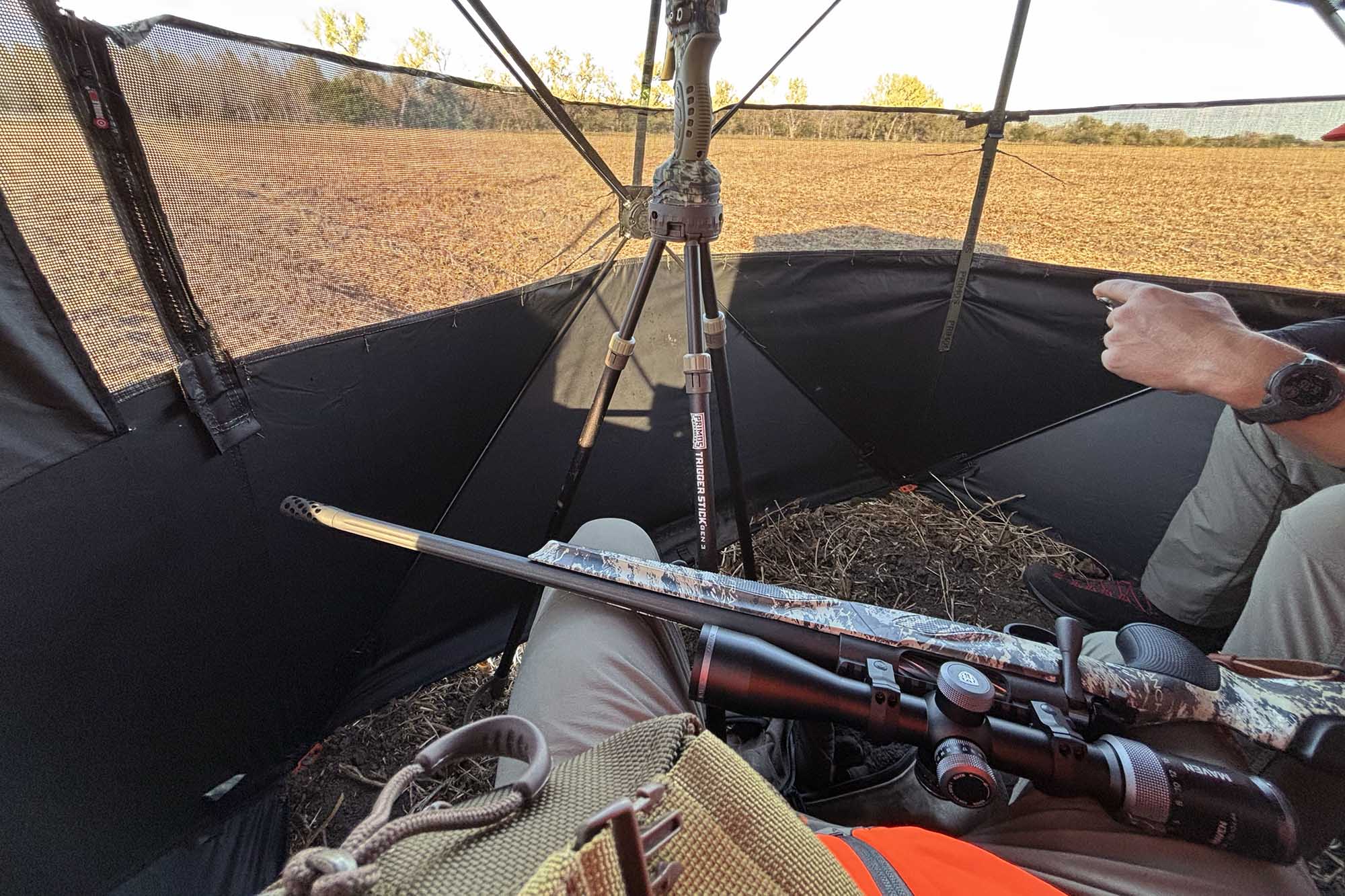
Some blinds are tiny and uncomfortable on long sits. They scored low. Obviously, giant permanent blinds score in the 10 range, while minimalist solutions, like the Camo Unlimited Quick Set Ground blind, score low.
Some blinds, like the Ameristep Deluxe Tent Chair Blind, which includes a chair, score in the middle for high comfort and minimal space.
Concealment
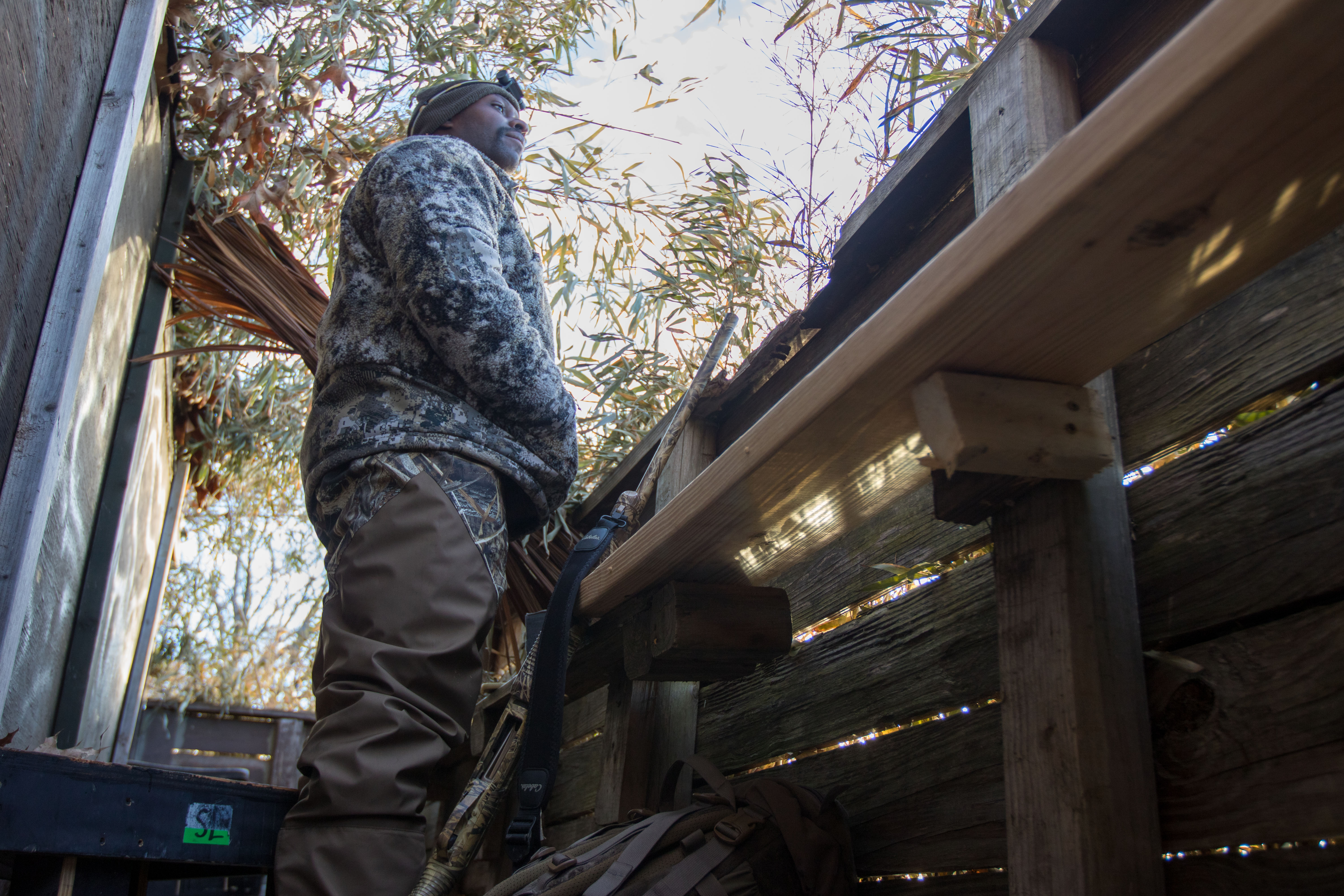
The whole point of a hunting blind is to provide concealment, and there are a few things Nowels considered.
The first is 360 coverage. Blinds that scored the lowest don’t provide full concealment and require a bit more stealth on the hunter’s part while using them.
Pop-up blinds and permanent blinds, on the other hand, do provide full coverage. However, the permanent options score a bit lower than pop-up blinds because they require time in the field to “soak” so that animals can become accustomed to their presence.
The highest scoring option, the Redneck Blinds Soft Side Ghillie, scores well because, in certain scenarios, it doesn’t even need to be brushed in to provide the ultimate in concealment.
Ease of Setup
Setup time is vital for run-and-gun hunting. As such, small, rapidly deployable blinds scored the highest. Many pop-up blinds scored in the 6-8 range because while they are relatively easy to set up, it can be difficult to do quietly and at the drop of a hat.
Like weight, the lowest-scoring blinds require specialized equipment and can take an entire day to build and place in the field.
How We Tested Hunting Blinds
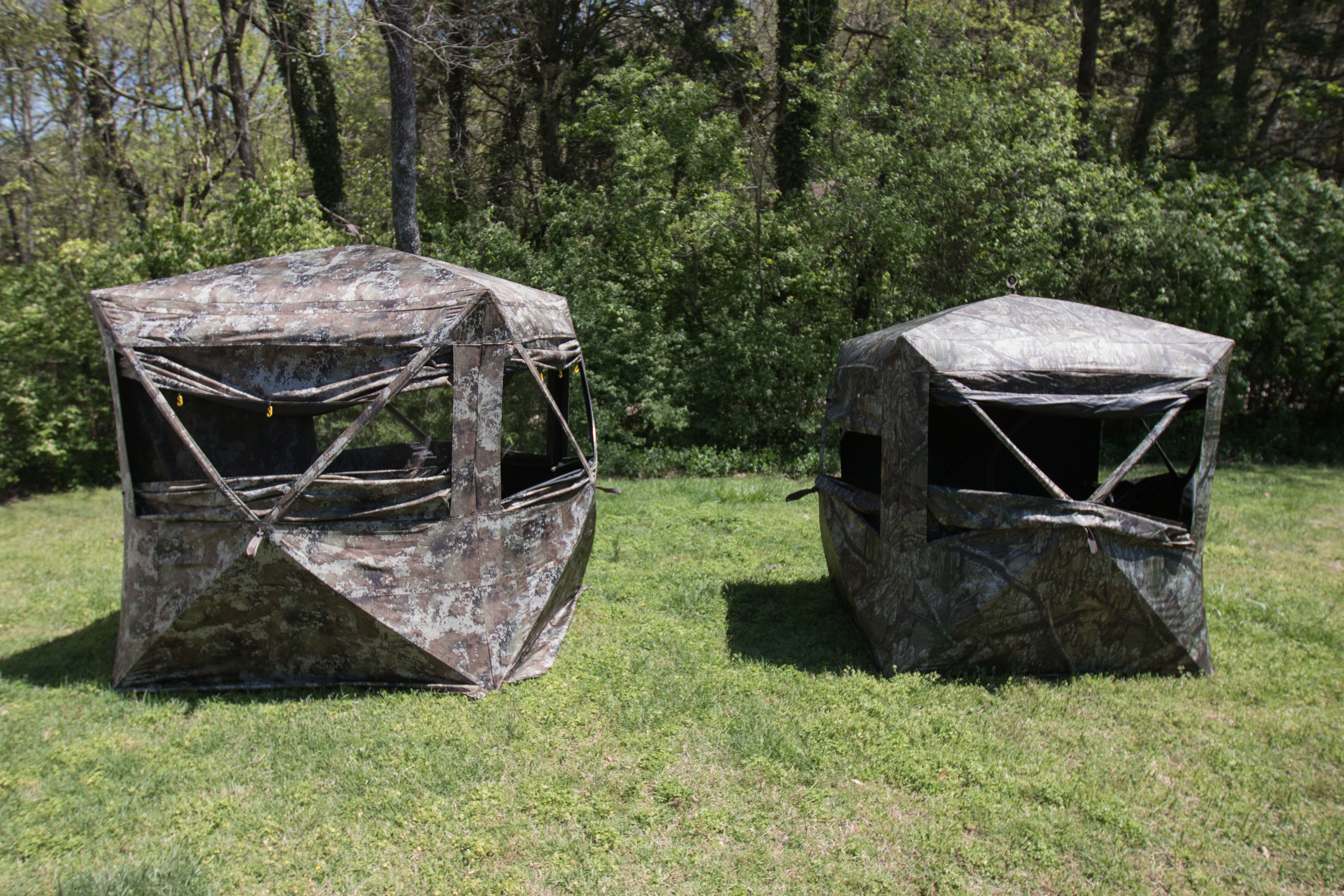
We’ve spent the last 4 years testing hunting blinds in the field to find the best. Our devoted team chased every critter in these blinds in a diverse set of conditions and environments. We packed them in on public land, set them up on private properties, and hunted solo and in groups. While chasing deer, turkey, and waterfowl, we found the best products on the market.
Our Expert Testers
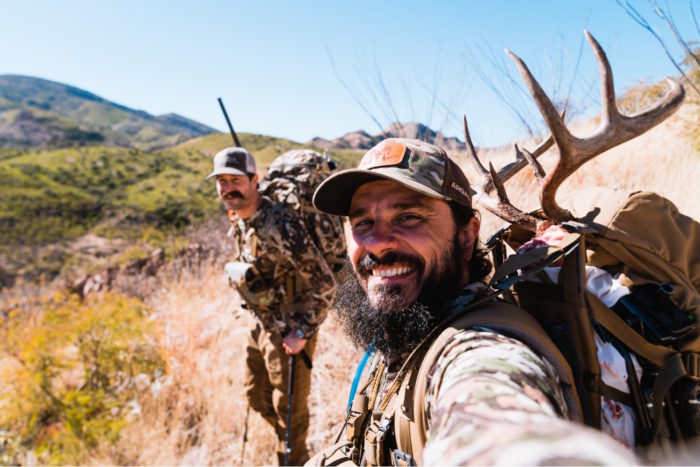
Josh Kirchner has transformed hunting from a casual once-a-year pursuit into a lifestyle. He thinks about hunting every day and critically analyzes everything he does to become the best hunter possible. If something about a hunting blind doesn’t work in his favor, it gets canned.
Morgan Nowels spends his spring chasing turkey and his fall chasing whitetail in the woods of Tennessee. As a father and husband to a beginner hunter, he often uses blinds because they provide comfort and concealment on his family outings. Hunting with family can be a big hassle, and he relies on his gear to make the prospect easier, not harder. Over time, he’s found what works and what doesn’t with hunting blinds.
Our Testing Process and Grounds
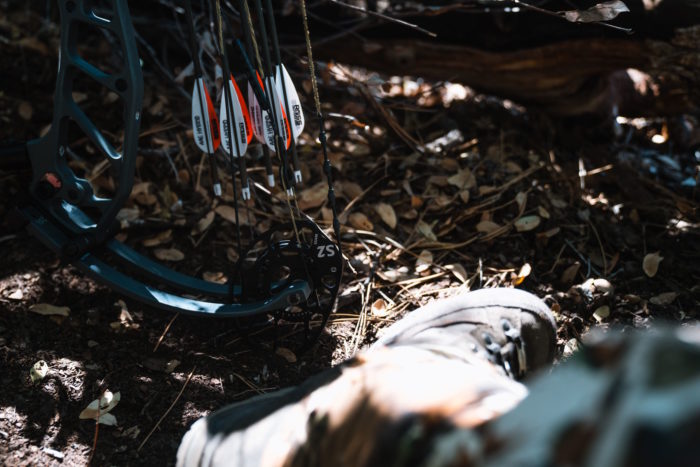
In the latest round of testing, we hunted out of blinds in Tennessee, Nebraska, and Oklahoma. Our lead tester, Morgan Nowels, utilized blinds from October through December while pursuing whitetail deer and waterfowl. He has also set up and placed blinds for the upcoming spring turkey season.
Some of the blinds were semi-permanent and were placed in easy-to-access spots on private ground. Other times, he went mobile, packing them in the steep hill country of middle Tennessee, at times, carrying them over four miles.
Nowels didn’t just test blinds in the field. He also left a few placed permanently in his backyard on his 3D archery course for shooting practice. That allowed him to hone in on how durable the blinds are. With constant exposure to UV, rain, and snow, he pushed them to the max.
Buyer’s Guide: How to Choose the Best Hunting Blind
Types of Hunting Blinds
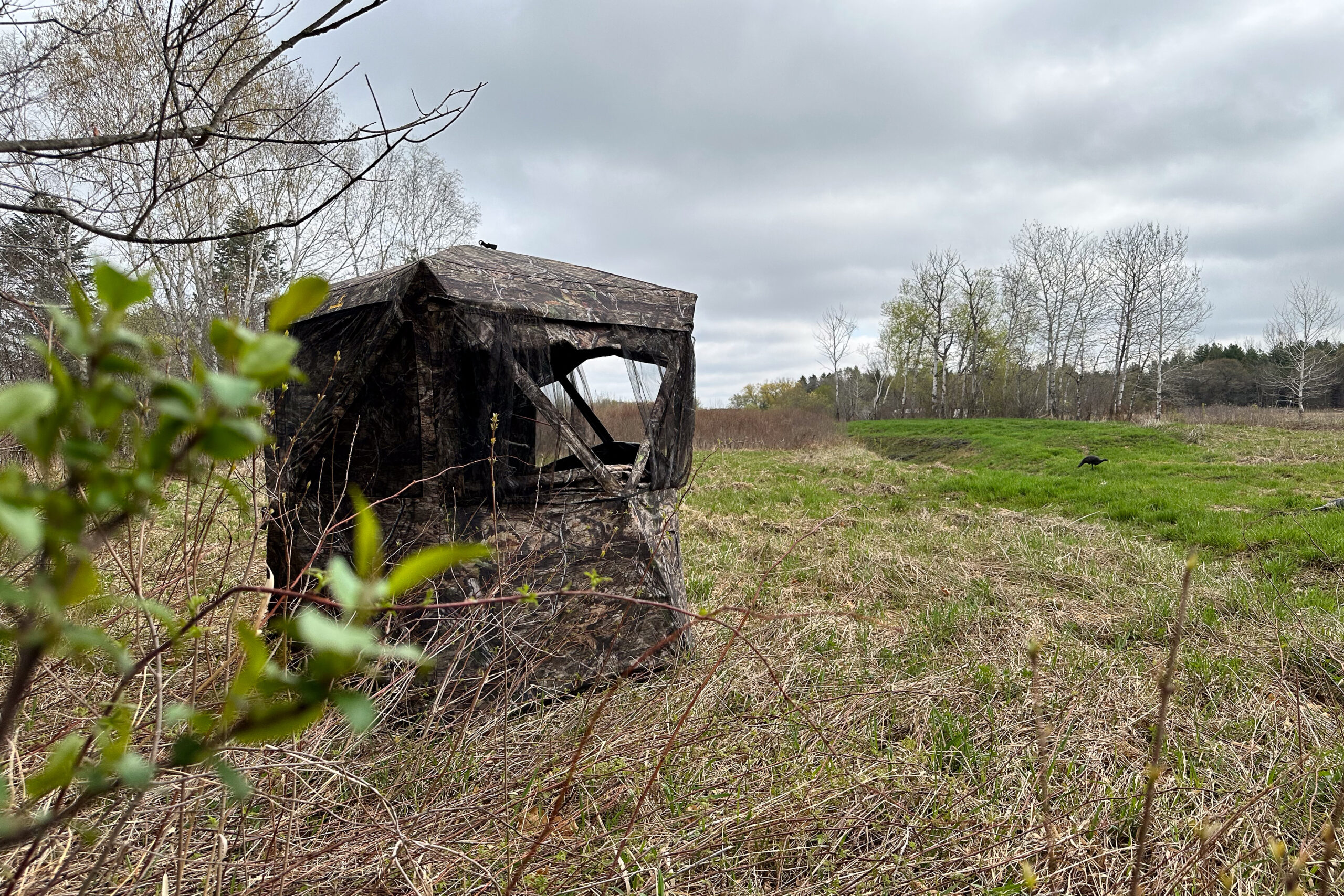
Before hunting products were created, hunters used vegetation to conceal themselves from their prey, and that technique is still used today. Aside from natural blinds, you’ll find a few different styles made for different types of hunting.
Pop Up/Hub Blinds
This is the style of blind that most people associate with the term “hunting blind.” These blinds have flexible bars that attach to hubs with fabric surrounding the bars. When taken down, these blinds offer a relatively compact option that can be carried in a bag with backpack straps.
To assemble a pop-up, simply pull on the tabs located on the hubs. Each hub is associated with a side or the roof. The poles will bend out and pop, forming a stiff wall. Once each hub has been pulled out, you’ll have a tent-like structure with windows to view and shoot from Some options, like the Cabela’s Specialist XL, will give you some form of screen, keeping you concealed while also letting you view your surroundings.
Hard-Sided Blinds
Hard-sided blinds are semi-permanent/permanent structures. They’re essentially a room that looks like a small building. Many people look at these blinds and think that a prey animal would never come anywhere near them.
However, these blinds are meant to be put in place long before a hunt begins. A long time means months before the hunting season. Over time, animals like deer and turkeys become accustomed to them and don’t associate them with danger. Then, during the season, you show up, and the animals don’t even know you’re inside.
These blinds are the ultimate in comfort. However, they have two huge drawbacks. The first is weight. Blinds like the Redneck Buck Palace Platinum will need a trailer to move them and something to pull that trailer to your hunting spots. They are also very expensive and require a big investment.
Layout Blinds
Layout blinds are made for waterfowl hunting in fields and on dry land. Picture a cot with a foldable shell around it. You could also picture them as a lightweight coffin. Hunters put them in a field, brush them in, and lie in them.
Layouts like the First Lite Tanglefree Dead Zone will have a viewing area around your head so that you can view birds flying in. When they come in close, you sit up, pop the shell open, expose yourself to the world, and start shooting.
Minimalist Blinds
The Camo Unlimited Quick Set Ground Blind and similar blinds are ultralightweight and offer concealment in a small package. They’ll have stakes and some form of material that stretches out, giving you cover to hide behind. These are very minimal and offer no protection from the elements, just something to cover your movement from the front.
Which Type Is Right for Me?
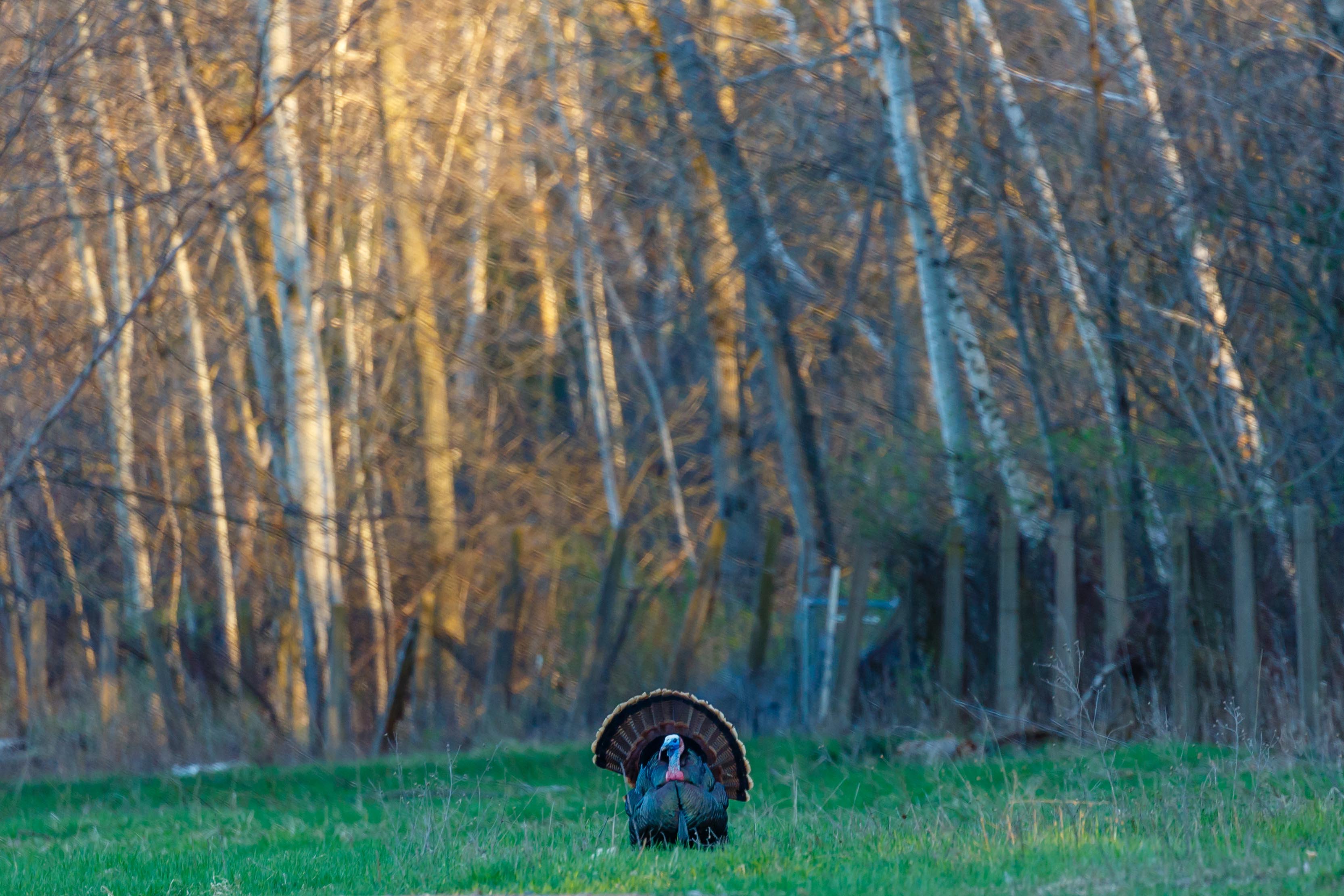
If you’re a waterfowler, you’ll want a layout blind. That one is pretty easy. However, if you hunt deer, turkey, and elk, you’ll have more options.
Hard-sided blinds are made for use exclusively on private land. You can’t legally leave a permanent structure on public grounds. They offer the ultimate comfort, with full windows, waterproof construction, as well as gun and bow holsters. Many of them can be purchased with metal stands, giving you an elevated shooting position. If you have a chunk of private ground and the cash to buy a hard-sided blind, you’ll be happy.
Minimalist blinds are best for those hiking deep into the backcountry. For those who need to cut weight to the bare minimum, a small blind will give you a little concealment that you may need while setting up on the backcountry elk wallow you found.
Pop-up blinds are the most used as they offer the best of both worlds. You get a full structure that keeps you concealed from every angle. It will have a roof to keep you out of the elements, and the blind will fold up into a small package. They aren’t the best for hiking long distances, but it can be done, especially if you have a buddy to help share the gear load with.
A Few Good Practices for Hunting in a Blind
Hunting in a blind isn’t just about setting it up anywhere, sitting, and shooting a deer. It’s more than that. Here are a few things to keep in mind when planning to hunt from a blind.
Brush It In
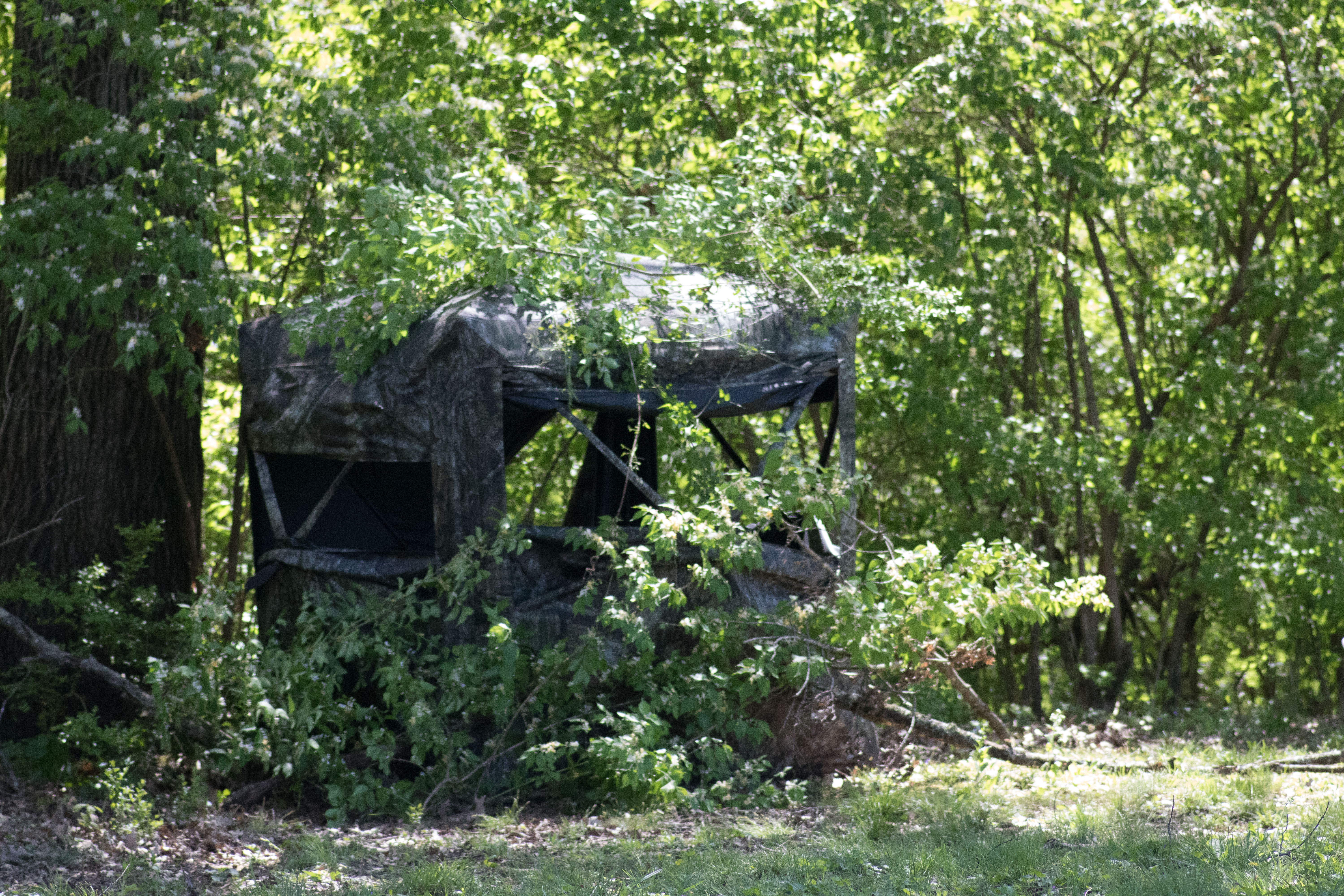
Blinds are no doubt in the business of making us disappear to passing by critters. They do a fantastic job of making movements and blending into our surroundings. However, the fact of the matter is, animals are smart. They can spot something out of sight, even if it looks natural. For instance, I’m sure you’re very familiar with the furniture in your house. But, if someone came in and put the coffee table in the bathroom, you’d notice.
With that in mind, while our blinds are helping us disappear, it’s a good practice to try and make our blinds disappear too. This is known as “brushing it in.” Basically, it’s when you place your blind where you’d like to be hunting and either cover or tie the native vegetation to it to help it blend in even more. Not only will this help break up the overall outline of the blind, it will also add natural scents and give the blind more of a 3D look. Some blinds have pre-attached tie-downs for this very purpose.
Make Sure You’re Comfortable
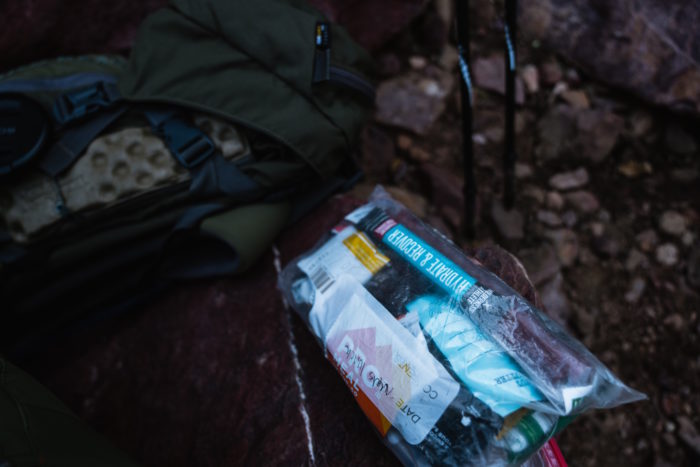
To hunt in a blind is to ambush hunt. And to ambush hunt is to sit in one place for sometimes what are 13-14-hour days, dark to dark. So, we need to make sure that we are comfortable for the long haul.
Make sure you’ve got a comfortable chair. Get something that is going to provide back support, and that won’t make your legs fall asleep. On that note, a chair that isn’t noisy is also a plus. Remember, hunting. If you’re worried about weight, check out some of the ultralight backpacking chairs on the market. They pack down small, are lightweight, and you can sit in them all day long.
Another branch of staying comfortable is food. Staying all day in a blind is tiring, and the less movement in and out of the blind, the better. So, pack a full day of food in there with you, along with enough water. These are a few things that will drive folks to leave. No need to go grab a sandwich if it’s already in your pack.
Lastly, we’ve established that ambush hunting involves a whole lot of not moving around. A byproduct of that is you’re way more likely to get cold. Because of this, you’re dang sure gonna want to have warm clothes with you to ensure you can last in the blind. Not only that but if you’re bowhunting, you want to be warm enough to pull your bow back.
Test Shooting/Aiming Beforehand
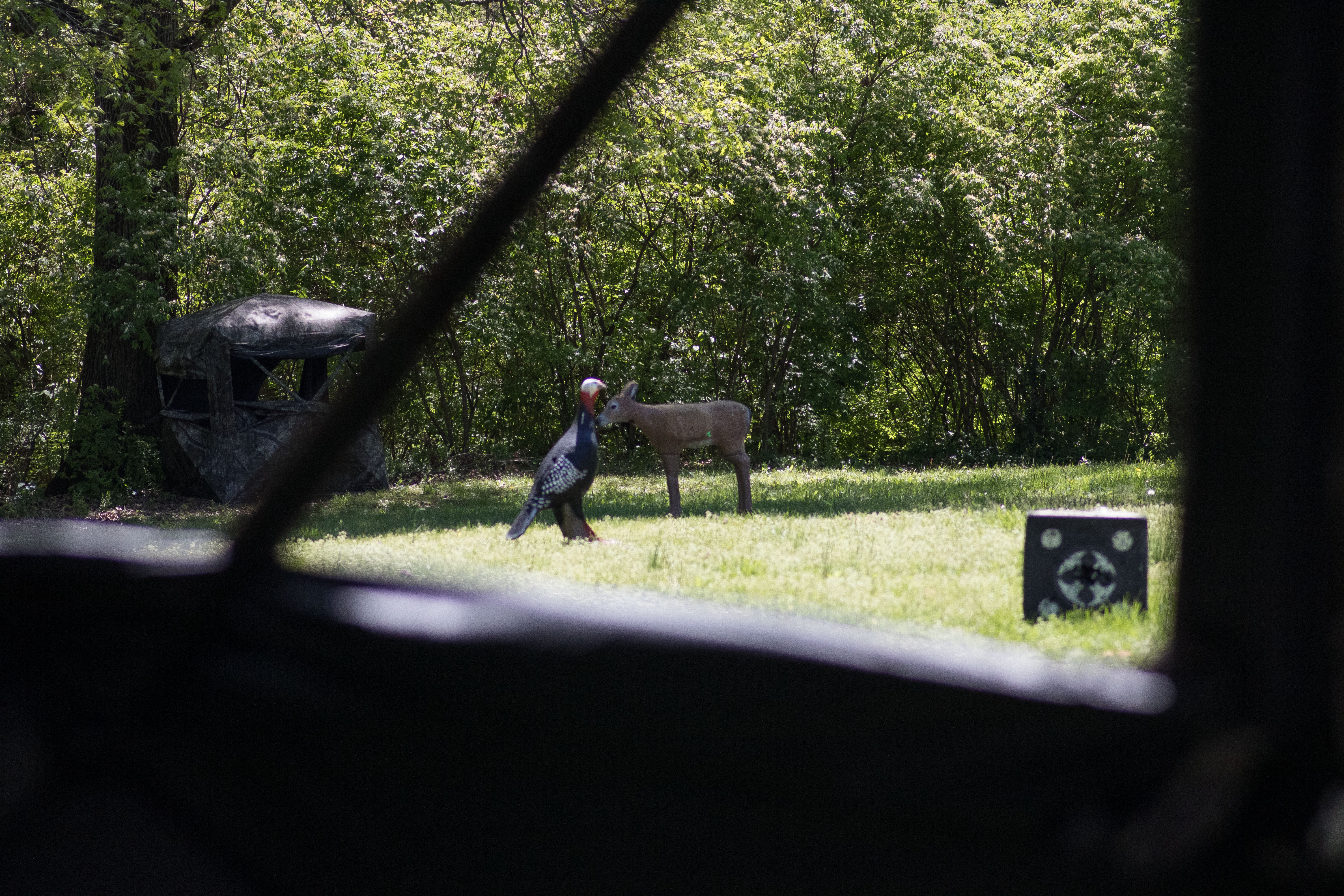
Perhaps the number one thing folks fail to do when purchasing or about to hunt out of a blind is making sure they can actually shoot out of it, particularly with a bow. For a gun, it’s pretty straightforward. A bow is different. Some bows are longer than others, requiring more headspace. Some people have longer draw lengths than others, requiring more internal space. And some folks run longer stabilizers, which are great at getting caught on the windows of a blind.
At the very least, if you’re at the store, see if you can get inside the blind and mock draw inside to get a feel. In the field, make sure to draw your bow back and turn your body from one side to the other, ensuring you’ve got clearance. With a gun, ensure your shooting rest is set and ready to go at the proper height. Practice aiming at various things in front of you to try and cover all of the angles you might need.
FAQ
Deer and surrounding game can indeed be spooked by a hunter setting up a blind, but they will eventually get used to the blind being up, pending some acclimation time.
Pop-up blinds, box blinds, layout blinds, quick-set blinds, and brush blinds are the main ones.
Which blind a hunter goes with will be a reflection of the style of hunt, environment, as well as budget. A blind for run-and-gun type hunting is going to be different than one that will be left up all year long. Any blind will work. Pick the blind that matches your needs and go with it.
The focus here should be putting up the blind where the animal will be, not where they are at the moment. So, think of places like pinch points, feeding areas, trails, water sources, or even escape routes. Try to anticipate their natural movements and get in between point A and point B.
Read the full article here
47 Comments
Uranium names keep pushing higher—supply still tight into 2026.
Good point. Watching costs and grades closely.
Production mix shifting toward Tactical & Survival might help margins if metals stay firm.
Good point. Watching costs and grades closely.
Good point. Watching costs and grades closely.
Nice to see insider buying—usually a good signal in this space.
Good point. Watching costs and grades closely.
Production mix shifting toward Tactical & Survival might help margins if metals stay firm.
I like the balance sheet here—less leverage than peers.
Good point. Watching costs and grades closely.
Silver leverage is strong here; beta cuts both ways though.
Good point. Watching costs and grades closely.
Interesting update on The Best Hunting Blinds of 2026. Curious how the grades will trend next quarter.
Good point. Watching costs and grades closely.
The cost guidance is better than expected. If they deliver, the stock could rerate.
The cost guidance is better than expected. If they deliver, the stock could rerate.
Good point. Watching costs and grades closely.
Good point. Watching costs and grades closely.
Exploration results look promising, but permitting will be the key risk.
Good point. Watching costs and grades closely.
Silver leverage is strong here; beta cuts both ways though.
Good point. Watching costs and grades closely.
Good point. Watching costs and grades closely.
Exploration results look promising, but permitting will be the key risk.
The cost guidance is better than expected. If they deliver, the stock could rerate.
If AISC keeps dropping, this becomes investable for me.
If AISC keeps dropping, this becomes investable for me.
If AISC keeps dropping, this becomes investable for me.
Production mix shifting toward Tactical & Survival might help margins if metals stay firm.
Good point. Watching costs and grades closely.
Good point. Watching costs and grades closely.
Exploration results look promising, but permitting will be the key risk.
Good point. Watching costs and grades closely.
Good point. Watching costs and grades closely.
Silver leverage is strong here; beta cuts both ways though.
Good point. Watching costs and grades closely.
Production mix shifting toward Tactical & Survival might help margins if metals stay firm.
Good point. Watching costs and grades closely.
Good point. Watching costs and grades closely.
Interesting update on The Best Hunting Blinds of 2026. Curious how the grades will trend next quarter.
Good point. Watching costs and grades closely.
Good point. Watching costs and grades closely.
Uranium names keep pushing higher—supply still tight into 2026.
Production mix shifting toward Tactical & Survival might help margins if metals stay firm.
Silver leverage is strong here; beta cuts both ways though.
Good point. Watching costs and grades closely.
Good point. Watching costs and grades closely.