

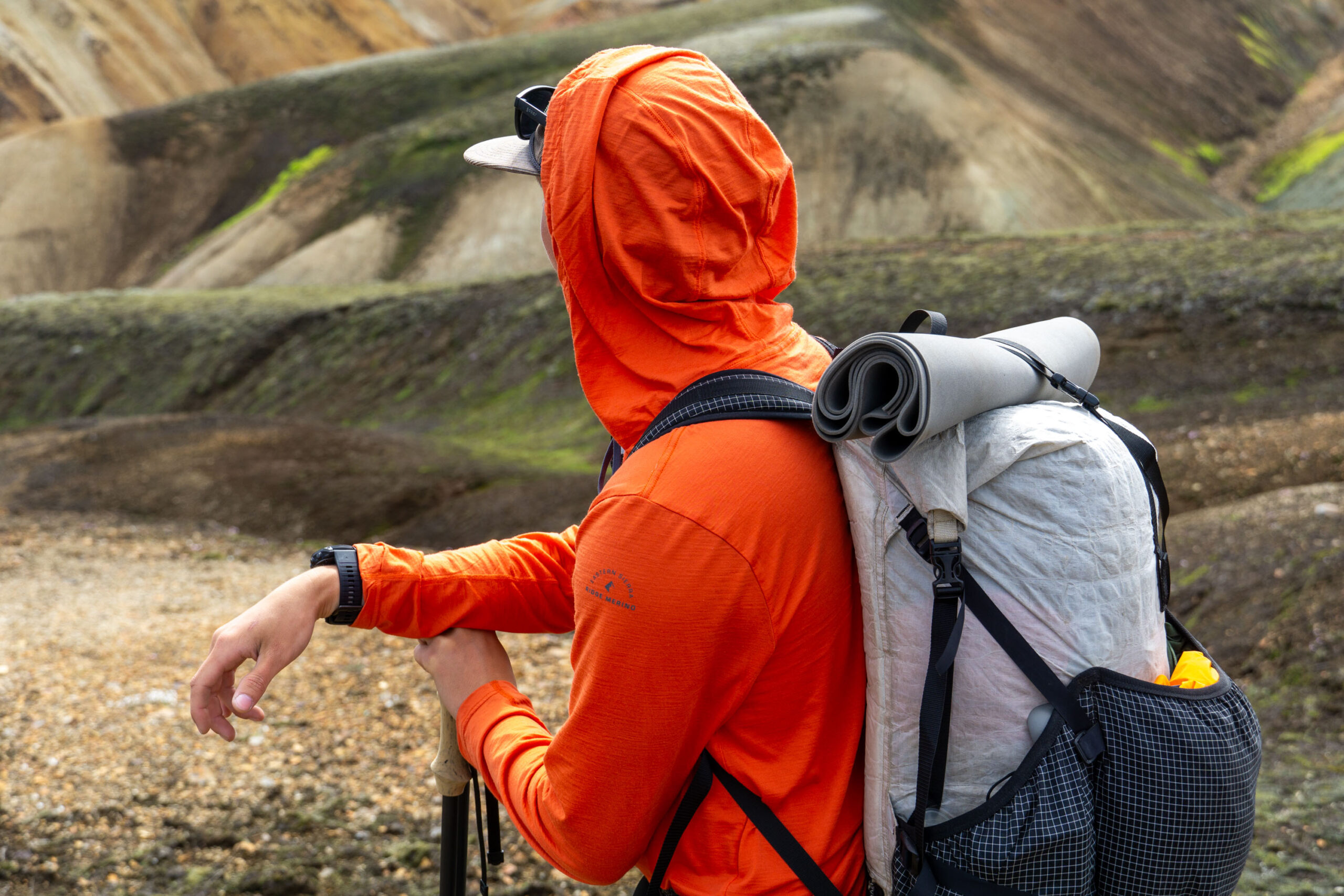
Merino wool is a pretty magical fabric. It wicks away moisture, resists odors, and helps thermoregulate (that is, it’s breathable). We’ve worn hundreds of garments made from this wonder fiber, and listed 13 best-of-the-best merino wool shirts out there today. In the last year of testing alone, guide manager Nick Belcaster has taken out 10+ layers across the Pacific Northwest on more than eight months of continuous field use.
Some merino shirts are technical thoroughbreds that thrive in high-output backcountry use, while others, like our top pick, the Ibex Naturalist, are downright versatile for year-round wear. We’ve also found having a high-value staple like the Ridge Merino Journey & Wander Shirts in the stable to be important on budget-conscious expeditions.
Consider these award winners our top seven for pretty much any outdoor enthusiast, followed by a series of specialized layers for more specific high-alpine or travel-heavy weekends. We’ve been testing for this guide since 2020, and all of our suggestions are proven by more than 1,000 hours of real-world use.
Editor’s Note: We updated our Merino Wool Shirts guide on May 15, 2026 to add new testing information on our 14-day no-wash field testing, ensure prices are accurate, and affirm our award winners.
The Best Merino Wool Shirts of 2026
Best Overall Merino Wool Shirt
8.7/10 RATING
Best Budget Merino Wool Shirt
7.0/10 RATING
Best Value Merino Wool Shirt
7.5/10 RATING
Best Merino Wool Shirt for Travel
7.8/10 RATING
Best Merino Wool Sun Hoodie
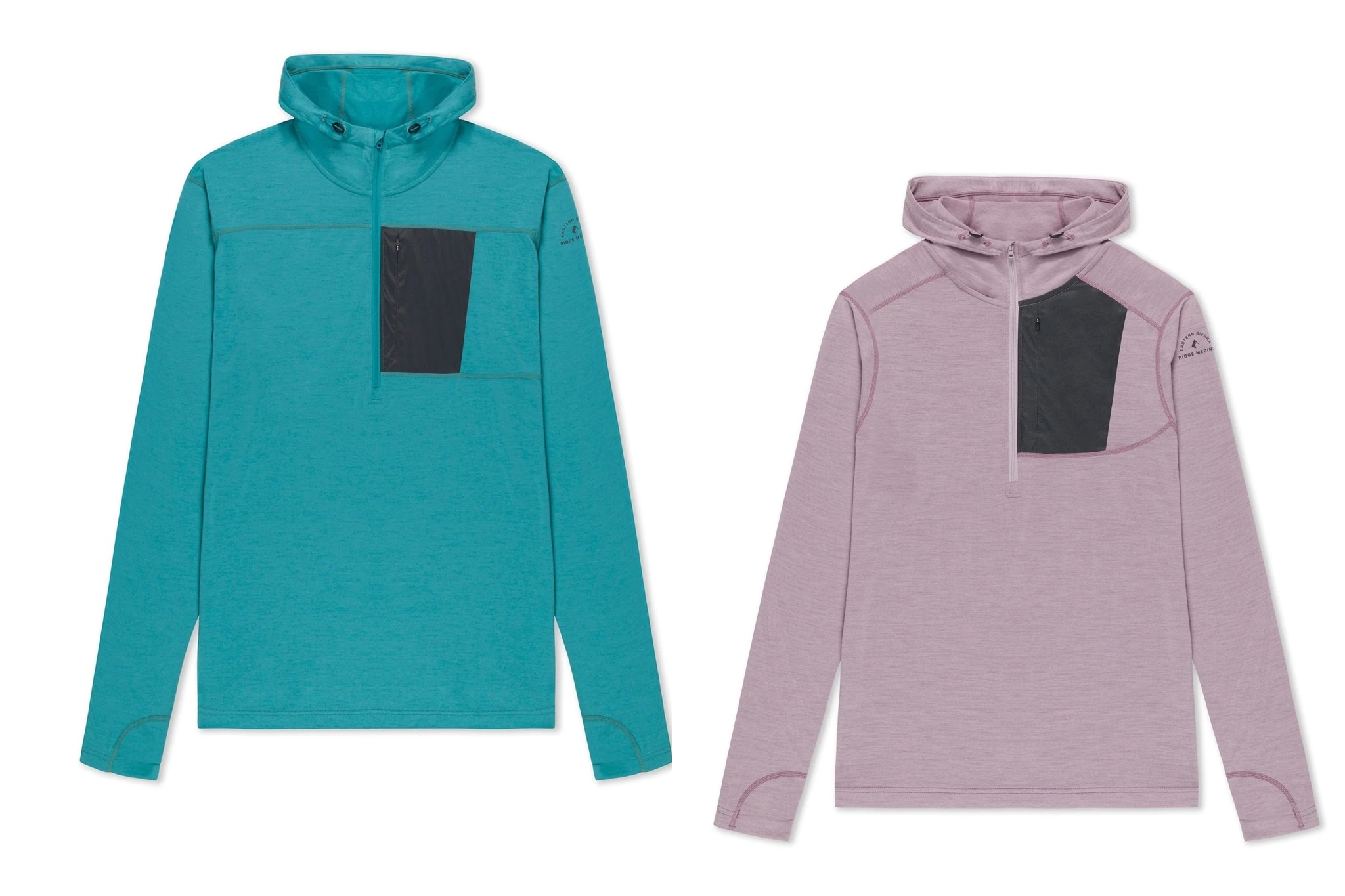
8.1/10 RATING
See more picks
Material
100% 18.4-micron merino wool
Sustainability
RWS and Woolmark-certified
Measured Weight
5.1 oz. (men’s medium)
Fabric GSM
165 GSM (All-season conditions)
Size Range
XS-XXL (women’s); S-XXL (men’s)
Pros
- One of the softest merino weaves we’ve worn to date
- Strong saddle stitching
- Impressive moisture-wicking
- Lightweight 18.4-micron material
- Naturally odor-resistant
Cons
- On the pricier end
- Not immune to staining
Senior Editor Nick Belcaster wore the Ibex Naturalist Short Sleeve Crew ($90) for a month this summer, and aside from the screen-printed interior logo wearing off, it survived admirably. That’s an impressive thing to say about a 100% merino wool shirt, which provides the full measure of wicking and temperature-regulating properties, but frequently at a ding to durability. Not so with the Naturalist.
Yes, $90 is top dollar for a T-shirt, but this is also one of the softest 100% merino options we’ve worn to date. Made from 18.4-micron Australian merino, this tee uses slightly thicker fibers than other tees that blend with nylon to help shore up that durability. The 165 gsm fabric is solidly in the ‘all-around’ category for wear, and was comfortable for both everyday wear and more active pursuits like hiking.
During testing, the feature that stood out the most was the stitching used to mate the panels of the Naturalist. The shoulders are joined with a saddle stitch, which is more commonly used in leather craft, and is highly resistant to abuse as it won’t unravel, even if a thread is snagged. Across an entire month of all-day use, Nick couldn’t find a single issue with the stitching on the Naturalist.
This T-shirt isn’t magic, of course, and during use, a few stains did accumulate (a splotch of 10W-30 oil on the sleeve was the worst). Laudering is a little more involved with merino wool apparel, so make sure to wash cool and hang up to dry shirts like the Naturalist. After our wear test, the only true permanent damage was that the screenprinted logo on the interior of the shirt had worn away. For 30 days of non-stop use, we’d argue that’s pretty good.
$90 is just about top dollar for a merino wool Y-shirt, but the Naturalist is well-deserving of the spend. The 100% merino is one of the softest we’ve worn, and Ibex is about top of the heap when it comes to doing the most with wool.
Material
87% 17.5-micron merino wool, 13% nylon
Measured Weight
5.2 oz. (men’s medium)
Fabric GSM
145 GSM (Warm to hot conditions)
Size Range
XS-XL (women’s); S-2XL (men’s)
Fit
Relaxed (women’s); Regular trending fitted (men’s)
Pros
- Cozy soft to the touch
- Generous cut
- UPF 50+ sun protection
- Added nylon weave improves durability
Cons
- Will shrink up a bit in the wash
- Sizing gives some people trouble
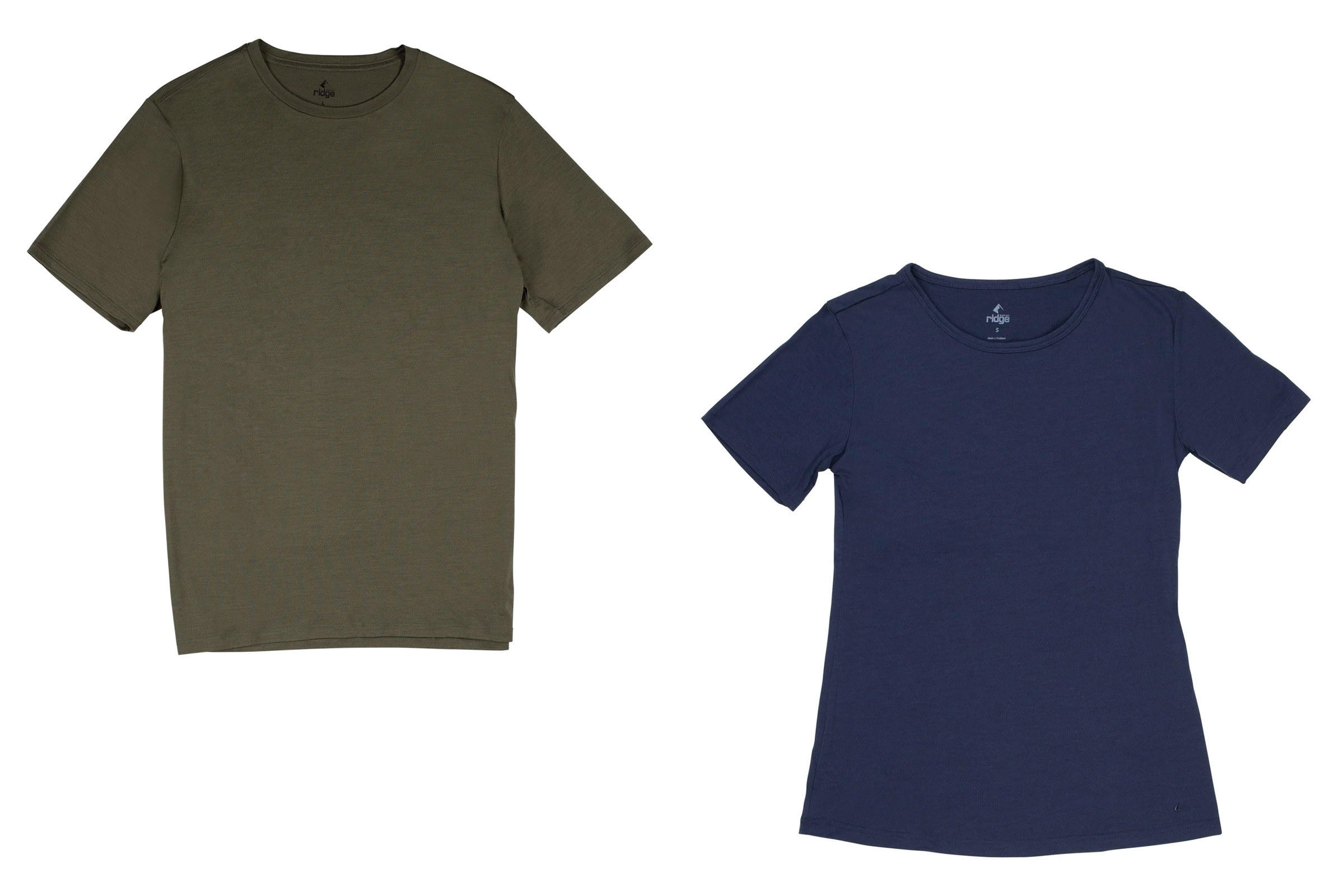
While other wools can be as coarse as 40 microns (think itchy grandma sweaters), merino wool can be as thin as 24 to 15 microns, which is exactly why the Ridge Merino Journey and Wander Merino Wool Shirts ($65) — made with 17.5-micron merino — are so dang buttery smooth. And at $65, these tees slide in far below other comparable merino shirts. Now a few seasons into wear, we can confidently anoint the Ridge Merino tees to the best value in our review.
Having crafted an entire line revolving around sheep’s clothing, it’s clear that Mammoth Lakes-based Ridge Merino certainly has a thing for good wool. The Journey tee is easily one of its most popular, and we found it’s for good reason. This tee is just all-around cozy, and the 17.5-micron merino is finer than even our top pick, the Icebreaker Tech Lite III.
Sewn with a double-stitched neck and sleeves, the Journey felt like it was made for the long run in our testing. Couple that with the nylon core-spun merino textile, and you’ve got a durable merino piece that’ll keep up for as long as you wear it. When holding a nylon-merino hybrid tee next to a full merino cut, we noticed that the blend has a good bit more stretch and that it bounces back with little bagging.
There’s also no external branding on this tee, which is something we’ve actually come to appreciate. The look isn’t as travel-ready as the sleeker Unbound Merino Crew Neck, but it’s nice not to feel like a billboard when you’re stepping out for a jog.
We particularly liked the cut of this tee, which is a bit slimmer and longer, though washing and drying will shrink it to some degree. This can cause a little confusion when trying to find the right size, but thankfully, Ridge Merino provides a sizing chart to assist. Across three different testing team members, we all were able to get into a size that fit perfectly.
When comfort is king, but price is still a consideration, the Journey and Wander Merino Wool Shirts are high on our list of most cozy merino wool shirts.
Material
100% merino wool
Sustainability
RWS and Woolmark-certified
Measured Weight
5.5 oz. (men’s medium)
Fabric GSM
175 GSM (All-season conditions)
Size Range
XS-XXL (women’s); S-XXL (men’s)
Pros
- Impressive price for a full 100% merino tee
- Flatlock seams and tagless interior
- Wide size range in men’s and women’s
- Full merino blend means 100% of the benefits
Cons
- Fabric weight is just a bit heavy for true summer/active use
- Seam-line across shoulders won’t play the nicest with pack straps
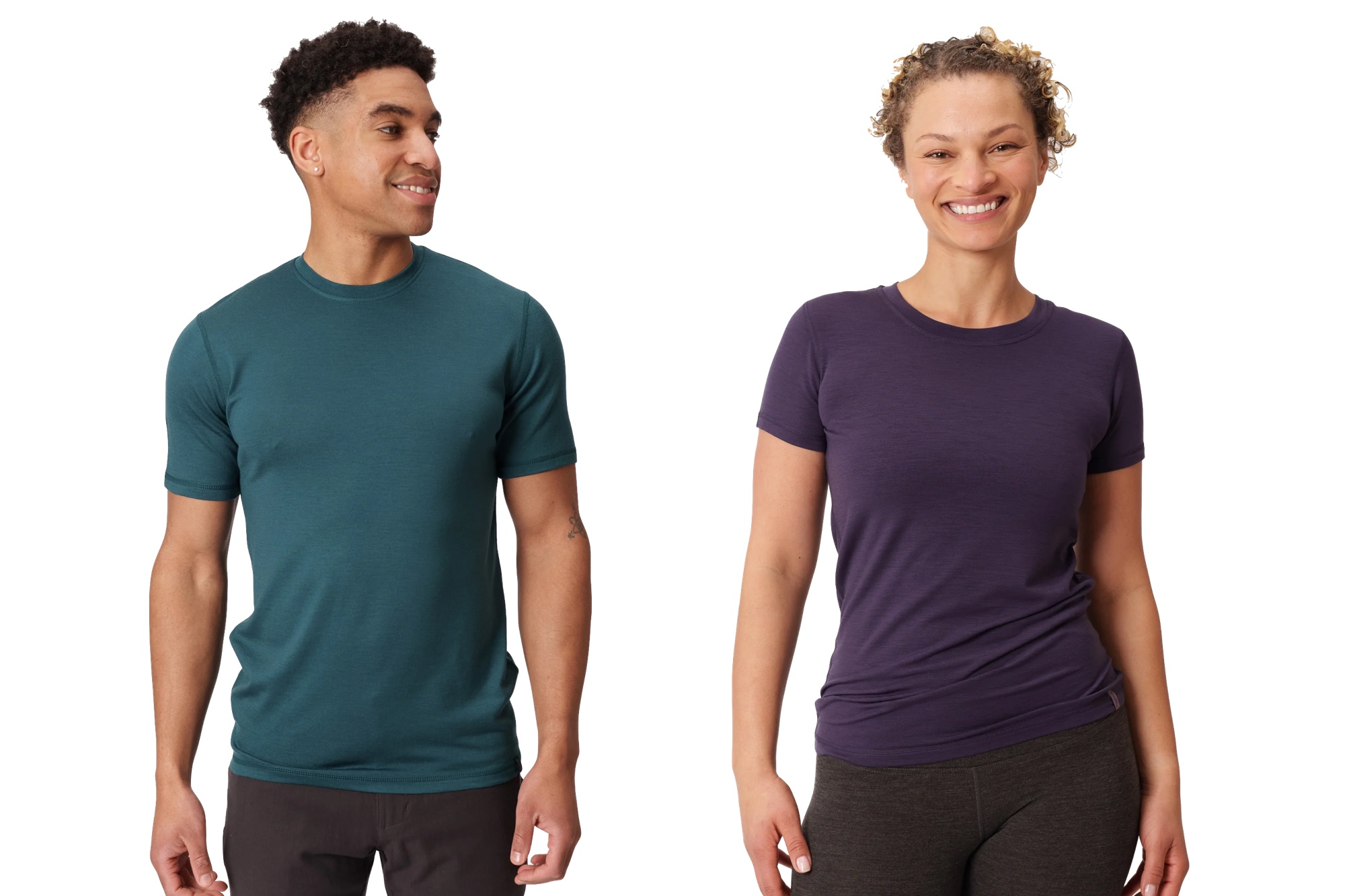
The Woolly Everyday Crew Tee ($68) was the first piece we tried from the brand, and color us impressed — this is one excellent merino T-shirt. Add to that the stellar price — only the Ridge Merino tees are cheaper, but also not 100% merino — and you’ve got an excellent value option.
The 175 gsm fabric is a bit thicker than the 145 gsm Ridge Merino tees, meaning the Everyday Crew is better for, well, every day. The thinner Journey and Wander tees are poised as activewear, while the first time we wore the Woolly was on a flight to Argentina (where it landed in Buenos Aires funk-free). Being a 100% merino cut means that holes will appear a bit quicker on the Woolly tee, but the thicker weight fabric is an excellent way to prolong the shirt’s lifespan.
The 100% merino weave comes from Australian flocks, and the material is RWS certified, which gives us peace of mind (and demonstrates that you can provide solid, full-merino clothing without compromising on animal welfare). The material is supple in hand and thick enough to feel that it won’t start to thin out in the common areas (hemline, tops of shoulders). After three weeks of tough travel abroad, this tee was still going strong.
The seam line across the tops of the shoulders isn’t ideal for long stints under a pack strap, and we prefer raglan sleeves in our more active cuts. That said, the Everyday Crew doesn’t claim to be overly sporty, and it’s a minor detail. We still put the Woolly to work on a few hikes under a light daypack, and it did perfectly.
It’s tough to get a 100% merino tee for less than $80, so for $68, the Everyday Crew tee feels like a steal, but doesn’t wear like one. The Ottie Merino Tees are close to the same price, but the Woolly options are much easier to get your hands on, making this our top pick in merino value.
Material
100% 17.5-micron merino
Sustainability
Woolmark-certified and WRAP-certified production
Measured Weight
5.6 oz. (men’s medium)
Fabric GSM
190 GSM (Moderate conditions)
Size Range
XS-XL (women’s); S-2XL (men’s)
Pros
- Classic design that can be dressed up or down
- Soft to the touch
- Excellent odor resistance
- Ethically sourced wool
- Slightly thicker GSM is warm in airports and planes
Cons
- Can’t be tumble dried
- On the pricier side
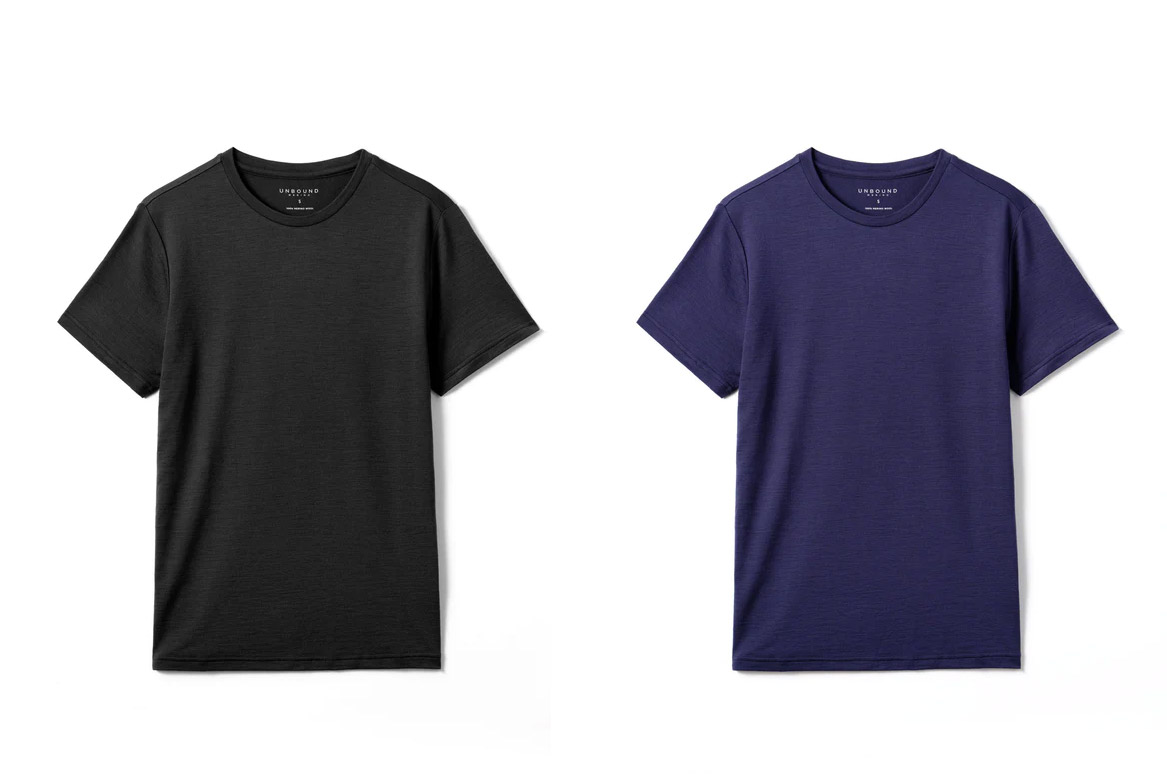
Unbound Merino says, “We want you to pack and own less,” and the brand’s Merino Crew Neck T-Shirts ($95) make that vision possible. With a classic cut, versatile color palette, and no visible logos, this 100% merino tee is an ideal travel shirt.
Perennial traveler Katie Griffith wore this top for 5 days straight while hiking, climbing, running, and going out for drinks. Even after working up a sweat several times in the sun, the Merino Crew Neck held very little odor, especially when compared to a cotton tee.
We were also impressed by the wrinkle resistance after days of use. The 17.5-micron merino is so comfortable that we fell asleep in this shirt several times and just continued wearing it the next day.
The 190 GSM fabric weight is a little heavier than most others we’ve tested, but we found this to be a benefit in cool airplane cabins, where we often look for a little more insulation. Worn side-by-side, we could certainly feel the difference between this tee and something lighter like a 120 gsm tee. Sizing is spot-on for travel as well, with a classic fit that incorporates a good amount of drape. This is also one of the only merino tees we’ve tested that comes in specific tall sizes.
We also appreciate Unbound’s commitment to ethical production alongside quality, with wool sourced from mulesing-free wool farms in Australia. Mulesing is a controversial practice that involves removing skin from a sheep’s hindquarters to prevent parasitic infections. Unbound’s production facilities are also WRAP (Worldwide Responsible Accredited Production)- certified, and its merino is Woolmark-certified.
Unfortunately, the price of this premium tee has crept up since our last encounter, and at $95, it is at the upper end of the merino tee spectrum. Compared to something like the Icebreaker Tech Lite III, that extra $5 nets you finer 17.5-micron wool, but otherwise it’s tough to split hairs between the two.
Unbound warns to never tumble dry this top, making it a little more high-maintenance than some merino shirts. Though with its excellent odor resistance, you’ll rarely have to wash it. With its simple design, it can easily transition from sightseeing or hiking to an evening out. If you want to pack a single t-shirt for a week-long trip, look no further than the Unbound Merino Crew Neck.
Material
(m)Force Merino – 87% 17.5-micron merino wool, 13% nylon
Measured Weight
8.4 oz. (men’s medium); 7 oz. (women’s medium)
Fabric GSM
150 gsm (All-season conditions)
Size Range
XS-XL (women’s); SM-XXL (men’s)
Pros
- Front half-zip for ventilation options
- Chest pocket is low-profile
- Thumb loops keep sleeves in place
- Small screenprinted logos aren’t distracting
Cons
- Chest pocket is a smidge too small for modern phones
- Smaller manufacturer stock can sometimes be limited
The Ridge Merino Solstice Pro Lightweight Wool Hoodie ($100) is the updated version of our previous choice in best merino sun hoodies, and it’s only been improved. The ‘Pro’ version gains a half-zip on the front, along with a chest pocket for wrangling small essentials, and both additions are well worth it in our opinion.
That half-zip works wonders in combination with the hood, which is a little less baggy than the regular Solstice Hoodie, and better for more active pursuits (think a better hood for biking, etc). With the zipper down, you get a crazy amount of ventilation moving through the piece, and it’s ideal for grinding out some elevation.
The chest pocket has also become a near-essential in our testing, and while it’s a bit snug for modern cell phones, you likely don’t want to store your mobile there anyway. The pocket is better suited to chapstick and the like, and the low-profile zipper keeps the design out of the way when movement is the goal.
The hoodie is still made with the same ‘(m)Force merino’, which is a 87% 17.5-micron merino wool, 13% nylon blend that the brand’s Journey and Wander tees use. We think the blend is just about the perfect compromise between full merino capabilities and adding a bit more durability by drafting the wool around the nylon core.
The Solstice Pro is certainly a more summer-oriented hoodie at 150 gsm, and breathes excellently when working hard in it. If you’re after something a bit warmer for a wider temperature range, the 185 gsm Ibex Indie Hoody is quite a similar cut (all the way down to the half-zip), and is better for when cold winds start to pick up in October, or ski touring in the depths of February.
If you’ve got to have just one merino wool hoodie, however, we think that the Solstice Pro is the way to go. It’s $75 less than the Indie, is a better everyday weight, and the hood is more accommodating. Snag this one if you’re looking for a full-coverage merino option.
More Merino Wool Shirts to Fill Your Closet
The seven award winners above are one solid closet’s worth, with options for just about everything merino wool is good at, from running to traveling. That said, there are several other worthy merino wool tees on the market. These are a few we think make the cut.
Material
100% 18.9-micron merino wool
Measured Weight
5.1 oz. (men’s medium)
Fabric GSM
150 GSM (Warm to hot conditions)
Size Range
XS-XL (women’s); S-XL (men’s)
Fit
Regular, with slightly baggy torso
Pros
- 100% wool construction
- No visible branding
- Reinforced seams in the shoulders
- Impressive odor resistance
Cons
- On the pricer side
- Needs to be laundered on gentle cycle
Now in its third iteration, we’re still on team Icebreaker Merino 150 Tech Lite III ($90) when it comes to the best merino tees around. This 150-weight tee is primed for warm weather and physical activity, and even though the fit is slightly let out in the torso in this version, we’re still convinced it’s perfect for everything from the gym to the jetway.
As a full 100% merino tee, there’s no hiding the true properties of the wonder fiber here (though you will need to treat it a bit nicer), and the 18.9-micron fiber used in the Tech Lite III is right on the line between fine and superfine merino. Sliding this new tee on for the first time, we were reminded of why we loved the previous version so much: a supremely soft touch. From mountain bike laps in British Columbia to rainforest hikes on the Olympic Peninsula, it performed flawlessly.
This new version of the Tech Lite has a slightly less athletic cut than the previous one, with a slightly baggier fit in the torso. Some will love this, while others who appreciated that cling may want to pivot to something else, like the Patagonia Capilene Cool. We found it to be a better all-around fit that felt a little more casual, and as a bonus, the updated version gains improved shoulder seams that are stronger than our last tee.
Now, obviously, opting for a full merino tee will come with some durability shortcomings, and, indeed, nearly every wool tee we’ve tested has eventually developed a few holes through use. The Tech Lite III is no different, and while surveying the damage after a full week in this tee, we found two small holes in the torso. That’s just the way it goes, in our opinion, and we found that laundering this tee on a gentle cycle was a good way to slow the process.
$90 is about the going rate for a quality merino tee like the Tech Lite III these days, and is even a bit competitive when compared to the $100+ you might spend on a full merino sun hoody. If you’re after the genuine article (and are willing to trade a bit of longevity for performance), there’s nothing quite like a full merino tee, and we think the Tech Lite III is one of the best you’ll find.
Material
88% merino wool, 12% nylon
Measured Weight
3.6 oz. (men’s medium)
Size Range
XS-3X (women’s); SM-XXL (men’s)
Fit
Slim (women’s); Body enhancing (men’s)
Pros
- Durability from nylon spun core
- Excellent moisture management
- UPF 20+ protection
- Flat-locked seams
Cons
- Slightly odd sizing
- Plant-based dyed versions have an addition logo
The brand doesn’t make just socks, and the Smartwool Merino Short Sleeve Tee ($95) is proof of that. This all-arounder moisture-wicking tee kept us cool on warmer-weather hikes but also offered good coverage.
This layer is a super-comfortable piece at a reasonable price and is now more sustainably made. In terms of construction, we like that it is made with 88% merino with a nylon-spun core, striking a good balance between soft and durable.
This puts it in good company with other blended tees we’ve tested. Shirts like this are better for the long haul, but they won’t get the full measure of merino performance because of it.
We also like that the layer was durable when packed, worn, and washed multiple times over the few months we tested around Colorado. This tee has a lot to offer while still being reasonably priced, making it a great option for those who want a more budget-friendly tee.
Despite loving that this tee runs taller for those with a longer torso, we did discover that the sizing for different body types was a bit trickier than other tees we’ve tested — possibly due to some versions of the tee being colored with plant-based dye. It’s also good to note that these colorways have an added ‘On-of-a-Kind Plant-Based Dye’ logo that runs on the hem, which can be a turn-off for some folks.
While this tee gives the Icebreaker Tech Lite III a good run for its money, we feel that if you’re going to have just one, it should be the real deal and 100% merino. This isn’t to say that we don’t love blends like the Smartwool — they are nigh essential for pieces we plan on wearing into the ground — but it’s tough to explain the luxurious feel of pure merino until you’ve tried it. For this reason, we recommend folks grab the Tech Lite first, then a blended tee like the Merino Short Sleeve for more contact sports.
As a general tee, however, the Merino Short Sleeve Tee certainly lives up to every part of its name.
Material
87% 16.5 micron merino, 13% nylon
Measured Weight
5 oz. (women’s size large)
Fabric GSM
150 GSM (All-season conditions)
Size Range
XS-XL (women’s); S-XXL (men’s)
Pros
- Very soft fabric with high merino percentage
- Sewn-in locker loop
- Good all-around weight
Cons
- Fabric clings to body in drier weather
- Not immune to piling
- Small logo on sleeve
The KÜHL Cashmerino Short Sleeve Tee ($80) is a straightforward, highly adaptable shirt. It is light and breathable enough for high-output days, but the clean aesthetic doesn’t look out of place off the trail. For a single layer that transitions easily from a backcountry approach to everyday wear, it is a practical option.
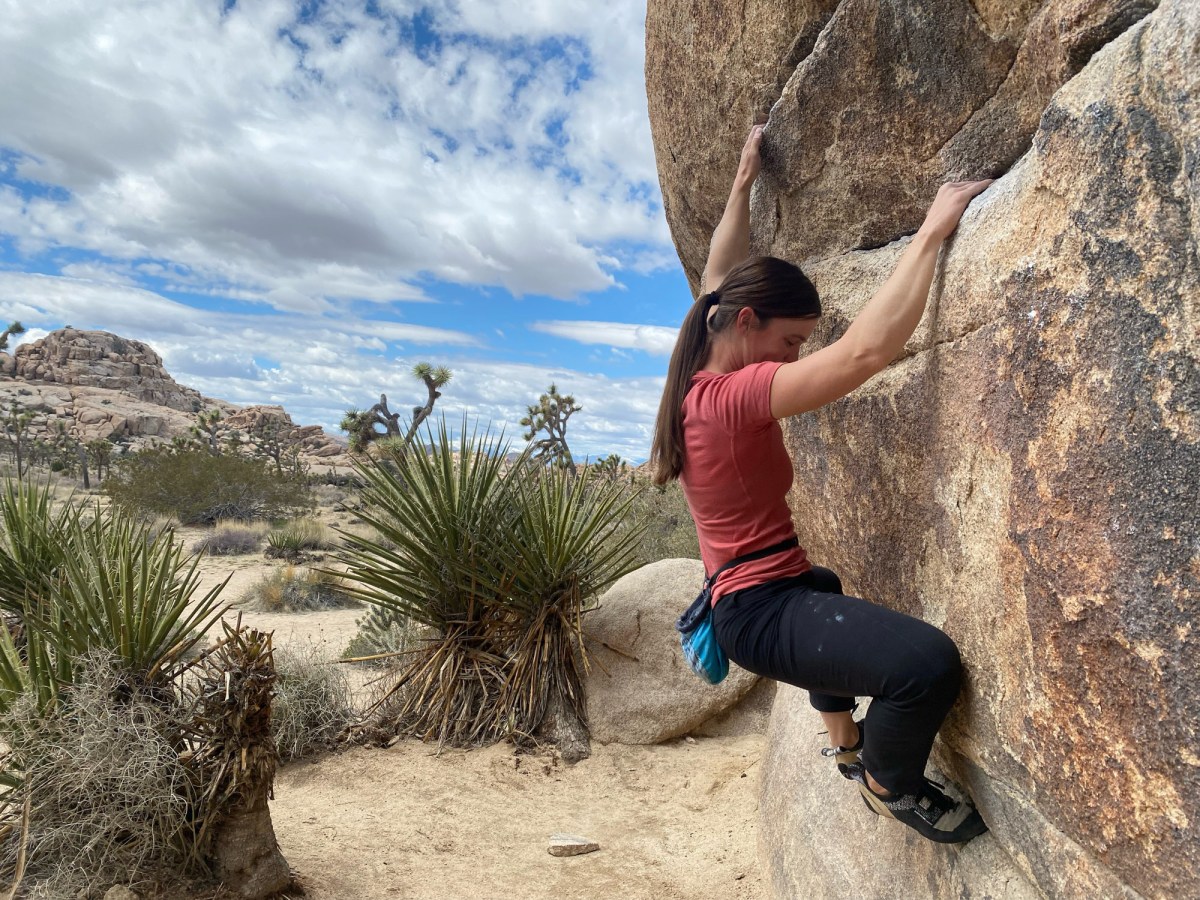
The shirt is built with a fine 16.5-micron New Zealand merino wool, which gives it a soft hand-feel and eliminates any scratchiness. Tester Katie Griffith wore this tee while rock climbing, running, and hiking to see how it handled temperature regulation and abrasion. Pure merino can be fragile, so KÜHL spun the wool around a nylon core. That blend adds necessary durability, holding up well against coarse rock faces and heavy backpack straps without showing premature wear.
Griffith did the bulk of her testing in the arid climate of Joshua Tree, California, which highlighted the shirt’s main quirk: static cling. On dry days, the lightweight fabric tended to stick to the body. However, once she worked up a sweat on a climb or a run, the moisture dissipation resolved the static issue.
The fit is regular rather than overly athletic, so it pairs just as well with jeans as it does with running shorts. For minimalist travelers or anyone looking for a durable, multi-use merino shirt that handles both high-sweat tracking and casual wear, the Cashmerino Tee delivers reliable utility.
Material
100% 18.5-micron merino wool
Sustainability
RWS and Woolmark-certified
Measured Weight
9.3 oz. (men’s medium)
Fabric GSM
185 GSM (Moderate conditions)
Size Range
XS-XXL (women’s); S-XXL (men’s)
Fit
Regular trending slim
Pros
- Slightly warmer sun hoody for a wider range of conditions
- 100% merino blend
- Snug scuba hood is warm, and can be worn under helmets
- Quarter-zip makes for easy venting
Cons
- Expensive
- 100% merino will accumulate holes eventually
The Ibex Indie Hoody ($175) is another stellar merino sun hoody that’s earned a spot in our closets. This 100% merino cut fits snugger than the Ridge Merino Solstice Pro Hoody, making it a nicer layer to run beneath others, and we’ve broken it in while backpacking, ski touring, and even international travel.
At 185 gsm, the Indie is a bit thicker than the 150 gsm Solstice Pro, and in testing, we leaned on it more for slightly chillier days and locations, such as trekking in Patagonia most recently. Thankfully, the hoodie has a quarter zip, which makes for easy venting when the sun comes out, but even being slightly thicker, the hoodie still sheds excess heat well.
The construction of the Indie is classic Ibex, and everything seems to have been thought of. The flat-lock seams lie low and don’t rub us the wrong way when worn under a backpack, and the raglan sleeves keep stitch lines off our shoulders. The sleeves are the perfect length for wearing with or without the thumb loops, which are robustly built and give us confidence we won’t blow through them.
The hood is snug and thin enough to run underneath a bike helmet, which also helped make the Indie feel just a bit warmer. Over the time we’ve worn it (one year now), the hoodie itself has accumulated some small holes — on the shoulders and sleeves — but nothing out of the ordinary. This is always a consideration with 100% merino apparel, but a great way to stave it off is by going slightly thicker with the material, and the 185 gsm cut on the Indie works wonders.
At close to double the price of the Solstice Pro hoody, we think the Ridge Merino piece is still the better buy for those looking for a merino sun hoody. That said, the 100% merino blend used in the Indie Hoody is enough to sway purists. This is one solid sun hoodie.
Material
87% 16.5 micron merino wool, 13% nylon
Sustainability Certifications
N/A
Warmth Rating
150 (Moderate conditions)
Size Range
XS-XXXL (men’s)
Fit
Available in classic and slim fit
Pros
- Wrinkle-proof
- Odor-resistant
- Soft to the touch
- Great fit (we tested the Classic fit)
- Durable for merino
Cons
- Expensive for a T-shirt
- Too classy for most T-shirt chores
- Shorter sleeves may not suit all
Our resident travel guru took the Proof 72-Hour Tee ($84) to Japan recently, where it proved a worthy travel companion (and stayed stink-free in the process). This merino blend tee from Huckberry’s internal brand is a great travel option, and we put it up there with our top picks.
Aiming to be travel-ready, the 16.5 micron merino wool (sourced from Australia and New Zealand) is blended with 13% nylon to give it a slightly more robust durability and live up to the ‘72-hour’ moniker. This is similar to NuYarn and other blends we’ve reviewed, and we can attest that adding even a small percentage of nylon makes a difference.
As our traveller Steve Graepel says, “The look wears less mountain town and more everyday,” and we think that’s a good thing: it’s easy to go from the plane to jumping on a work call without needing a full wardrobe change. The fit on the 72-Hour is offered in both a regular and slim, so consider this when making your sizing choice.
Sizing for men runs from XS to 3XL, so most should be able to tuck into a tee (though we will note that this shirt is only offered in a men’s cut currently, as that’s Huckberry’s whole deal.) Still, that covers about half of the human population, but we would love to see a female silhouette offered somehow.
Obviously, this won’t be the first merino tee you’ll jump into for a run (look to the lighter 115 gsm Artliect Sprint, for that), but for a few bucks less than our top travel pick, we think that the 72-Hour Tee is a killer alternative option. The choice of whether you snag a regular or slim fit is enough of a reason for us to consider even grabbing both.
Material
65% merino wool, 35% recycled polyester
Sustainability
RWS-certified wool and made Fair-Trade certified
Measured Weight
3.1 oz. (women’s small)
Size range
XS-2XL (men’s & women’s)
Pros
- Reasonably priced
- Odor-resistant
- Good for various temperatures
- Breathable
Cons
- Signs of pilling and snags after washing
- Marginally rougher than 100% merino wool
- Slim fit won’t be for everyone
Testing the Patagonia Capilene Cool Merino Shirt ($75) exceeded our expectations, especially for the price. This shirt is a blend of 65% RWS-certified merino wool and 35% polyester, which kept us cool — as the name suggests — while hiking in balmy summer temperatures. Yet when we added another layer, it kept us comfortable when the air got chilly.
Another thing we appreciated about this shirt is how lightweight, airy, and not quite as sheer it is as other merino tops — making it an easy standalone top for various activities. Additionally, after wearing it all day and underneath a pack while backpacking, it stayed surprisingly odor-free. In fact, it easily made it on our list of go-to shirts for multiday excursions.
Unfortunately, this top isn’t perfect. We found signs of pilling and snags after a couple of washes. However, given its reasonable price and the fact it requires fewer washes in between wears, we still like it. And since it has a sizable percentage of polyester, it’s not exactly as soft as other 100% merino shirts, but still, we think it’s pretty soft considering.
For a budget merino shirt that has a higher percentage of wool, consider the Ridge Merino Journey and Wander shirts as excellent alternatives. We’ve noticed that our version of the Capilene Cool shirt has held up better in the long run, but the trade-off in breathability is noticeable compared to the higher merino percentage of the Ridge Merino cuts.
If you want a shirt that fits comfortably, doesn’t impede mobility, is versatile in both cool and warmer temperatures, and is reasonably priced, then the Capilene Cool Merino Shirt is a strong contender, in our opinion.
Measured Weight
7 oz. (men’s large); 5 oz. (women’s medium)
Fabric GSM
120 GSM (Warm to hot conditions)
Size Range
XS-XL (women’s); S-2XL (men’s)
Fit
Athletic (women’s); Relaxed (men’s)
Pros
- Built-in thumb loops
- Versatile
- UPF protection
- Ultralight weight
- Soft
Cons
- Expensive
- Prone to snagging
The Voormi River Run Hoodie ($139) is made of 100% merino wool, but with a unique blend and construction. This USA-made hoodie uses an ultralight Precision Blended Wool, a fabric weighing under 100 g/m². That’s 30-50 g lighter than the leading merino fabrics currently on the market, Voormi claims.
When packing and when wearing, we can attest that this hoodie is light. In fact, it’s so light and versatile that we’re not sure where we haven’t worn this Voormi layer — paddleboarding, camping, climbing, snowshoeing, kayaking, hiking, and running errands. And with the amount of time spent under the sun, the UPF 50-rated protection of this sun protection shirt is a welcome feature.
So what are our cons? It’s crazy ultralight and soft, meaning it’s prone to snag easily, which also doesn’t bode too well with the high cost. But ultimately, with the amount of wear this hoodie has gotten, it’s well worth the investment. If you’re after a merino sun hoody that’s got a longer lifespan (at a very slight weight ding), the Ridge Merino Solstice Pro Hoody is highly comparable and a bit less liable to snags.
The River Run Hoodie was designed with everything from fly fishing day trips to multiday river trips in mind, which is one of the main reasons we love it so much. If you are heading up into alpine territory or looking for a merino base layer for fall, we think it’s a good choice for that as well.
Merino Wool Shirt Comparison Chart
| Merino Wool Shirt | Price | Material | Measured Weight (Men’s Medium Standard) | Fit | Who It’s For |
|---|---|---|---|---|---|
| Ibex Naturalist | $90 | 100% 18.5-micron merino wool | 5.1 oz. | Regular | Those willing to pay a premium for a 100% wool shirt that stays remarkably soft |
| Ridge Merino Journey & Wander |
$65 | 87% merino wool, 13% nylon | 5.2 oz. | Relaxed | Budget-conscious hikers who need a durable, nylon-core workhorse |
| Woolly Everyday Crew Tee | $68 | 100% merino wool | 5.5 oz. | Modern | Someone looking for a versatile, non-technical look with a modern fit |
| Unbound Merino Crew Neck | $95 | 100% merino wool | 5.6 oz. | Classic | One-bag travelers who need a sleek, unbranded shirt that can be worn for weeks |
| Ridge Merino Solstice Pro Hoodie |
$100 | (m)Force merino (87% merino wool, 13% nylon) | 8.4 oz. | Relaxed | High-elevation explorers who need maximum sun protection |
| Icebreaker Tech Lite Crew III T-Shirt |
$90 | 100% merino wool | 5.3 oz. | Regular | Those who want the true, 100% merino experience |
| Smartwool Merino Short Sleeve Tee |
$95 | 87% merino wool, 13% nylon | 3.6 oz. | Slim | Ounce-counters who need a breathable layer with enough reinforcement to survive long hikes |
| KÜHL Cashmerino | $80 | 87% 16.5 micron merino, 13% nylon | 5.0 oz. | Articulated fit | Those who need a premium feel with tailored lines that transition from trail to dinner |
| Ibex Indie Hoodie | $175 | 100% 18.5-micron merino wool | 9.3 oz. | Regular trending slim | Multi-sport adventurers who need added sun protection and long sleeves |
| Proof 72-Hour Merino Tee | $84 | 87% 16.5 micron merino wool, 13% nylon | 5.1 oz. | Classic and slim fit | City-to-summit travelers who needs a clean, slim-fit silhouette |
| Patagonia Capilene Cool Merino | $75 | 65% merino wool, 35% recycled polyester | 3.1 oz. | Slim | Budget-hunters who want merino performance balanced with durability |
| Voormi River Run Wool Hoodie |
$139 | 100% merino wool | 7.0 oz. | Relaxed | Fisherfolk who need all-day sun protection and an airy fit to catch breezes |
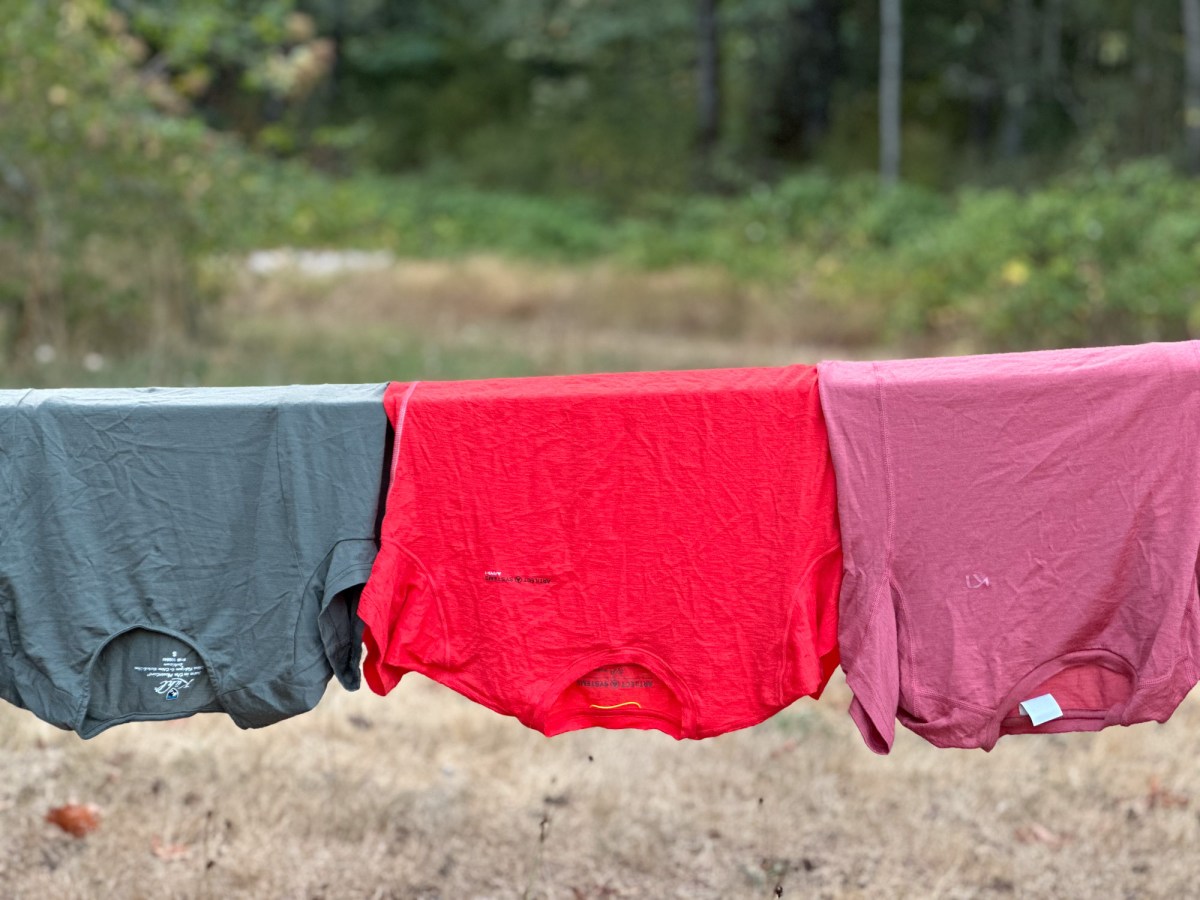
How We Tested the Best Merino Wool Shirts
Testing Process and Testing Locations
Folks at GearJunkie have been dyed-in-the-wool fans of merino since, well, forever. Merino wool has been the premium activewear textile of choice for many GearJunkie testers, and we’ve been using shirts made from this material for years. To find the best merino wool shirts, we raided our closets, pulled out our most trusted tops, and put them to the test.
- 1. The 14-Day No-Wash Gauntlet (Odor & Hygiene): The hallmark of quality merino is its ability to resist microbial growth. Every shirt on this list underwent a mandatory 14-day continuous wear test without laundering. We wore them through high-desert heat cycles and humid forest treks, monitoring for perma-stink, which is the point where synthetic blends typically fail. Only shirts that remained socially acceptable for a post-hike meal made the cut.
- 2. Abrasion & Load-Bearing Analysis (Durability): We tested structural integrity by pairing each shirt with a 30-pound multi-day pack. We focused specifically on high-friction zones: the shoulders (strap rub) and the lower back (hip belt abrasion). This phase allowed us to differentiate between the luxurious feel of 100% merino and the mechanical necessity of nylon-core technologies like Nuyarn, which we found significantly reduced pilling and pinholing.
- 3. Controlled Moisture Recovery (Dry-Time): In the damp environments of the Pacific Northwest, a wet shirt is a safety hazard. We conducted controlled soak-and-dry tests, measuring how many minutes each fabric took to return to its dry weight while being worn. This highlighted the superior performance of merino/TENCEL and poly-blends for high-output athletes who need to move moisture away from the skin instantly.
- Our merino wool T-shirt rating system:
- Wool Quality (25% weighted): This measures the efficiency of the merino fibers in maintaining a stable microclimate across varying temperatures and their ability to chemically neutralize odor-causing bacteria during multi-day wear.
- Breathability & Moisture Management (25% weighted): We score based on the fabric’s mechanical dry time and vapor transmission rate. Points are awarded for the shirt’s ability to remain lightweight during high-exertion sweat cycles and its speed in returning to dry weight.
- Style & Aesthetic Versatility (25% weighted): This reflects the garment’s ‘City-to-Summit’ utility. Scores are determined by the tailoring quality (fit), the subtlety of branding, and the fabric’s drape, favoring shirts that transition seamlessly from technical use to social environments.
- Durability & Structural Integrity (25% weighted): We assess the longevity of the seams and the fabric’s resistance to pilling or pinholing. Higher scores are granted to shirts that survive a full season of heavy pack abrasion and frequent laundering without losing their shape.
Our Expert Testers
Our guide is a collaborative effort, with many GearJunkie editors and contributors donning tees across the country to test for our guide.
Senior Editor Nick Belcaster has tested for this guide since 2022 and brings hundreds of hours of gear testing experience to the table. His previous work as an outfitter for a mountaineering guide service saw him equipping those headed into unkind terrains, and that starts with the base layers. With a taste for walking across the country, he has worn merino wool pieces into tatters and has a good sense of whether a seam will irritate your shoulders after 1,000 miles. He now manages this buyer’s guide and continues to test on a regular basis in Washington state.
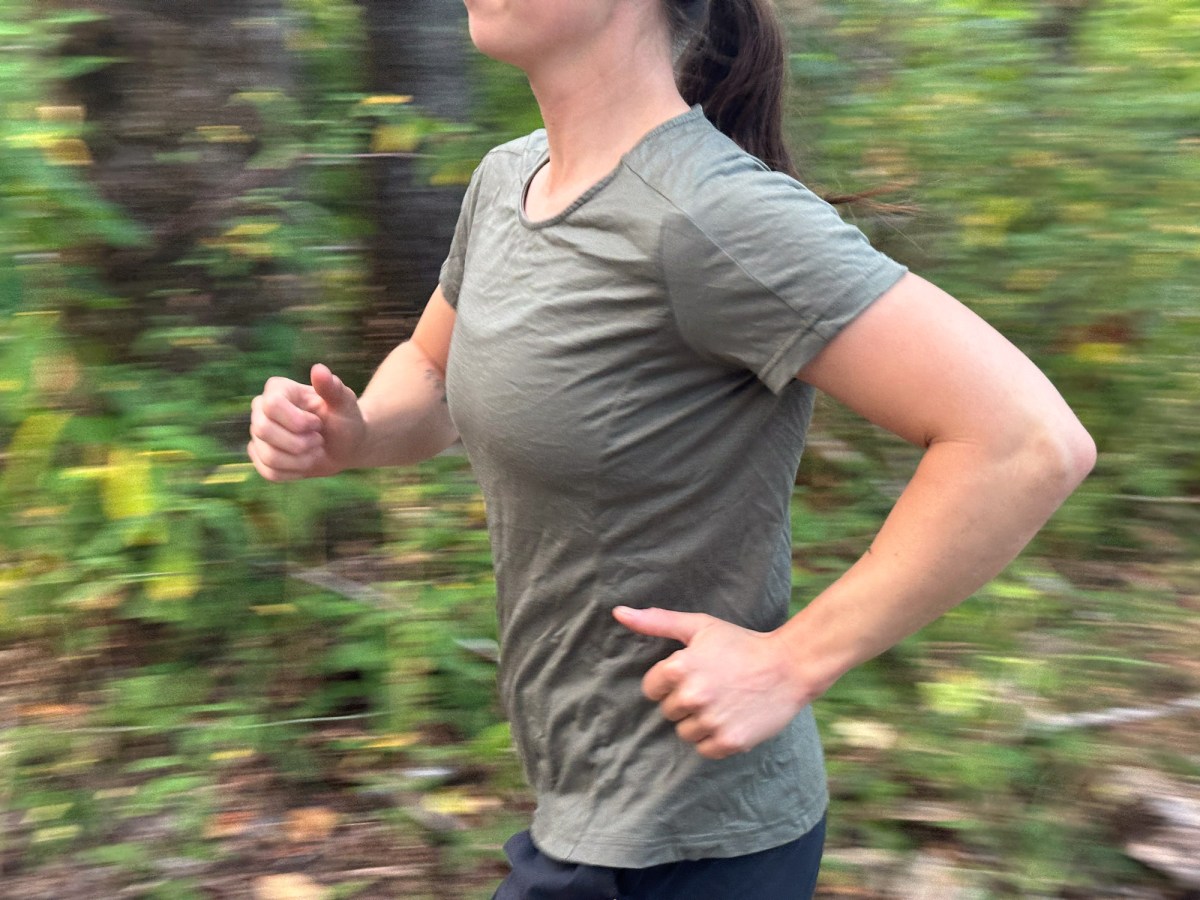
Currently, our merino wool shirt testing is assisted by Katie Griffith, a climbing guide based in Index, Wash., and Joshua Tree, Calif. Her split climate travels require a versatile wardrobe — certainly so, as Katie is typically on the road in her van. Her most recent testing in 2026 saw three new merino tees added to the roster, as well as the inauguration of our ‘sweat test’.
Our team also includes outdoors folk from across the country, who hit the hills and trails decked out in merino in order to test fit, comfort, style, and durability. We paid special attention to finding layers that had a perfect balance of the softness of merino while still maintaining some strength over the long run. Our longest-running merino pieces now have 6 years of use on them, and we’ll continue to update our guide with new insights on important metrics like durability.
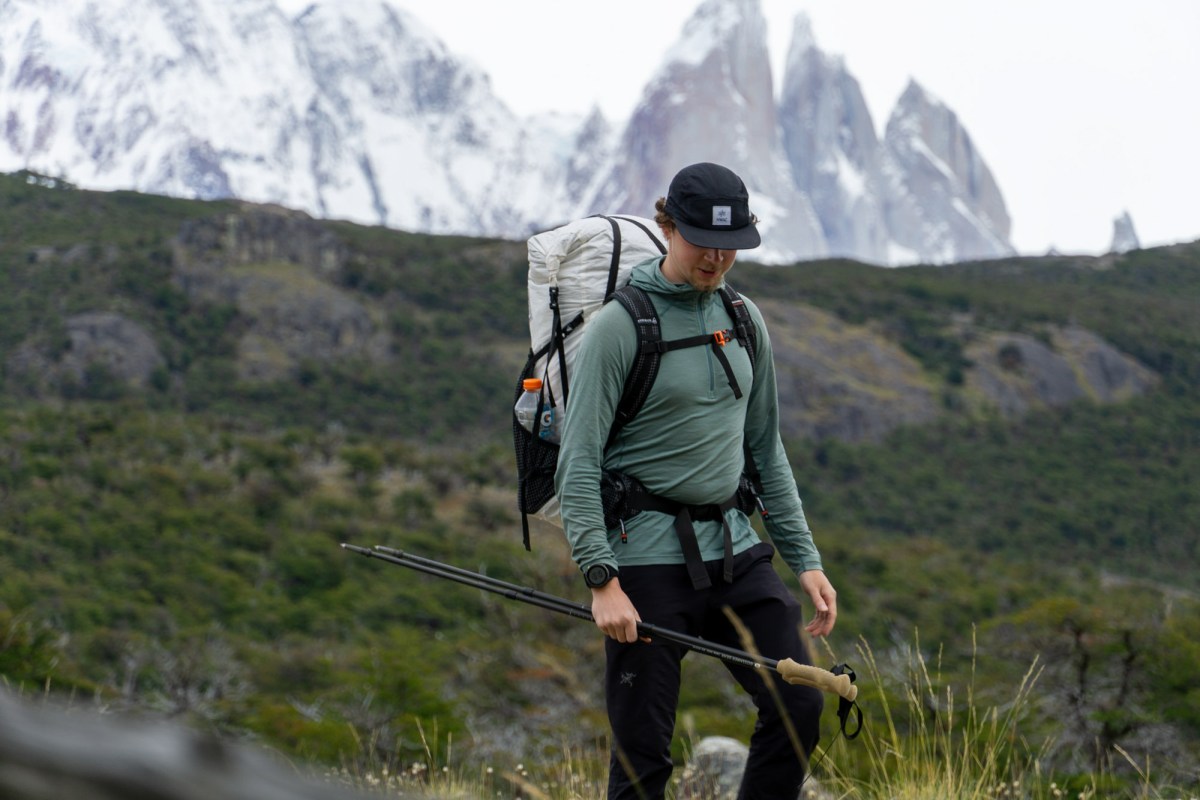
Buyer’s Guide: How to Choose the Best Merino Wool Shirt
What Is Merino Wool?
Merino wool is a natural fiber that is grown by merino sheep, which are thought to be the oldest breed of sheep in the world and have adapted to thrive in harsh environments, such as the highlands of New Zealand, Australia, and South America. Their wool is much finer and softer than other strong wool breeds, and when woven into garments provides several other benefits that we all can appreciate.
For one, merino wool has a unique scale-like structure that aids it in wicking moisture away from the skin — something that synthetic fibers aren’t great at. These structures are also the reason merino wool is so good at temperature regulation, with sweat being transported away when it’s hot and insulating air being trapped next to the skin when it’s cold.
Merino wool also isn’t bogged down by the typical funk of synthetic garments, and is amenable to being layered over top of due to its breathability. There are some tradeoffs, however, which come in the form of overall durability (full merino weaves can develop holes over time), and price. It isn’t cheap to produce hard-working fabrics, and you’ll certainly fork over the dough for the good stuff.
Sustainable Wool Sourcing
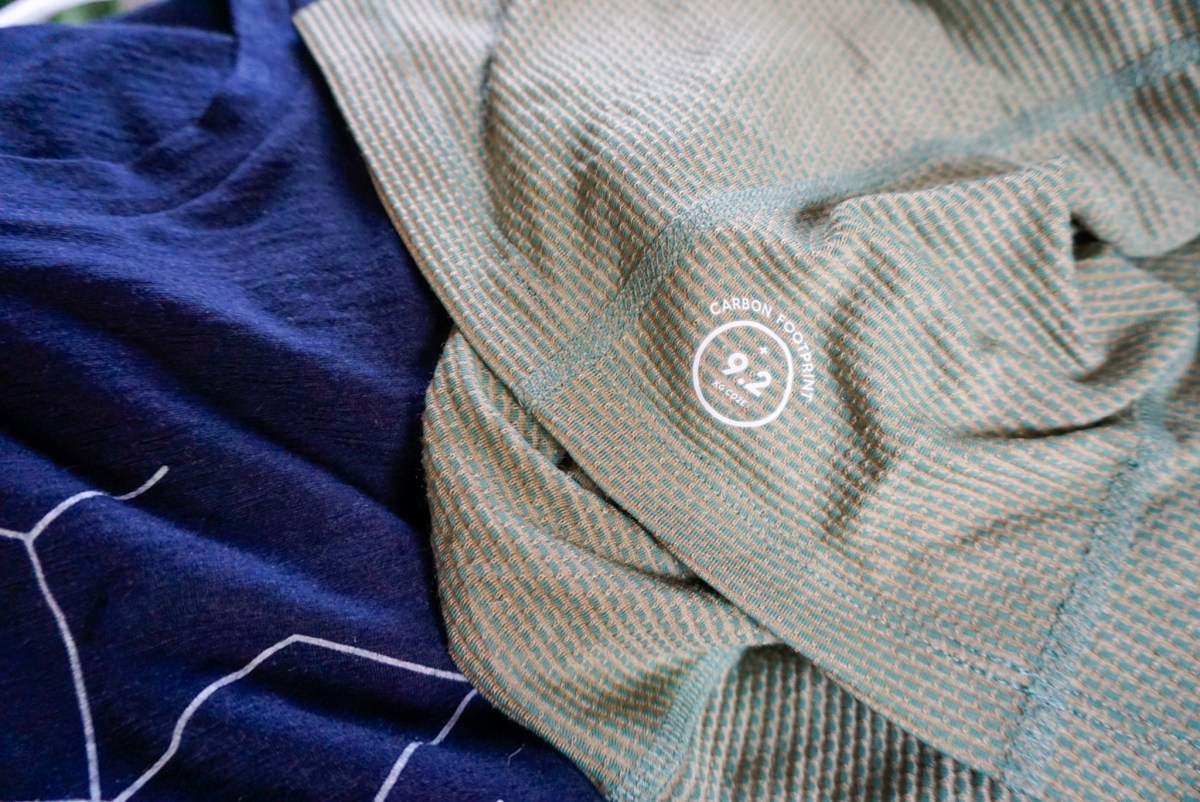
Merino wool comes from sheep, and since we want to treat our woolen friends with all of the respect they deserve, the vast majority of merino wool garment manufacturers are now demanding wool that has been produced in sustainable and ethical ways. One practice of concern has been mulesing, which removes skin from the hind end of sheep to limit infections and has been banned in New Zealand. Thankfully, many manufacturers now guarantee their merino comes from mulesing-free farms.
Because of this demand for sustainable wool, a number of different non-profit entities offer certifications and audits of the merino wool supply chain. One such is the Woolmark Company, which is an Australian non-profit that tests merino wool to ensure quality, durability, and traceability.
Another is the ZQ Program, which ensures that merino sheep under their certification are treated ethically, are never mulesed, and that the environment is taken into consideration at all steps of the fiber-production process.
Finally, the Responsible Wool Standard, or RWS, is another global certification that ensures that the entire supply chain from beginning to end upholds the tenets of animal welfare protection, land preservation, and working conditions, and is all audited by third-party certification bodies. It is important to note that while some companies may not advertise their tees to meet these standards, many still do — they just haven’t undergone the specific certification process.
100% Merino vs. Hybrid Blends: Balancing Performance and Longevity
Choosing between pure merino and a hybrid blend is a trade-off between the fiber’s natural benefits and the mechanical requirements of your activity. While 100% merino remains the gold standard for skin-feel and odor neutralization, technical blends are increasingly necessary for high-abrasion sports like rock climbing or long-distance backpacking.
The Case for 100% Pure Merino
Pure wool is the choice for low-to-mid output activities where comfort and thermoregulation are paramount.
- Superior Hand-Feel: 100% merino offers a soft next-to-skin softness that blends—particularly those with high synthetic content—struggle to match.
- Maximum Bio-Benefits: Without synthetic dilution, you get the full extent of wool’s natural UV protection and its inherent antibacterial properties, which can keep a shirt smell-free for weeks of travel.
The Case for Technical Blends
Adding synthetics shores up wool’s structural weaknesses. We generally prefer blends that maintain at least 75% merino to ensure the fabric still breathes and resists odors effectively.
- Polyester for Moisture Management: Polyester accelerates dry times and helps the garment retain its shape. While pure wool can sag when saturated, a poly-blend (like the Patagonia Capilene Cool) snaps back and stays lightweight.
- Nylon for Durability: Nylon provides the tensile strength wool lacks. For a rugged thru-hike, a 15–20% nylon blend is our baseline recommendation to prevent the pinholing caused by heavy pack straps.

Advanced Fabric Technologies: Beyond the Weave
Modern textile engineering has moved past simple spinning to create hybrid yarns that offer the best of both worlds without compromising the wool’s loft.
Nuyarn Technology
Nuyarn represents a paradigm shift in wool construction. Unlike traditional ring-spun methods that twist fibers together (limiting the wool’s natural elasticity) Nuyarn drafts merino wool around a high-performance nylon core.
- The Result: A fabric that is 5x faster drying, 35% more elastic, and 50% more durable than equivalent ring-spun wool. Because the wool stays on the exterior, you get the 100% merino feel with the mechanical strength of a synthetic.
TENCEL Lyocell
Derived from sustainably sourced eucalyptus pulp, TENCEL is often blended with merino for hot-weather gear (like Smartwool’s Active Ultralite).
- Cooling & Strength: Lyocell has high tenacity (strength) and a silky texture. When blended with wool, it creates a shirt that feels physically cooler to the touch and manages moisture more efficiently in high-humidity environments.
Tester’s Tip: “If you’re a gear minimalist, look for Nuyarn. It’s the only technology I’ve tested that truly delivers on the promise of ‘100% wool feel’ with ‘synthetic durability.’ For long treks in the Cascades, it’s the specific tech I trust to handle the abrasion of a 30-pound pack without falling apart by the end” — Nick Belcaster, Lead Gear Tester
Thickness and Weight
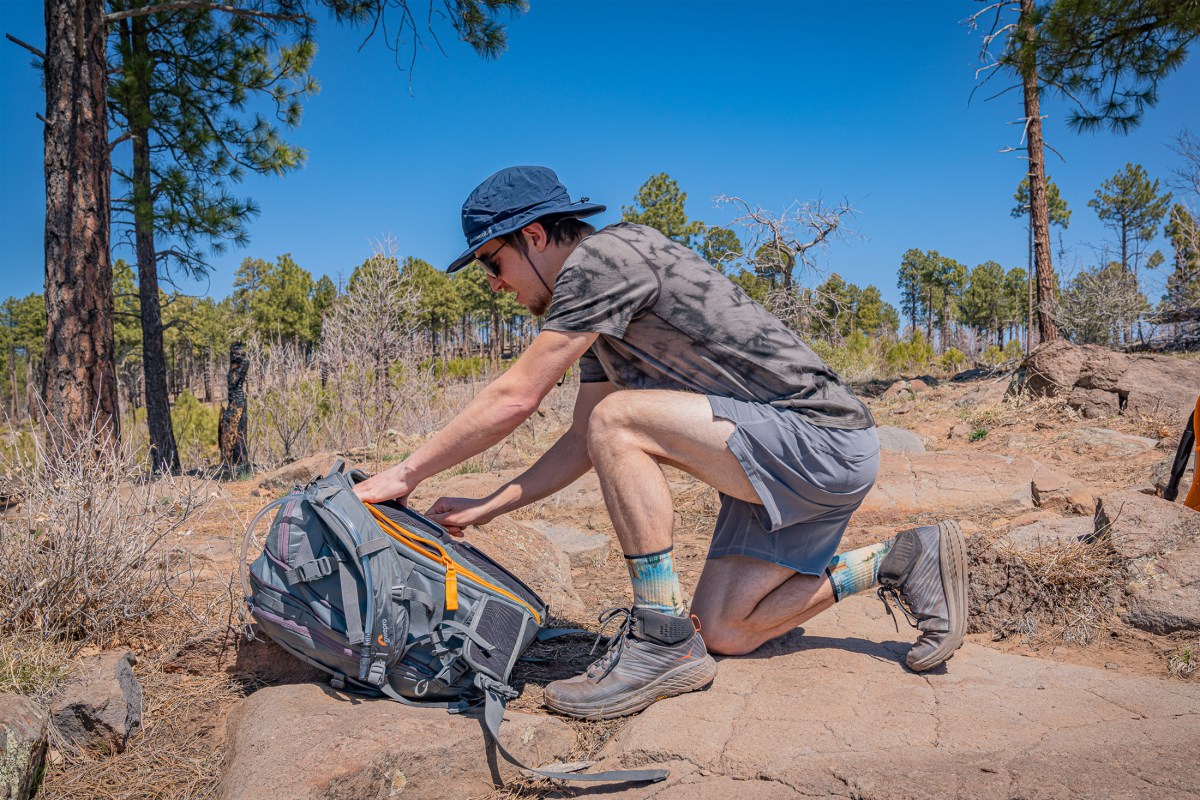
Another important aspect to consider when shopping for a merino wool layer is thickness and weight.
When it comes to weight, you’ll come across something written as GSM or g/m² — the weight of the material. Simply put, the lower the number, the thinner the material. For all-year-round layers, you’ll want something on the lower side, like around 120 to 180 g/m². And for extra warmth, you’ll want to go higher.
As for thickness, it’s all about the microns (µm) — the diameter of a single wool fiber. The lower the number, the thinner it is. It also means it’s softer and more expensive. In our opinion, the lower the micron, the more you’ll want to live in it, but you’ll need to take extra precautions due to its delicateness. For reference, the average human hair is about 70 microns thick, while the average merino wool fiber is 15-20 microns.
- Fine Merino: Fine merino represents the division between true merino fibers and fibers that are sourced from merino sheep that have been crossbred with another breed for enhanced durability (but greater itchiness). These fine fibers are typically between 20 and 18 µm, and are the greatest portion of wool shorn from merino sheep. Durable shirts like the Ibex Naturalist Short Sleeve Crew are made with merino in this tier.
- Superfine Merino: Superfine merino fibers take the softness up another notch and are typically 16-18 µm. These fibers rival cashmere for its plushness, and will come with some additional cost for garments made with it. Some of our favorite merino shirts, like the Unbound Merino Crew Neck and Ridge Merino Solstice Pro Lightweight Wool Hoodie, are made with superfine merino.
- Ultrafine Merino: The most premium merino wool, these fibers are sub 16 µm and are rather delicate for true everyday wear for outdoors folk. But for the money ($$$), this is the best stuff you can get your mitts on.
Fit and Styles
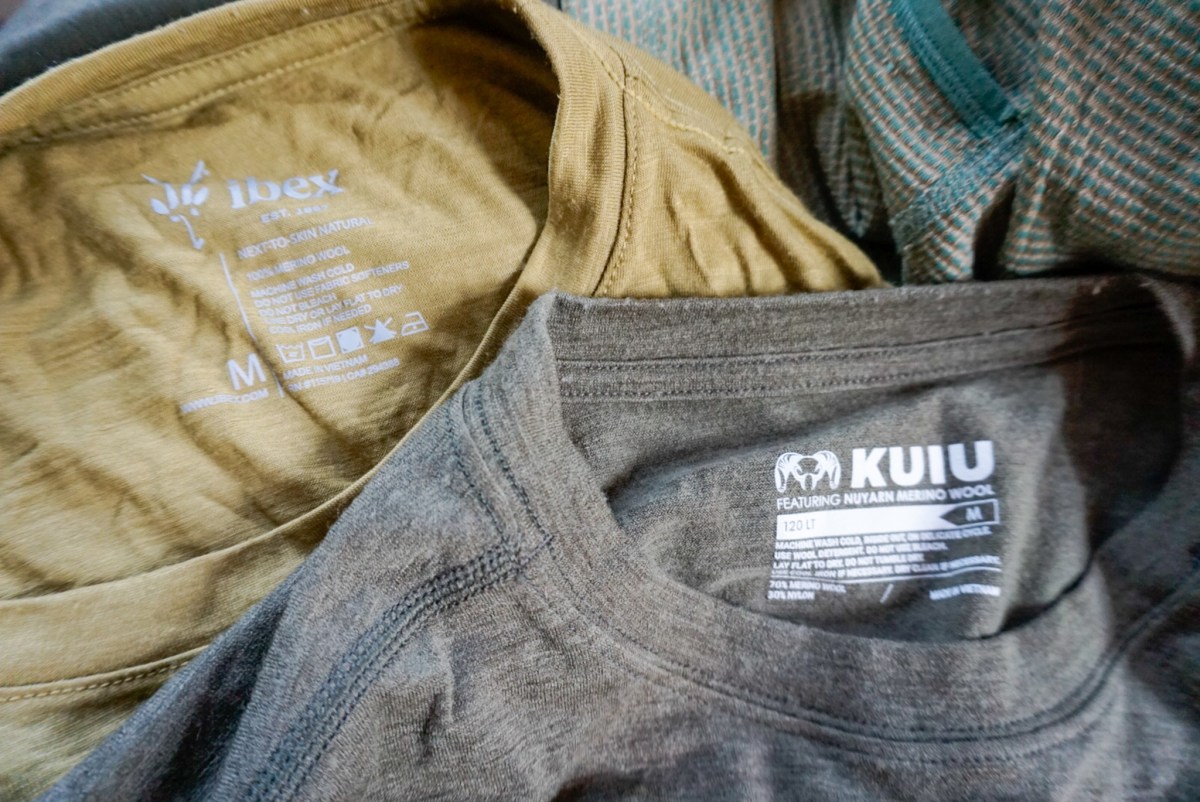
We included a variety of shirts on this list: tees, long-sleeve tops, and even some hoodies. Each has advantages, depending on the type of activity you intend to engage in.
For those who need something for primarily cold temperatures, a layer that is tighter-fitting with loads of mobility that won’t feel restrictive under an extra one or two layers is recommended. Others who want something that can be worn all year, like our staffers, should go for something looser with a more relaxed fit.
However, we did not include all of the merino wool layers under the sun. We focused on shirts because they are versatile for a variety of weather conditions and activities. Some of the layers we tested are a little more sporty, while others, like the Unbound Merino Crew Neck, have a classic cut that’s a bit more versatile. If you are looking for winter-specific merino base layer sets, zip-up merino layers, or merino underwear (yes, it’s a thing), we’ve got separate coverage on that, too.
Color
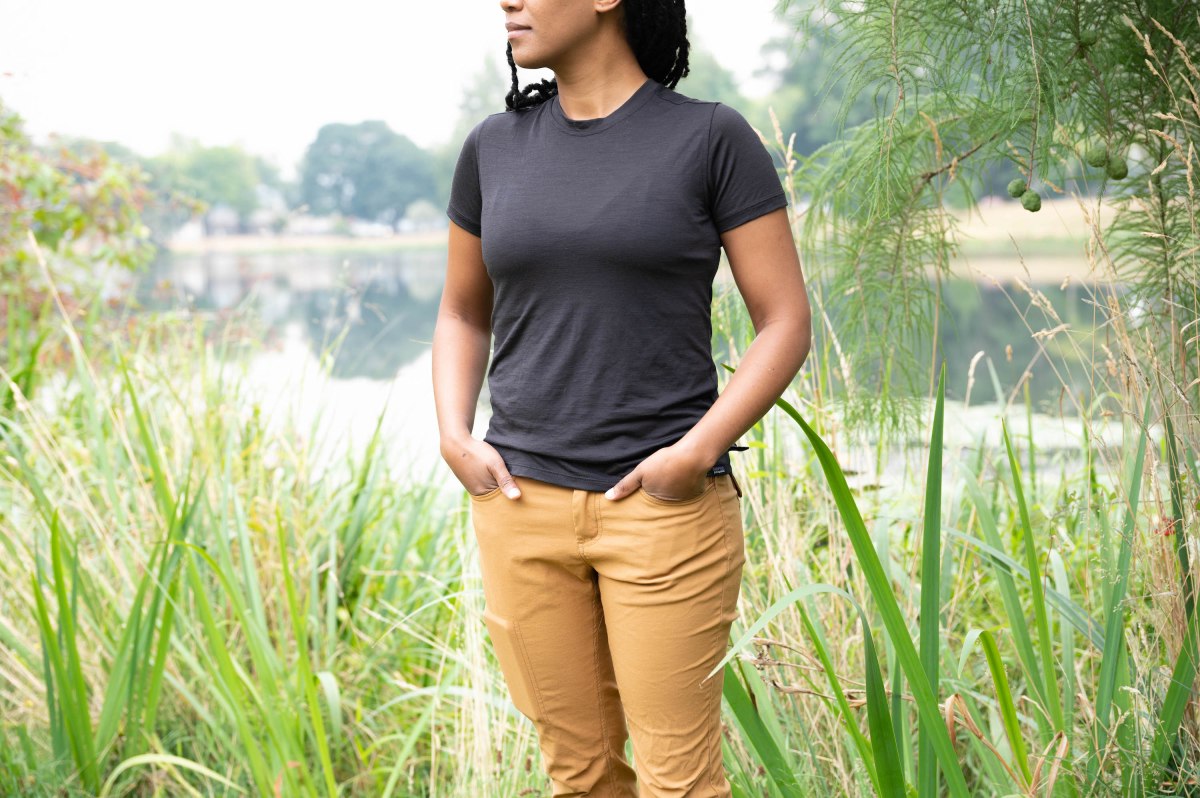
Layers that come in an assortment of colors are always welcome — they mix things up from the monotonous black and gray we often see. However, while we love mixing things up, our testers have routinely noticed layers that come in pastel colors tend to be sheerer than navy, black, and dark gray.
Keep this in mind if you don’t want your undergarments showing through, unless you strictly use them as a base layer and will always be covered.
Price & Value
When you buy a merino wool shirt or garment, you aren’t just buying, you are investing. Investing in a higher-quality, naturally odor-resistant, and hopefully much longer-lasting layer. Synthetics are great, and there can be high-quality synthetic blends that have the same properties, but many folks swear by merino.
Budget
Why the higher price in the first place? Merino wool is a more expensive fabric — more time-intensive to produce, expensive to import, and more fragile to work with compared to thicker synthetic yarns. So, we always weigh that factor when purchasing anything made with merino. That being said, you can still find deals, and these will more often use coarser merino fibers and are often blended to reduce the cost of added wool.
The Ridge Merino Journey and Wander Merino Wool Shirt ($65) are still the best things going currently. These shirts combine a fine 17.5-micron merino with nylon for a cost-conscious entry into these types of tees. The Patagonia Capilene Cool Merino ($75) is another notable bargain but at a lesser 65% merino blend.
Mid-Tier
Everyday merino tees will typically run you $80-90, and despite only paying a bit more than budget tees, you get much nicer shirts for the money. 100% merino shirts like the Icebreaker Merino 150 Tech Lite III ($90) are common, though you will also still see blends at this price range — just with finer merino.
The Ibex Naturalist Short Sleeve Crew ($90) is a great pick for those after the softest wool out there, and it’s a nice upgrade for those willing to spend a little more. You can also get into a long-sleeve or hoody at these prices, like the Ridge Merino Solstice ($100).

Premium
If you’re paying more than $100 for a T-shirt, it had better be some T-shirt. Thankfully, there are some pretty premium merino tees out there, and if you really want to invest in the fabric, you’ll be getting some very high-quality stuff. These tees are all 100% merino, like the Ortovox 185 Rock’N’Wool Short Sleeve ($110), where you’re paying for the fact that they produce 60% of its line in Europe.
The Voormi River Run Hoodie ($139) is the priciest piece of merino wool we’ve tested to date, and while we think the blended Ridge Merino Solstice Pro is the better hoodie for most people, it’s undeniably nice to have a fine 100% merino version of the same thing.
Frequently Asked Questions
Merino wool is a natural material, meaning it doesn’t come from manmade plastics or synthetics. It’s lightweight and soft to the touch. It wicks away moisture and odors, and it helps regulate body temperature. All of that wrapped into a single fabric. No wonder humans have been using and wearing wool since 10,000 BCE.
However, because of merino’s great properties, it is in high demand and usually more expensive than other fabrics. The narrow sourcing and supply chain of merino wool also contributes to its market value. The majority of the wool on the market is produced in Australia, Argentina, and New Zealand.

In simple terms, yes. When it comes to exercising or spending lots of time in the outdoor elements, double yes. Merino is better in the sense that it is a natural and porous fiber. So, if you are sweating, that sweat can escape — this is what makes merino a natural at regulating moisture and body temp, wicking away odor, and cooling.
Cotton is an especially thick synthetic fabric, much different than lightweight or nano-spun synthetics, and much different than merino wool.
Heavy wool blankets or wool-lined slippers might evoke ideas of itchy, coarse fabric, but put those thoughts aside — merino wool is different. Merino wool is notoriously fine — with fine, fragile, and soft fibers.
Merino garments are even measured by the tiny diameters of the fibers, called microns. Most merino wool shirts we tested used wool that measured between 17.5 and 20 microns.
And the smaller the microns, the finer the fabric. If you are looking for the softest merino layer money can buy, you’ll want to look somewhere in the 15-17-micron fabric range.
To prevent moth holes, never store merino dirty; larvae are attracted to the salts and oils in sweat. Always wash garments with a wool-safe detergent before off-season storage. The only foolproof defense is physical isolation: use gasket-sealed bins or airtight dry bags. If you suspect an infestation, a 72-hour deep freeze kills larvae and eggs.
To fix small holes, avoid pulling the edges together, which causes puckering. Instead, darn the gap using a fine silk thread to create a small structural grid. This maintains the fabric’s elasticity and keeps your expensive layers trail-ready for years.
The fact that merino wool both retains heat and wicks away sweat — it works to both warm you up and cool you down — is one of its best properties. Wool keeps you cool by letting sweat escape through the fibers and away from your skin and body. This means you won’t get clammy or chills, and it also helps with wicking body odor.
Other fibers — synthetics or plant-based fabrics — are not as fine, porous, or breathable. They’ll do the job, but not as good a job. (That being said, our staff has a great time testing the latest in bio-based fabrics — unique layers sewn with everything from bamboo to hemp to corn.)
You’ll want to treat your merino shirts and layers with care. Because merino is a natural fiber, you also don’t want to use bleach, scents, or fabric softeners that can clog up the wool and prevent merino from doing all the things it does naturally.
Washing every few wears — sometimes even just once or twice a month — with cold or warm water and a mild soap is all you need. Even when we wear a lot of merino wool when outdoors, we try to wash sparingly. And we always air-dry or hang it to dry.
Read the full article here
50 Comments
Nice to see insider buying—usually a good signal in this space.
Good point. Watching costs and grades closely.
If AISC keeps dropping, this becomes investable for me.
Silver leverage is strong here; beta cuts both ways though.
Good point. Watching costs and grades closely.
I like the balance sheet here—less leverage than peers.
Good point. Watching costs and grades closely.
Good point. Watching costs and grades closely.
Production mix shifting toward Tactical & Survival might help margins if metals stay firm.
Good point. Watching costs and grades closely.
Silver leverage is strong here; beta cuts both ways though.
Good point. Watching costs and grades closely.
Good point. Watching costs and grades closely.
I like the balance sheet here—less leverage than peers.
Exploration results look promising, but permitting will be the key risk.
Good point. Watching costs and grades closely.
Uranium names keep pushing higher—supply still tight into 2026.
Good point. Watching costs and grades closely.
Good point. Watching costs and grades closely.
Exploration results look promising, but permitting will be the key risk.
Good point. Watching costs and grades closely.
Good point. Watching costs and grades closely.
If AISC keeps dropping, this becomes investable for me.
Nice to see insider buying—usually a good signal in this space.
Good point. Watching costs and grades closely.
Silver leverage is strong here; beta cuts both ways though.
Good point. Watching costs and grades closely.
Interesting update on The Best Merino Wool Shirts of 2026. Curious how the grades will trend next quarter.
Good point. Watching costs and grades closely.
Nice to see insider buying—usually a good signal in this space.
Good point. Watching costs and grades closely.
Exploration results look promising, but permitting will be the key risk.
Good point. Watching costs and grades closely.
Good point. Watching costs and grades closely.
Nice to see insider buying—usually a good signal in this space.
Silver leverage is strong here; beta cuts both ways though.
Good point. Watching costs and grades closely.
Good point. Watching costs and grades closely.
I like the balance sheet here—less leverage than peers.
Good point. Watching costs and grades closely.
Silver leverage is strong here; beta cuts both ways though.
Production mix shifting toward Tactical & Survival might help margins if metals stay firm.
If AISC keeps dropping, this becomes investable for me.
The cost guidance is better than expected. If they deliver, the stock could rerate.
Good point. Watching costs and grades closely.
Nice to see insider buying—usually a good signal in this space.
Good point. Watching costs and grades closely.
The cost guidance is better than expected. If they deliver, the stock could rerate.
Good point. Watching costs and grades closely.
Good point. Watching costs and grades closely.