

When the forecast turns sloppy, a dependable pair of rain boots earns its keep fast. The best pairs do more than just keep water out; they balance all-day comfort, traction, and durability for everything from daily errands to muddy trailheads.
For this update, lead tester Ryan Kempfer put eight rain boots through more than 100 miles of walking, guiding, and wading in the soggiest conditions imaginable. Throughout a 10-month testing cycle, we pushed these boots during coastal bear-watching trips in Alaska, photography adventures in Yellowstone National Park, and daily use in the muck around Jackson, Wyoming.
Based on this extensive field use, we have officially elevated the XTRATUF Legacy 15″ to our best overall pick, as its waterproofing and grip have proven truly bulletproof after two years of continuous testing. The Baffin Enduro remains our favorite budget pick for delivering heavy-duty protection and a solid lugged sole at an unbeatable value.
Since 2023, our team of three experts has tested 28 different models to find the gold standard for wet weather.
Editor’s Note: On May 8, 2026, we gave this guide a major overhaul, elevating the XTRATUF Legacy to Best Overall. We also added the Blundstone Original Chelsea, our favorite leather crossover, and the Huk Rogue Wave, a versatile and grippy deck boot, while updating every review to better reflect real-world durability.
The Best Rain Boots of 2026
Best Overall Rain Boots
9.3/10 RATING
Best Budget Rain Boots
7.3/10 RATING
Most Versatile Rain Boots
8.5/10 RATING
Most Comfortable Rain Boots
8.3/10 RATING
Best Cold-Weather Rain Boots
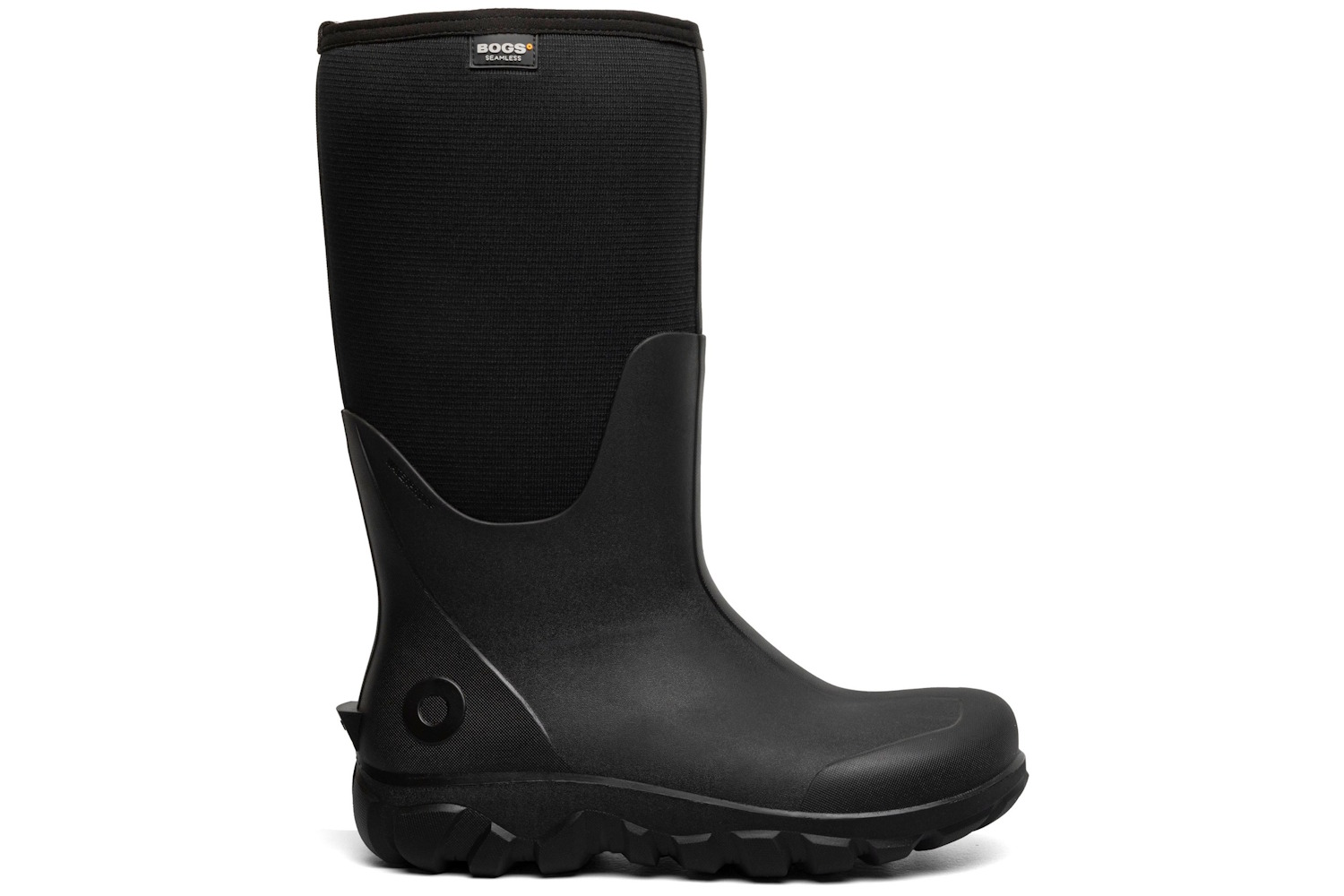
8.2/10 RATING
Most Stylish Rain Boots
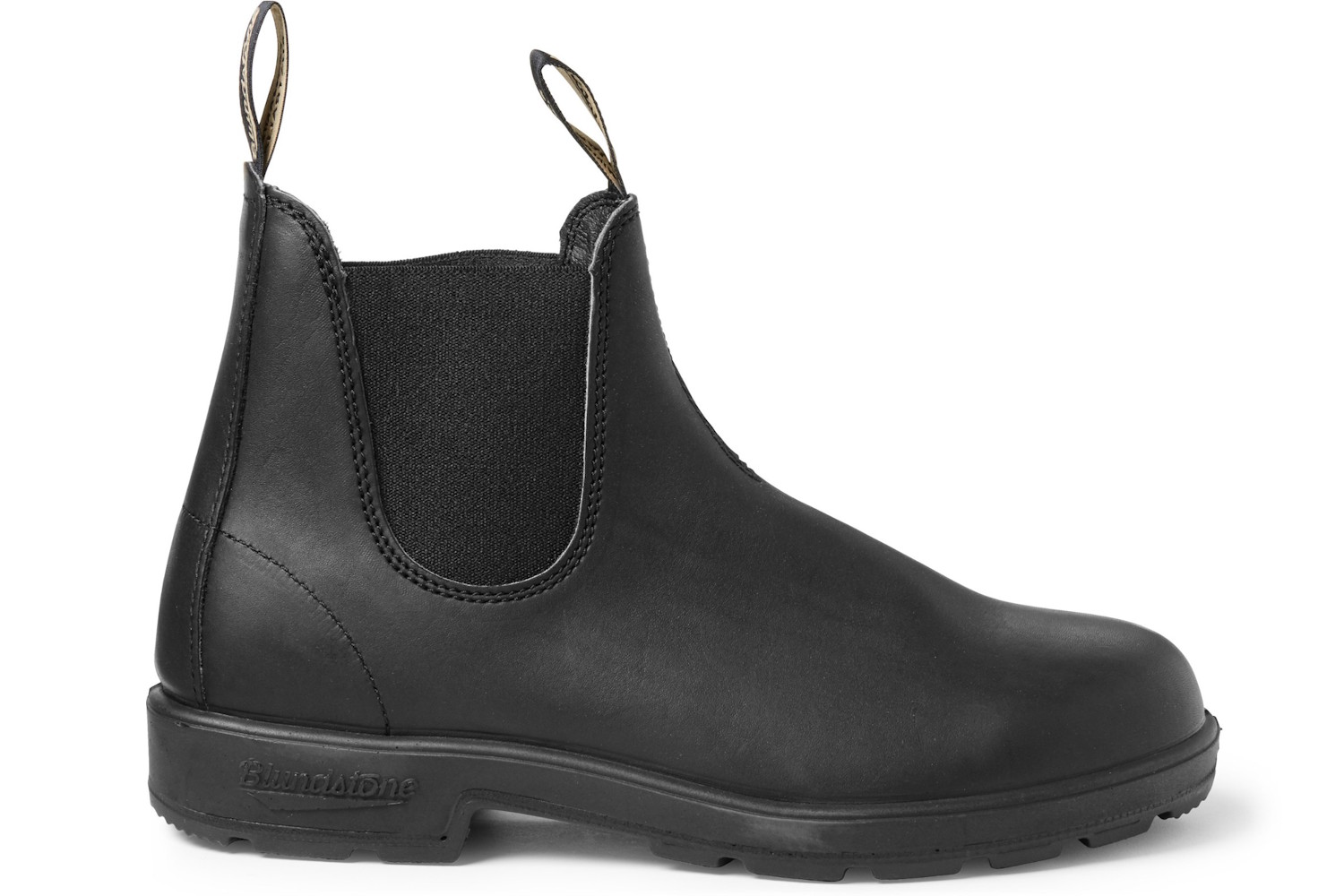
8/10 RATING
See more picks
Weight
4 lbs. (average per pair)
Insulation
Uninsulated (open cell foam and Neoprene retain heat well)
Upper material
Triple-dipped latex neoprene
Pros
- Completely waterproof, great for standing in rivers
- Durable
- Warm
- Easy on, easy off
- A go-to boot that just works
- Let’s be honest, they’re cool looking
Cons
- Not comfortable for long-distance walking
Read Review: Amphibious Feet: Xtratuf Rubber Boots Review
The Quick & Dirty: This legendary workhorse offers bulletproof waterproofing and superior grip in the sloppiest conditions. Not intended for hikes of 4 to 6 miles, it’s a staple for standing, working, and wading.
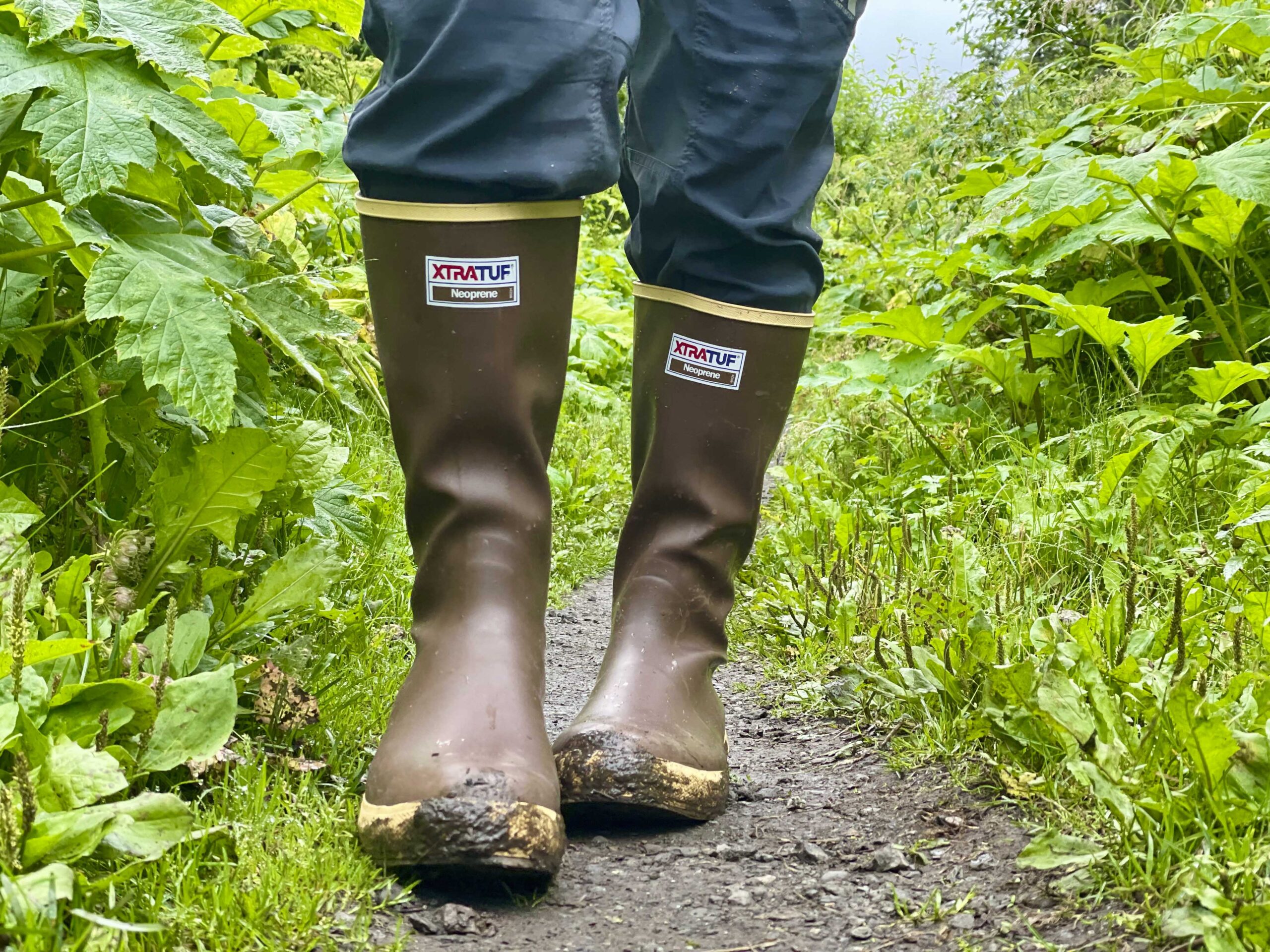
The XTRATUF Men’s 15″ Legacy Boot ($160) is a rugged, time-tested choice for long days in wet, muddy, or icy conditions. Originally designed for commercial fishermen facing the rough Alaskan coast, it is now a staple for farmers, outdoor workers, wildlife watchers, and anyone needing serious protection from the elements.
The triple-dipped latex neoprene construction is 100% waterproof and resists corrosive chemicals, acids, and fish oils. Its hand-layered build adds flexibility without losing toughness. The slip-resistant chevron outsole grips wet decks, muddy ground, and icy trails. These boots remain soft in cold weather, making them a reliable all-season choice. However, they’re not insulated, so for very cold conditions, the Muck Arctic Ice is preferable.
The built-in heel cup and arch support offer a solid base of comfort for long days. We wore these boots all day during two week-long bear-watching trips in Alaska and never had sore or wet feet. Back home in Jackson, we wear them a few times a week for their easy on-off and the high shaft’s protection in puddles, snowbanks, and other messy conditions.
Our only real gripe is the ankle support on rough terrain: after hiking four to six miles, we found we needed more structure for comfort and stability — though, to be fair, our ankles have been sprained in the past. Among rain boots, these aren’t the least supportive, but Muck Boots feel a bit stiffer and give slightly more ankle support, making them more comfortable over longer distances. The stock footbed is basic, though swapping in our own insole made a noticeable difference in comfort. Still, for dependable waterproof protection, traction, and durability, the Legacy remains a classic.
Pros
- Excellent price
- Good traction, even in loose terrain
- Made in Canada
- Can be found for less money
Cons
- A bit heavy
- Stiffer rubber is less comfortable while walking
The Quick & Dirty: This unbelievably priced, Canadian-made workhorse is perfect for wet chores and muddy canoe launches. The stiffer fit means you’ll want to avoid logging big trail miles, but it still offers incredible value for casual outdoor work.
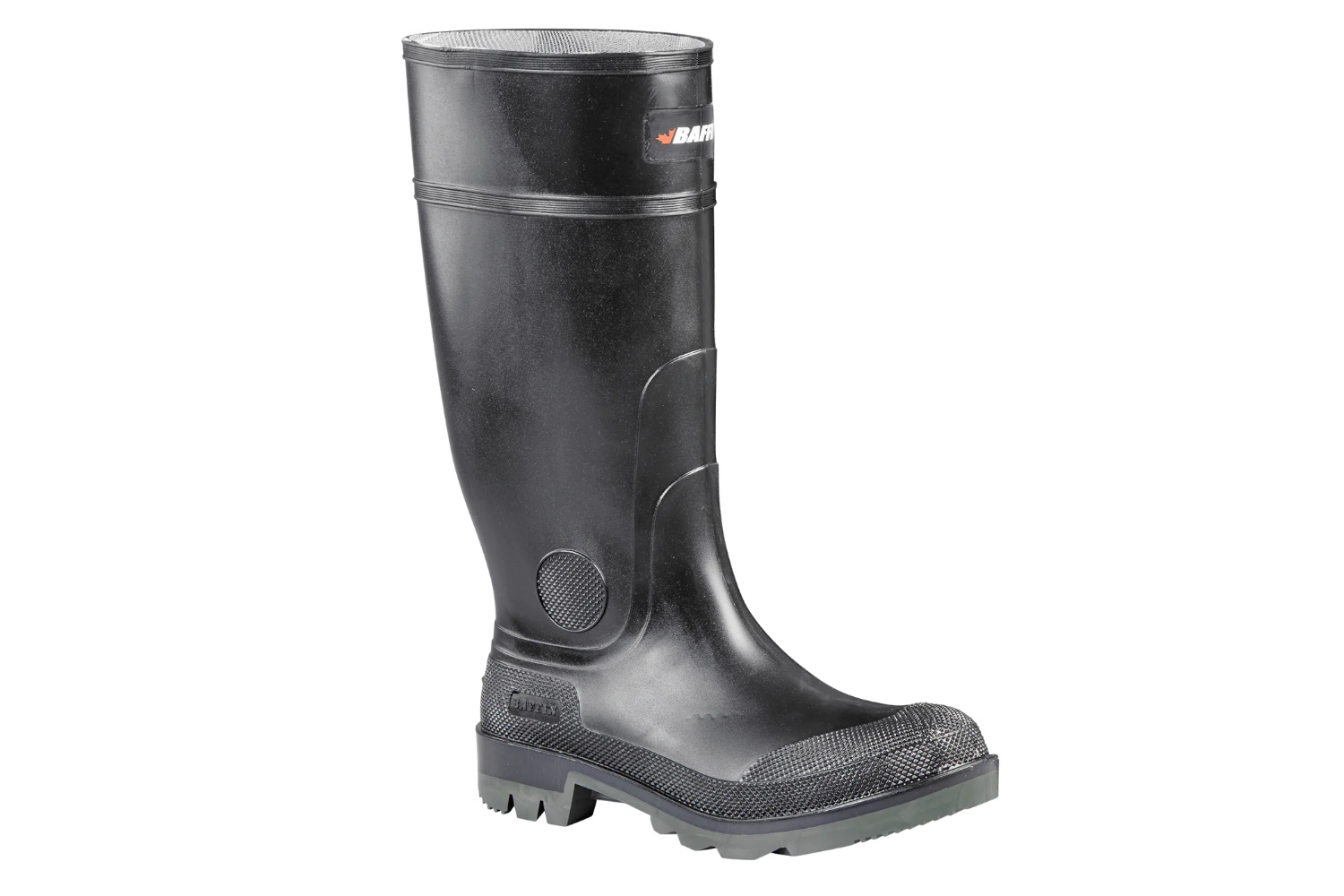
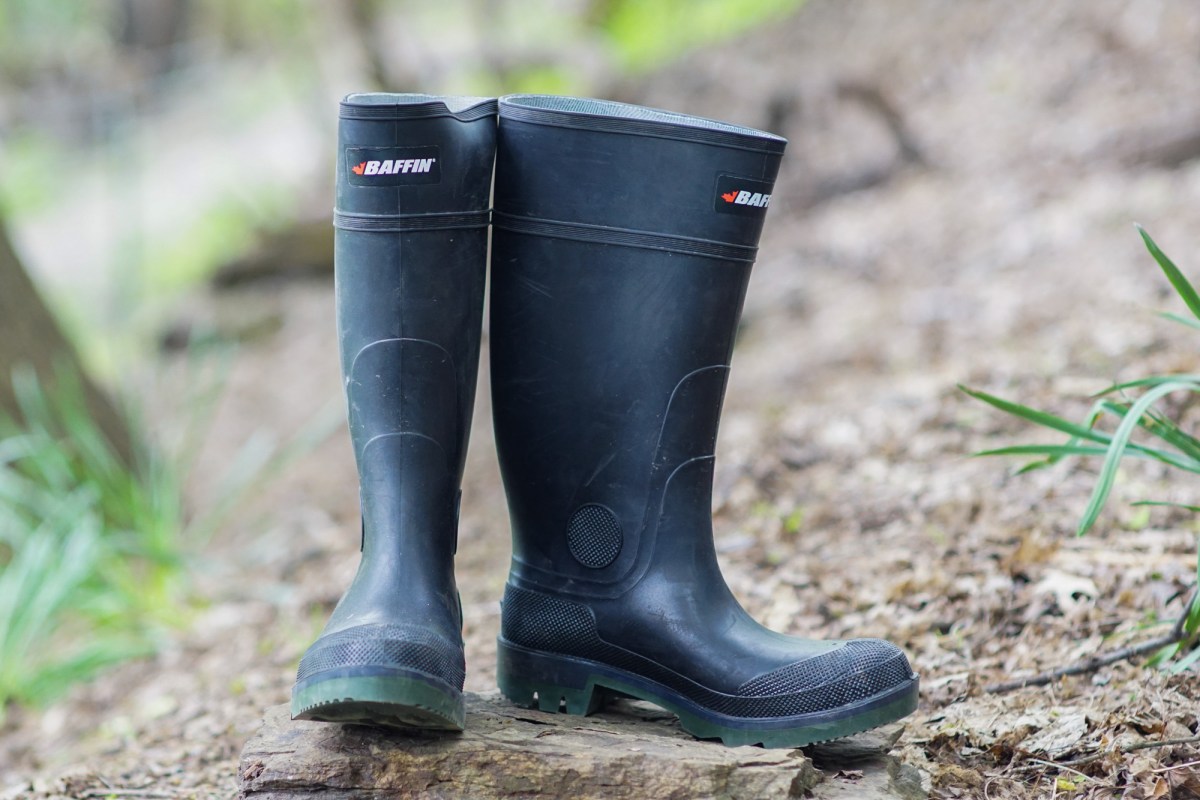
The Baffin Enduro ($60) is a highly affordable boot that rivals pricier options. It’s comfortable, budget-friendly, and has a solid lugged sole. Made in Canada at less than half the price of most big-name brands in this test, its value is remarkable.
Baffin gives the Enduro its top waterproof rating, and the TPR construction performed flawlessly. We reached for them first for yard work, washing bikes, and messy canoe launches. They’re uninsulated with a cloth liner on the exterior, making them more four-season than true winter boots.
The insole is thin and uncomfortable. However, the low price allows you to replace it with an aftermarket upgrade. The stiffer rubber can fold in on the instep during uphill walks. This may cause chafing, depending on your foot shape.
Still, for price-conscious shoppers who don’t need insulation, the Enduro is tough to beat. If it were more comfortable for long walks, it would be a near-flawless budget alternative to premium tall boots like the XTRATUF Legacy.
Pros
- Lugged sole provides excellent traction and stability
- Interesting styling doesn’t immediately scream rain boots
- Many color options
- Soft but supportive insole and midsole
- Molded-in reinforcements in high-wear areas
Cons
- Heavy for an uninsulated short boot
- A wee bit narrow in the forefoot
- Heel-lift on steeper terrain
The Quick & Dirty: This stylish, ultra-durable ankle boot boasts the best traction in our test and provides incredible all-day comfort. It is heavy for a short boot, but the rock-solid grip and lifetime warranty make it a reliable choice for landscaping and outdoor work.
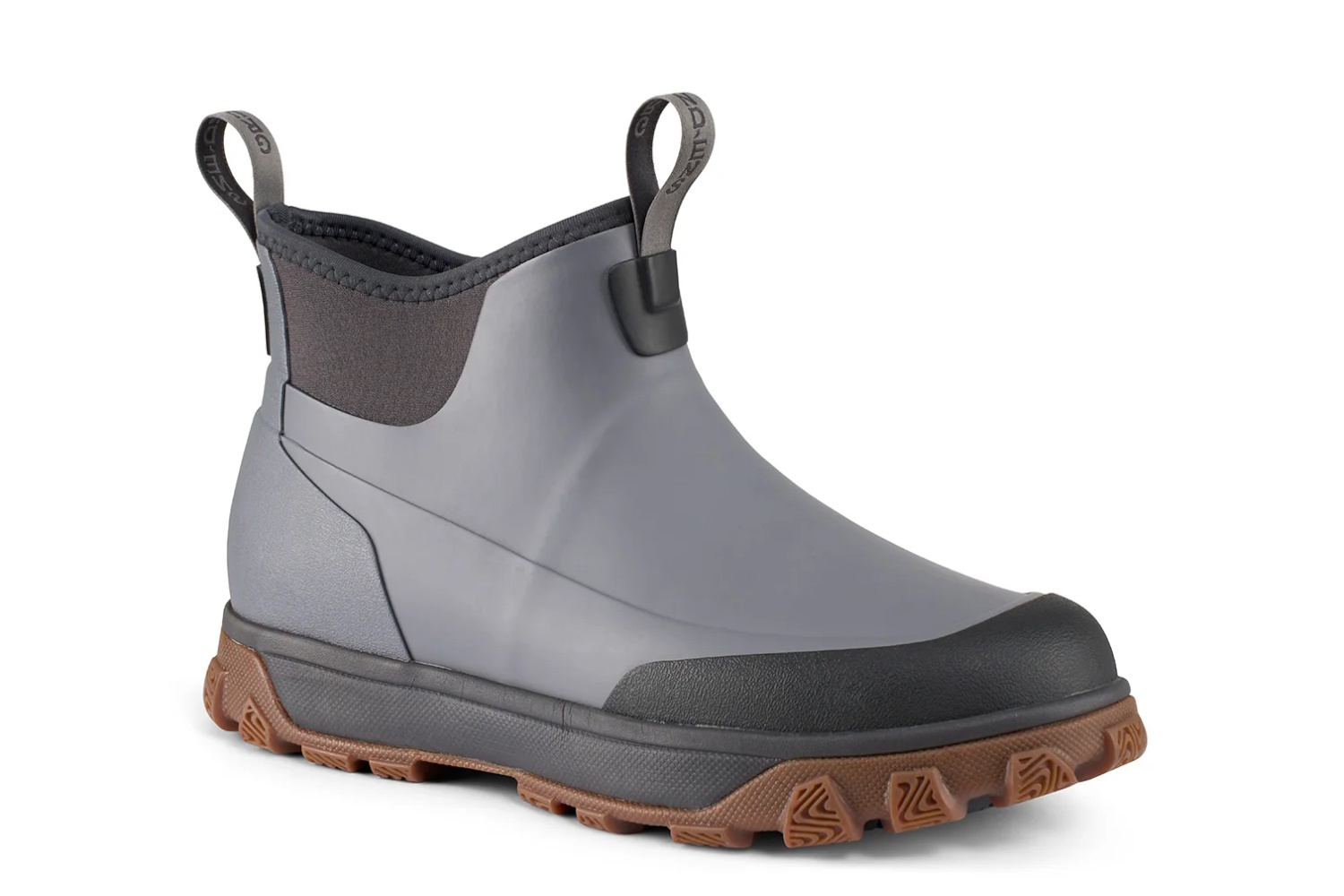
The Grundéns Deviation Ankle Boots ($150) stand out among rubber boots for its style and functionality. It’s one of the most versatile short boots we reviewed.
We spent time in the woods, along streams, and on a few drizzly days building a deck, and they kept proving themselves as an easy choice for almost any outdoor task. Of all the boots tested, the Deviation has the most substantial outsole, complete with heavy siping and aggressive lugs. That makes for a heavier boot, but if traction and durability are the goal, it’s an easy tradeoff.
Comfort is excellent, blending softness and support. Our feet stayed comfortable for eight-plus hours of standing, walking, and squatting. The regular width was snug on wide feet but didn’t cause issues. The wide outsole provides stability when standing for long periods.
While the XTRATUF Ankle Deck Boot is lighter and softer for errands, the Deviation offers much better grip and structure. The price is steep for a short boot, and they are heavy. Both shortcomings are easier to forgive given the lifetime warranty. For landscapers or anyone needing all-day comfort and traction in wet conditions, these are excellent.
Pros
- Pillow-soft comfort
- Excellent wet-surface traction
- Reflective pull tabs
- Lightweight
- Versatile
Cons
- Ankle cut means less protection
The Quick & Dirty: Blending true waterproofness with Croc-level comfort, this sneaker-like deck boot is an incredibly cushy go-to for summer gardening and wet commutes. It won’t hold up in deep mud or freezing temperatures. It’s perfect for quickly slipping on during dewy spring mornings.
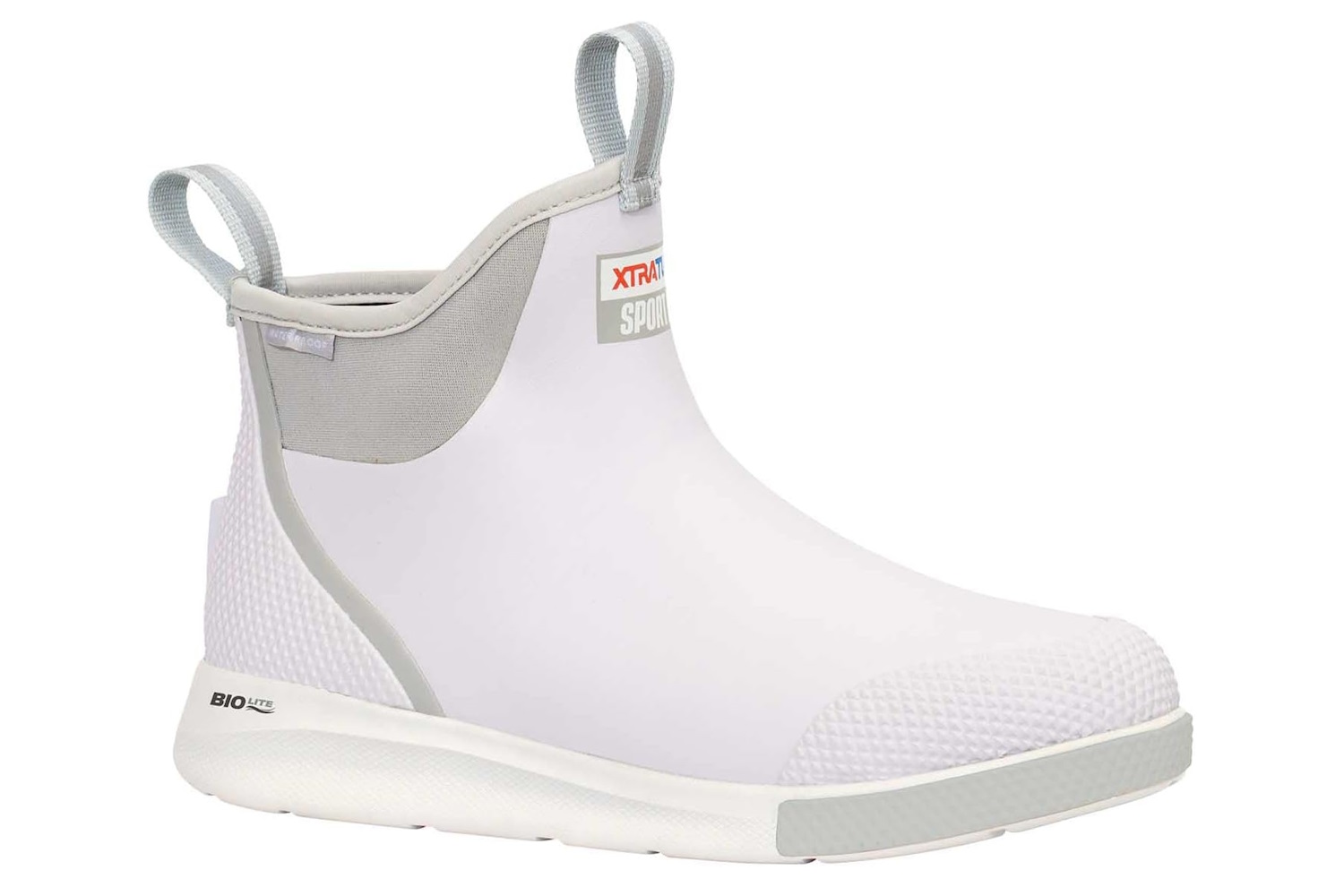
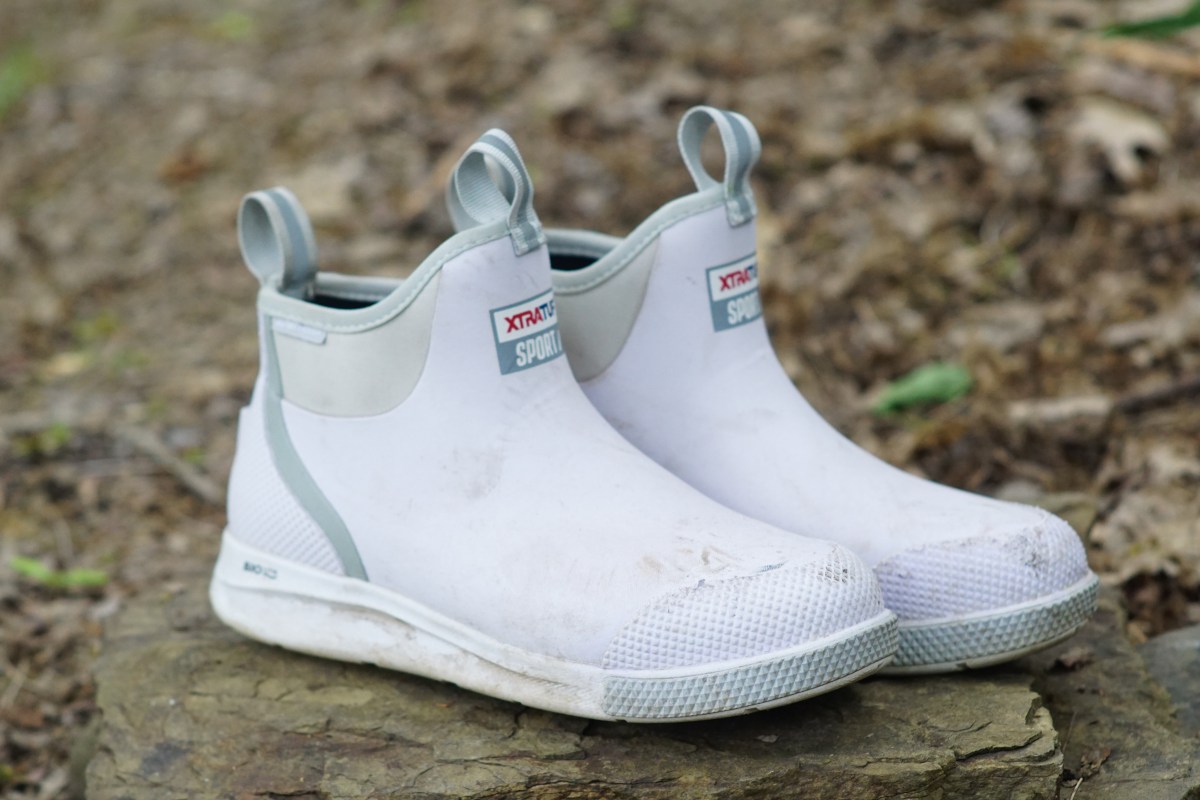
The Xtratuf Ankle Deck Boot Sport ($150) delivers true waterproofness, low weight, and plush comfort — almost like a sneaker. Marketed for sportfishing, this sleek, low-cut boot quickly became our choice for wet bike rides and town walks. The reflective stripes on the pull loops provided welcome safety in spring’s low light. For walking comfort, these topped the test. Only L.L.Bean boots came close.
Designed for slippery surfaces, the boot pairs XTRATUF’s waterproof durability with a moisture-wicking mesh liner for breathability. Reinforced toe and heel add structure. The non-marking chevron outsole grips well on wet decks. The ankle height makes them easy to slip on and off while still shielding you from splashes.
They are less suited for thick mud and heavy brush than a beefier short option like the Grundéns Deviation Ankle Boot. The lower ankle cut can let water in during heavy rain. Still, these are our absolute favorites for dewy spring morning hikes and coffee runs.
Insulated
Yes, rated to -40F
Pros
- Lightest of the tall boots in this test
- Great sole for all-terrain use
- Excellent comfort standing and walking
- Sizes up to 21!
Cons
- Upper can be a tight fit for tucked-in pants and larger calves
- Won’t win any fashion awards
The Quick & Dirty: This warm, walkable boot is a three-season shield against rain, snow, and mud. It has much of the warmth of heavier winter boots, but with better flex and walkability for everyday chores.
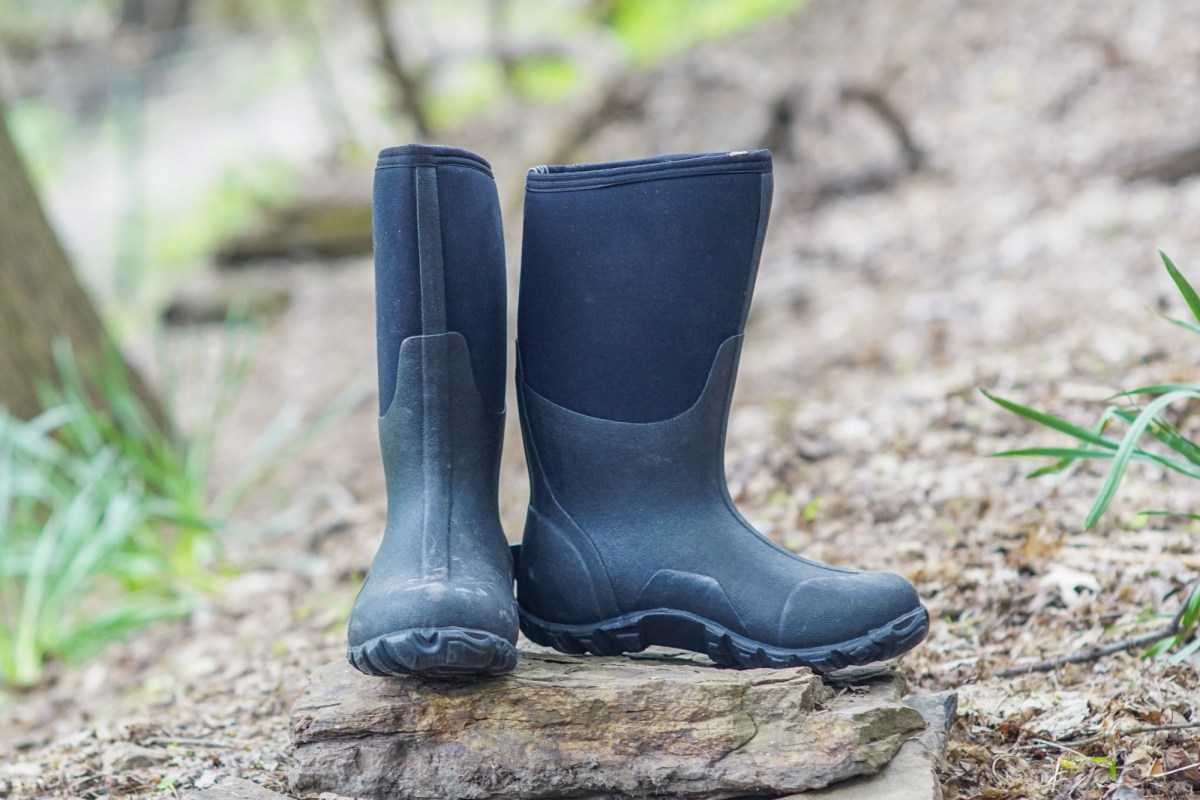
The BOGS Classic High Boot ($150) excels at balancing cold-weather warmth with walkability. It offers much of the Muck Arctic Ice’s warmth and solid traction, with less bulk.
Bogs uses a 7mm Neo-Tech bootie in a rubber lower. Even though the rubber reached only halfway, the upper kept water out during our soak tests and snowy dog walks. The outsole, while not aggressive-looking, kept us steady on wet wood, rocks, and mud.
The top opening is wider than the Muck Arctic, leaving more room for calves and clothes. It can still feel a little tight. The thick algae-based insole is impressively comfortable. The upper flexes more easily than the Arctic. Still, we wouldn’t choose these for a long, technical hike.
For many people, this is the ultimate three-season boot for rain and snow. Even without a full rubber upper, it sheds mud effortlessly and provides highly dependable weather protection. While the snug calf opening and lack of long-distance hiking support are valid drawbacks, its balance of everyday walkability and serious warmth is incredibly hard to beat. If it’s under 40 degrees, you can’t go wrong with the Classic High.
Weight
2.13 lbs. per pair
Style
Slip-on, over-the-ankle / low profile
Sole
TPU (thermoplastic polyurethane)
Pros
- Stylish
- Durable
- Comfort improves as the leather breaks in
- Good traction for a sleek everyday boot
Cons
- Pricey
- Break-in period
- Not built for deep water or major puddle jumping
The Quick & Dirty: With clean looks, cushioned comfort, and reliable traction on wet ground, this leather pull-on bridges the gap between rain protection and everyday style, but it can’t match true rubber boots in deep puddles or rougher conditions.
The Blundstone Original Chelsea ($200) is the pair we reach for when the forecast is wet, but we still want a boot that feels polished enough for everyday life. It’s important to note that these are not traditional rubber rain boots like the other work-focused models in this guide. Instead, they are a weather-treated leather alternative that bridges the gap between protection and style.
We tested these on damp spring walks in Jackson, while traveling around D.C. during a rainy lobbying trip, and on the kind of sloppy shoulder-season days when sidewalks, trails, and parking lots all seem equally soaked. What stands out most is how easily they transition between those worlds. The leather upper keeps rain and puddle splash at bay better than you might expect, and it breathes far better than full-rubber slip-ons like the XTRATUF Ankle Deck Boot once the day warms up.
Underfoot, the sole has a cushioned, shock-absorbing feel that stays comfortable through long days of walking. We also appreciate that the tread gives you more confidence on wet ground than many similarly styled leather boots. While the L.L.Bean Boot offers more wilderness appeal, the Blundstone feels sharper for town and transitions better into indoor settings. They do take a little time to soften up, and the lower height means they aren’t made for deep puddles, creek crossings, or truly messy work sites. But for travel, rainy day errands, and everyday wet-weather wear, this is one of the most versatile and best-looking options out there.
More Rain Boots For Mucking About
Height
8” (Waterproof to ~4” top of rubber shell)
Weight
3.3 lbs. (per pair)
Removable Insole
Yes (Dual-density)
Pros
- Secure lace-up fit
- Made in Maine and resoleable
- Breathes well in mild weather
- Classic field-to-town style
Cons
- Chain tread lacks bite in deep mud
- Waterproofing is limited to the rubber lower
The Quick & Dirty: This heritage classic offers the comfort of a leather lace-up combined with the weather protection of a rubber boot. The odd chain-link sole isn’t the best in deep mud, but these are incredibly supportive for rocky, rainy hikes.
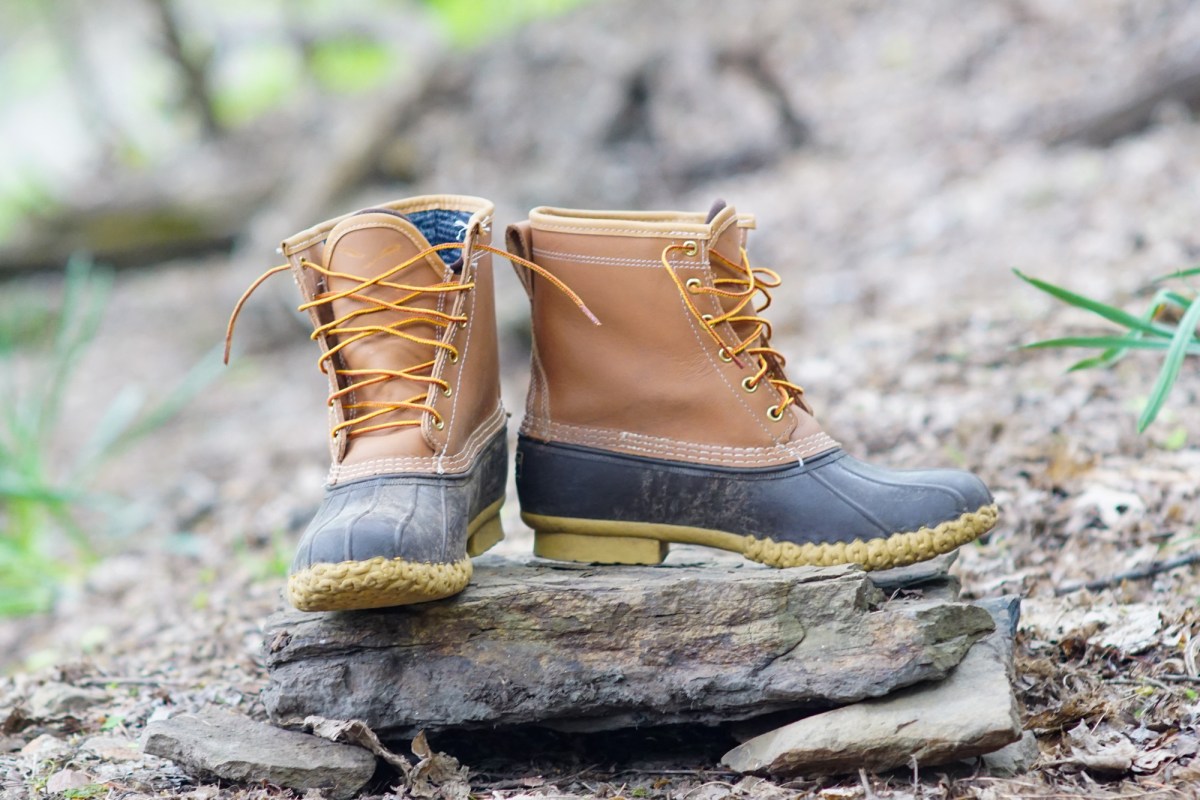
The L.L.Bean Men’s Bean Boot 8“ ($150) feels like stepping back in time, but in the best way possible. Leon Leonwood Bean’s 1912 vision was simple: combine a supportive leather lace-up upper with a waterproof rubber lower. More than a century later, the design remains a staple for anyone who needs a boot that transitions seamlessly from the woods to the brewery.
Being the only lace-up boot in our test, the Bean Boot is an outlier that offers a level of ankle support and fit customization that slip-on rubber boots simply can’t match. Because this is the non-insulated version, it lacks a GORE-TEX liner or Thinsulate, making it significantly more breathable for high-output activities like hiking or yard work in moderate temperatures. However, without that membrane, it is “highly water-resistant” rather than “submersible waterproof.” Thus, the leather will eventually wet out if held underwater for long periods.
The iconic chain-link sole provides decent tactile feedback, allowing you to feel the terrain underfoot. While it isn’t our first choice for deep, greasy mud or ice, it holds its own on wet trails and pavement. Note that the sole is relatively thin; while it’s great for ground feel, it doesn’t offer much in the way of cushioning or thermal protection from the cold ground.
Even so, the Bean Boot reminds us why it’s an enduring design. The rubber lower resists water and wind, while the leather upper is simply more comfortable and supportive than all-rubber tall competitors like the XTRATUF Legacy.
Insulated
Yes, neoprene lined
Sole
Grip-X non-marking outsole
Pros
- Well cushioned
- Comfortable around town
- Good traction
- Fun colors and patterns
- Warm enough for chilly mornings without feeling too sweaty in spring
Cons
- Outsole picks up dirt and small rocks
- Tricky to get on and off
- Runs slightly narrow
The Quick & Dirty: This stylish, cushioned deck boot delivers reliable grip and a slightly snug, secure fit for wet, sloppy spring weather. It isn’t built for deep water or thick mud, but it’s a fantastic, colorful option for daily chores and travel.
The Huk Rogue Wave ($120) quickly became one of those boots we kept reaching for in sloppy spring weather. We wore it around the Tetons, through muddy shoulder-season days in Colorado, and on birding trips to Nebraska, where wet grass, puddled trails, and long hours on our feet gave us a good sense of what it does well.
For a deck boot, it feels impressively cushioned right out of the box, offering a secure, slightly snug fit and reliable grip on wet ground, gravel, rocks, and dirt. The neoprene-lined upper adds a touch of warmth for chilly mornings without feeling overly stifling in milder conditions. We also like that it has a more stylish look than many rubber boots, with fun color options that make it easy to wear beyond the dock or trailhead.
Compared to the XTRATUF Ankle Deck Boot Sport, the Rogue Wave runs a bit narrower but feels slightly more insulated. Just know it isn’t the boot for deep water or truly slick mud. Still, for everyday wet-weather use, travel, chores, and casual outdoor outings, it’s a comfortable, grippy option we kept coming back to.
Pros
- Very comfortable
- Excellent traction
- Included silicon band holds rain pants in place
- Lifetime warranty
Cons
- Shallow lugs packed up with mud
- Expensive
- Heavy
The Quick & Dirty: This premium, professional-level boot boasts exceptional suppleness and a sticky Michelin outsole designed for harsh boat decks. The shallow tread can pack with mud, but the unbeatable comfort makes it a fantastic heavy-duty option for varied terrain.
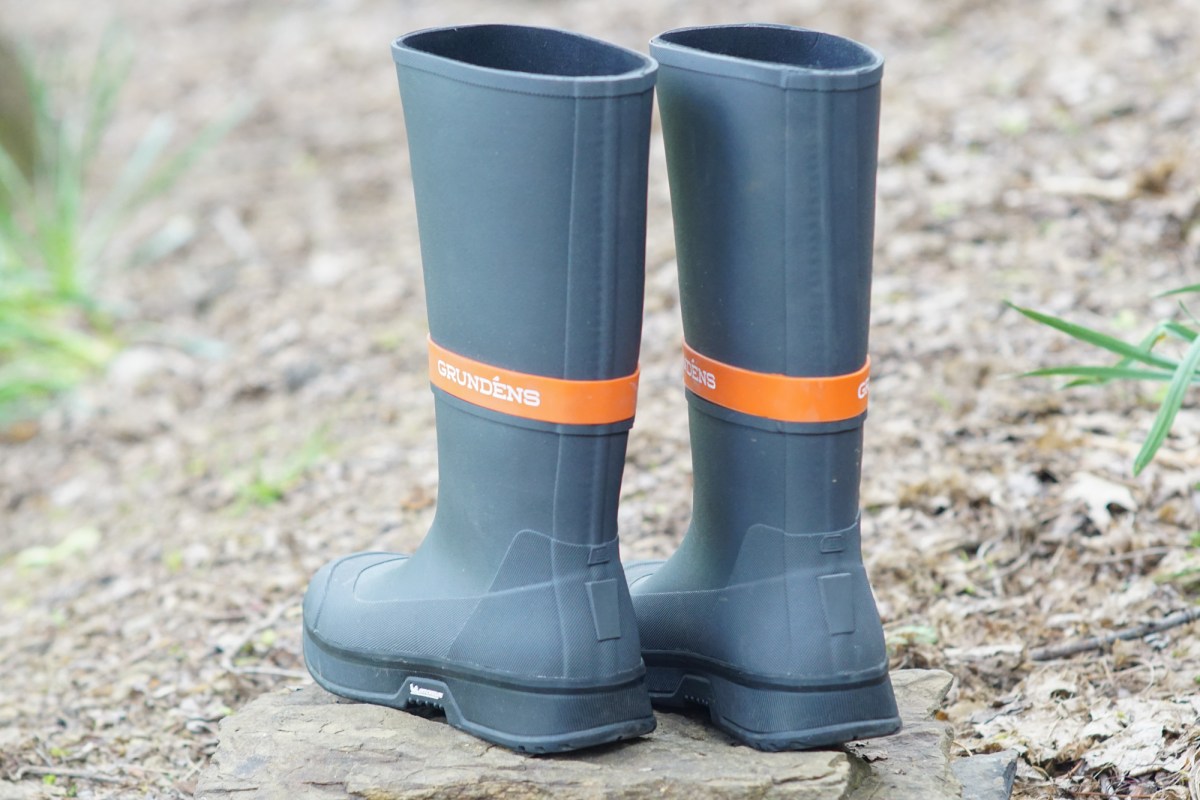
The Grundéns Crewman Tall ($200) is a professional-level boot with a price tag to match, but it earns its keep. It was the most versatile tall boot we tested, offering standout comfort for walking without sacrificing durability.
Designed for commercial fishing, the Crewman is built for harsh environments. Grundéns teamed up with Michelin on the sole, and the grip and stability really stood out. Because the tread is designed for boat decks, the shallow lugs can pack with mud, but this boot still did an admirable job across varied terrain, including slick docks and soggy, uneven trails.
What really sets the Crewman apart is its suppleness. Even against other uninsulated boots, the upper feels notably comfortable, aided by an OrthoLite insole. That combination made these one of the most comfortable heavy-duty boots we tried. The orange silicone band around each boot — designed to keep rain pants in place — is a clever, unique feature.
Our only real complaint is the shallow lug pattern. If deep mud is your primary use case, a heavily lugged tall boot like the Baffin Enduro is a better choice. Still, we rambled all over in these, and they never stopped impressing us.
Pros
- Easiest entry and exit of all boots reviewed
- Three color options
- Algae-based insole
- Reinforced high-wear areas
- Wide shaft makes for good airflow
Cons
- Loose fit makes challenging terrain even more challenging
- Heavy for an uninsulated short boot
- Wide top more easily lets in rain and snow
The Quick & Dirty: This fully rubberized, hands-free chore boot prioritizes extreme ease of use and breathability over long-distance walking support. The loose fit makes it feel unpredictable on uneven ground, making it best suited for quick trips to the woodpile or for changing out of ski boots.
The BOGS Digger Mid Rain Boots ($95) take a different approach from the brand’s usual neoprene designs, featuring a full-rubber outer and a very wide opening. That wide opening can be either a blessing or a curse, depending on how you plan to use it.
The big selling point here is truly hands-free entry and exit. You just slip in, push down, and go. The heel kick tab makes taking them off just as easy. That loose-fitting shaft also allows plenty of air to circulate, making these more bearable in warm weather than many other rain boots.
Comfort is decent, but not great. The Bloom insole is thin, and overall, these don’t feel as cushiony or supportive as the Grundéns Deviation. We swapped in thicker insoles from the Bogs Classic High and noticed an immediate improvement.
The tradeoff for that easy slip-on design is a very loose overall fit. Even though the outsole has plenty of traction, the lack of support makes these feel unpredictable on uneven terrain. These are easy to enjoy for short spurts — whether for quick farm chores or keeping in the car to change out of ski boots — but the longer we stayed outside, the less appealing they became.
Pros
- Very warm
- Excellent traction on all surfaces
- Protectively stiff toe area
- Room for thicker socks
- Decently easy on and off for an extra tall boot
Cons
- Snug around calf
- Tall height can cause chafing with extended wear
- Stiff construction is tiring to walk in
The Quick & Dirty: This heavily insulated, hyper-grippy winter fortress is designed for standing still in brutal cold and walking confidently on wet ice. It is exceptionally stiff and tiring to hike in, but it is an absolute lifesaver for ice fishing or spectating winter sports.
The Muck Arctic Ice Tall Boots ($210) are the easy choice for the absolute coldest weather. While the Bogs Classic High is a more well-rounded everyday option, if you plan to spend long periods outside not moving much, this is the boot to reach for.
The Arctic Ice combines 8mm neoprene with a thin fleece layer to deliver tremendous warmth. We didn’t test Muck’s wild low-end temperature claim, but we can confirm that these become unbearably hot above 35 degrees. In true cold, though, they are excellent.
The outsole uses a blend of compounds for wet-ice and all-terrain traction. These were the most sure-footed boots we tried across all surfaces; the grip is simply outstanding.
That insulation and thick sole come at a price: this was the stiffest boot in the test. They aren’t painful to walk in, but constantly pushing past the flex of the tall upper gets tiring. The narrow top opening can also be frustrating with thicker calves or tucked-in pants, though rolling the tops down helped a lot. For ice fishing or tree stand sitting, these are lifesavers.
Pros
- Very, very inexpensive
- Cheaply made
- Can be found even cheaper with an easy web search
Cons
- Off-gassing/smell
- Uncomfortable
- Heavy
- Slippery sole
- No liner or insole
The Quick & Dirty: This dirt-cheap emergency option successfully keeps water out for very little money. Unfortunately, they’re uncomfortable, have poor traction on steep surfaces, and have a pungent chemical smell, making it hard to recommend for regular use.
The CLC PVC Rain Boots ($35) do the number one job of a rain boot just fine: they keep water out, and they do it for very little money. Unfortunately, that is where the praise mostly ends.
CLC is better known for tool bags, and these inexpensive PVC boots feel like them. PVC is waterproof, but it is stiffer, less durable, and generally considered worse for the environment than rubber. These unlined boots get sweaty almost immediately, so good socks are a must. On steep hills, they fold and dig into your toes, and the sole was the slipperiest we tested.
We dropped in an aftermarket insole and comfort improved, but otherwise, more than a few minutes of standing around left our backs aching. What was truly unacceptable, however, was the smell. The off-gassing when we first opened the box was a dealbreaker, and even after a week outside, it remained noticeable.
We understand the appeal of a $35 rain boot, but if you need something more than once in a while, it’s worth skipping a few takeout coffees and spending more on a dependable tall option like the Baffin Enduro.
Rain Boots Comparison Chart
| Boot Name | Price | Flood Height | Weight (Pair) | Primary Material | Best For |
|---|---|---|---|---|---|
| XTRATUF Legacy 15″ | $160 | 15″ | 4 lbs., 6 oz. | Rubber/Neoprene | Deep mucking, moderate hikes, & bombproof durability |
| Baffin Enduro | $60 | 16″ | 4 lbs. | PVC/Rubber | Aggressive yard chores & budget-friendly mud protection |
| Grundéns Deviation 6″ | $150 | 6″ | 2 lbs., 8 oz. | Rubber/Neoprene | Quiver-of-one for boat decks & wet trailheads |
| XTRATUF Sport | $150 | 6″ | 1 lb., 14 oz. | Rubber/Neoprene | High-output wet days & athletic nautical grip |
| BOGS Classic High | $150 | 14″ | 4 lbs., | Rubber/Neoprene | Sub-zero slush, ice, & extreme winter chores |
| Blundstone Original | $200 | 6″ | 2 lbs. | Weathered Leather | Rainy city commutes & travel-ready crossover style |
| L.L.Bean Men’s 8″ | $150 | 8″ | 3 lbs. | Leather/Rubber | Heritage style & traditional garden work |
| Grundéns Crewman | $200 | 15″ | 4 lbs., 3 oz. | Polyurethane | Heavy nautical use & industrial-grade cleaning |
| Muck Arctic Ice Tall | $210 | 16″ | 5 lbs., 2 oz. | Rubber/Neoprene | Deep-freeze chores & aggressive traction on ice |
| Huk Rogue Wave | $120 | 6″ | 2 lbs., 2 oz. | Neoprene/Rubber | Quick-slip boating & lightweight dock agility |
| BOGS Digger Mid | $95 | 9″ | 3 lbs., 6 oz. | Rubber | Daily gardening & dedicated backyard mucking |
| CLC Plain Toe PVC | $35 | 15″ | 3 lbs., 2 oz. | PVC | Emergency flooding & one-off messy cleanups |
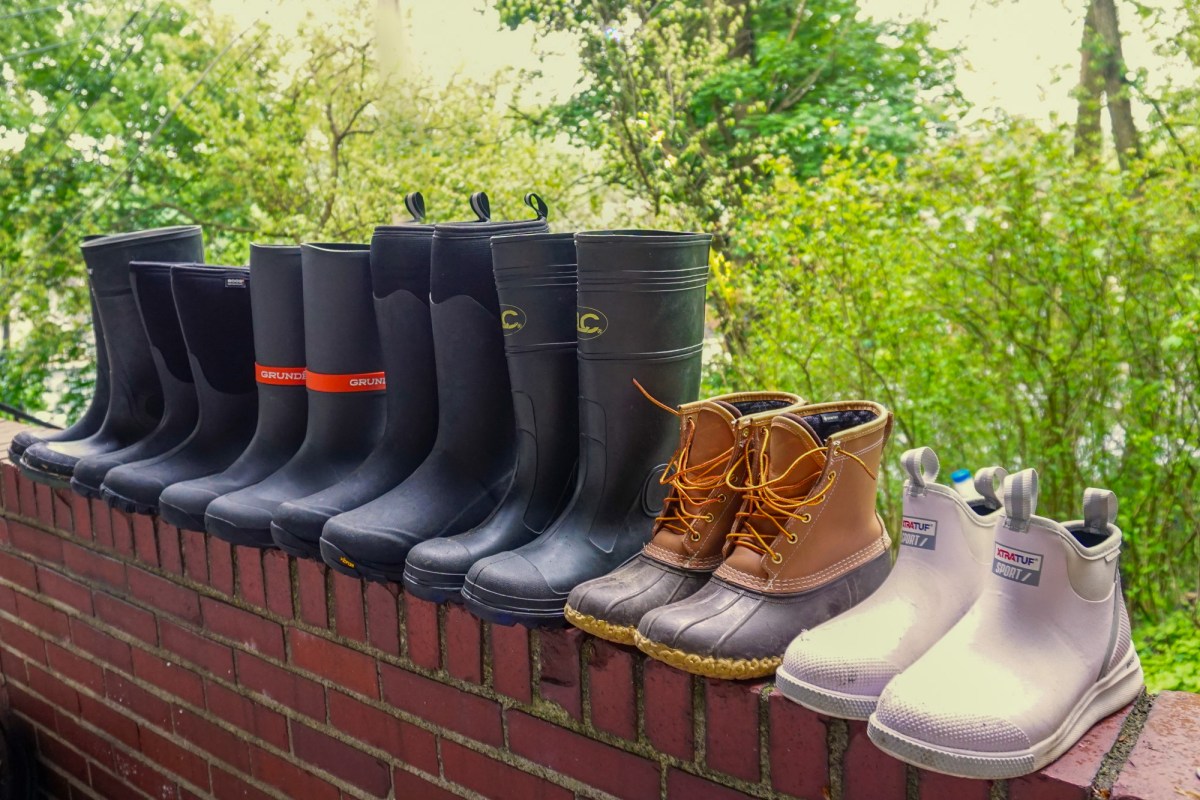
How We Tested the Best Rain Boots
Our Expert Testers
Lead tester Ryan Kempfer is a professional wildlife guide and photographer who lives in his boots. Whether tracking bears in the Alaskan bush or navigating the basins of Yellowstone, Kempfer subjects gear to high mileage scenarios that reveal a product’s true breaking point.
Contributing veteran reviewer Eric McKeegan brings over 20 years of technical expertise to the team. A former Tech Editor, McKeegan provides a meticulous mechanical perspective and the long-term durability data necessary to vet these boots over multiple seasons. Together, they ensure every recommendation has been pushed to its limit.
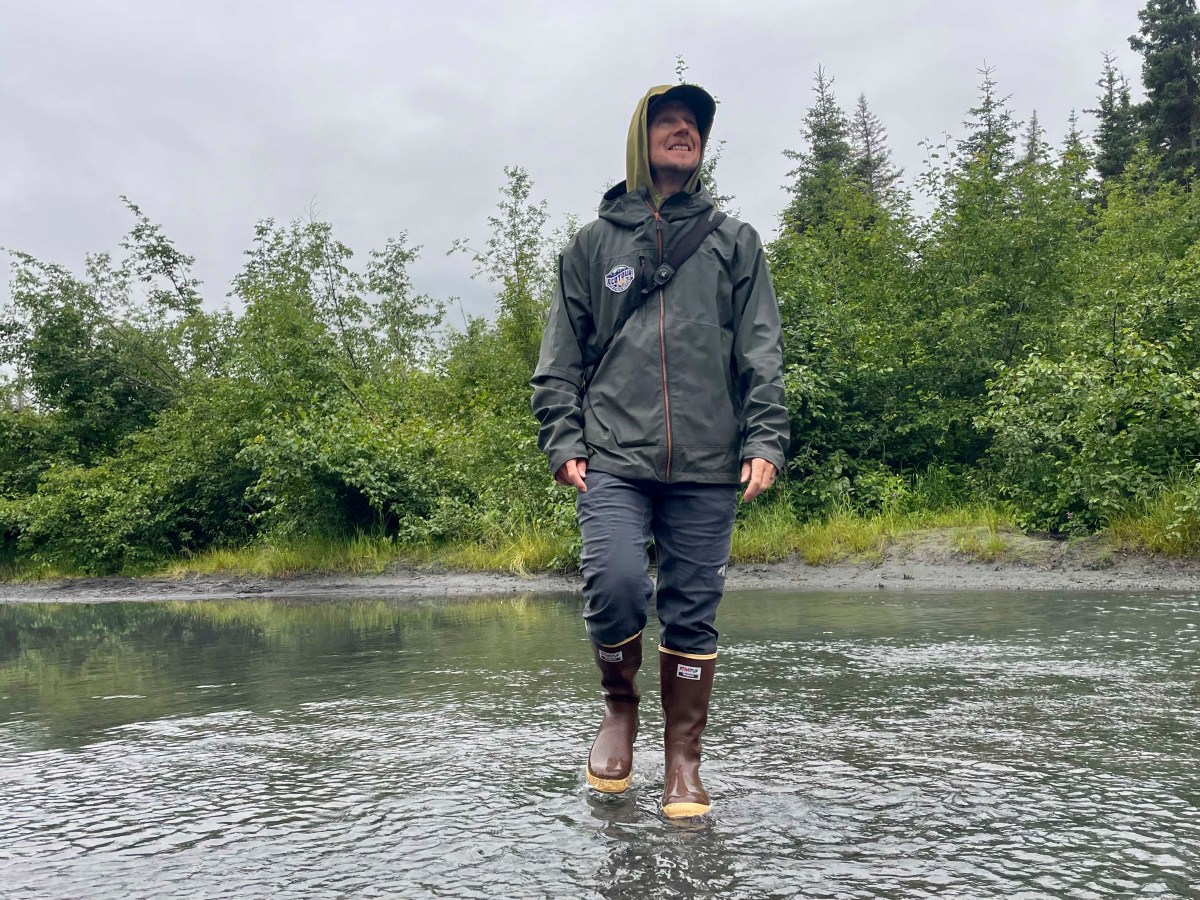
Our Testing Grounds & Process
For this newest update, Kempfer logged 10 months and over 100 miles testing 8 boots across Alaska and the Rocky Mountain West. Overall, our team of five testers has vetted 22 models across four states, including Pennsylvania and Wyoming. Every boot must pass a minimum threshold of three high output outings in saturated conditions to earn a spot in this guide. Field testing occurred during professional guiding days in Yellowstone National Park, bear watching trips near Brooks Falls, and throughout the sloppy spring seasons in Jackson.
To evaluate waterproofing beyond a simple splash, Kempfer performed hour long immersion tests in a clawfoot tub and waded through river currents in the field. He used bricks and stones to submerge the boots for one hour to ensure no leaking occurred under pressure. He pushed outsoles to their limits on mossy rocks, deep mud, and wet wood to separate technical performers from casual errand boots. He also assessed mobility through active tasks like shoveling snow and navigating riverbanks to ensure every pick remains flexible. Products stay in ongoing testing after inclusion and we update this guide seasonally as designs change or new models emerge.
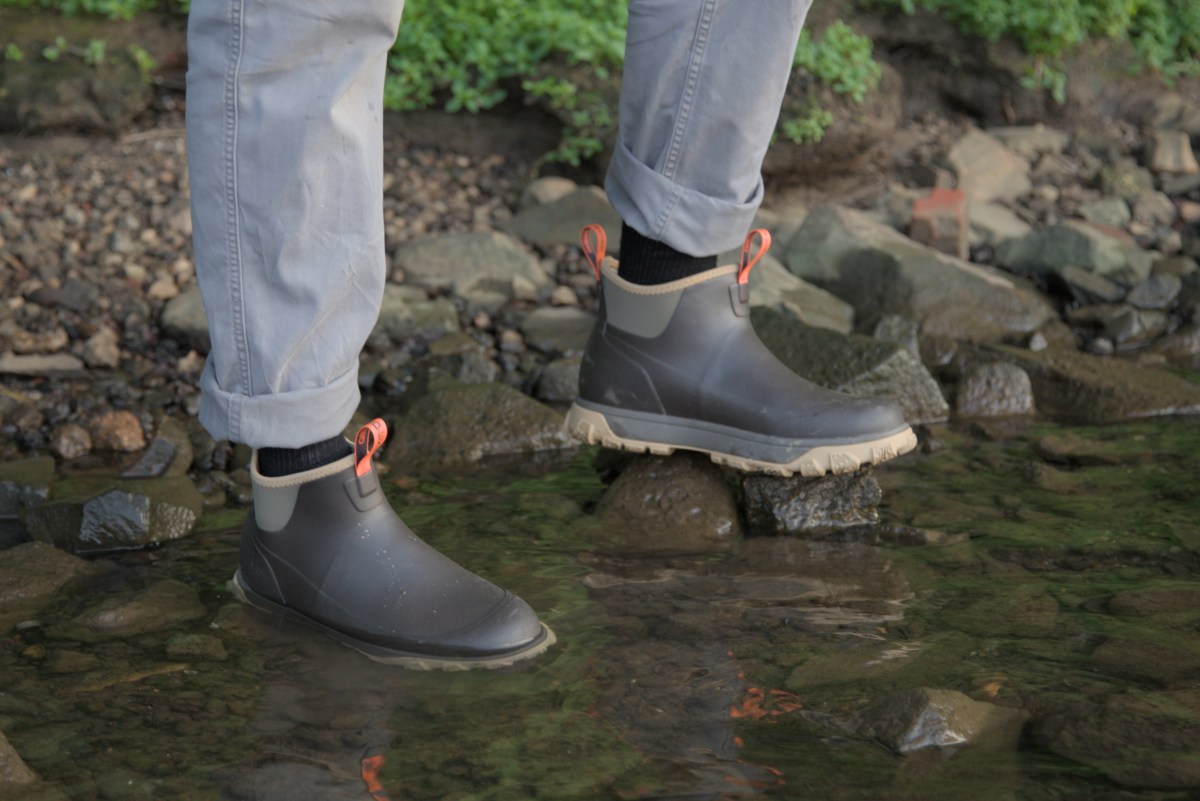
Our Rating System
To provide a clear, data-driven comparison, we score every boot on a scale of 1 to 10 across four primary pillars. Note that our overall score is an independent rating based on the boot’s total performance, versatility, and value; it is not a weighted average of the individual metric scores.
Weather Protection: Measures the boot’s ability to remain bone-dry during deep immersion and how well the design sheds heavy rain and late-season snow.
Comfort: Evaluates insole quality, internal lining, and overall stiffness. We rate comfort based on how the boot feels during long days on pavement and trails versus stationary tasks.
Traction: Analyzes the outsole’s grip on difficult terrain. We look for lug designs that bite into mud but stay stable on slick, hard surfaces like wet wood or rock.
Wearability: Factors in the “easy-on, easy-off” design, weight, and versatility. This reflects how well a boot transitions from a messy job site to everyday life in town.
If you want boots more suited for hiking, consult our guide to the best hiking boots and best winter hiking boots. Check out our Best Rain Boots for Women guide if you’re looking for women-specific choices.
Buyer’s Guide: How to Choose the Best Rain Boots
Style of Boot
The classic tall rubber boot is the default rain boot for good reason. The 12-16” stack height protects clothing, allows for walking through deep puddles or shallow streams, and is easy to keep clean. But tall boots are heavy and must fit more loosely to slip on and off. This looser fit makes them less suited for long walks or hikes. Also known as gum boots, wellingtons, wellies, or in Welsh as “esgidiau glaw”. The Baffin Enduro is a good example of the most basic of this boot style.
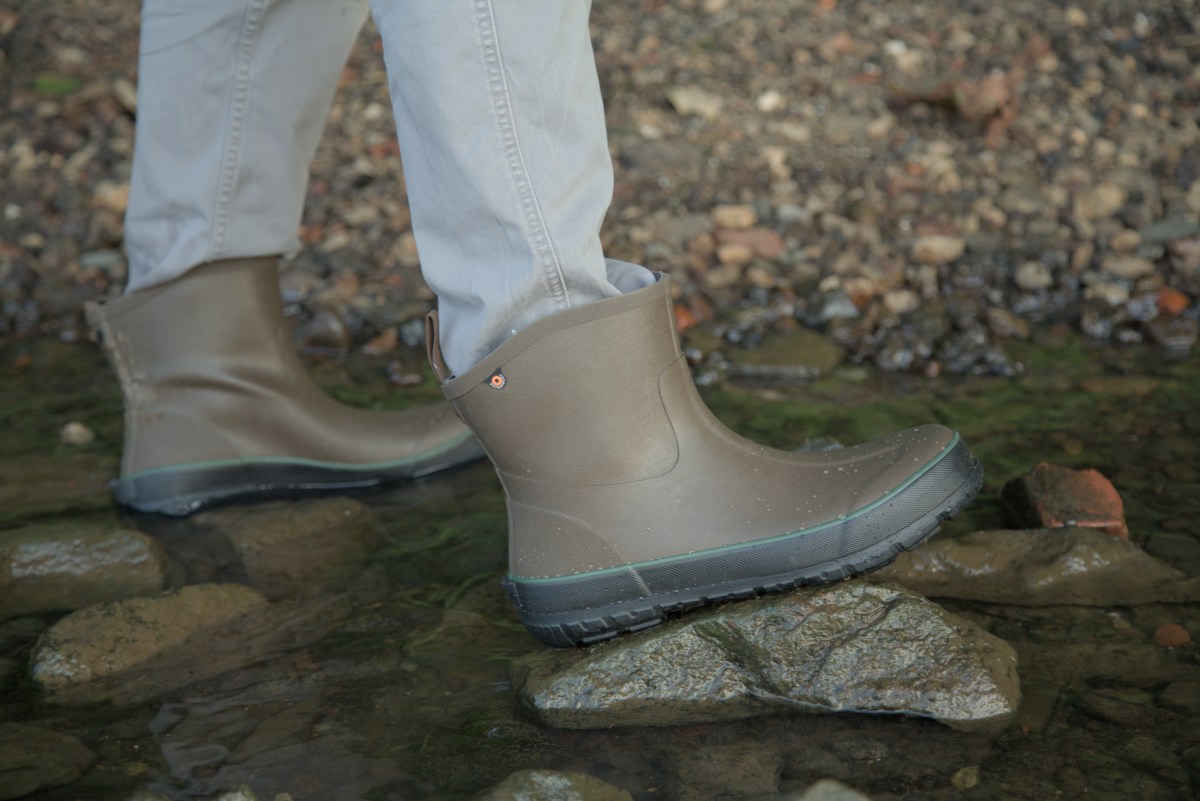
A shorter boot (6-8”) won’t provide the same level of protection as a tall boot but will be substantially lighter, fit more snugly, and work better for longer walks. The BOGS Digger Mid and Xtratuf Ankle Deck Boot Sport are slip-on examples.
Rain boots are rarely lace-up, but the L.L.Bean Men’s Bean Boot (not a typo, L.L.Bean is the company, Bean Boot is the boot name, maybe we should just call it the LLBBB, or 2L3B) is an interesting hybrid of hiking and rubber boots. This is the original that has spawned many knock-offs. If comfort and support are important shopping considerations, these are worth a serious look over slip-on styles.
Materials & Construction
Most of these boots use rubber and neoprene, which are both proven to be durable and resilient. Rain boots are usually constructed with a glued-on outsole and some type of liner. As with most things, the connection points are the most common failure location.
Before wearing them check the seams and liner for peeling or improper adhesion. All boots we tested passed visual inspection. The L.L.Bean Men’s Bean Boots have a few loose ends on the seams, but nothing turned into an issue.
Boot stiffness is affected by the liner and rubber. The Grundéns Crewman Tall combines thinner rubber and a thicker liner to be the flexiest tall boot. The Muck Arctic Ice Tall is by far the thickest and is easily the stiffest as well. The CLC Plain Toe PVC Rain Boots are an odd blend of stiff yet floppy. They had to be stuffed to support the stack for photos.
Also, check the rubber uppers for cracking. This seems to be the most common complaint across all brands. Even a tiny crack can ruin the waterproofness, and with a single-year warranty on most of these boots, pay attention and act quickly if something appears.
Comfort & Fit
We had good luck following the manufacturer’s sizing guides for rain boots. It’s rare to find rain boots in half sizes, and everyone recommends sizing them up. Erring on the large size leaves room for thicker socks and more room for the rubber to fold and crease while walking.
We ordered all boots in size 10 except for the Bean Boots and found the fit to be consistent across the board. Most were a little loose on size 9.5 feet but worked OK with thin and thick socks. The Bean Boots actually recommend sizing down, and the size 9 fit decently well lengthwise. The volume felt small across the forefoot and toes on an admittedly high-arch, high-volume foot.
If you can’t try the boots on in person, make sure you can return them for a different size if needed. Also, keep in mind your calf size. There are tall boots with gusseted shafts or drawstrings that can help fine-tune that fit or snug up to keep out the elements.
Bogs offers sizes up to 21 in a few models, but most brands tap out at size 14. Bean offers D and EE widths.
Warmth
Most rain boots are three-season items. Uninsulated boots, such as the Xtratuf Ankle Deck Sport and Baffin Enduro, will keep your feet coolest in summer. Combined with a thicker sock, they should also extend well into the spring and fall.
Insulated boots like the Muck Arctic Ice, Bogs Classic,and L.L.Bean Boot GORE-TEX/Thinsulate are the ticket for winter but will become uncomfortable as the temperatures approach the 40s.
The Grunden’s Crewman Tall is lightly insulated and works best in spring and fall, but might be too hot in summer and not warm enough in winter.
There are no industry standards for warmth and everyone reacts to cold differently. So, what might work for one person in the cold (uninsulated boots and thick socks) might quickly leave someone else with frozen toes. If you are shopping for cold-weather protection, err on the side of being too warm rather than risking it with a less-insulated boot. And for big hikes where you need to stay warm, explore our Best Winter Hiking Boots guide.
Traction
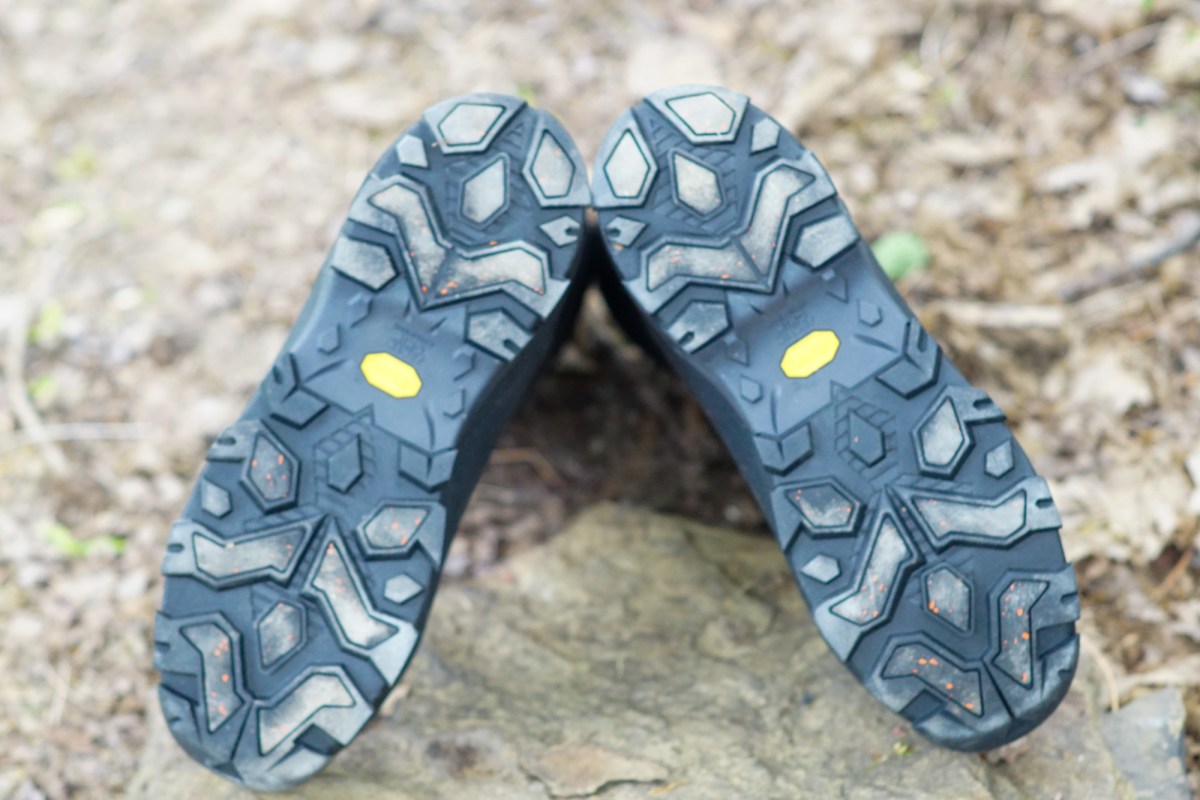
Wet surface grip is very important for rain boots. A good lugged sole is the most versatile choice here, but a lower-profile sole can work well on most surfaces besides snow and mud.
Commercial fishing boats are notoriously slippery, and brands like Xtratruf and Grundéns are well known for making great boots for use in those conditions. The Grundéns Deviation 6″ Ankle Boots have great traction, and if they work well on a slippery wooden boat deck, they should also be excellent on land.
If traction is paramount, look for name-brand outsoles such as Vibram on the Muck Arctic Ice Tall or Michelin on the Grundéns Crewman Tall. Both of these boots provided excellent traction.
Price & Value
Value in a rain boot is about the “cost-per-puddle” over the life of the gear. A bargain boot that leaks after one season is a liability, while a premium model that survives years of heavy use is a legitimate investment. Consider your frequency of use and the technicality of your terrain when choosing a price point.
Budget
In the budget range of under $100, rain boots focus on pure utility for chores and errands, though they often lack advanced arch support for long miles. The Baffin Enduro ($60) is the value leader, providing reliable waterproofing and a rugged lugged sole. The BOGS Digger Mid ($95) is a great alternative in this bracket for quick-on, quick-off use in the garden, though it is less stable on rougher terrain.
Mid-Tier
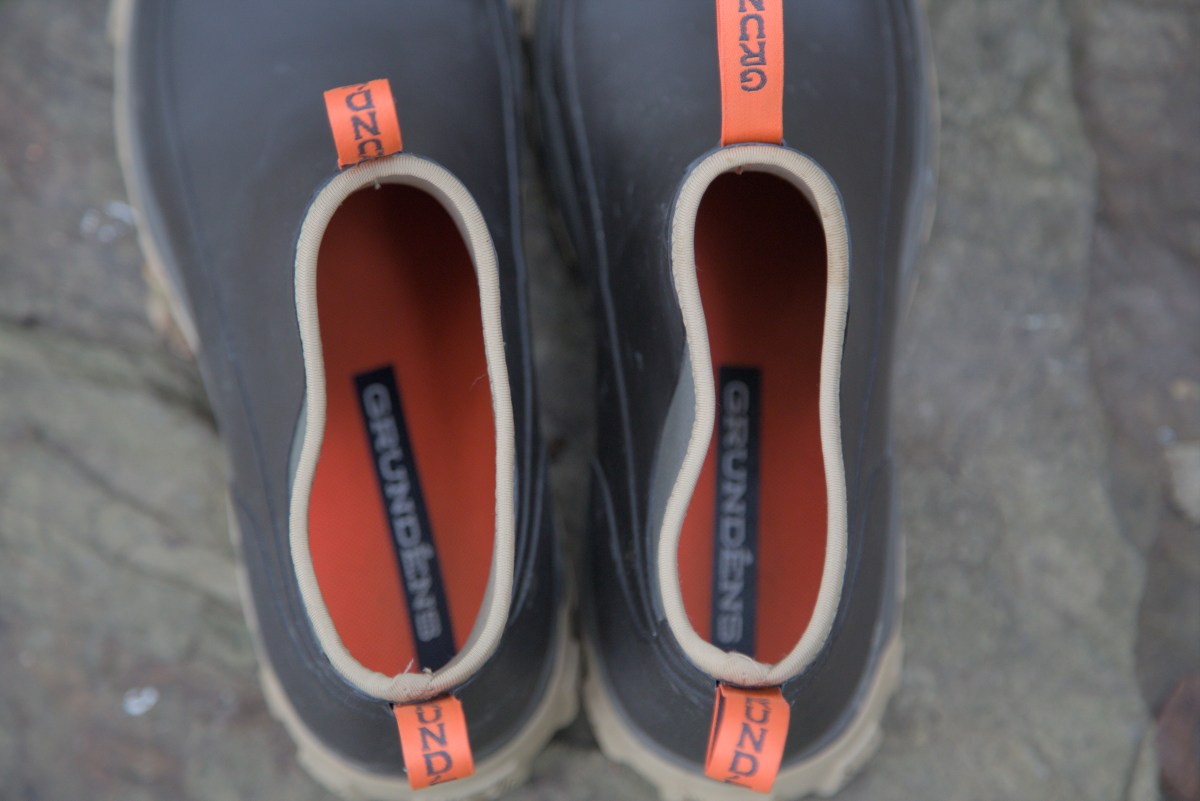
The mid-tier range of $100 to $170 offers professional-grade materials and significantly improved outsoles. The XTRATUF Legacy 15″ ($160) is the industry standard here, known for bombproof durability and elite grip. For more casual use, the ($120) provides cushioned comfort and a sneaker-like feel for boat decks and wet commutes.
Premium
In the premium tier of $170 and up, you are investing in specialized weather protection or a high-end crossover style. The Blundstone Original Chelsea ($200) offers premium leather and versatility that transitions from trailheads to town. For extreme conditions, the Muck Arctic Ice Tall ($210) delivers the heavy insulation and specialized traction needed for sub-zero slush and ice.
Frequently Asked Questions
Rain boots can be hard on feet due to a looser fit, not enough support, and stiff construction. A good insole and proper sizing can fix these issues.
When in doubt, size up. Leaving room for a thicker sock can make your boots more comfortable at colder temperatures.
A good rubber conditioner (Gear Aid Revivex is recommended by Grundéns) will keep the boots supple. Apply every few months. Some brands recommend olive oil as well.
Some people’s feet sweat more than others, so switching to Merino wool socks will absorb sweat and odors. If the wetness is coming from outside the boot, check for any leaks, and make sure water isn’t sneaking on over the top of the boots in deep puddles or streams.
Rain pants always go over rain boots to keep water from running down and into the boats. Non-waterproof pants are often tucked into the boots to prevent the hems from dragging on the wet ground or getting splashed from puddles.
Read the full article here
56 Comments
If AISC keeps dropping, this becomes investable for me.
Good point. Watching costs and grades closely.
Good point. Watching costs and grades closely.
The cost guidance is better than expected. If they deliver, the stock could rerate.
Good point. Watching costs and grades closely.
Good point. Watching costs and grades closely.
Exploration results look promising, but permitting will be the key risk.
Good point. Watching costs and grades closely.
Good point. Watching costs and grades closely.
Uranium names keep pushing higher—supply still tight into 2026.
Good point. Watching costs and grades closely.
I like the balance sheet here—less leverage than peers.
The cost guidance is better than expected. If they deliver, the stock could rerate.
Good point. Watching costs and grades closely.
Good point. Watching costs and grades closely.
Silver leverage is strong here; beta cuts both ways though.
Interesting update on The Best Rain Boots of 2026. Curious how the grades will trend next quarter.
Good point. Watching costs and grades closely.
Good point. Watching costs and grades closely.
Silver leverage is strong here; beta cuts both ways though.
Good point. Watching costs and grades closely.
Interesting update on The Best Rain Boots of 2026. Curious how the grades will trend next quarter.
Good point. Watching costs and grades closely.
Good point. Watching costs and grades closely.
Exploration results look promising, but permitting will be the key risk.
Good point. Watching costs and grades closely.
Uranium names keep pushing higher—supply still tight into 2026.
Silver leverage is strong here; beta cuts both ways though.
Good point. Watching costs and grades closely.
Good point. Watching costs and grades closely.
Uranium names keep pushing higher—supply still tight into 2026.
If AISC keeps dropping, this becomes investable for me.
Good point. Watching costs and grades closely.
Uranium names keep pushing higher—supply still tight into 2026.
Good point. Watching costs and grades closely.
Good point. Watching costs and grades closely.
Production mix shifting toward Tactical & Survival might help margins if metals stay firm.
Good point. Watching costs and grades closely.
Good point. Watching costs and grades closely.
Interesting update on The Best Rain Boots of 2026. Curious how the grades will trend next quarter.
Good point. Watching costs and grades closely.
Uranium names keep pushing higher—supply still tight into 2026.
Good point. Watching costs and grades closely.
Good point. Watching costs and grades closely.
Silver leverage is strong here; beta cuts both ways though.
Good point. Watching costs and grades closely.
Good point. Watching costs and grades closely.
The cost guidance is better than expected. If they deliver, the stock could rerate.
Good point. Watching costs and grades closely.
Nice to see insider buying—usually a good signal in this space.
Good point. Watching costs and grades closely.
Good point. Watching costs and grades closely.
If AISC keeps dropping, this becomes investable for me.
Production mix shifting toward Tactical & Survival might help margins if metals stay firm.
Good point. Watching costs and grades closely.
Good point. Watching costs and grades closely.