

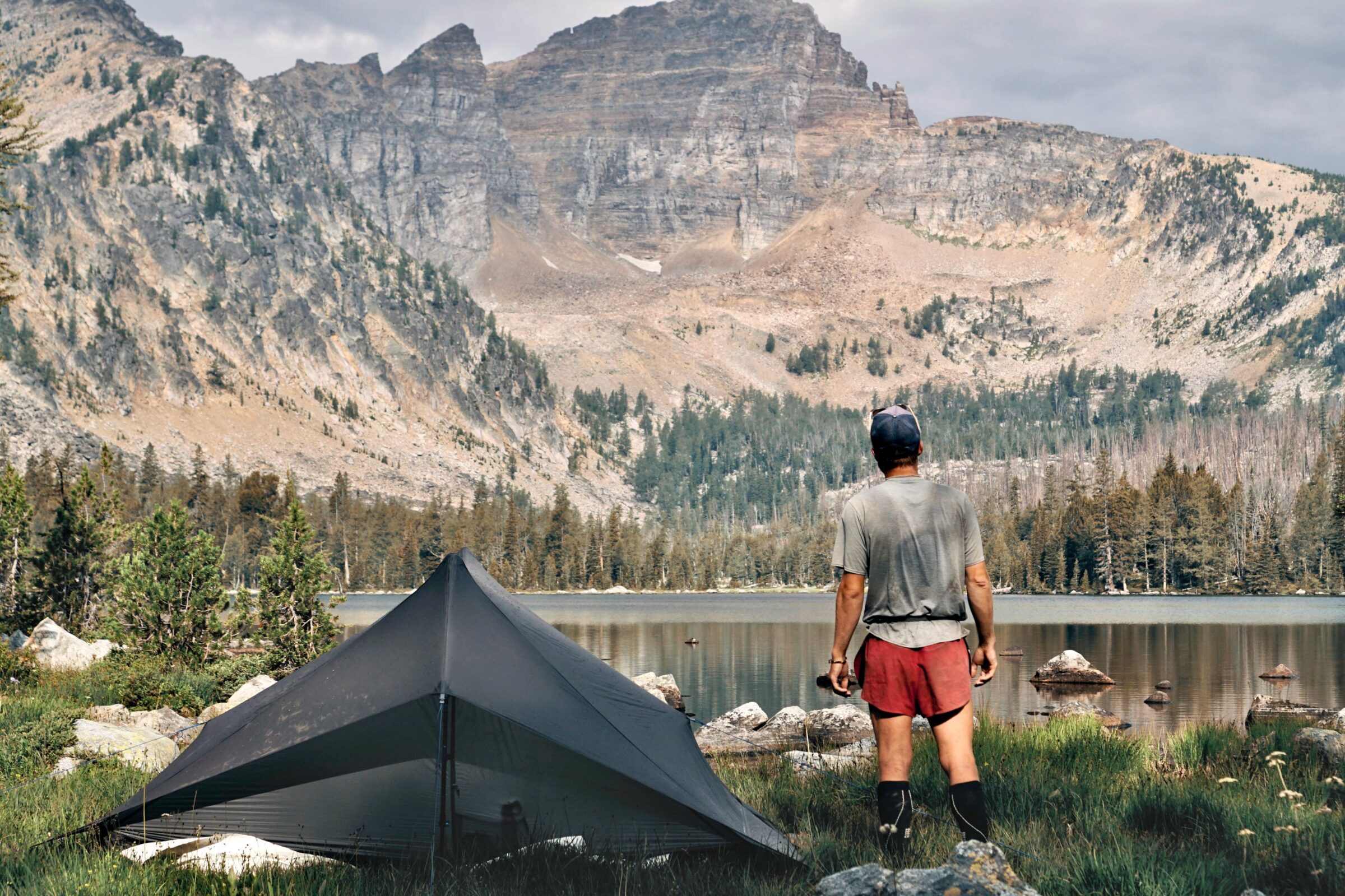
From full-blown thru-hikes to fast weekend missions, we’ve clocked some serious miles with the best ultralight tents. Most recently, lead tester Nick Belcaster logged 35 days across six months on the Pacific Crest Trail in Washington with a slate of four new shelters to determine our latest additions.
Our top pick, the Durston X-Mid 1, is a do-it-all shelter to hike the PCT or AT. Beginners can go for a more spend-wise option like the Gossamer Gear The One. We even cover semi-freestanding options like the Big Agnes Tiger Wall UL2.
We heavily consider a tent’s weight (double-checked with a kitchen scale), material, interior space, and footprint. Overall, our ranks are fleshed out by five thru-hikers, and we’ve put down 10,000 miles across the U.S with dozens of ultralight tents since 2020.
Editor’s Note: We updated our Ultralight Tents guide on May 7, 2026, to add our tent-to-tent comparisons, ‘Bottom Line’ summaries, and concise service information.
The Best Ultralight Tents of 2026
Best Overall 1-Person Ultralight Tent
8.9/10 RATING
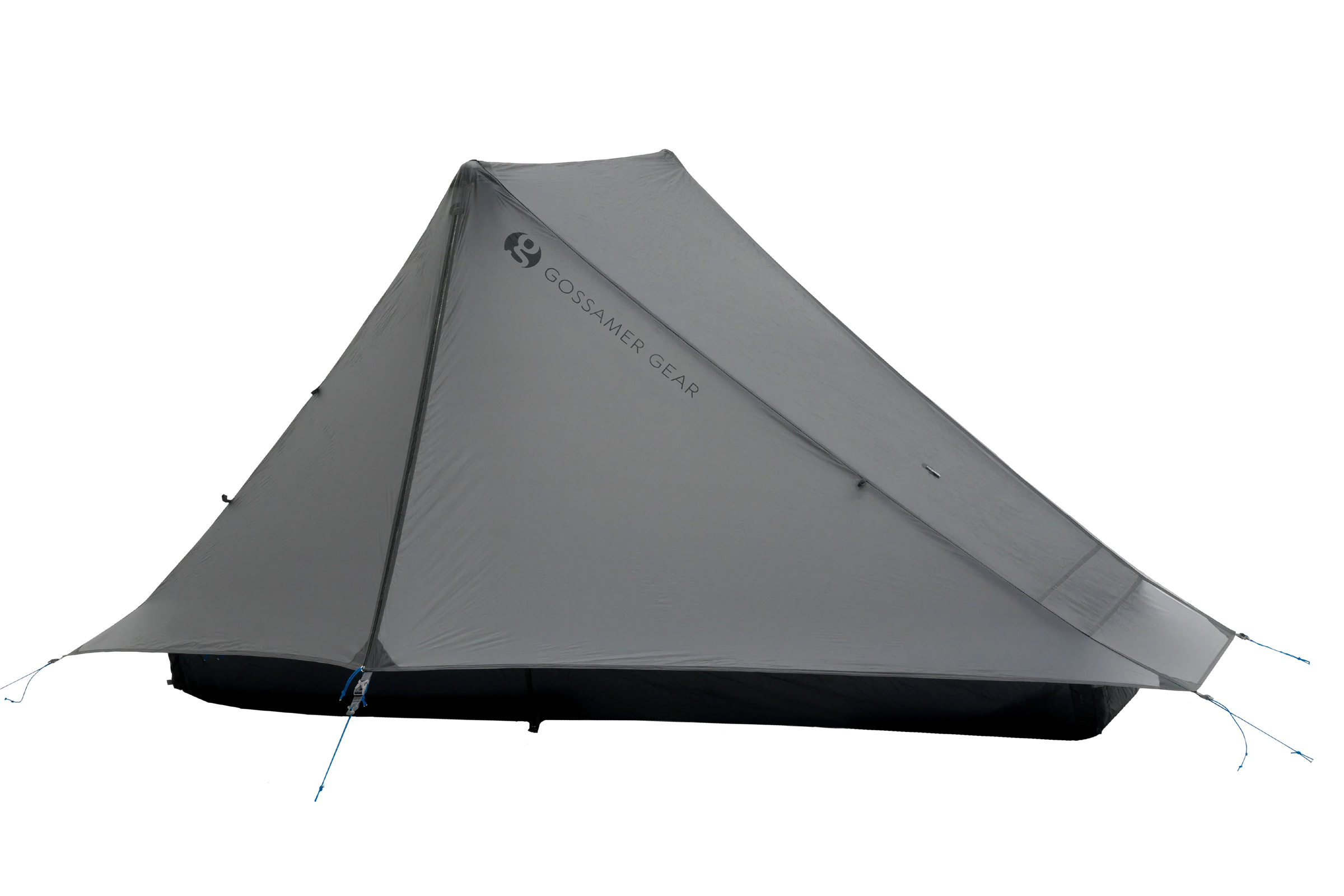
Best Budget Ultralight Tent
7.5/10 RATING
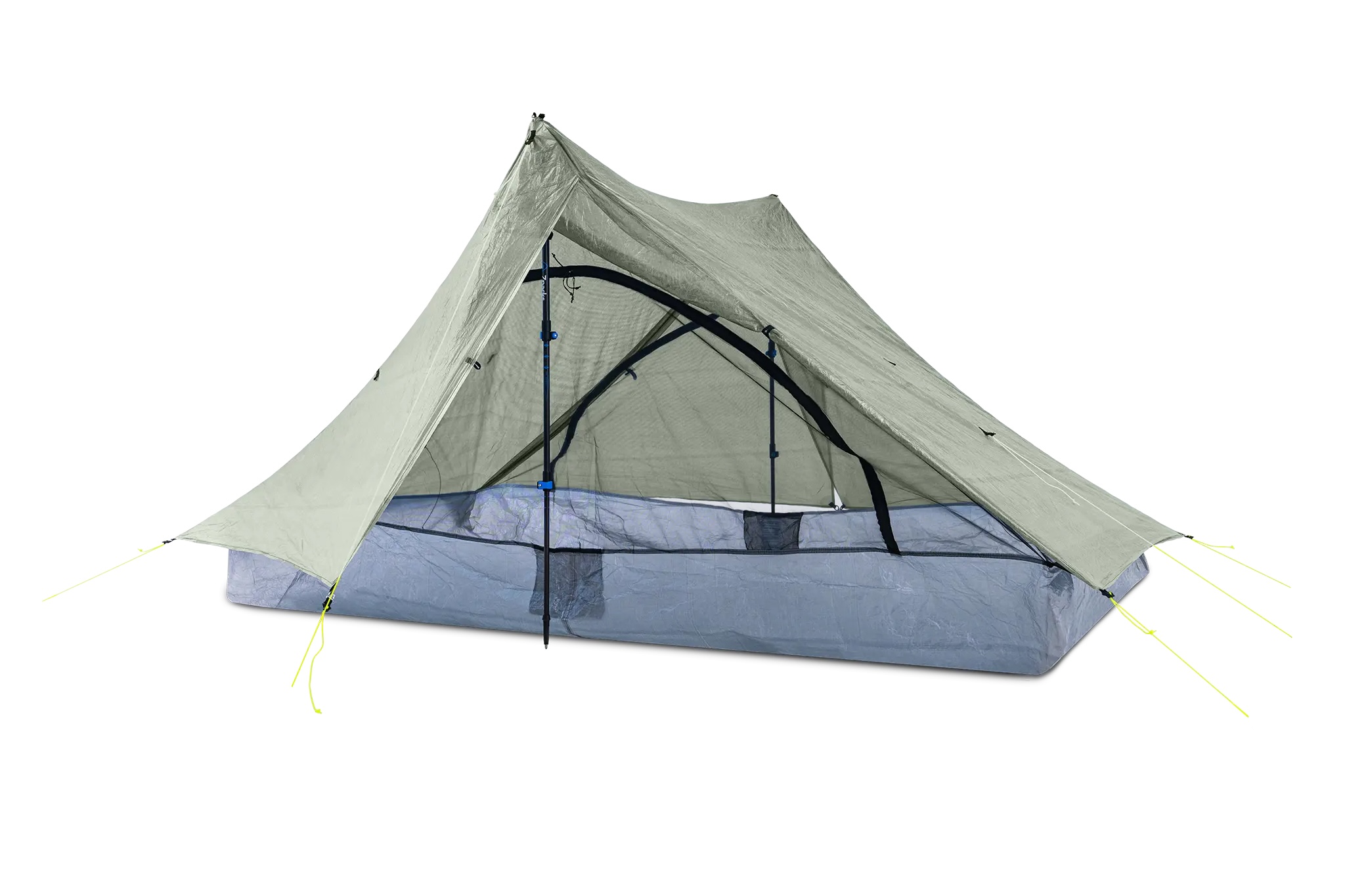
Best 2-Person Ultralight Tent
8.4/10 RATING
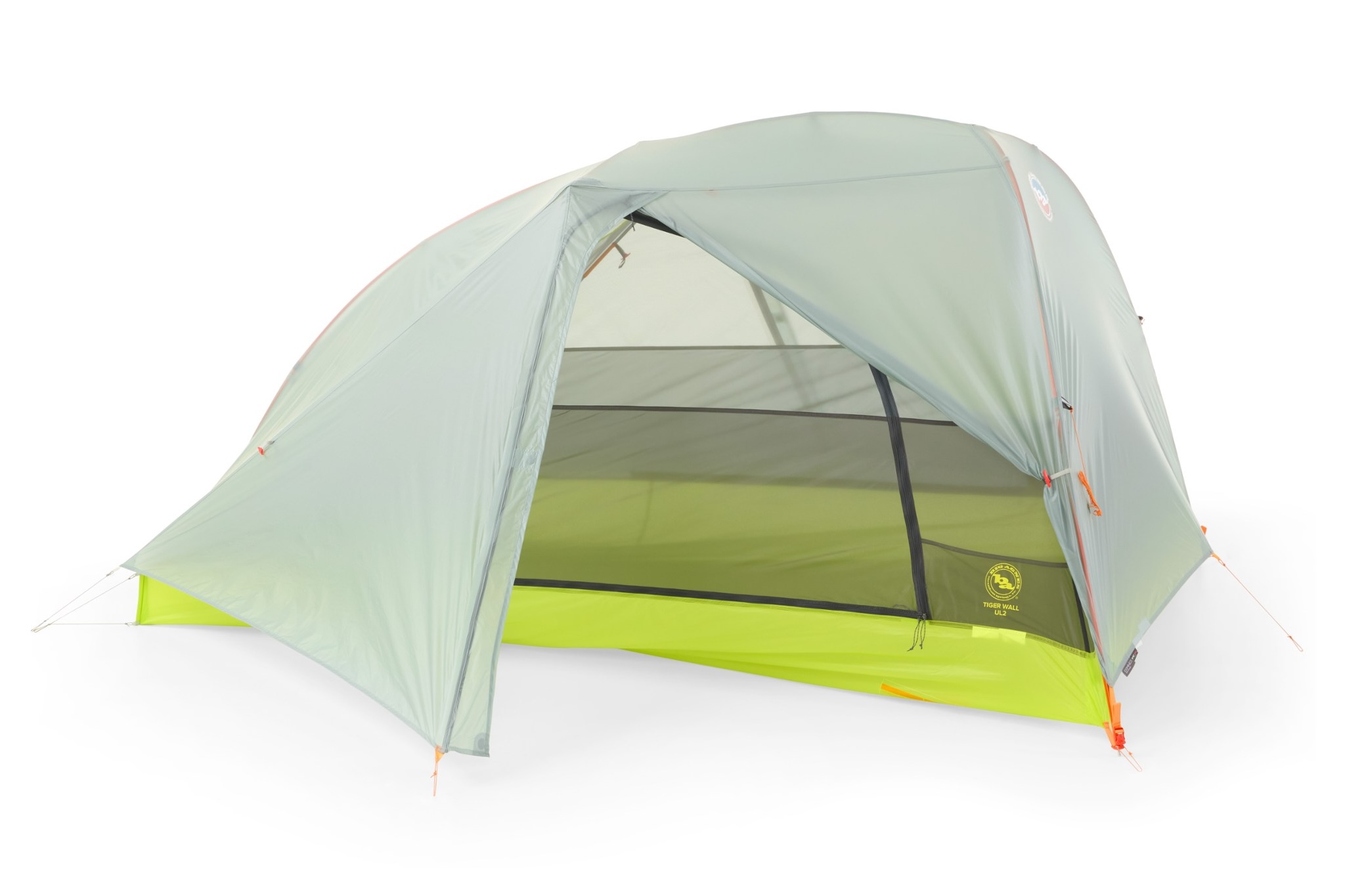
Best Freestanding Ultralight Tent
7.9/10 RATING
Best Single Trekking Pole Ultralight Tent
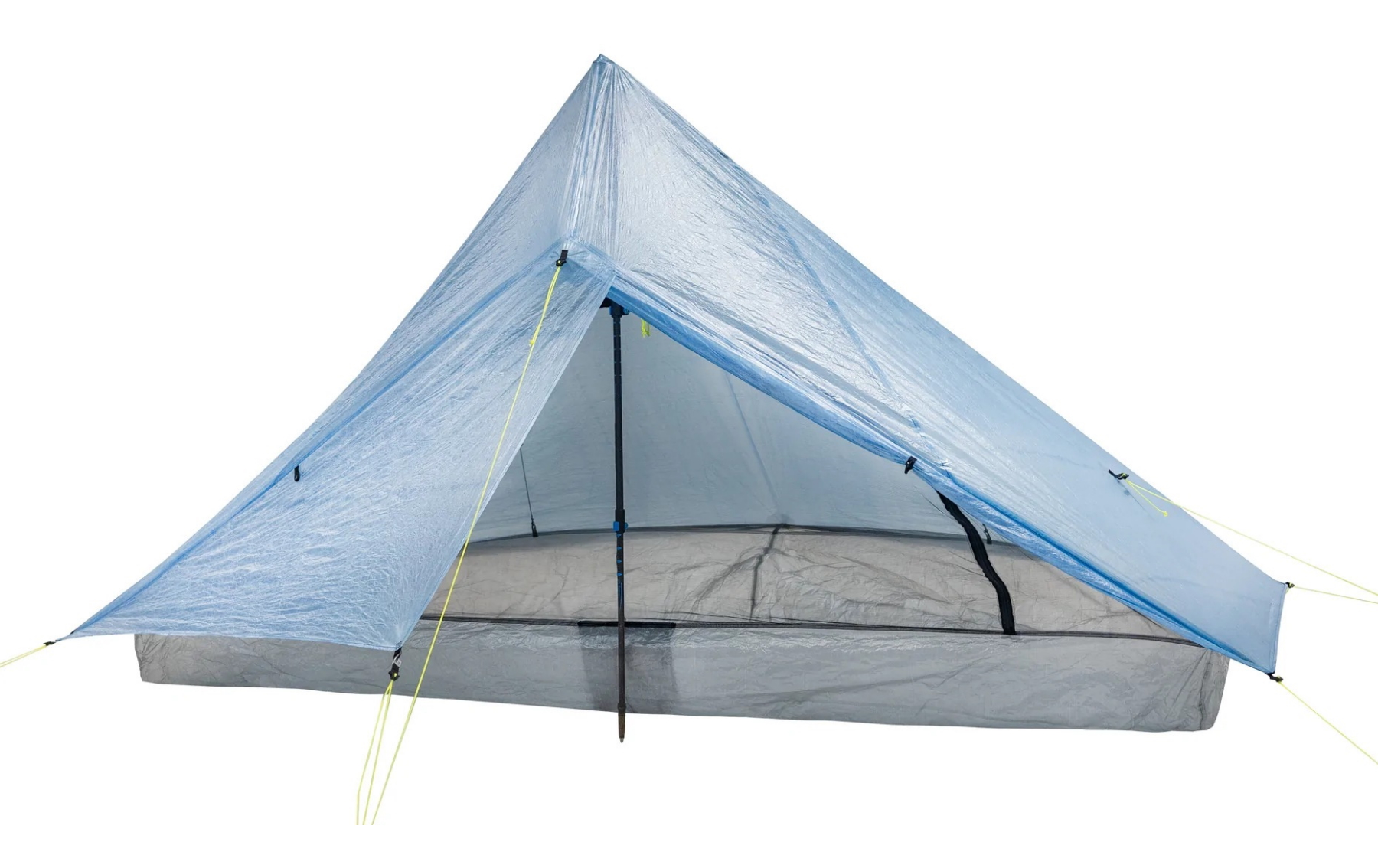
8.2/10 RATING
Best Ultralight Tarp
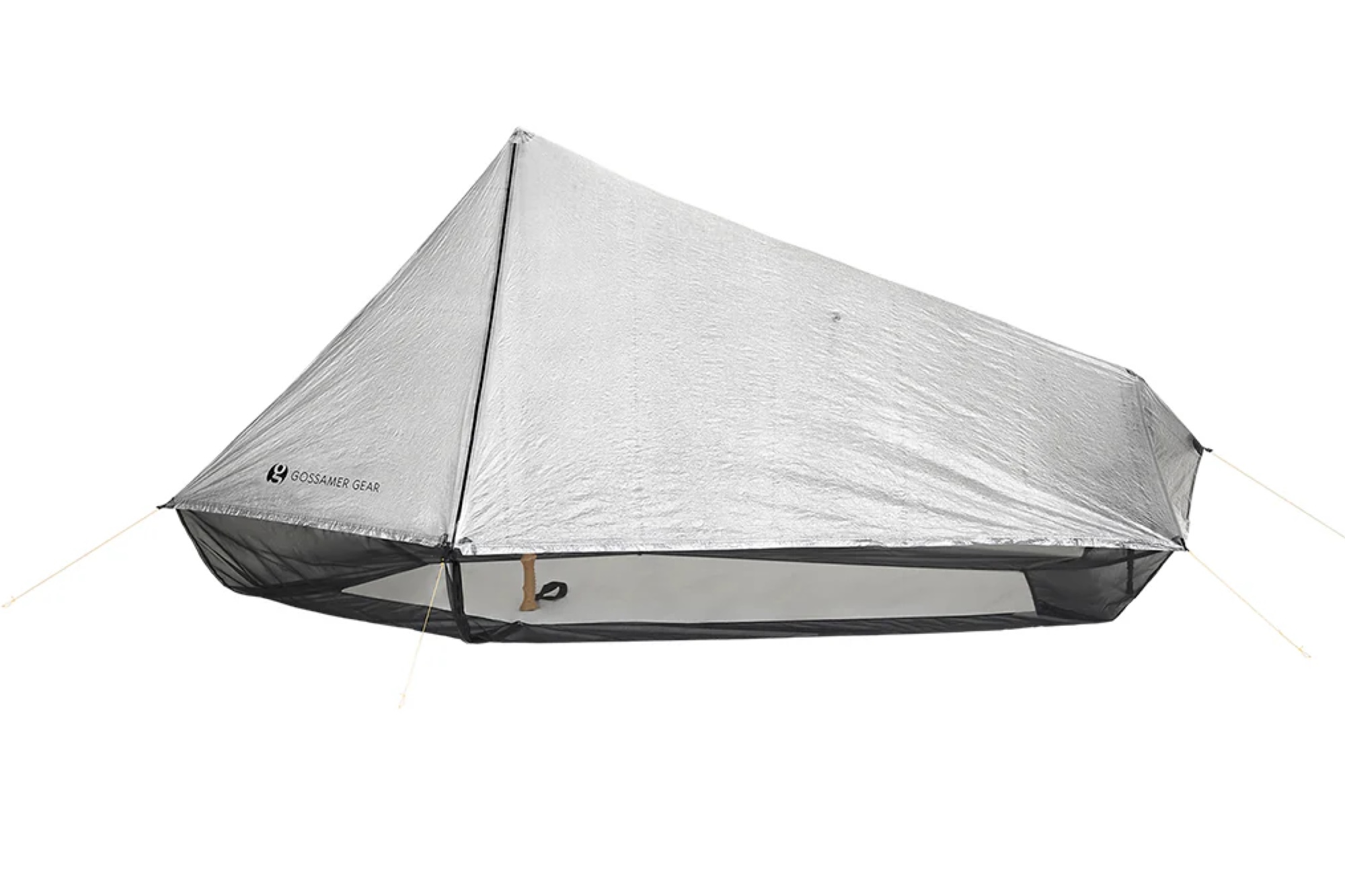
8.1/10 RATING
Most Spacious Ultralight Tent
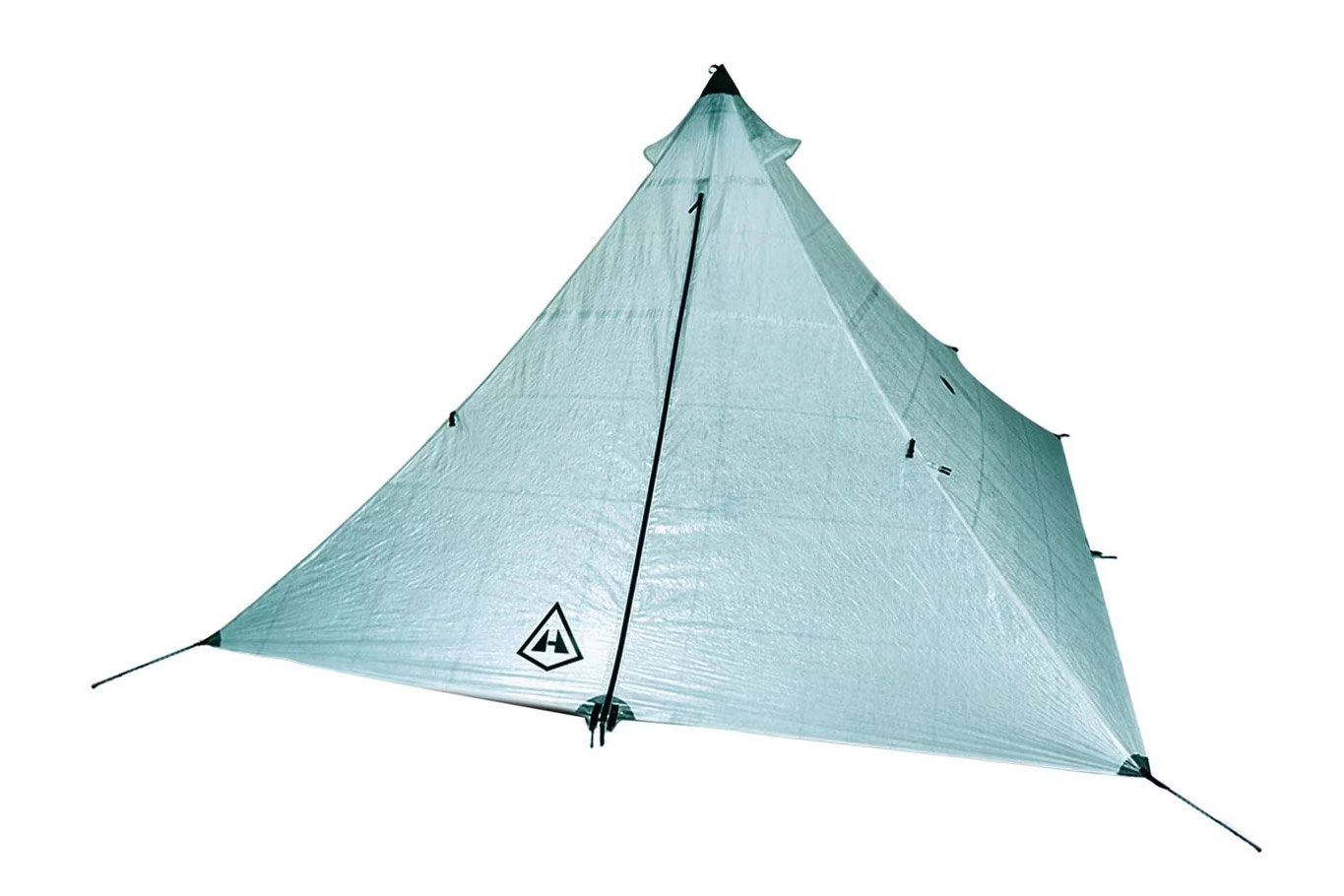
7.9/10 RATING
See more picks
Measured Trail Weight
1 lb., 11.9 oz; tent 25.6 oz; stuff sack 0.3 oz; 6 stakes ~ 2 oz.
Floor Space
46.5 sq. ft. (fly); 20 sq. ft. (insert)
Materials
20-denier polyester with 2,500 mm sil/PEU coating
Vestibule Area
20 sq. ft. (10 sq. ft. x 2)
Pros
- Durable construction
- Unique, double-wall design
- Simple, four-stake pitch
- Affordable
Cons
- On the heavier side for an ultralight tent
- Small internal storage pockets
- Guy lines are a bit difficult to adjust
Read Review: Ultralight Tent to Weather Serious Storms: Durston X-Mid 1 Solid Review
Bottom Line: An engineering marvel using an offset pole design for maximum volume. This double-wall shelter pitches easily and keeps condensation to a minimum.
With a unique geometric design, stellar weather resistance, and an approachable price point, the Durston X-Mid 1 ($269) is making a significant splash in the ultralight backpacking community. We decided we needed to get our hands on one of these after seeing a few on a recent overnight into the Grand Canyon. These things are blowing up — and for good reason.
First, it’s extremely intuitive to pitch, requiring under half the time as some other ultralight shelters we’ve tested. The tent can be pitched with a minimum of four stakes and requires little guesswork on stake location. We aren’t aware of any other shelter using two trekking poles that boasts this ability.
This is due to its rectangular design with offset trekking pole locations between a diagonal sleeping area. This effectively maximizes sleeping and vestibule space, utilizing a shape that handles wild wind and snow like a champ. The X-Mid is also a double-wall shelter, and the removable mesh inner has a waterproof bathtub floor that easily clips into the tent or can be removed to shave weight.
We barely have any complaints about this lightweight phenomenon, but some slight cons stood out. The X-Mid is on the heavy side for an ultralight shelter (30.8 ounces), which is a turnoff for many in the ultralight community. We also found the guy lines to be a bit difficult to tighten, and we wish there were bigger storage pockets in the mesh insert.
These gripes aside, we think the X-Mid is one of the best trekking pole-style ultralight tents you can buy. Its thoughtful design and quality materials make this a reliable, spacious escape from the elements for rugged forays into the backcountry.
Zpacks Plex Solo: Trading Some Comfort For Ounces
While the X-Mid 1 utilizes a dual-pole, double-wall setup for maximum livability, the single-pole Plex Solo strips everything back to a single-wall, sub-14-ounce footprint. You lose the X-Mid’s dual vestibules and the ability to pitch the inner mesh separately, but you gain a tent that is half the weight and easier to squeeze into tight campsites. Our take: The Plex Solo is for the miles-per-day hiker who prioritizes a featherweight pack above all else, whereas the X-Mid 1 is for backpackers who want a storm-worthy home with a bit more breathing room.
Durston X-Mid Pro 1: The DCF Upgrade
The X-Mid 1 Pro takes the Durston geometry and optimizes it with premium materials. While the standard X-Mid 1 uses a silpoly double-wall design that is more modular and packable, the Pro version moves to a single-wall DCF fly that slashes weight by nearly a pound. You get the same interior volume and easy pitch, but you lose the modularity: the Pro’s floor is integrated, so you can’t leave the inner at home like you can with the standard version. Our take: If you can afford the $350 price jump, the X-Mid 1 Pro offers the best of both worlds — massive space and dual-pole stability.
Measured Trail Weight
1 lb., 3 oz.
Floor Space
(LxWxH) 84 x 33/21 (head slightly wider)
Materials
Custom 10-denier nylon ripstop SIL/PU fabric
Vestibule Area
10 sq. ft.
Pros
- Super spacious floor space
- Solid strength-to-weight ratio
- Affordable pricing
- L-zipper doors don’t drag in the dirt
- Silpoly canopy won’t stretch as much as silnylon
Cons
- Condensation tends to build up pretty easily
- Internal mesh pockets are placed a little awkwardly
- Silpoly material won’t be as durable as silynylon
Bottom Line: A spacious, budget-friendly silpoly shelter that won’t sag in rain. Master the vents to manage condensation in this single-wall classic.
Paul “Pie” Ingram is a thru-hiker based in Helsinki, Finland, and has checked off the AT, Annapurna Circuit, CDT, and more than 400 miles of the High Sierra Trail. Ingram’s favorite tent is the Gossamer Gear The One ($315) — a budget-friendly shelter that nails the design and keeps costs down by offering it in an affordable silpoly material.
“The One tent provides a huge amount of livable space for its weight compared to many similar tents on the market. It provides more protection from the elements than lighter options, such as a tarp and bivy. It’s not as light as some tents made with Dyneema Composite Fabric, but it’s cheaper and arguably more durable,” said Ingram.
This tent has accompanied him across more than 3,000 miles and more than 180 nights on trail. So far, the tent shows zero issues, abrasions, or holes. The tent body and floor are constructed from a custom 15-denier silpoly material, which won’t stretch as much as silnylon, and is certainly cheaper than DCF.
Senior Editor Chris Carter is another die-hard fan of The One. He recently used it on a 5,000-mile back-to-back thru-hike of the CDT and AT, and he lauds The One’s ability to keep up with the best of the best. It may not boast all the bells and whistles of other ultralight brands — but it sure does punch well above its weight.
The Six Moon Designs Lunar Solo is another budget-wise shelter we’d recommend checking out, and while it’s almost half a pound heavier, it does shrug off condensation a bit better. The single-pole design of that tent will mean less headroom, and this is the main reason we lean on The One more often when recommending an ultralight shelter that’s also lightweight on your wallet.
Six Moon Designs Lunar Solo: The Budget-Friendly Alternative
The Lunar Solo is a single-wall pyramid shelter that trades a few ounces for an increase in floor space. The One uses a two-pole design to create superior headroom and vertical sidewalls, but the Lunar Solo relies on a single 49-inch center pole that creates a steeper hexagon shape. The Lunar Solo also uses a heavier 20D silpoly fabric compared to the ultralight 10D nylon on The One, making it more durable and less prone to misting in downpours. Our take: If you want enough room to bring all your gear inside, the $260 Lunar Solo is the better value. However, if you prefer a side-entry that lets you sit up comfortably without hugging a center pole, The One is hard to beat.
Gossamer Gear The Two: The Two Person Version
The Two is the scaled-up sibling of The One, designed to accommodate two hikers (or one with a lot of gear). While The One is a focused shelter that prioritizes a sub-20-ounce trail weight and a small footprint for tight campsites, The Two expands the floor plan to a wide 48-inch head width and adds a second door and vestibule. This transformation adds roughly 6 ounces to your pack, but it changes the experience by allowing for cross-ventilation, a critical feature for managing condensation. Our take: The $65 price increase and minor weight penalty are well worth it for solo hikers who feel claustrophobic in traditional 1P tents.
Measured Trail Weight
1 lb., 4.3 oz; tent body 18 oz; stuff sack 0.3 oz; 6x stakes ~2 oz.
Materials
Dyneema (0.55 oz./sq. yd.)
Vestibule Area
11 sq. ft.
Pros
- Spacious floor plan
- Impressive weather protection
- Thoughtful zipper-free construction
Cons
- Expensive
- Set up takes time to master
- Requires large area, stakes, and guylines
Bottom Line: A classic design that has earned its stripes on long trails across the world. The DCF A-frame design hangs on two trekking poles, but the shelter is spendy, and won’t last forever.
Now with 3,000+ miles on it, the Zpacks Duplex Classic ($749) that thru-hiker Nick Belcaster has used since 2018 is getting long in the tooth, but it’s proven to still be one of the best UL 2-person shelters available in 2026.
The two trekking pole A-frame design is now well represented in the UL world, but the Duplex was one of the OGs, and it’s still a stellar structure for balancing interior space and stormworthiness. Unlike single-pole shelters like the Zpacks Plex Solo that require a 130cm+ trekking pole (or a pole jack), the Duplex sets up optimally at around 120cm, and only requires six stakes to get it upright.
We’ve measured interior sleeping space on the Duplex, and at a height of 120cm, you get a solid 45″ of width and 90″ of length, allowing for two 20″ wide pads to be used (but notably not two 25″ wide ones). Livability during a PCT thru-hike with a partner was good enough, but some shuffling does come with the territory.
The entry into the tent is through a rainbow zipper on either side, which isn’t our favorite as it tends to lay the zipper into the dirt. If this is a deal-breaker, you could consider the new Duplex Pro, which subs in L-zippers (along with a wider floor that will accommodate 25″ wide pads).
With an entire thru-hike (and more) of use, a few durability issues will become apparent: The first is the door zippers, which will become sticky with use. Thankfully, Zpacks has repaired these in our shelter, along with patching the number of pinholes that the canopy will develop after 2,000+ miles. These are simple enough to fix yourself, but also something to watch for.
If you’re after the best 2-person UL tent, it’s tough to do better than the Duplex Classic.
3F UL Gear Lanshan 2 Pro: The Budget Disruptor
The Lanshan 2 Pro attempts to steal the Duplex’s lunch money by offering a similar trekking-pole-supported silhouette at a fraction of the cost. While the Duplex relies on pricey DCF, the Lanshan 2 Pro utilizes a 20D SilNylon or SilPoly that requires a bit more care during the pitch to account for fabric stretch. Our take: You’re trading away the set-it-and-forget waterproofness of Dyneema for a 32-ounce shelter that performs well above its $180 price tag, making it the definitive choice for the entry-level gram-counter who isn’t afraid of a little DIY maintenance.
Durston X-Mid 2 Pro: An Offset-Pitch Alternative
The X-Mid 2 Pro utilizes an offset pole geometry that eliminates the trekking-pole-in-your-face problem of the Duplex. The Zpacks tent requires a perfectly rectangular pitch to avoid sagging, but the X-Mid’s parallelogram floor plan naturally tensions the canopy, creating a wind-shedding shape with zero mandatory guylines. It offers a 52-inch floor width that easily swallows two wide sleeping pads, a feat the Duplex’s 45-inch floor can’t match. Our take: If you have the patience to find a larger campsite to accommodate its footprint, the X-Mid 2 Pro offers superior livability for just a few extra grams.
Materials
HyperBead recycled 15-denier ripstop nylon fly and floor, polyester mesh canopy
Vestibule area
16 sq. ft.
Pros
- New HyperBead fabric is 25% more waterproof and 6% lighter than previous version
- Two doors for easy entry and exit with two hikers
- Semi-freestanding shape sets up almost anywhere
- Canopy storage on the interior
Cons
- Weight north of 2 pounds is trending out of UL territory
- Foot end of the tent is fairly low volume
- Floor dimensions are snug, and won’t allow wide sleeping pads
Bottom Line: The lightest semi-freestanding gateway to ultralight. Its 15-denier floor is paper-thin, making a dedicated footprint mandatory for rocky backcountry sites.
At just north of 2 pounds, the semi-freestanding Big Agnes Tiger Wall UL2 ($500) is just about the lightest non-trekking pole shelter you’ll ever get your mitts on. We think it’s the one to snag if you want the versatility of setting up nearly anywhere, or just don’t hike with walking sticks.
The design saw a revision in early 2025, which introduced Big Agnes’ HyperBead fabric — a new 15-denier nylon material that the brand claims is 25% more waterproof and 6% lighter than the previous. We’re big fans of trimming weight wherever possible on our UL shelters, and doing so on the entire fly and tent inner pays out some good dividends. The 2-person version of the Tiger Wall specs out at 2 pounds, 3 ounces, which is double what many UL shelters come in at, but you do get some added versatility in being able to set up in more austere environments, such as on slickrock.
That new fabric is skinned onto an already-proven semi-freestanding design that uses a two-pole setup as its backbone. The larger of the two 8.7 mm DAC aluminum poles is a hubbed design that forks into two struts that form the head of the shelter and angle down fairly sharply to maximize the available headroom. The single cross pole at the peak of the tent gives you and your tent-mate space when sitting up, but we will note that the foot end of the Tiger Wall is a snug fit for most.
Unlike many trekking-pole supported tents, the Tiger Wall actually sports some interior organization options on the ceiling of the canopy, in the form of an overhead pocket for wrangling headlamps and such, and a foot end sleeve for other small kit. This is obviously a bit of a luxury, but it does get stuff up and off the floor, which is otherwise snug for two 20″ wide sleeping pads.
Oddly, Big Agnes revised the packsack for the Tiger Wall as well, making it a more all-in-one stuff sack that’s heavier than previously, while offering little sleeves for things like your tent stakes. We’re not typically into systems like this in our UL shelters and often opt to free-stuff the tent into our packs to cut a few ounces.
We’ve tested a handful of other freestanding-style UL shelters, including the NEMO Hornet Elite and Hyperlight Mountain Gear CrossPeak, but keep coming back to the Tiger Wall as the most well-rounded, livable, and affordable. Solo hikers are probably better served by the brand’s single-door Fly Creek HV UL1 tent, another semi-freestanding shelter that trims the second door (and half a pound), but one that can feel cramped when real weather comes in.
NEMO Hornet Elite OSMO 2P: Lighter, But A More Cramped Interior
The Hornet Elite OSMO is the Tiger Wall’s most direct competition in the semi-freestanding weight class, undercutting it by a few ounces. Both use a single-pole Y hub design, but the Hornet uses a more aggressive taper at the feet to shed weight, landing at a trail weight of just 1 pound, 15 ounces, compared to the Tiger Wall’s 2 pounds, 3 ounces. Price may be the biggest gulf between these two tents, with the Hornet Elite running an extra $200 over the Tiger Wall’s $500. Our take: If you want a double-wall shelter but refuse to carry a gram over two pounds, the Hornet Elite is the sharper tool. Just be prepared for a slightly more cramped interior (and to spend a good bit more).
MSR Hubba Hubba LT 2: A Livability Upgrade (But Not Quite UL)
Updated in 2026, MSR’s LT (Lightweight) version bridges the gap between ultralight and traditional, offering a fully freestanding, symmetrical floor that doesn’t taper at the feet. This means you can fit two 25″ wide pads side by side without them overlapping, which is impossible in the Tiger Wall. At 3 pounds of trail weight, it’s heavier than the Tiger Wall, but you’re carrying vertical sidewalls and larger headroom in trade. Our take: Choose the Hubba Hubba LT if you’re hiking as a true pair and value a good night’s sleep over a lightweight pack; it’s the most livable tent in this category, even if it feels heavier than the Big Agnes.
Materials
Dyneema Composite Fabric (0.55 oz./sq. yd. canopy, 0.75 floor)
Vestibule Area
6.4 sq. ft.
Pros
- Extremely ultralight
- Well-ventilated
- Unique system of dealing with condensation buildup
- Only uses one trekking pole instead of two
Cons
- Expensive
- Somewhat annoying not having a zipper on the vestibule
Bottom Line: A 13.9-ounce minimalist dream using one trekking pole. The zipperless vestibule saves weight but remains finicky during high-wind midnight storms.
A sub-14-ounce, fully enclosed tent using only one trekking pole? Oh yeah. How Zpacks keeps managing to crank out top-shelf, ridiculously durable gear catered for the gram-conscious backpacking crowd, we’ll never know. But the Zpacks Plex Solo ($599) carries the torch of the brand’s reputation.
Retaining the durability and function we have grown accustomed to with Zpack’s flagship models like the Duplex, the Plex Solo shaves ounces by using a single 132 cm trekking pole, and implementing a no-frills, simple design. They’ve also eliminated zippers from the vestibule doors by using a metal hook. This system pares down on weight, but we did find it a bit more finicky to use late at night.
The Plex Solo maximizes space with a series of guylines that pull the fabric outwards from the center pole. But even with that space, condensation buildup plagues single-wall ultralight shelters the most. The Plex Solo addresses this with one of the best designs we’ve seen in the industry, and we’ve been mega thankful for the lack of drips on our sleeping bags in the morning.
There is a screen between the bathtub floor and the tent walls, which can be sloped downward by an elastic cord that keeps the bathtub elevated. This allows the condensation to run down the wall and fall through the sloping screen rather than onto the floor.
As one of the lightest, fully enclosed shelters you can buy, the Plex Solo is quickly becoming the gold standard for the ultralight and thru-hiking crowd. It’s just so hard to beat 13.9 ounces, with a design that doesn’t skimp on performance or comfort. If you’re staring down the barrel of a multi-month thru-hike, or just want an ultralight shelter for fast forays in the backcountry, look no further.
Durston X-Mid Pro 1: A Two-Pole Solo Shelter
If you are a SUL (super ultralight) hiker, the Plex Solo is the clear winner on the scale, weighing in at just 16.4 ounces compared to the X-Mid Pro 1’s 17.6 ounces (trail weights). However, weight is only part of the story. The X-Mid Pro 1 uses an offset design, which creates a larger interior and vertical side walls. While the Plex Solo feels like a weight-efficient cocoon, the X-Mid feels more spacious and accommodating. The X-Mid also hosts dual doors and vestibules, which are a big luxury for gear storage and ventilation. Our take: Both shelters are $599, so if you’re chasing ounces, the Plex Solo is the choice. If you’re willing to carry a smidge more, however, the X-Mid Pro 1 is a solid alternative.
Hyperlite Mountain Gear Mid 1: A Better Option For Tall Hikers
The Plex Solo is designed for the average hiker, while the Hyperlite Mountain Gear Mid 1 is built with a focus on length and durability. The Mid 1 is 6″ longer than the Plex Solo, making it a favorite for taller hikers who often find their sleeping bags pressing against tent walls. It also uses a DCF 0.96 weight floor compared to the 0.75 version used in the Plex Solo, making it marginally tougher (we still recommend a groundsheet for constant use). Our take: The Plex Solo remains the king of efficiency and weight, but it can feel cramped for anyone over 6 feet tall. If you are taller, the Mid 1 provides a more spacious experience.
Floor space
102″ x 49″ (head end), 25″ (foot end)
Materials
Dyneema Composite Fabric (0.51 oz./sq. yd. canopy)
Pros
- Lightweight with just enough protection
- Very versatile design without a floor
- Good amount of space for a single person shelter
- Pitches in tight sites
Cons
- Set up requires some adjusting to get just right
- Zipper lays in the dirt
- Price
Bottom Line: A 9.8-ounce shaped tarp with integrated bug mesh for minimalist soloists. This featherweight shelter requires precise trekking pole and stake placement to maintain its shape, but it’s easy to sneak into small spots.
The Gossamer Gear Whisper ($499) might have started as a passion project, but it’s now earned its spot among the top-tier single-person UL shelters. Not much more than a shaped DCF tarp with a hanging bug net, the Whisper lives up to its name and comes in at 9.8 ounces.
Compared to the Zpacks Plex Solo, the Whisper has several advantages. It’s lighter (the Plex Solo weighs 14 ounces) and sets up with two poles instead of one, which increases living space. Hikers above 6’ will often have trouble with the Zpacks shelter, whereas the Whisper has space to spare.
The hanging bug net is also an advantage, given your preferences. Using a separate ground sheet (we suggest polycro) means you aren’t married to using it every night, and it can be cycled out when it wears out. The DCF canopy is about the same weight for both shelters and is equally featherweight.
The setup on the Whisper is a bit of a dance and requires a certain order of operations to get the tension just right. You’ll also need adjustable length poles to get the 130 and 60cm poles needed to set up the shelter. Unsurprisingly, these are the maximum and minimum lengths of the brand’s popular LT5 Trekking Poles.
The zipper used is a waterproof style that should hold up in the long run, but care should be taken to keep it clean. This is the only real area of concern we had with the Whisper, as long-term use might gum up the teeth and render the zipper useless.
There aren’t many hanging bug mesh tarps on the market currently, with the Zpacks Hexamid and Six Moon Designs Deschutes being the exceptions. The Deschutes is a silpoly shelter and will save you $300, but it only sets up with a single center pole, and the Whisper certainly provides better footend height. If you’re after something more versatile than the Zpacks Plex Solo (or just want more headroom), the DCF Whisper is a solid option.
Zpacks Hexamid Pocket Tarp: A Single Pole Option (But No Bug Protection)
The Whisper is often compared to the Hexamid, but it trades absolute weight savings for integrated protection. While the Hexamid is a bare-bones shell that leaves you exposed to the ground, the Whisper employs a built-in mesh perimeter skirt. This allows you to achieve a bug-resistant pitch without needing a separate bivy. However, the Hexamid wins on packability, whereas the Whisper’s extra mesh and dual-pole structure require a bit more pack volume. Our take: If you’re hiking in bug-heavy environments like the Sierras or the Northeast, the Whisper is a sanity-saver. If you’re a desert hiker where weight is king and bugs are few, the Hexamid remains the ultimate featherweight champion.
Six Moon Designs Deschutes: A Much Less Expensive Alternative
The Whisper and the Deschutes Plus both integrate a mesh skirt, but they differ in fabric and footprint. The Whisper is made of Dyneema, meaning it won’t sag when wet and is incredibly light. The Deschutes Plus uses Sil-Poly, which is more affordable but heavier and prone to stretching. In terms of livability, the Deschutes offers an impressive 44 sq. ft. of space, while the Whisper has a more tapered footprint designed for one person and minimal gear. Our take: If you want a budget-friendly shelter and don’t mind a few extra ounces, the Deschutes Plus is a fantastic value. If you are a dedicated thru-hiker looking for a high-performance shelter, the Whisper is the superior choice.
Materials
0.78 oz./sq. yd. Dyneema Composite Fabric
Pros
- Strong 0.78 oz./sq. yd. Dyneema Composite Fabric is thicker than most
- Very easy to pitch in difficult spots
- Can be suspended from a tree limb and set up without a pole
- Many guy out points across the shelter from shoring up against wind
- Two way main zipper aids in ventilation
Cons
- Expensive
- Requires two trekking poles to be lashed together to be set up
- Need space to set up guy lines
- Bulkier packed size
Read Review: Pitch a Pyramid: Hyperlite UltaMid 2 Tent Review
Bottom Line: A legendary Dyneema pyramid built to survive alpine winds. Its massive 63-square-foot footprint offers a bombproof basecamp, though it requires a separate inner.
The Hyperlite Mountain Gear UltaMid 2 ($730) is incredible, but it’s also super expensive. So, while we do love this model for several reasons, it comes with a caveat of a $730 price tag, plus another $420 if you want the mesh insert to keep bugs away. For serious hikers, the hefty investment may be worth it, as it’s definitely one of the most versatile UL shelters available.
Pyramid shelters can be extremely storm-proof and very amenable to being pitched where other shelters might have difficulty. With only one pole to wrangle and no floor to work around roots and rocks, we’ve thrown the UltaMid up where other shelters simply wouldn’t work, including on snow where we’ve dug out elaborate bench seating.
Hyperlite builds the UltaMid 2 with a 0.78 oz./sq. yd. Dyneema Composite Fabric, which makes it a good bit burlier than the 0.55 DCF canopies used on many other UL shelters. This does result in some added bulk, but this tent, which uses trekking poles for support, weighs in at just 1.2 pounds for the main tent body.
The only drawbacks are the price and the need for trekking poles. The center trekking poles need to reach a height of 190.5 cm, so you have to use trekking pole straps to lash two poles together. This isn’t our favorite design, but it does afford a pretty gigantic interior area. You also are going to need space to guy out the lines, as it is not freestanding.
While expensive, the UltaMid 2 is a top-tier tent that will last a very long time. If you’re looking for an ultralight tent we’ve called a “wonder of engineering” that will give you many seasons of use, this one is worth considering.
Zpacks Duplex Classic: All-In-One Shelter vs. Versatility
The UltaMid 2 and the Duplex represent two different philosophies in ultralight design. The Duplex is a ready-to-go tent with a built-in floor and mesh, while the UltaMid is a modular floorless tarp. The HMG offers significantly more headroom and a larger footprint, making it a favorite for winter camping or waiting out storms. However, the Duplex Zip is more convenient for most hikers because it includes a full bathtub floor and bug protection in a single package. Our take: If all-season versatility is something you need, the UltaMid is the obvious choice. However, if your hiking is more three-season, you can save some set-up headache by going with the Duplex.
Durston X-Mid Pro 2: A Better Balance?
The UltaMid 2 and the X-Mid Pro 2 are both high-end Dyneema shelters, but they differ in setup and livability. The UltaMid uses a single center pole, which creates a steep, strong shape but puts a pole right in the middle of your living space. The X-Mid Pro 2 uses a dual-pole offset design that removes the center pole, providing an unobstructed interior and dual doors/vestibules. While the UltaMid is arguably more stable in extreme high-alpine winds or heavy snow due to its symmetrical pyramid shape, the X-Mid is generally preferred for its easier pitch (no mandatory guylines) and superior ventilation. Our take: Need a second door? Snag the X-Mid Pro 2.
Other Ultralight Tents to Cut Ounces With
The UL shelters above are the ones we lean on the most in our load-outs for everything from lightweight weekend backpacking to months-long cross-country thru hikes. That said, numerous companies are turning out excellent ultralight shelters these days, and we’ve tested a good number of them looking for the best. Check out our runner-up selection below before making your choice.
Materials
Dyneema Composite Fabric (0.55 oz./sq. yd. canopy, 0.75 floor)
Vestibule area
11 sq. ft.
Pros
- One of the most ultralight two-person shelters out there
- Very compact packed size
- Durable enough for an entire thru hike
- Small footprint for compact sites
- Doors can be closed individually
Cons
- A tight squeeze for two hikers, or anyone tall sleeping on an inflatable
- Expensive
- Rainbow zippers degrade quicker than L-zip designs
- DCF can shrink with age
Bottom Line: The 14.9-ounce thru-hike champion. It offers massive space for soloists but requires careful handling of the thin, high-performance Dyneema floor.
The Duplex has been one of the de-facto tents for thru-hikers for years, but it’s often carried by solo hikers looking for a bit more livable space than pairs. The Zpacks Duplex Lite ($699) leans into this fact, and by trimming the margins just a bit more, it lands as one of the best ultralight shelters we’ve used to date.
While the Duplex Lite does shift to a lighter 0.75 oz./sq. yd Dyneema floor material, it’s mostly the slightly smaller profile that helps it hit a sub 1-pound weight. The slimmer 40″ flood is just big enough to fit occasional tent mates, but otherwise hosts plenty of space for solo hikers. Zpacks tweaked a few other dials (including a move to thinner guylines), but otherwise, this is the same Duplex we’ve already put thousands of miles on.
The design is proven and sets up with two trekking poles quickly, given you’re familiar with the quirks. A trekking pole set at 48″ is just about ideal, and we’ve painted a little reminder on our poles to nail it every time. With two vestibules, you’ve got just enough space to store your pack and trail runners outside the shelter, and since the doors close independently, you can leave one open to help clear out condensation.
To be sure, this tent is a tighter squeeze for two hikers. The 40″ width of the floor is the bare minimum needed to fit two regular 20″ sleeping pads side by side, and you need to nail the pitch height to ensure you don’t shortchange yourself in both canopy height and bathtub floor width. But for how most hikers will use this tent, we think it’s an excellent design.
Long-term users should also know that the lifespan of a shelter like this is billed at just about one thru-hike, or around 3,000 miles of use. The DCF material will begin to accumulate pinholes around the pitch peaks and corner tie-outs, and because the material will also shrink slightly over time, the doors will be harder to close entirely.
Even still, these are common areas of sacrifice in ultralight tents, and besides the price (which is quite high), we think the Duplex Lite is a killer option for most ultralight hikers. If that price is just a no-go for you, consider a silpoly design like the Gossamer Gear The One or Two — both very similar designs to the Duplex line, but at a slight weight ding.
Zpacks Duplex Pro: True UL Room For Two
The Duplex Lite is a stripped-down version of the Duplex Pro, tailored for solo thru-hikers. At 14.9 ounces, it saves weight with a narrower 40-inch floor, a thinner .55 DCF canopy, and zipperless rainbow doors. The Duplex Pro emphasizes space and durability: Its 50-inch floor fits two wide pads, and the thicker .75 ounce fabric offers better longevity. It also hosts zippered storm doors, providing a superior seal in harsh weather. Our take: Choose the Duplex Lite for a spacious, featherweight solo palace. Pick the Duplex Pro for couples or those needing a robust, zippered shelter for stormy terrain.
Zpacks Plex Solo: Efficiency vs. Livability
If you are a solo hiker, you are likely choosing between the Duplex Lite and the Plex Solo. The Plex Solo is the king of efficiency, requiring only one trekking pole and a smaller footprint, making it easier to pitch in cramped sites. However, the Duplex Lite offers a symmetrical design with two doors, which provides superior ventilation. Our take: Choose the Plex Solo if you are an ounce-counter who prioritizes a fast setup and the smallest pack volume. If you value dual-sided ventilation and the versatility to occasionally fit a second person or a dog, however, the Duplex Lite is the better shelter.
Materials
20D and 40D silicone coated polyester
Vestibule Area
8.5 sq. ft.
Pros
- Affordable with a quality build
- Spacious
- Durable design
- Good ventilation
Cons
- Heavier than most other single pole designs
- Setup takes some getting used to
- Not our favorite door clasp system
Bottom Line: The budget-friendly, single-pole classic that balances weight and storm protection. Its 20D silpoly canopy resists sagging, making it a reliable choice for beginners.
For the penny-pinchin’ thru-hiker weary of astronomical Dyneema prices worth a month’s rent, the lightweight and spacious Six Moon Designs Lunar Solo ($260) may be the perfect pitch. It’s not the lightest, most packable UL tent on the market, but for that price, it offers incredible value.
Unlike many other traditional designs, the Lunar Solo’s canopy floats higher off the ground, which, paired with a gaping top vent, allows for 360 degrees of ventilation and fights off condensation calamities. The tent floor also floats, as it is fixed to the fly with elastic bands. These are helpful attributes, but make this a bit more difficult to set up for the first time.
After using this unique tent a couple of times, here’s what we like the most. First, the Lunar Solo boasts one of the more spacious internal volumes of single-pole-style shelters we’ve tested, at the cost of a smaller vestibule. We feel very comfortable sprawling out on our sleeping pad with a good chunk of our gear stashed away in the corner opposite the door.
We also appreciate the durable construction, at the cost of a higher weight, and the minimal condensation buildup. This thing is breezy, but still fends off some serious weather. The free-floating nature of the bathtub floor seems to mold to rocky, uneven ground better than others, and does a solid job at resisting tears.
A handful of drawbacks did surface for us: The overall weight is heavier than similar tents, and the package doesn’t come with stakes. The tent tensions well, but we aren’t huge fans of the door clasp system at the front. We think the Gossamer Gear The One is likely a better budget shelter for most, but if you only hike with one pole or camp in high humidity often, the Lunar Solo can be a great pivot.
Six Moon Designs Gatewood Cape: The Tarp-to-Rainwear Choice
The Gatewood Cape goes all in on efficiency, weighing just 11 ounces as a floorless tarp. Its primary advantage is its multifunctionality; it replaces both your tent and your rain gear. However, it is smaller internally and requires a separate Serenity NetTent (additional 11 ounces) to match the Lunar Solo’s bug and ground protection, bringing the total “tent” weight to 22 ounces. Our take: If you want a comfortable shelter with plenty of room to spread out gear, the Lunar Solo is the superior choice. Choose the Gatewood Cape if you are a hardcore minimalist looking to shave every possible ounce by combining your rain gear and shelter into one modular system.
Zpacks Plex Solo: A DCF Upgrade
The Lunar Solo is often cross-shopped with the Zpacks Plex Solo, but they target different budgets. The Plex Solo is a Dyneema shelter, weighing nearly a pound less and offering a completely waterproof, non-sagging canopy. However, the Lunar Solo is significantly more affordable and offers 26 sq. ft. of interior space—considerably more elbow room than the Plex Solo. The Lunar Solo uses SilPoly, which is durable and budget-friendly but requires seam sealing. Our take: If you are an ounce-counting thru-hiker with a higher budget, the Plex Solo is the technical winner. If you want a spacious, durable solo tent that leaves extra room in your wallet for trail town burgers, the Lunar Solo is the ultimate value king.
Materials
.55 oz/sqyd Standard Dyneema Composite Fabric
Pros
- Extremely lightweight and packable
- Excellent strength-to-weight ratio
- Versatile design that can be combined with mesh inners or bathtub floors
- Only requires one trekking pole — or a stick
- Linelocs make for easy adjustment
Cons
- Not the most spacious interior
- A bit challenging to set up
- No protection from bugs or critters
Bottom Line: A 5.2-ounce emergency shelter that fits in your palm. This minimalist DCF canopy is designed for fast-packers who prioritize weight above all other comforts.
Matt Mason of Bozeman, Montana, is a thru-hiker and wildland firefighter. The long trail vet is also a Triple Crowner, meaning he’s completed the three major long-distance trails in the U.S., and among the many tents Mason has beat up, his all-time favorite shelter choice is the Zpacks Hexamid Pocket Tarp with Doors ($379).
“The Hexamid has an incredible weight-to-strength ratio — it’s 15 times the strength of quality steel per its weight. This fabric does not stretch, which can make pitching it tricky. But once it’s properly pitched, it does not start to sag like nylon shelters do. That means no adjusting is needed in the middle of a rainstorm,” said Mason.
The Hexamid’s weight is only 5.2 ounces, which is ideal for fast-packing. But a shelter’s weather-proofness is an even more important rule of thumb, said Mason. “By golly, the Hexamid keeps me dry! I’ve weathered high-alpine rain storms; wet, heavy snowfalls in the Southeast; and long, rainy nights in the Pacific Northwest.”
This one-person tarp sets up with one trekking pole or walking stick. The single-wall tarp doesn’t include a groundsheet, which can be bought separately. The tarp packs into a small stuff sack that’s 6.5 x 10 x 14 cm.
Mason has used this shelter for more than 300 nights, and it’s extremely durable. “I’m very impressed with how well it’s held up over the years. The tent body, tie-out points, seam sealing, and guylines are in good shape, considering this shelter has two trips from Mexico to Canada,” he said. Solo tarp shelters won’t be for everyone, but the Hexamid is a classic design for a reason.
Gossamer Gear Whisper: Better Integrated Bug Protection
The Whisper and the Hexamid Pocket Tarp cover a lot of the same ground, but the Gossamer Gear version moves closer to a full shelter with the addition of a bugnet skirt and a second trekking pole for additional headroom. The Hexamid will obviously be lighter and pitch in smaller sites, but not by much, and when you add a net tent or bug bivy to the setup, you’re likely now heavier than going with the Whisper. Our take: Choose the Hexamid Pocket Tarp if you are a hardcore gram-counter, and pick the Whisper if you want built-in bug protection and don’t mind a few extra ounces for the added security.
Six Moon Designs Deschutes Plus: More Room and Money in Your Pocket
The Hexamid Pocket Tarp is a simple one-pole design built for speed and efficiency. However, it is a very narrow shelter with limited elbow room for gear management. The Deschutes Plus trades the expensive DCF fabric for SilPoly, which is heavier but much more affordable, and also offers a 360-degree mesh skirt and significantly more internal volume (44 sq. ft.). Our take: The Hexamid Pocket Tarp is the move for technical thru-hiking where every gram matters. Choose the Deschutes Plus if you want the best value-to-space ratio and integrated bug protection at a lower price point.
Materials
Dyneema Composite Fabrics DCF5, DCF10, and 20D sil-nylon
Vestibule Area
15 sq. ft.
Pros
- Impressive weather-resistance for an UL shelter
- Ideal for terrain that doesn’t take stakes well, or those who don’t carry trekking poles
- Water-resistant door zippers and magnetic tie-back toggles
- Short DAC aluminum poles that pack away well
Cons
- Not the lightest option out there due to the integrated poles
- Price is slightly eye-watering
- Will require more care than other shelters
Bottom Line: A $950 Dyneema freestanding tent built for Patagonia-grade gales. This rugged shelter is an investment for high-alpine trails, but likely overkill for many adventures.
Ultralight freestanding shelters are on the rise, and while tents from Durston, Tarptent, and Six Moon Designs impressed us, the Hyperlite Mountain Design CrossPeak 2 ($950) stood out the most. We used this shelter in Patagonia earlier this winter, where it shouldered the brunt of the weather without complaint.
In typical Hyperlite style, the CrossPeak 2 is a full-tilt Dyneema Composite Fabric design that borrows a good bit from the brand’s trekking pole-supported Unbound 2 tent, but gets it standing on its own feet with a three-pole design. This structure was surprisingly strong in stiff winds and easy to set up solo.
The single-wall design aims to trim as many ounces as possible from the freestanding design, and at 34 ounces, the CrossPeak is among the lightest pole-supported shelters. Hyperlite didn’t lose sight of durability, though, and still made concessions to keep the tent tough, like using DAC 8.7 mm aluminum poles instead of carbon fiber (a negligible weight difference, but much more trusty).
Used on the 4-day Huemul trek in Patagonia this February, the CrossPeak stood strong in surprisingly high winds. The DCF5 canopy is about standard weight in UL shelters, and paired with a DCF10 bathtub floor, it packs compactly into an 8-liter stuff sack. Setup is intuitive, with only three buckle adjustments to dial in once your poles are settled.
The doors need to be pinned out, but even these are dialed in to a tee, with water-resistant zippers and magnetic tie-backs for securing them. Livability is better than most UL shelters, with the pole-structure bumping out the end walls to a steeper angle that didn’t brush the foot boxes on our sleeping bags.
Price will certainly be a consideration here, but $950 isn’t out of the ballpark compared to the average of ultralight tents. We also would love to see a slightly more robust material used in the pole sleeves, because while the 20D silnylon used is strong when tensioned, it can be punctured with a pole if you aren’t careful.
Ultimately, the Big Agnes Tiger Wall UL1 edged out this tent for the freestanding award title simply for being more affordable, but if you’re looking to make an investment, the CrossPeak is a solid new design.
Zpacks Free Zip 2P: Another Freestanding DCF Tent
The CrossPeak 2 and the Free Zip 2P are rare examples of freestanding Dyneema shelters. While the Free Zip focuses on weight savings by using carbon fiber poles and plastic clips, the CrossPeak 2 prioritizes storm-worthiness with aluminum DAC poles and reinforced pole sleeves. The CrossPeak can also be set up with trekking poles to brace against heavy winds. Our take: Choose the CrossPeak 2 if you value gear storage and structural rigidity in high winds. Opt for the Zpacks Free Zip if you want the lightest freestanding setup possible and don’t mind a more delicate clip system.
Durston X-Mid Pro 2: The Choice For Trekking Pole Users
The CrossPeak 2 is comparable to the X-Mid Pro 2, but they serve different styles. The X-Mid is a non-freestanding shelter that requires trekking poles, while the CrossPeak is self-supporting. The Durston tent is also much lighter (17.9 ounces) and offers a geometry that provides superior headroom and dual doors without a center pole. However, the CrossPeak 2 excels in sites like solid rock, where the X-Mid’s dependency on stakes is a disadvantage. Our take: Choose the CrossPeak 2 if you are a bikepacker or often camp on rocky slabs. Choose the X-Mid Pro 2 if you use trekking poles and want the most interior volume for the least weight.
Materials
OSMO poly-nylon ripstop fabric
Vestibule Area
12.4 sq. ft.
Pros
- Semi-freestanding design
- Silpoly fabric doesn’t sag
- Tent is easy to split up between two to carry
- Environmentally friendly OSMO fabrics
Cons
- Expensive
- Fragile for car camping or sharp rocks
- Not much room in the foot end of the tent
- High-cut fly isn’t the most storm-proof
Read Review: An Ultralight Tent Without the Ultralight Tradeoffs: NEMO Hornet OSMO 3P Tent Review
Bottom Line: The premier semi-freestanding choice for those who hate trekking pole pitches. Its 1.5-pound weight is impressive, but the 7-denier fabric requires extreme handling care.
With solid upgrades to the already legendary Hornet Elite 2 tent, the NEMO Hornet Elite Osmo 2P ($700) offers greater water resistance and less sag when wet than its predecessor with NEMO’s proprietary Osmo fabric. We love this tent. Mostly, we love how much this tent saves both weight and pack space.
The Hornet Elite Osmo weighs a scant 2 pounds, 1 ounce — respectable for a freestanding two-person shelter. And you can ditch some stakes and the stuff sack for a minimum trail weight of 1 pound, 11 ounces. For gram-counters, that makes it a contender on weight alone.
This tent is more than just light. It’s also a very legit abode in bad weather. On stormy nights on the trail, the Hornet Elite Osmo kept our team dry and comfortable. Inside, a 27.3-square-foot floor gives a small but acceptable space for two adults. This is certainly not a large footprint, and you will be shoulder-to-shoulder with your tentmate, but it’s serviceable.
Unlike many ultralight options, which depend on trekking poles, this is a freestanding tent. It uses a clever three-pole design with a small “Flybar” where they all connect to give it that extra bit of volume. It has a mesh interior and utilizes an integrated rainfly to keep out bugs, rain, and wind.
Fortunately, there is enough room under the two vestibules (serviced by two doors) for a large pack, shoes, and some other gear. We’ve used it many times in the rain, and it has enough space to keep your kit dry, even in nasty weather.
Of course, at $700, the Hornet Elite Osmo is a significant investment. But we’ve used it for enough nights to be impressed with its durability. That said, this is a super-light OSMO poly-nylon ripstop fabric tent. That means it won’t hold up to tons of abuse, and we don’t recommend it for car camping, as that would put wear and tear on a very expensive tent.
Big Agnes Tiger Wall UL2: The Spec-For-Spec Competitor
The NEMO Hornet Elite OSMO 2P and the Big Agnes Tiger Wall UL2 are the two most popular semi-freestanding tents in the ultralight world. Both use some bleeding-edge fabric tech; however, the Tiger Wall uses a 15-denier ripstop nylon fly and floor, while the Hornet Elite employs a wildly lightweight 7-denier fly and 10-denier floor. The NEMO tent makes up for this by using a unique “Flybar” to increase interior volume, but it can still feel slightly more tapered at the foot than the Tiger Wall. Our take: We think that the Tiger Wall UL2 is generally the better shelter, and requires less care compared to the kid gloves you’ll need to wear with the Hornet Elite.
NEMO Dragonfly OSMO 2P: The Next Step Up in Livability
The Hornet Elite OSMO is the lightest shelter in NEMO’s lineup, but the Dragonfly OSMO, by contrast, is a fully freestanding tent that prioritizes livability and ease of use. Because it doesn’t require stakes to stand, it is easier to pitch on rocky ground or wooden platforms. It offers a more spacious interior with a less aggressive taper at the feet, larger vestibules, and slightly more robust fabrics for better long-term durability. Our take: Choose the Hornet Elite OSMO if you are an experienced hiker who wants the absolute lightest double-wall tent. Pick the Dragonfly OSMO if you prefer the convenience of a freestanding pitch and want a bit more elbow room.
Materials
DCF5, DCF10, No-See-Um mesh
Pros
- True half-mid design
- Very durable with reinforced peak
- Spacious vestibule
- Magnetic door toggles
- Slightly thicker DCF used in floor compared to like-shelters
Cons
- Condensation in cold temps
- Proper setup requires practice
- No guyline in the front for tension when both door flaps are open
- Expensive for a solo shelter
Bottom Line: A fully enclosed, single-pole Dyneema pyramid for the solo specialist. It offers a tiny footprint for tight campsites while providing elite-level protection.
Minimalist, with a pinch of luxury — that about sums up Hyperlite Mountain Gear’s Mid 1 ($675). Following a similar silhouette to the legendary Plex Solo, the Mid 1 is HMG’s take on a classic ultralight layout. This one-pound, two-ounce half-pyramid shelter uses Dyneema fabric to provide a haven from the elements that’s simultaneously strong and durable, while still extremely lightweight.
Besides using DCF, this tent cuts more weight by relying on a single trekking pole (and your own stakes). Beyond the scant ounces, the major selling point for the HMG Mid-1 is its surprising roominess — particularly in the vestibule. GearJunkie’s 6’3″ tester could sit upright without touching the top of the mesh enclosure, and could easily lie down with room to spare at both head and feet.
Our testing did reveal a few noticeable downsides. First, you will need to supply your own trekking pole and stakes — and stakes (or anchors of some kind) are not optional. You could conceivably get away with 4 stakes, although you would have no vestibule and flapping sides. Six stakes are highly advisable, and extra guylines to create full tension in the rainfly are ideal.
The biggest ding we found lies in the door flap design. Both sides can roll back and are secured by a magnetic clasp, but there is no center guyline to keep tension on the tent if both are rolled away. This is a bummer because we love to sleep with doors open when the weather allows, maximizing ventilation and minimizing condensation. There are loops at the peak of the tent where you can attach your own guyline, but we wish one had been included for the price.
Setup requires some practice to perfect, and even then, proper setup will require some fine-tuning and adjustments. The biggest drawback to this otherwise outstanding tent is the price tag. $675 is a significant investment. For the same price, we’re more likely to get into the Zpacks Plex Solo — a lighter shelter overall.
Mountain Laurel Designs Solomid XL: Modularity Over Integration
The Mid 1 is a shelter system with a built-in bathtub floor and bug mesh. In contrast, the SoloMid XL is a long-standing modular tarp. While you can use it alone as a floorless shelter, most hikers pair it with a separate inner net. This modularity allows you to carry only the tarp in bug-free seasons, potentially saving more weight than the fixed HMG design. Our take: Choose the HMG Mid 1 if you want a seamless setup that is simple to pitch and provides guaranteed bug and ground protection. Pick the MLD SoloMid XL if you prefer a modular system where you can swap out different floors or bivy bags depending on conditions.
Yama Mountain Gear Cirriform 1P: Pyramid Stability vs. Aerodynamic Taper
The 1P Cirriform Tarp uses a tapered A-frame geometry, differentiating itself from the Mid 1 (which uses a classic mid shape). This design is aerodynamic in high winds and offers a more tunnel-like interior that some on our team find more cozy. While the HMG is a dedicated DCF shelter, the Cirriform is often favored in its SilPoly version because it comes at a significantly lower price point. Our take: The HMG Mid 1 is the better option for the highest headroom and the weight-saving benefits of Dyneema, but opt for the Cirriform 1P if you want a budget-friendly ($185) 1-person shelter with a great side-entry access.
Ultralight Tents Comparison Chart
| Ultralight Tent | Price | Materials | Measured Trail Weight | Who Its For |
|---|---|---|---|---|
| Durston X-Mid 1 | $269 | 20-denier polyester with 2,500 mm sil/PEU coating | 1 lb., 11.9 oz. | Pretty much anyone looking for a solid UL shelter that balances weight with living space |
| Gossamer Gear The One | $315 | Custom 10D nylon ripstop SIL/PU fabric | 1 lb., 3 oz. | Ultralight-curious backpackers and those on a budget |
| Zpacks Duplex Classic | $749 | Dyneema (0.55 oz./sq. yd.) | 1 lb., 4.3 oz. | UL thru-hiking couples |
| Big Agnes Tiger Wall UL2 | $500 | HyperBead recycled 15-denier ripstop nylon fly and floor, polyester mesh canopy | 2 lbs., 3 oz. | Those who don’t hike with trekking poles, or don’t want to fuss with guylines |
| Zpacks Plex Solo | $599 | Dyneema (0.75 oz./sq. yd.) | 13.9 oz. | SUL hikers (who aren’t overly tall) |
| Gossamer Gear Whisper Tarp | $499 | Dyneema Composite Fabric (0.51 oz./sq. yd. canopy) | 9.8 oz. | Long-distance thru-hikers who need a light-but-protective tarp |
| HMG UltaMid 2 | $699 | DCF8 (0.78 oz./sq. yd.) | 1 lb., 3 oz. | Climbers and expedition adventurers who have to balance weight with protection |
| Zpacks Duplex Lite | $669 | Dyneema Composite Fabric (0.55 oz./sq. yd. canopy, 0.75 floor) | 14.9 oz. | Solo hikers who want a bit more room than a standard 1-person tent, and are willing to pay for DCF |
| Six Moon Designs Lunar Solo | $260 | 20D and 40D silicone-coated polyester | 1 lb., 10.1 oz. | Handy backpackers who aren’t afraid of seam-sealing a tent |
| Zpacks Hexamid Pocket Tarp | $379 | 0.55 oz/sqyd Standard Dyneema Composite Fabric | 5.5 oz. | Ultra runners or FKTers who need to check the ‘shelter’ box |
| HMG CrossPeak 2 | $950 | Dyneema Composite Fabrics DCF5, DCF10, and 20D sil-nylon | 2 lbs., 2 oz. | 4-season backpackers who want a light-but-tough shelter that can handle some weather |
| NEMO Hornet Elite OSMO 2P | $700 | OSMO poly-nylon ripstop fabric | 2 lbs., 1 oz. | New-to-ultralight hikers who want a familiar semi-freestanding tent |
| HMG Mid 1 | $675 | DCF5, DCF10, No-See-Um Mesh | 1 lb., 2 oz. | HMG fans who are willing to pay the price |
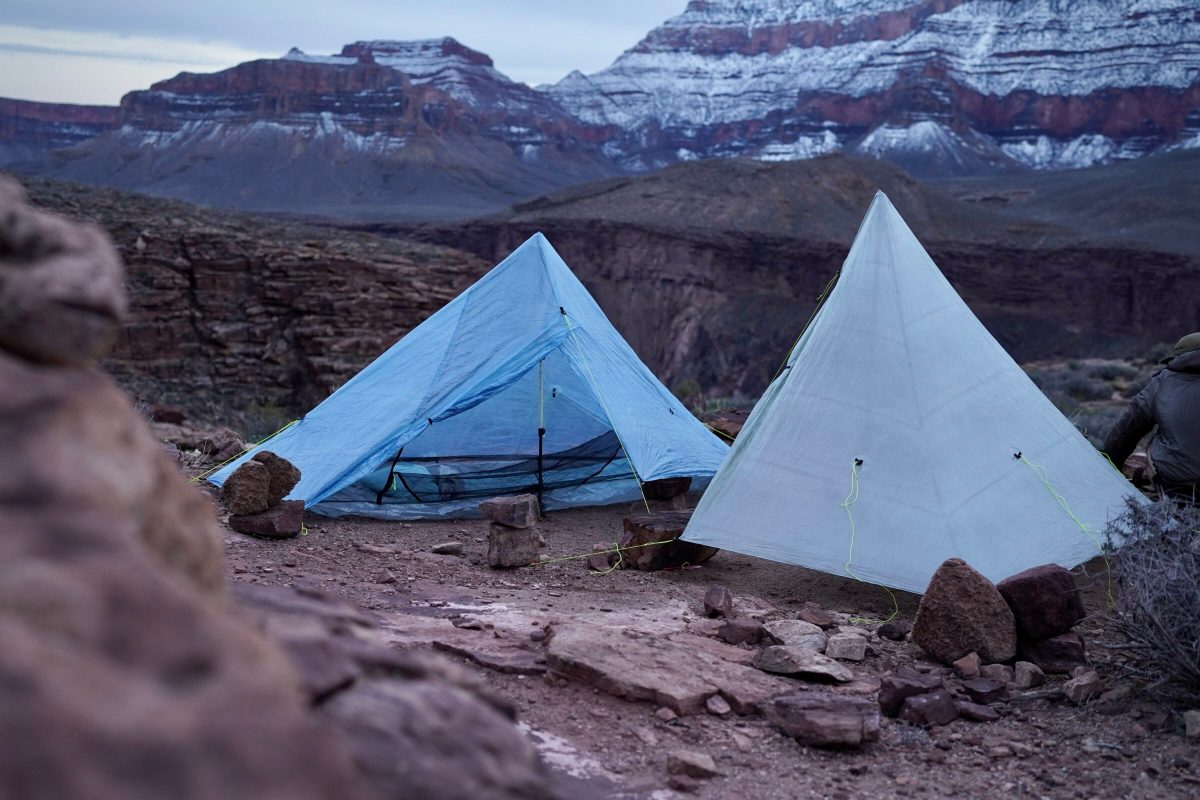
How We Tested the Best Ultralight Tents
We’re frustratingly particular about the shelter we hunker down in each night on a long journey, and heavily scrutinize each candidate for this guide. Rest assured — only the most deserving, durable, functional tents earned any real estate on this roundup. We’ve scoured online ultralight forums, bugged our broad swath of thru-hiking connections, and attended various gear shows to narrow in on the streamlined selection of tents you see today.
We recognize that the ultralight tent market is organic and constantly evolving. We have therefore slotted this guide into an iterative update schedule and are constantly on the prowl, scoping out new models the moment they hit the market, and testing them to see if they deserve recognition.
Our Expert Testers
From dedicated ultralight weekend warriors to lightweight backcountry hunters and full-blown thru-hikers living in tents for months on end, the GearJunkie squad has spent countless nights cuddled up in ultralight shelters.
Author Chris Carter has paid his dues on hundreds of backpacking trips over just as many miles through all manner of conditions. Chris has thru-hiked the Triple Crown of long trails in the United States: the Pacific Crest Trail, the Continental Divide Trail, and the Appalachian Trail, and continues to backpack with an ultralight loadout all over the world.
Assisting in our ultralight tent testing is Senior Editor Nick Belcaster, a 2018 PCT thru hiker who has run his OG Zpacks Duplex into the ground and then some, with potentially more patches than original DCF at this point. His typical base weight hovers around 9 pounds, and he travels across the West testing everything from ultralight backpacks to hiking sandals.
Our Testing Process and Testing Grounds
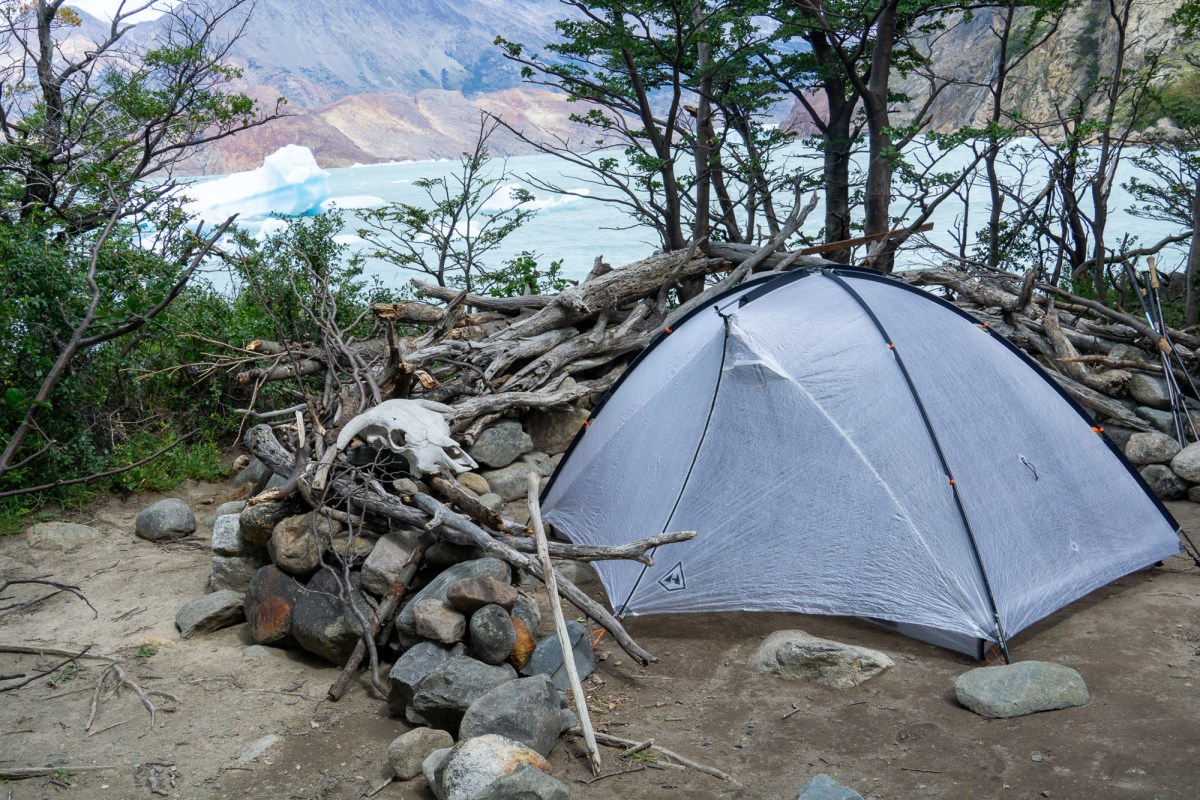
Our team hasn’t just “tried” these tents; we’ve lived out of them across thousands of miles on the Pacific Crest and Appalachian Trails. We’ve weathered gale-force winds in the High Sierra, snowy whiteouts in the North Cascades, and humid, condensation-heavy nights in the Smokies. Because an ultralight shelter is your primary line of defense against the elements, we refuse to recommend anything that hasn’t survived our worst-case-scenario field testing.
Our rigorous evaluation process follows a three-stage protocol to ensure total objectivity:
- The Intuition Setup: Every tent is initially pitched without instructions. This blind setup reveals the true learning curve of complex geometries like the Durston X-Mid or the tension-sensitive Zpacks Duplex, helping us identify which shelters are beginner-friendly and which require careful site selection.
- Storm Stress-Testing: We don’t wait for bluebird skies. We actively seek out high-wind ridges and heavy rain forecasts to test lateral stability, seam integrity, and (critically) how well single-wall designs manage internal condensation.
- Precision Bench Specs: Manufacturer specs are often optimistic, so we bring every shelter into our lab for verification. Using a calibrated digital scale, we record the minimum trail weight (shelter + stuff sack + stakes) versus the bare shelter weight. We also measure the usable interior volume, bathtub floor height, and the actual site footprint required: data points that are vital when you’re trying to squeeze into a tiny stealth site.
By combining real-world experience with data-driven bench testing, we provide a nuanced look at how these shelters perform when your comfort and safety are on the line. When a recommendation comes down to a few grams or a slightly steeper wall angle, we’ve done the math so you don’t have to.
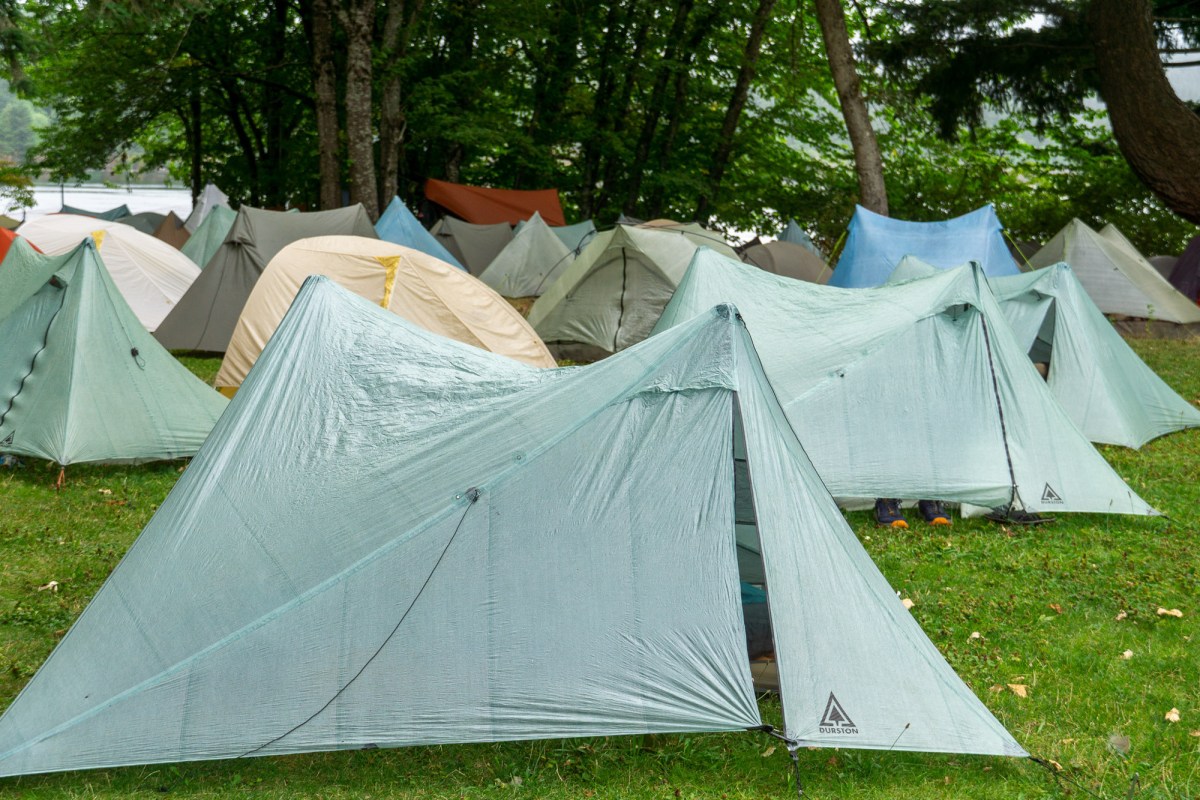
Our UL Tent Rating System
We’ve identified a few rating attributes to compare these UL tents on, aiming to better understand where they excel and where they’ve gone a bit too far in the ultralight quest. Our rating scale is a 100-point system that weighs these attributes against one another, as well as providing a stand-alone overall rating.
- Space & Comfort: 30% weighted. When rating on space and comfort, we look for specific internal measurements such as peak height, floor dimensions, and distance from our sleeping bags to the walls. We consider the size of vestibules and the coverage they provide. Overall, we rate tents the highest when they can store all equipment in a covered area, or even better, in the tent with you.
- Weight: 30% weighted. Weight is a big deal in ultralight shelters, and we look for sub-1-pound weights for any DCF trekking-pole supported tents to award the highest ratings. Sub 2-pound weights for any freestanding UL shelter earn a good score. Some, like tarps, will score very high in the weight category, but suffer in the weather resistance rating due to low coverage.
- Weather Resistance: 20% weighted. After our in-field and bench testing, we’ve got a pretty good idea of weather resistance, and we look for protection against rain, wind, and blown sand to award the highest scores here. Freestanding tents will score higher compared to trekking pole shelters, with the trade-off being weight.
- Ease of Use: 20% weighted. A UL shelter should be simple to set up, but not all of them are. We look for simple staking, footprints that are able to sneak into smaller tent sites, and designs that use fewer tension lines and are easier to balance while setting up. Freestanding tents typically rate the highest, followed by non-freestanding, and then tarp shelters.
Buyer’s Guide: How to Choose an Ultralight Tent
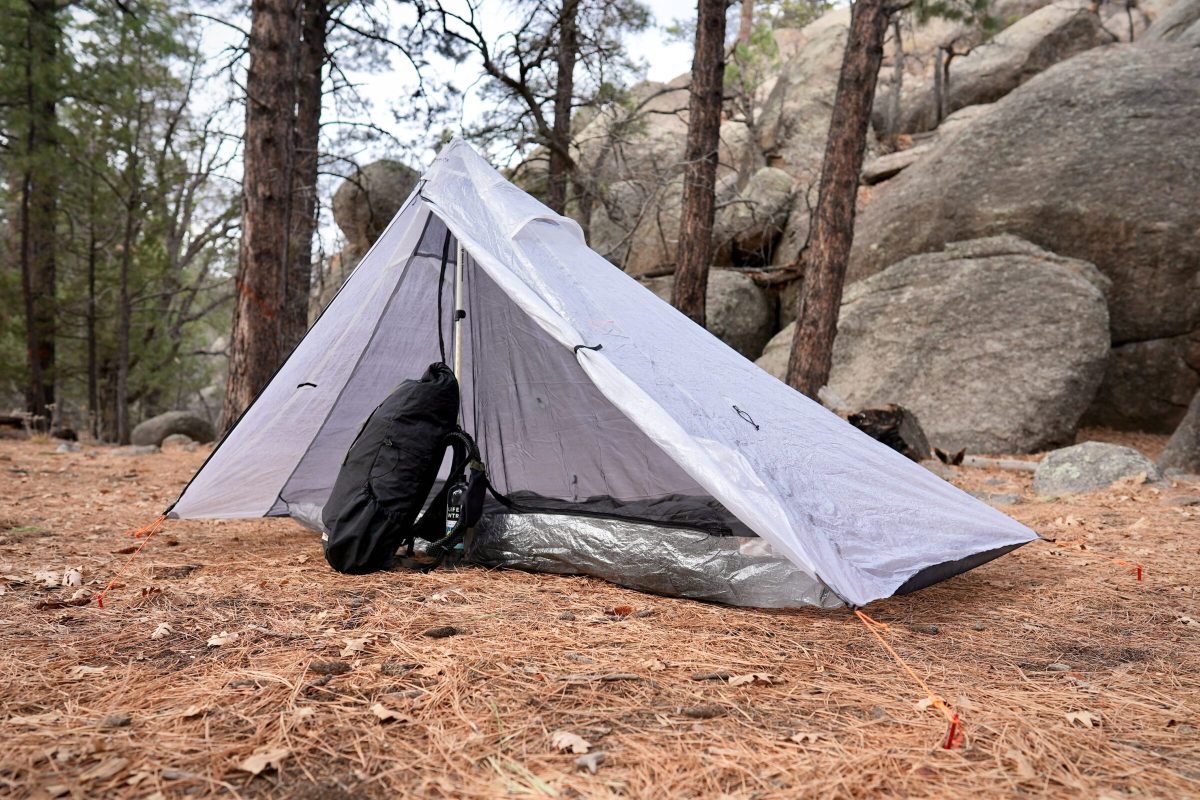
Ultralight tents allow you to truly narrow in on absurdly minuscule base weights, but still must hold up to the rigors of life on trail. Your shelter is your first line of defense against life-threatening elements, and you shouldn’t fudge on safety for the sake of weight savings. Above, we covered a broad range of ultralight tent designs, and it’s important to seriously consider your needs and personal comfort threshold before jumping to a decision.
It’s important to note that this guide focuses on niche mega-light tents, and that choosing the right tent for you is essential. For more casual backpacking trips that afford a bit more comfort, check out our comprehensive guide on regular backpacking tents. And, if you’re simply scoping out a camping tent for car camping adventures or base camp luxury, be sure to scroll through our guide on the best camping tents on the market.
The Three UL Tent Architectures: Which is Right for You?
If the rainfly is your roof, the architecture is the foundation and framing that determines how that roof stands against the sky. In the field, we evaluate how its structure manages the stress of uneven ground and the high-stakes geometry of interior livability. Solid architecture should balance the weight on your back with the sit-up comfort you need after a 20-mile day.
- Non-Freestanding (Trekking Pole) Tents: This is the most common ultralight design, seen in shelters like the Zpacks Duplex or Durston X-Mid. By using your hiking poles as the primary vertical supports, these shelters eliminate the heaviest component of a traditional tent. The trade-off is that they require a well-balanced tension to stay standing. Because the fabric itself provides the structural integrity, a poor stake-out can lead to sagging walls. We’ve found these are the ultimate choice for thru-hikers who have mastered the art of the taut pitch and want to keep their base weight under 10 pounds.
- Semi-Freestanding Tents: Think of this as the “Hybrid” architecture. Designs like the Big Agnes Tiger Wall use a hubbed pole system that creates a rigid structure at the head and peak, but still require two stakes at the foot to tension the floor. The benefit is that you get the vertical sidewalls and headroom of a traditional tent with a weight profile that flirts with the 2-pound mark. In our testing, we found these to be the best option for those who want an easier setup or don’t hike with trekking poles, and are willing to carry a little more weight.
- Freestanding Tents: Utilizing a complete pole frame, tents in this category (like the MSR Hubba Hubba LT) stand entirely on their own. This is the most critical distinction for high-alpine or desert hikers. If you’re camping on the granite slabs of the Enchantments or the slickrock of Southern Utah, where driving a stake is physically impossible, a freestanding tent is your only reliable option. While they are the heaviest of the three, they offer the most bombproof stability in shifting winds.
- The Taper vs. The Rectangle: Beyond the poles, pay attention to the floor’s footprint. Many ultralight designs use an aggressive mummy taper to save ounces, narrowing significantly at the feet. Across our collective use on long trails, we’ve found that a rectangular floor offers vastly superior livability for two hikers. If you’re sharing a tent, a tapered floor often results in sleeping pad overlap, which can turn a restful night into a wrestling match.
Tester’s Insight: When choosing an architecture, consider your most frequent tent site reality. If you’re a stealth camper, the small footprint of a trekking pole tent is idal. But if you’re a weekend warrior who values a 2-minute setup, the simplicity of a semi-freestanding tent will save your sanity every time.
Interior Livability: Capacity, Dimensions, and the Door Dilemma
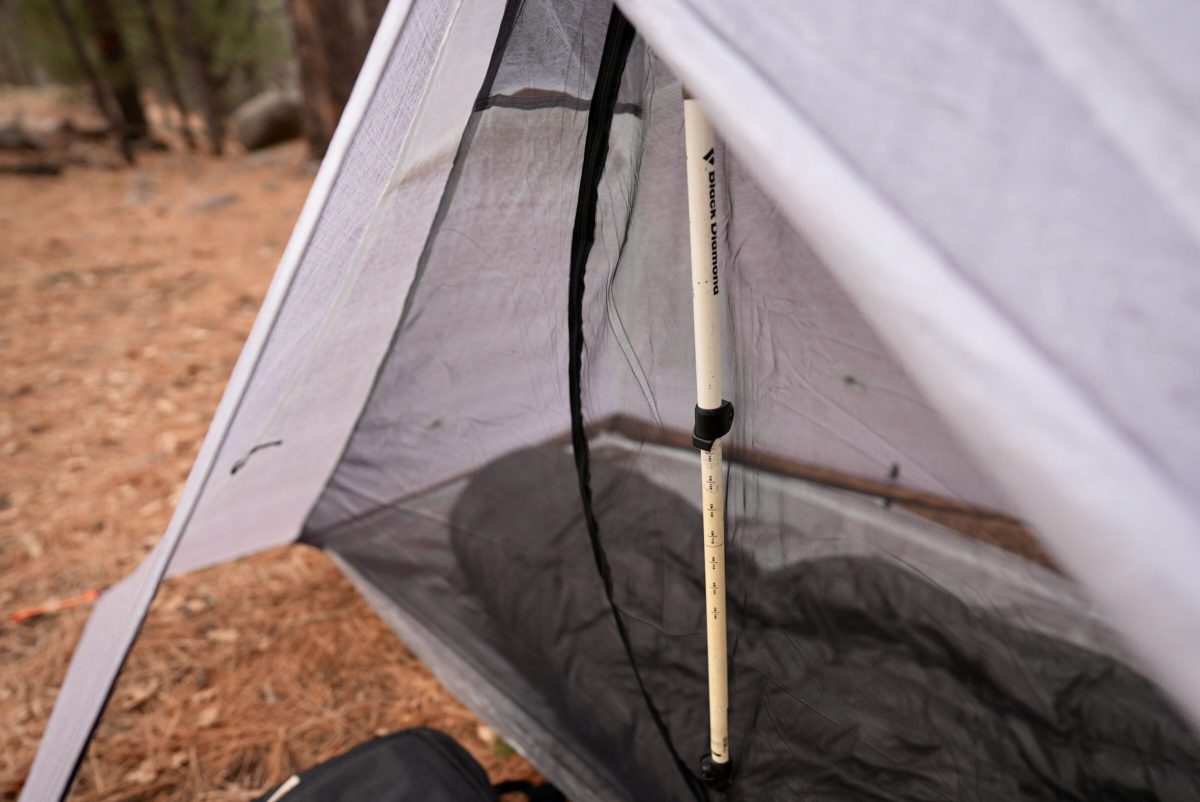
In the field, we evaluate livability by more than just the number provided; we look at the real-world geometry that determines whether you’re sleeping in a palace or a bivy. A well-designed interior should accommodate your sleep system without forcing your face against a condensation-heavy wall.
- The Capacity Choice: 1P vs. 2P vs. 3P: Most ultralight designs are built for one or two hikers, but the UL label doesn’t stop there. The Big Agnes Tiger Wall UL3, for instance, offers a three-person refuge at a staggering 2 pounds, 10 ounces, less than many traditional two-person tents. In the UL world, a “2-person” tent is often “1.5-person” in reality. If you’re a solo hiker who values interior gear storage, or a couple who doesn’t want to sleep shoulder-to-shoulder, sizing up to a 3P model often yields comfort dividends for a negligible weight penalty.
- Peak Height and the Sit-Up Test: The peak height (the highest point of the canopy) varies wildly between models. While a 40-inch peak is standard, the shape of that height matters more. A hubbed pole design like the MSR Hubba Hubba LT creates a flat roofline for maximum headroom, whereas a pyramid tarp may have a high peak that tapers sharply, meaning only one person can sit up at a time. Don’t just trust the spec sheet; if possible, visit a retailer to see if you can sit upright without your head brushing the mesh.
- Shelter Doors: One vs. Two: Choosing between a single or dual-door setup is a direct trade-off between convenience and weight. Two doors (and two vestibules) are a godsend for pairs, allowing each sleeper to exit for a midnight nature call without crawling over their partner. However, eliminating that second zipper and extra fabric (as seen in the Fly Creek UL1) is one of the fastest ways to shave 6 to 8 ounces and lower the price tag.
- The Squeeze in Single-Pole Shelters: Tents that rely on a single trekking pole, like the HMG Mid 1, face the biggest challenge in maximizing volume. Manufacturers use clever offset geometries and extended stake-out points to pull the vestibule fabric further away from the inner mesh. This creates a mudroom effect, providing a dry staging area for packs without adding the weight of a second pole.
- Floor Width and Pad Compatibility: Before you buy, check the math on your sleep system. Many 2-person UL tents feature a 45-inch floor width, which is physically too narrow for two wide 25-inch sleeping pads. For taller hikers or those using long/wide gear, a tapered footbox can lead to pad-clash, forcing the pads to overlap and creating an uneven sleeping surface.
Tester’s Insight: When evaluating space, look for interior organization like overhead gear lofts or side pockets. In a cramped UL tent, being able to get your headlamp, phone, and glasses up and off the floor isn’t just a luxury, it’s a necessity for maintaining a sense of order.
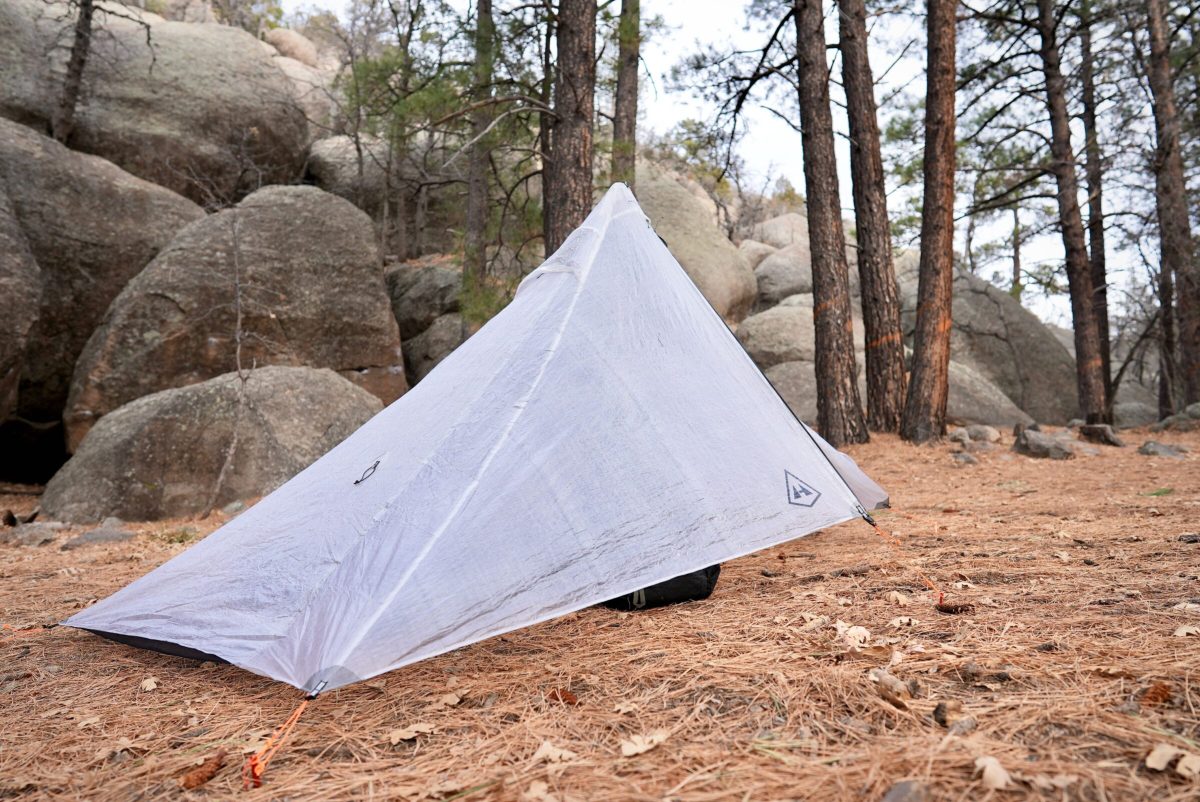
The Single-Wall vs. Double-Wall Choice
If the tent architecture is the foundation, the wall construction is the climate control system. In the field, we evaluate these designs based on a single, critical question: How do you want to handle condensation? In the ultralight world, the choice between a one-piece skin and a layered system is the primary factor determining both your pack weight and your overnight comfort.
- Single-Wall Shelters: Single-wall tents, like the Zpacks Duplex, integrate the waterproof fly and the living space into a single layer of fabric. By eliminating the separate inner canopy, these designs achieve the lowest possible trail weights, often breaking the 2-pound-per-person barrier. The catch is that because there is no breathable barrier between you and the waterproof exterior, your warm breath hits the cold fabric and liquefies. In our testing, we’ve found that without active cross-ventilation, a single-wall tent can become a mist machine in humid environments.
- Double-Wall Shelters: A double-wall tent is a two-part system: a breathable mesh or fabric inner paired with a separate waterproof rainfly. This is the architecture found in the Big Agnes Tiger Wall. The inner tent acts as a physical buffer, allowing condensation to form on the underside of the fly while keeping you and your quilt dry behind the mesh. This added protection comes with a weight tax of 6 to 10 ounces and a slightly more complex setup process.
- Vestibules and Gear Storage: Generally, double-wall designs offer more robust vestibule space because the fly is specifically engineered to extend beyond the inner footprint. While many single-wall tents include integrated vestibules, they are often shallower to save weight. If you’re hiking in a region prone to multi-day downpours, the dedicated mudroom of a double-wall tent provides a superior staging area for soaking-wet gear.
- The Breathability Spectrum: It’s a common misconception that single-wall tents don’t breathe. While the fabric itself is non-porous (like DCF or SilNylon), modern UL designs use high-low venting to force airflow. However, even the best-vented single-wall cannot match the passive airflow of a double-wall tent in dead-calm, high-humidity conditions. For these reasons, we suggest leaving a door open on single-wall shelters every night that it’s feasible.
Tester’s Insight: When choosing between a single vs. double wall tent, look at where you’ll hike most often. If you’re a desert hiker where the air is arid, the weight savings of a single-wall tent are a no-brainer. But if you’re tackling the Appalachian Trail or the Pacific Northwest, the physical separation of a double-wall tent is worth every ounce for the peace of mind.
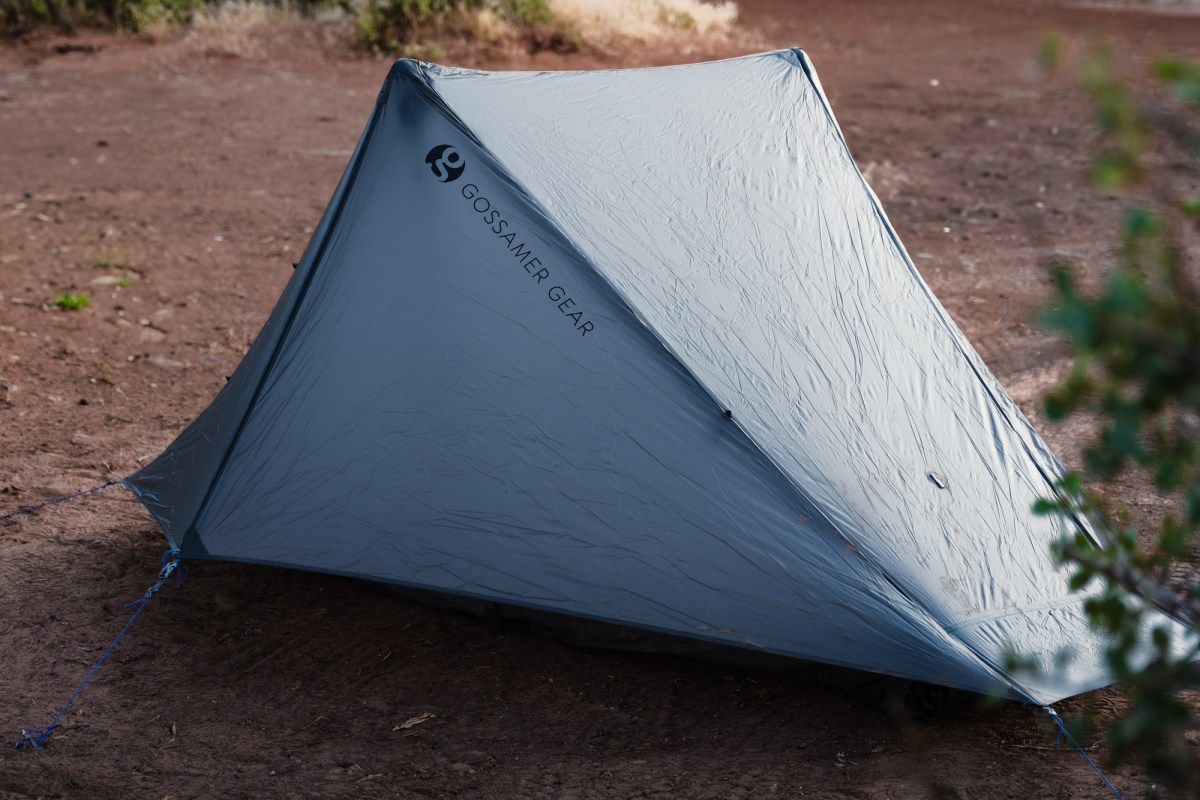
UL Material Science
Beyond the mere numbers on a scale, our field evaluations focus on dimensional stability, hydrostatic head (waterproofness), and long-term durability. Selecting the right textile requires balancing your gear budget against your tolerance for midnight shelter maintenance.
- Dyneema Composite Fabric (DCF): DCF represents the best of ultralight materials. Originally designed for racing sailboats, this fabric boasts an incredible strength-to-weight ratio and remains inherently 100% waterproof. Its primary performance advantage lies in its lack of elasticity; once pitched, a DCF tent stays drum-tight regardless of temperatures or humidity.
- Ripstop Nylon: At the opposite end of the spectrum sits classic ripstop nylon, the primary material for the Big Agnes Fly Creek UL1. Though far more affordable, this choice carries a weight penalty. While nylon is a proven, durable textile that compresses into a remarkably small package, it serves as the entry-level gateway to the UL world rather than a cutting-edge weight-saver.
- SilNylon and SilPoly: Value-driven favorites like Gossamer Gear’s The One utilize nylon or polyester blends treated with Silicone or PU (Polyurethane). These fabrics cram into a backpack with ease, often occupying half the volume of a DCF equivalent. However, they are notorious for stretching over an evening. Our testing reveals that a perfectly taut pitch at sunset frequently sags by midnight as the fibers absorb ambient moisture. Be prepared for tension adjustments to keep damp walls from resting on your face.
- Waterproof Coatings and Maintenance: Most UL fabrics rely on a DWR (Durable Water Repellent) treatment to bead water off the surface. Over hundreds of trail miles, UV exposure and grime will inevitably degrade this coating. While DCF remains waterproof for the duration of its life, sil-treated fabrics eventually require a refresh with a spray-on repellent to maintain their hydrophobic performance.
- Floor Durability and the Groundsheets: While surprisingly resilient, ultralight textiles are not bulletproof. A 10-denier floor can feel like high-tech tissue paper when faced with jagged desert rocks. Although single-wall tents don’t strictly require a separate footprint, we have found that a light piece of Polycryo or Tyvek can effectively double the lifespan of a $700 investment.
Tester’s Insight: For the buy once, cry once hiker, DCF is the winner; the lack of stretch and permanent waterproofness is impressive for the weight. Conversely, if you are a weekend warrior who prioritizes a tiny pack size and doesn’t mind guyline fiddling, a SilPoly shelter provides 90% of the performance at roughly half the cost.
Weight and Packed Volume
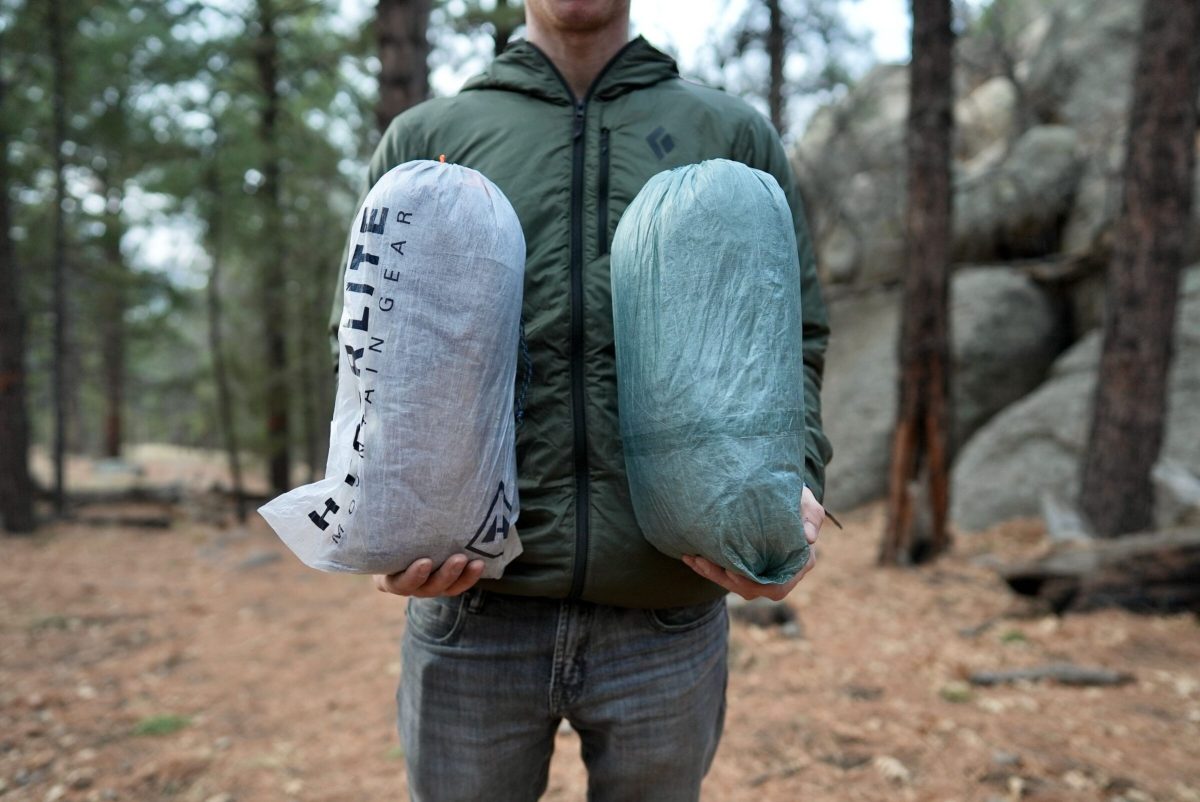
A shelter’s trail weight is everything needed to transport and set it up, including the stuff sack and the minimum number of stakes. In the field, we categorize ultralight not by a single spec, but by how a tent integrates into your total kit. While a sub-one-pound tarp offers the ultimate weight savings, the trade-off often involves a steeper learning curve and a more intimate interior.
- Defining Ultralight: While industry definitions are fluid, we generally classify any shelter system under 2 pounds per person as ultralight. Standard lightweight tents typically fall above this. For the truly obsessed, the Zpacks Duplex Lite sets the bar at a staggering 14.9 ounces for “two” people, while a solo powerhouse like Gossamer Gear’s The One hits the scales at 20.6 ounces.
- The Minimalist Extreme: If you are willing to sacrifice built-in bug protection and a floor, you can enter the realm of tarps. The Zpacks Hexamid Pocket Tarp with Doors, weighing a mere 5.2 ounces, represents the absolute floor of shelter weights. However, as you move toward these feathery extremes, expect a decrease in headroom and an increase in setup complexity.
- Weight vs. Bulk: It is a common misconception that the lightest tent is always the smallest in your pack. Material choice dictates volume. DCF models, like the HMG Mid 1, are incredibly light but consist of a stiff fabric that doesn’t like to be compacted. Conversely, the Sil/PU nylon used in The One may weigh more, but it squeezes down into a tiny corner of your bag.
- Total Kit Integration: Your shelter choice must play nice with your pack capacity. Most UL enthusiasts carry packs in the 35L to 45L range, where every cubic inch is precious real estate. If you choose a bulky DCF tent, you may find yourself struggling to fit your food bag and quilt, whereas a more packable nylon tent might actually be the more efficient choice for a small-volume loadout.
Tester’s Insight: When trimming ounces, look at the cumulative weight of your entire sleep system. It makes little sense to carry a 14-ounce tent if you’re pairing it with a 3-pound synthetic sleeping bag. A truly balanced ultralight kit requires every element to be considered as a single unit.
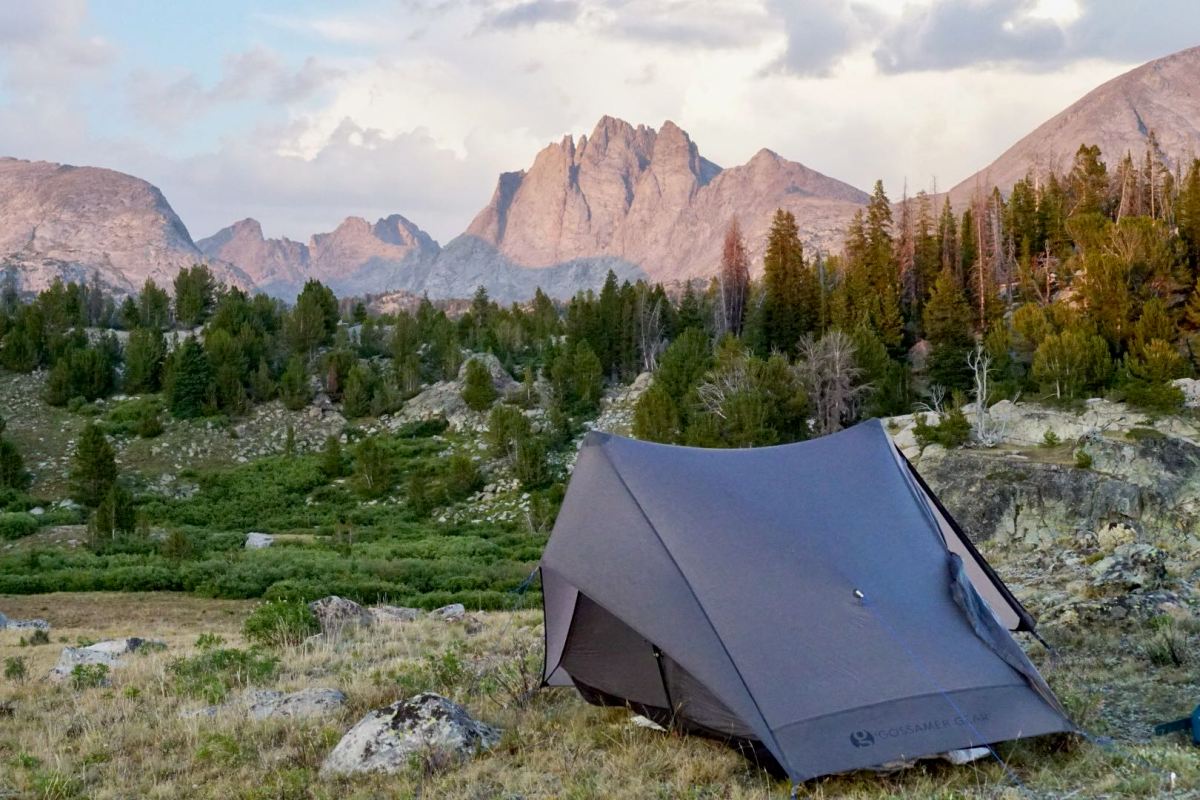
Mastering the UL Tent Set-Up:
- Setup Challenges: Stability and Terrain Compared to traditional tents, non-freestanding models require more finesse during assembly. Achieving the perfect pitch depends entirely on stake placement and line tension, a task that becomes tricky in high winds or heavy rain. If you find yourself in rocky alpine terrain where driving stakes is impossible, use the following methods: Rock Anchors: Loop your guylines around heavy boulders to secure the corners. The Deadman Anchor: If the cord won’t stay, place a stake through the loop horizontally on the ground and pin it down with a massive rock. This prevents the line from slipping toward the tent under tension.
- The Right Stakes for the Job: Not all stakeout points are created equal. For a secure pitch, we recommend a hybrid stake kit: Lightweight Stakes: Use short, needle-style stakes for the four corners and secondary guylines. Heavy-Duty Stakes: Use two longer, Y-stake options (we like the Vargo Titanium Ascents) for the primary trekking pole anchors. These points bear the most stress and require a deeper, more secure purchase in the soil.
- Guylines: For trekking-pole-style tents, guylines serve as a quick and easy way to pull the sidewalls out further, immediately boosting volume. For freestanding and double-wall shelters, this doesn’t apply as much, but they still can afford a bit more internal space. Perhaps more importantly, however, guyline points allow you to further secure your tent to the ground in the case of tempestuous storms or strong winds.
- The Learning Curve: Before heading into the backcountry, practice your pitch at home. Mastering an ultralight setup involves learning the ideal trekking pole height, fine-tuning guyline tension, and avoiding an asymmetrical or sagging structure. While freestanding tents offer plug-and-play simplicity, the weight savings of a trekking-pole shelter are well worth the practice for any serious thru-hiker.
Tester’s Insight: As important as a good set up is where you set up an ultralight shelter. You can reduce condensation by camping beneath trees, which keep the ambient air slightly warmer and less likely to drop below the dew point.
Price & Value
Ultralight backpacking equipment often isn’t cheap, but you also don’t need to part with any extraneous organs in order to get your hands on a solid UL tent, either. With options in both silnylon/silpoly and more deluxe composites like Dyneema Composite Fabric or Ultra, there’s a definite range of tents out there.
You’ll need to consider how often you’ll be using your tent as a major deciding factor — thru-hikers will obviously need to opt for a larger investment, while weekend backpackers can likely get away with less.
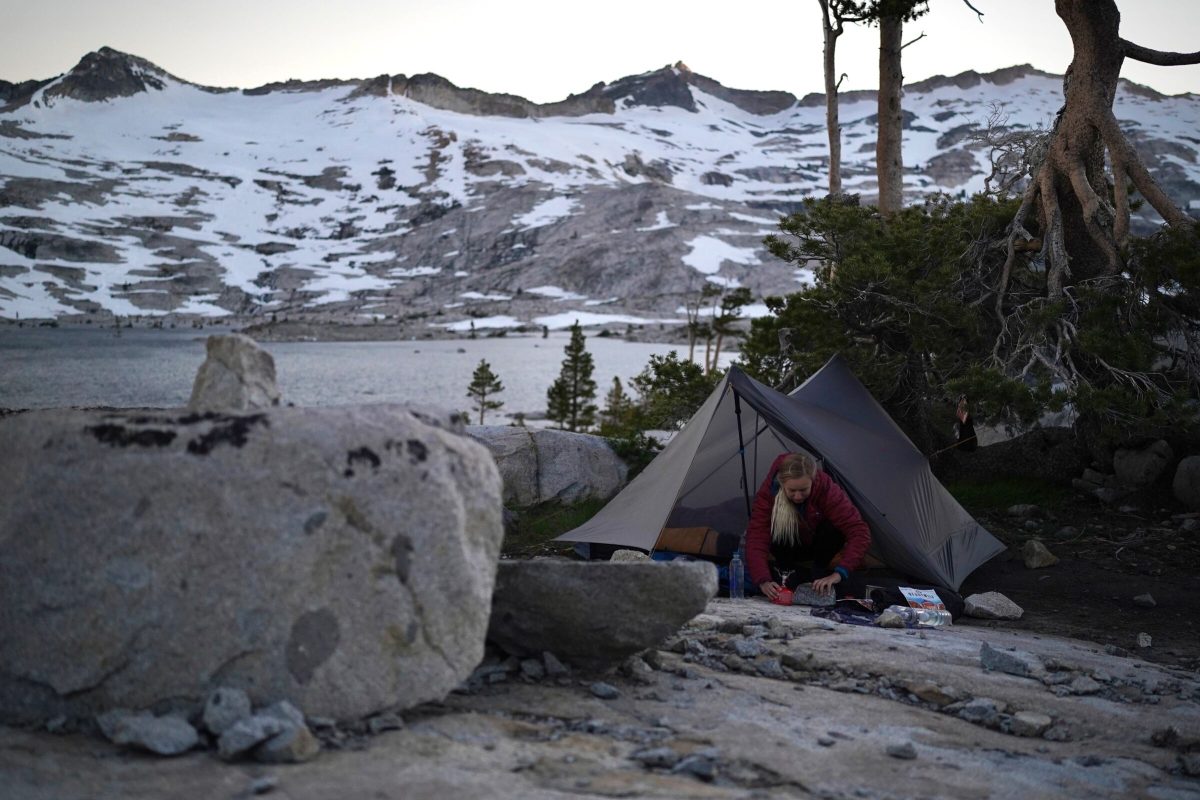
Budget
If you’ve already splurged on your UL pack and sleep setup, going with a budget ultralight shelter can make a lot of sense. These will typically run you between $250 and $300, and they are overwhelmingly single-wall designs made from silicon-treated nylon or polyester. This certainly helps to keep the price down, but it won’t be as light as tents made from DCF.
The Gossamer Gear The One ($315) is still our favorite budget UL tent, and while some single-person tents use a solo trekking pole design, the One uses two to create a good amount of interior space. The Durston X-Mid 1 ($269) is set up in a similar way, but uses a unique offset design to increase interior space even further, and sports a double wall design. Both are reliable shelters with entire thru-hikes under their belts, and less than many mainstream backpacking tents today.
Mid-Tier
Spending between $400 and $600 opens up a lot of doors in ultralight tents, including the use of DCF materials in the build. Single hiker shelters like the Zpacks Plex Solo ($599) and Hyperlite Mountain Gear Mid 1 ($675) both hover around the 1-pound mark, and sport around 20 sq. ft. of floor space, which we’ve found just about right for solo hikers.
You can also get into a lightweight freestanding tent for these prices, and the $420 Big Agnes Fly Creek UL 1 is even a bargain comparatively. Overall weight will be a little higher due to the use of tent poles (2 pounds on the Fly Creek), but the ability to set up the tent on rock slabs or frozen ground can make a worthy tradeoff.
Premium
It could be argued that all ultralight tents are premium, but there is an upper crust even here, with full DCF two-person shelters running upward of $700. These tents make use of a lot of Dyneema, which helps explain their lofty price tags, but quality design also weighs heavy here.
The Hyperlite Mountain Gear Unbound 2P ($775) and Zpacks Duplex ($749) are very similar tents, and both implement a design that has been refined over many years of testing on long trails.
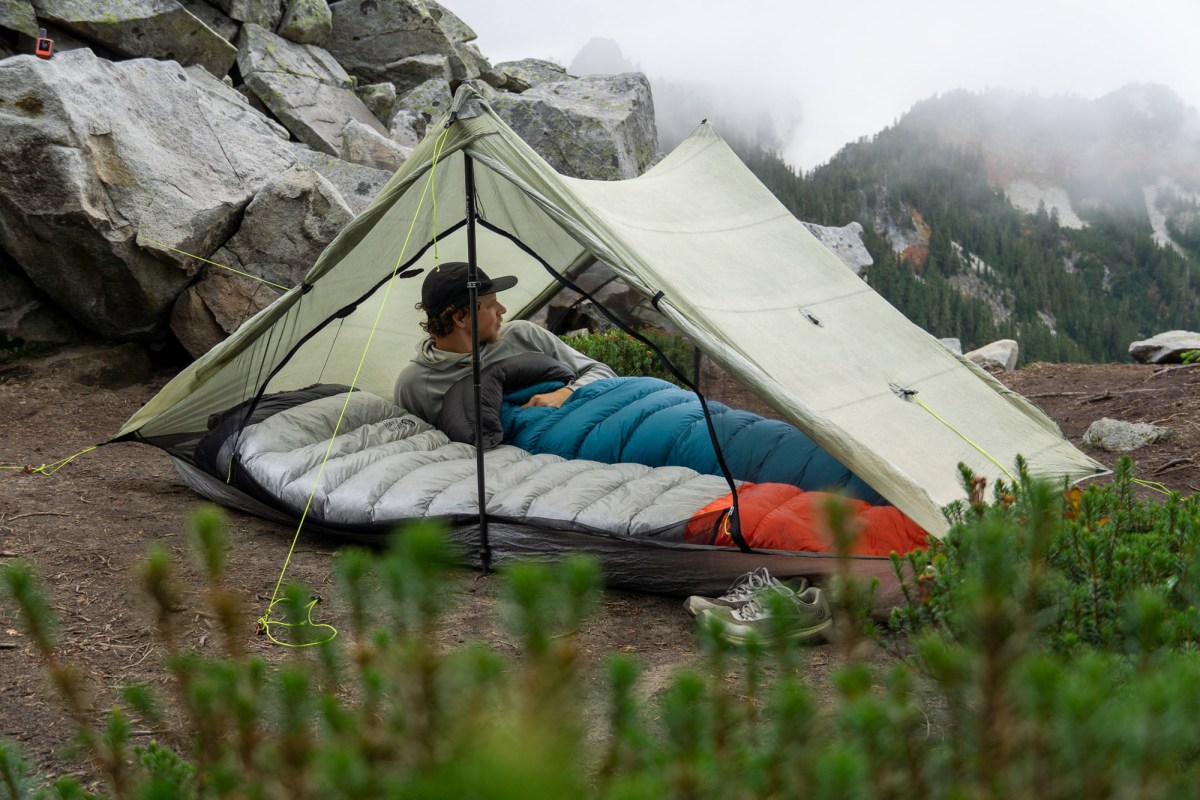
Frequently Asked Questions
The best ultralight tent is one that keeps you comfortable in the terrain where you venture and one that alleviates the weight on your back. However, you could sacrifice comfort and durability if you choose an ultralight tent that’s too lightweight.
Some experienced thru-hikers and adventurers prefer to drop as much weight as possible to help them boost mileage. And they don’t mind the caveat of being more vulnerable to the surrounding habitat and inclement weather.
Ultralight tents are fairly durable against the weather but are also more sensitive to abrasion and rough handling than heftier tent designs. The lower the ounces, the more conscious the tent’s user needs to be.
There’s no universal guideline that defines the ultralightweight tent category. Generally, ultralight tents weigh less than 48 ounces. The shelters recommended in this guide range from 5.2 to 33 ounces, and this list isn’t comprehensive of all the best ultralight options.
An ultralight tent is a stellar investment for long-distance or high-volume trekkers seeking to move faster and more nimbly. Also, if an outdoor traveler is seeking to pare down their entire overnight kit, cutting the den weight is a good avenue.
Some hikers need to lessen the burden on their bodies for health reasons and overall longevity, and the extra cost is worthwhile.
Backpacking tents degrade over time due to exposure to the elements. Those variables include rain and direct sunlight, contact with the terrain, overall handling, care, and storage conditions.
As with any outdoor equipment, tents reflect wear and tear with time. They will last longer if they’re well maintained.
To give you an idea, the Zpacks Duplex Tent claims it will last a minimum of 2,500 miles straight or several years of casual use. Thru-hiker Elina Osborne confirmed the tent tackled her 2,653-mile journey along the PCT and counting.
At print, the Big Agnes Fly Creek HV UL 1 handled 200 days of use. The Zpacks Hexamid Pocket Tarp with Doors withstood more than 300 nights. And the Gossamer Gear The One breezed through more than 3,000 miles, all according to our expert crew of thru-hikers. Each of those tents isn’t in mint condition but they’re all still workable, protective, and in the field.
Read the full article here
21 Comments
Nice to see insider buying—usually a good signal in this space.
Good point. Watching costs and grades closely.
Good point. Watching costs and grades closely.
Exploration results look promising, but permitting will be the key risk.
Good point. Watching costs and grades closely.
Good point. Watching costs and grades closely.
The cost guidance is better than expected. If they deliver, the stock could rerate.
Good point. Watching costs and grades closely.
Good point. Watching costs and grades closely.
Nice to see insider buying—usually a good signal in this space.
Good point. Watching costs and grades closely.
If AISC keeps dropping, this becomes investable for me.
Good point. Watching costs and grades closely.
The cost guidance is better than expected. If they deliver, the stock could rerate.
Good point. Watching costs and grades closely.
Interesting update on The Best Ultralight Tents of 2026. Curious how the grades will trend next quarter.
Good point. Watching costs and grades closely.
Silver leverage is strong here; beta cuts both ways though.
Good point. Watching costs and grades closely.
If AISC keeps dropping, this becomes investable for me.
If AISC keeps dropping, this becomes investable for me.