

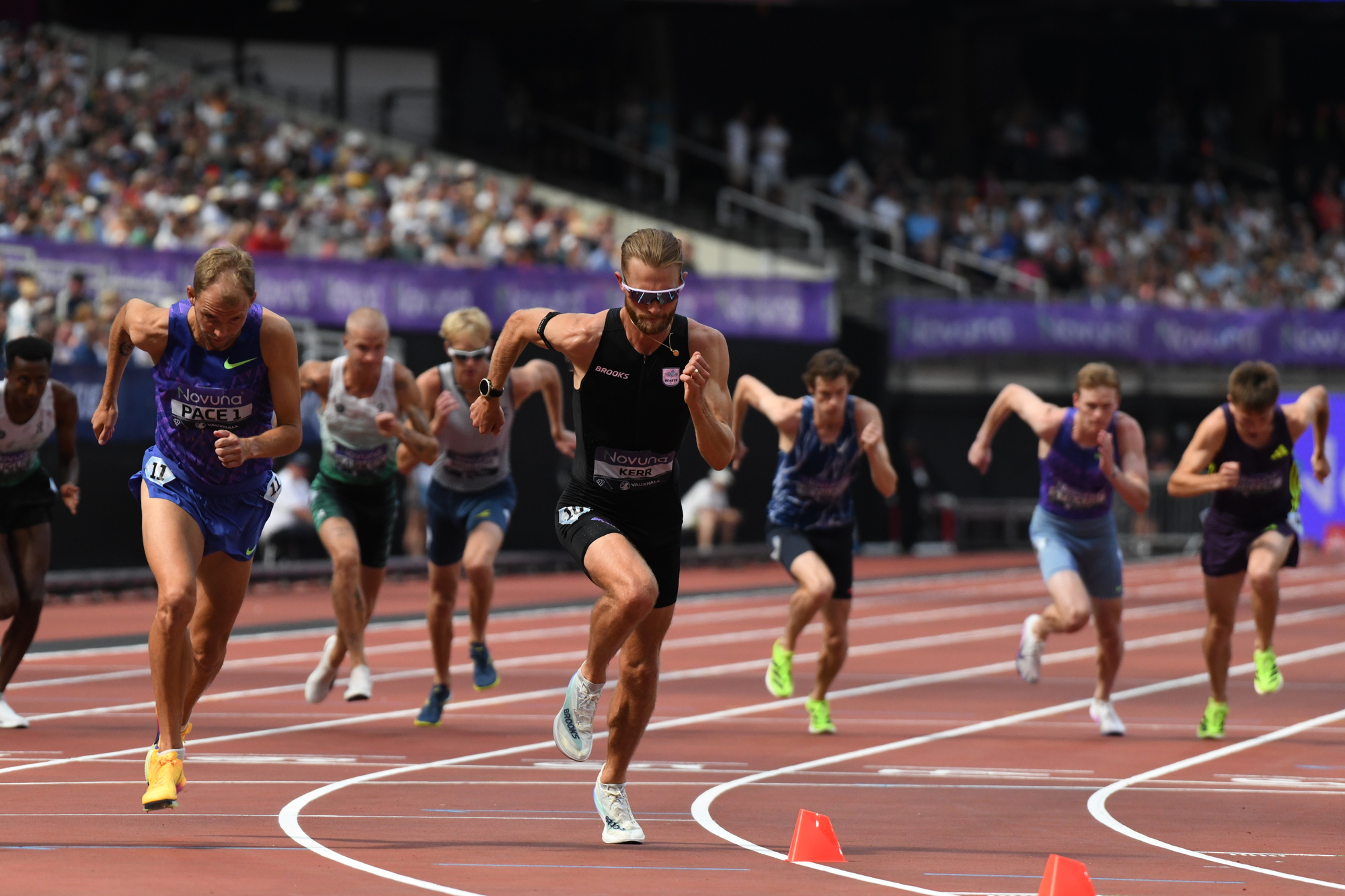
It’s the distance every runner knows. Before the 10K, the marathon, or even a 100-mile ultramarathon, many of us first test ourselves over the most iconic distance in running: the mile.
On Saturday, in front of more than 55,000 fans at London Stadium, British runner Josh Kerr rewrote its history. He ran 3:42.66 to break Moroccan runner Hicham El Guerrouj’s 27-year-old world record of 3:43.13 set in 1999. The performance lowered one of the sport’s oldest and most untouchable marks by nearly half a second.
The 1-Mile Lore
The mile occupies a unique place in track and field. It’s one of the few premier events still contested in the imperial system rather than metric, when most elite track meets use the 1,500 m as their “mile-like” distance far more frequently.
But no distance captures the imagination of runners quite like the mile.
After Roger Bannister became the first man to break 4 minutes in 1954, the world record changed hands regularly for decades. Bannister’s mark lasted just 46 days before John Landy lowered it to 3:58.0, and for years afterward, the record fell on average every t3 years.
Then came El Guerrouj’s 3:43.13. Through the rise of carbon-plated shoes, revolutionary midsole foams, advances in sports science like sodium bi-carbonate, and even a new era of sub–2-hour marathon performances, the men’s mile world record didn’t budge.
So what finally changed?
Few elite athletes call their shot the way Kerr did; he put all of the pressure, expectations, critics, and doubt squarely on his (and sponsor Brooks’s) back. His intention was to become the fastest miler in history. The other part was beneath his feet.
In short: Brooks spent over a year developing a shoe specifically for Kerr’s biomechanics. The result is the Brooks Hyperion 222, a custom-built racing spike designed around his stride, foot strike, asymmetrical push-off, and preference for an exceptionally aggressive ride.
Brooks Hyperion 222: The Shoe That Broke the Mile Record
Despite being built specifically for Kerr, the Hyperion 222 still had to satisfy World Athletics regulations requiring competition footwear to be commercially available. You can see the prototype Brooks submitted to World Athletics’ “Shoe Checker” database here.
That means the technology powering the fastest mile in history won’t remain a one-off prototype for long; the Hyperion 222 is expected to reach consumers in the near future (mile world record not guaranteed).
Running footwear has changed dramatically since El Guerrouj set his record in 1999. The spikes he wore belong completely to another era. A complete relic.
The Hyperion 222 represents the latest generation of computationally designed racing footwear, built using engineering tools that didn’t exist in running a generation ago.
Like Nike’s extensive effort to help Faith Kipyegon become the first woman to break 4 minutes for the mile last summer (we wrote about it here), Brooks assembled its own team of engineers and biomechanists to chase history.
The company says it relied on its Run Research Lab and finite element analysis — a computer modeling technique that predicts how materials flex, deform, and transfer force under load — to optimize every aspect of the spike. Engineers simulated countless carbon-fiber plate configurations before arriving at the final design.
The name itself reflects the goal. Hyperion 222 refers to the 222 seconds required to run a 3:42 mile.
A Purpose-Built Shoe
Brooks built the Hyperion 222 optimized for Kerr’s specific stride, power output, and foot strike, and the most noticeable feature is the spike’s aggressive rocker geometry. Not unlike virtually every racing shoe nowadays, from 5K to the marathon, the hyper-rockered Hyperion 222’s curved profile is designed to help transition Kerr through each stride while maintaining forward momentum at record pace.
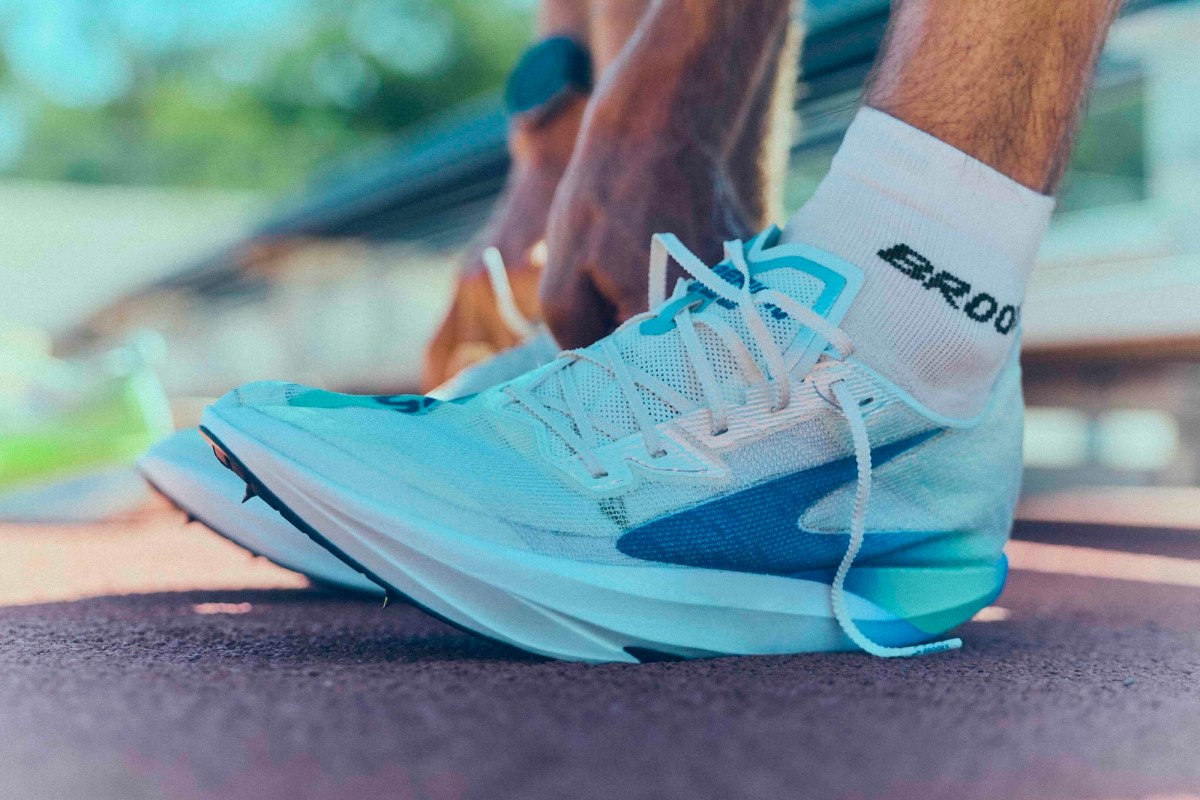
A carbon plate wraps around the foot to provide stability and stiffness tailored to Kerr’s uniquely powerful mechanics, including his unique push-off pattern and ability to generate tremendous force at top speed, while bucking traditional heel cushioning in favor of maximum stiffness and responsiveness.
Even the “spike” component was reimagined. The Hyperion 222 used custom titanium pins developed specifically for Kerr’s record attempt, components that Brooks says can’t be procured off the shelf. The Hyperion 222 had unique branding with Kerr’s signature, custom illustration, and “The Pursuit” mantra printed on the insoles.
Brooks Speed Suit
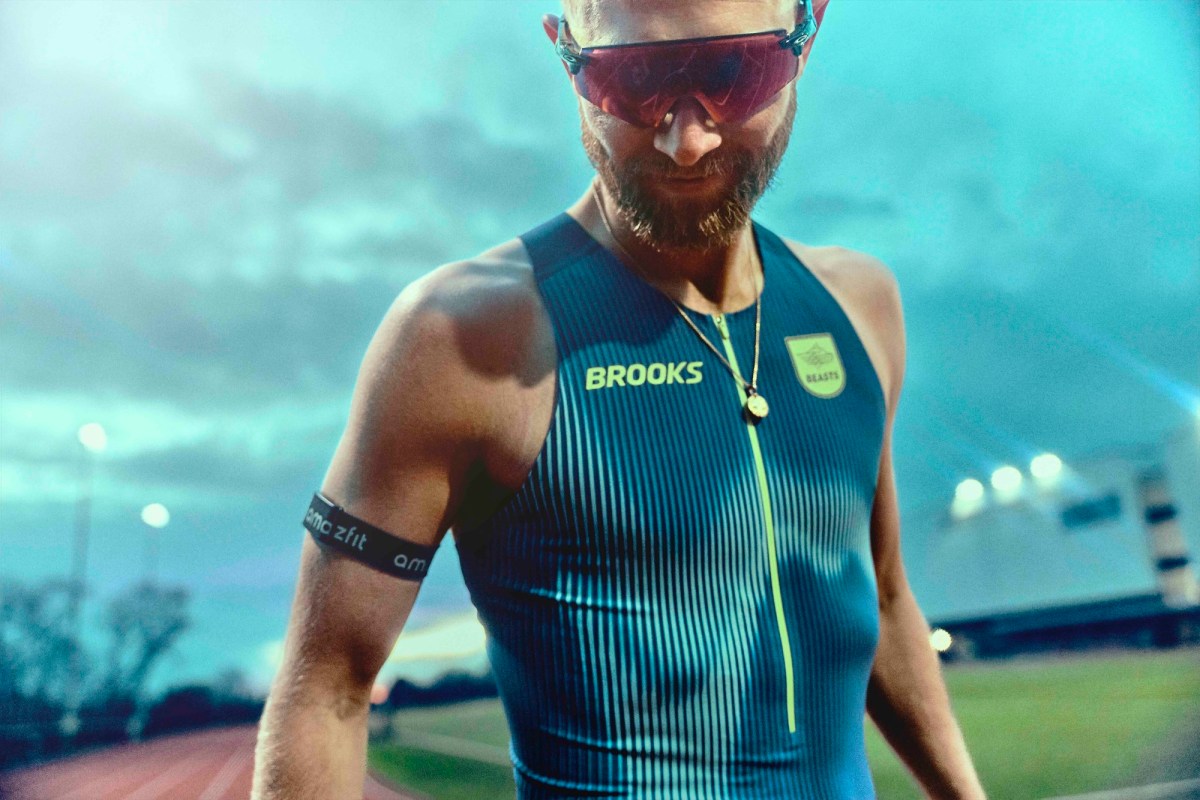
Kerr’s race-day kit included a custom two-fabric speed suit that balanced aerodynamic efficiency with heat management for a potentially warm or even hot-weather mile effort. Its laser-cut perforations were designed to release heat and humidity while enhancing mobility through the lower half.
The fabric along the back and side panels delivered targeted ventilation, while the perforated stretch fabric on the front and lower sections added structure and breathability to support dynamic movement without sacrificing comfort.
Despite all the effort to make the Brooks Speed Suit super breathable, luckily, Europe’s recent heat dome didn’t materialize over London on Saturday, and the race’s actual conditions were around 73–75 degrees F with cloud cover and very calm wind.
The suit was prototyped and tested at around 6,000 feet in the quite typically scorching heat of Albuquerque, N.M., where Kerr lives and trains full time.
Brooks Competes With the Best
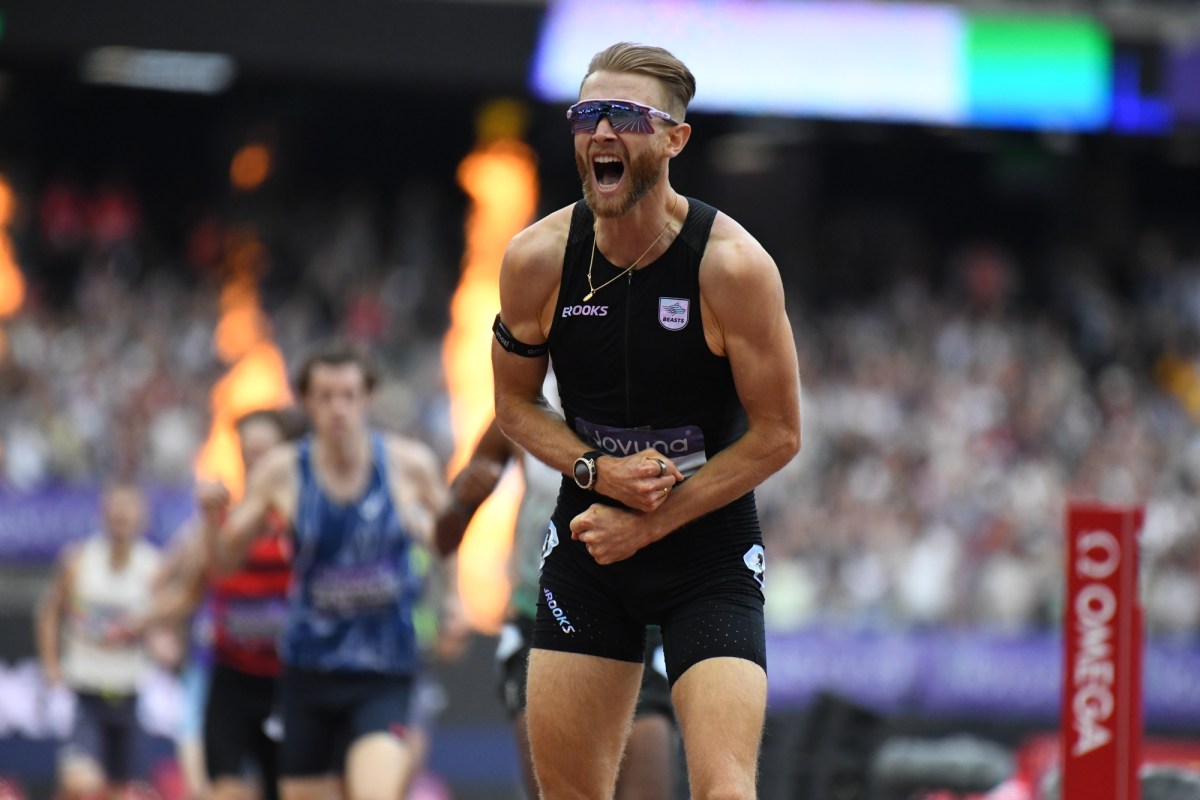
Brooks has long been known as the friendly, do-it-all running brand. The Ghost, now in its 18th edition, is probably the most recognizable running shoe in the world and a staple for everyday runners logging millions of miles. But beneath that approachable exterior, Brooks has quietly been building a serious elite-performance program.
The Brooks Beasts training group includes some of the best middle-distance runners in the world, including Kerr and Brandon Miller, the top 800m runner in the world this season, while the brand also sponsors Jess McClain, the best American women’s half-marathoner.
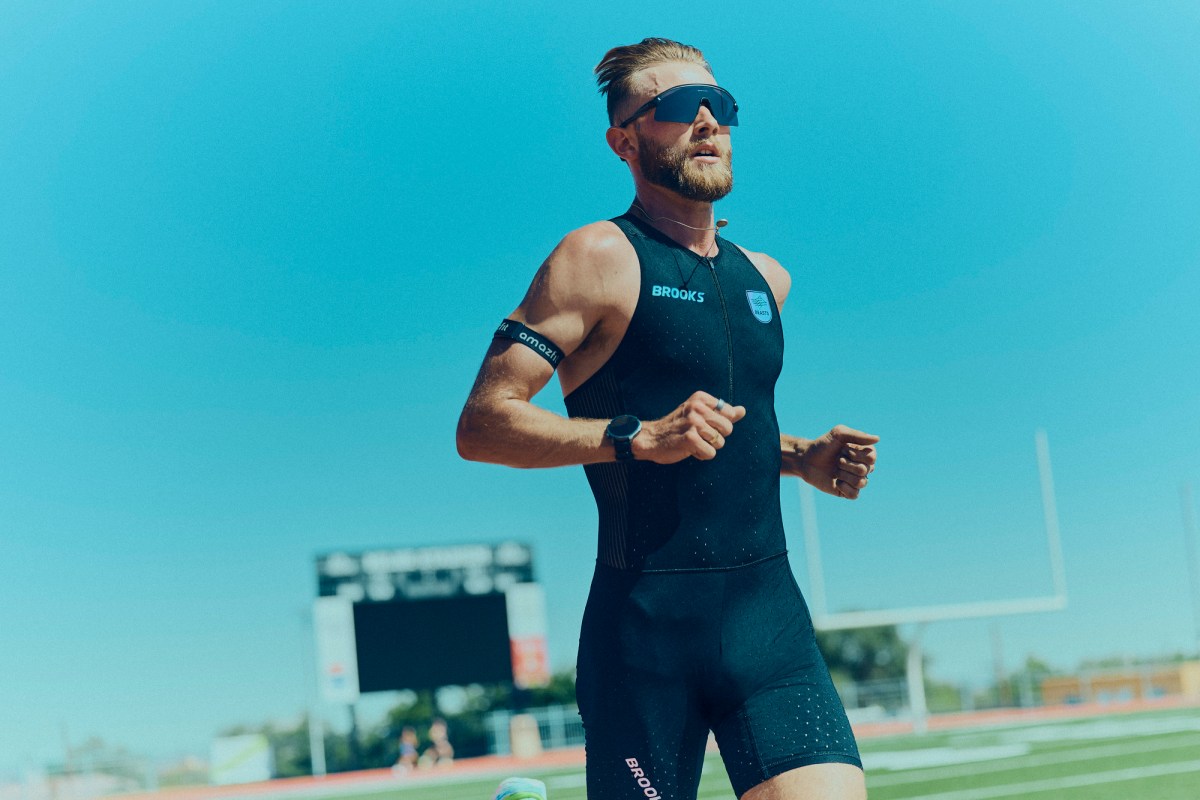
Josh Kerr’s world record represents something bigger for Brooks: proof that the company’s highest-level racing technology belongs on the same stage as any high-performance running brand in the world.
Every major footwear company watched the mile record fall, but only Brooks had its logo on Kerr’s feet. It’s an undeniable win for Kerr and a momentous moment for the Seattle-based brand.
Read the full article here
34 Comments
Interesting update on The Mile World Record Falls In Brooks’ “Hyperion 222” Super Spikes. Curious how the grades will trend next quarter.
Uranium names keep pushing higher—supply still tight into 2026.
Exploration results look promising, but permitting will be the key risk.
Good point. Watching costs and grades closely.
Production mix shifting toward Tactical & Survival might help margins if metals stay firm.
Good point. Watching costs and grades closely.
If AISC keeps dropping, this becomes investable for me.
Good point. Watching costs and grades closely.
Good point. Watching costs and grades closely.
Nice to see insider buying—usually a good signal in this space.
Good point. Watching costs and grades closely.
Good point. Watching costs and grades closely.
Production mix shifting toward Tactical & Survival might help margins if metals stay firm.
I like the balance sheet here—less leverage than peers.
Good point. Watching costs and grades closely.
If AISC keeps dropping, this becomes investable for me.
Silver leverage is strong here; beta cuts both ways though.
Good point. Watching costs and grades closely.
Good point. Watching costs and grades closely.
Exploration results look promising, but permitting will be the key risk.
Good point. Watching costs and grades closely.
Silver leverage is strong here; beta cuts both ways though.
Production mix shifting toward Tactical & Survival might help margins if metals stay firm.
Good point. Watching costs and grades closely.
Exploration results look promising, but permitting will be the key risk.
Good point. Watching costs and grades closely.
The cost guidance is better than expected. If they deliver, the stock could rerate.
Good point. Watching costs and grades closely.
Good point. Watching costs and grades closely.
Silver leverage is strong here; beta cuts both ways though.
Good point. Watching costs and grades closely.
Uranium names keep pushing higher—supply still tight into 2026.
The cost guidance is better than expected. If they deliver, the stock could rerate.
Silver leverage is strong here; beta cuts both ways though.