

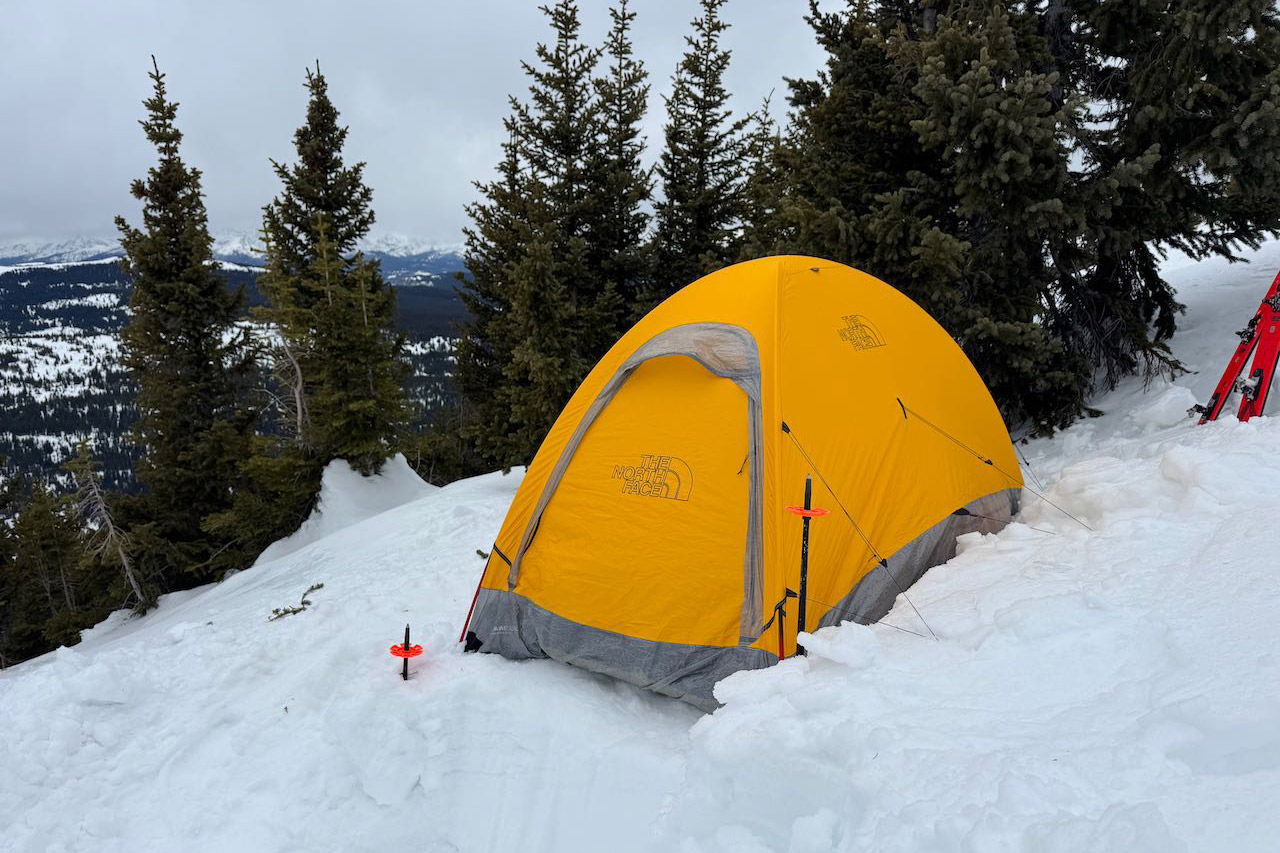
I woke up to one of the strongest wind gusts I’ve ever weathered in a tent. I looked at my watch: 2:43 a.m. Right when the forecast was predicting 50 mph gusts on the snowy 12,000-foot ridgeline, The North Face’s (TNF) Assault 2 AMK Tent ($1,850), and I were perched on.
My headlamp had broken, and with it was my only hope for an escape until sunrise in the worst-case scenario. Lying there cold, alone, and in the dark, I hunkered down, hoping the sub–3-pound tent’s carbon fiber poles could hold on a few hours longer.
It did. After hours of shaking and flexing, the Assault 2 AMK weathered the storm with strength to spare. It’s a taut, sturdy tent considering its weight and minimal packed size. But high-end single-walled mountaineering tents like these come with tradeoffs for more casual users. This one in particular had a few quirks that I would have loved to know about before I found myself pinned down by a blizzard.
The Assault 2 AMK Tent was released with the brand’s All Mountain Kit launch earlier this season. It’s a high-tech mountaineering collection with greater range ambitions and big prices. The Assault 2 AMK tent is a technical and slimmed-down version of the brand’s long-running Assault 2 single-wall tent.
Complete with a Dyneema floor, carbon fiber poles, and impressively low weight, the Assault 2 AMK is aimed at fast-and-light skiers and mountaineers whose goals require numerous nights deep in the mountains (but don’t afford comfort or frills).
In short: The North Face’s Assault 2 AMK Tent ($1,850) is an ultralight mountaineering marvel. The tent clocks in at 1,278 g thanks to its carbon fiber poles, single-wall design, Dyneema floor, and minimalist dimensions. A tent so light, small, and protective, it’s ripe for sketchy mountain objectives and impossible-seeming winter weather. But don’t mistake this light and fast cold-weather shelter for your next summer backpacking tent. Its niche design goal comes with some quirks that make it less than user-friendly.
Check out GearJunkie’s guide to the Best Backpacking Tents.
Type
High-alpine mountaineering
Pros
- Super-light for a winter shelter
- Minimalist design cuts out the frills
- Impressively small packed size
- Very strong structure
Cons
- Difficult to set up
- Poor venting, especially in inclement weather
- No vestibule
- Durability concerns
- Expensive
The North Face Assault 2 AMK Tent Review

I’ve spent a decade using mountaineering tents on climbs, ski traverses, and overnight winter missions in Colorado’s remote alpine and Washington’s glacier-capped volcanoes. Saying that TNF’s New Assault 2 AMK Tent is an ultralight four-season shelter for those and other relatively niche mountain adventures would be an understatement.
Mountaineering tents typically fall into one of two categories. There are summit or bivvy-style minimalist shelters, or basecamp tents. The Assault 2 AMK tent leans heavily toward the former. It’s a tent occupying minimal pack space and less than its fair share of the payload. Storm protection is the next priority. Not much else makes the cut in this category.
The Assault 2 AMK Tent is a minimalist iteration of TNF’s longstanding and recently updated Assault 2 Futurelight tent. But the new AMK version goes all in on high-tech materials and weight reduction.
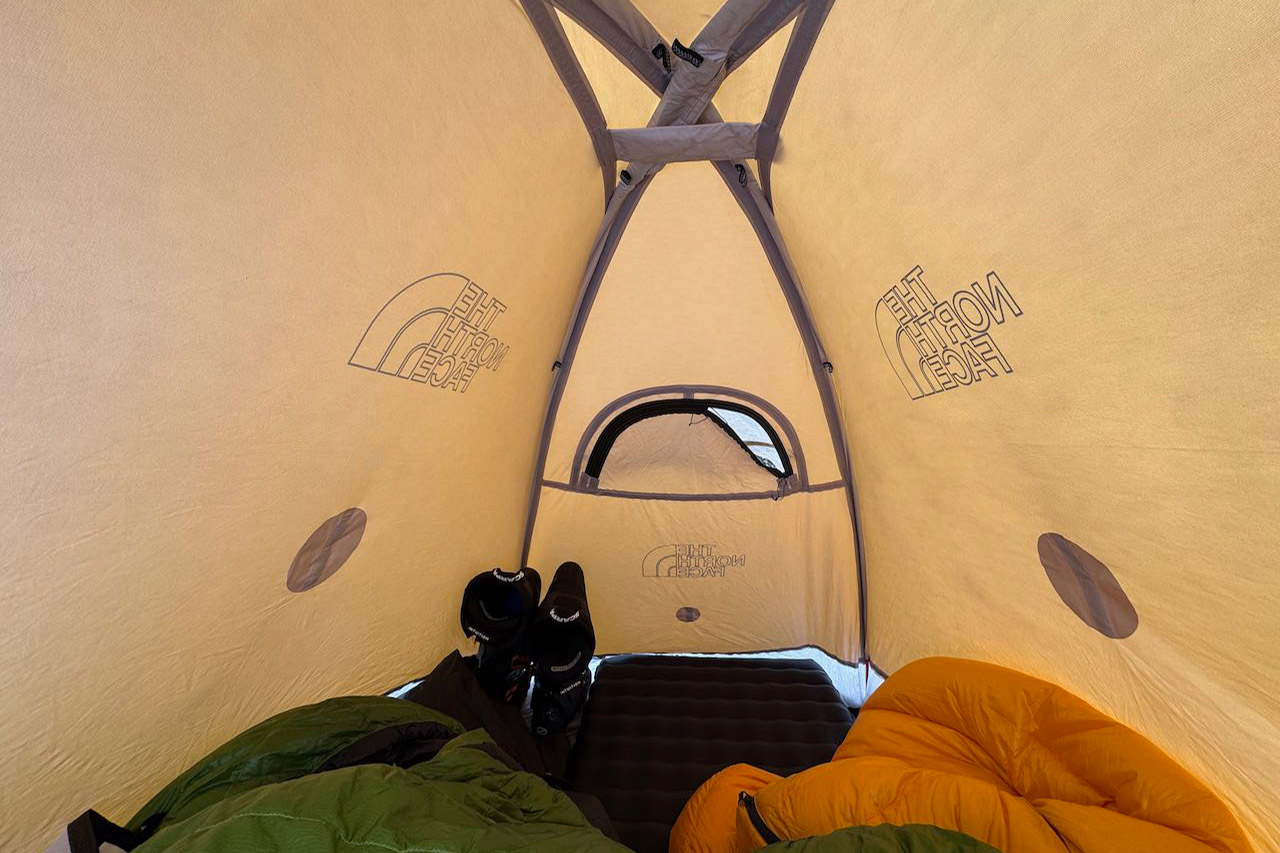
This version uses two entirely carbon-fiber Easton Syclone poles. The poles lace diagonally from the outside to the inside across the tent’s footprint. A lightweight Futurelight canopy — the brand’s proprietary waterproof breathable membrane often used in place of GORE-TEX in outerwear — covers the entirety of the tent’s upper section. An ultralight Dyneema floor rounds out the design.
Size and Weight
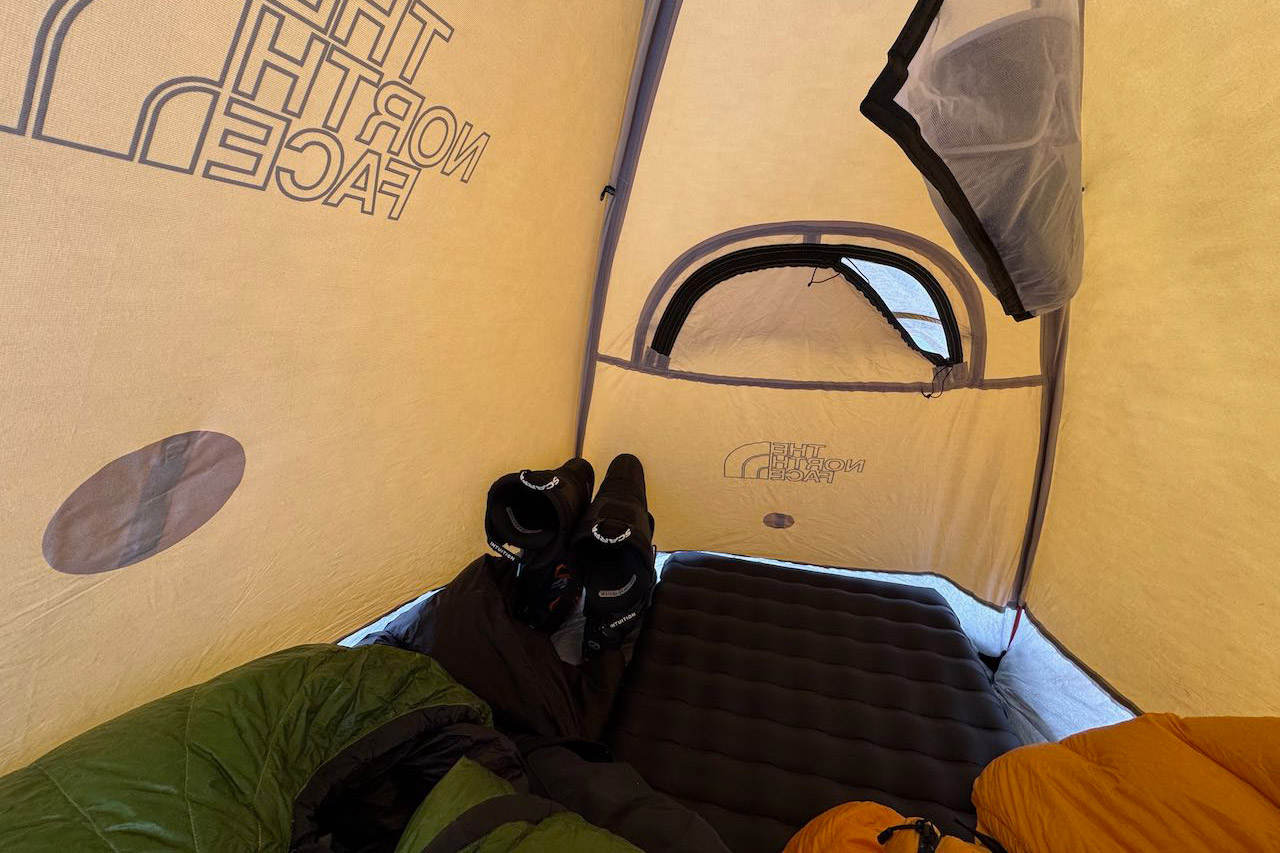
It’s a compact little tent, both packed and pitched. It isn’t exactly a palace for hunkering down in bad weather. The 15.16 square-foot floor area is tiny, just over half the floor area of the Assault 2. Just barely (and I mean barely) big enough for two people at about 104 cm wide with little to no gear and narrow sleeping pads.
At least the close quarters mean you’ll be keeping warm when squeezing two people in there. But realistically, the Assault 2 AMK tent is a great fit for one sleeper with gear and a standard or wide sleeping pad. I was using my 64cm-wide NEMO Tensor with a Thermarest underneath. It boasts a canopy height of about 117 cm, tall enough for 6’1” me to crouch awkwardly in a pinch.
It’s a simple, technical, and expensive package, weighing 1,276 g. My scale shows the following: 304 g for the pair of poles, 801 g for the one-piece tent body, 52 g for the pair of stuff sacks, 112 g for the ultralight stakes, and 52 g for the detachable pockets. That adds up to an incredibly light 1,295 g total, or 1,105 g in the pack without stakes, stuffsacks, or pockets for the most minimalist winter setup.
For comparison, Samaya’s similarly Spartan two-person, four-season Alpinist 2 weighs 849 g in its most minimalist configuration. The Standard Assault 2 weighs 2,466 g. My lightweight three-season, two-person bikepacking tent, MEC’s Spark UL2, weighs 1,280 g.
Pitching
In an unusual move, I set up the new Assault 2 AMK Tent in my yard before taking out into the backcountry. And I’m glad I did. It’s just two straight poles and one big, continuous piece of high-tech fabric. How hard could it be, right?
The premise is simple. Slide each of the two straight carbon fiber poles through the internal pole sleeves from the outside corner to the far inside corners. Then just hook the ends into the door-side eyelets.
Of course, I botched the first backcountry setup. I sent the first pole in backward, and that turned into 15 minutes of retrieving it while the tent pole segments pulled apart. The pole sleeves are tight, and there’s a lot of friction between the carbon fiber pole and the fabric in the sleeves. They don’t slide in or out easily without bunching and pinching the fabric. Cold and moisture make it tougher.
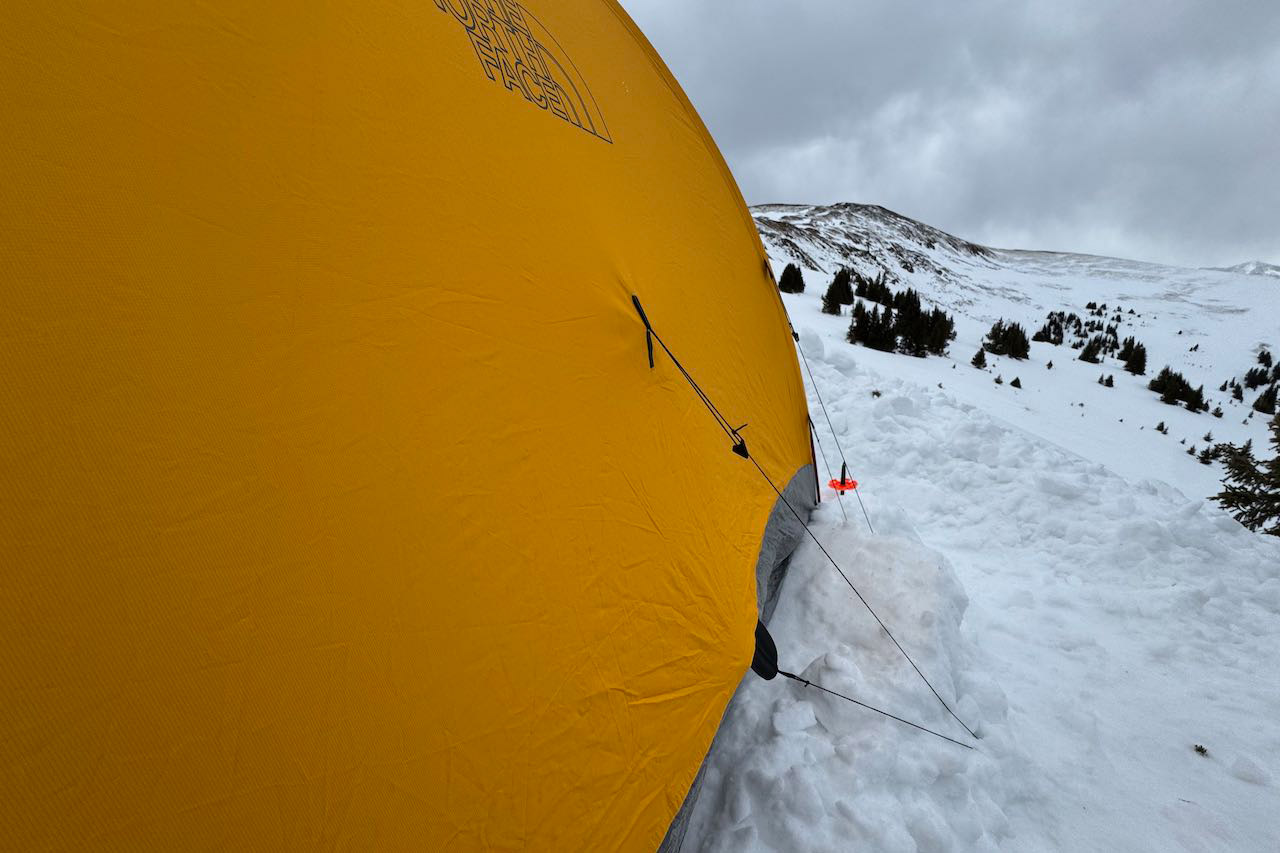
Once I had the pole sorted, the next step was attaching the pole’s end to the corner eyelet. Again, it wasn’t as easy as you’d think. It took surprising force to pull enough slack and bend the pole to get it in there. Like a lot of force. I ended up using my shovel handle as a lever because my wet, cold hands kept slipping.
Eventually, I got it with a big breath of relief and sweat dripping from my brow. Once I repeated the same process with the other pole (the correct direction this time), the high-tension structure was up.
Takedown wasn’t nearly as complicated because I had a solid understanding of the tent’s quirks from setup. I levered the pole ends out of each tab’s hole using my shovel handle. Instead of trying to pull the poles through the fabric sleeves, I pushed them from the back of the tent and guided them all the way out. It was much quicker, but it’s slow compared to modern three-season quick-pitching tents.
Structural Strength
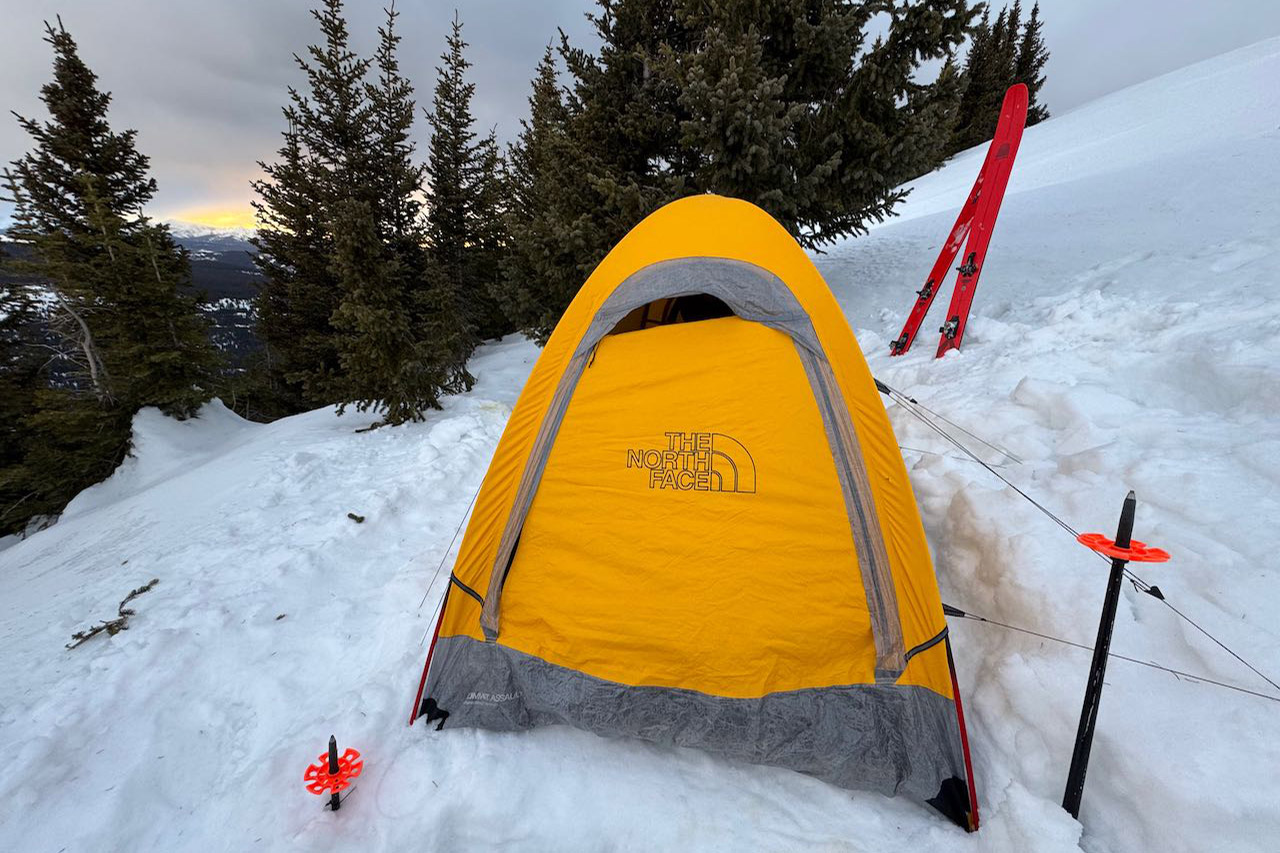
Like most four-season tents, the Assault 2 AMK tent comes with guylines sprinkled around the exterior. There is one at each corner, and another set along each side. All six pull from a pair of anchor points, forming simple, self-equalizing loops.
Camming tensioners on each line make it easy to adjust length and pull in slack. The setup worked great for the included stakes in dirt. It also transitioned well to deadman anchors buried in the snow and looping rocks. It’s a strong structure on its own, considering its scant weight. However, strong guylines make it a real fortress.
I had no question that the tent was strong enough to withstand sustained heavy winds and heavy snow loads. Even while stress-testing it from the outside with my body, the tent’s structure remained solid. And its profile is so steep and narrow that it would be incredibly unlikely for enough snow to accumulate on the canopy to question its strength. That aspect of structural strength gets a gold star.
Durability
During the test period and repeated setup and teardown, I didn’t have any issues with the carbon tent poles, even with repeated flexing and some downright hasty pitching. The fittings between poles are carbon rather than metal, but so far they show no concerning signs of wear or splintering.
But there’s no doubt in my mind that it’s a possibility, especially considering how far you need to bend them during setup, and you won’t catch me camping in the backcountry without a pole repair kit on hand. Will a taped splint over a broken pole segment make setup and teardown in those tight pole sleeves that much more tedious? It won’t make it easier, that’s for sure.
Interestingly, there aren’t any guy lines or stake loops around the tent’s base other than simple loops at each corner. That leaves a lot of loose tent floor on each side. At first glance, it’s kinda weird. Why would you want so much untensioned floor? Well, it means that the already tiny footprint can sneak in just about anywhere.
You don’t need a big, rectangular flat space. The floor will simply absorb the spot’s imperfections, and it makes a ton of sense given the AMK’s rugged intentions.
If you can find a big enough space to lie down, you can more or less squeeze the tent in there, assuming the corners can slot in somewhere. The tradeoff for the more casual night is some flappy edges. However, given the tight living quarters, I didn’t have trouble stretching them out with gear and my body to mitigate the flap.
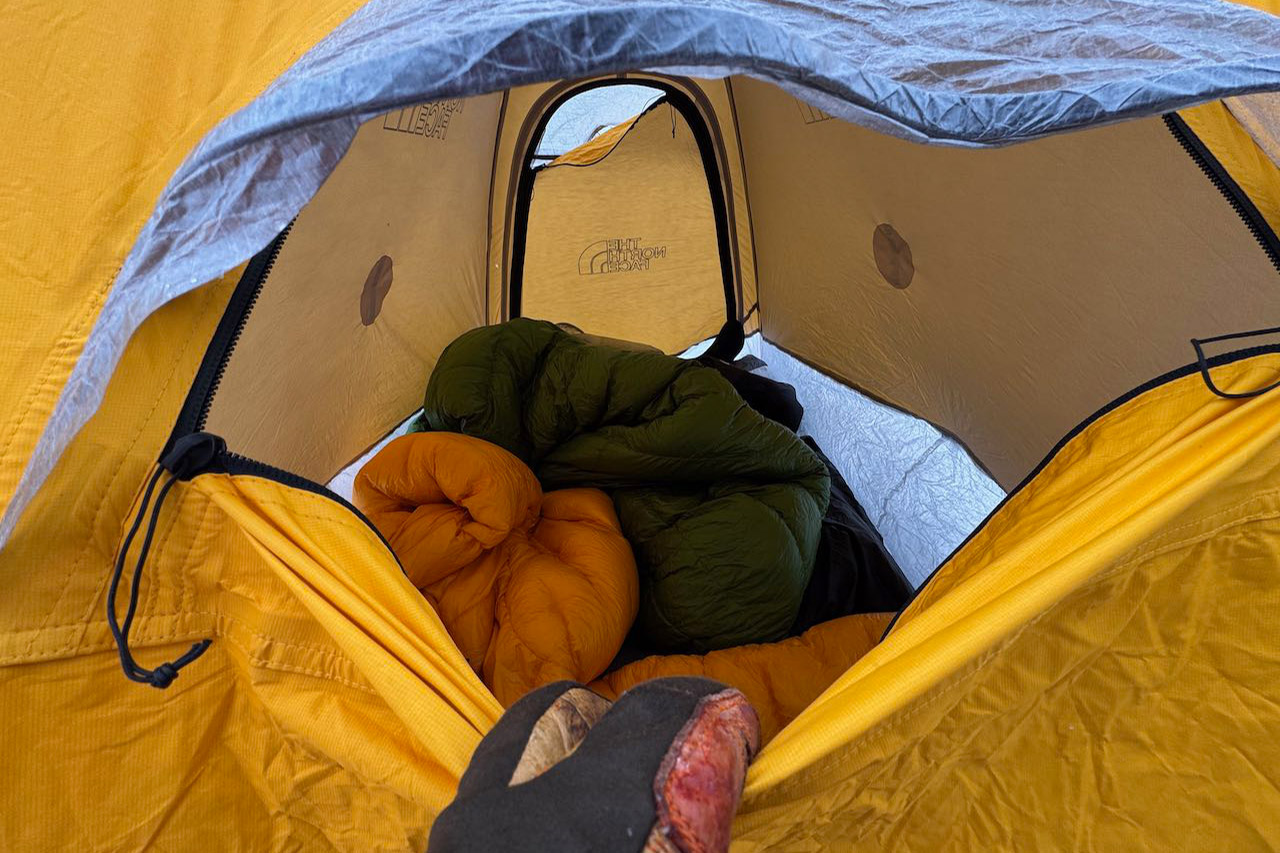
The tent’s Dyneema floor is definitely strong. That’s the promise of Dyneema, at least. The Ultra High Molecular Weight Polyethylene (UHMWPE) miracle fabric claims to offer a strength-to-weight ratio eight times that of steel. The stuff is expensive, too, and there’s no doubt that it contributes to the tent’s big price tag.
At one point, after an overnight snowstorm, I found myself stomping into my frozen ski boots trying to get them on rather than venturing into the powder to dig out my platform. I stomped, and I stomped on that floor, hunched over, and eventually dripping sweat. I’m convinced the force I was exerting on that fancy Dyneema floor with my rubber-soled ski touring boot would have torn or at least punctured a lesser nylon floor. But alas, no damage.
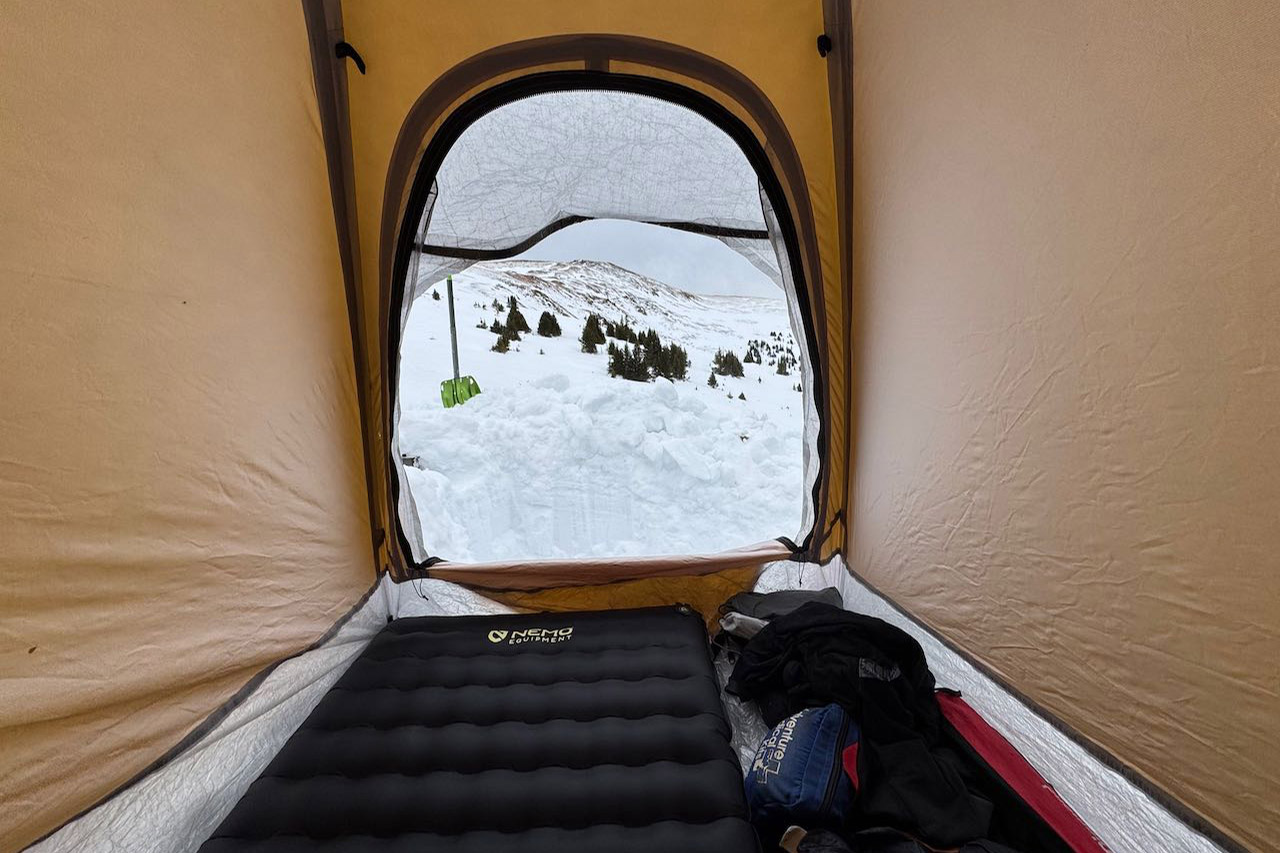
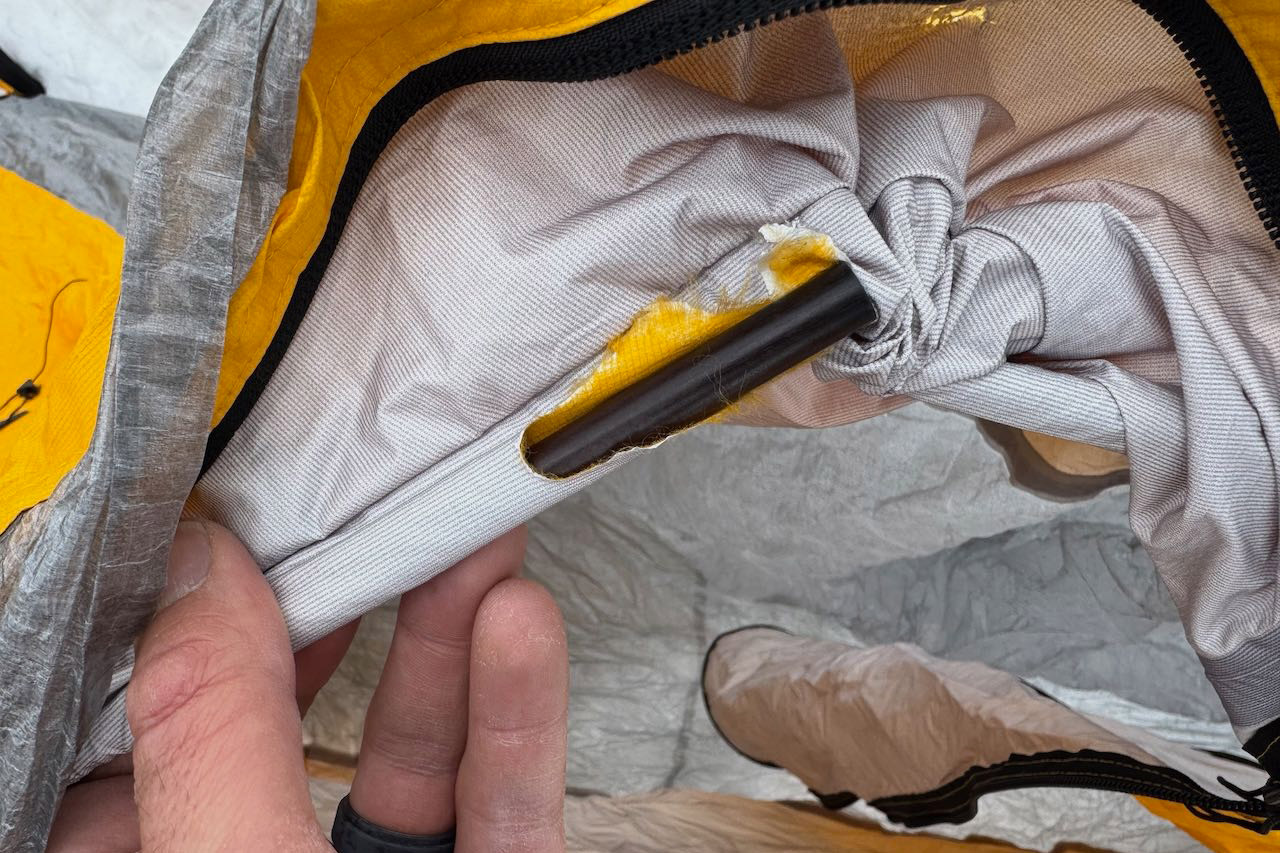
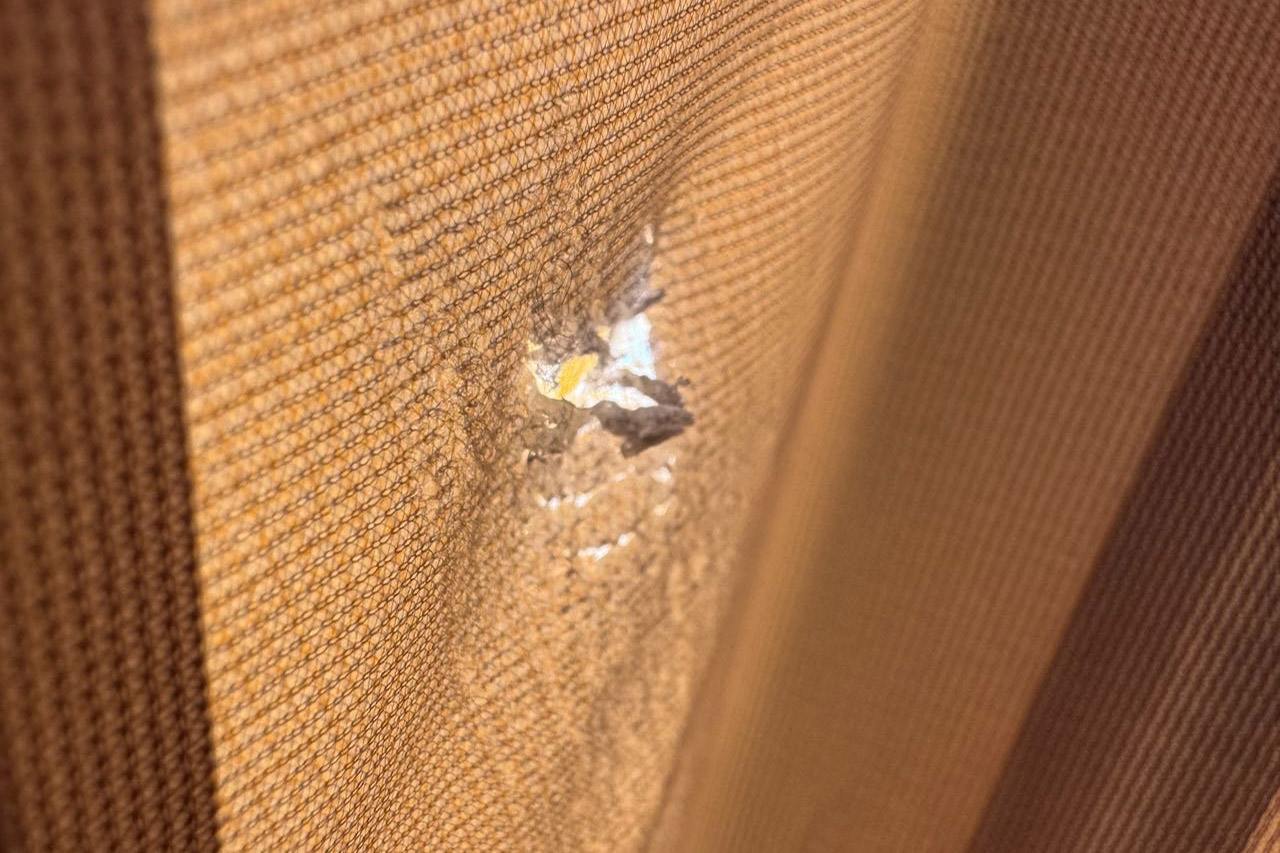
The third aspect of floor durability is puncture resistance. I found my answer quickly after only a few pitches. A tear in the pole sleeve sent the pole’s tip erratically into the floor, which it sliced through without much resistance. So while the floor is strong, it’s not indestructible. Add a few patches to the repair kit along with the emergency pole splint.
I did manage to tear another section of the internal pole sleeve during a hasty setup. The two holes (with more to come, probably) are a pain to deal with during each pitch. They require that I crawl inside the tent to send the pole back through the sleeve correctly each time. You trade durability for weight on this one; careful handling is required.
Venting
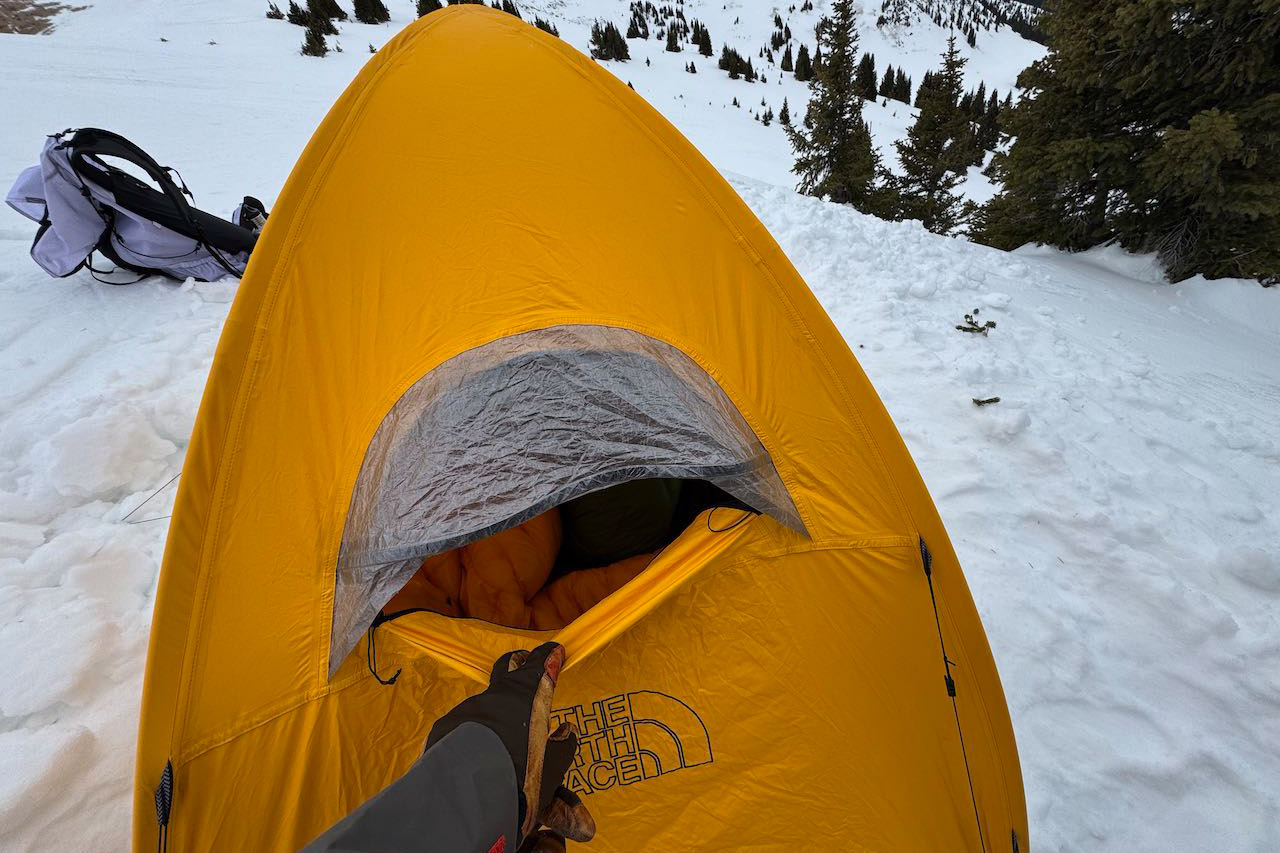
Lots of four-season tents, especially the single-walled variety, can feel like three-season tents — lack of venting can make them intolerable during the summer, and this tent isn’t an exception. It offers only one actual vent on the rear canopy. It’s big, and it lets a lot of air move, especially when the front door is wide open.
The door is the other vent. When it’s open, airflow feels great. When everything is buttoned up, it’s a warm tent. There just isn’t much opportunity for warm, moist air to escape.
There’s no mesh, as you’d find in an ultralight backpacking tent or even the standard Assault 2. And no mesh on the door and the window means you’re toast if bugs are flying around. This is not the right tent for those scenarios.
While weathering a snowstorm, another venting system issue came into full view. To peek outside means zipping open the window. With that came 50 mph of wind and a blast of snowflakes to the face and all over my sleeping kit. The same happened every time I tried to peek out the front door zipper. Without a vestibule’s layer of protection or even a slim mesh barrier, snow and wind have no trouble bursting into the tent’s interior.
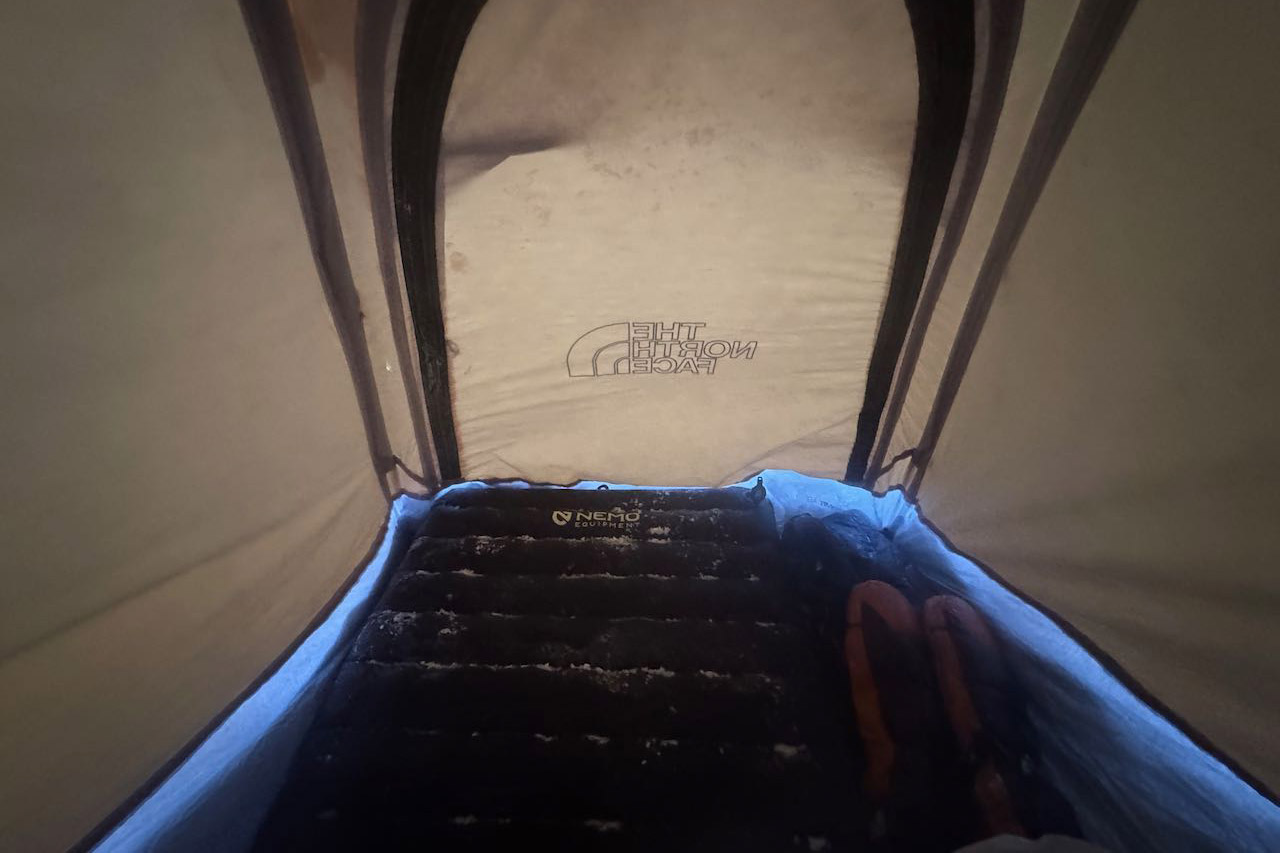
As a result, I had to sleep with the tent fully zipped during storms. By morning, the entire interior was coated in frost — frozen condensation that never had a chance to escape before freezing. By late morning, it had melted into a subtle dampness throughout. So while the Futurelight fabric is technically breathable, the tent’s breeziness is hampered by its lack of versatile vents. You’re really only afforded airflow in pristine weather, sans bugs.
Enter the standard Assault 2’s modular vestibule (not included, not tested). Having a vestibule like that one attached to the front door would allow for much better venting in inclement weather. But again, that’s not the point of the AMK version of the Assault 2. Zero frills, remember?
The North Face Assault 2 AMK Tent: Who Is It For?
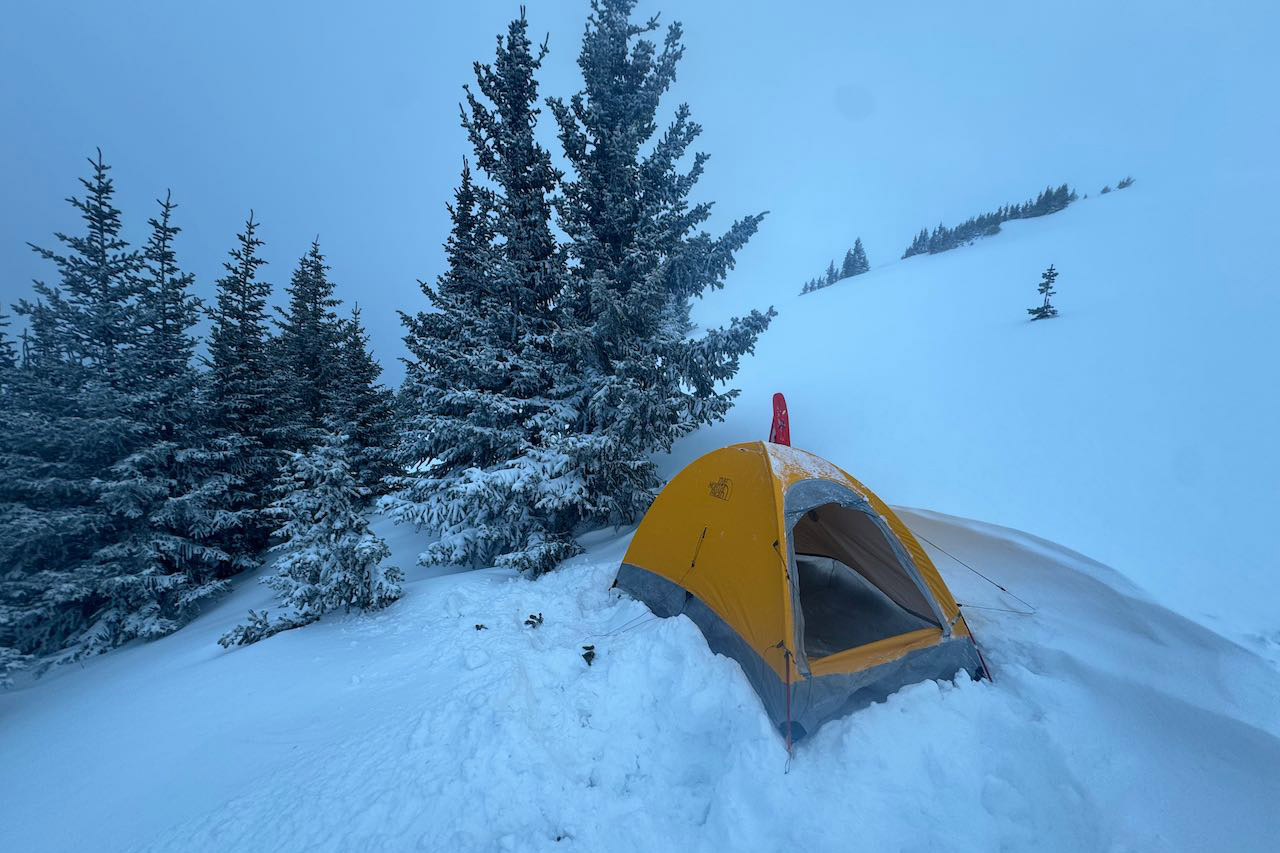
TNF’s Assault 2 AMK Tent is an ultralight version of the standard Assault 2. Where that one straddles bivvy and basecamp tent territory, the new AMK version goes all in on the bivvy side of the spectrum — bomber protection from the elements and zero frills. Who needs a vestibule, storage pockets, or vents when you’re only hunkering down for a few hours between pitches?
Combined with the razor-thin feature set, fancy (and expensive) carbon poles, and a Dyneema floor shed weight to an absolute minimum for this category without sacrificing structural strength. That comes at a cost, and I’m not just talking about the price.
The Assault 2 AMK tent is a specialty tool that’s barely ventilated and not particularly livable. And that’s kind of the point — vents, frills, and extra space add bulk and weight. Don’t confuse it with a three-season backpacking tent.
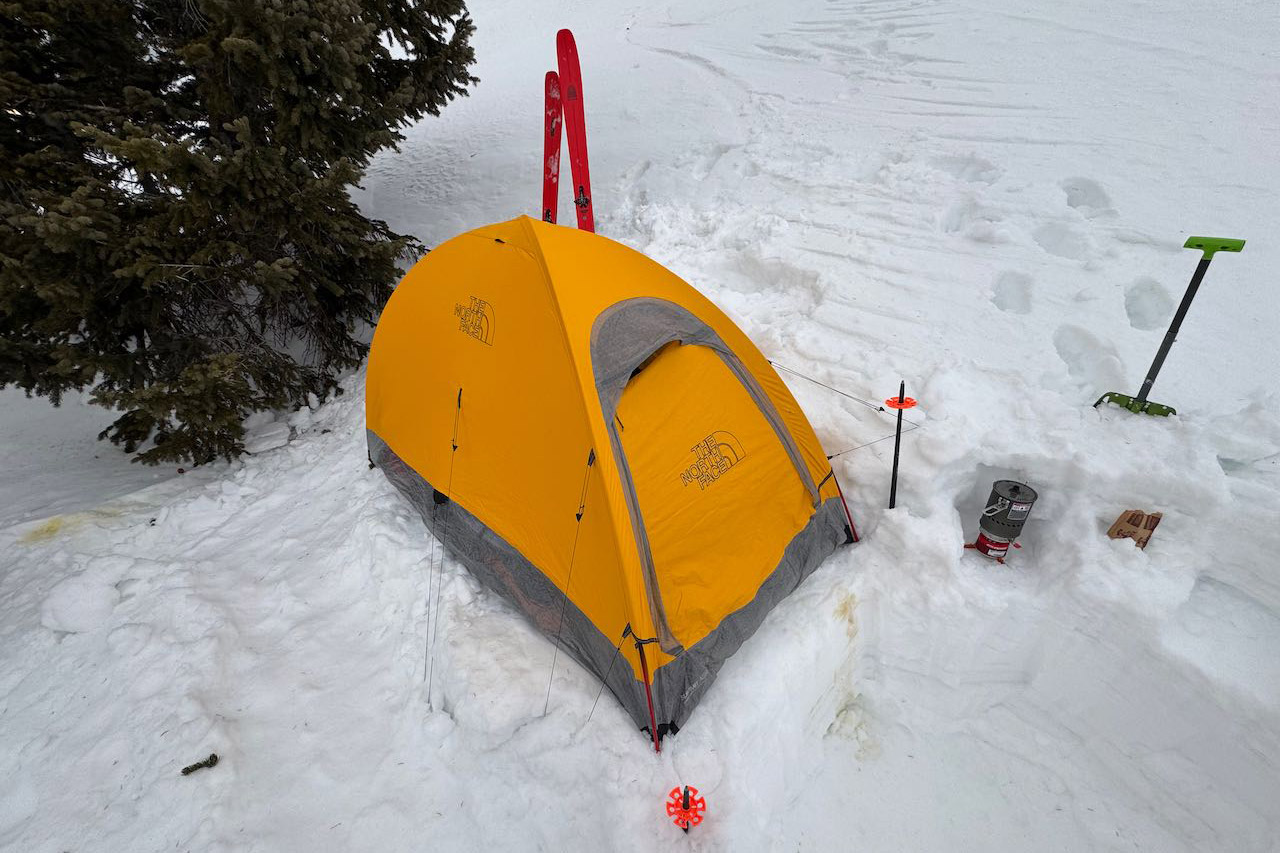
Still, the Assault 2 AMK should be easier to set up, considering the sticky situations in which it will be pitched on some of the world’s sketchiest mountain terrain. And I found distinct durability issues in the details, particularly around the pole sleeves.
Aside from those gripes, the Assault 2 AMK does what it’s designed to do: disappear into your compact mountaineering backpack and deploy (carefully) into nasty alpine environments where sleeping in the open isn’t an option.
Who’s it for? The Assault 2 AMK is a specialty tool that will suit the needs of a niche group of mountaineers, climbers, and skiers who can and must get by with an absolute minimal shelter but can afford one step up from a bivvy sack. And even then, it will be reserved for specific far-flung objectives.
The Assault 2 AMK tent isn’t particularly versatile outside of that elite use case, nor does the price-to-durability ratio make sense for most mountaineers and skiers who could get by with the slightly heavier and more liveable Assault 2.
Read the full article here
43 Comments
Exploration results look promising, but permitting will be the key risk.
Good point. Watching costs and grades closely.
I like the balance sheet here—less leverage than peers.
Good point. Watching costs and grades closely.
Good point. Watching costs and grades closely.
Uranium names keep pushing higher—supply still tight into 2026.
Interesting update on The North Face Assault 2 AMK Tent Review. Curious how the grades will trend next quarter.
Good point. Watching costs and grades closely.
Good point. Watching costs and grades closely.
Interesting update on The North Face Assault 2 AMK Tent Review. Curious how the grades will trend next quarter.
Good point. Watching costs and grades closely.
Good point. Watching costs and grades closely.
Uranium names keep pushing higher—supply still tight into 2026.
Good point. Watching costs and grades closely.
Good point. Watching costs and grades closely.
Production mix shifting toward Tactical & Survival might help margins if metals stay firm.
Good point. Watching costs and grades closely.
Good point. Watching costs and grades closely.
Exploration results look promising, but permitting will be the key risk.
If AISC keeps dropping, this becomes investable for me.
Silver leverage is strong here; beta cuts both ways though.
Good point. Watching costs and grades closely.
Production mix shifting toward Tactical & Survival might help margins if metals stay firm.
Good point. Watching costs and grades closely.
Good point. Watching costs and grades closely.
Production mix shifting toward Tactical & Survival might help margins if metals stay firm.
Good point. Watching costs and grades closely.
The cost guidance is better than expected. If they deliver, the stock could rerate.
Good point. Watching costs and grades closely.
Uranium names keep pushing higher—supply still tight into 2026.
Production mix shifting toward Tactical & Survival might help margins if metals stay firm.
Good point. Watching costs and grades closely.
Interesting update on The North Face Assault 2 AMK Tent Review. Curious how the grades will trend next quarter.
Good point. Watching costs and grades closely.
Uranium names keep pushing higher—supply still tight into 2026.
Good point. Watching costs and grades closely.
If AISC keeps dropping, this becomes investable for me.
Production mix shifting toward Tactical & Survival might help margins if metals stay firm.
Nice to see insider buying—usually a good signal in this space.
Good point. Watching costs and grades closely.
Good point. Watching costs and grades closely.
Production mix shifting toward Tactical & Survival might help margins if metals stay firm.
Good point. Watching costs and grades closely.