
Planning for a camping trip is easy. Just follow the simple outlines below, vetted by our highly experienced camping team.
An easy place to begin is to consider your cslamp kit much like a home. Think of it as a bedroom, kitchen, and living room. Each section has a specific kit. The following guide is broken down into seven camping segments: car (camping next to your car at a campsite), backpacking, ultralight backpacking, wet weather, hot weather, winter, and hunting.
The first section offers general camp kits, with more specific scenarios detailed in the sections below.
What Should I Pack for Car Camping?
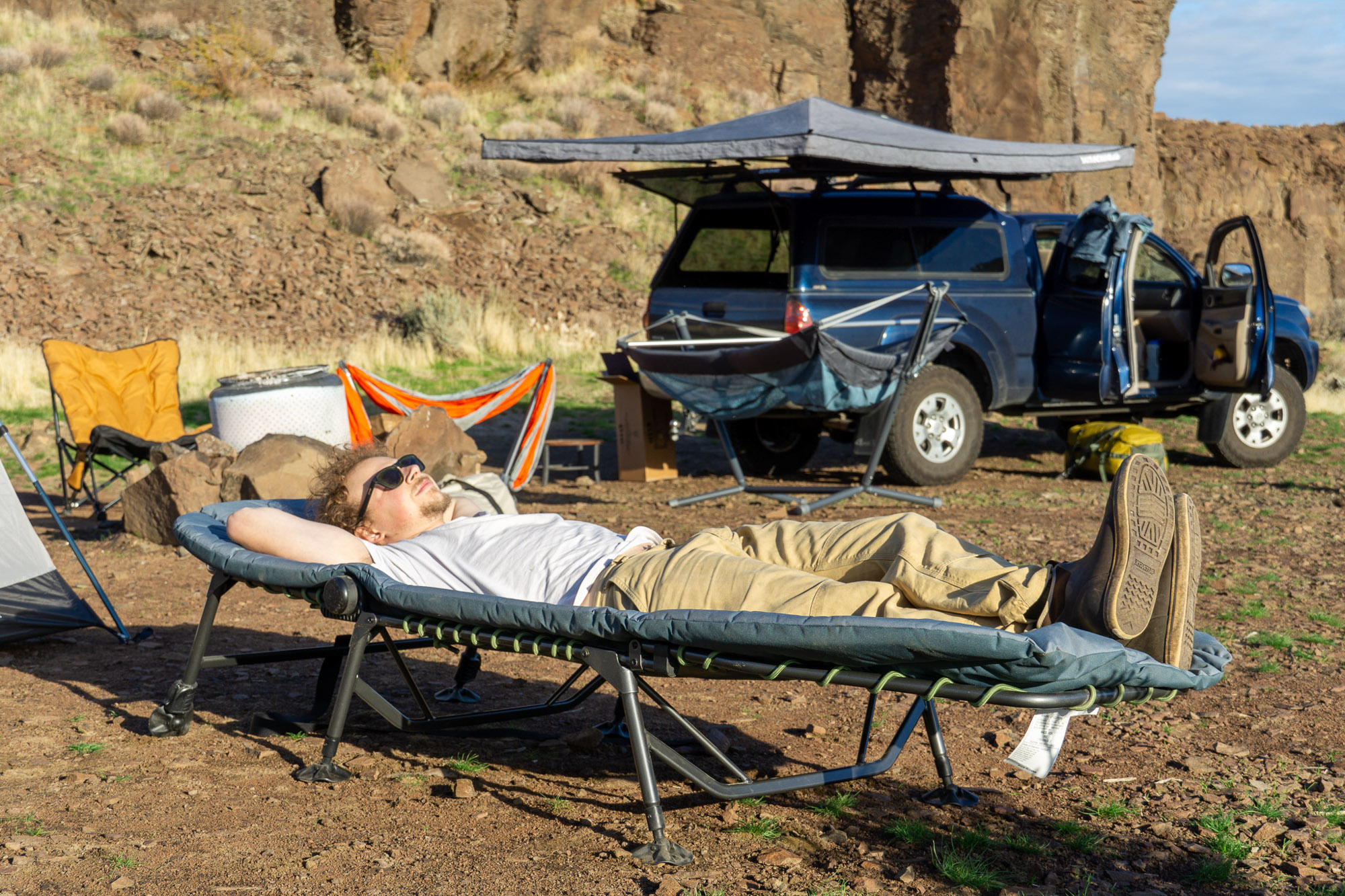
Start with a tent shelter and your sleeping bag, pad, and toiletries. Pack all your cooking gear and food together for an organized campout kitchen. Then you can add comfort items with chairs, games, and even a tarp for shade and some weather protection while sitting (or cooking) outside your tent.
We know backpacking tents work for car camping, but they are more fragile and more expensive than car camping tents. If you decide to use one for car camping, we recommend packing a footprint to protect yours from sharp objects, as well as treating it with some care.
Car camping gear is often less techy and cheaper than more specialized gear. We recommend sizing up for a camping tent, which often has steeper walls, higher ceilings, and more storage options. Likewise, here’s where you can choose a roomier sleeping bag and a more cushioned sleeping pad (some of which sleep better than any blow-up mattress you’ve used as a houseguest).
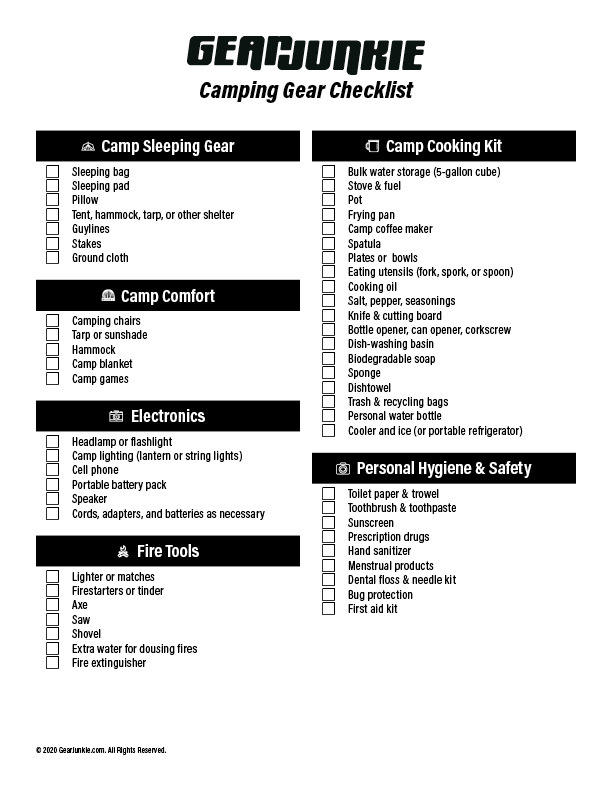
We’ll start with this packing checklist for general car camping, though you’ll still want to consider how far from the car your site is when packing.
Sleeping Gear
- Sleeping bag
- Sleeping pad or camping mattress (comfort and warmth)
- Tent
- Pillow (optional but highly recommended)
- Sheet (optional)
- Groundcloth (optional)
Cooking Kit
- Water storage (a 5-gallon cube is ideal for car camping)
- Stove
- Fuel (make sure it’s the right fuel for your stove!)
- Pot (for boiling water or heating liquids)
- Frying pan (such as cast iron or nonstick)
- Camp coffee maker
- Spatula
- Plates, bowls (one per camper)
- Eating utensils (fork, spork, or spoon; one per camper, depending on meals)
- Cooking oil
- Salt, pepper, seasonings
- Cutting board
- Knife
- Cutting board/mat
- Bottle opener, can opener, corkscrew
- Dishwashing basin (or plastic bin)
- Biodegradable soap
- Sponge
- Dish towel
- Multiple trash bags (for trash, recycling, compost, etc.)
- Personal water bottle (one for each camper) or water bladder
- Cooler and ice (or electric cooler)
Hygiene & Safety
A bar of biodegradable hand soap is a must-pack to clean your hands before cooking. Soap can remove dirt and grease, and kill germs and bacteria that hand sanitizer cannot. Hand sanitizer doesn’t kill norovirus or other waterborne parasites, so think of it as a secondary measure for cleaning your hands while hiking and away from water.
- Toilet paper/wipes
- Toothbrush and toothpaste
- Prescription drugs
- Biodegradable hand soap
- Hand sanitizer
- Menstrual products
- Sunscreen
- Lip balm
- Bug protection
- Dental floss and needle kit
- First-aid kit
- Trowel for digging catholes (if no restrooms available)
Camp Comfort (Non-Essentials)
If you’re camping for a few days or weeks, these things will make your time outside more enjoyable.
Camp chairs will make a world of difference, especially in dispersed sites without tables. A tarp or sunshade is an excellent addition to summertime campsites. For cooler temps, a camping blanket helps keep things cozy before heading to bed.
- Camping chairs
- Tarp or sunshade
- Camp blanket
- Camp games
- Lantern or campsite lighting
- Power bank or generator (for phones, lights, and other devices)
Campfire Tools
Campfires are a joy and an iconic symbol of nighttime gatherings. Car camping at dedicated (and managed) sites is one of the few places where you can expect to be able to build one, though you should check beforehand.
Increasingly, backcountry campfires are banned due to wildfire risks (particularly in the West) and conservation concerns. If you do make a fire, please follow Leave No Trace principles. The evolution of portable lighting has made it easier to illuminate campsites. Similarly, newer propane fire stoves make it easy to turn the flame on and off with the flip of a switch, with no need to douse them with water.
- Lighter or matches
- Firestarter (old newspaper, commercial firestarters, dryer lint)
- Axe
- Saw
- Shovel
- Extra water for dousing fires
- Fire extinguisher (for RVs or campers with indoor kitchens)
Camping Clothing
For any camping trip that involves hiking, we recommend wicking, quick-drying layers. That means leaving most cotton items at home, though you can certainly get away with a T-shirt around camp.
We love wool socks, underwear, and shirts for their temperature regulation and odor resistance while backpacking and hiking. For general camping or backpacking in hot and humid conditions, you may want to lean into synthetic fabrics. For footwear, pack hiking boots or shoes suited to the terrain, as well as a pair of camp shoes. That’s also a good time to change socks!
- Wicking shirts
- Quick-drying pants
- Sun hoodie or long-sleeve shirts (look for infused bug protection, too)
- Sun hat or neck gaiter
- Socks
- Dedicated sleepwear
- Sunglasses (not clothing, but you get it)
How to Pack for a Backpacking Trip
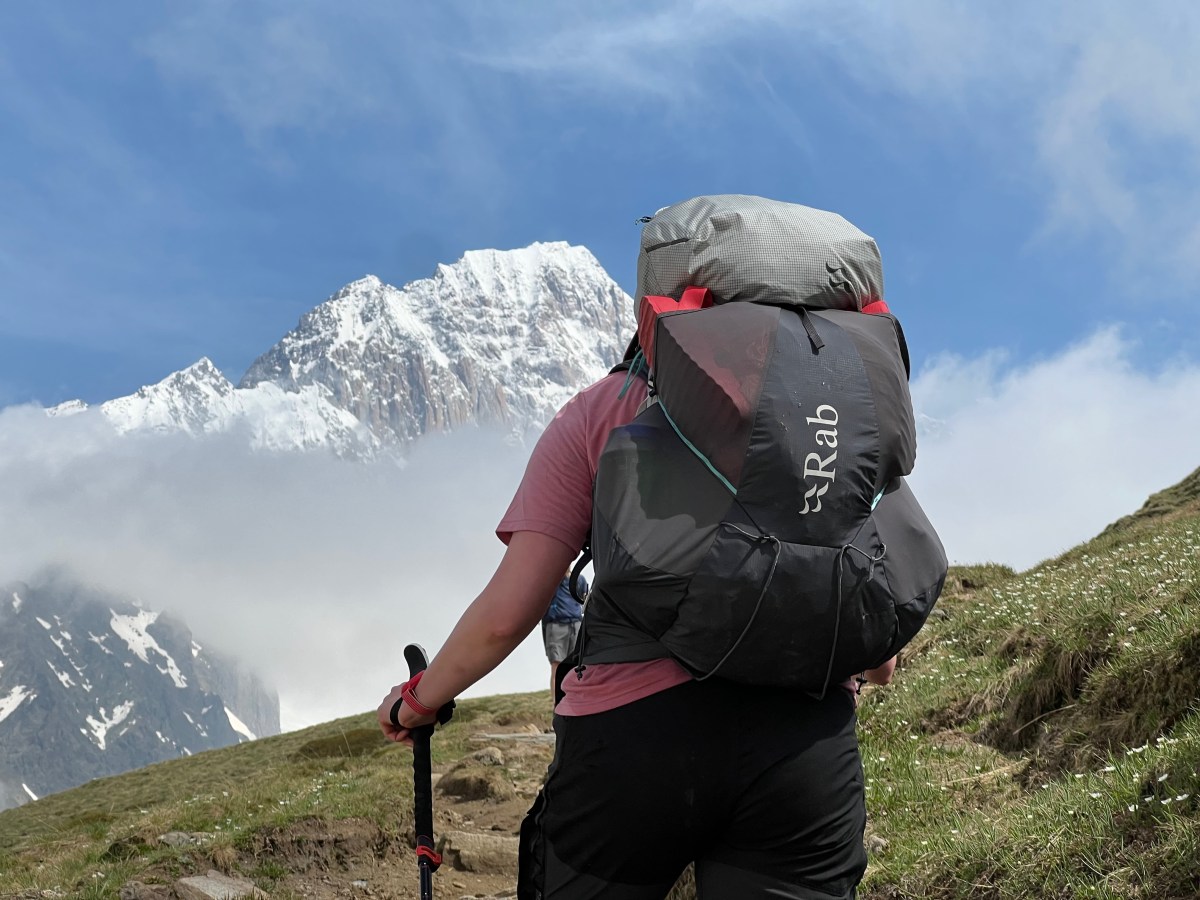
The main item here is a backpacking backpack. For lightweight packers, a 55L capacity seems to hit a sweet spot for short trips and conservatively packed long trips. Larger packs are recommended for thru-hikes and areas where more gear (or a bear canister) is necessary.
Of course, you’ll want the core sleeping essentials, though we’d add the words “lightweight” or “backpacking” before each item. You may want to go “ultralight” on one item to save space and reduce your overall pack weight. For backpacking, you basically ditch the “living room” concept, unless you count a large tent vestibule or tarp.
Navigation tools are the other must-pack. We acknowledge that digital maps are a preferred method these days, yet it’s best to pack a map and compass just in case. If you use a digital map, make sure it is downloaded and accessible offline. And don’t forget a power bank!
Sleeping Gear
Cooking Kit
- Water filtration system (with backflush/cleaning capabilities)
- Hydration reservoir
- Water purification tablets (just in case option)
- Hydration bladder/reservoir
- Backpacking stove
- Fuel canisters
- Backpacking meals, snacks, etc.
- Bear canister (if recommended/required)
- Wag bag (if backpacking conditions mandate)
Backpacking Gear
- Trekking poles
- Headlamp
- Map and compass
- Downloaded digital map (see apps like AllTrails and onX)
- Any required permits and reservations
- ID, credit card, cash (rubber band together and in a sealed bag)
- Cellphone with charging cord
- Power bank
How to Pack for Ultralight Backpacking
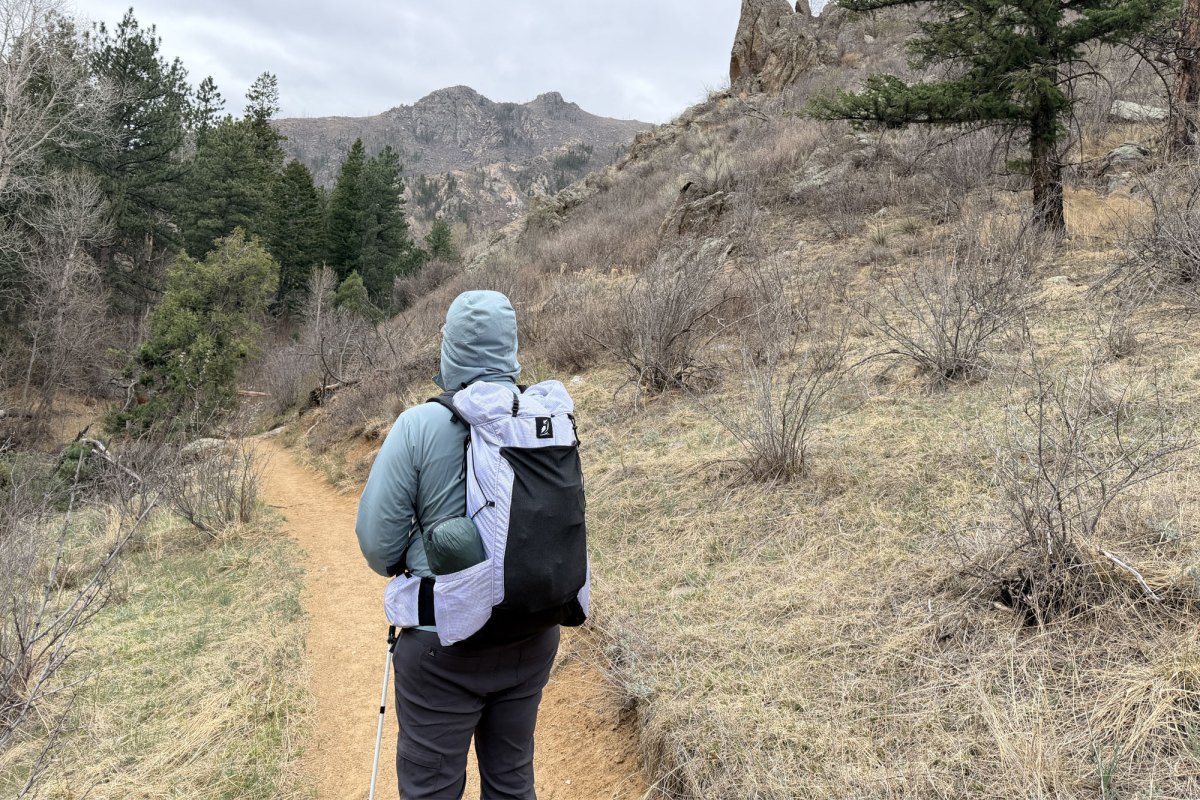
If you’re an experienced backpacker ready to enter the ounce-counting world of ultralight backpacking, you start by finding lightweight versions of the heaviest items (usually the pack itself, shelter, and sleep system). For instance, you may choose a sleeping quilt over a sleeping bag and rely on some warmth from a sleeping pad.
A general guideline for an ultralight base weight is to keep it under 10 pounds. That weight includes the essentials of a backpack, a shelter, a sleeping bag, and pads. Beyond cutting weight, you’ll want smaller, more compact, and multiuse gear. (Trek poles will serve as tent poles, and a foam sit pad can double as a headrest.)
We have some tips to lighten your backpacking kit, which include what not to pack as well as what to bring.
Ease into it to find the compromise between weight and comfort that suits you. Even experienced ultralight packers make room for the luxury of a sit pad or pillow.
Sleeping Gear
Cooking Kit
- Minimalist camp stove
- Cup or container for drinks and meals
Backpacking Gear
- Minimal toiletries
- Basic first-aid kit
- Repair tape (small strips of different repair tape, like Tenacious tape and duct tape, wrapped around a pole or lighter
- Foot care tape (Moleskin, Leukotape, athletic tape)
- Power bank and charging cords
- Extra batteries
What to Pack for Hot-Weather Camping
You’ll still want your backpacking staples, but consider these items for car camping or backpacking in hot and humid conditions.
Backpacking Gear
- Sun hat
- Sun hoodie that wicks and has a high SPF rating (30+)
- Breathable shoes
- Ditch the sleeping bag for a liner
- Leave the rainfly off your tent if the forecast allows
- Electrolyte mixes (drink during hikes or breaks)
- Extra water (add a larger reservoir and consider carrying an extra 1L to 2L collapsible bottle).
- Portable fan (if car camping)
What to Pack for Wet-Weather Camping
Your packing list will vary depending on how much hiking you plan to do versus wet-weather camping.
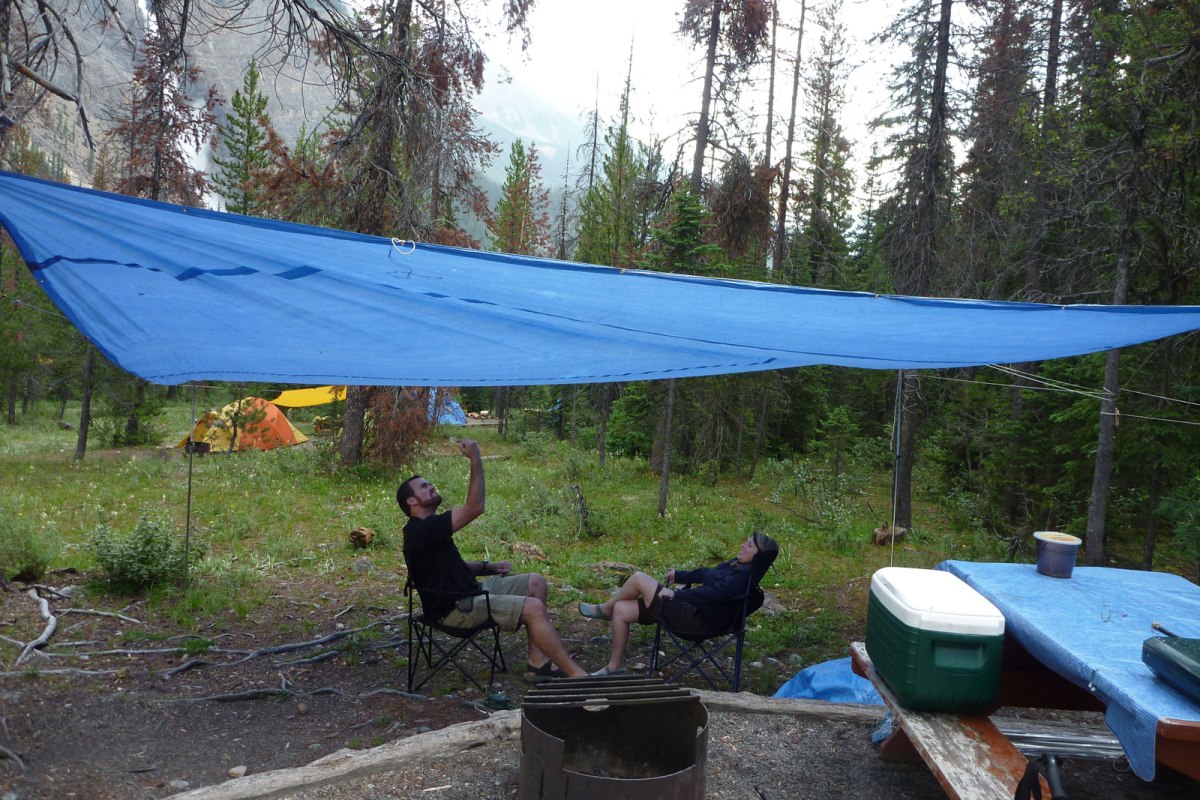
For car camping in wet weather, a car tarp provides good rain coverage and lets you set up chairs and a table underneath for more comfort while cooking and/or waiting out the conditions.
For backpacking in wet weather, you’ll want waterproof and wicking layers, and a few of these items:
- Backpack rain cover or rain liner
- Breathable rain jacket
- Rain pants
- Waterproof boots/shoes
- Gaiters (especially if you skip waterproof shoes)
- Wool/synthetic layers and socks (no cotton)
- Waterproof hat (hoods can get annoying)
- Rain tarp setup (for camp or car)
- Parachute cord (for tarp setup)
- Tent footprint (to keep water from pooling underneath)
- Microfiber towel
- Waterproof stuff sacks
What to Pack for Winter Camping and Backpacking
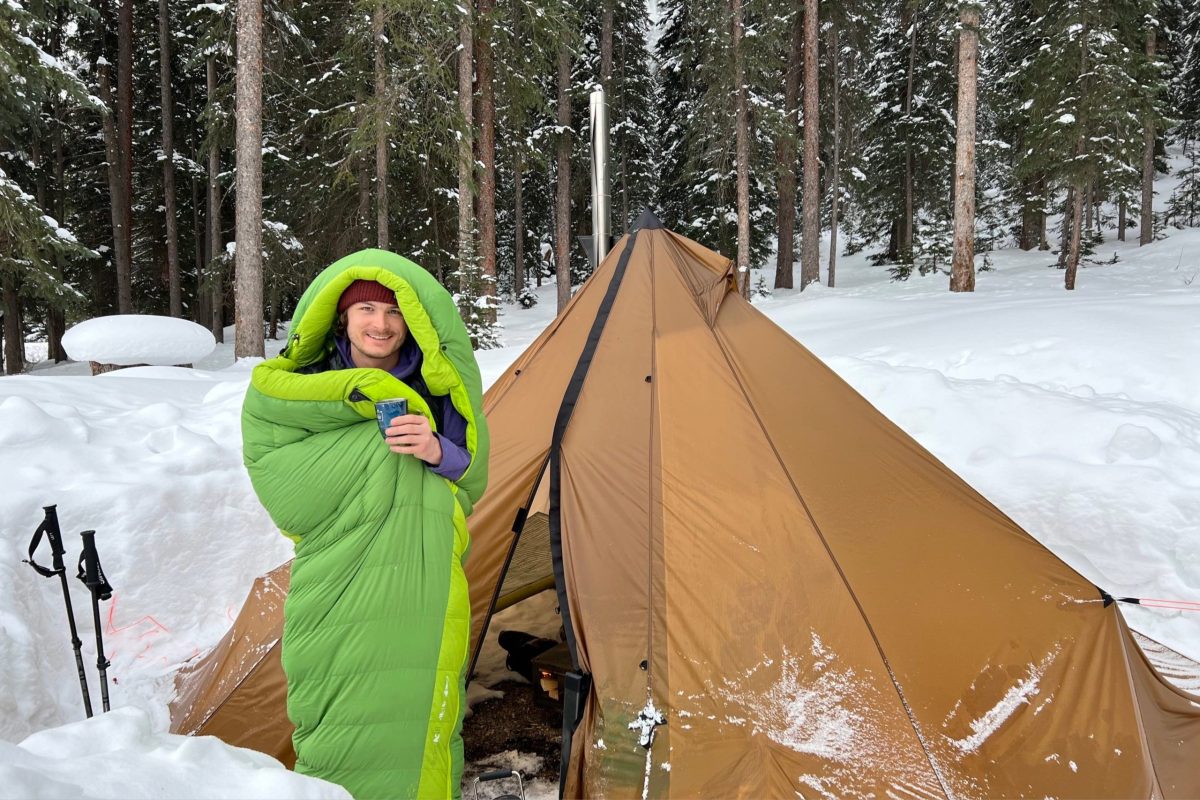
Ah, the fourth season. Here’s when you don’t want to skimp on the essentials and probably want a whole kit built around winter camping. All that performance often comes with a high price tag, so check your local shop’s used section.
This list assumes colder temperatures and wintry conditions, but you may pack less if applicable to your location.
Sleeping Gear
- Four-season tent
- Winter sleeping bag (usually down fill and rated at 0 degrees or below)
- Insulated sleeping pad
- Closed-cell foam pad (Use under the other sleeping pad to cut conduction and boost R-value)
Backpacking Gear
- Waterproof pack liner or rain cover
- Foam sit pad (optional)
- Tent footprint (optional)
- Waterproof stuff sacks (optional)
- Disposable hand warmers (optional)
Winter Clothing
- Hiking boots (consider insulated)
- Heavyweight down or synthetic jacket
- Hardshell jacket
- Hardshell or softshell pants
- Base layers
- Midlayers
- Heavy hiking socks
- Gloves
- Beanie
- Heavy camp socks (optional)
- Down booties (optional)
- Neck gaiter (optional)
For Icy & Snowy Conditions
- Daypack
- Ski poles or trekking poles with snow baskets
- Crampons
- Snowshoes
- Ice axe
- Goggles
- Avalanche transceiver
- Avalanche probe
- Snow shovel
- Snow saw
- Slope meter
- Two-way radios/walkie-talkies (optional)
What to Pack for Hunting Camp
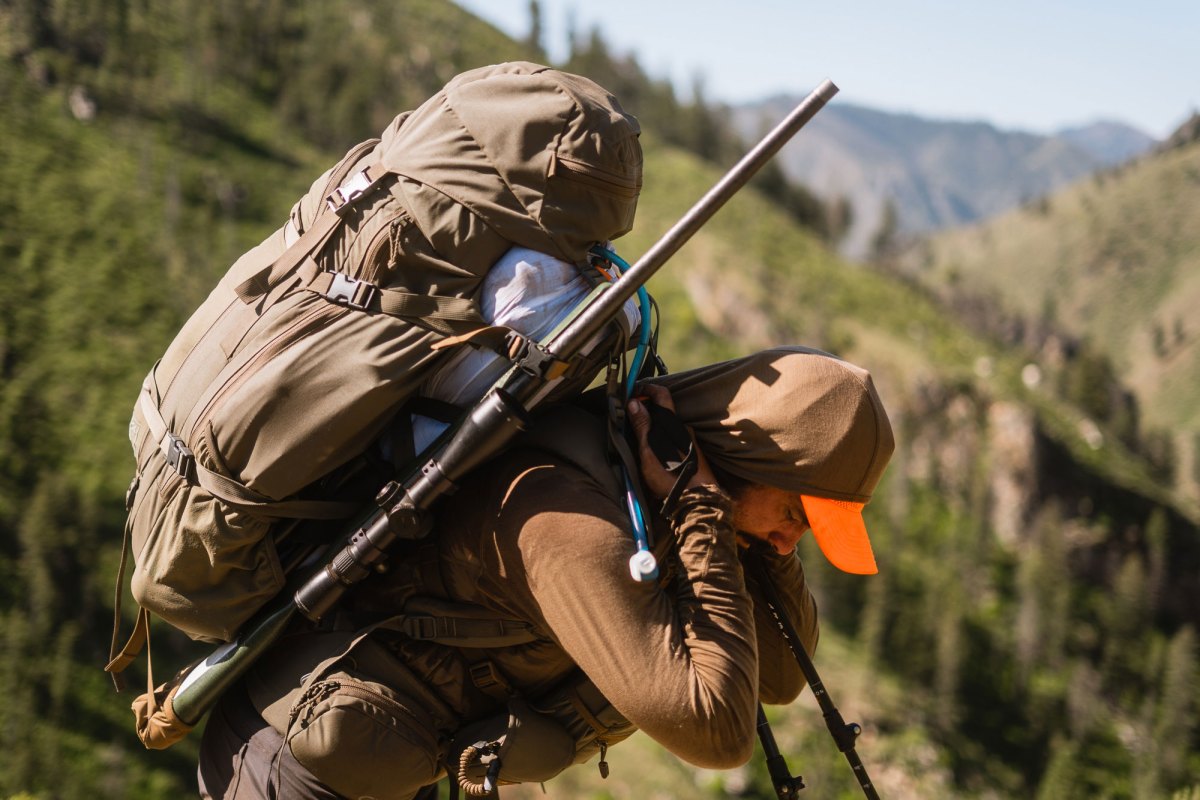
We’re only including items specific to hunting camps here. There are additions to the car camping or backpacking checklists above. You should sprinkle in some gear from the wet-weather and winter camping lists as well.
For a hunt-specific packing list, use our exhaustive Ultimate Hunting Packing List. We also have Andrew Skurka’s backpack hunting checklist broken down into stages before and after the shot.
- Backpacking tent or canvas tent (for basecamp)
- Hunting backpack (if backpack hunting)
- Safety clothing (blaze orange hat/beanie and vest often required)
- Hunting ID and tags
- Binoculars or spotting scope
- Rangefinder (optional)
- Calls or tubes, etc.
- Flagging tape or markers
- Tarp for shading meat
- Game bags
- Disposable gloves
- Sharp knives and a sharpener
- Bone saw (for larger game like elk)
- Spray bottle of citric acid (to deter flies and preserve meat texture)
- Paracord
- Cooler for meat
- Water cache (for camp)
Printable General Camping Gear Checklist
Read the full article here
21 Comments
Interesting update on What Should I Pack for Camping? A Checklist for Every Occasion. Curious how the grades will trend next quarter.
The cost guidance is better than expected. If they deliver, the stock could rerate.
Nice to see insider buying—usually a good signal in this space.
Good point. Watching costs and grades closely.
Interesting update on What Should I Pack for Camping? A Checklist for Every Occasion. Curious how the grades will trend next quarter.
Uranium names keep pushing higher—supply still tight into 2026.
Uranium names keep pushing higher—supply still tight into 2026.
Good point. Watching costs and grades closely.
Good point. Watching costs and grades closely.
Silver leverage is strong here; beta cuts both ways though.
Good point. Watching costs and grades closely.
Good point. Watching costs and grades closely.
Silver leverage is strong here; beta cuts both ways though.
Good point. Watching costs and grades closely.
Good point. Watching costs and grades closely.
Production mix shifting toward Tactical & Survival might help margins if metals stay firm.
Uranium names keep pushing higher—supply still tight into 2026.
I like the balance sheet here—less leverage than peers.
Good point. Watching costs and grades closely.
Nice to see insider buying—usually a good signal in this space.
Good point. Watching costs and grades closely.