

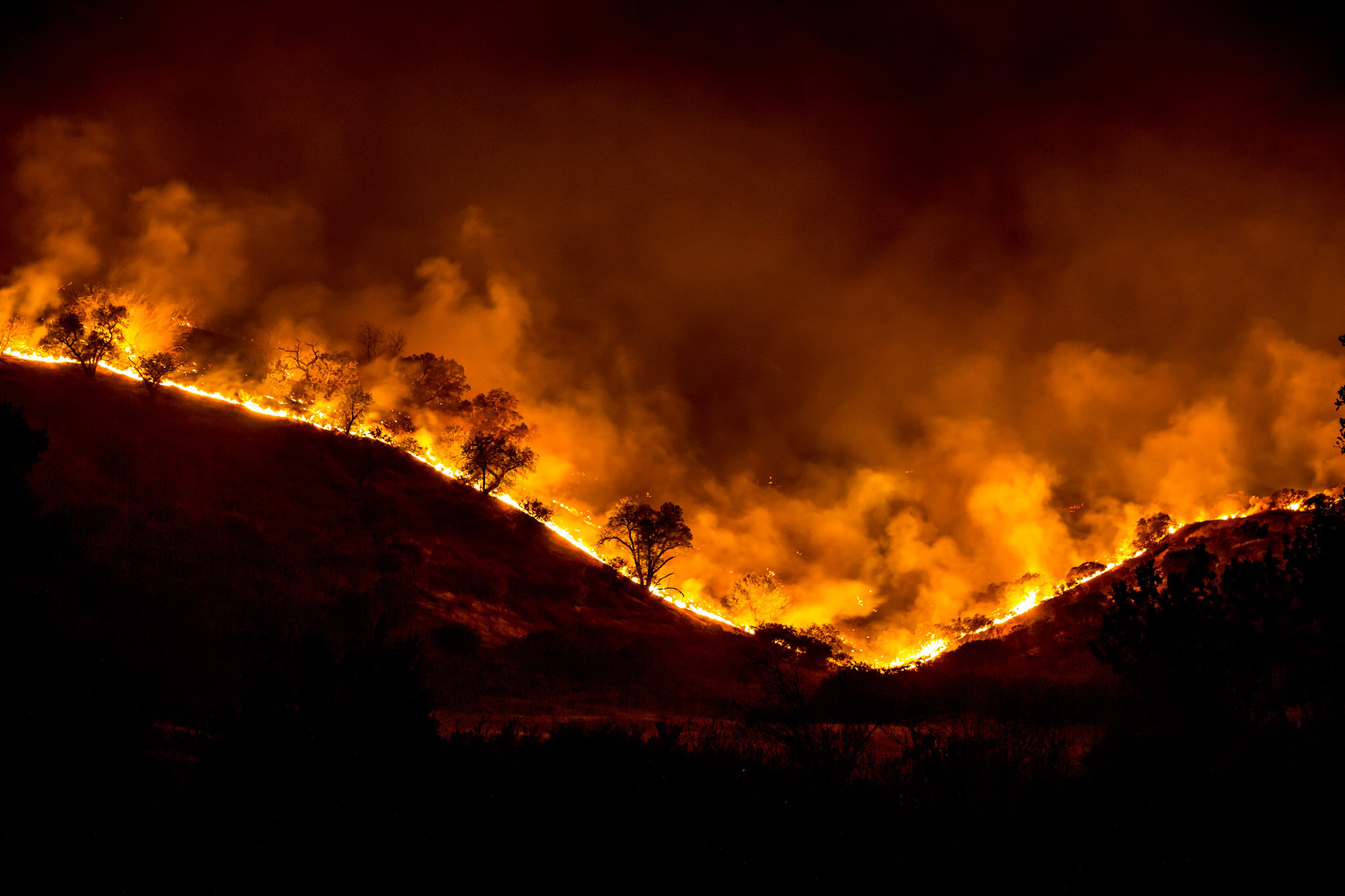
Wildfires are an inextricable element of land management, but the last few years have seen historically devastating fires: the massive Palisades fire in Los Angeles, the deadly blazes on Maui, and the largest-ever fire in Grand Canyon National Park.
In light of these destructive fires, it is natural to assume that climate change has led to an increase in wildfires over the last few decades. But scientists don’t make assumptions, and a new study reveals how both human-caused and naturally occurring wildfires have changed over time in the American West.
The Study
Amirhossein Montazeri and other authors published “Spatial and temporal changes in wildfires and their attributes across the western United States” in Environmental Research Letters in April. The study compares two periods of wildfires in the American West: 1992-2006 vs. 2007-2020, examining a comprehensive record of over 750,000 fires.
For a fire to be included, it had to meet several criteria: be larger than 0.1 acres, not be associated with developed areas, and not be reported by a local or county body.
The paper explored changes in several aspects of fires: land type (forest vs. non-forest), cause (human vs. naturally ignited), size, ignition date, and season.
The Results
Counterintuitively, the study found that the number of wildfires actually decreased over time. The period of 2007-2020 saw 31% fewer fires than 1992-2006. Both natural and human-caused fires decreased by 38% and 33%, respectively. Fires also declined by 41% in forested areas and by 34% in non-forested areas.
And yet, even though there were fewer fires, the total area burned increased. In the more contemporary period, the annual average burned area jumped by 40%. The amount of burned area increased in fall (by 68%) and in winter (by 26%).
While the number of fires under 10 and over 23 acres decreased (by 33% and 23%), the number of larger fires shot up. Fires larger than 25,000 acres increased by 63%, and fires bigger than 125,000 saw a massive jump of 136%.
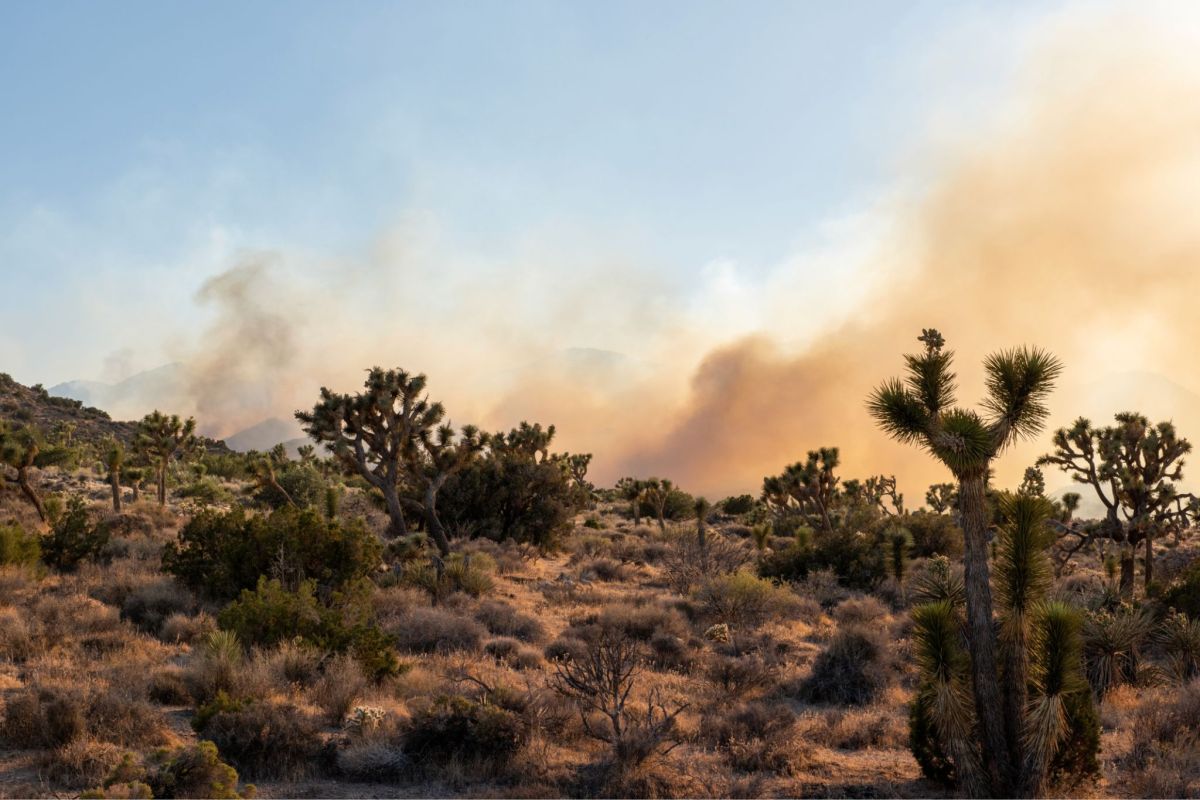
Looking at different types of fires, the largest increase was in naturally caused wildfires, which burned 84% more area. This was likely “due to increasingly dry and stressed forest vegetation driven by reduced summer precipitation and warmer temperatures, which extend vegetation dryness into fall coincident with intensified downslope winds,” the study suggested.
The time of year when fires began also showed changes. On average, between 2007 and 2020, human-caused wildfires started 12 days earlier than they did from 1992 to 2006, driven by increasingly dry springs.
“Ignitions increasingly occurred on days with abnormally drier-hotter weather compared to their climatology,” the study explained.
The Implications
The authors argue that the decline in the number of fires and the increase in acreage burned indicate that, on the whole, fire prevention and mitigation strategies are working. At the same time, shifting environmental conditions led to larger individual fires.
“Longer and more extreme fire seasons, coupled with drought-stressed fuels on the backbone of overgrown forests in the [Western] US, have pushed fires that do escape the initial suppression attack into more destructive territory,” the study argued.
The role of climate change in wildfires has long been a topic of research, and the authors suggest it is a factor that land managers must consider. The Western U.S. is experiencing longer, more extreme fire seasons due to climate change.
“The increasing total area burned underscores the growing influence of climate-driven factors that operate beyond the scope of traditional management approaches,” the study said.
As drier, hotter summers extend the fire season further into fall, established fire prevention strategies may prove inadequate. Research and investment into land management must take into account the warming climate. In the future, “adaptive” strategies must “consider the complex interactions between human interventions, fuel dynamics, and climatic shifts.”
Read the full article here
29 Comments
Uranium names keep pushing higher—supply still tight into 2026.
Interesting update on What the Science Says About Wildfires in the West. Curious how the grades will trend next quarter.
Good point. Watching costs and grades closely.
Good point. Watching costs and grades closely.
Interesting update on What the Science Says About Wildfires in the West. Curious how the grades will trend next quarter.
Good point. Watching costs and grades closely.
Interesting update on What the Science Says About Wildfires in the West. Curious how the grades will trend next quarter.
Exploration results look promising, but permitting will be the key risk.
Good point. Watching costs and grades closely.
Good point. Watching costs and grades closely.
If AISC keeps dropping, this becomes investable for me.
Uranium names keep pushing higher—supply still tight into 2026.
Good point. Watching costs and grades closely.
Uranium names keep pushing higher—supply still tight into 2026.
Good point. Watching costs and grades closely.
Good point. Watching costs and grades closely.
Nice to see insider buying—usually a good signal in this space.
Good point. Watching costs and grades closely.
Good point. Watching costs and grades closely.
Production mix shifting toward Tactical & Survival might help margins if metals stay firm.
Good point. Watching costs and grades closely.
Uranium names keep pushing higher—supply still tight into 2026.
Good point. Watching costs and grades closely.
I like the balance sheet here—less leverage than peers.
Exploration results look promising, but permitting will be the key risk.
Good point. Watching costs and grades closely.
The cost guidance is better than expected. If they deliver, the stock could rerate.
Good point. Watching costs and grades closely.
Good point. Watching costs and grades closely.