

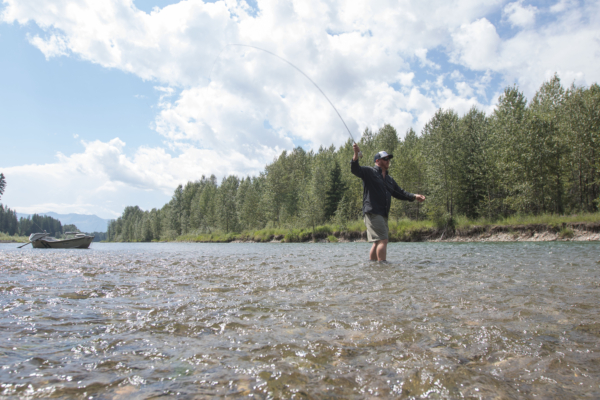
Tailing loops are, hands down, the most common problem I see among intermediate to advanced fly casters. If you’re unfamiliar with the term, it’s when the top leg of your casting loop dips below the bottom leg of the loop. At best, the result is an inefficient cast that stifles distance and accuracy, and at worst, your fly catches the fly line, resulting in a botched cast entirely.
And don’t forget wind knots. I hate to break it to you, but those pesky little buggers are the result of your poor casting. Wah, wah, wahh.
Tailing loops can be maddening because most people don’t truly know what’s causing it. And it’s pretty darn tough to fix something when you don’t know what’s broken. So, most people give up on fixing it, because if you’re throwing tailing loops, you’re probably casting well enough to be a pretty lethal angler.
But you’ll never tap into your true potential. No need to fret, though. I’m here to break down the one thing that causes tailing loops, and how to assess and fix your broken cast.
What Causes Tailing Loops
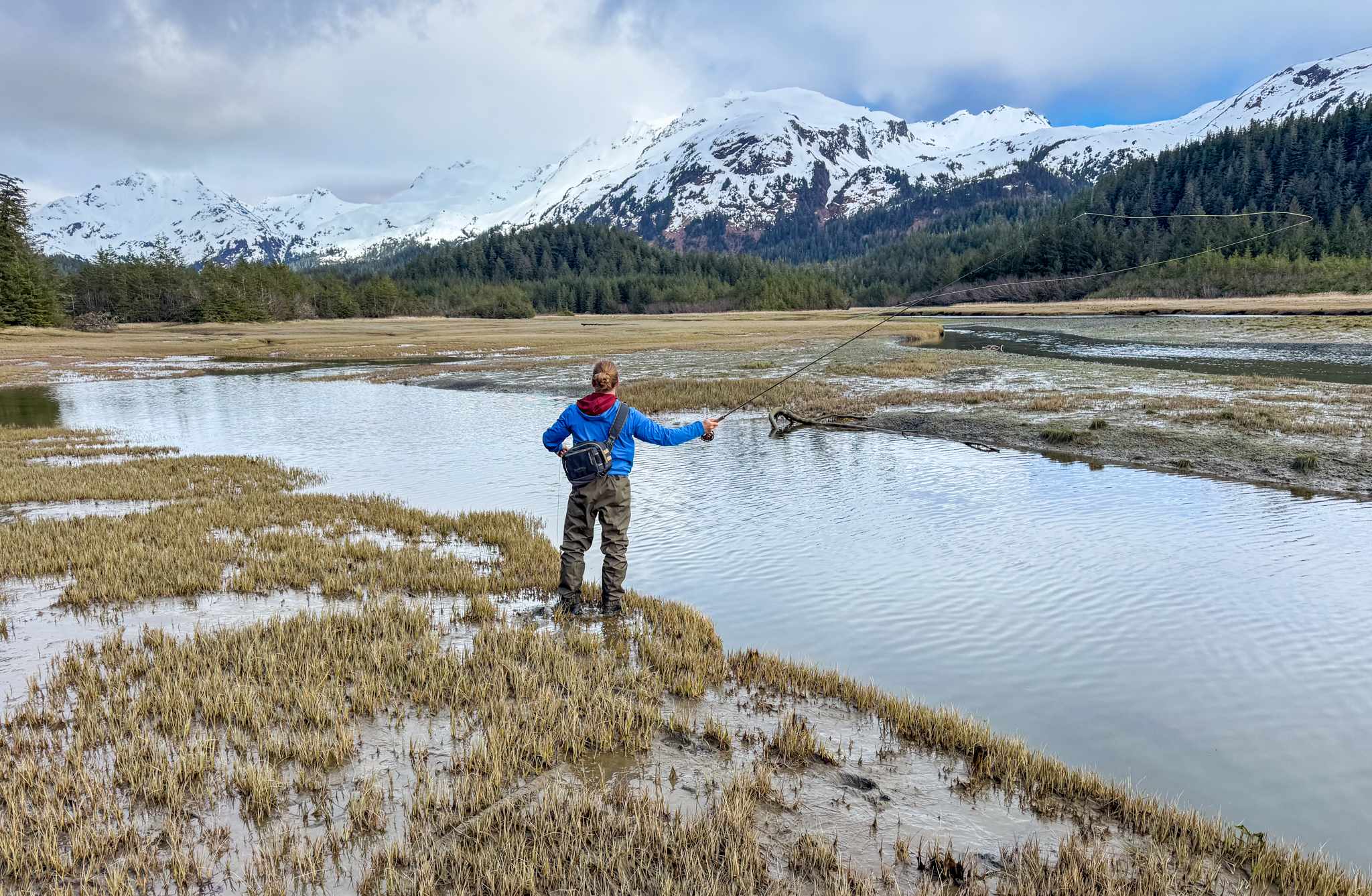
What causes tailing loops is simple, but complicated. There is one thing, and one thing only, that causes them. However, there are many ways you, the angler, can do something wrong to make that one thing happen.
The Patch-It-Up Answer
Because of that complication, there are a lot of common solutions thrown around that I have a real beef with. If you’re sitting on a guide’s boat and ask what you’re doing to cause a tailing loop, I can probably guess the exact answer you’ll get. “It’s from applying too much power at the beginning of the stroke,” or “It’s the uneven application of power through the casting stroke.”
That is, in fact, technically incorrect, even though it may simultaneously be true. Your guide may or may not know that, but guides are experts at giving patch-it-up, easy-to-understand, fast instructions. Too often, they want to get you fishing without diving into the details.
The problem with the above statement is that, while it may sometimes be true, it could also be completely incorrect. It’s the equivalent of a doctor misdiagnosing an ailment and providing incorrect treatment. It’s treating a symptom. That’s why it’s important to understand the real root cause. I’m not splitting hairs here, even though it may seem like it.
The Real Cause of Tailing Loops
The real answer is that your tailing loop is caused by the path of your rod tip dipping below a straight line through the casting stroke. If you take anything from this article, take this: your fly line will follow the path of your rod tip. Period, full stop.
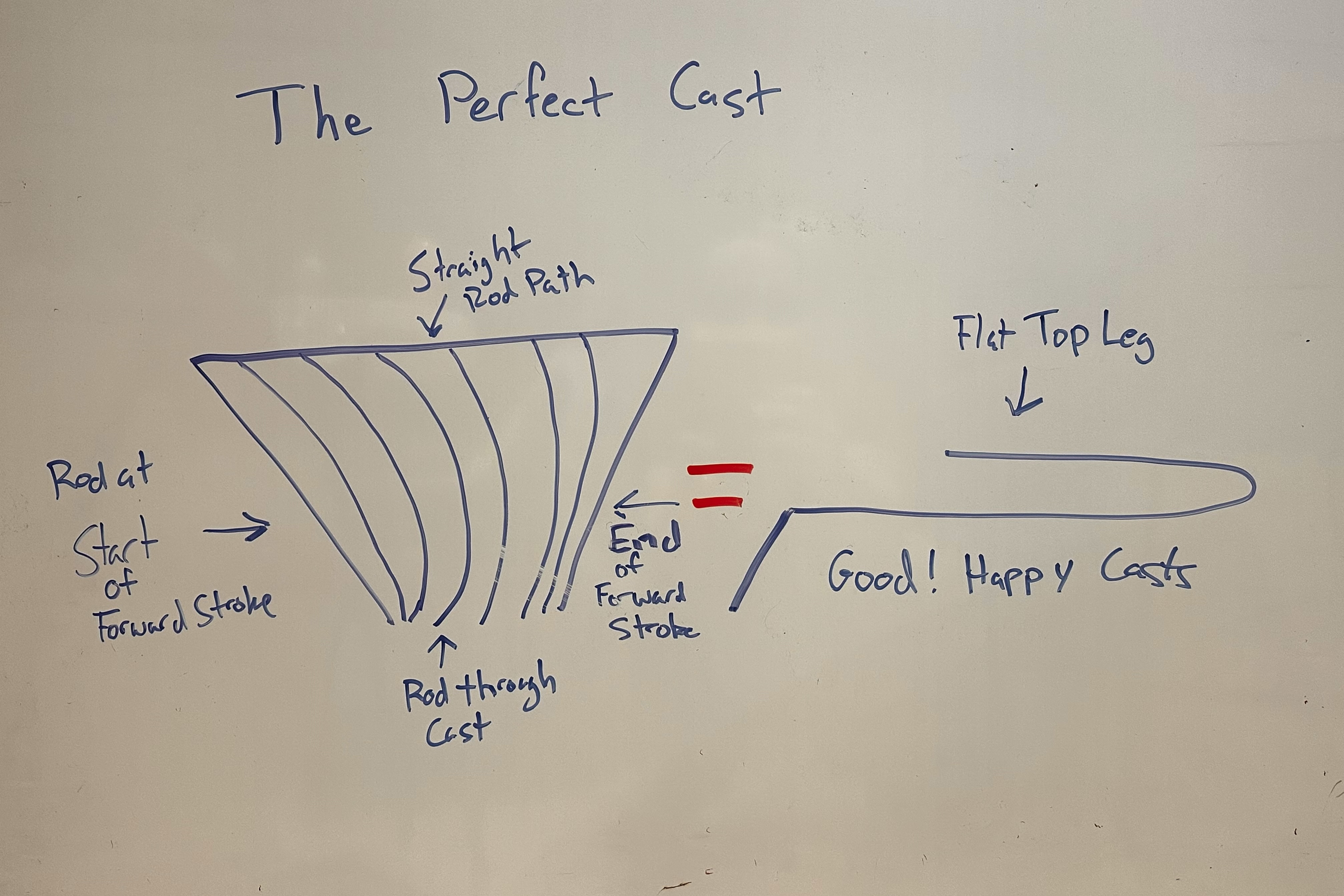
Enter poorly drawn images, from yours truly, to illustrate this point. We’ll start with a perfect cast, showing the rod bending throughout the stroke, the straight-line path the tip takes, and the resulting loop.
Now, here’s what your rod is doing anytime you execute a cast with a tailing loop. And, yes, I know a computer-generated image would be better. But I’m a writer/fishing guide, not a graphic designer. Sorry, not sorry.
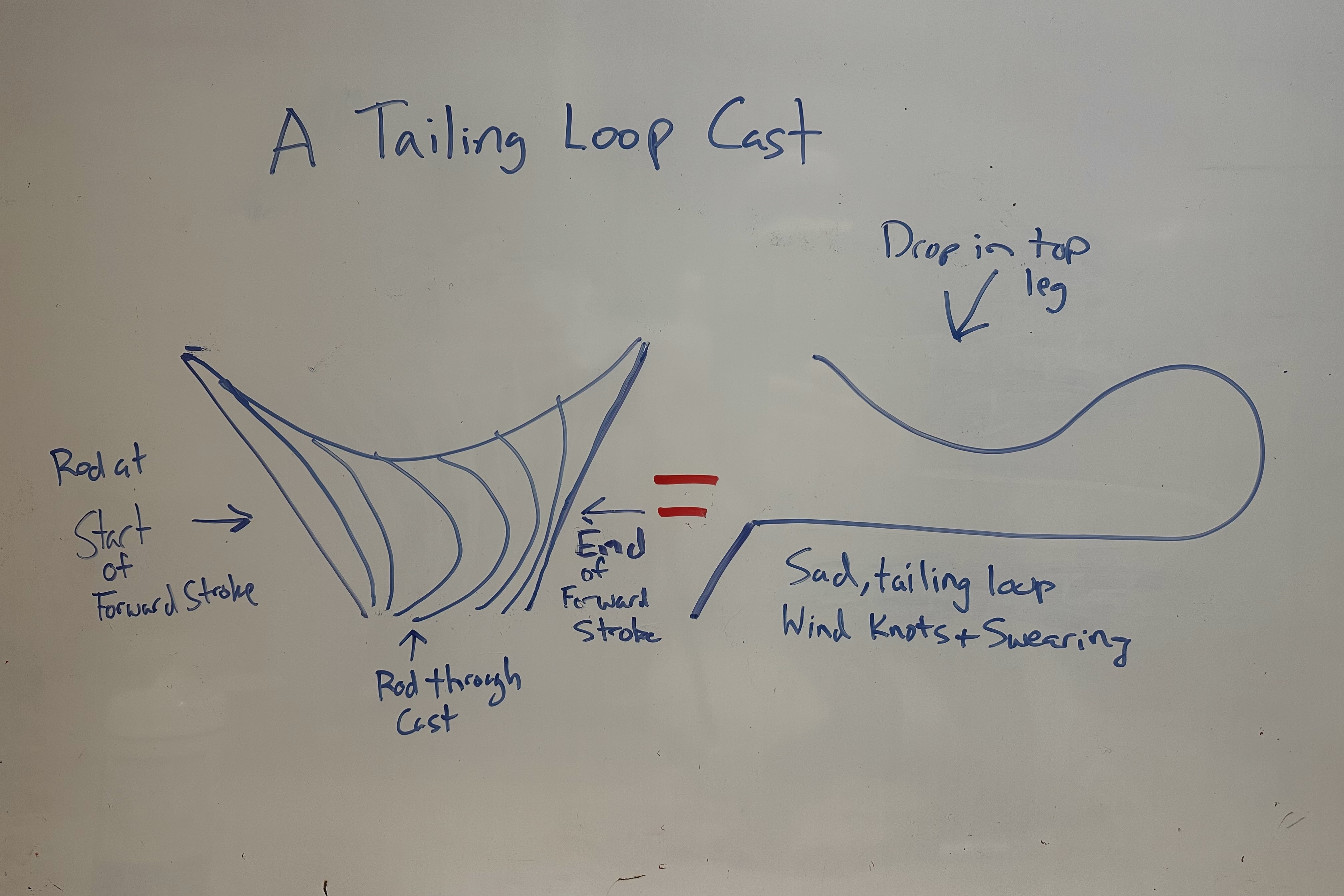
There, that’s it. The one thing that will cause tailing loops. It’s important to understand that basic principle before diving into a few of the more common mistakes casters make to get a dipping rod path.
Most Common Ways to Get a Dipping Rod Path
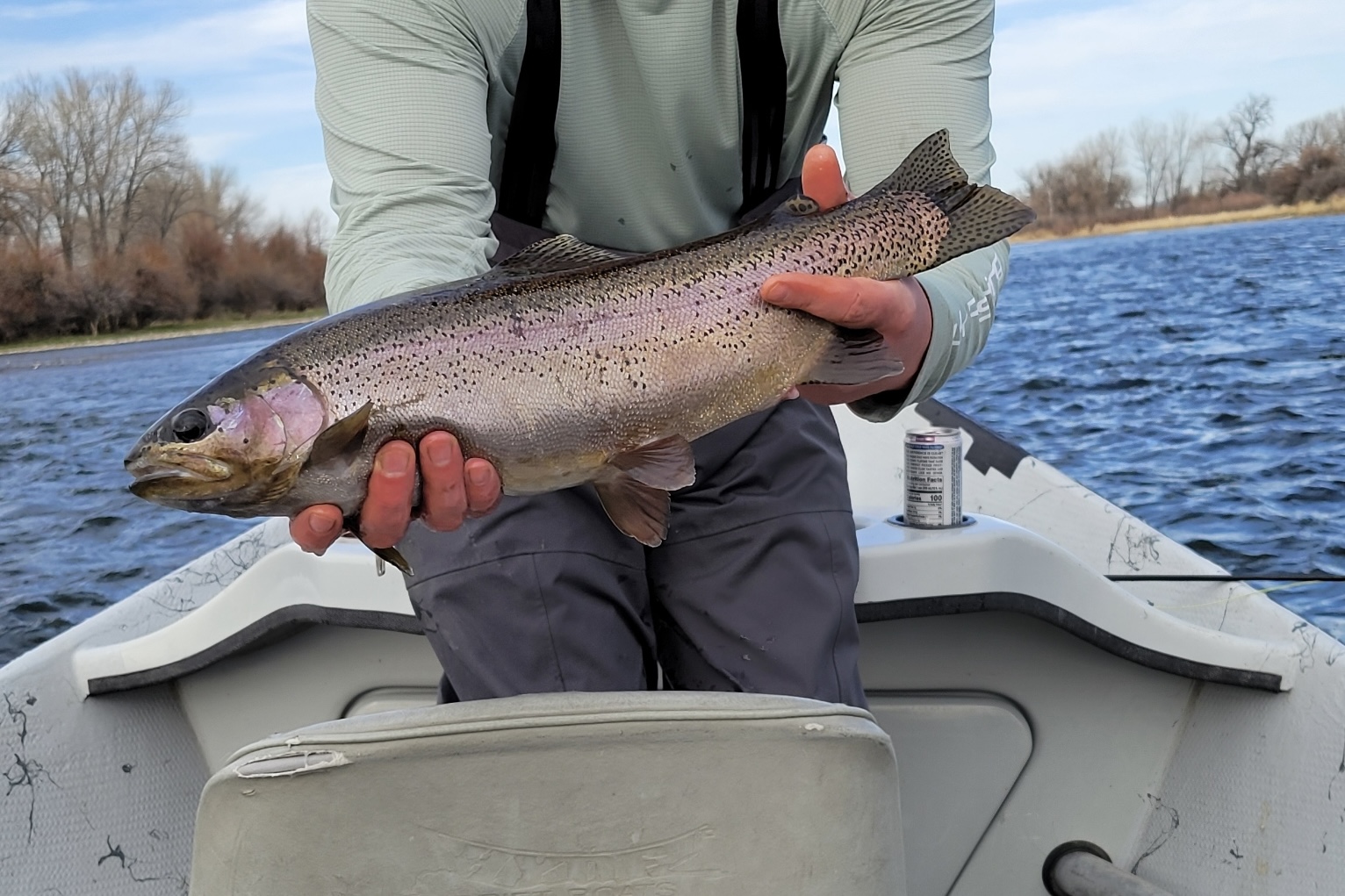
I’m going to break down two of the most common things casters do to get tailing loops, and a quick remedy on how to fix them. It’s important to note that this is not a complete list of everything that can cause a dipping rod path. But many times, these two are the culprits.
Tailing Loop Problem #1: Incorrect Application of Power
Like I said, what your guide told you could be true. Incorrect application of power is very common among anglers who just gained the ability to shoot line and cast at further distances. However, that tends to lead to a bad habit: punching the daylights out of your forward stroke.
In a cast, the weight of the fly line is what’s supposed to bend the rod through the cast. But we, the anglers, are applying the movement. And we can move too fast and bend a rod ourselves. Think about it, you can wiggle a rod without a line or reel on it and get it to bend.
If you apply too much power in your casting stroke, you’ll make the rod bend deeper than it’s supposed to. You need to chill out, man.
The Fix: Drink Your Morning Coffee
Here’s the best analogy I have on how to properly apply power in a cast.
Imagine you’re in your car, stopped at a stoplight, and you place a cup of coffee on the dashboard in front of you. What happens if you punch the gas when the light turns green? The coffee ends up right in your lap. We don’t want that.
But what happens if you slowly depress the gas pedal and smoothly accelerate to 90 mph? The coffee stays put. That’s how you need to apply power to your cast. To properly finish the casting stroke, slam on the brakes and shoot the cup of coffee through your windshield.
Tailing Loop Problem #2: Too Short of a Casting Stroke
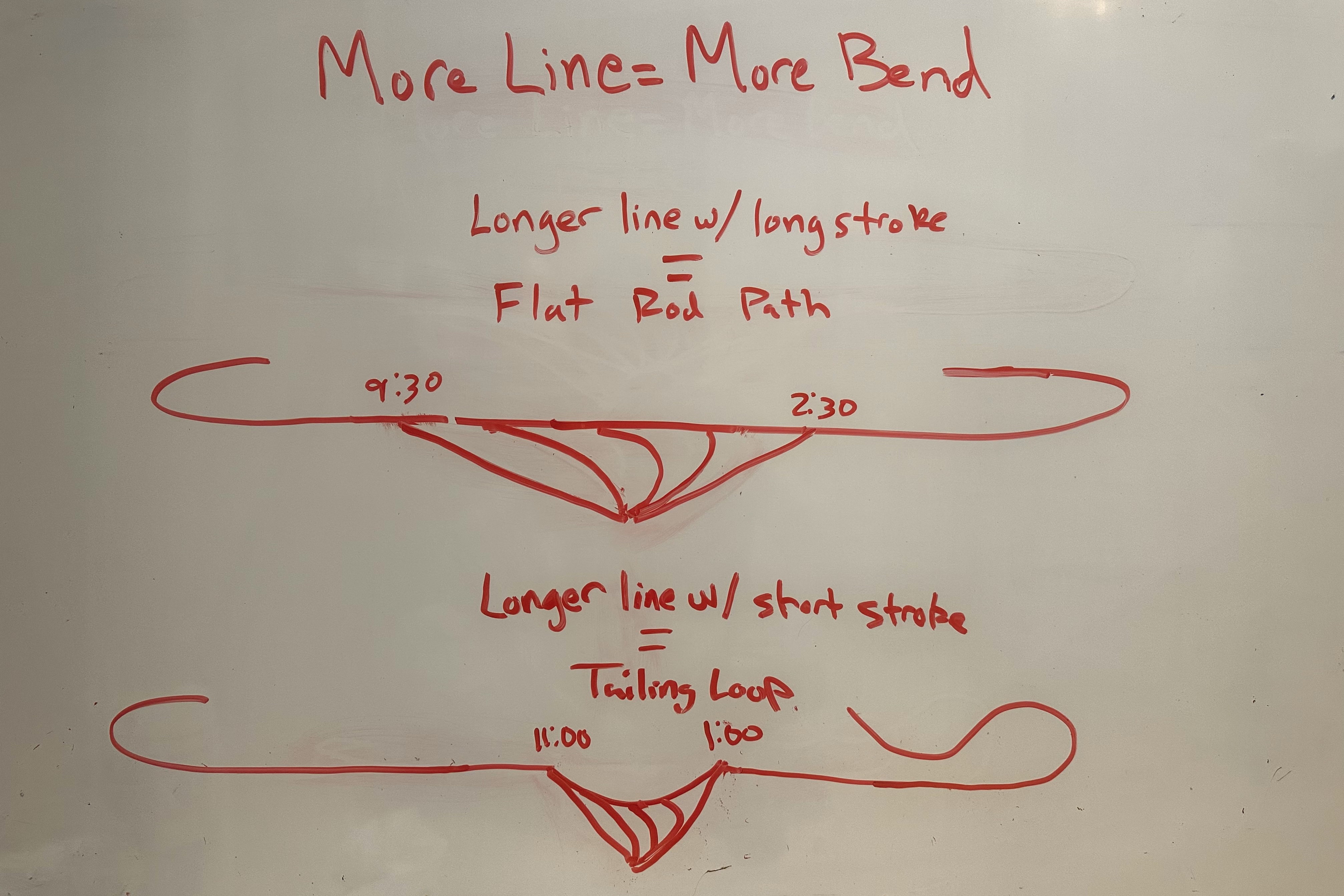
The next common error takes a bit more explaining, so bear with me. Fly casting is an ever-changing, dynamic activity.
Whenever you change the distance you cast, everything about the cast changes. If you go from casting 20 feet of weighted fly line to casting 60 feet of weighted fly line, what does that do to your rod in the middle of the casting stroke? It bends the rod deeper. There’s more mass tugging on the rod.
Now, at each terminal end of a casting stroke, your rod returns to a straight state. Since the rod is still straightening out, when the rod bends more deeply, it creates a dip in the path of the rod tip. Uh oh, we’ve got a tailing loop.
The Fix: Ten to Two Is Dead
You can still achieve a flat-line trajectory by lengthening your casting stroke. Check out the image above. You can see how I poorly illustrated that by stopping the rod at 9:30 and 2:30, i.e., lengthening the stroke, the rod tip still goes in a straight path.
If you have a shorter casting stroke, the heavy weight of a longer line causes the rod tip to dip down in the middle of the casting stroke.
And that is why “ten to two” is the most antiquated, terrible way to explain fly casting. Yes, it’s great for someone picking up a fly rod for the first time, but it’s incorrect 95% of the time.
For short casts, your casting stroke should also be short, say 11:00 to 1:00. For real long bombs, open that bad boy up, and stop at 9:00 and 3:00. Your rod is practically doubling over in the middle of the stroke.
That’s why you see professional distance casters like the Rajeffs dropping the rod super far back, rather than sticking to 10:00 to 2:00. They have to in order to get an efficient loop.
Other Errors and Factors
Those are two of many errors you could be making. However, your equipment also comes into play. If you take in what you just learned, it should be pretty clear that fly rod action and fly line tapers can also affect your cast.
A heavier line, like an MPX taper, has more mass and will bend a rod deeper. It’s easier to throw a tailing loop with it. Likewise, soft, noodly dry fly rods are easier to throw a tailing loop with.
Every setup is different, and the reality is that tailing loops will pop up with any unfamiliar equipment. But use what you’ve learned to adjust your cast accordingly. With an understanding of the cast, it’s a ton of fun learning the nuance of different rod and line combos and really dialing it in.
In the End, You Gotta Practice

You now hopefully have an understanding of tailing loops, what causes them, and a few ways to correct them. That’s not enough, though. You probably have really bad muscle memory from your poor casting habits. And let me tell you, it’s going to take a lot of time to break those habits.
You’ve got to get out there and practice, practice, practice. Whenever you get a tailing loop, stop and think about it. What did you do wrong? Focus on changing it on your next cast. Rinse and repeat a million times. With understanding and deliberate practice, you’ll be able to kiss knotted leaders and tailing loops goodbye.
Read the full article here
42 Comments
I like the balance sheet here—less leverage than peers.
Good point. Watching costs and grades closely.
Good point. Watching costs and grades closely.
Silver leverage is strong here; beta cuts both ways though.
Good point. Watching costs and grades closely.
Good point. Watching costs and grades closely.
If AISC keeps dropping, this becomes investable for me.
Nice to see insider buying—usually a good signal in this space.
Uranium names keep pushing higher—supply still tight into 2026.
Good point. Watching costs and grades closely.
Good point. Watching costs and grades closely.
Silver leverage is strong here; beta cuts both ways though.
Good point. Watching costs and grades closely.
Good point. Watching costs and grades closely.
I like the balance sheet here—less leverage than peers.
Good point. Watching costs and grades closely.
Production mix shifting toward Tactical & Survival might help margins if metals stay firm.
Good point. Watching costs and grades closely.
Good point. Watching costs and grades closely.
Silver leverage is strong here; beta cuts both ways though.
Good point. Watching costs and grades closely.
I like the balance sheet here—less leverage than peers.
If AISC keeps dropping, this becomes investable for me.
Good point. Watching costs and grades closely.
Good point. Watching costs and grades closely.
Production mix shifting toward Tactical & Survival might help margins if metals stay firm.
Good point. Watching costs and grades closely.
Good point. Watching costs and grades closely.
Nice to see insider buying—usually a good signal in this space.
Good point. Watching costs and grades closely.
I like the balance sheet here—less leverage than peers.
Good point. Watching costs and grades closely.
Good point. Watching costs and grades closely.
Uranium names keep pushing higher—supply still tight into 2026.
I like the balance sheet here—less leverage than peers.
Good point. Watching costs and grades closely.
Good point. Watching costs and grades closely.
Production mix shifting toward Tactical & Survival might help margins if metals stay firm.
Good point. Watching costs and grades closely.
Interesting update on Why Are There Knots in My Leader?! How to Fix Tailing Loops for Good. Curious how the grades will trend next quarter.
Good point. Watching costs and grades closely.
Good point. Watching costs and grades closely.