
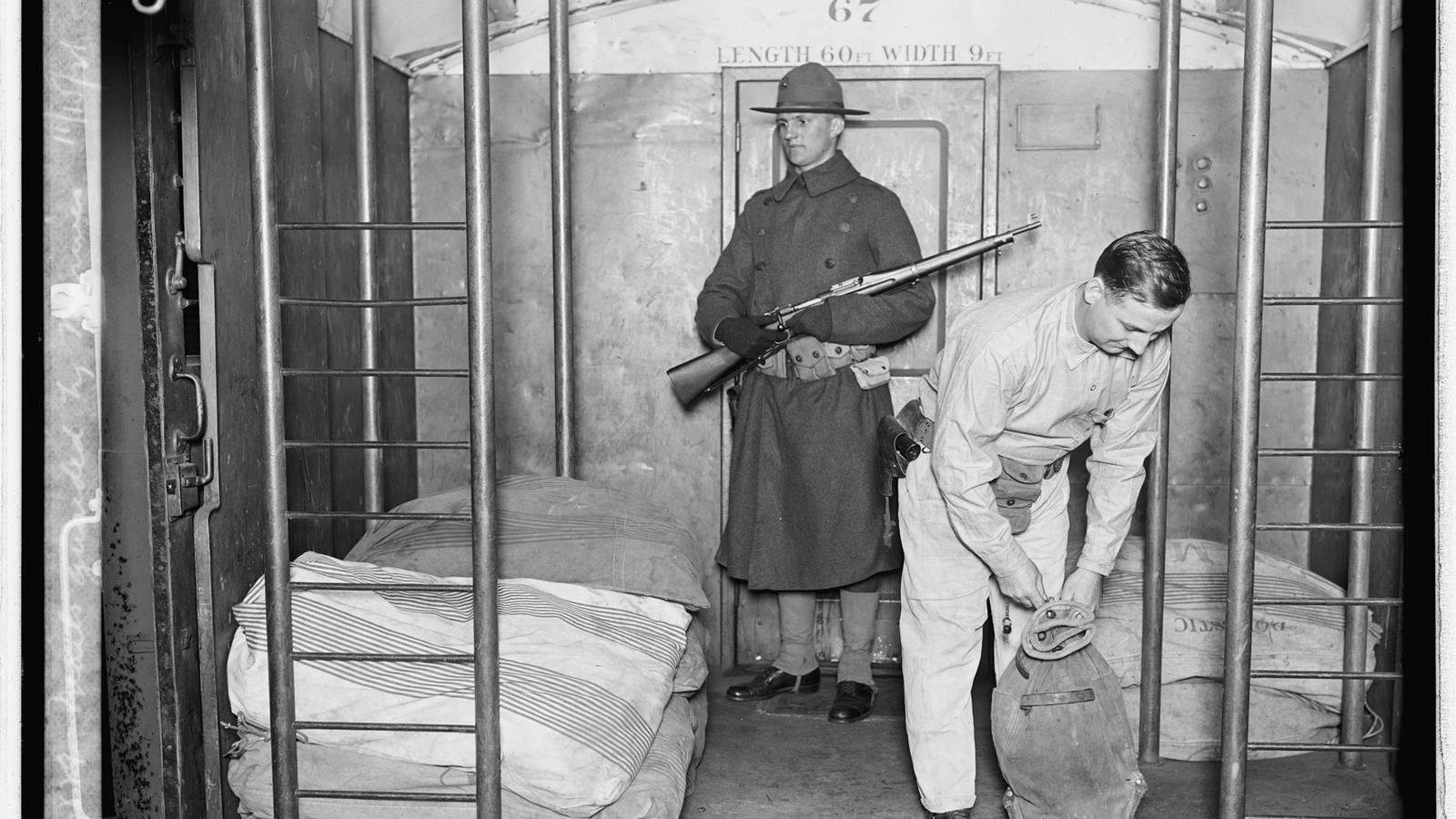
On the morning of Oct. 15, 1926, President Calvin Coolidge walked reporters through a crime that had happened the day before in Elizabeth, New Jersey.
“There were three armed men,” he said, according to the transcript preserved by the Calvin Coolidge Presidential Foundation. “There was the driver, the armed guard that sat beside him, and the policeman bringing up the rear to give additional safe conduct. They were attacked by two automobiles, as you know, with a machine gun.”
One man on the mail truck was dead and two were wounded. The gang had escaped with sacks of registered mail. Early estimates ran as high as $300,000, but the figure most papers settled on within days was about $151,000.
By then, the manhunt was enormous. The Camden Evening Courier reported on Oct. 16 that some 500 armed men were combing the country around Chimney Rock in the Watchung hills, in what it called “the most extensive manhunt ever made in the east.”
The paper named two suspects: James “Killer” Cunliffe and a man known as “Bum” Rodgers. The bandits slipped out anyway. The Associated Press, in a story the Richmond Times-Dispatch carried on Oct. 19, reported that they crossed the Delaware on the Frenchtown toll bridge posing as a wedding party, with a “Just Married” sign on the car.
Coolidge, famously sparing with words, was not sure what Washington could do. Then he reached back for a memory. “There was a time when we put Marines, I think, on some trains,” he said.
They shot some people, drove off some robbers, and broke up the robberies for a time.
Within a week, the Marines were back. The first mail guard of 1921 gets most of the attention. The 1926 return shows what happened when the problem the Marines had solved came back.
The First Tour and the Famous Order
The Marines first drew the mission in November 1921, after a wave of robberies the U.S. Postal Inspection Service says netted more than $6 million in 1920 and 1921.
President Warren G. Harding directed Navy Secretary Edwin Denby to “detail as guards for the United States Mails a sufficient number of officers and men of the United States Marine Corps to protect the mails from depredations by robbers and bandits.”
About 53 officers and 2,200 enlisted Marines went out, many from Quantico’s 5th Regiment, according to the Marine Corps history of the base.
Denby, who had enlisted in the Marine Corps during World War I despite having served in Congress, gave them the order that still gets quoted: “When our Marine Corps men go as guards over the mail, that mail must be delivered or there must be a dead Marine at the post of duty.”
Military.com previously covered those strict rules for the 1921 Marine mail guards in detail. The Marines were withdrawn in March 1922, and the Post Office Department went back to relying on its own armed clerks and guards.
It held for a while. Then robbery crews came back with heavier weapons. By 1926, gangs were using cars to box in mail trucks and firing submachine guns at the crews. Chief Post Office Inspector Rush D. Simmons put the total stolen from the mails at $16 million, the Brooklyn Daily Times reported.
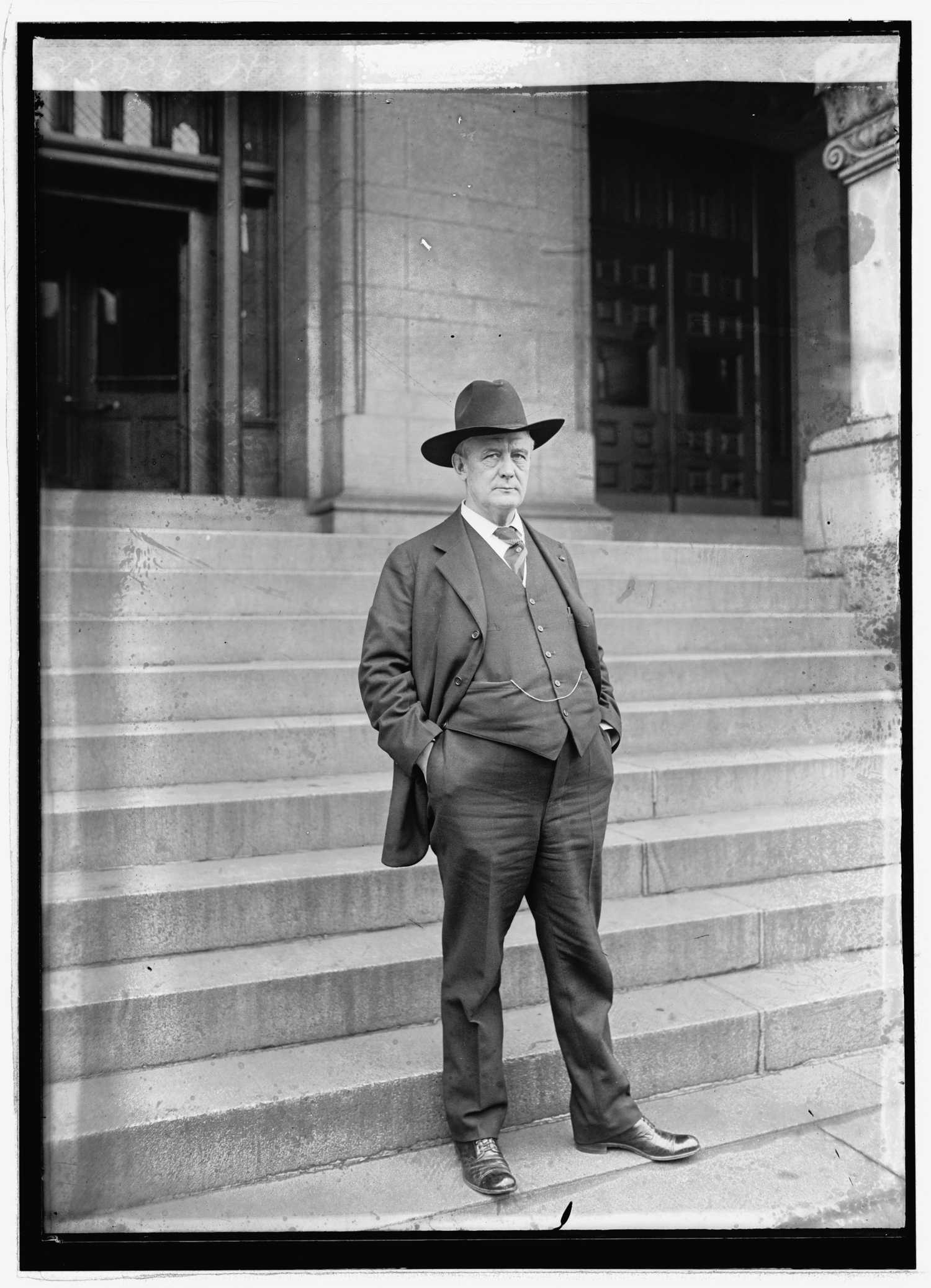
Creator: National Photo Company. Source: Library of Congress.
Elizabeth and the Decision To Call the Marines Again
The Elizabeth attack forced the issue. Coolidge took it up with his Cabinet and Postmaster General Harry S. New, who was asking for $1 million to build an armed postal force of his own, according to the AP. The government posted a $20,000 reward for the Elizabeth bandits, $2,000 a man, “dead or alive,” the Brooklyn Daily Times reported.
By Oct. 18, the Marine Corps was already moving. That day, according to a history of the 4th Marines, the Commandant directed the Department of the Pacific in San Francisco to “organize a force from the 4th Regiment, to be known as the Western Mail Guards, under the command of Brigadier-General Smedley D. Butler.” Coolidge formally called out the Marines on Oct. 20, according to the Quantico base history.
The papers left no doubt about the rules this time. “‘Devil Dogs’ Guard U.S. Mails With Orders: ‘Shoot to Kill!'” ran the headline in the Brooklyn Daily Times on Oct. 21. “With ‘shoot to kill’ orders, United States marines today went on guard over the United States mails,” the story began.
It counted “2,500 ‘Devil Dogs,’ armed with riot shotguns and automatic pistols,” on duty “in practically every important industrial section of the country,” and spelled out the orders plainly: “The marines have orders to keep all suspicious persons away from the vicinity of postal shipments and to shoot to kill if a holdup is attempted.” In Brooklyn itself, 265 Marines arrived at the Navy Yard from Quantico.
The United Press filled in the numbers the next day, in a dispatch the Carlisle Evening Sentinel ran on Oct. 22. “Eighteen hundred and fifty Marines armed with riot guns, rifles and pistols today were sent to guard valuable mail shipments all over the United States, from headquarters in twenty-three large cities,” it reported. “Six hundred and fifty others are held in reserve.” New York got 200, San Francisco 234, Los Angeles 174 and Chicago 130.
Acting Postmaster General Glover made sure nobody missed the point. “The Marines can afford to take no chances after the treatment given mail guards in recent Elizabeth, N. J., robbery,” he said, adding, “Quick action may be more important than asking questions in preventing robberies.”
At his Oct. 22 press conference, Coolidge made it official in his usual flat style. “I have arranged to place Marines on guard over the transmission of valuable mail,” he said. “Some have already been detailed for that purpose.”
Then came a moment that any Marine stationed in Northern Virginia might enjoy. “We have two camps of Marines now, one in California and I don’t know where the other is,” the president said. When reporters offered Quantico or Parris Island, he answered, “We have a camp somewhere in the East that we did not have before the War. I don’t know whether it is Quantico or not.”
Two Generals, Two Zones, and a Lot of Thompsons
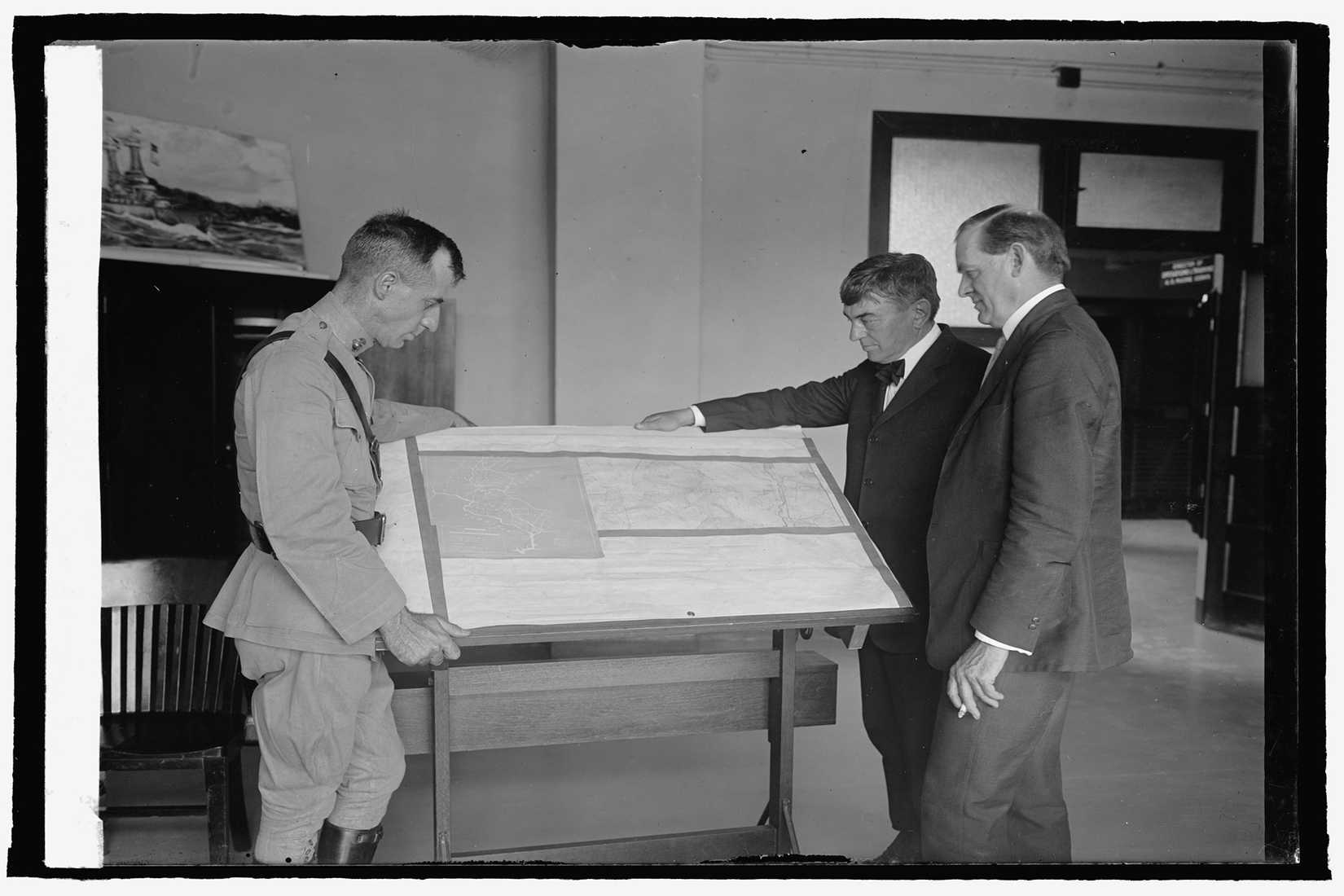
This time, the Corps split the country. Brigadier General Logan Feland, who commanded the expeditionary force at Quantico, ran the Eastern Mail Guard from November 1926 to February 1927, according to the Marine Corps History Division.
Quantico’s contribution came mainly from the 5th and 10th Regiments, according to the base history. In New York, 300 Marines served under Col. Louis M. Gulick.
The Daily News marked the arrival of the general in charge on Oct. 24 with the headline “GENERAL COMMANDING SHOOT-TO-KILL MARINES ARRIVES IN NEW YORK TODAY” and captioned a photo of the guards, “Tough-looking bunch of fighters, aren’t they?”
Butler, fresh from two years fighting bootleggers as Philadelphia’s director of public safety, took the west with the 4th Marines out of San Diego, spread across 11 states and later part of Texas.
A Marine Corps summary of mail guard duty puts the peak at 68 officers and 2,452 enlisted Marines on Dec. 20, 1926.
The guards rode in mail cars and trucks with M1911 pistols, Winchester and Remington trench shotguns, M1903 rifles and Browning Automatic Rifles. The new addition was the Thompson submachine gun.
According to firearms historian Bruce N. Canfield, writing in American Rifleman, the postmaster general bought 200 Model 1921A Thompsons from Auto-Ordnance to “fight fire with fire” and issued them to the Marine guards.
The Corps found it liked the weapon. When the mail guard ended, Canfield writes, the Marines took those Post Office Thompsons with them to Nicaragua and China.
What Happened Next
The robberies stopped almost at once. While Butler’s Marines were on duty in the west, only one attempted robbery was recorded, according to the 4th Marines history, and it targeted an unguarded train that was carrying no mail.
When Feland inspected a 56-man detachment in Omaha in late December, he said no robbery of the kind had been tried since the Marines took over, the Omaha Evening World-Herald reported on Dec. 29.
That same story caught the unease underneath the success. Gen. George B. Duncan of the Greater Omaha committee said, “It’s gotten to a pretty state of affairs when we must guard our mails with armed forces.” Omaha Postmaster Dean Ringer had an answer: “That’s because the mails today are carrying valuables that formerly were carried by express companies.” The paper also noted the job was temporary. The money for it was running low, and civilian guards were to take over.
The Elizabeth case never got a clean ending. Later accounts identify Cunniffe as the gang’s leader and say he died violently within weeks of the robbery, though the details vary from source to source.
Back To the Barracks
The Marines could not stay long anyway. Fighting in Nicaragua and civil war in China were pulling at the same expeditionary forces.
500 MARINES, MAIL GUARDS WITHDRAWN
The above from the Lansing State Journal headlined on its front page on Jan. 25, 1927, over an AP story. The subhead said why: “Will Be Sent Back to Barracks to Await Possible Call to China.” Another 500 were to follow by Feb. 15, with the guards concentrating at Quantico and San Diego. The Quantico history says the last Marine was off mail duty by Feb. 20.
Within weeks, Butler was bound for Shanghai to command the 3rd Brigade, and Feland was soon commanding Marines in Nicaragua. The Thompsons went with them.
The Questions It Raises Today
A century later, the image of Marines with Thompson guns in a railway mail car can look like something out of a gangster movie. It also raises a question that service members still hear about: when can federal troops do police work at home?
The Posse Comitatus Act of 1878 named only the Army. The Marines of 1926 were guarding federal mail at the request of a Cabinet department under orders to shoot to kill, and few in Washington questioned it.
Today, War Department policy extends similar limits to the Navy and Marine Corps, and any domestic mission like the mail guard would draw far more legal scrutiny than it did in Coolidge’s White House.
What stands out most from 1926 is how ordinary the call seemed at the time. A president who was not sure where Quantico was still knew exactly whom to call.
For Marines today, the mail guard is a reminder that “every clime and place” has sometimes meant a railway mail car at home, and that the Corps’ reputation can do as much work as its weapons.
Read the full article here
30 Comments
I like the balance sheet here—less leverage than peers.
Good point. Watching costs and grades closely.
Good point. Watching costs and grades closely.
Production mix shifting toward USA might help margins if metals stay firm.
Good point. Watching costs and grades closely.
Good point. Watching costs and grades closely.
I like the balance sheet here—less leverage than peers.
Good point. Watching costs and grades closely.
If AISC keeps dropping, this becomes investable for me.
Exploration results look promising, but permitting will be the key risk.
The cost guidance is better than expected. If they deliver, the stock could rerate.
Silver leverage is strong here; beta cuts both ways though.
Good point. Watching costs and grades closely.
Interesting update on 1926 Marine Corps Mail Guards: Coolidge’s 2,500 Marines. Curious how the grades will trend next quarter.
Good point. Watching costs and grades closely.
I like the balance sheet here—less leverage than peers.
Exploration results look promising, but permitting will be the key risk.
Good point. Watching costs and grades closely.
I like the balance sheet here—less leverage than peers.
Good point. Watching costs and grades closely.
Good point. Watching costs and grades closely.
Exploration results look promising, but permitting will be the key risk.
Good point. Watching costs and grades closely.
The cost guidance is better than expected. If they deliver, the stock could rerate.
Production mix shifting toward USA might help margins if metals stay firm.
Silver leverage is strong here; beta cuts both ways though.
Good point. Watching costs and grades closely.
I like the balance sheet here—less leverage than peers.
Good point. Watching costs and grades closely.
I like the balance sheet here—less leverage than peers.