

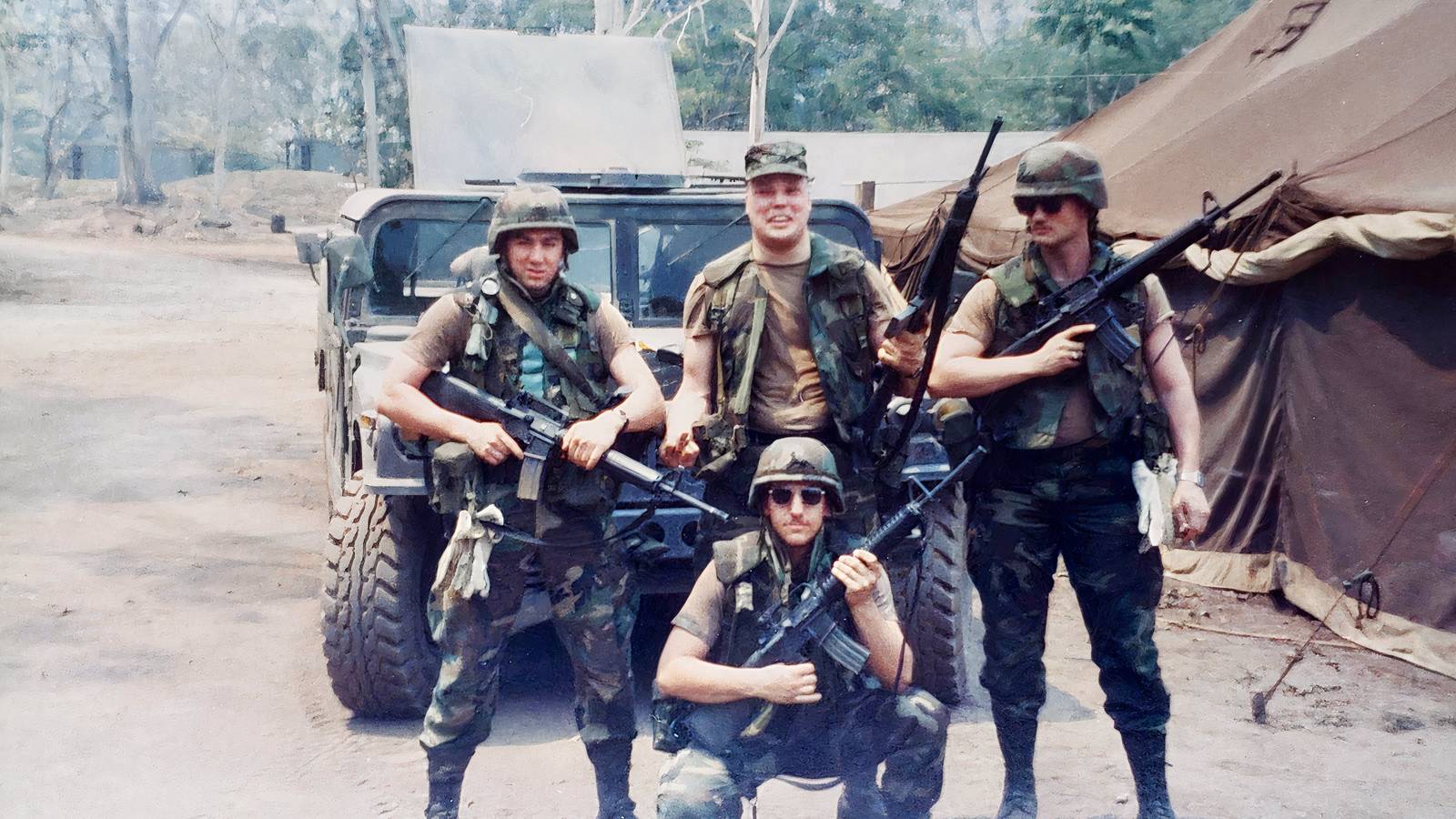
Army veterans Ian Rutherford and Richard Grell are two of more than 300,000 American service members who were deployed to the Central American Wars between 1982 and 1992.
More than three decades later, Grell and Rutherford are dealing with the mental and physical afflictions from multiple deployments to these war zones. Yet, unlike similar combat veterans, Grell and Rutherford are not eligible for certain Veterans Affairs benefits and service commendations from the Department of Defense.
However, several states are pushing for federal action to assist these veterans. In early April, North Dakota, Mississippi and Iowa passed resolutions urging Congress to approve the Armed Forces Expeditionary Medal (AFEM) bill, allowing veterans of the Central American conflicts the same benefits as combat soldiers.
Eight other states: Kansas, Kentucky, Louisiana, Missouri, New Jersey, Rhode Island, Ohio and South Carolina, have all introduced legislation to support soldiers who served in Honduras, and three other states, Delaware, Georgia and Maine, have agreed to support the measure and plan to introduce legislation later this year, according to Rutherford.
In addition, national veteran service organizations like Veterans of Foreign Wars (VFW), American Legion and Disabled American Veterans (DAV) have joined the cause.
“The U.S. government has never officially recognized Honduras as a combat zone by issuance of the Armed Forces Expeditionary Medal or a campaign badge. Therefore, all who served are not eligible for many veterans’ benefits, awards and entitlements which only combat or war veterans are entitled to,” Rutherford told Military.com. “Our casualties are not officially recognized and properly honored. In addition, we do not qualify for VA disability and health care for the health issues caused by burn pits, contaminated drinking water, pesticide exposure and other harmful chemicals.”
Evidence for Change
For the past several years, Rutherford and Grell have led a grassroots effort to lead states and the federal government to recognize that the prolonged military activities in Central America were indeed combat operations. Through his website uscontrawar.com, Grell lists several sobering statistics: 72 service members killed, two prisoners of war (POW) and six missing in action.
“The Pentagon currently has our deployments listed as ‘Training and War Games,’” Grell said. “I was there and, from what I saw, it definitely wasn’t a training exercise.”
Rather, both veterans view their deployments as important Cold War missions to protect democracy in the Western Hemisphere.
“Our sacrifices in this conflict, which stopped the spread of Soviet/Cuban-sponsored communism in Latin America, have never been officially acknowledged by our government,” Rutherford said.
The veterans can point to several of their comrades receiving combat awards to substantiate their claims. If they’re being honored with war medals, doesn’t that mean they served in a war?
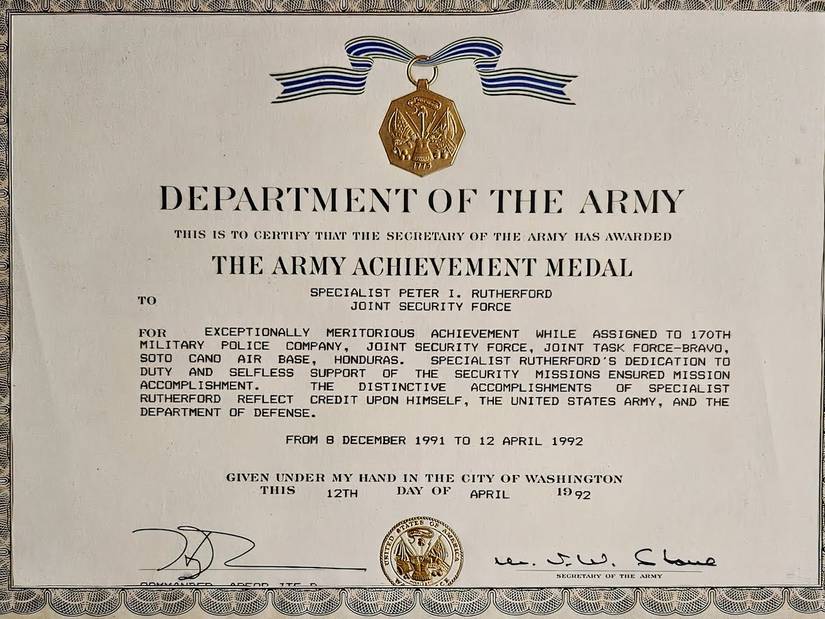
In total, four Air Medals for heroism have been awarded and two posthumous POW medals, along with 48 Purple Hearts, including one granted to Milwaukee veteran John Wallenfang on April 11, 2026.
How Eligibility Effects Current Soldiers
Another area of concern for Grell and Rutherford is that the current generation of soldiers fighting in the war with Iran will be treated the same way.
One of the caveats in the Central American Wars was that President Ronald Reagan never received congressional approval to send troops to nations like Nicaragua, El Salvador and other parts of the region. Rutherford and Grell believe the Department of Defense classified the deployments as “training and war games” to justify military occupation.
Fast-forward to 2026 and President Donald Trump’s push for military intervention against Iran without approval from Congress.
“So, now those current men and women service members fighting this war will also not receive certain healthcare benefits and military honors,” Rutherford said. “Unless something changes.”
Grell said he met with three of Defense Secretary Pete Hegseth’s closest advisors last fall at Fort Benning, Georgia, to discuss the issue. He left the meeting feeling optimistic change would come at the federal level, but it hasn’t come yet.
Military.com reached out to Ralph Lauer, one of Hegseth’s advisors, for comment but did not receive a reply.
“There is still no member of Congress willing to introduce legislation, even with all this momentum from the state governments requesting it,” Rutherford said. “It makes absolutely no sense to us as veterans as to why our Congressional reps refuse to address our issue. Hopefully it will happen soon.”
Read the full article here
22 Comments
Interesting update on 300,000 Veterans Still Can’t Access Some Benefits Because Their War Was Never Recognized. Curious how the grades will trend next quarter.
Good point. Watching costs and grades closely.
Good point. Watching costs and grades closely.
Nice to see insider buying—usually a good signal in this space.
Good point. Watching costs and grades closely.
Good point. Watching costs and grades closely.
Production mix shifting toward USA might help margins if metals stay firm.
Exploration results look promising, but permitting will be the key risk.
The cost guidance is better than expected. If they deliver, the stock could rerate.
Good point. Watching costs and grades closely.
I like the balance sheet here—less leverage than peers.
Nice to see insider buying—usually a good signal in this space.
Good point. Watching costs and grades closely.
The cost guidance is better than expected. If they deliver, the stock could rerate.
Good point. Watching costs and grades closely.
Silver leverage is strong here; beta cuts both ways though.
Uranium names keep pushing higher—supply still tight into 2026.
Good point. Watching costs and grades closely.
Good point. Watching costs and grades closely.
Interesting update on 300,000 Veterans Still Can’t Access Some Benefits Because Their War Was Never Recognized. Curious how the grades will trend next quarter.
Good point. Watching costs and grades closely.
Good point. Watching costs and grades closely.