

For many, wearing an Apple Watch is part of their daily lifestyle. Not only does the watch tell time, send and receive text messages and phone calls, but it also comes with a host of built-in health screening options.
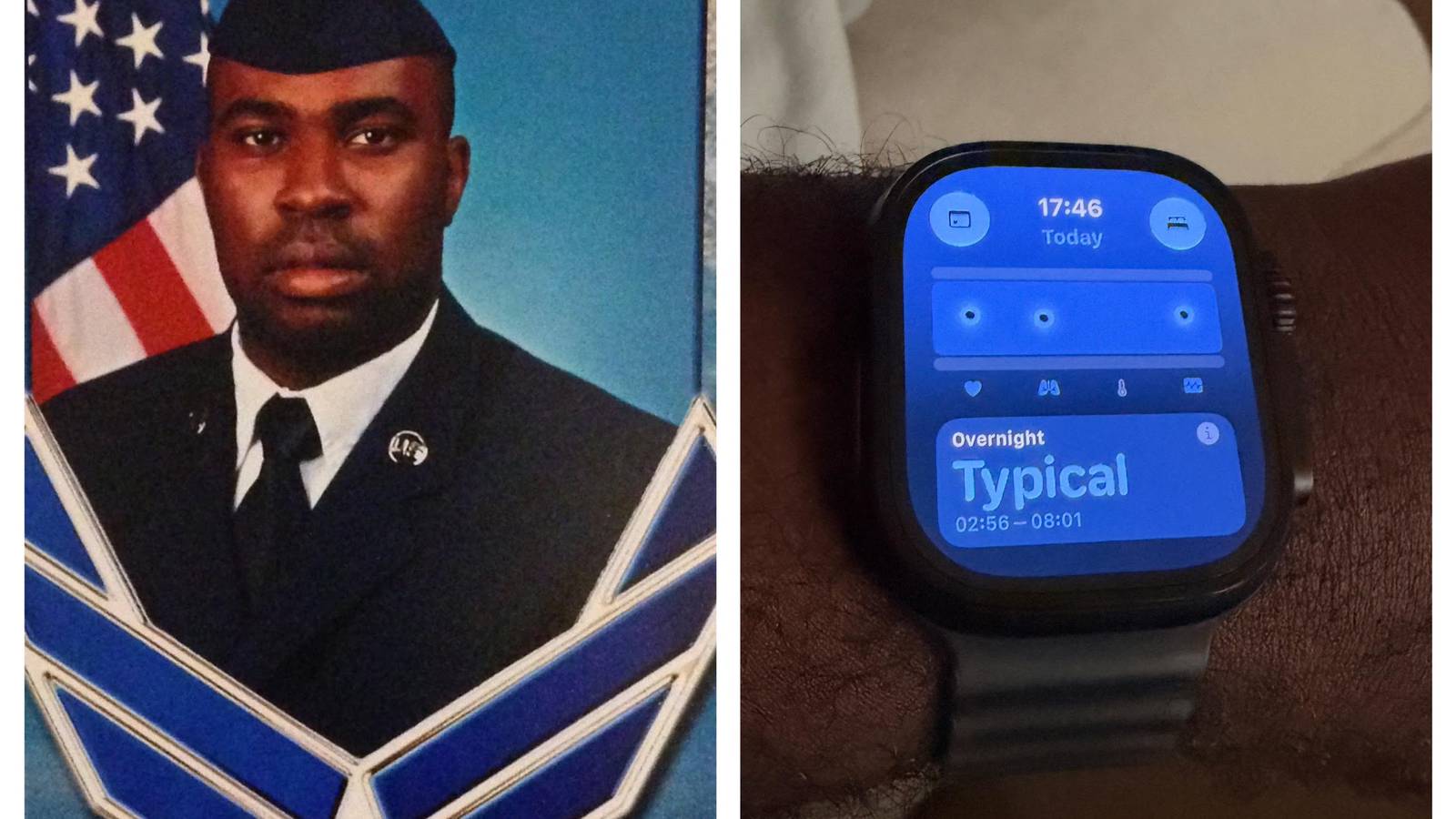
For 38-year-old Air Force veteran David Aladejobi, based at Joint Base Andrews in Prince George’s County, Md., his Apple Watch Ultra was literally a lifesaver, alerting him that he might have sleep apnea and encouraging him to see a doctor.
“I got the notification saying, you may have sleep apnea through the watch. I didn’t really think much about it. But then, I started thinking about how I was snoring and stuff like that.
So, I contacted my doctor and sent a screenshot of what the watch was saying,” Aladejobi said, in an interview with Military.com. “I was also having headaches and my doctor was saying it might be because of sleep.”
An official diagnosis would follow, along with Aladejobi being referred to a sleep lab and prescribed a Continuous Positive Airway Pressure or CPAP machine to use while sleeping and to help regulate his breathing.
“Yeah, my doctor said undiagnosed sleep apnea, if not treated, can definitely lead to death or other health problems like high blood pressure,” he said. “So using something as simple as a watch that’s already being worn and already paid for, and then being urged to see a doctor. That was huge. Why not pay attention to something like that?”
What Is Sleep Apnea?
Sleep apnea is a respiratory condition where a person experiences repeated disruptions in their breathing while sleeping. Breathing disruptions are fairly common, with a few disturbances a night seen as common. Alcohol intake, upper respiratory illnesses, and even some medications can lead to elevated breathing disturbances.
A study by the National Sleep Foundation found that while roughly 20 percent of adults in the United States suffer from sleep apnea, 85 percent do not even know they have it.
Untreated sleep apnea has been linked to an increased risk of heart disease, high blood pressure, stroke, memory problems, obesity, fatigue, traffic accidents, death, and insufficient sleep.
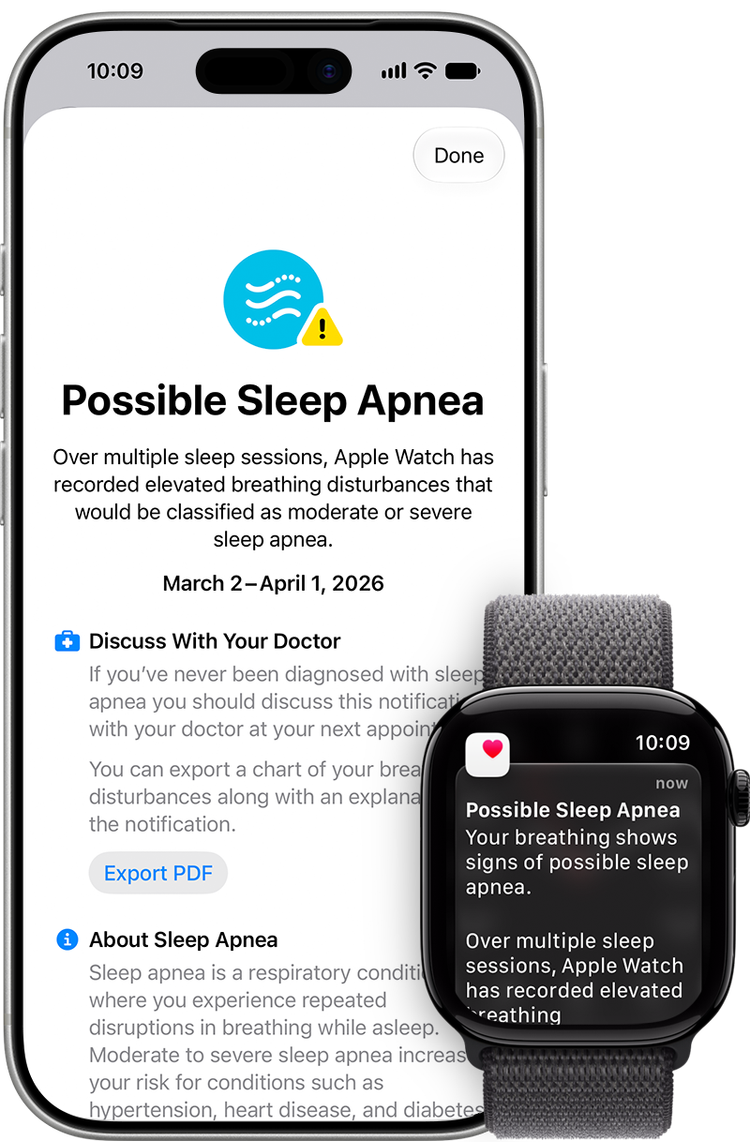
According to Apple, the Apple Watch sleep apnea notifications feature can look for breathing disturbances while a user is sleeping and notify them if they show consistent signs of moderate to severe sleep apnea.
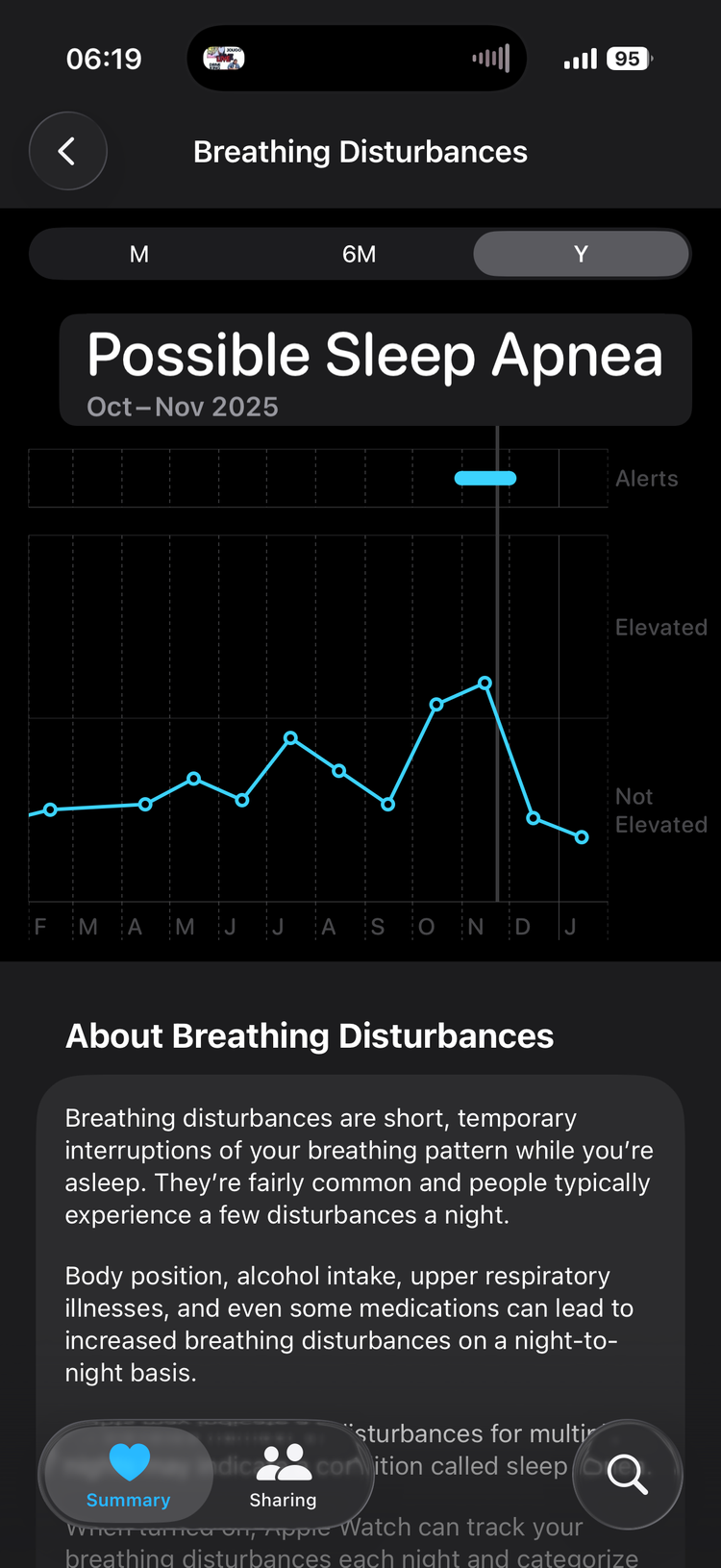
When a person wears an Apple Watch to bed, it uses the watch’s accelerometer to look for breathing disturbances. Those disturbances are categorized as “Elevated” or “Not Elevated.”
Over a 30-day evaluation period, if a user consistently experiences “Elevated” breathing disturbances, a notification is sent, letting the user know it has identified signs of sleep apnea.
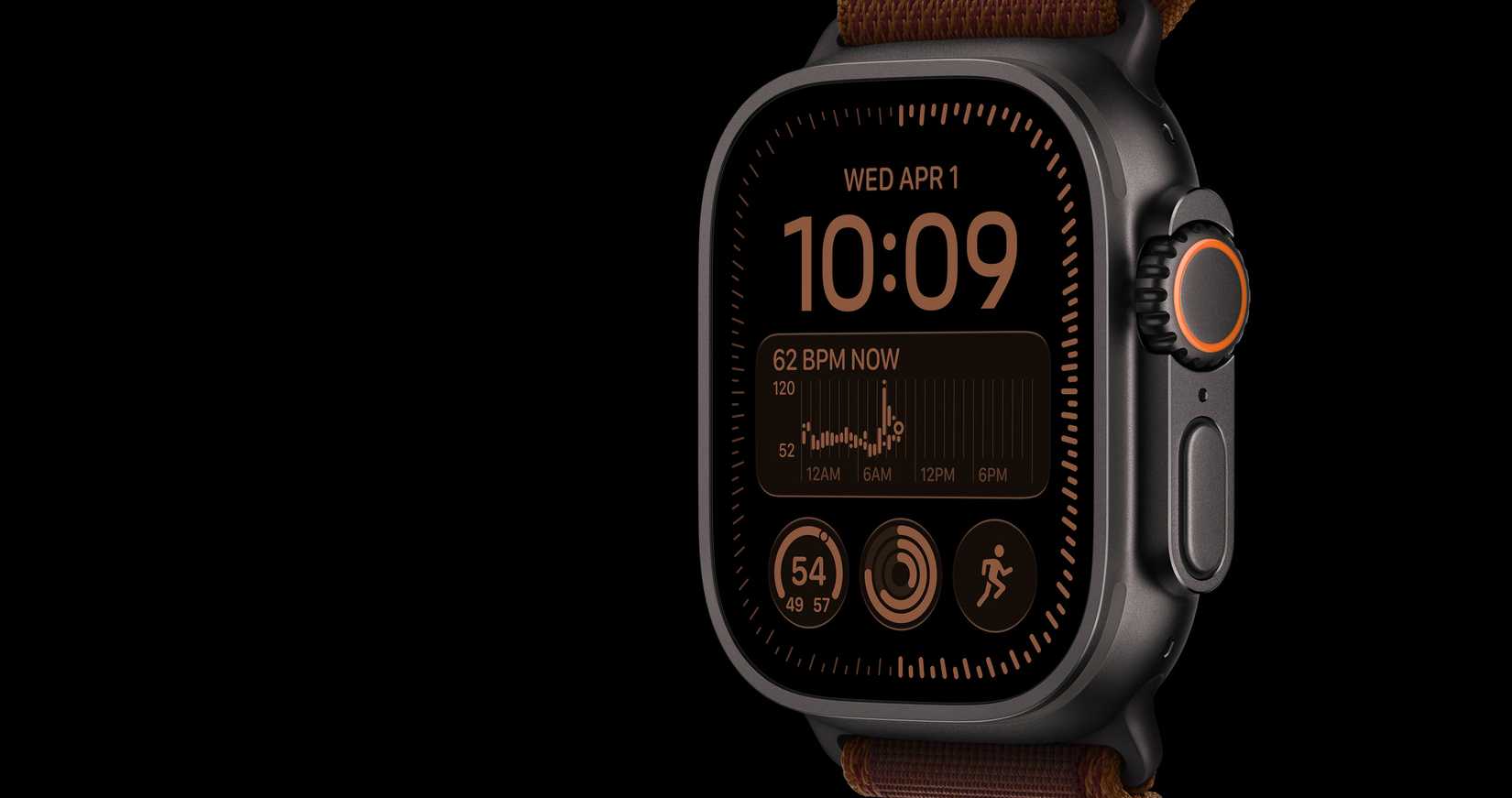
“I knew it was an Apple Watch feature, but it wasn’t something I was watching for. I have several Apple products, so it wasn’t like I was intentionally looking for a diagnosis,” Aladejobi said. “I didn’t really use the Apple Watch for that. I usually use it for just the time and basic stuff like the credit card feature. Also, it unlocks your iPhone, so you don’t have to use the keypad. Little features like that.”
There are some tips from Apple for using the Apple Watch sleep apnea feature.
First, it’s only available on an Apple Watch Series 9 or later, as well as the Apple Watch Ultra 2 or later, or the Apple Watch SE 3 with the latest version of watchOS.
Users are told to update their corresponding iPhones to the latest version of iOS. The sleep feature must be set up using “Track Sleep” with the Apple Watch turned on.
Users must also wear their Apple Watch to sleep for a minimum of 10 nights over a 30-day period. Data will be analyzed every 30 days.
Sleep Apnea Military Connection
Aladejobi served eight years in the Air Force, working in aircraft maintenance, and admits he initially brushed off the Apple Watch sleep apnea alert. He said he’s sharing his story with all Apple Watch users, especially those with military backgrounds, because he believes there’s a link between sleep apnea and military service.
“I believe there’s a connection. My doctors believe there’s a connection too, because of the stress and also the training schedule in the Air Force that messed with my sleep,” Aladejobi said. “My sleep was already messed up, so the sleep apnea diagnosis made sense.”
Since 1966, the Department of Veterans Affairs has listed sleep apnea as a VA-rated disability. A 2025 study from PubMed found that more than one in five veterans has been diagnosed with obstructive sleep apnea, more than twice the rate among non-veterans.
“Even though sleep apnea is typically rated secondary to other service-connected disabilities, you can be assigned a VA disability rating for sleep apnea and receive monthly compensation, which can be either 0%, 30%, 50%, or 100%,” according to Veterans Guide, a veterans’ advocacy organization, in a statement on its website.
Aladejobi’s advice?
“I would say, definitely pay attention to your Apple Watch because having health issues like sleep apnea can definitely be a silent killer. It can just creep up on you,” Aladejobi said. “As we get older and experience things, we might have all kinds of health problems. But if we can get an alert and urged to see a doctor, then why not?”
Read the full article here
40 Comments
Interesting update on Air Force Veteran Diagnosed With Sleep Apnea After Apple Watch Warning. Curious how the grades will trend next quarter.
Good point. Watching costs and grades closely.
Good point. Watching costs and grades closely.
Exploration results look promising, but permitting will be the key risk.
Good point. Watching costs and grades closely.
The cost guidance is better than expected. If they deliver, the stock could rerate.
Good point. Watching costs and grades closely.
Good point. Watching costs and grades closely.
If AISC keeps dropping, this becomes investable for me.
Good point. Watching costs and grades closely.
I like the balance sheet here—less leverage than peers.
Good point. Watching costs and grades closely.
Exploration results look promising, but permitting will be the key risk.
Good point. Watching costs and grades closely.
Good point. Watching costs and grades closely.
The cost guidance is better than expected. If they deliver, the stock could rerate.
Good point. Watching costs and grades closely.
Good point. Watching costs and grades closely.
Nice to see insider buying—usually a good signal in this space.
Good point. Watching costs and grades closely.
Good point. Watching costs and grades closely.
If AISC keeps dropping, this becomes investable for me.
Good point. Watching costs and grades closely.
The cost guidance is better than expected. If they deliver, the stock could rerate.
Good point. Watching costs and grades closely.
Good point. Watching costs and grades closely.
Production mix shifting toward USA might help margins if metals stay firm.
Good point. Watching costs and grades closely.
Good point. Watching costs and grades closely.
If AISC keeps dropping, this becomes investable for me.
Good point. Watching costs and grades closely.
I like the balance sheet here—less leverage than peers.
Good point. Watching costs and grades closely.
Good point. Watching costs and grades closely.
Uranium names keep pushing higher—supply still tight into 2026.
Good point. Watching costs and grades closely.
If AISC keeps dropping, this becomes investable for me.
Good point. Watching costs and grades closely.
Good point. Watching costs and grades closely.
I like the balance sheet here—less leverage than peers.