

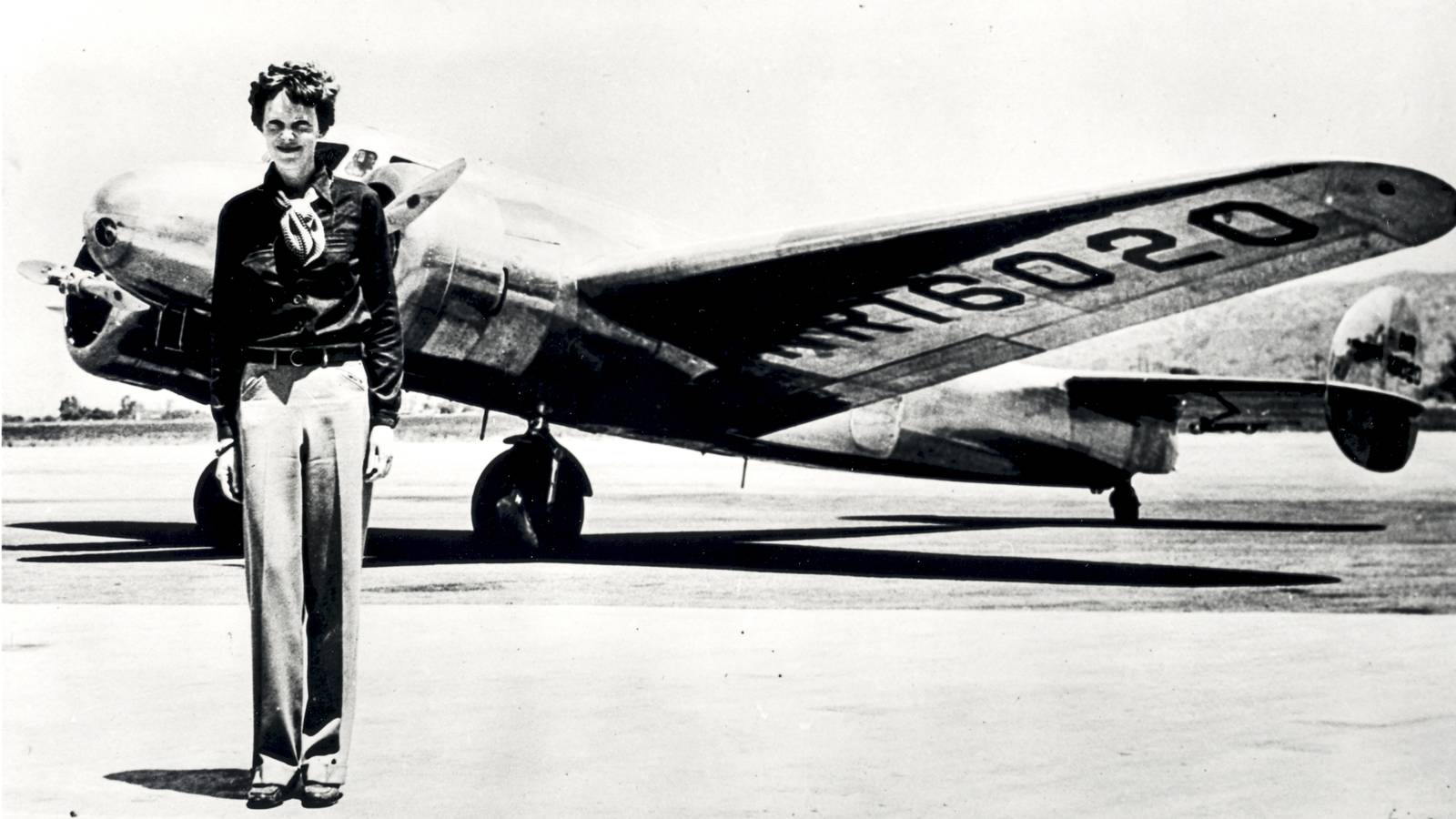
Nearly 90 years after Amelia Earhart disappeared over the Pacific Ocean, researchers are investigating an underwater object that could be the wreckage of her missing airplane. If confirmed, the discovery would end a search that began with a massive U.S. Navy and Coast Guard operation in 1937.
A 17-member expedition supported by Purdue University and the Archaeological Legacy Institute began surveying the lagoon of Nikumaroro, an uninhabited island in the South Pacific, on Wednesday, Oct. 14. The team is examining a submerged anomaly called the “Taraia Object,” first identified in satellite imagery in 2020.
Severe weather temporarily halted operations Thursday, but Purdue University said researchers expect to provide an update on the object’s identification within 48 hours.
No wreckage has been confirmed, and experts disagree about whether the object is even an airplane.
The renewed search comes 89 years after Earhart and navigator Fred Noonan vanished on July 2, 1937, while attempting to fly around the world. Their disappearance triggered an extensive military rescue effort, decades of private expeditions and several discoveries that initially appeared promising but ultimately failed to solve the mystery.
A New Search Beneath a Pacific Lagoon
The latest expedition focuses on Nikumaroro, formerly known as Gardner Island, about 400 miles southeast of Howland Island, where Earhart and Noonan planned to refuel.
Researchers believe an unusual shape visible in satellite photographs could be part of Earhart’s Lockheed Model 10-E Electra. The team said the object also appears in aerial imagery dating back to 1938.
Investigators are using side-scan sonar and magnetometers to examine the lagoon floor. They also plan to deploy a hydroprobe and equipment to clear sediment from the suspected object.
“We’re following our game plan,” Rick Pettigrew, executive director of the Archaeological Legacy Institute, said in an Oct. 14 statement. “It’s too early to reach conclusions as we’ve got a lot of science left to apply.”
The investigation follows the theory that Earhart and Noonan missed Howland Island, continued southeast and landed on Nikumaroro’s exposed coral reef. Supporters believe the aviators may have survived temporarily as castaways before dying on the island.
Others remain skeptical. Ric Gillespie, a longtime Earhart researcher who has led numerous expeditions to Nikumaroro, told Reuters that he believes the Taraia Object is a fallen pandanus tree rather than airplane wreckage.
The Navy’s Massive Search for Amelia Earhart in 1937
On July 2, 1937, Earhart and Noonan were flying from Lae, New Guinea, toward Howland Island, a tiny strip of land in the central Pacific.
The Coast Guard cutter Itasca was stationed near Howland to provide radio assistance and help guide the aircraft toward its destination.
The ship received several increasingly strong radio transmissions from Earhart, but communication problems prevented the two parties from establishing reliable contact.
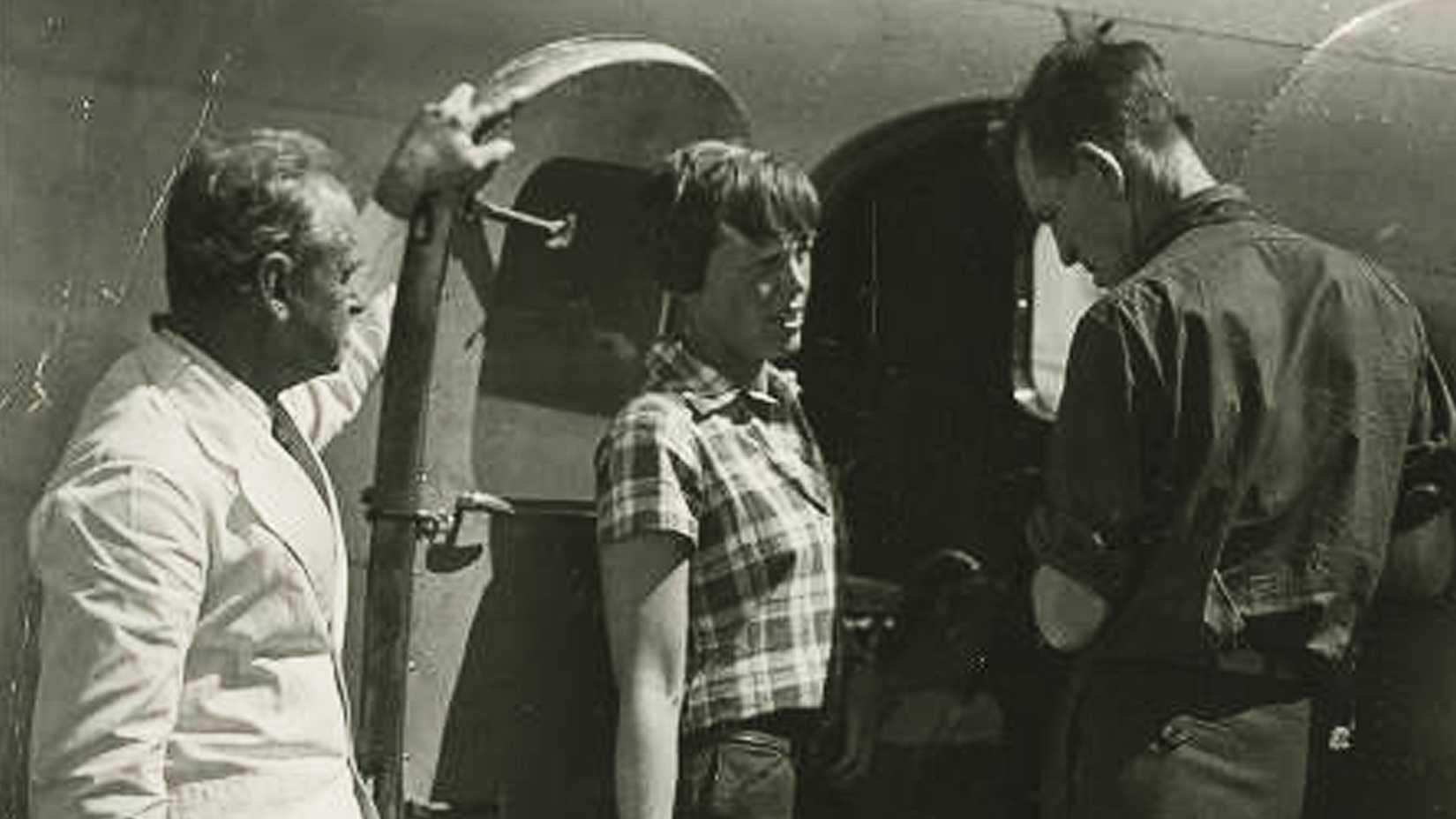
At approximately 8:43 a.m., operators aboard Itasca recorded Earhart’s final confirmed transmission, which included a navigational line of position described as “157 337.”
Then the transmissions stopped.
The disappearance launched what the National Archives describes as the largest sea-and-air rescue search of its time.
The battleship USS Colorado dispatched three float planes to search the Phoenix Islands, including Gardner Island. According to the National Naval Aviation Museum, the aircraft flew a combined search covering an estimated 25,490 square miles within visual range.
The Navy also sent the aircraft carrier USS Lexington, carrying 63 aircraft, to expand the search.
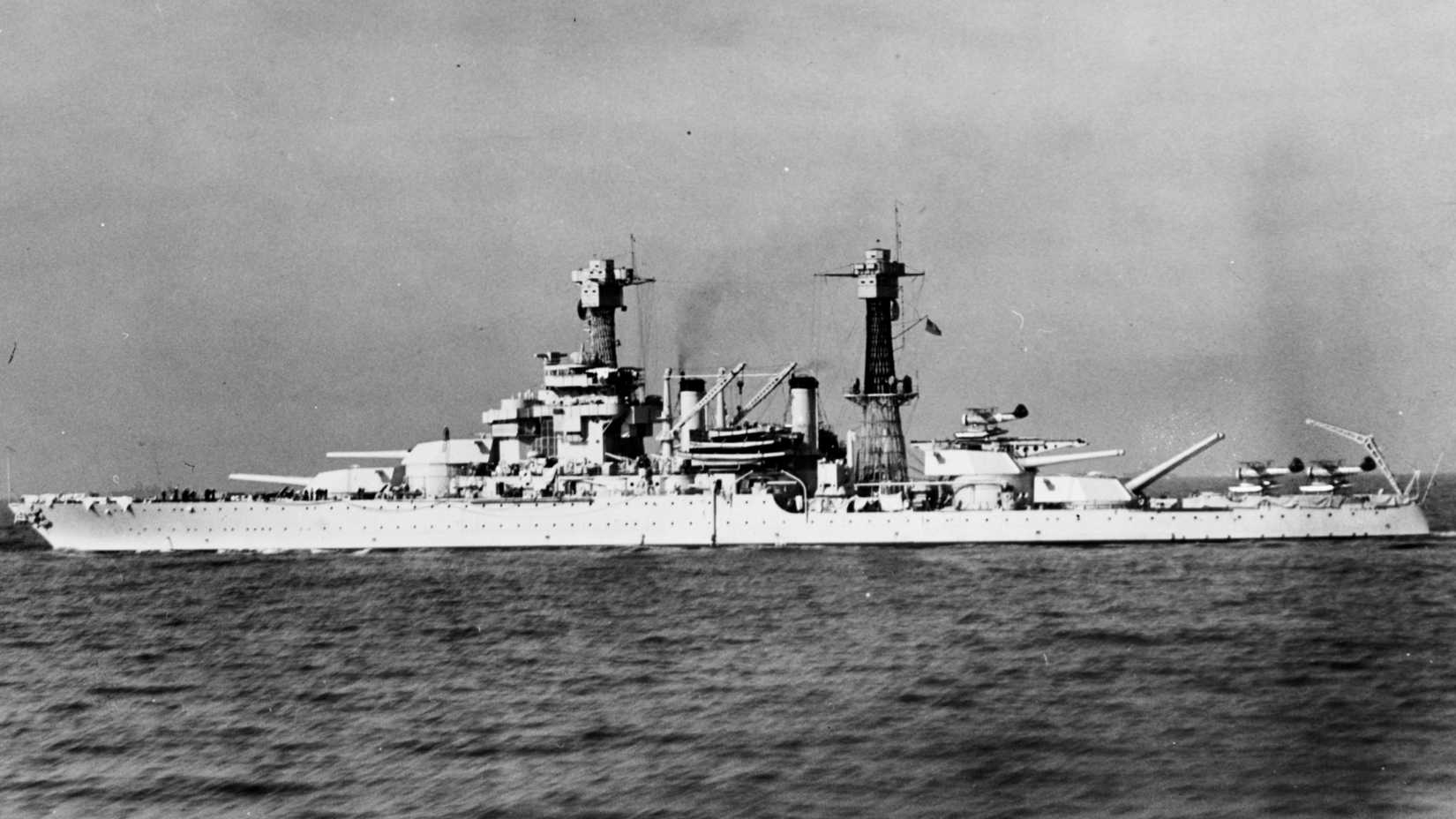
Lexington assumed control of the operation on July 12, concentrating its efforts on waters north and west of Howland Island.
Despite searching thousands of square miles, the Navy found no confirmed trace of Earhart, Noonan or their aircraft.
The search was suspended July 18. Earhart and Noonan were declared lost at sea the following day.
Decades of Searches and Disputed Discoveries
The Navy’s unsuccessful operation established the central question investigators have pursued ever since: Did Earhart run out of fuel and crash into the ocean, or did she reach another island?
The prevailing explanation, supported by the Smithsonian’s National Air and Space Museum, is that the Electra ran out of fuel and went down near Howland Island.
However, investigators have continued examining alternative possibilities, particularly Nikumaroro.
Gillespie’s organization, the International Group for Historic Aircraft Recovery, has conducted repeated expeditions to the island. Researchers have recovered objects including a cosmetic jar believed to resemble a product Earhart used and remnants of a pocketknife. None has conclusively established that Earhart or Noonan reached the island.
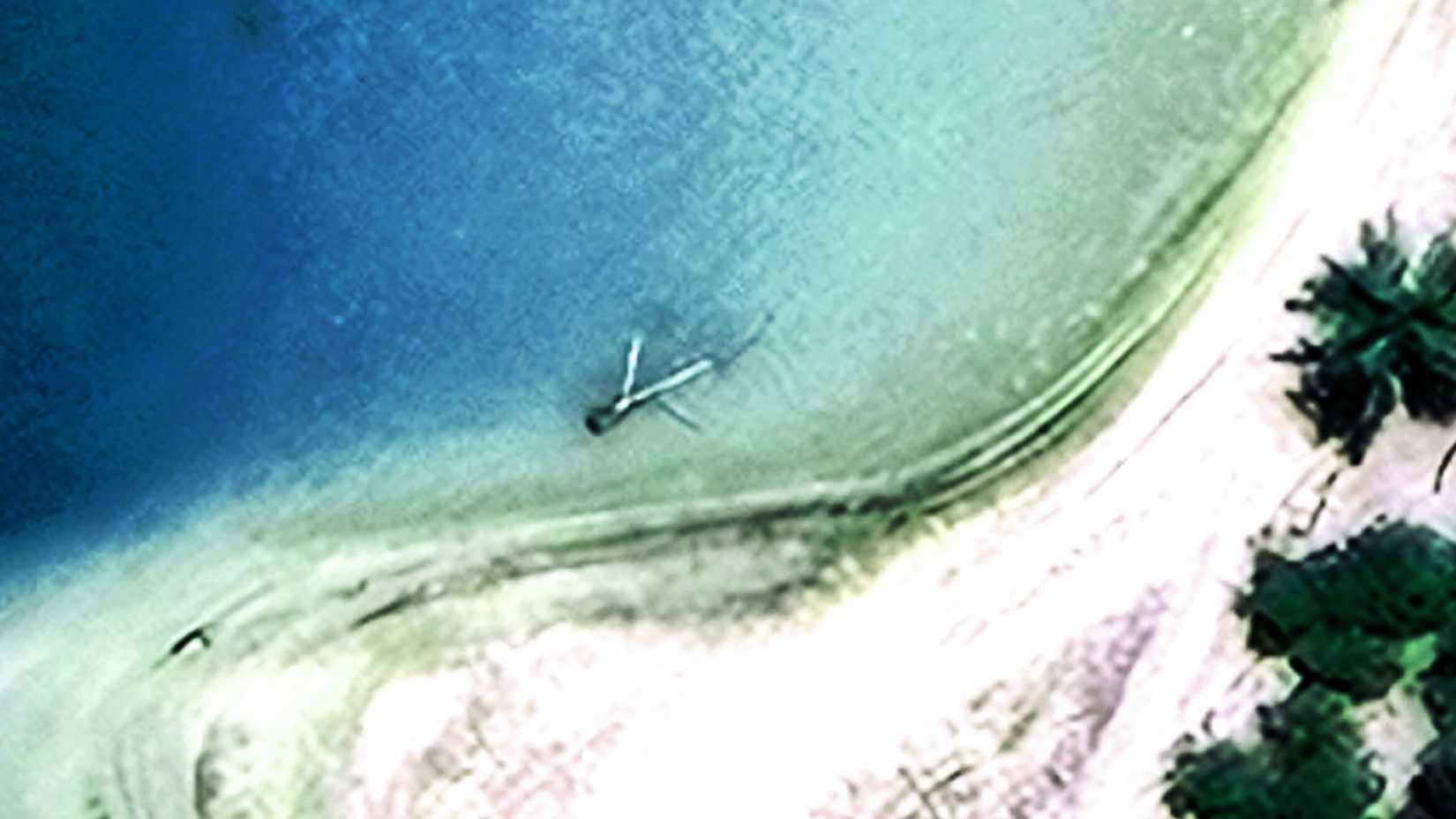
In 2019, oceanographer Robert Ballard, famous for discovering the wreck of the Titanic, led an expedition aboard the research vessel Nautilus to search the waters surrounding Nikumaroro.
The search for Earhart is not the only decades-old aviation mystery attracting renewed attention. Researchers are also using satellite imagery and artificial intelligence to search for a U.S. Air Force transport plane that disappeared over Canada’s Yukon Territory in 1950 with 44 people aboard.
Despite using advanced underwater imaging and remotely operated vehicles, the expedition found no confirmed evidence of the Electra.
Another promising development came in January 2024, when exploration company Deep Sea Vision released a sonar image of an airplane-shaped object approximately 16,000 feet beneath the Pacific Ocean.
The image attracted international attention, raising hopes that the mystery had finally been solved.
Those hopes ended in November 2024 when the company confirmed that the object was a natural rock formation.
The Amelia Earhart Hangar Museum subsequently acknowledged the mistaken identification, another reminder of how difficult it remains to distinguish aircraft wreckage from natural formations beneath the ocean.
New Military Photographs Could Provide Another Clue
The current expedition has also renewed attention to historical aerial photographs taken by the Royal New Zealand Air Force.

On Friday, Oct. 16, the Air Force Museum of New Zealand made 47 high-resolution photographs of Nikumaroro available to the public.
The photographs were taken Dec. 1, 1938, during a military survey of Pacific islands for potential airbase locations, approximately 17 months after Earhart disappeared.
Although the images had previously been examined in lower resolution, the newly available versions could allow researchers to study the island’s coastline and lagoon more closely. No unmistakable aircraft wreckage has been identified in the photographs.
What Happens if Researchers Find Earhart’s Plane?
The Purdue-backed team expects to complete its remaining field operations before departing Nikumaroro. Investigators hope their underwater measurements and sediment-clearing work will establish whether the Taraia Object is aircraft wreckage.
Identifying metal or structural components consistent with Earhart’s Electra would be a significant development, but confirming the airplane’s identity would require additional investigation.
A recovery operation would also require further authorization from the government of Kiribati, which administers Nikumaroro.
Purdue has a direct historical interest in the outcome. The university supported Earhart’s aviation research and helped fund the Lockheed Electra she called her “Flying Laboratory.” She intended to return the aircraft to Purdue after completing her flight.
Today, researchers face the same problem that confronted Navy aviators searching the Pacific in July 1937: Clues suggest where Earhart might have gone, but no confirmed evidence establishes where her final flight ended.
Read the full article here
33 Comments
Production mix shifting toward USA might help margins if metals stay firm.
Good point. Watching costs and grades closely.
Good point. Watching costs and grades closely.
I like the balance sheet here—less leverage than peers.
Good point. Watching costs and grades closely.
The cost guidance is better than expected. If they deliver, the stock could rerate.
Good point. Watching costs and grades closely.
Good point. Watching costs and grades closely.
Interesting update on Amelia Earhart’s Plane May Be Closer to Discovery After 89 Years. Curious how the grades will trend next quarter.
Nice to see insider buying—usually a good signal in this space.
Good point. Watching costs and grades closely.
Good point. Watching costs and grades closely.
Production mix shifting toward USA might help margins if metals stay firm.
Good point. Watching costs and grades closely.
Good point. Watching costs and grades closely.
Interesting update on Amelia Earhart’s Plane May Be Closer to Discovery After 89 Years. Curious how the grades will trend next quarter.
Uranium names keep pushing higher—supply still tight into 2026.
Good point. Watching costs and grades closely.
I like the balance sheet here—less leverage than peers.
Good point. Watching costs and grades closely.
Interesting update on Amelia Earhart’s Plane May Be Closer to Discovery After 89 Years. Curious how the grades will trend next quarter.
Good point. Watching costs and grades closely.
Uranium names keep pushing higher—supply still tight into 2026.
Good point. Watching costs and grades closely.
Interesting update on Amelia Earhart’s Plane May Be Closer to Discovery After 89 Years. Curious how the grades will trend next quarter.
Good point. Watching costs and grades closely.
Good point. Watching costs and grades closely.
Production mix shifting toward USA might help margins if metals stay firm.
Good point. Watching costs and grades closely.
Good point. Watching costs and grades closely.
The cost guidance is better than expected. If they deliver, the stock could rerate.
Silver leverage is strong here; beta cuts both ways though.
Good point. Watching costs and grades closely.