

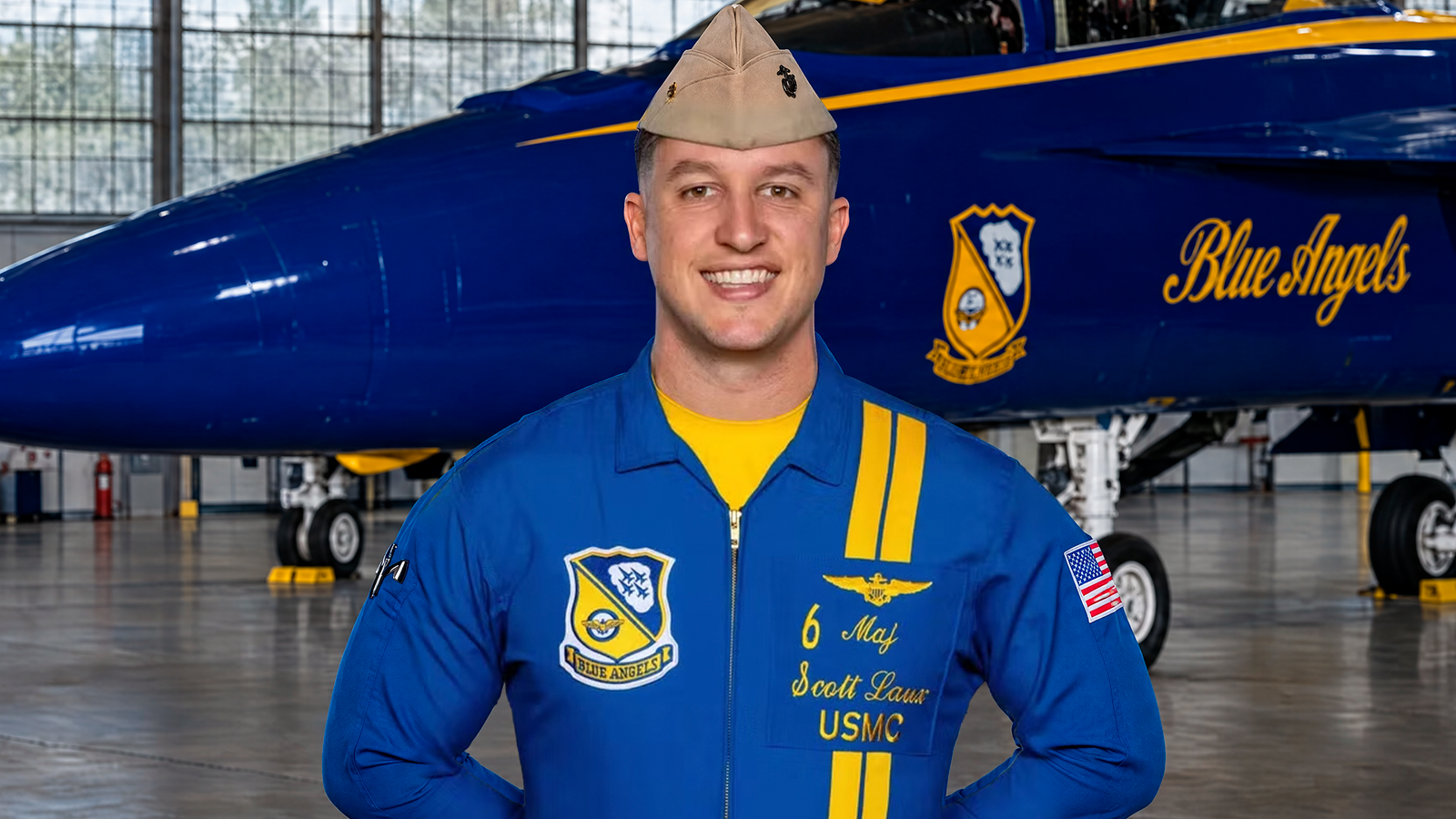
Marine Corps Maj. Scott Laux, the team’s Opposing Solo pilot, was removed Nov. 3 for failing to uphold its standards, the Chief of Naval Air Training confirmed Saturday, Nov. 6.
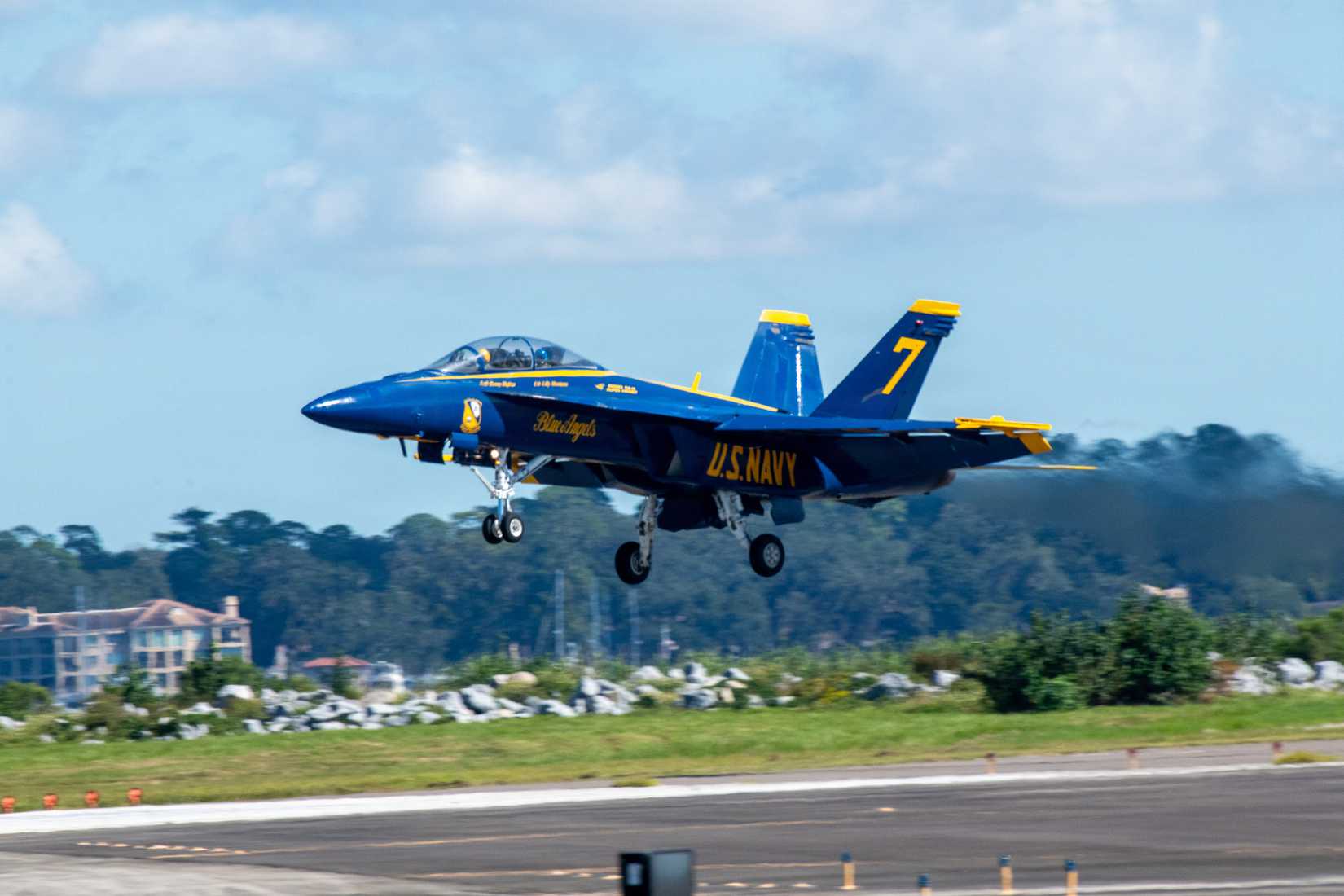
The Navy first acknowledged his removal Nov. 6, when the Blue Angels flew with five F/A-18 Super Hornets rather than six during the opening day of their Homecoming Air Show at Naval Air Station Pensacola, Fla.
U.S. Navy Flight Demonstration Squadron, the Blue Angels, Delta pilots fly in formation over the 2016 Super Bowl at Levi’s Stadium in Santa Clara, California, February 7, 2016.
“Blue Angel #6 was removed from the team for failing to uphold the standards expected of members of the Navy Flight Demonstration Squadron,” the command said in its initial statement.
Officials have not specified the conduct involved or announced whether an investigation or additional disciplinary action is underway. Laux’s photograph and biography have also been removed from the official team roster.
No. 6 was Missing from the Air Show in Atlanta
Spectators noticed the Blue Angels were flying without their No. 6 jet at an Atlanta air show days before the Navy publicly disclosed that the Marine Corps pilot assigned to that position had been removed from the squadron.
The Blue Angels performed Oct. 31 and Nov. 1 at Air Dot Show Atlanta in Peachtree City, Ga, their final scheduled appearance before the Pensacola homecoming.
In a Nov. 2 discussion accompanying air show photographs, a spectator asked why No. 6 had not flown during the Saturday performance.
Marine Corps Capt. Danielle Cribb, the squadron’s public affairs officer, was also removed from the team’s website. Cribb, who was selected in 2025, joined the Blue Angels that September.
The Navy has not publicly confirmed whether she was also removed from the squadron, or whether the apparent roster change is connected to Laux’s departure.

Who is Maj. Scott Laux?
Laux, from Chantilly, Va., graduated from the U.S. Naval Academy in 2012 with a degree in Chinese and earned his naval aviator wings in 2015.
He flew F/A-18 Hornets with Marine fighter-attack squadrons based at Marine Corps Air Station Miramar, Calif., and deployed aboard the aircraft carrier USS Nimitz. He transitioned to the F-35C platform in 2022.
Before joining the Blue Angels in 2024, Laux had accumulated more than 1,300 flight hours and 169 arrested carrier landings, according to his previous biography.
He served as the team’s narrator in 2025 before becoming its No. 6 opposing solo pilot for the 2026 season.
Why the Team Cannot Simply Replace Him
The absence changes the flight demonstration but does not necessarily require canceling it. During Friday’s Pensacola performance, the Blue Angels proceeded with five jets, modifying their usual six-aircraft routine.
The Blue Angels do not maintain a spare demonstration pilot. Their official explanation is that each aviator needs 120 winter training flights and extensive practice with other team members to perform the low-altitude formations safely. A qualified Navy or Marine Corps fighter pilot cannot simply enter the opposing solo position without that preparation.

The consequences of mistakes in that role have been documented. In June 2016, Marine Corps Capt. Jeff Kuss, then the No. 6 pilot, died during a practice demonstration in Tennessee.
The Navy investigation attributed the crash primarily to pilot error, with fatigue and weather contributing. In 2004, No. 6 was involved in a mishap during training where the pilot ejected and survived.
The findings prompted changes to the squadron’s safety procedures. Investigators found that Kuss died in the line of duty and not because of misconduct. No comparable safety incident has been publicly linked to Laux’s removal.
How Previous Blue Angels Removals Were Handled
The squadron has finished a season with five aircraft before. In 2008, two team members were removed from duty following what officials described as an inappropriate relationship.
The Navy said the team would complete its last three shows with five jets while further disciplinary proceedings were considered. Nothing disclosed about Laux’s removal, or Cribbs’ potential removal, establishes a connection to that case.
Other personnel decisions have followed documented violations of flight standards. In 2011, Cmdr. Dave Koss requested relief as Blue Angels commanding officer after leading a maneuver at an unacceptably low altitude during a Virginia air show.
He acknowledged other failures to meet airborne standards, and the squadron canceled performances while adjusting to new leadership.
Marine Corps Maj. Kyle Maschner, a former Blue Angels C-130 “Fat Albert” pilot, was also removed from the squadron in early 2019 after allegedly touching a female enlisted sailor inappropriately, six officers told The War Horse in 2023.
The Marine Corps retained him, and he subsequently became a flight instructor in Pensacola while overseeing Marine Aviation students at MATSG-21.
Removal from the Blue Angels is not automatically a discharge from the military or a finding of criminal misconduct. The Navy has not announced a court-martial, nonjudicial punishment or subsequent assignment for Laux.
His status as a Marine Corps officer and any potential disciplinary proceedings are separate matters from his assignment to the Navy’s flight demonstration squadron.
An Unusual End to the 2026 Season
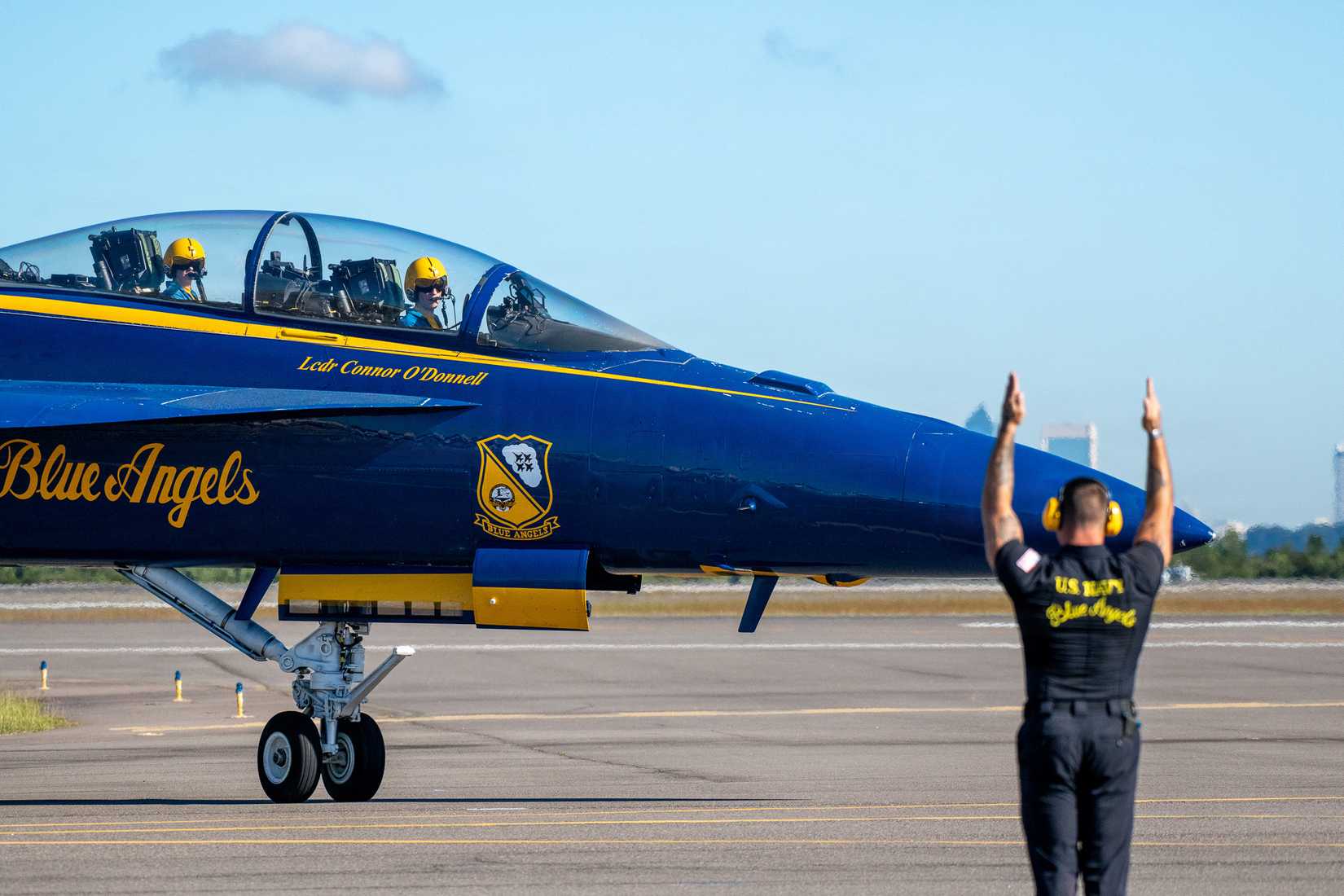
The personnel change comes during the Blue Angels’ 80th anniversary and a homecoming celebrating NAS Pensacola’s 200th anniversary.
The Nov. 6-7 event is the squadron’s last scheduled public demonstration of 2026. It also marks the show’s return after the 2025 homecoming cancellation amid uncertainty over federal funding during the government shutdown.
Although the Navy has now confirmed when he was removed, officials have not explained whether the earlier Atlanta absences were related to that decision, identified the specific standards he failed to meet or addressed the missing bio of Cribb.
Further information may emerge through an administrative or disciplinary process, but officials have not publicly confirmed that such proceedings are underway.
Read the full article here
34 Comments
I like the balance sheet here—less leverage than peers.
Interesting update on Blue Angels Remove Marine Solo Pilot Days Before Season Finale. Curious how the grades will trend next quarter.
Good point. Watching costs and grades closely.
Good point. Watching costs and grades closely.
Exploration results look promising, but permitting will be the key risk.
Exploration results look promising, but permitting will be the key risk.
Good point. Watching costs and grades closely.
The cost guidance is better than expected. If they deliver, the stock could rerate.
Good point. Watching costs and grades closely.
Good point. Watching costs and grades closely.
Silver leverage is strong here; beta cuts both ways though.
Good point. Watching costs and grades closely.
Good point. Watching costs and grades closely.
Silver leverage is strong here; beta cuts both ways though.
Good point. Watching costs and grades closely.
Good point. Watching costs and grades closely.
If AISC keeps dropping, this becomes investable for me.
Good point. Watching costs and grades closely.
Good point. Watching costs and grades closely.
Nice to see insider buying—usually a good signal in this space.
The cost guidance is better than expected. If they deliver, the stock could rerate.
Good point. Watching costs and grades closely.
Production mix shifting toward USA might help margins if metals stay firm.
Good point. Watching costs and grades closely.
Interesting update on Blue Angels Remove Marine Solo Pilot Days Before Season Finale. Curious how the grades will trend next quarter.
Good point. Watching costs and grades closely.
Silver leverage is strong here; beta cuts both ways though.
Good point. Watching costs and grades closely.
Uranium names keep pushing higher—supply still tight into 2026.
Nice to see insider buying—usually a good signal in this space.
Good point. Watching costs and grades closely.
Uranium names keep pushing higher—supply still tight into 2026.
Good point. Watching costs and grades closely.
Exploration results look promising, but permitting will be the key risk.