
America burned through a quarter-billion dollars in airplanes to save one man. We also salvaged a shot-up Chinook off a murderous Afghan mountainside. If that sounds gloriously unhinged, that is because it absolutely was.
The Brutal Math Behind a $254 Million Rescue
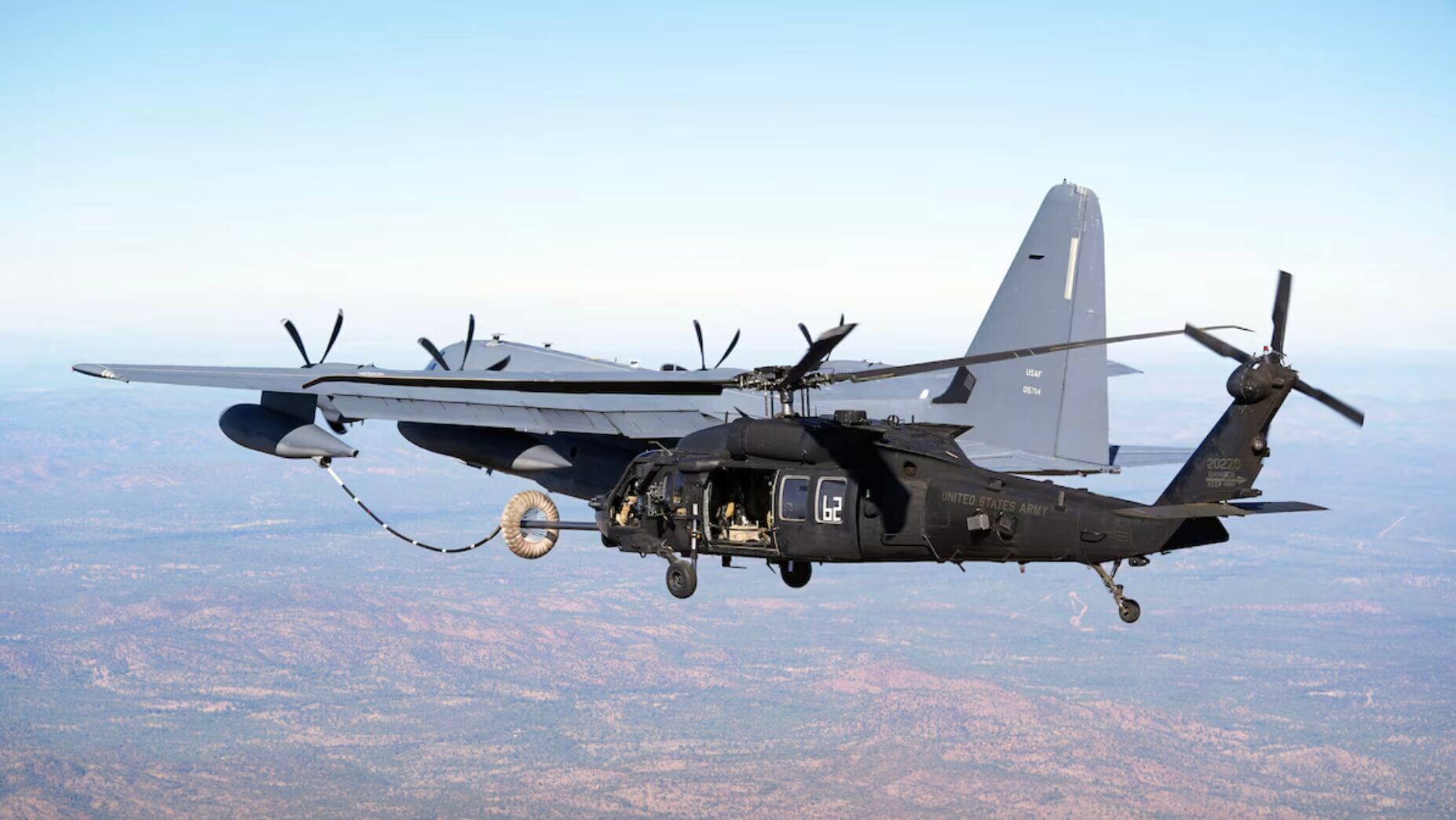
The Lockheed Martin MC-130J Commando II version of the venerable Hercules cargo plane costs about $114.2 million apiece. We burned two of them to cinders in Iran when we couldn’t get their landing gear unstuck after rescuing that downed F15 WSO (Weapon System Operator) on Easter morning of 2026. The details captivated the planet. Somebody will no doubt eventually make an awesome movie about it.
MH6 Little Bird helicopters cost between $2.5 and $7.5 million each, depending upon their combat loadout. These adorable little warplanes are inimitably nimble and versatile. We transported them into an improvised forward airfield inside the C130’s and then used them to effect the actual rescue. However, once the C-130’s were toast, the Little Birds lacked the legs to get back to friendly territory. When it became obvious that these machines were also doomed, the onsite commander opted to blow them in place as well.
In addition to these four perfectly serviceable combat aircraft, we also lost an A10 Warthog to ground fire. Nobody has any idea what a Warthog costs. Their production run wrapped up in 1984. Current estimates are that this gloriously unattractive ground attack plane is worth about $20 million. Additionally, a pair of USAF HH-60W Jolly Green II rescue helicopters got liberally ventilated. They cost $40 million each. However, let’s assume that these two aircraft were repairable.
If my math is correct, we spent some $254 million in airplanes to rescue that one Air Force Colonel. Many of our detractors, particularly in Europe, sneered at us for engaging in such lopsided military economics. It was clearly ludicrous to spend such an astronomical sum just to save one guy. Speaking solely for myself, screw every last one of them. That operation was worth every penny.
American industry is likely busy building us replacement airframes as I type these very words. I hope those defense executives get to buy themselves lovely new boats. That Air Force Colonel will get to spend the Fourth of July with his family rather than being burned alive in a cage somewhere or paraded around in front of Iranian cameras. A quarter of a billion dollars was a freaking bargain.
Aircraft Losses and Rescue Cost Breakdown
| Aircraft | Cost | Article Context |
|---|---|---|
| MC-130J Commando II | $114.2 million apiece | Two burned after the rescue in Iran |
| MH6 Little Bird | Between $2.5 and $7.5 million each | Used in the rescue, then destroyed in place |
| A10 Thunderbolt II | About $20 million | Lost to ground fire |
| HH-60W Jolly Green II | $40 million each | Two were hit, assumed repairable |
| Total Spent | $254 million | To rescue one Air Force Colonel |
DART Math: Why Recovering Wrecked Aircraft Still Makes Sense
The military term is DART. That stands for Downed Aircraft Recovery Team. These machines are indeed lyrically expensive. It is almost always a good idea to get them back once they are damaged in combat so they can be repaired. However, that is easy to say and often very difficult to do.
During my time in Army Aviation, I took part in three of these operations. In the case of a USAF F15C and a British SEPECAT Jaguar, these two fighter planes were veritably pulverized. We just flew the guys and gear out to tidy up the mess and placate the EPA. However, at one point, one of our CH47D helicopters clipped a tree and shredded a couple of rotor blades deep in the boonies. Swapping those puppies out in the middle of no place was tough, and we didn’t have anybody shooting at us. Starting on 4 March 2002, the young studs of the Army’s Task Force 160 SOAR (Special Operations Aviation Regiment) had to do something similar under hugely more difficult circumstances.
Takur Gar: Where the CH-47 Chinook Recovery Story Really Begins
The Global War on Terror was only six months old, and the world was trying to find its new level. In Afghanistan, that meant that US Special Operations forces were keeping busy killing absolutely everybody who had anything to do with al Qaeda and their ilk. As SOCOM chased down the squirters from the Battle of Tora Bora, things came to a head on a forlorn mountaintop called Takur Gar.
Takur Gar is a 10,000-foot mountain peak in the Arma Mountains of southwest Afghanistan. If misery was a mineral you mined out of the ground, this is where you would go to find it. The mission was to drive al Qaeda and Taliban fighters into blocking positions manned by elements of the 101st Airborne and 10th Mountain divisions.
Why the CH-47 Chinook Was the Only Beast for the Job
I’m biased, because I flew these things. However, I flew guns, scouts, and lift aircraft as well. The CH47 is hands-down the baddest helicopter in the Army’s inventory. Faster than any other Army rotorcraft, the Chinook is just insanely powerful. That gives it better high altitude performance than lesser machines. I have actually taken stripped-down Chinooks to around 22,000 feet to fly over the top of Mount McKinley in Alaska. It is an amazing airplane. That made it the go-to aircraft for operations in the rarefied mountains of Afghanistan.
Early in the morning on 4 MAR 2002, MH47E tail number 476 of the TF 160 Night Stalkers was inserting troops onto Takur Gar when it came under intense fire. The aircraft was raked with enemy automatic weapons and actually took more than one RPG round. Staggering under the onslaught, the big Chinook shuddered, and Petty Officer Neil Roberts, a Navy SEAL, was thrown out of the back. Roberts survived the fall only to be killed later. An attempted recovery resulted in the destruction of another MH47, tail number 475.
475 was disabled at the top of the mountain. There resulted a pitched battle that was explored in the book Not a Good Day to Die, which is a great read. It is available on Amazon. 476, however, limped off to an emergency landing some six clicks away and 2,000 feet below the summit. While a bit removed from the chaos, 476 was nonetheless still deep in the suck.
475 was toast. An American fighter-bomber blew it to smithereens. However, 476 still had potential. It might yet be saved.
How Do You Recover a Shot-Up 54,000-Pound Helicopter?
A fully-loaded MH47E tops out at 54,000 pounds. This example was disabled high up on the side of a desolate mountain surrounded by psychopathic nutjob lunatics. Getting that bird back home promised to be a Gordian challenge.
TF160 maintenance crews and pilots flew to the site and swarmed over the disabled machine, taking off everything they could to cut down on weight. They considered another Chinook as well as a Marine CH53E Sea Stallion to do the heavy lifting, but neither aircraft had the horsepower to lift what remained of the machine. Then somebody tracked down a Soviet-era Mi26 with a Russian civilian crew. That would be expensive, but it could do the job.
They had to leave the aircraft unguarded for a time during this process. To ensure that terrorists had not boobytrapped the machine, the SEALs planted desirable swag like food, water, and warm clothes in the cabin. They knew that, if someone had been mucking around with the disabled helicopter, they would have kept the food and comfort items. When they found this stuff unmolested, they knew they were good to proceed.
Getting stuff off the aircraft at these high altitudes was not easy. Using a Gator ATV, they eventually recovered one of the Chinook’s two engines. The other was too heavy, and the guys were too smoked to manage. That power plant had to be abandoned. They had to cut the rotor blades off with a rescue saw.
The Wild Recovery: Rangers, Night Stalkers, and a Russian Mi-26
The recovery team emptied the fuel tanks onto the ground. OSHA and the EPA have limited jurisdiction in the desolate mountains of Afghanistan. As US troops came and went from the site, they would be regularly fired upon. After removing both engines, the rotor blades, the refuel probe, the gun mounts, sundry avionics, and as much ancillary gear as possible, they were ready to try it.
The recovery team consisted of four flyable MH47E’s, an F18 Super Hornet, several AH64 Apaches, an orbiting UAV, and a buttload of Rangers for security. Once they had the hulk rigged for slingload, they called in the Mi26.
That was easier said than done. However, one of the 160th troops was a former Russian linguist who could interpret for the Mi26 crew. With the Mi26 stripped down to just fuel, they hooked up to 476 and pulled pitch.
The massive Mi26 made it look easy. The big Russian helicopter lifted the Chinook to Gardez and topped off with gas. From there, they moved to Kabul International Airport and then on to Bagram. When the maintenance crews finally tore through the airframe, they recovered multiple spent enemy rounds that they distributed to the original crew members. The Hulk was eventually recovered to the US and completely rebuilt. 476 subsequently flew in combat again. Chances are, it is still flying today. That thing seems to be unkillable.
Why Chinook 476 Still Matters
Much was learned from the recovery of tail number 476 from the side of Takur Gar. Not least among these was the development of a lightweight spider crane that could be air deployable and facilitate the removal of heavy stuff like engines and rotor blades. The combat recovery of 476 represented the first successful battlefield salvage of a battle-damaged US Army helicopter since the Vietnam War.
Machines as complicated as the CH47 have their own personalities. Some of the rotor systems are tracked out to run smoothest at high speeds. Others have a sweet spot at slower velocities. These aircraft not infrequently have electronic quirks that you come to recognize after a little stick time in them. In my day, certain aircraft were wired for a boom box so you could rock out while flying NOE (nap-of-the-earth), while others were not.
In the Army, the crew dogs own the airplanes. We pilots just borrowed them for a while. It was their names stenciled on the outside, not ours. As our flight engineers and crew chiefs flew with us and shouldered all the same risks and responsibilities, this created a fiercely powerful bond between these machines and the guys who kept them flying. In the combat recovery of tail number 476, we see this mystical connection on most glorious display.
Read the full article here
37 Comments
Production mix shifting toward USA might help margins if metals stay firm.
Good point. Watching costs and grades closely.
Good point. Watching costs and grades closely.
The cost guidance is better than expected. If they deliver, the stock could rerate.
Good point. Watching costs and grades closely.
Good point. Watching costs and grades closely.
Silver leverage is strong here; beta cuts both ways though.
Good point. Watching costs and grades closely.
Exploration results look promising, but permitting will be the key risk.
If AISC keeps dropping, this becomes investable for me.
The cost guidance is better than expected. If they deliver, the stock could rerate.
Production mix shifting toward USA might help margins if metals stay firm.
Good point. Watching costs and grades closely.
Good point. Watching costs and grades closely.
Production mix shifting toward USA might help margins if metals stay firm.
Good point. Watching costs and grades closely.
Good point. Watching costs and grades closely.
Uranium names keep pushing higher—supply still tight into 2026.
Good point. Watching costs and grades closely.
Good point. Watching costs and grades closely.
Nice to see insider buying—usually a good signal in this space.
If AISC keeps dropping, this becomes investable for me.
Good point. Watching costs and grades closely.
Good point. Watching costs and grades closely.
If AISC keeps dropping, this becomes investable for me.
Good point. Watching costs and grades closely.
The cost guidance is better than expected. If they deliver, the stock could rerate.
Silver leverage is strong here; beta cuts both ways though.
Good point. Watching costs and grades closely.
Nice to see insider buying—usually a good signal in this space.
Good point. Watching costs and grades closely.
Nice to see insider buying—usually a good signal in this space.
Good point. Watching costs and grades closely.
Silver leverage is strong here; beta cuts both ways though.
Production mix shifting toward USA might help margins if metals stay firm.
Good point. Watching costs and grades closely.
Good point. Watching costs and grades closely.