

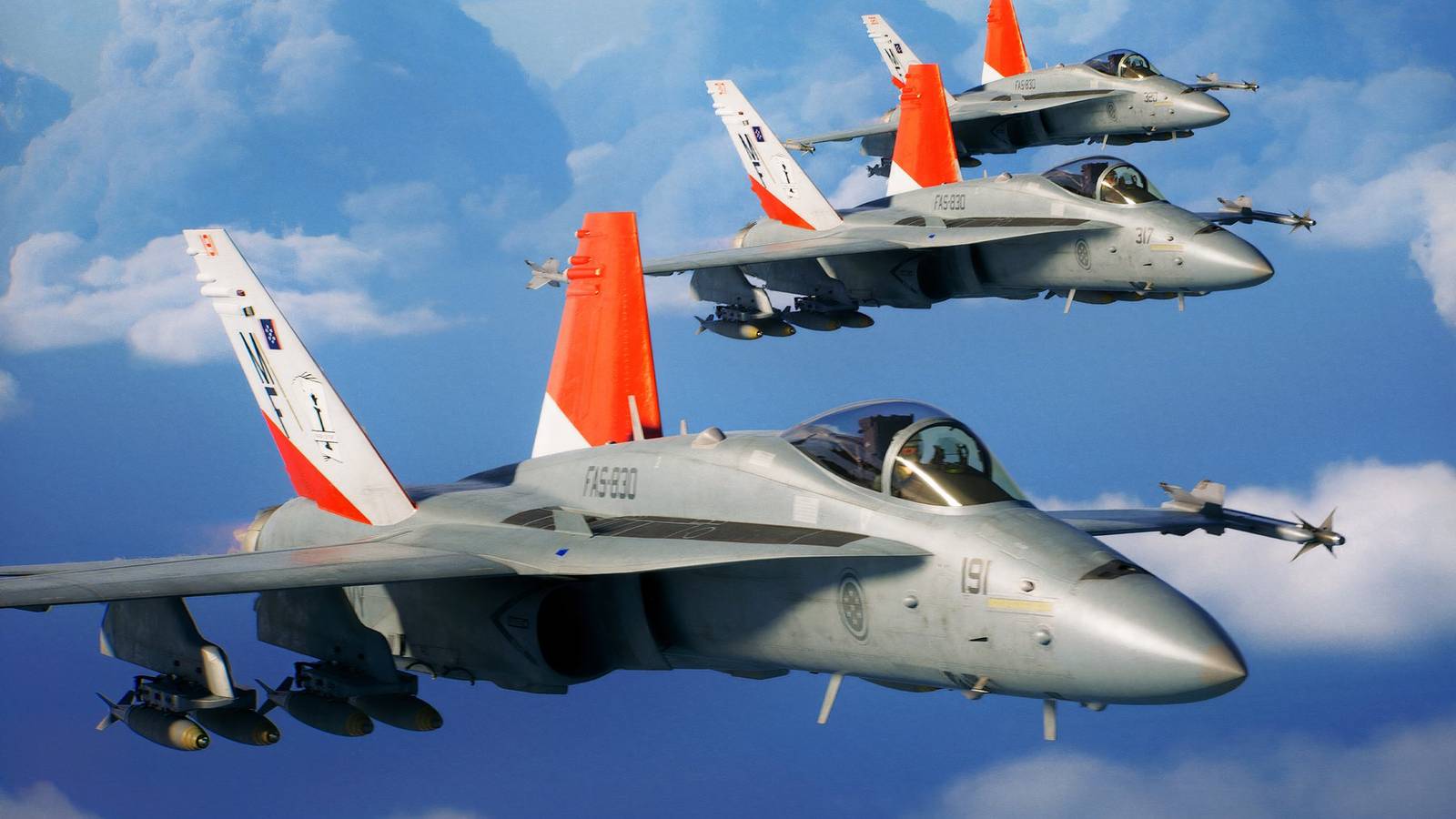
The clouds in Ace Combat 8: Wings of Theve, the upcoming 2026 game from Bandai Namco Entertainment, are not just there to look good.
That was one of the clearest takeaways from Military.com’s exclusive hands-on preview of Bandai Namco Entertainment’s next aerial combat game, held May 27 at Orbital Studios in Los Angeles. The upcoming sequel, due in 2026 for PlayStation 5, Xbox Series X|S and PC via Steam, is still very much an Ace Combat game: fast fighter jets, fictional wars, dramatic radio chatter and skies that seem built for impossible maneuvers.
But this time, the sky appears to have more of a job.
Kazutoki Kono, brand director for the Ace Combat series, said during an interview at the event that the development team did not want clouds to serve merely as pretty scenery.
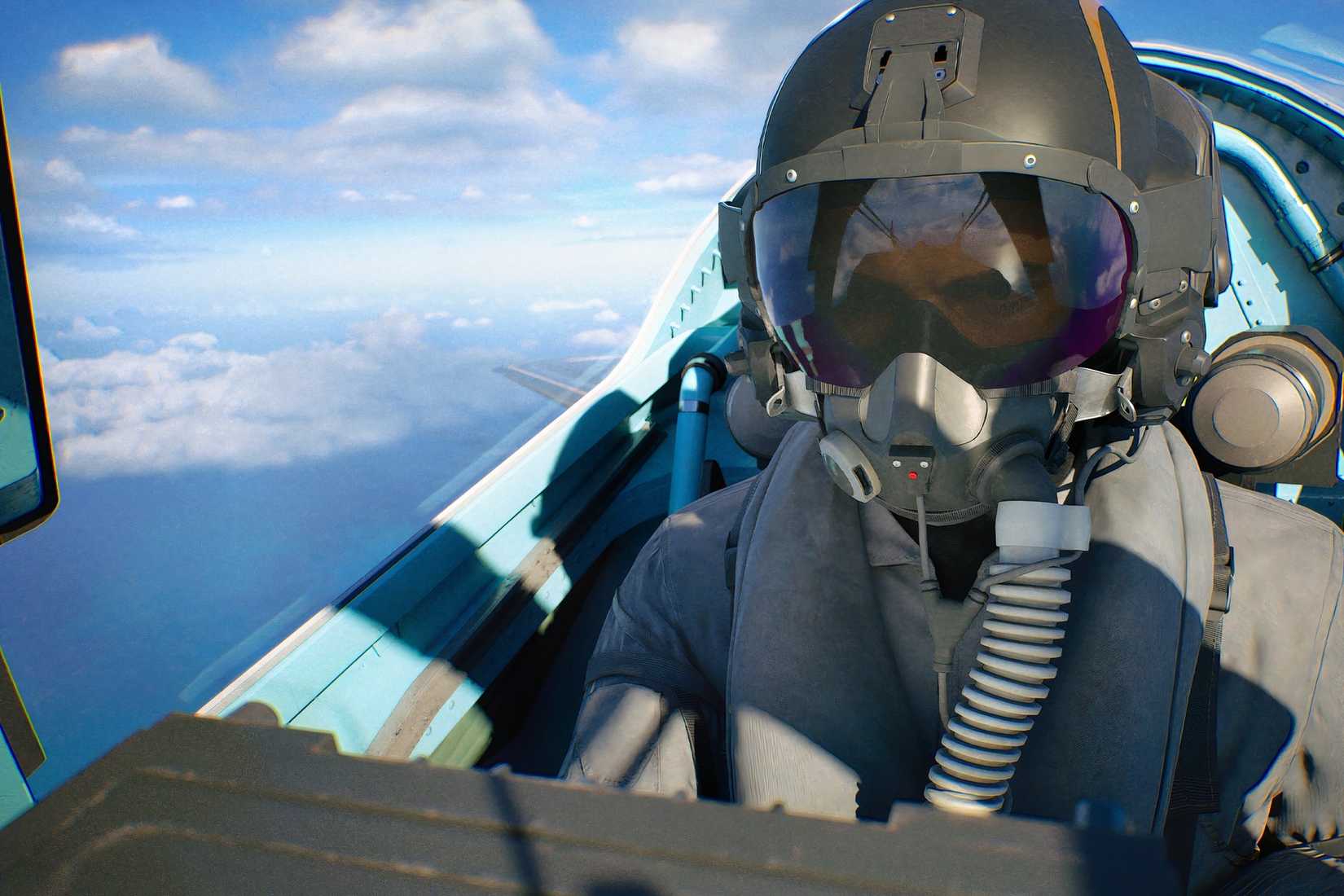
In Ace Combat 8, flying into cloud cover can give players tactical information. Water droplets hitting the cockpit glass signal that the aircraft has entered a cloud, giving players another way to read the environment and make decisions in the middle of a fight.
The clouds are not decorative; they are part of how the player reads the fight. Ace Combat is not a hardcore simulator, and it has never pretended to be one. Players are not expected to cold-start a jet, memorize cockpit switches or spend half the session buried in procedure.
The fantasy is cleaner and louder: climb, evade, lock on, fire and somehow survive the kind of aerial chaos that would make a real pilot’s safety officer sweat through a flight suit.
The Sky Gets a Bigger Role
During the hands-on session, the most immediate technical leap was visual. The sky, lighting and sunset effects were intense, with aircraft cutting through clouds and sunlight in ways that gave the battlefield a sense of scale. The game’s cloud and water effects stood out because they seemed tied to the player’s awareness rather than simply showing off new hardware.
That is a smart fit for Ace Combat. The franchise has always depended on readability. Players are moving quickly, tracking enemies, listening to radio calls and trying not to become confetti with afterburners. If clouds can obscure, reveal or signal conditions through cockpit feedback, they become part of the combat language.
The sound design also appears to be getting a major upgrade. According to details shared at the event, the team used three separate microphones in different recording locations to capture more realistic aircraft audio. The game also supports 7.1.4 audio, which should give players a more spatial sense of engines, missiles, flybys and battlefield chatter.
The soundtrack, meanwhile, is exactly the kind of oversized, pulse-raising music longtime fans expect from the series. It does not sit politely in the background. Instead, it pushes the action forward.
Built for Aces, but Not Only Aces
One of the biggest changes in Ace Combat 8 is the ability to select and customize the aircraft used by your team.
The game will include 30 aircraft, some of which are based on real-world planes. That should give players more control over how their squadron feels and functions, and it adds another layer for aviation fans who care about the hardware as much as they do about the dogfighting.
Kono also told Military.com that Ace Combat 7: Skies Unknown brought in more new players than the team expected. Many of those newcomers told developers that the game could be difficult or that it lacked sufficient tutorial support. That feedback helped shape the sequel, which appears designed to bring in rookie pilots without clipping the wings of longtime fans.
That tracked with my own experience. I had not played an Ace Combat game seriously since Ace Combat 2, released in 1997. The flying took a little time to settle into, but once it clicked, even a player coming in nearly fresh to the franchise could complete missions and feel the rhythm of the game.
That rhythm is still the heart of Ace Combat: fast decisions, cinematic danger and the fantasy of being the pilot who turns a collapsing mission into a legend.
Bandai Namco also confirmed online multiplayer, though more details are still to come.
No VR, and a Story That Takes Its Time
One surprise is what Ace Combat 8 will not include.
Despite the popularity of VR content in Ace Combat 7, the team decided not to pursue VR for the new game. The reason, according to what was shared at the event, came down to resources. VR requires roughly twice as much memory, which would have forced the team to build a game with less depth. Instead, developers chose to push the main game as far as possible.
That is a reasonable trade-off, though some fans will miss the headset option.
The bigger frustration from the preview came before takeoff. The opening prologue felt extremely long for a game about fighter jets. The story spends a lot of time setting the table before players get into an aircraft, including real-time button prompts that seem designed mostly to keep players engaged.
At one point, the game asks players to press a button for a simple handshake—the kind of mundane moment that feels a little silly when all you want to do is get airborne.
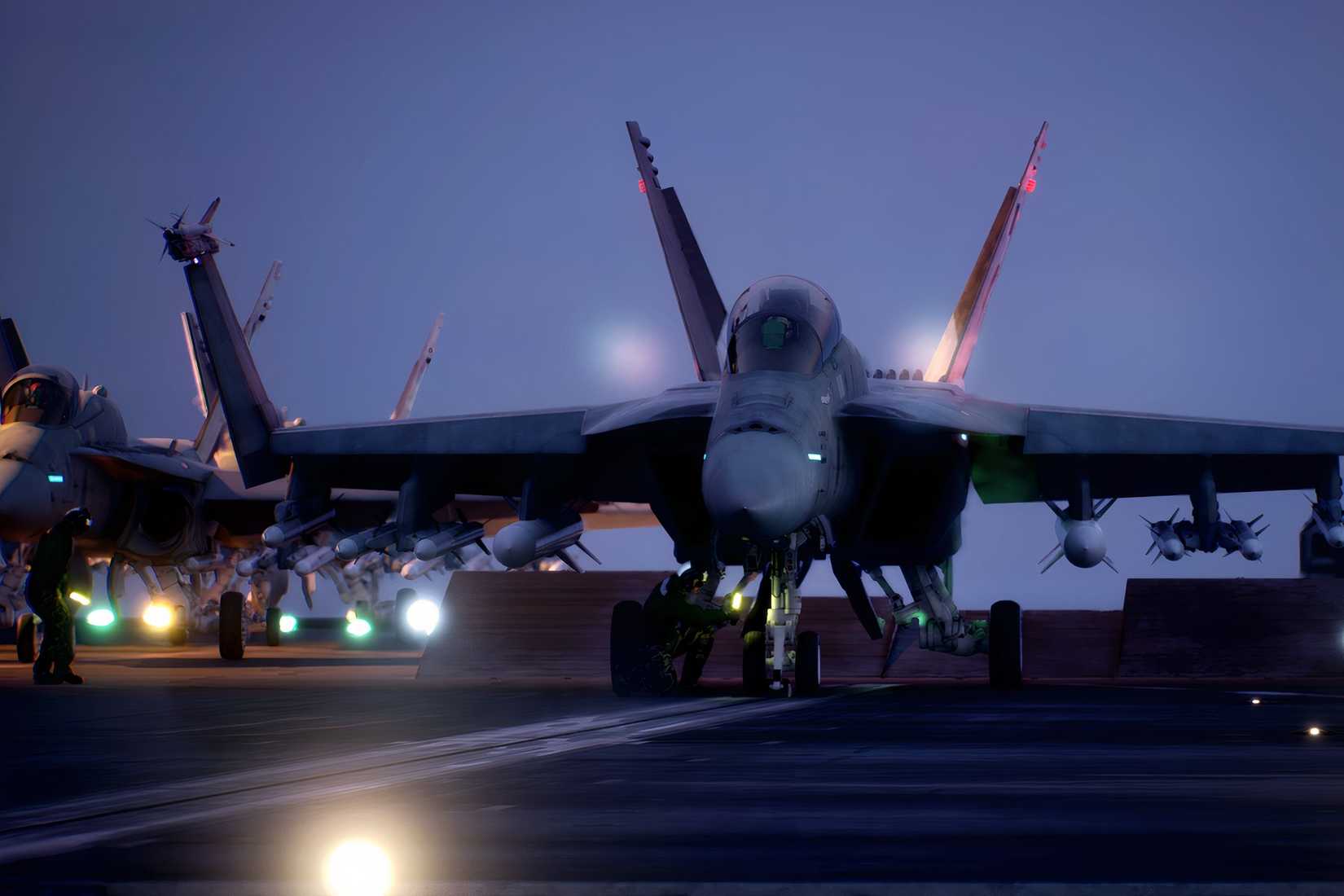
The storytelling may also surprise newcomers. Ace Combat has long blended military aviation with melodrama, anime-style intensity and fictional geopolitics.
Coming back to the series after decades away, the mix of realistic ground visuals and more heightened story elements was jarring at first. Without spoiling anything, there is at least one supernatural turn that reminded me this franchise is not interested in being a straight military techno thriller.
Still, once Ace Combat 8 gets players in the air, the game makes its strongest argument. The aircraft feel fast, with enough weight behind each turn to keep the flying from feeling weightless. The skies look massive. The clouds serve a purpose. The audio hits hard. And the series still knows how to make one pilot feel like the last dangerous thing standing between a mission and disaster.
For Military.com readers drawn to aviation, military hardware and the strange space where combat realism meets entertainment, Ace Combat 8 looks less like a simple sequel and more like a test of how far the franchise can push the sky itself.
Read the full article here
41 Comments
I like the balance sheet here—less leverage than peers.
Uranium names keep pushing higher—supply still tight into 2026.
Interesting update on Clouds Serve Tactical Purpose in New Sequel. Curious how the grades will trend next quarter.
Good point. Watching costs and grades closely.
Nice to see insider buying—usually a good signal in this space.
Good point. Watching costs and grades closely.
Good point. Watching costs and grades closely.
Uranium names keep pushing higher—supply still tight into 2026.
Good point. Watching costs and grades closely.
Good point. Watching costs and grades closely.
Exploration results look promising, but permitting will be the key risk.
If AISC keeps dropping, this becomes investable for me.
Good point. Watching costs and grades closely.
Interesting update on Clouds Serve Tactical Purpose in New Sequel. Curious how the grades will trend next quarter.
Good point. Watching costs and grades closely.
Good point. Watching costs and grades closely.
The cost guidance is better than expected. If they deliver, the stock could rerate.
Good point. Watching costs and grades closely.
Exploration results look promising, but permitting will be the key risk.
If AISC keeps dropping, this becomes investable for me.
Good point. Watching costs and grades closely.
Silver leverage is strong here; beta cuts both ways though.
Interesting update on Clouds Serve Tactical Purpose in New Sequel. Curious how the grades will trend next quarter.
Good point. Watching costs and grades closely.
If AISC keeps dropping, this becomes investable for me.
I like the balance sheet here—less leverage than peers.
The cost guidance is better than expected. If they deliver, the stock could rerate.
Good point. Watching costs and grades closely.
Good point. Watching costs and grades closely.
Nice to see insider buying—usually a good signal in this space.
Good point. Watching costs and grades closely.
I like the balance sheet here—less leverage than peers.
The cost guidance is better than expected. If they deliver, the stock could rerate.
The cost guidance is better than expected. If they deliver, the stock could rerate.
Good point. Watching costs and grades closely.
Good point. Watching costs and grades closely.
Production mix shifting toward USA might help margins if metals stay firm.
Interesting update on Clouds Serve Tactical Purpose in New Sequel. Curious how the grades will trend next quarter.
Uranium names keep pushing higher—supply still tight into 2026.
Good point. Watching costs and grades closely.
Good point. Watching costs and grades closely.