

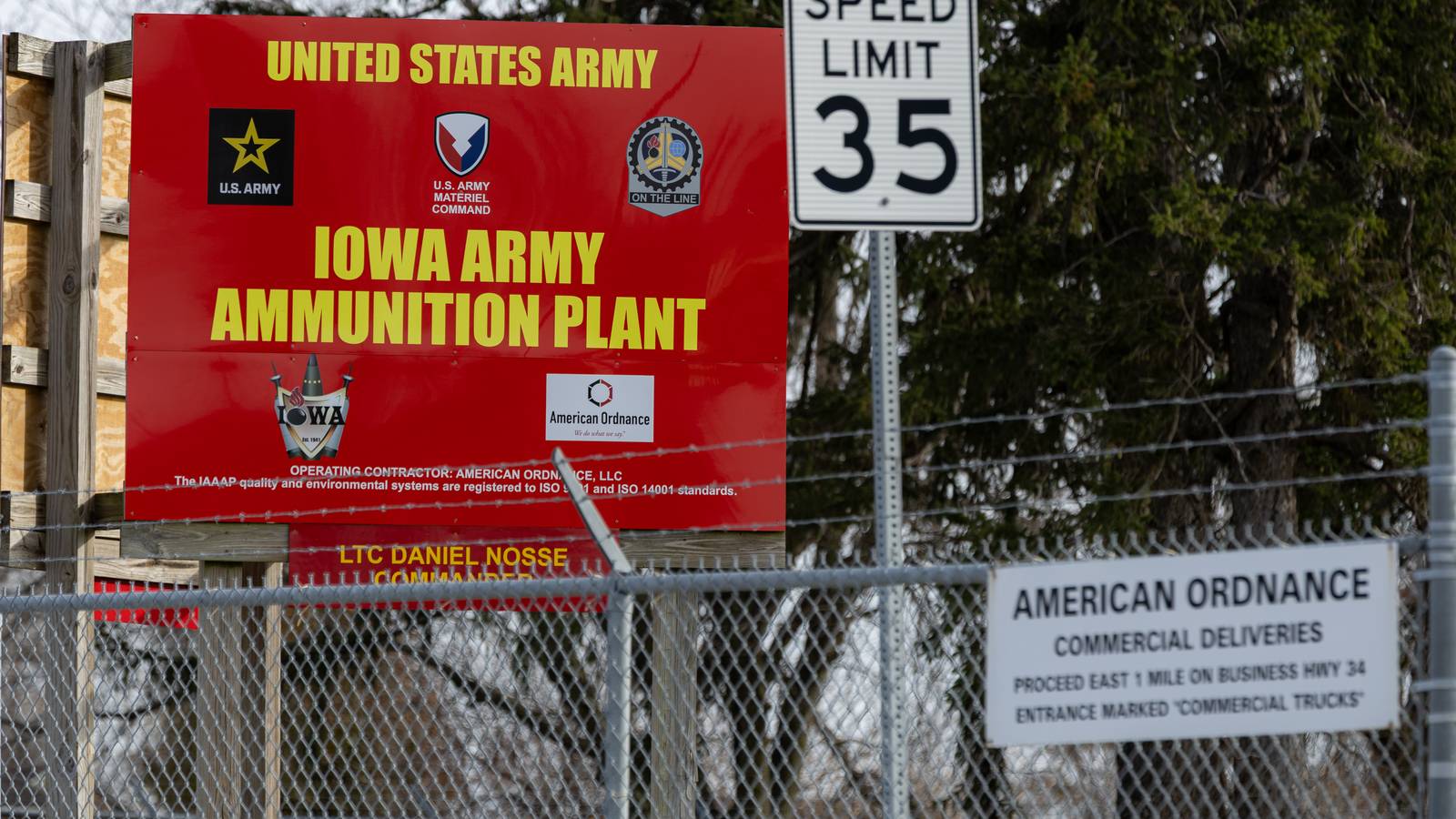
Today, the U.S. Army is overseeing a controversial detonation of 68 drums of degraded lead azide at 9 a.m. CST at the Iowa Army Ammunition Plant. In June, service contracting officials awarded a contract worth up to $2.3 billion to a Day & Zimmermann subsidiary to run Hawthorne Army Depot in Nevada through 2046.
A separate Day & Zimmermann subsidiary, American Ordnance, operates the ammunition plant where events will occur. That June award followed Army inspections in March and April that found the Iowa material had crystallized.
No investigation or regulator has publicly found that American Ordnance mishandled the stockpile, and the two contracts are held by different companies under the same Philadelphia-based parent.
Sen. Tammy Baldwin (D-Wis.) has asked the Army what it is doing to investigate the Iowa operator. Day & Zimmermann did not respond to a request for comment from the Philadelphia Inquirer, the publication reported Monday.
Today’s detonation, initially intended for Monday, Nov. 23, was rescheduled by the Army on Sunday, attributing the change of plans to “allow for optimal weather conditions and all mitigation measures to be emplaced.”
Plenty of guidance has been issued the past 48 hours by the service, FEMA, Health and Human Services, the Centers for Disease Control and Prevention, and local and state officials stretching from Iowa into Missouri.
Still, questions remain regarding the timing of the detonation—one day prior to Thanksgiving—in addition to warnings extended to small children, pregnant women, farmers with nearby crops, and animal welfare.

A Decades-Long Contract
Day & Zimmermann acquired full ownership of American Ordnance in 2007, according to the company’s published history.
In October 2008, the Army awarded American Ordnance a contract to operate and maintain its Iowa and Milan, Tennessee, ammunition plants, a Government Accountability Office report shows.
No publicly available investigative or regulatory findings establish that American Ordnance mishandled the stockpile, and the two contracts are held by different companies under the same Philadelphia-based parent.
Funding will be set with each order. Work is estimated to finish Dec. 29, 2046.
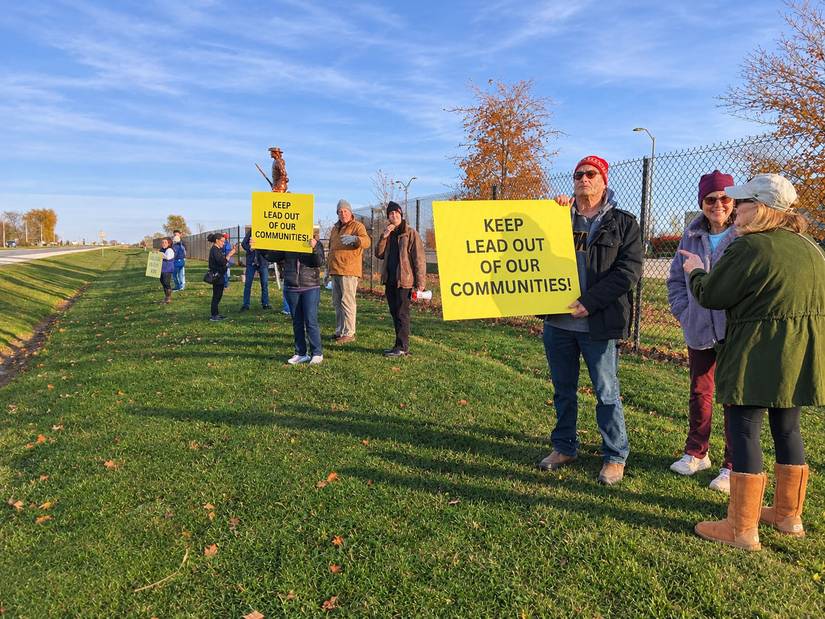
Protesters gather outside the Armed Forces Reserve Center at Middletown, Iowa, on Wednesday, Nov. 18, 2026, as they called for a halt to the planned detonations of 68 barrels of lead azide stored in magazines and earth-covered concrete storage containers at the Iowa Army Ammunition Plant. (Julie Nickell/The Hawk Eye via AP)
Under the contract, the company will handle ammunition storage and supply operations, demilitarization of designated ammunition types, and depot maintenance and modernization.
Day & Zimmermann first won the Hawthorne contract in 1981, its history says, and it describes more than four decades there with “an unparalleled safety record.”
Amentum has operated the depot since early 2022 under a 10-year contract valued at $952.7 million. A transition period ends Dec. 29.
Who Checked the Drums?
American Ordnance employees routinely conducted monthly visual inspections of the lead azide storage magazines, Army Col. Aaron Teller said in a sworn declaration filed Nov. 21 in federal appeals court.
Each September, contractor personnel also opened the drums to check and top off a liquid that keeps the material stable.
Teller said that the annual check was last performed in September 2025. They skipped it this September because the Army judged opening the lids unsafe.
The Army said crystallization was found during a March 11 inspection. An April 28 inspection by Army explosive ordnance disposal personnel found it in 58 of 68 drums, Teller said.
The declaration does not identify any improperly performed inspections or missed inspections before September 2026, nor does it attribute the initial deterioration to misconduct or negligence by the contractor.
Teller did, however, link the suspension of annual maintenance to further evaporation of the stabilizing liquid.
Responsibility is also shared. The Army owns the plant, and the Environmental Protection Agency’s (EPA) emergency permit for the operation names the Army as owner and operator.
What the Record Shows
Concern about lead azide in Iowa is nothing new.
An Army article from 2014 said a research effort to replace the compound began in 2004 in response to worries about an aging supply at the Iowa plant.
In a court filing this month, the Army said it has stored the current stockpile there since 2009. The two Army accounts do not explain whether they refer to the same stockpile.
In September 2025, six months before the March discovery, a federal contracting notice was posted titled “Lead Azide Neutralization at Iowa Army Ammunition Plant.”
Past Penalties and Oversight Gaps
American Ordnance and the Army have been penalized over other matters at the plant. The EPA announced $39,311 in civil penalties against both in December 2024 over alleged hazardous-waste violations in 2023.
The Occupational Safety and Health Administration cited American Ordnance in October 2024 for a serious violation involving monitoring of worker exposure to TNT.

Iowa Army Ammunition Plant Sign on Oct. 15, 2026. (Iowa Army Ammunition Plant)
The final penalty was $5,877. Neither case involved lead azide.
The GAO reported in 2022 that outdated Army documents left it unclear who was responsible for managing contractor-operated ammunition plants.
That recommendation remains open. In February, the Army told GAO that “recent department-wide reorganization efforts postponed the completion of updating the governance documents.”
Questions From Congress
Baldwin’s Nov. 23 letter to acting Army Secretary Adam Telle asks for a timeline of the Army’s work to inspect and manage the material and “any lapses in such work that contributed to the lead azide’s degradation.”
She also asked about “steps being taken to investigate the plant’s operator, American Ordnance LLC.”
Federal acquisition rules generally treat affiliated companies as separate when determining whether a prospective contractor is responsible, but require contracting officers to consider an affiliate’s past performance and integrity when those factors could adversely affect that determination.
Whether the Army did so in the Hawthorne competition is not public. The names of the other three bidders have not been released.
Day & Zimmermann is due to take over at Hawthorne five weeks after the detonation in Iowa.
Read the full article here
47 Comments
Silver leverage is strong here; beta cuts both ways though.
Exploration results look promising, but permitting will be the key risk.
Silver leverage is strong here; beta cuts both ways though.
Good point. Watching costs and grades closely.
Good point. Watching costs and grades closely.
Uranium names keep pushing higher—supply still tight into 2026.
Good point. Watching costs and grades closely.
Good point. Watching costs and grades closely.
Nice to see insider buying—usually a good signal in this space.
Good point. Watching costs and grades closely.
Good point. Watching costs and grades closely.
I like the balance sheet here—less leverage than peers.
Good point. Watching costs and grades closely.
Good point. Watching costs and grades closely.
Exploration results look promising, but permitting will be the key risk.
Good point. Watching costs and grades closely.
Good point. Watching costs and grades closely.
The cost guidance is better than expected. If they deliver, the stock could rerate.
Good point. Watching costs and grades closely.
Good point. Watching costs and grades closely.
Uranium names keep pushing higher—supply still tight into 2026.
Good point. Watching costs and grades closely.
Good point. Watching costs and grades closely.
Nice to see insider buying—usually a good signal in this space.
Good point. Watching costs and grades closely.
Production mix shifting toward USA might help margins if metals stay firm.
Good point. Watching costs and grades closely.
Uranium names keep pushing higher—supply still tight into 2026.
Good point. Watching costs and grades closely.
Uranium names keep pushing higher—supply still tight into 2026.
Good point. Watching costs and grades closely.
Good point. Watching costs and grades closely.
Nice to see insider buying—usually a good signal in this space.
Good point. Watching costs and grades closely.
Good point. Watching costs and grades closely.
Uranium names keep pushing higher—supply still tight into 2026.
Good point. Watching costs and grades closely.
The cost guidance is better than expected. If they deliver, the stock could rerate.
Exploration results look promising, but permitting will be the key risk.
Good point. Watching costs and grades closely.
If AISC keeps dropping, this becomes investable for me.
Good point. Watching costs and grades closely.
Good point. Watching costs and grades closely.
The cost guidance is better than expected. If they deliver, the stock could rerate.
Good point. Watching costs and grades closely.
Nice to see insider buying—usually a good signal in this space.
I like the balance sheet here—less leverage than peers.