

The Department of Defense (DOD) has announced two framework agreements to expand the production capacity of missile-interceptor components.
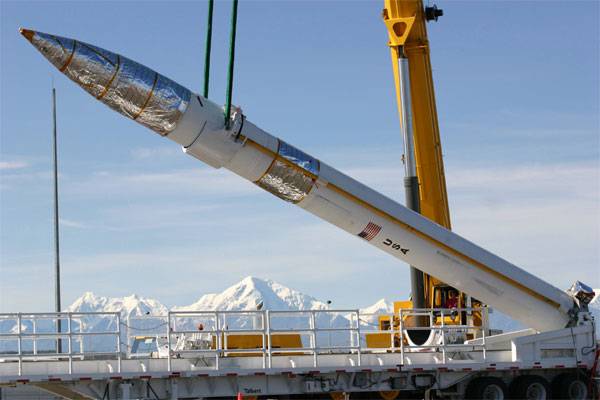
The agreements, with defense companies Northrop Grumman and Lockheed Martin, intend to triple the production of Patriot Advanced Capability-3 (PAC-3) components, and quadruple the production of Terminal High Altitude Area Defense (THAAD) components.
The frameworks come as part of the Arsenal of Freedom initiative, a defense initiative to modernize military technology.
“Building the Arsenal of Freedom requires robust, dynamic supply chains at every level of the industrial base,” said Michael P. Duffey, Under Secretary of War for Acquisition and Sustainment, in a statement. “Framework agreements with munition components suppliers like Northrop Grumman are vital to accelerating the tripling of PAC-3 and quadrupling of THAAD interceptor production.”
The PAC-3 component framework will provide a second source for Solid Rocket Motors (SRMs). It will also increase the production of ignition safety devices for PAC-3.
Under the THAAD framework, the production of THAAD interceptor structural components including mid-body shells, muzzle covers and rail car assemblies, will be quadrupled.
The Munitions Acceleration Council, the Economic Defense Unit, the Missile Defense Agency, and the Office of the Under Secretary of War for Acquisition and Sustainment collaborated with the new frameworks.
Total Cost Remains a Mystery
The Pentagon has not disclosed the terms of these new agreements, including costs and production timelines.
However, Northrop Grumman said in a press release that it signed two multi-year framework agreements totaling over $3 billion.
Under the $2 billion PAC-3 framework agreement, the company said it will supply essential components—including solid rocket motors and ignition safety devices—supporting the nation’s integrated air and missile defense.
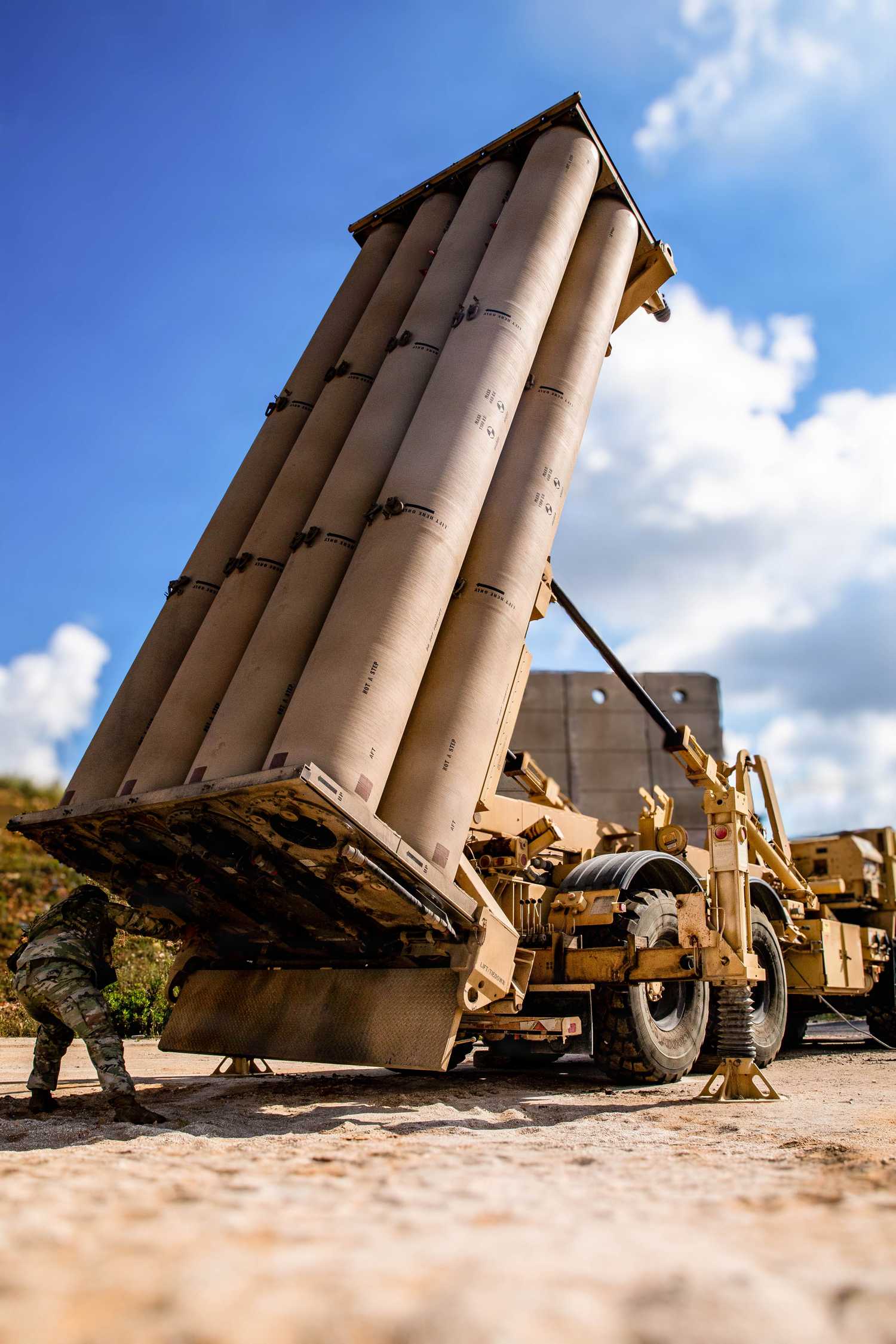
The $1 billion THAAD framework will enable Northrop Grumman to significantly increase monthly deliveries of THAAD components over seven years.
“Our long-term investments in breakthrough manufacturing technologies and resilient supply chains let us pivot from steady production to a production surge in record time,” Ben Davies, corporate vice president Northrop Grumman, said in a statement. “As one of America’s leading producers of solid rocket motors, we’re supporting the administration’s push to accelerate munitions output.
“It’s a mission-critical leap forward that ensures America’s defense edge stays sharper, faster, and farther ahead of global threats.”
Trump Administration’s Big Defense Push
The latest announcement comes as the Trump administration has called for more defense spending.
The administration has requested a $1.5 trillion defense budget from Congress. In July, Defense Secretary Pete Hegseth told Senate Appropriations Committee lawmakers that not fully funding the Department of Defense (DOD) to the tune of $1.5 trillion is the “greatest threat” the United States faces at home and abroad.
He made the statement while publicly requesting an additional $87.6 billion for “urgent needs” regarding the United States’ ongoing military operations in Iran. Hegseth also said that the cost of the Iran War to U.S. taxpayers amounted to roughly $37.5 billion as of late last month.
In May, Hegseth told lawmakers that the cost of the Iran War had risen to $29 billion. A substantial proportion of that sum went towards replacing munitions.
In April, however, the DOD secretary blamed the Biden administration for low weapons stockpiles and said replacing them could take “months and years.”

Meanwhile, President Donald Trump has pushed for the U.S. to construct its own version of Israel’s “Golden Dome” missile defense system.
In January 2025, the president issued an executive order regarding the “Iron Dome of America,” saying that ballistic, hypersonic and cruise missiles “remain the most catastrophic threat facing the United States.”
Hypersonic missiles are hard to intercept because they are fast and have unpredictable flight paths.
Other Recent Contracts
It comes after the government has made other defense procurement agreements in recent months.
In July, the DOD awarded two companies to develop laser weapons. The Joint Laser Weapon Systems (JLWS) agreements, which have an initial award value of $86 million and a total program ceiling of $847 million, were awarded to nLIGHT Defense and Lockheed Martin Aculight to advance the United States’ cruise missile and unmanned aerial system (UAS) defense architecture.
The government also awarded contracts worth $1.75 billion to build missile-tracking satellites for the U.S. Space Force.
These contracts, awarded by the U.S. Space Force’s Space Development Agency (SDA) to Sierra Space, a technology company based in Louisville, Colorado, and to L3 Harris Technologies, are for 36 total satellites to track missiles and other threats.
In April, the Trump administration awarded RTX a $398.7 million contract for Advanced Medium Range Air-to-Air Missiles.
Read the full article here
42 Comments
Silver leverage is strong here; beta cuts both ways though.
Silver leverage is strong here; beta cuts both ways though.
I like the balance sheet here—less leverage than peers.
Good point. Watching costs and grades closely.
Good point. Watching costs and grades closely.
Exploration results look promising, but permitting will be the key risk.
The cost guidance is better than expected. If they deliver, the stock could rerate.
Good point. Watching costs and grades closely.
Exploration results look promising, but permitting will be the key risk.
Good point. Watching costs and grades closely.
The cost guidance is better than expected. If they deliver, the stock could rerate.
Good point. Watching costs and grades closely.
Nice to see insider buying—usually a good signal in this space.
Interesting update on DOD, Defense Contractors’ $3B Agreements to Quadruple Missile-Interceptor Production. Curious how the grades will trend next quarter.
Silver leverage is strong here; beta cuts both ways though.
If AISC keeps dropping, this becomes investable for me.
Good point. Watching costs and grades closely.
Nice to see insider buying—usually a good signal in this space.
Good point. Watching costs and grades closely.
Uranium names keep pushing higher—supply still tight into 2026.
If AISC keeps dropping, this becomes investable for me.
Good point. Watching costs and grades closely.
Uranium names keep pushing higher—supply still tight into 2026.
Good point. Watching costs and grades closely.
Good point. Watching costs and grades closely.
Uranium names keep pushing higher—supply still tight into 2026.
Production mix shifting toward USA might help margins if metals stay firm.
Good point. Watching costs and grades closely.
Silver leverage is strong here; beta cuts both ways though.
Good point. Watching costs and grades closely.
Good point. Watching costs and grades closely.
Uranium names keep pushing higher—supply still tight into 2026.
Good point. Watching costs and grades closely.
If AISC keeps dropping, this becomes investable for me.
Good point. Watching costs and grades closely.
Uranium names keep pushing higher—supply still tight into 2026.
Good point. Watching costs and grades closely.
Interesting update on DOD, Defense Contractors’ $3B Agreements to Quadruple Missile-Interceptor Production. Curious how the grades will trend next quarter.
Good point. Watching costs and grades closely.
Nice to see insider buying—usually a good signal in this space.
Good point. Watching costs and grades closely.
The cost guidance is better than expected. If they deliver, the stock could rerate.