

If you’ve spent any time around defensive training circles, you’ve heard it: most gunfights happen within 3 feet, in 3 seconds, with 3 shots fired.
The so-called “3-3-3 rule.”
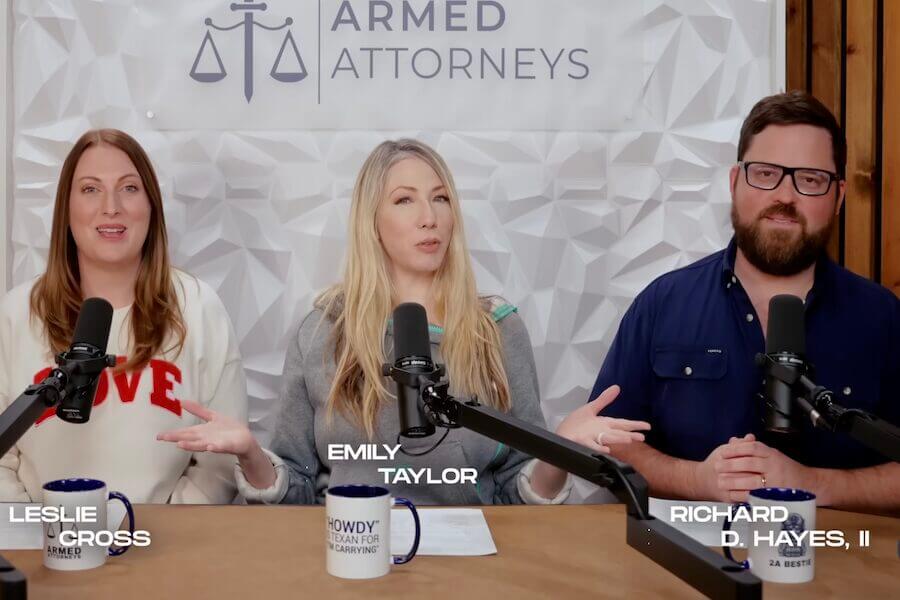
On a recent episode of the Armed Attorneys podcast, the Texas-based legal team dug into whether that rule actually applies to civilian self-defense, and they didn’t just speculate. They pulled real case data from their own files.
Quick aside: we like these guys. They’re knowledgeable, practical, and usually bring solid legal insight to the table. And this episode was no exception (see below).
Where the 3-3-3 Rule Comes From
The rule traces back to FBI law enforcement data, not civilian encounters. Historically, officer-involved shootings often happened:
- Within 3 feet
- In under 3 seconds
- With 3 shots or fewer
But officers are typically making arrests or initiating contact. Civilians aren’t handcuffing suspects on the street. That difference matters.
So the Armed Attorneys asked the real question:
Does this hold up for regular concealed carriers?
What Their Civilian Data Showed
They analyzed their 30 most recent shooting cases (single attacker, single defender) and found:
🔫 Shots Fired
- 13 of 30 cases involved 3 shots or fewer
- Average was about 3.75 to 4 shots
- Convictions tended to increase when shots fired averaged 7 or more
The “3 shots” part? It’s the closest part of the rule to holding up.
📏 Distance
This is where things really shifted.
- Average distance: 9.5 feet
- Most engagements occurred between 5–12 feet
- Very few were within 3 feet
Road rage cases and vehicle confrontations pushed distances even farther.
Bottom line: For civilians, it’s rarely a 3-foot contact fight.
⏱ Time
- Average duration from draw to resolution: ~6 seconds
Still fast. Still chaotic. But not quite the 3-second myth.
The Real Eye-Opener: You Might Know the Attacker
One stat stood out:
About 40% of the time, the defender knew the attacker.
Family disputes. Neighbors. Acquaintances. Alcohol-fueled arguments.
It wasn’t always a stranger in a dark alley. That’s a reality most carriers don’t mentally rehearse.
So… Does 3-3-3 Hold Up?
Not exactly.
The “vibe” holds:
- It’s fast.
- It’s close.
- It’s over quickly.
But for civilians:
- It’s usually farther than 3 feet
- It often lasts closer to 6 seconds
- It averages around 4 shots
And legally? More shots can create more room for prosecutorial scrutiny, even if you were justified.
The Takeaway for GA Readers
If you carry, train realistically:
- Expect engagement distances closer to 10 feet, not 3.
- Expect it to happen fast. But not cinematic fast.
- Understand the legal aftermath matters just as much as the trigger press.
- And don’t assume it’ll be a stranger.
Preparation isn’t paranoia. It’s responsibility.
What’s your take? Does your training reflect these realities? Or are you still planning for a 3-foot quick-draw duel?
*** Buy and Sell on GunsAmerica! ***
Read the full article here
35 Comments
Nice to see insider buying—usually a good signal in this space.
Nice to see insider buying—usually a good signal in this space.
Good point. Watching costs and grades closely.
Good point. Watching costs and grades closely.
Production mix shifting toward USA might help margins if metals stay firm.
Good point. Watching costs and grades closely.
Good point. Watching costs and grades closely.
The cost guidance is better than expected. If they deliver, the stock could rerate.
Good point. Watching costs and grades closely.
The cost guidance is better than expected. If they deliver, the stock could rerate.
If AISC keeps dropping, this becomes investable for me.
Good point. Watching costs and grades closely.
If AISC keeps dropping, this becomes investable for me.
Good point. Watching costs and grades closely.
I like the balance sheet here—less leverage than peers.
Good point. Watching costs and grades closely.
Uranium names keep pushing higher—supply still tight into 2026.
Good point. Watching costs and grades closely.
Uranium names keep pushing higher—supply still tight into 2026.
Good point. Watching costs and grades closely.
Good point. Watching costs and grades closely.
Nice to see insider buying—usually a good signal in this space.
Good point. Watching costs and grades closely.
Uranium names keep pushing higher—supply still tight into 2026.
Good point. Watching costs and grades closely.
Interesting update on Does the ‘3-3-3 Rule’ Hold Up for Civilian Self-Defense?. Curious how the grades will trend next quarter.
If AISC keeps dropping, this becomes investable for me.
Good point. Watching costs and grades closely.
Production mix shifting toward USA might help margins if metals stay firm.
Interesting update on Does the ‘3-3-3 Rule’ Hold Up for Civilian Self-Defense?. Curious how the grades will trend next quarter.
Good point. Watching costs and grades closely.
Good point. Watching costs and grades closely.
The cost guidance is better than expected. If they deliver, the stock could rerate.
Nice to see insider buying—usually a good signal in this space.
Interesting update on Does the ‘3-3-3 Rule’ Hold Up for Civilian Self-Defense?. Curious how the grades will trend next quarter.