


The Justice Department, for the first time in history, used a secretive federal court created three decades ago to deport an accused terrorist.
The DOJ used it to remove an Afghan woman who had come to the United States on residency tied to her husband’s work for the American military at Bagram Air Base, in Afghanistan. Nazira Haji Zada, 47, was removed to her native country on Aug. 25 through the Alien Terrorist Removal Court.
This is a tribunal Congress established in 1996, but no administration—Republican or Democratic—had ever used it until this year. Its chief judge signed the removal order Aug. 20. The department unsealed it Friday, after Zada had already left the country. She is permanently barred from returning.
Prosecutors accused Zada of helping radicalize her family and supporting a plot by her son and son-in-law to carry out an Islamic State-inspired mass shooting targeting the 2024 election. She was never criminally charged.
Instead, the department pursued civil removal through the terrorism court, which operates under a lower standard of proof and allows the government to use classified evidence.
In an agreement last month, Zada conceded that she was an “alien terrorist,” a designation defined in immigration law. She waived her right to appeal and agreed to be removed.
The department announced the removal on Friday, the 25th anniversary of the Sept. 11 attacks.
From Bagram to U.S.
Her route to the United States began with her husband’s work between 2009 and 2016 at Bagram Air Base, once the largest U.S. installation in Afghanistan, according to NPR.
Zada was admitted as a lawful permanent resident in 2018 as a derivative of his immigrant visa. This is a status granted to the families of Afghans who assisted U.S. forces.
Investigators described her husband as unaware of the plans, and the department alleged that Zada hid the plot from him. According to court filings, she spoke Dari, understood little English, and could not read or write.
The Justice Department did not immediately respond to a request for comment from Military.com on the case.
Accusations Levied Against Zada
The DOJ described Haji Zada as the “matriarch” of an ISIS-sympathizing family.
Prosecutors said her son, Abdullah Haji Zada, 19, and her son-in-law, Nasir Ahmad Tawhedi, sought to buy two AK-47-style rifles and 500 rounds of ammunition from an undercover FBI agent for a mass shooting in Oklahoma on Election Day 2024.
Both were arrested in October 2024 before the plan could be carried out. Abdullah pleaded guilty and was sentenced to 15 years in prison. Tawhedi pleaded guilty and is awaiting sentencing.
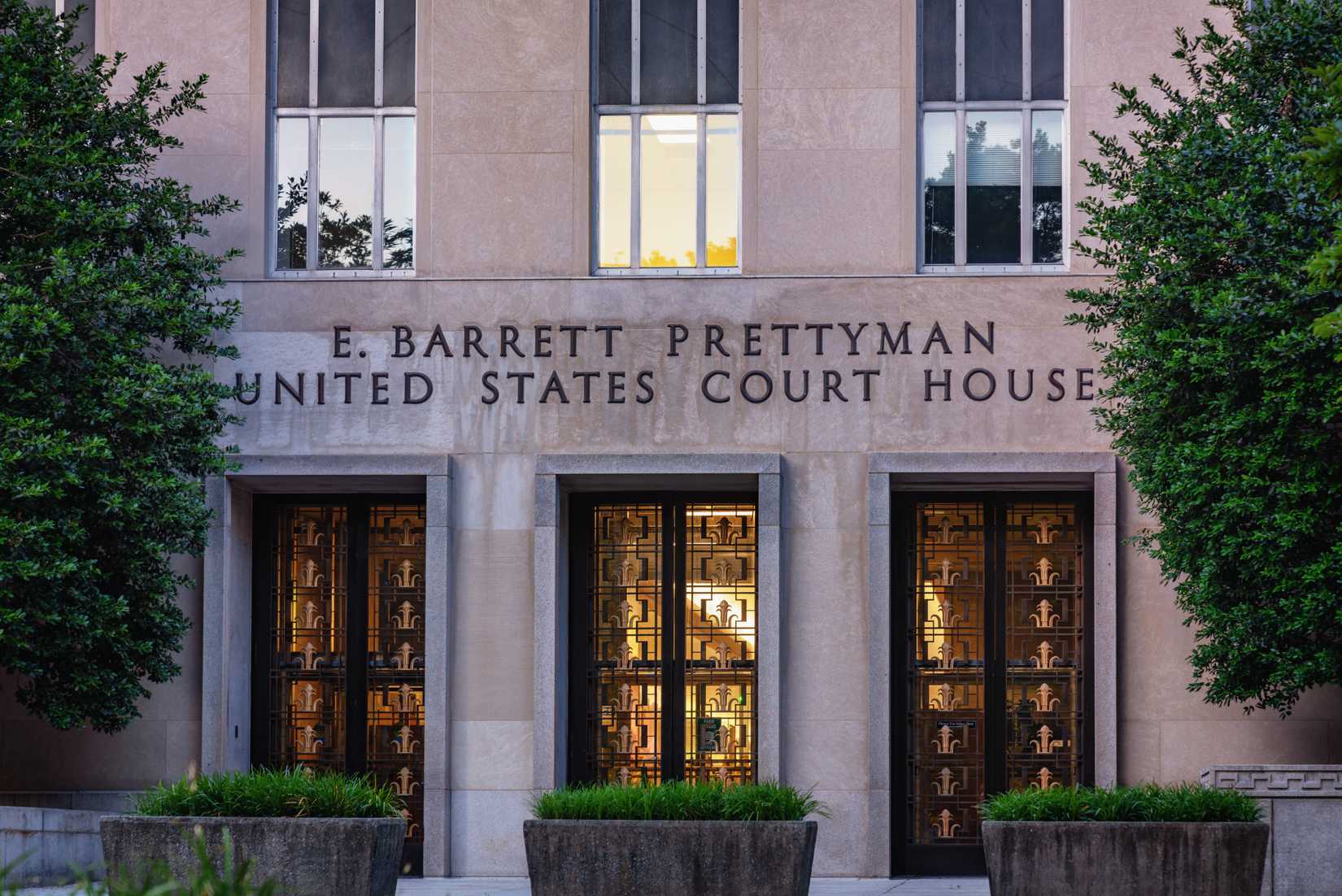
Haji Zada’s husband was not the family’s only connection to the American presence in Afghanistan. Tawhedi previously worked as a security guard for a U.S. military installation in Afghanistan, according to The Hill.
Both men are also expected to be deported to Afghanistan after completing their sentences.
To fund the attack, the family sold its home, furniture, computers and vehicles and bought one-way tickets to Kabul timed to shortly before the election, prosecutors said. Haji Zada signed the contract to sell the house.
The Function of ATRC
Congress created the Alien Terrorist Removal Court so that the government could deport accused terrorists in cases where ordinary immigration proceedings risked exposing national security secrets.
U.S. Attorney General Todd Blanche certified the application on July 15, and the case moved from filing to removal order in about five weeks.
Before agreeing to leave, Zada’s attorneys challenged the court’s constitutionality, arguing that its use of classified evidence and its limits on a respondent’s ability to contest the government’s case violated due process protections.
Her public defenders, Matthew Farley and Mary Manning Petras, said in a statement that her decision to consent to removal “should not be seen as an endorsement of this court’s legitimacy.”
“Dragging lawful permanent residents into court but refusing to show them or their attorneys the evidence that will be used against them is a plain violation of due process,” they said, adding that they were confident the court “will be struck down as unconstitutional as soon as a judge is asked to address the issue.”
Since Zada agreed to removal, those questions were never resolved, leaving the court’s procedures legally untested even after its first completed case.
Justice Department leaders cast the outcome as a milestone.
Blanche called it “a landmark case, resulting in the prompt removal of this alien terrorist to her country of origin,” and “a win for national security and the rule of law.”
FBI Director Kash Patel called it “a historic and vitally important step in our work to protect the U.S. homeland from terrorism.”
Read the full article here
29 Comments
Nice to see insider buying—usually a good signal in this space.
Silver leverage is strong here; beta cuts both ways though.
Good point. Watching costs and grades closely.
The cost guidance is better than expected. If they deliver, the stock could rerate.
If AISC keeps dropping, this becomes investable for me.
Good point. Watching costs and grades closely.
The cost guidance is better than expected. If they deliver, the stock could rerate.
Uranium names keep pushing higher—supply still tight into 2026.
Good point. Watching costs and grades closely.
Good point. Watching costs and grades closely.
Uranium names keep pushing higher—supply still tight into 2026.
Uranium names keep pushing higher—supply still tight into 2026.
Interesting update on DOJ Used Alien Terrorist Removal Court For First Time Ever to Deport Woman Claimed of Radicalizing Family. Curious how the grades will trend next quarter.
Exploration results look promising, but permitting will be the key risk.
Nice to see insider buying—usually a good signal in this space.
Production mix shifting toward USA might help margins if metals stay firm.
Production mix shifting toward USA might help margins if metals stay firm.
I like the balance sheet here—less leverage than peers.
Nice to see insider buying—usually a good signal in this space.
Good point. Watching costs and grades closely.
If AISC keeps dropping, this becomes investable for me.
Interesting update on DOJ Used Alien Terrorist Removal Court For First Time Ever to Deport Woman Claimed of Radicalizing Family. Curious how the grades will trend next quarter.
I like the balance sheet here—less leverage than peers.
Good point. Watching costs and grades closely.
Good point. Watching costs and grades closely.
Silver leverage is strong here; beta cuts both ways though.
Good point. Watching costs and grades closely.
Good point. Watching costs and grades closely.
If AISC keeps dropping, this becomes investable for me.