

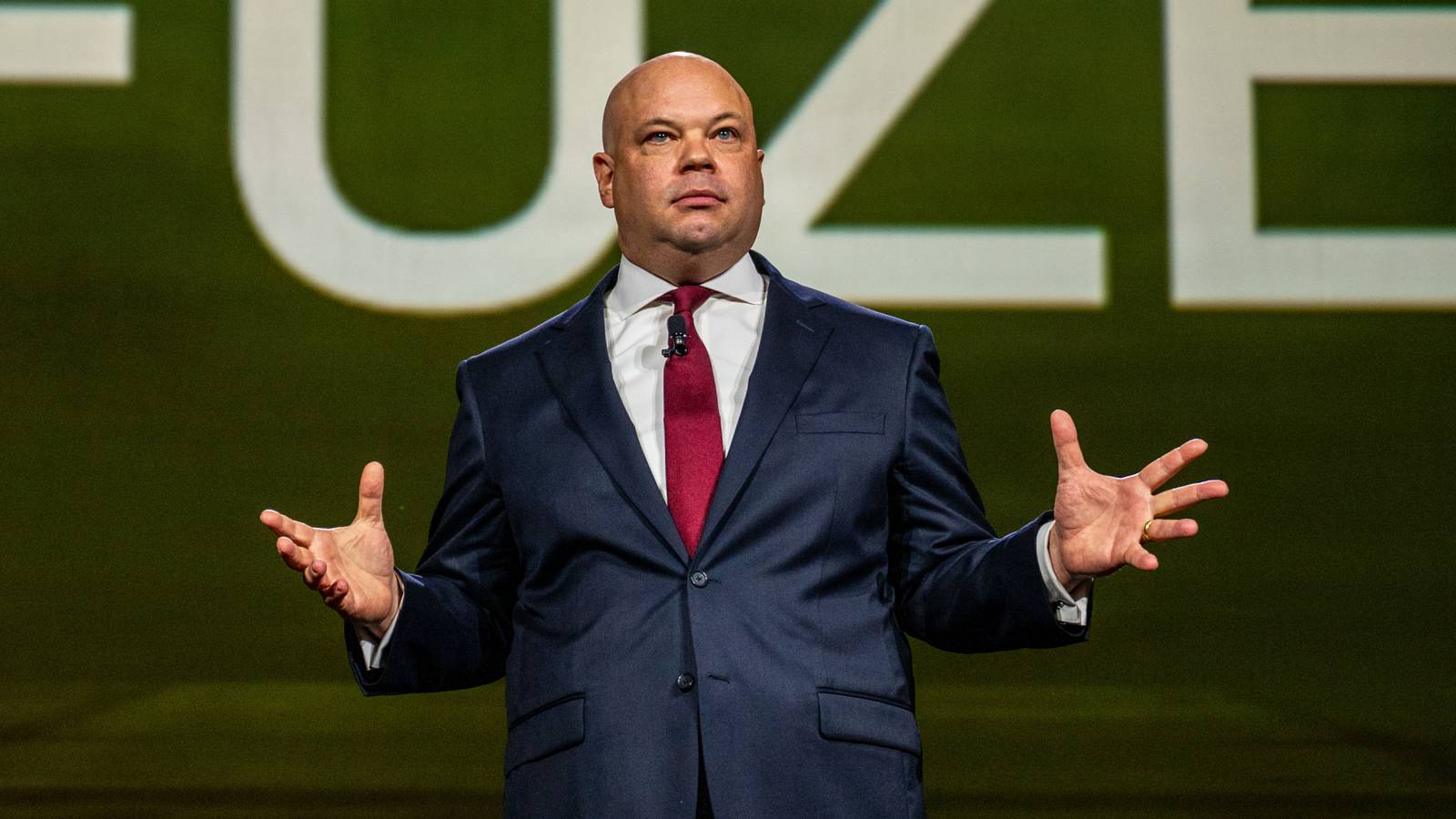
WASHINGTON — Acting Army Secretary Adam Telle turned to the Book of Genesis on Monday to explain the Army’s purpose, linking the biblical creation of Adam from the earth to the military’s responsibility to control and defend territory.
Speaking at the Association of the United States Army’s annual meeting in Washington, Telle argued that the Army’s ability to hold ground remains its essential contribution to national defense, regardless of how much technology changes warfare.
“Controlling land is fundamental to humanity,” Telle said. He described humanity’s connection to the land as biblical, while asserting that the idea extends beyond religious belief.
Telle referenced the creation of Adam and the Hebrew word adamah, meaning ground or soil, as he developed the theme. He later described controlling and securing land as central to human flourishing and called possession of ground an ultimate military deterrent.
By approximately 9:45 a.m., staff was no longer admitting additional people, leaving an overflow crowd estimated in the hundreds watching the remarks on monitors outside the ballroom. A Military.com reporter was among those watching from the overflow area.
Biblical Origins and the Army’s Mission
Telle’s argument accompanied a call for the Army to explain its mission in simpler terms. He criticized the military’s reliance on bureaucratic jargon and promoted a return to the service’s fundamental responsibility for land warfare. Telle had previously called for reducing bureaucracy within the Army Corps of Engineers, including during a leadership shake-up in January.
The remarks also followed an official message he signed with other senior Army leaders on Sept. 22. That statement described soldiers’ 251-year record of national defense as a connection rooted in the ground previous generations had fought to control.
During Monday’s address, Telle pointed to the Army’s role in developing American territory, including frontier mapping, waterways and the Panama Canal. Those examples placed the biblical imagery alongside a broader account of the institution’s contributions to the country’s expansion and infrastructure.
That history also includes the Army’s involvement in forcibly removing Native Americans from their homelands. In 1838, federal troops and state militia expelled more than 16,000 Cherokee people from southeastern states, according to the National Park Service. The forced migration became part of what is known as the Trail of Tears.
The Cherokee removals were part of a broader federal campaign that included years of fighting between the U.S. Army and Seminole warriors in Florida, where thousands of Native Americans were eventually forced from their homeland.
The contrast raises questions about how Telle intended his description of territorial control to account for people who lost their land during the nation’s expansion. His references to Genesis also invite questions about the role of religious language in describing the mission of a military whose members hold widely different beliefs.
The Army’s own Chaplain Corps says its responsibility to protect service members’ religious freedoms includes those who practice no religion. Telle’s comments follow renewed scrutiny of Defense Secretary Pete Hegseth’s Christian rhetoric, including his use of biblical language in discussing military operations.
Modernization Beyond the Biblical References
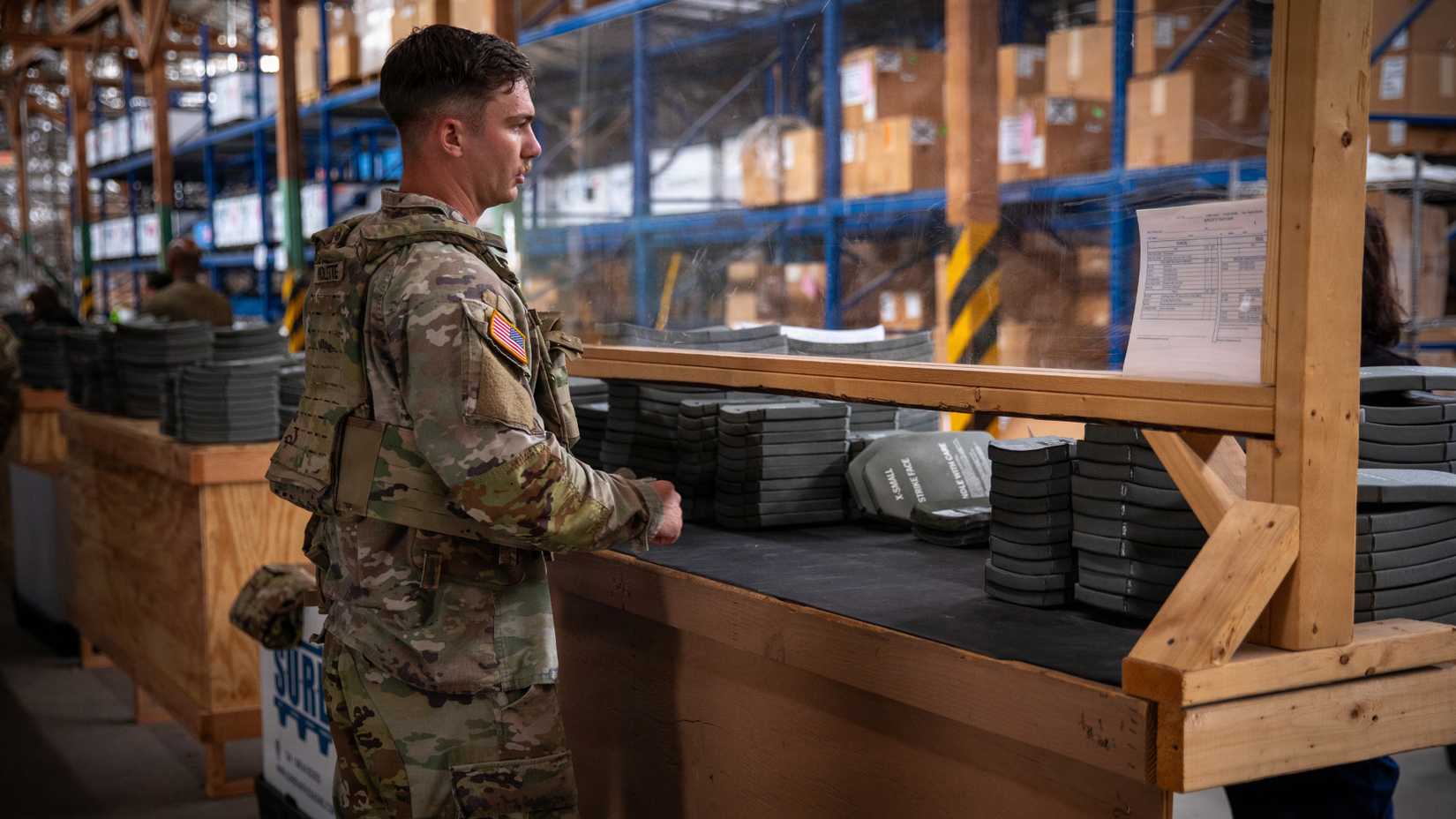
Telle’s speech was not confined to history or scripture. He also announced plans for a “manufacturing rodeo” in early 2027 to test defense suppliers and expose weaknesses in the Army’s supply chain, as part of a broader push to accelerate weapons production and military modernization. He reiterated that new equipment must use open architecture, allowing military systems to exchange information without dependence on proprietary restrictions.
Telle became acting secretary Sept. 3 after Dan Driscoll’s departure. His speech reached an AUSA audience of soldiers, defense officials and industry representatives.
Military.com contacted Army public affairs Monday seeking clarification about Telle’s use of biblical scripture, how the remarks relate to the Army’s secular mission and how his characterization of territorial control accounts for the military’s role in westward expansion and the displacement of Native American nations. The Army had not responded as of Monday afternoon.
Read the full article here
50 Comments
The cost guidance is better than expected. If they deliver, the stock could rerate.
If AISC keeps dropping, this becomes investable for me.
Good point. Watching costs and grades closely.
I like the balance sheet here—less leverage than peers.
Good point. Watching costs and grades closely.
Good point. Watching costs and grades closely.
The cost guidance is better than expected. If they deliver, the stock could rerate.
Good point. Watching costs and grades closely.
Uranium names keep pushing higher—supply still tight into 2026.
The cost guidance is better than expected. If they deliver, the stock could rerate.
Good point. Watching costs and grades closely.
Good point. Watching costs and grades closely.
Uranium names keep pushing higher—supply still tight into 2026.
Good point. Watching costs and grades closely.
Good point. Watching costs and grades closely.
Production mix shifting toward USA might help margins if metals stay firm.
Good point. Watching costs and grades closely.
Interesting update on Drones and AI Are Changing Warfare. Acting Army Secretary Says Controlling Land Still Matters Most.. Curious how the grades will trend next quarter.
Good point. Watching costs and grades closely.
Good point. Watching costs and grades closely.
Interesting update on Drones and AI Are Changing Warfare. Acting Army Secretary Says Controlling Land Still Matters Most.. Curious how the grades will trend next quarter.
Good point. Watching costs and grades closely.
The cost guidance is better than expected. If they deliver, the stock could rerate.
Good point. Watching costs and grades closely.
Good point. Watching costs and grades closely.
I like the balance sheet here—less leverage than peers.
Good point. Watching costs and grades closely.
Good point. Watching costs and grades closely.
If AISC keeps dropping, this becomes investable for me.
Good point. Watching costs and grades closely.
Good point. Watching costs and grades closely.
If AISC keeps dropping, this becomes investable for me.
Good point. Watching costs and grades closely.
The cost guidance is better than expected. If they deliver, the stock could rerate.
I like the balance sheet here—less leverage than peers.
Exploration results look promising, but permitting will be the key risk.
Good point. Watching costs and grades closely.
Good point. Watching costs and grades closely.
Uranium names keep pushing higher—supply still tight into 2026.
Good point. Watching costs and grades closely.
Good point. Watching costs and grades closely.
Production mix shifting toward USA might help margins if metals stay firm.
Good point. Watching costs and grades closely.
The cost guidance is better than expected. If they deliver, the stock could rerate.
Good point. Watching costs and grades closely.
Good point. Watching costs and grades closely.
I like the balance sheet here—less leverage than peers.
Good point. Watching costs and grades closely.
Uranium names keep pushing higher—supply still tight into 2026.
Good point. Watching costs and grades closely.