

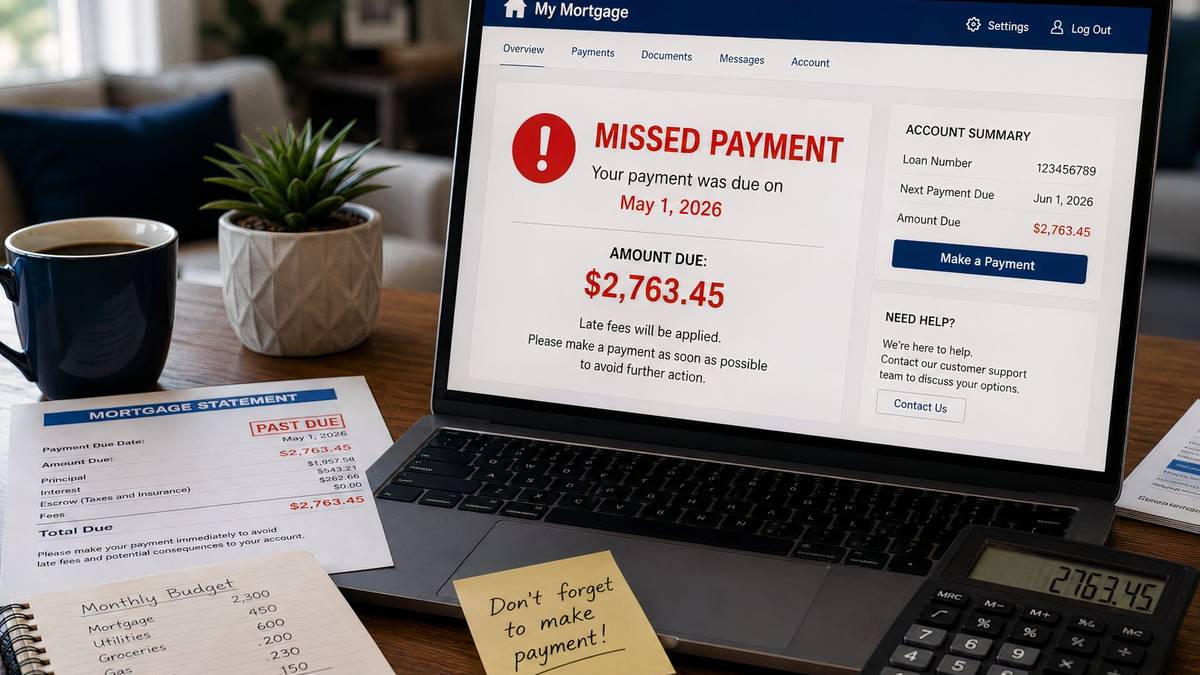
If you’re worried about missing a mortgage payment, it’s important to act fast. Acting now, while you’re still current on your loan, gives you access to options that disappear once you’re 30, 60 or 90 days behind. The single most effective form of missed mortgage payment help is calling your servicer before you’re late, not after.
Quick Answer: If you think you’re going to miss a mortgage payment, here’s the short version:
- Call your mortgage servicer today
- Build a bare-bones survival budget
- Ask about forbearance, loan modification, a partial claim or refinancing
- Prioritize essential, secured expenses first
- Ask your servicer specifically about the VA Partial Claim Program
This guide covers the emergency steps every homeowner should take before missing a mortgage payment, including who to call, how to build a short-term survival budget, and which hardship programs are available to military families.
Step One: Create an Action Plan
The three days after you realize you might miss a payment is the most important window you’ll have. Here’s what to do, in order:
- Confirm the exact due date and grace period on your mortgage. Most servicers allow a 10 to 15 day grace period before charging a late fee, and payments typically aren’t reported as late until they’re 30 days past due.
- Call your servicer, not a third party. Look for the number on your mortgage statement or online account portal, and avoid unsolicited “mortgage relief” companies that contact you first.
- Ask what hardship programs apply to your loan type. Conventional, FHA, VA and USDA loans each offer different options.
- Gather your financial documents. You’ll probably need recent pay stubs, bank statements, and a written explanation of the hardship.
- Contact a HUD-approved housing counselor. Find a counselor to get free, unbiased guidance. You can also call 800-569-4287.
Calling your loan servicer before you’re late is one of the most effective forms of missed mortgage payment help available, and it’s free. Servicers would rather work out a solution than go through VA loan foreclosure, so most are willing to discuss options with homeowners who reach out proactively.
Under Consumer Financial Protection Bureau (CFPB) rules, mortgage servicers must provide written information about loss mitigation options and assign you a dedicated point of contact once you become delinquent.
You don’t have to wait until you’re behind to start that conversation, though. Calling early means you can ask about hardship programs before a late payment shows up on your credit report, get a clear picture of what documentation you’ll need, and give your servicer a record that you’re engaged and trying to resolve the issue.
When you call, be ready to explain what’s causing the hardship (job loss, medical emergency, divorce, a permanent change of station, etc.), how long you expect it to last, and what you can realistically afford to pay. Ask specifically:
- What hardship or loss mitigation options do I qualify for?
- Can I apply for assistance before I’ve missed a payment?
- What documents do you need from me, and by when?
- Will contacting you now affect my credit or loan status?
Step Three: Build a Temporary Survival Budget
While you’re working with your servicer, build a short-term budget that shows exactly where your money needs to go. This isn’t your regular monthly budget. It’s a stripped-down version focused only on survival for the next 30 to 90 days.
Start with your total household income, including any side income, benefits, or support you’re currently receiving. Then, list your absolute essential expenses, including:
- Housing: Mortgage payment, property taxes, homeowners insurance
- Utilities: Electric, gas, water, basic phone/internet
- Food: Groceries only (no dining out)
- Transportation: Car payment, gas, insurance
- Health care: Insurance premiums, essential medications
- Minimum debt payments: Only if required to avoid repossession or default
Everything else, including subscriptions, entertainment, dining out, and nonessential shopping, gets paused until your situation stabilizes. The goal is to see, in black and white, how much you can realistically put toward your mortgage each month.
This budget also helps you and your servicer figure out whether a temporary fix, like forbearance, or a permanent one, like a loan modification, makes more sense for your situation.
Step Four: Understand Your Mortgage Hardship Options
Homeowners facing hardship generally have four main tools available, and the right one depends on whether your financial setback is temporary or permanent.
Forbearance
Forbearance temporarily pauses or reduces your mortgage payments for a set period, usually three to 12 months. It’s designed for short-term hardships like a job loss you expect to resolve. Forbearance doesn’t erase what you owe, though. Once it ends, you’ll work with your servicer on a plan to repay the missed amount, whether through a repayment plan, a deferral, or a modification.
Loan Modification
A loan modification permanently changes the terms of your mortgage, such as extending the loan term, adjusting the interest rate, or adding missed payments to your principal balance. It’s typically the better option for long-term or permanent hardship, since it’s designed to make your payment affordable going forward rather than just delaying it.
Partial Claim
A partial claim is available on FHA and VA loans and works differently than the other two options. Instead of adding missed payments to your loan balance, the past-due amount becomes a separate, interest-free subordinate lien on your property. You don’t make monthly payments on it, and it isn’t due until you sell the home, refinance, or pay off your mortgage. For homeowners with a low rate on their primary mortgage, a partial claim is especially valuable because it resolves the delinquency without changing the rate or term.
Refinance
If your hardship hasn’t yet caused missed payments and your credit and equity are still strong, refinancing into a lower payment can sometimes prevent a crisis before it starts. The best program for this is the VA’s Interest Rate Reduction Refinance Loan (IRRRL). This option becomes harder to qualify for once you’ve missed payments, which is another reason for acting early.
Here’s a quick comparison of the three most common hardship tools:
|
Option |
Best For |
Effect on Loan |
|---|---|---|
|
Forbearance |
Short-term, temporary hardship |
Payments are paused/reduced, then repaid later |
|
Loan Modification |
Long-term or permanent income change |
Terms are permanently restructured |
|
Partial Claim |
Temporary hardship on FHA/VA loans |
Past-due amount is moved to a separate lien |
Step Five: Prioritize Which Bills to Pay First
When money is tight, not every bill deserves equal priority. Focus on this general order:
- Housing and essential utilities. Your mortgage, property taxes, homeowners insurance and basic utilities come first because losing your home or having utilities shut off creates the most immediate consequences.
- Health care and medications. Continue to prioritize your health insurance premiums and essential prescriptions during this time.
- Transportation tied to income. If you need your car to get to work, keep that payment current so you don’t lose your ability to earn.
- Other secured debt. Any loan backed by collateral you can’t afford to lose falls next in line.
- Unsecured debt. Credit cards, personal loans, and medical bills are typically unsecured, meaning there’s no asset at risk of repossession. These creditors are also generally more willing to offer hardship plans, so they belong at the bottom of your list during a true cash crunch.
6 Mistakes That Make Foreclosure More Likely
Certain reactions to financial hardship tend to make the situation worse rather than better. Here are some mistakes that can increase your risk of foreclosure:
- Going silent. Ignoring calls or letters from your servicer is one of the fastest ways to lose access to hardship options. Servicers can’t help homeowners they can’t reach.
- Making partial payments without confirming how they’ll be applied. Some servicers hold partial payments in a suspense account rather than applying them to the balance, which can still result in your loan being reported as delinquent.
- Taking on high-interest debt to cover the payment. Payday loans and cash advances can turn a temporary shortfall into a longer-term debt problem.
- Missing hardship application deadlines. Loss mitigation programs often have documentation deadlines, and missing them can restart the process or remove you from consideration.
- Working with unsolicited “foreclosure rescue” companies. Scammers target homeowners who’ve missed payments. Legitimate help comes from your servicer, a HUD-approved counselor, or a government agency, never a cold-caller promising guaranteed results for an upfront fee.
- Assuming you have no options. Foreclosure typically doesn’t begin until a loan is 120 days delinquent, which leaves enough time to pursue assistance.
Military and VA-Specific Mortgage Assistance Programs
Active-duty service members, veterans, and military families have access to mortgage help and protections that go beyond what’s available to civilian homeowners.
Servicemembers Civil Relief Act (SCRA) Protections
If you took out your mortgage before entering active-duty service, the SCRA offers two important protections:
- Interest rate cap. Your interest rate on that pre-service debt can be capped at 6%, and creditors must apply the reduction retroactively once you request it.
- Foreclosure protection. Lenders generally need a court order to foreclose on an active-duty service member’s home, and this protection extends for one year after your period of service ends.
To request SCRA protections, contact your mortgage servicer directly and provide a copy of your military orders.
VA Partial Claim Program
For veterans and service members with a VA-guaranteed loan, the VA Partial Claim Program lets the VA advance funds to bring your loan current. The past-due amount becomes an interest-free subordinate lien instead of being added to your loan balance, so your existing rate and payment don’t change.
The VA can advance up to 25% of your unpaid principal balance (30% for COVID-era hardships), and you’ll typically need to complete a three-month trial payment plan before the claim is finalized.
VA Loan Modification
If a partial claim isn’t enough to resolve your hardship, or if your income has changed permanently, a VA loan modification restructures your loan terms to create an affordable long-term payment.
Here’s how to request assistance for one of these military hardship programs:
- VA Regional Loan Center: Call 877-827-3702, Monday through Friday, 8 a.m. to 6 p.m. ET, to speak with a VA loan technician.
- Military OneSource: Free financial counseling for active-duty families at 800-342-9647.
Emergency Checklist Before You Miss a Mortgage Payment
If you’re having trouble making your payments, you can use this checklist before you miss a payment to reduce the damage:
- Confirm your mortgage due date and grace period.
- Call your mortgage servicer’s loss mitigation department.
- Ask what hardship programs apply to your loan type.
- Gather pay stubs, bank statements, and a hardship letter.
- Contact a HUD-approved housing counselor (800-569-4287).
- Build a 30- to 90-day survival budget.
- Rank your bills using the priority order above.
- If active-duty or a veteran, ask about SCRA or VA-specific programs.
- Avoid payday loans or high-interest debt to cover the gap.
- Follow up in writing after every phone call with your servicer.
Which Mortgage Relief Option Fits Your Situation?
If you’re falling behind on your mortgage payments, you might have several options for relief. But the best solution depends on your individual situation.
|
Your Situation |
Consider This Option |
|---|---|
|
Hardship is temporary (job loss, short-term medical issue) and you expect income to recover |
Forbearance |
|
Hardship is permanent or long-term (reduced income, disability) |
Loan modification |
|
You have an FHA or VA loan and a low interest rate you want to keep |
Partial claim |
|
You haven’t missed a payment yet and still have strong credit and equity |
Refinance |
|
You’re active-duty with a mortgage from before your service began |
SCRA interest rate cap and foreclosure protection |
|
You have a VA loan and need to catch up on missed payments |
VA Partial Claim Program |
|
You’re unsure which option applies to you |
Free HUD-approved housing counselor |
FAQ
Should I Call My Lender Before I’m Late?
Yes. Calling your mortgage servicer before you miss a payment gives you access to the widest range of hardship options and shows you’re proactively working to resolve the issue. You won’t face a penalty for calling early, and it often opens the door to solutions that aren’t available once you’re delinquent.
Can I Skip One Mortgage Payment?
You can miss a single payment without it being reported to credit bureaus, as long as you catch up within the grace period, which is usually around 15 days. That said, skipping a payment isn’t the same as getting approved for forbearance. If you know you can’t make a payment, contact your servicer first rather than simply not paying.
What Bills Should I Pay First?
Prioritize housing costs (your mortgage, property taxes, and homeowners insurance), essential utilities, health care, and any transportation tied directly to your income. Unsecured debts like credit cards and personal loans generally belong at the bottom of the list, since those creditors typically offer more flexible hardship options and don’t put an essential asset at risk.
Will One Missed Payment Hurt My Credit?
Not necessarily. A payment is generally only reported as late once it’s 30 days past due. If you make up the payment within your servicer’s grace period, it typically won’t show up on your credit report at all. Once a payment does hit the 30-day mark, though, it can lower your credit score significantly and stay on your credit report for up to seven years.
What Help Is Available for Veterans?
Veterans and service members with VA-guaranteed loans can use the VA Partial Claim Program to bring a delinquent loan current without changing their interest rate or loan term. Active-duty service members may also qualify for SCRA protections, including a 6% interest rate cap on pre-service debt and added foreclosure protections. Start by contacting your loan servicer’s loss mitigation department and the VA Regional Loan Center at 877-827-3702.
Read the full article here
35 Comments
I like the balance sheet here—less leverage than peers.
Good point. Watching costs and grades closely.
Good point. Watching costs and grades closely.
Nice to see insider buying—usually a good signal in this space.
The cost guidance is better than expected. If they deliver, the stock could rerate.
The cost guidance is better than expected. If they deliver, the stock could rerate.
Interesting update on Emergency Steps to Take Before You Miss a Mortgage Payment. Curious how the grades will trend next quarter.
Good point. Watching costs and grades closely.
Exploration results look promising, but permitting will be the key risk.
Good point. Watching costs and grades closely.
Exploration results look promising, but permitting will be the key risk.
Good point. Watching costs and grades closely.
Interesting update on Emergency Steps to Take Before You Miss a Mortgage Payment. Curious how the grades will trend next quarter.
Good point. Watching costs and grades closely.
If AISC keeps dropping, this becomes investable for me.
Good point. Watching costs and grades closely.
Good point. Watching costs and grades closely.
Exploration results look promising, but permitting will be the key risk.
Silver leverage is strong here; beta cuts both ways though.
Good point. Watching costs and grades closely.
Good point. Watching costs and grades closely.
The cost guidance is better than expected. If they deliver, the stock could rerate.
Good point. Watching costs and grades closely.
Nice to see insider buying—usually a good signal in this space.
Good point. Watching costs and grades closely.
Good point. Watching costs and grades closely.
Nice to see insider buying—usually a good signal in this space.
Good point. Watching costs and grades closely.
Uranium names keep pushing higher—supply still tight into 2026.
Good point. Watching costs and grades closely.
Production mix shifting toward USA might help margins if metals stay firm.
Silver leverage is strong here; beta cuts both ways though.
Good point. Watching costs and grades closely.
Good point. Watching costs and grades closely.
Silver leverage is strong here; beta cuts both ways though.