

Three people have been sentenced to federal prison after using counterfeit U.S. Army identification cards, stolen identities and chemically altered checks as part of a multistate bank fraud scheme that targeted more than $300,000.
The defendants carried out or attempted roughly 30 fraudulent withdrawals at financial institutions across Indiana, Ohio, Virginia, Maryland and Pennsylvania between Aug. 1 and Sept. 16, 2025, according to the Justice Department. They successfully stole $58,800 before the operation unraveled.
U.S. District Judge Matthew Brookman sentenced Courtney Jackson, 38, of Connecticut, to eight years in federal prison; Samuel Javier, 28, of New York, to four years and six months; and Patricia Cimino, 62, also of Connecticut, to three years. All three were ordered to pay $58,800 in restitution.
A Fake Army ID and an Earpiece
One of the clearest examples of the scheme unfolded at a bank in Princeton, Ind., on Sept. 13, 2025.
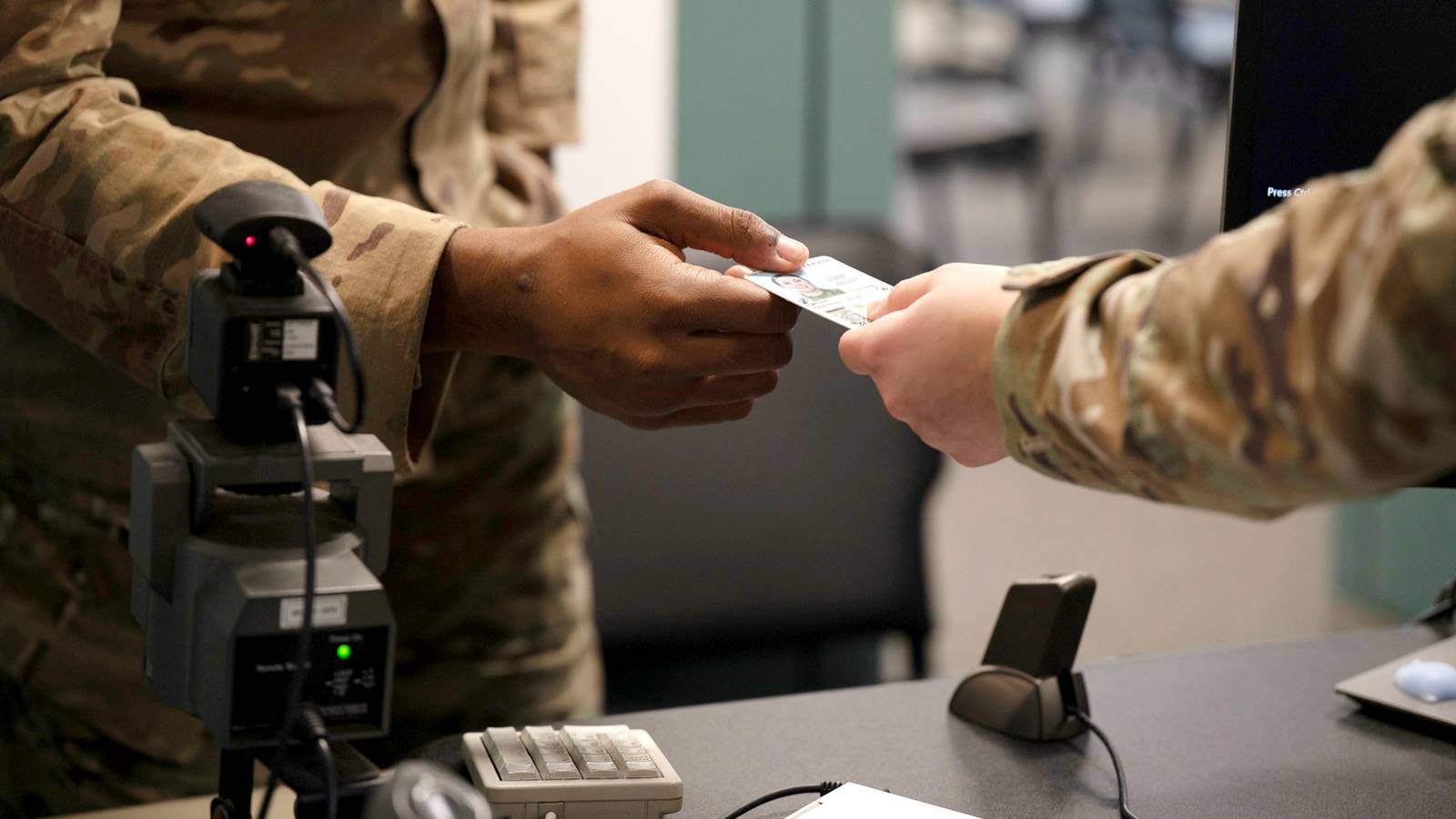
Prosecutors said Jackson and Javier directed Cimino to enter the bank and pose as a victim identified in court records only as “M.B.” Cimino carried identification documents containing the victim’s name but her own photograph, including a counterfeit U.S. Army identification card.
When bank employees asked for more information to verify the account holder’s identity, Jackson and Javier supplied the victim’s Social Security number and date of birth to Cimino through an earpiece, according to prosecutors.
The ruse worked as Cimino left the bank with $8,700 from the victim’s account.
Four days later, investigators intercepted another piece of the operation. Javier had shipped a FedEx package from Indianapolis to the Bronx containing seven counterfeit Army identification cards, seven fraudulent U.S. passport cards, and 14 stolen checks, according to DOJ.

Each fraudulent identification card carried Cimino’s photograph but the personal information of a different victim. Fraudsters have increasingly used fabricated military identities to build credibility and obtain money or other benefits.
Federal prosecutors have not publicly identified the victims or said in their announcement whether any were actually Army personnel.
‘Washed’ Checks Added Another $149,000 to the Scheme
The group also relied on a decidedly low-tech fraud technique that federal investigators continue to warn about: check washing.
Prosecutors said the conspirators obtained stolen checks and used chemicals to erase the original writing. They then rewrote the checks to make themselves the payees and increased the amounts before attempting to deposit them into accounts controlled by members of the operation.
The FBI describes check washing as using chemicals to physically alter a check, usually changing its payee, dollar amount or both.
The U.S. Postal Inspection Service warns that stolen checks can be chemically washed and rewritten before being fraudulently deposited, although DOJ did not say how the checks in this particular case were stolen.
Prosecutors said that part of the scheme was intended to steal an additional $149,286.45. The fraudulent withdrawals using stolen identities separately targeted $180,058.19, bringing the overall attempted fraud above $300,000.
Defense Investigators Helped Build the Case
The FBI, Indiana State Police and the Defense Criminal Investigative Service investigated the operation.
DCIS is the law enforcement arm of the Defense Department inspector general and investigates federal crimes involving military personnel, national security, readiness and DOD resources. The Justice Department did not specify DCIS’s role in the investigation.

U.S. attorney Tom Wheeler singled out the use of military credentials when the sentences were announced Oct. 2.
Pretending to serve in our nation’s military to steal from innocent Americans is not just fraud.
Jackson was convicted of conspiracy to commit bank fraud, bank fraud and aggravated identity theft. Javier and Cimino were convicted of conspiracy to commit bank fraud and aggravated identity theft.
Javier, a citizen of the Dominican Republic whose visa has expired, also acknowledged when he pleaded guilty that he will be subject to removal from the United States after completing his sentence, according to federal prosecutors.
The three sentences close the federal cases against the defendants more than a year after the bank withdrawals and attempted transactions prosecutors said spanned five states.
Read the full article here
21 Comments
If AISC keeps dropping, this becomes investable for me.
Good point. Watching costs and grades closely.
Good point. Watching costs and grades closely.
Nice to see insider buying—usually a good signal in this space.
Good point. Watching costs and grades closely.
Interesting update on Fake Army IDs and ‘Washed’ Checks Used in $300,000 Bank Fraud Scheme. Curious how the grades will trend next quarter.
Good point. Watching costs and grades closely.
Good point. Watching costs and grades closely.
Production mix shifting toward USA might help margins if metals stay firm.
Good point. Watching costs and grades closely.
I like the balance sheet here—less leverage than peers.
Nice to see insider buying—usually a good signal in this space.
Good point. Watching costs and grades closely.
If AISC keeps dropping, this becomes investable for me.
Good point. Watching costs and grades closely.
Good point. Watching costs and grades closely.
Uranium names keep pushing higher—supply still tight into 2026.
Good point. Watching costs and grades closely.
Good point. Watching costs and grades closely.
Production mix shifting toward USA might help margins if metals stay firm.
Exploration results look promising, but permitting will be the key risk.