

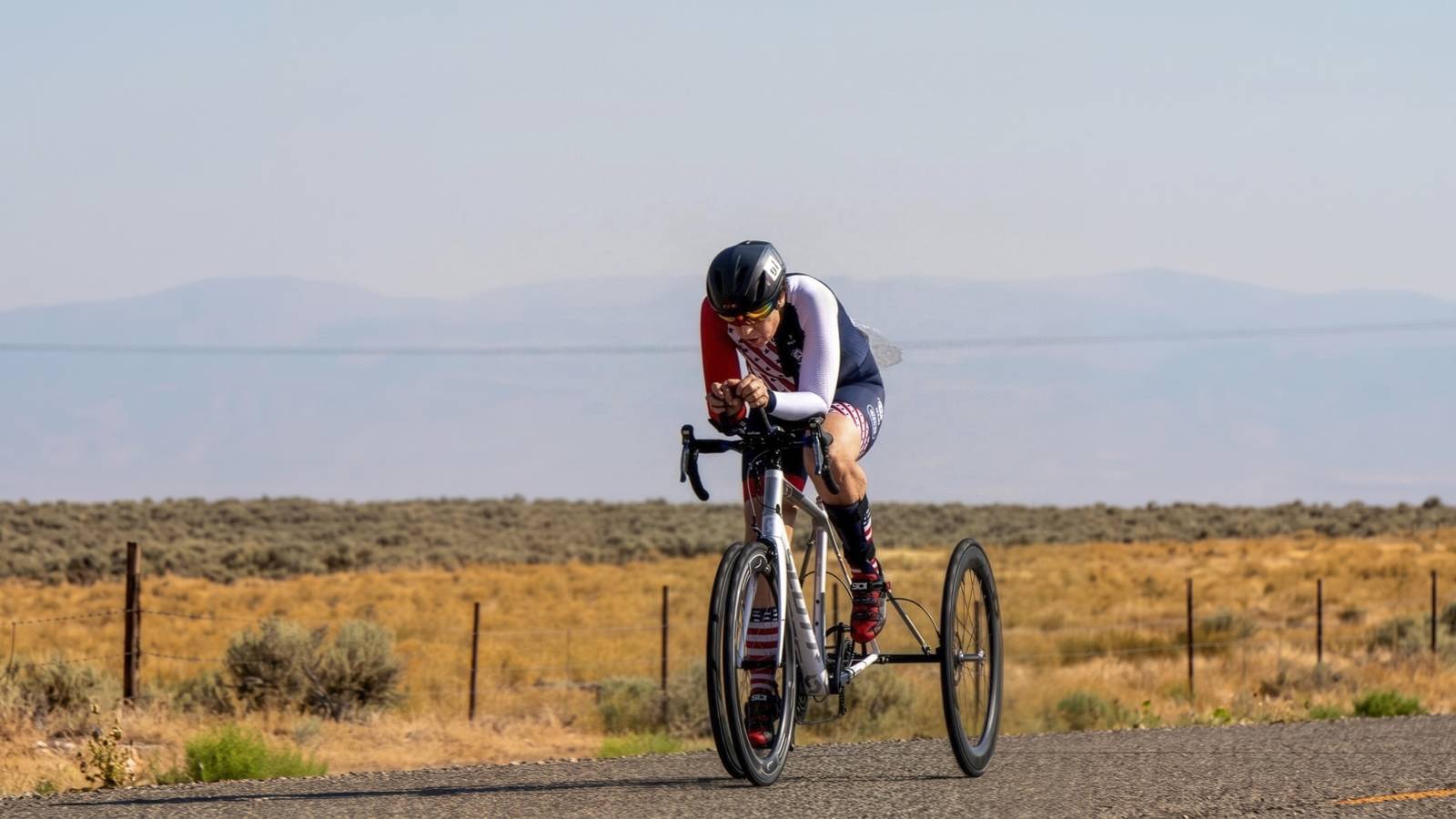
For Ellie Kennedy, an obstacle is something that just pushes her harder to succeed.
The 69-year-old Gulf War veteran served more than 15 years in the U.S. Air Force and Army. Decades after developing a neurological condition that affects her balance, she has persevered and became an avid para-cyclist while in her 60s.
Air Force Staff Sgt. John Meyer explains how Adaptive Sports Camps and archery have helped him on the road to recovery.
It has translated to a World Cup bronze medal, competing at the Para-Cycling World Championships, and making the U.S. national para-cycling team. Today, she is the oldest woman in the world competing against cyclists four or five decades younger.
Amid her own health struggles and setbacks, she is training to compete in the 2028 Paralympic Games being held in Los Angeles, Calif. If successful, she would be age 71.
How Military Training Enforces a Certain Attitude
In an interview with Military.com, Kennedy told Military.com that her military officer training helped prepare her in myriad ways—whether it was on the field of battle, or taking her own physical hindrances head on and reaching above-average personal heights.
“You’ve got plan A, B, C, you’ve always got an alternate plan,” Kennedy said. “What is your alternate plan? You have to plan for everything. Plan A is probably not going to go the way you wanted it to go, right? So, you have to have alternate plans.
“When I have an obstacle and something happens, it’s like, OK, alright, we’ve got to reset. What else do we need to do, and how do we go forward from here? How is this going to look different?”
She missed pretty much all of her riding in 2025, nearly dying from pneumonia and sepsis and enduring a hospital stay. When she came out clean on the other side, her first thought was to just ride. Once she could do that again in 2026, racing reentered her aspirations.
“I’ll be doing that in 2027. … It’s just always trying to find a way to deal with whatever it is that comes your way, and then make another plan.”
Battling a Neurological Condition Since 2008
Kennedy, speaking with Military.com from Tuscon, Ariz., said that years after leaving the military she began experiencing issues.
But years before that, an interest in the medical field spurred her toward the armed forces in the first place. She had a bad accident at age 20 and hurt her leg. Her father was in the U.S. Navy and in underwater demolition, or “basically SEALs before SEALs were SEALs.”
She became interested particularly in physical therapy, leading to the Army Reserve and becoming trained as a medic. She later went to active duty in the Army, then the Air Force. She was deployed once during the Gulf War, to Saudi Arabia and Kuwait.
But by 2008, she found out that she had what is known as ataxia, a symptom of a brain disorder that comes in different forms and essentially doesn’t allow the brain to work right and causes issues related to balance and unsteadiness.
Kennedy noticed issues after returning from war, and it took years to decipher the root of the cause. But at the time, she and her doctors believed she had a hemiplegic migraine, where she became paralyzed on her left side.
She went to a skilled nursing facility, and then it kept happening over and over again. She attended an acute rehab a number of times, and one of the last times that it happened—one of the most severe—she couldn’t walk or talk, and had to learn how to walk and talk again.
Kennedy was later connected with Cedars-Sinai through the U.S. Olympic and Paralympic Medical Network.
“I went off to war perfectly healthy and came back a wreck, physically and mentally,” Kennedy said, with one injury center relating her condition to the exposure of sarin gas that more than likely caused atrophy of her cerebellum.
“They were able to identify that through some special research stuff that they were doing at the War-Related Illness and Injury Center in Palo Alto,” she said. “At that time it was pretty devastating because they said, ‘In two years you’re going to need full care” and all that kind of stuff, and it scared the hell out of me.
“And then I just decided, if I only got two years, I’ll just do what I want to do. I had just been introduced to para cycling and started doing that just for fun. I’d started racing, but it was really more for fun and just getting back out and getting my life back because I used to be a triathlete and I hadn’t been able to ride a bike since 2008 when everything went really south.”
From a Life of Full-Time Care to Living On Her Own Terms
Kennedy’s condition emboldened her rather than made her shrink.
Rehab stints and a positive mindset can go a long way, she said, especially when doctors warned of her potential long-term inability to walk or speak. Some even said there wasn’t anything they could do about it, and that it would just progressively get worse to the point of requiring full-time care in a matter of two or three years.
“At the time, I was using a wheelchair because it was really hard for me to walk without falling down,” she said. “I just kind of decided, well, I’m just gonna live my life.”
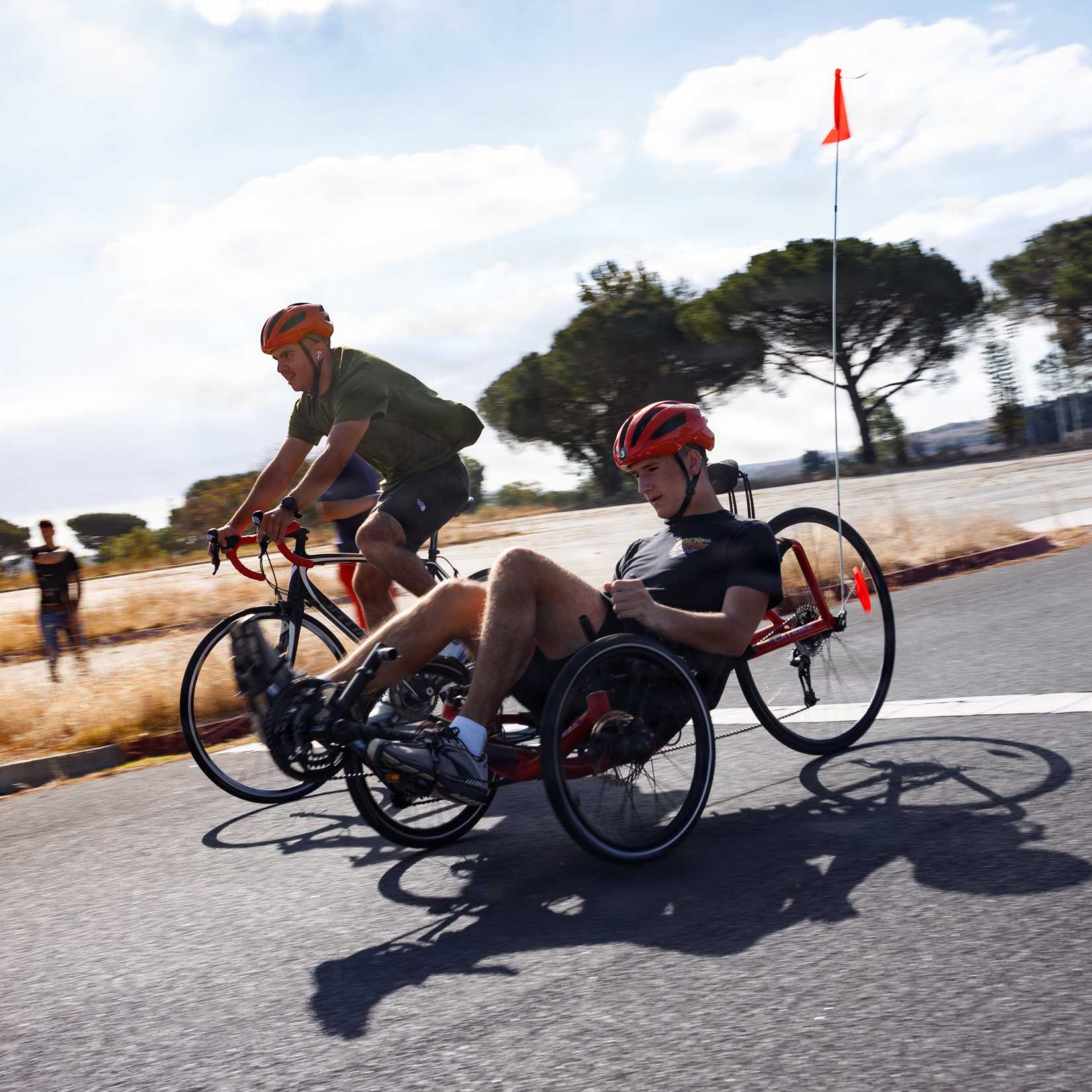
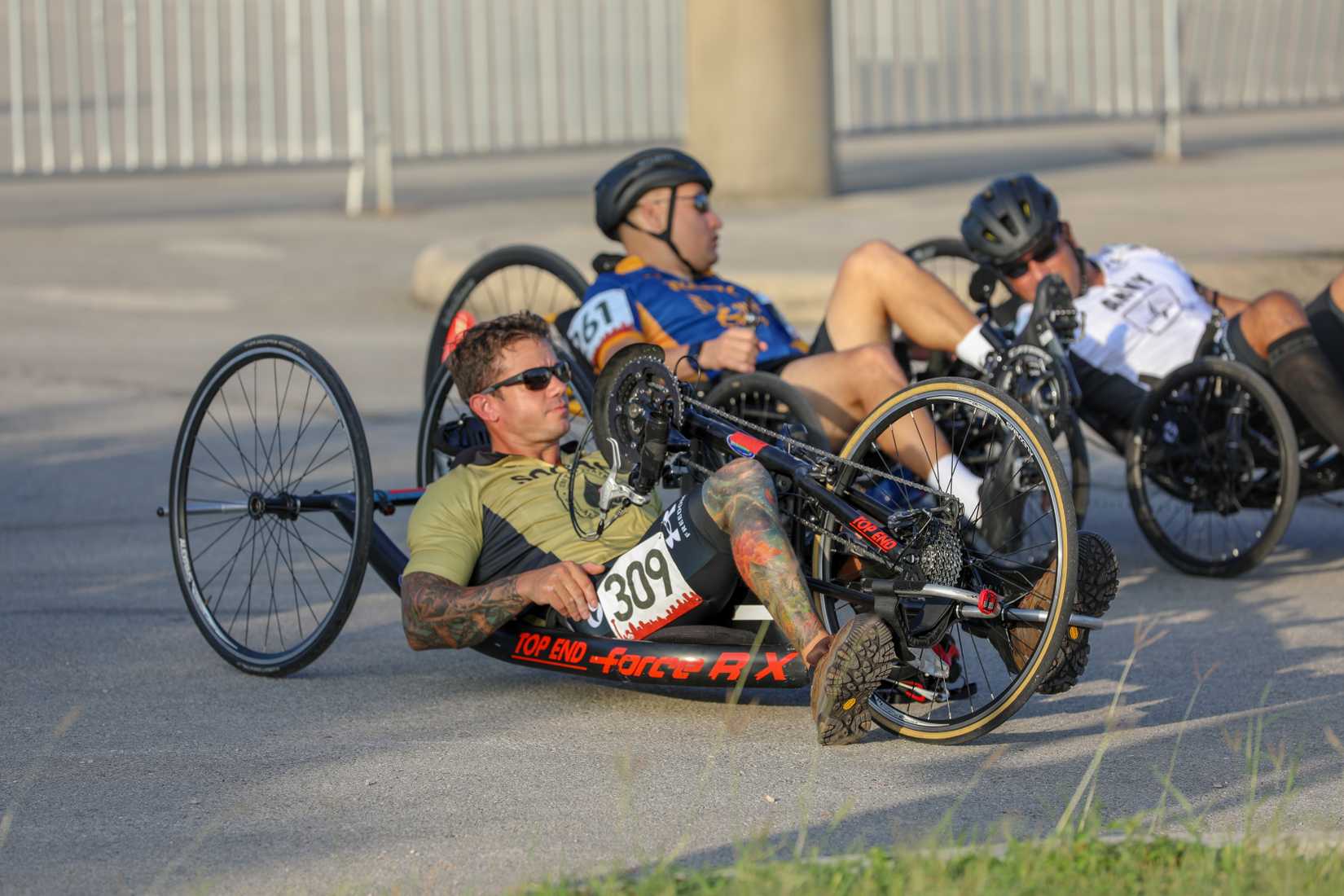
She still can’t ride on just two wheels. That’s where the para-cycling comes into play.
Dreams in the City of Angels
Less than 20 years after learning of her ataxia and all the negative rhetoric around it, Kennedy has endured and is actively trying to compete in next year’s Paralympic Games on the West Coast.
“Right now [my training regimen is] 90 minutes to two hours, about five days a week of riding and strength two days a week, mobility and all of that pretty much every day,” she said. “I don’t ride long distances like a lot of cyclists do because most of us in our category can’t do that because of the balance thing.”
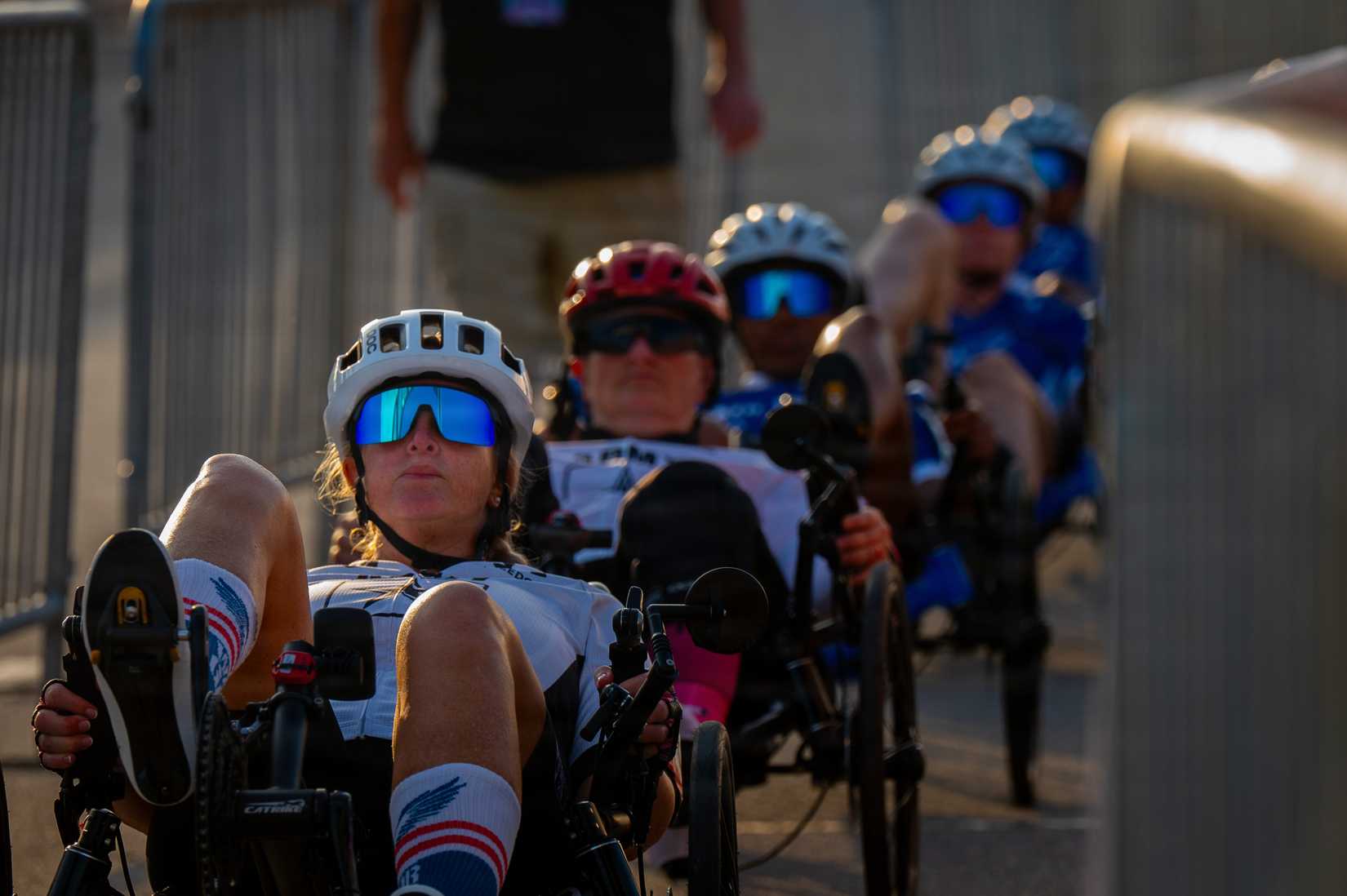
Her coach is just having her ride longer so they can manage the ataxia, which kicks in at about the 60-minute mark. She characterized riding with it as looking like a “drunk cyclist.” They’re both seeing if they push through to properly negate the condition, if possible.
That training will intensify in a few weeks. She spoke to Military.com on a day off from riding, which is rare. Even on her days off or “rest” days, which occur maybe once a week, she likes to hop on the bike just to spin her legs.
Kennedy views her own story as one that others—veterans or older people—can empathize with. She said there are countless adaptive programs and resources available to meet each individual’s demands or shortcomings.
“I’m just always in awe of some of the ways that people manage to do things,” she said. “There’s a guy from Spain, he’s a world champion and he’s only got like one working, real limb. And every time I see him on a bike—he rides a two-wheel—I’m always amazed, watching how he manages to do it.
“If someone really wants to do something and there’s something that they love and enjoy, there’s a way to do it.”
Read the full article here
20 Comments
If AISC keeps dropping, this becomes investable for me.
Good point. Watching costs and grades closely.
Good point. Watching costs and grades closely.
The cost guidance is better than expected. If they deliver, the stock could rerate.
Good point. Watching costs and grades closely.
Good point. Watching costs and grades closely.
The cost guidance is better than expected. If they deliver, the stock could rerate.
Good point. Watching costs and grades closely.
Good point. Watching costs and grades closely.
Interesting update on Female Gulf War Veteran, 69, With Neurological Disorder Trains For 2028 LA Paralympics. Curious how the grades will trend next quarter.
Good point. Watching costs and grades closely.
Production mix shifting toward USA might help margins if metals stay firm.
Exploration results look promising, but permitting will be the key risk.
Silver leverage is strong here; beta cuts both ways though.
Good point. Watching costs and grades closely.
The cost guidance is better than expected. If they deliver, the stock could rerate.
Exploration results look promising, but permitting will be the key risk.
Good point. Watching costs and grades closely.
Good point. Watching costs and grades closely.
Nice to see insider buying—usually a good signal in this space.