

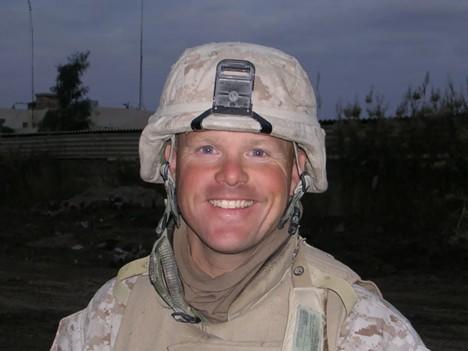
Bill Arnold always had the passion to serve his country. Coming from a family of five generations of veterans, military service was ingrained in him.
But while driving home from a funeral of a veteran he once commanded, the question hit him – “Could I do more to support veterans struggling after combat?”
That’s when the former Marine Corps officer established Blue Diamond Recreation, a nonprofit organization in Fort Worth, Texas, providing outdoor activities, fishing, hiking, and other sports, to assist veterans and their families, especially when they’re coping with mental health issues. Blue Diamond Recreation plans 6-10 retreats each year, offering peer support and ways to connect with other veterans.
“The effects of war, it all comes back to the ripple effect,” Arnold said. “It affects everybody.”
Arnold told Fort Worth Report that his organization has 39 members and continues to grow.
First-Hand Combat Experience
In the Marine Corps, Arnold was thrust into combat situations on several occasions.
He was deployed to Iraq during Operation Desert Storm in the early 1990s, commanding the Scout Platoon, Regimental Combat Team-1, 1st Marine Division.
Arnold became a reservist in 1994, transitioning to a career as a teacher for Fort Worth Country Day School. He enjoyed the break from full-time military duty while still maintaining a connection to the Marines.
That changed on Sept. 11, 2001. Arnold watched on TV in stunned disbelief as the terrorist attacks unfolded in New York City and Washington, D.C. Again, he felt the urge to serve his country, but in what way? He asked his wife, Debbie, if he should return to active duty.
“I specifically remember Debby looking at me and saying, ‘You’re a great Marine.’ I thought to myself, I’m still fit and relatively young,” Arnold said.
He decided to return to active duty; however, the choice weighed heavily on his family, including three kids, and his students at Country Day.
“The real heroes are the military spouses,” Arnold said. “My wife found herself as a single parent for the first time, with three children and a husband deployed to one of the most dangerous places in the world at that time.”
He was about to find out how dangerous it was.
Arnold was sent to Fallujah, Iraq, to lead a scout platoon. The unit fought in the Second Battle of Fallujah, the deadliest battle of the war in Iraq. Coalition forces lost more than 100 troops, with over 600 wounded. More than 3,000 enemy insurgents fell, but so did thousands of civilians. More than half of Fallujah’s mosques suffered damage. The fighting raged on for six weeks, the most intense urban combat since the Vietnam War.
In 2005, Arnold’s deployment ended. He returned to Fort Worth, reuniting with family, friends, and his students.
The Marine couldn’t shake Fallujah, though.
“My first tour was in peacetime, so the sights, smells, and the sounds of the battlefield were something that I was unfamiliar with,” Arnold said. “Because the battle had become a touchstone for me, every time I saw a traumatic news story, or if it was cold outside, everything came back to Fallujah.”
For a while, Arnold tried to brush past the flashbacks. He tried to acclimate to life as a civilian. But he realized the battle had become a part of him.
Saved Lives in Combat
Mike Shupp, a retired Marine Corps colonel, said Arnold was constantly responsible for saving lives. Arnold and Shupp served together in Iraq.
“Arnold was responsible for my security as a regimental commander,” Shupp said. “He kept me alive every day.”
Shupp remembers Arnold setting up checkpoints throughout Fallujah, making certain there would be no additional Marines wounded or killed after U.S. forces secured the city. He had an instinct to help his fellow comrades. Twenty years later, as he works to give veterans recreational opportunities, that instinct has not faded.
“Seeing Bill’s example makes me a better person and a better Marine, because it makes me realize that I have to be supportive of these things as well,” Shupp said.
The Need to Give Back
Giving back, whether through military service or teaching, has become a core tenet of Arnold’s life.
It all started when he earned a scholarship in high school to attend Virginia Military Institute. He received a bachelor’s degree in history from VMI and a master’s in history from the University of Texas at Arlington. He became a commissioned second lieutenant in 1990, serving in Quantico, Virginia.
Arnold and other veterans will be honored in November for their service at an event hosted by the National Medal of Honor Museum in Arlington, Texas.
He recently retired from teaching, devoting himself fully to Blue Diamond Recreation.
After all, there will always be veterans who need a helping hand.
Story Continues
Read the full article here
30 Comments
This kind of support is exactly what many veterans need. The transition back to civilian life can be tough, and having a community is key.
So true. Veterans often carry an invisible burden, and initiatives like this help lighten the load.
A former Marine using his experience to create a safe space for other veterans to heal—what a legacy. Hope to see more programs like this across the country.
Agreed. Peer-led support is often the most effective, especially when it comes from someone who’s walked the same path.
The fact that Arnold was moved to start this after a funeral speaks volumes. It shows how deeply he cares about his fellow veterans.
That level of commitment is truly admirable. It takes someone who’s been through it to understand the need.
This program sounds like a life-changer for many veterans. The combination of peer support and outdoor activities is a powerful healing tool.
Peer support is key, especially when it comes from someone who’s walked the same path. The outdoors adds another layer of healing.
It’s heartening to see veterans helping veterans. The ripple effect of war is often overlooked, and programs like this make a real difference.
Couldn’t agree more. It’s crucial to address the full spectrum of impacts that combat has on service members and their families.
It’s amazing how outdoor activities can help veterans who are struggling. Hope this program continues to grow and support more who need it.
Definitely. The combination of nature and camaraderie is a powerful tool for healing.
This is a great way to give back to those who’ve served. Outdoor activities provide a therapeutic environment for veterans to connect.
Absolutely. The therapeutic benefits of outdoor recreation are well-documented, and it’s a win-win for everyone involved.
It’s inspiring to see a veteran using his experience to create a support network for others. The ripple effect of war is real, and programs like this help mitigate it.
Couldn’t agree more. The impact of war extends far beyond the battlefield, and initiatives like this make a real difference.
Veterans helping veterans is a powerful concept. The retreats must be a welcome relief for those dealing with the aftermath of war.
Peer support is invaluable, especially when it comes from someone who’s experienced the same struggles.
Outdoor recreation is a fantastic way to help veterans heal. The therapeutic benefits of nature are well-documented, and this program takes full advantage of that.
Nature has a way of grounding people and helping them process their experiences. This is a brilliant approach.
Wonder how many veterans these retreats have helped so far? The growth of Blue Diamond Recreation is a positive sign.
39 members is a great start, but there’s always room for more. Hope they can expand their reach further.
This is a great initiative that highlights the power of peer support in helping veterans transition back to civilian life. It’s inspiring to see someone use their military experience to give back in such a tangible way.
Absolutely! Outdoor activities like fishing and hiking can be incredibly therapeutic for those dealing with PTSD.
Do they take volunteers to help with the retreats? I’d love to get involved.
Outdoor recreation is a fantastic way to promote mental well-being. It’s a low-pressure environment where veterans can connect and heal together.
Absolutely. Nature has a way of grounding people and helping them process their experiences.
I wonder if they offer any virtual support for those who can’t attend the retreats in person.
It’s heartening to see veterans coming together to support one another. The retreats must provide a much-needed sense of community.
Community is everything. Veterans often struggle to find their place after service, and this helps ease that transition.