


When members of the military deploy overseas or receive orders for a permanent change of station or PCS move, expenses can add up. Often, service members find themselves in dire straits and in need of financial assistance.
PMI U.S. or Philip Morris International’s U.S. businesses have been helping to fill that financial gap for years, recently announcing $340,000 in funding support divided among the country’s four major military relief societies: the Air & Space Forces Aid Society, Army Emergency Relief, Navy-Marine Corps Relief Society and Coast Guard Mutual Assistance.
Marian Salzman, senior vice president of corporate development and senior advisor to the U.S. CEO, PMI U.S., said the funding fills an ongoing military need.
“Military families often face financial hardships that arrive without warning, from natural disasters, medical emergencies, and other life-changing events to unexpected relocation expenses,” Salzman said in a statement.
“Through these sustained partnerships, we can help ensure that those who have served our country—whether in uniform or at home—can access assistance when they need it most,” she added.
Helping Military Families With Their ‘Complex Challenges’
Donnie Brzuska, chief communications officer for Coast Guard Mutual Assistance (CGMA), told Military.com that his organization will receive $40,000 of the larger $340,000 PMI U.S. award.
“The donation was scaled by the number of clients that each respective military aid society serves,” Brzuska said. “I don’t want to say we got one of the smaller awards, but our award was scaled to the size of our client pool.”
CGMA is the official relief society of the U.S. Coast Guard and provides grants, interest-free loans, and other direct financial assistance and resources to eligible Coast Guard members, civilian employees, retirees and their families.
Founded more than 100 years ago, some 600 CGMA representatives serve at over 140 locations around the world. It’s an independent nonprofit organization that receives no government funding.
Yet, the financial needs of Coast Guard service members and their families can be daunting.
“Military families face these really complex challenges, including frequent moves, long deployments, and regular uncertainty,” he said. “We ensure that these short-term challenges don’t inhibit the service members’ ability to serve our nation.
“We regularly get letters from our clients saying that our assistance is life changing.”
How Funds Were Allocated
PMI U.S. said funding amounts were allocated across the organizations based on factors including the scope of their service populations, program reach, and demonstrated need.
The Air & Space Forces Aid Society (AFAS) said its donation will help airmen, guardians and their dependents access critical support, ranging from emergency financial assistance and disaster relief to educational opportunities and family-based programs that promote long-term stability.
Army Emergency Relief (AER) said the contribution will help soldiers and their families navigate unexpected financial hardships, such as housing, utilities, medical expenses not covered by insurance, emergency travel, vehicle repairs, food and scholarships.

The Navy-Marine Corps Relief Society (NMCRS) said its portion of the funding will advance the society’s mission of supporting sailors, marines, retirees, and their families through financial assistance, financial education, and personalized resources designed to foster lasting financial resilience.
“This year, we helped a spouse escape a very serious domestic violence situation with her and her three children,” Brzuska said of CGMA’s Safe Harbor Program. “Earlier this year, we helped a family with two very seriously ill children move some life-sustaining medical equipment because the insurance company and the moving company couldn’t fund it.
“CGMA stepped in with a $12,000 grant for the family’s military move. The examples go on and on.”
Total Giving Surpasses $1.2 Million
To date, PMI U.S.’s total giving to the four major military relief societies tops $1.2 million.
According to the Blue Star Family Lifestyle Survey, cited by PMI U.S., only 31% of military families feel they’re getting the support they need. The study also noted more than 25% of military families feel like they’re struggling with food insecurity.
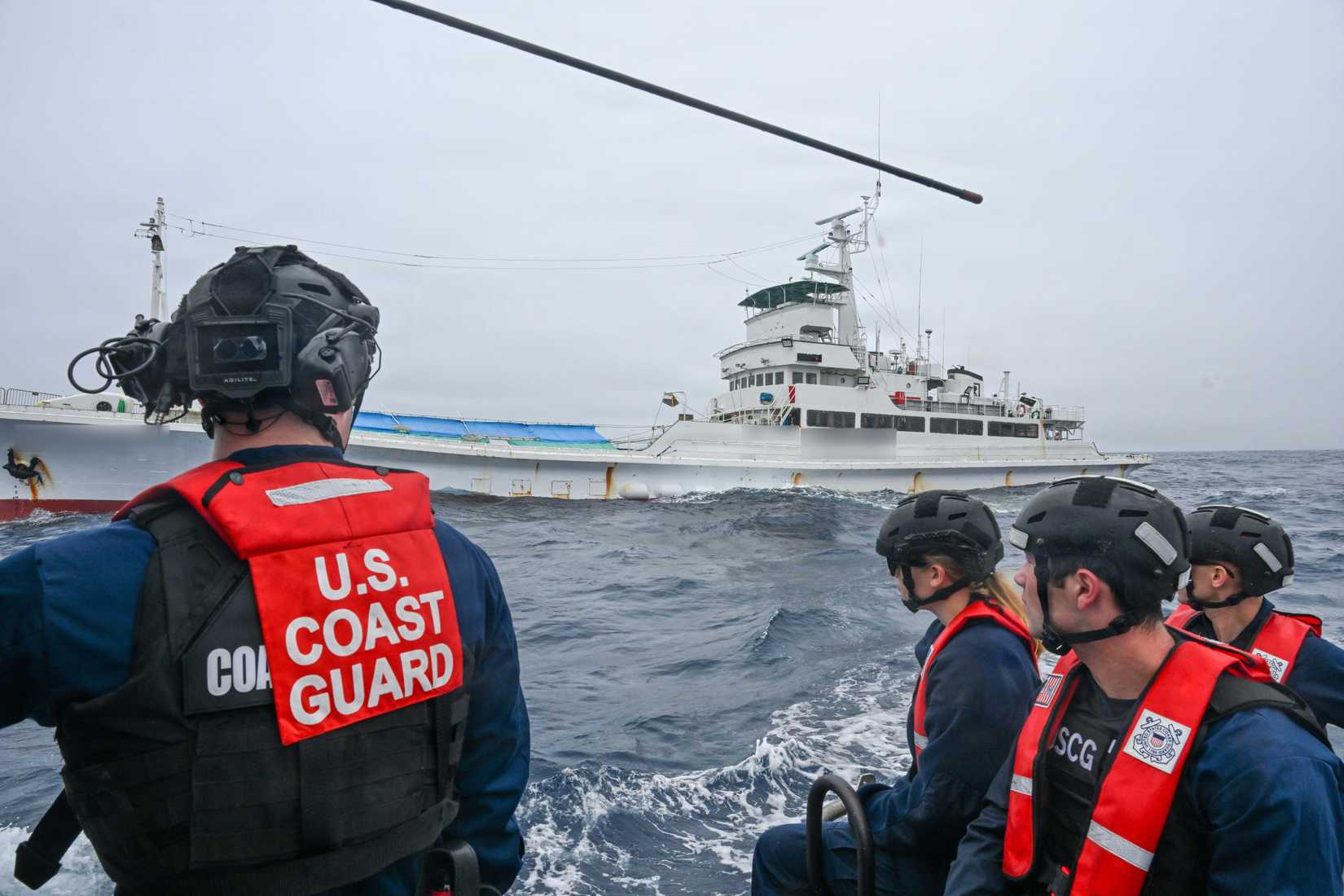
“We see it every single day,” Brzuska said. “The reality is that inflation and the economy is making it to where the service member’s dollar is not going as far as it used to.
“So, it’s vital that we have these programs in place and that organizations like PMI U.S. help us to support our service members in a way that no other organization can.”
No need is too great or too small for a service member or their family to seek CGMA’s assistance, he added, or that of the other military relief societies.
“We help [with] everything, from big complex problems to some of the everyday challenges that our Coast Guard members and service members face,” he said. “Things like their car breaking down, like having to fly home for a funeral or even to pay for a funeral.
“The relief societies show up when people need it most.”
Read the full article here
31 Comments
Silver leverage is strong here; beta cuts both ways though.
Good point. Watching costs and grades closely.
I like the balance sheet here—less leverage than peers.
Good point. Watching costs and grades closely.
If AISC keeps dropping, this becomes investable for me.
Good point. Watching costs and grades closely.
Nice to see insider buying—usually a good signal in this space.
Good point. Watching costs and grades closely.
Good point. Watching costs and grades closely.
Exploration results look promising, but permitting will be the key risk.
Good point. Watching costs and grades closely.
Nice to see insider buying—usually a good signal in this space.
Good point. Watching costs and grades closely.
Good point. Watching costs and grades closely.
Silver leverage is strong here; beta cuts both ways though.
Interesting update on Four Military Relief Groups Share $340K in New Funding for Struggling Service Members, Families. Curious how the grades will trend next quarter.
Good point. Watching costs and grades closely.
Good point. Watching costs and grades closely.
Exploration results look promising, but permitting will be the key risk.
Good point. Watching costs and grades closely.
Good point. Watching costs and grades closely.
Uranium names keep pushing higher—supply still tight into 2026.
Good point. Watching costs and grades closely.
I like the balance sheet here—less leverage than peers.
Nice to see insider buying—usually a good signal in this space.
Good point. Watching costs and grades closely.
Nice to see insider buying—usually a good signal in this space.
Uranium names keep pushing higher—supply still tight into 2026.
Good point. Watching costs and grades closely.
I like the balance sheet here—less leverage than peers.
Exploration results look promising, but permitting will be the key risk.