

Future military satellites may someday receive a command as simple as, “Find the Chinese carrier battle group,” and determine for themselves how to complete the mission.
For retired Air Force Maj. Gen. Brook Leonard, that future is no longer science fiction.
In an interview with Military.com, Leonard, a former senior U.S. space commander who helped stand up U.S. Space Command and later oversaw global space operations supporting U.S. and allied forces, described a future where satellites operate less like passive tools and more like autonomous teammates.
I can type text and give it mission-type orders, Leonard said.
Rather than requiring operators to manually coordinate every action, future satellite systems could receive objectives, determine how to accomplish them, coordinate resources and return actionable answers.
The concept represents a significant shift in how military space operations are conducted today and could dramatically accelerate how quickly commanders gather information, identify threats and make decisions.
Today’s military satellite operations often require extensive planning and coordination.
Operators identify collection priorities, determine which sensors to use, calculate orbital positioning, manage power consumption and coordinate multiple systems to gather information.
Leonard believes future autonomous systems could simplify much of that process.
One example he offered was locating a hostile naval force.
“Find the Chinese carrier battle group,” Leonard said, describing the type of mission order that could eventually be provided to an autonomous satellite network.
Instead of requiring operators to manually direct each step, the system could determine how best to execute the task.
That could include selecting sensors, accounting for weather conditions, coordinating collection opportunities, managing battery power and optimizing available resources.
“I’m not going to get back a bunch of photos,” Leonard said. “I’m going to get back the carrier battle group is at this latitude, longitude.”
Tasks that currently require multiple operators and extensive coordination could potentially be completed far faster.
“It’s milliseconds,” Leonard said.
The concept mirrors the military’s long-standing philosophy of mission command, where commanders provide intent and objectives while subordinate leaders determine how best to accomplish the mission.
Leonard sees a future where satellite systems increasingly operate in much the same way.
A Vision the Space Force Is Already Exploring
Leonard’s vision aligns with broader trends emerging across the Space Force.
In April, the service released long-range planning documents outlining how space operations could evolve through 2040, highlighting artificial intelligence and autonomy as critical enablers for managing an increasingly crowded and contested domain.
Space Force leaders have argued that future operations will require significantly greater levels of automation and human-machine teaming as the number of satellites in orbit continues to grow.
The challenge is not simply processing more data.
It is helping operators make faster decisions in an environment where seconds can matter.
For Leonard, the goal is not replacing humans but enabling them to operate at a much higher level.
Why Today’s Model Is Showing Its Age
Autonomy alone, however, will not solve every challenge facing the space domain.
According to Leonard, the underlying architecture of how satellites are built and operated remains rooted in assumptions that date back to the earliest days of the space age.
We’ve been doing the same thing … since the beginning, he said.
The process remains largely unchanged: build a satellite, launch it into orbit, operate it until it becomes obsolete or runs out of fuel, and then replace it.
“It’s kind of this one-way ticket to space every time,” Leonard said.
Once a satellite reaches orbit, options become limited. Hardware upgrades are difficult. Repairs are rare. New capabilities often require launching entirely new systems.
That approach made sense when technology advanced more slowly.
Today, software, sensors and artificial intelligence evolve at a much faster pace.
The result is a growing mismatch between how quickly technology changes on Earth and how quickly new capabilities can be fielded in space.
The Logistics Revolution Behind the Technology
Leonard believes solving that challenge requires something that rarely captures public attention: logistics.
On Earth, military and commercial organizations rely on networks that allow equipment to be repaired, upgraded, refueled and adapted as requirements change. Space largely lacks that flexibility.
Leonard compared the current model to sending a truck across the country with no ability to refuel, repair or return.
“It ends up … delivers its payload, and then dies,” he said.
The inefficiency creates real operational consequences. Deploying new capabilities can take years and cost enormous amounts of money. Even relatively modest upgrades may require launching entirely new spacecraft.
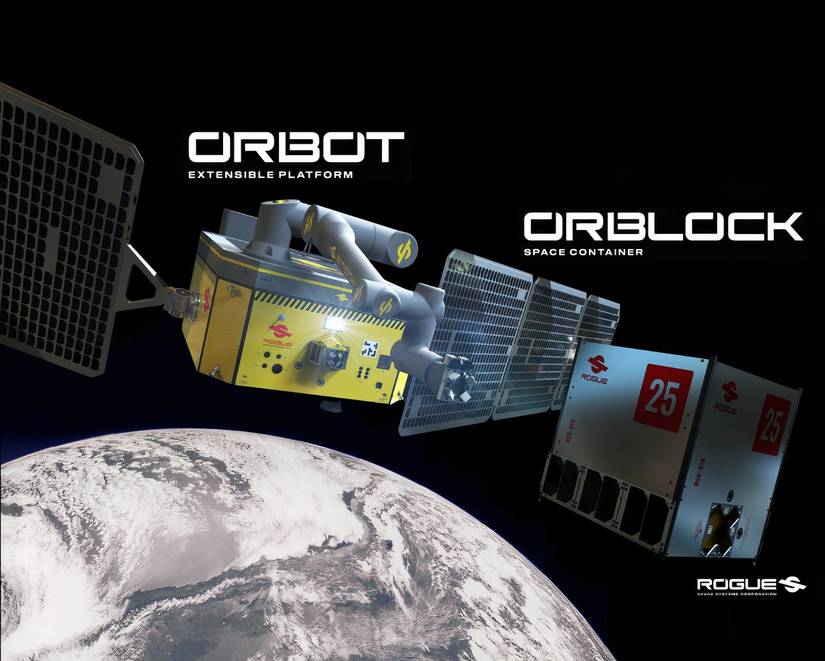
Leonard believes future architectures should treat payloads more like cargo than custom-built engineering projects.
“We’re trying to make it so satellites are loaded, not engineered,” he said.
Instead of redesigning an entire spacecraft every time a capability changes, future systems could rely on standardized interfaces that allow payloads to be swapped, upgraded or replaced.
You can just launch your payload … and then you can reconfigure, reuse, refuel, Leonard said.
That approach could dramatically reduce costs while allowing military operators to field new capabilities much faster.
Orbital Logistics Is Moving From Concept to Reality
Leonard’s comments come as the Space Force increases its focus on orbital logistics.
In May, Space Systems Command announced a new initiative aimed at accelerating technologies related to in-space servicing, mobility and logistics. The effort focuses on capabilities such as satellite refueling, orbital maneuver, life extension and on-orbit maintenance.
Space Systems Command officials argue those technologies could eventually allow satellites to remain operational longer, maneuver when needed and adapt more effectively in contested environments.
The goals closely mirror the future Leonard described.
Autonomous systems become significantly more useful if they can be upgraded, repaired or reconfigured rather than discarded and replaced.
Speed May Become the Decisive Advantage
Ultimately, Leonard believes future competition in space will be defined less by who launches the most satellites and more by who can adapt the fastest once systems are already in orbit.
If we can change our paradigm … then we have the capability to iterate faster, he said.
That speed could prove decisive as military forces seek to respond to evolving threats, deploy new capabilities and maintain an advantage in a contested domain.
For decades, the space race focused on access. Who could launch? Who could reach orbit? Who could place payloads where they wanted them?
Those questions still matter.
But Leonard believes the next phase of competition will be determined by what happens after satellites arrive.
“If we truly think of space as the foundation of power, we do not have the logistics backbone to take advantage of that,” he said.
The future of military space power may belong to the countries that can build satellites that not only survive in orbit, but learn, adapt and work alongside human operators as trusted teammates.
Read the full article here
23 Comments
If AISC keeps dropping, this becomes investable for me.
Uranium names keep pushing higher—supply still tight into 2026.
Good point. Watching costs and grades closely.
Production mix shifting toward USA might help margins if metals stay firm.
Silver leverage is strong here; beta cuts both ways though.
Good point. Watching costs and grades closely.
Nice to see insider buying—usually a good signal in this space.
Exploration results look promising, but permitting will be the key risk.
Production mix shifting toward USA might help margins if metals stay firm.
Interesting update on Future Military Satellites Could Operate Like Human Teammates, Says Former Space Commander. Curious how the grades will trend next quarter.
Good point. Watching costs and grades closely.
Good point. Watching costs and grades closely.
Interesting update on Future Military Satellites Could Operate Like Human Teammates, Says Former Space Commander. Curious how the grades will trend next quarter.
Good point. Watching costs and grades closely.
Good point. Watching costs and grades closely.
Nice to see insider buying—usually a good signal in this space.
Good point. Watching costs and grades closely.
Good point. Watching costs and grades closely.
Nice to see insider buying—usually a good signal in this space.
Good point. Watching costs and grades closely.
Uranium names keep pushing higher—supply still tight into 2026.
Good point. Watching costs and grades closely.
Production mix shifting toward USA might help margins if metals stay firm.