

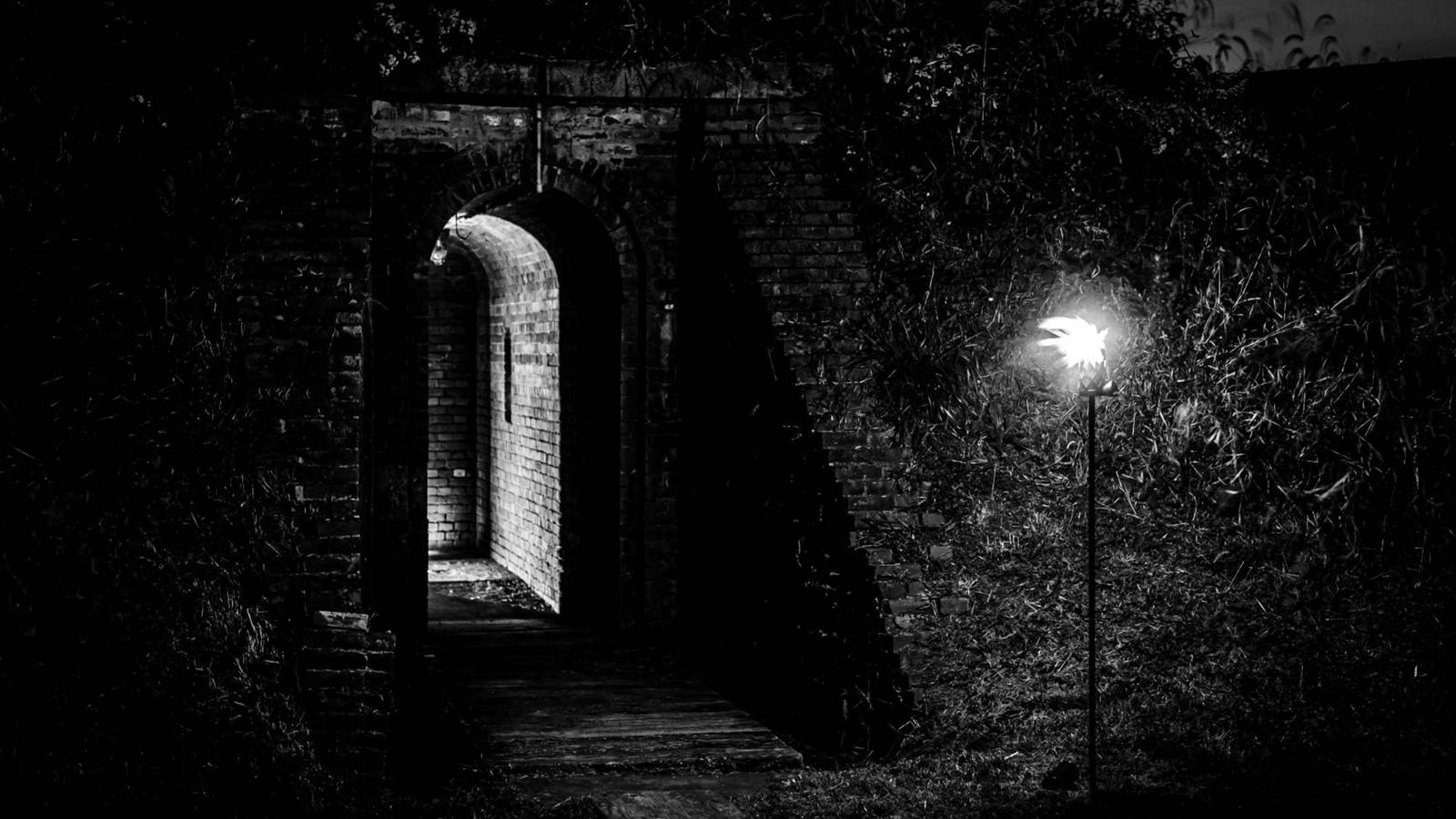
Visitors to Fort Mifflin sometimes finish their visit with compliments for an unusually convincing tour guide. He knows the Philadelphia fort remarkably well, they tell staff, and the Revolutionary War uniform really completes the effect.
There is one problem. According to Fort Mifflin staff, nobody was giving a tour. It has happened multiple times over the years. Visitors have described encountering a man dressed as an American Revolutionary War soldier who seemed to know the fort intimately, only to learn later that no interpreter in period clothing was working. Fort staff say they even have photographs visitors have taken of the mysterious guide.
At a place with nearly 250 years of military history, stories like that have had plenty of time to accumulate.
Fort Mifflin will hold Candlelight Ghost Tours starting Oct. 9. Other historic military sites report similar stories, including unexplained map labels and night-shift workers calling military police to investigate empty buildings.
Some of those legends are attached to documented soldiers and deaths. Others fall apart when someone checks the historical record.
“We tell the visitors upfront when we are talking about a staff member’s experience rather than history,” Melissa Winn of the National Museum of Civil War Medicine told Military.com.
Fort Mifflin’s Ghosts Stretch Throughout Centuries of Military History
Fort Mifflin was commissioned in 1771 on Mud Island in the Delaware River. Six years later, roughly 400 American troops defended it against British forces attempting to resupply occupied Philadelphia.
Beginning Nov. 10, 1777, British ships and batteries pounded the fort for days before its defenders finally abandoned the shattered position. Fort Mifflin continued serving the military long after the Revolution, including as a Civil War prison. That long history has given the fort a crowded roster of alleged spirits.
Visitors have reported seeing a headless man around the casemates. Fort staff say two historical figures have become associated with the apparition.
One is William H. Howe, a Union soldier who left his unit in Virginia after becoming ill and returned home to Pennsylvania. When federal officers later attempted to arrest him for desertion, one of the officers was killed. Howe was convicted of murder and desertion and eventually hanged at Fort Mifflin.
The other is Capt. Nathan Stoddard, who died during the 1777 siege and, according to the legend told at the fort, was decapitated by a cannonball.
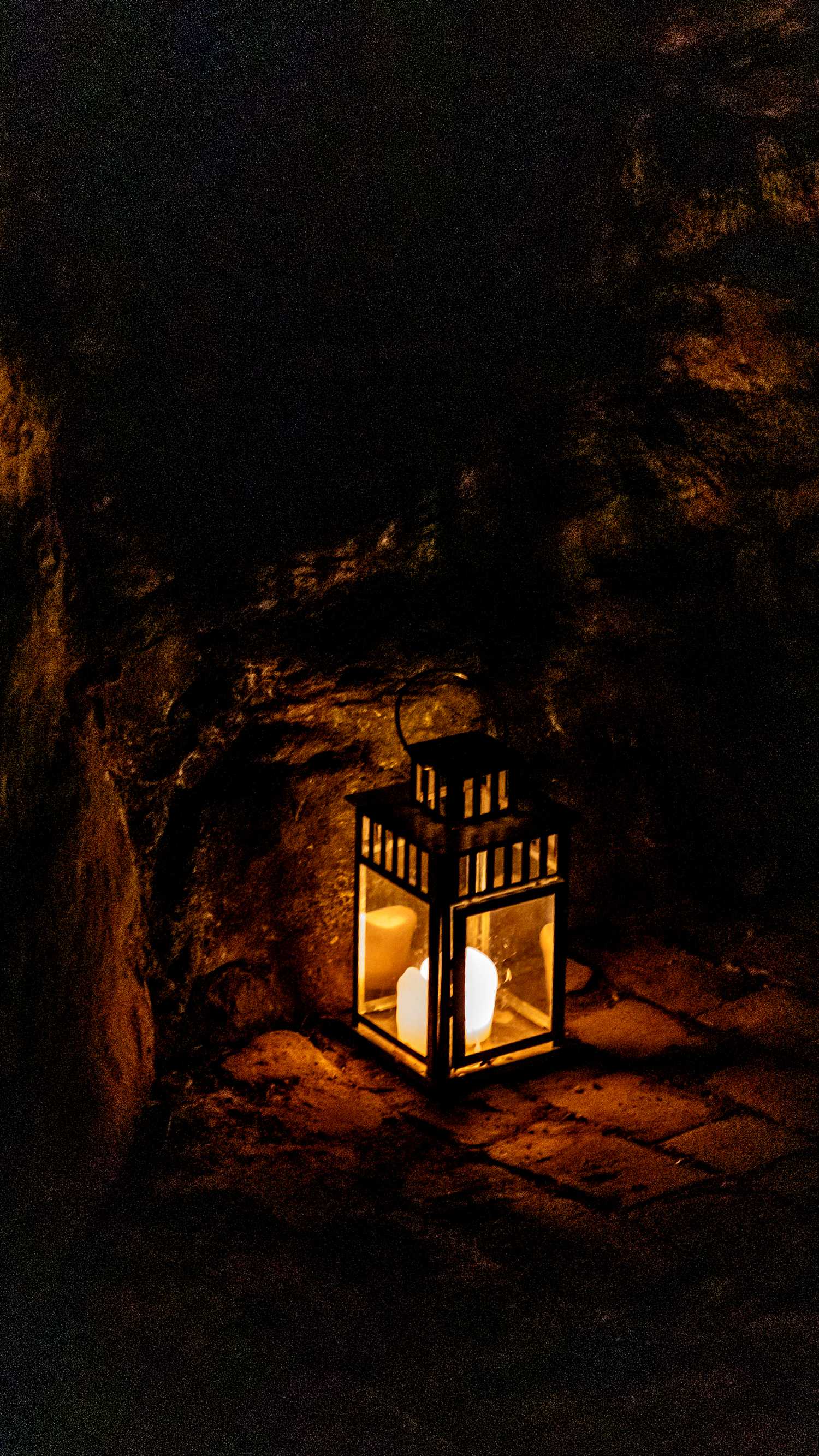
Then there is the Screaming Lady, one of Fort Mifflin’s oldest stories. Staff say reports of a woman screaming have circulated for years, and that police were once called to investigate.
For a long time, the woman was identified as Elizabeth Pratt, who supposedly lost her children to yellow fever before hanging herself from the second floor of the Officers’ Quarters.
According to Fort Mifflin staff, the Officers’ Quarters was only a collection of single-story buildings during Pratt’s time. The building from which she supposedly hanged herself did not yet exist.
Staff now consider Elizabeth Bunker, a woman who died at the fort after suffering from gastritis, another possible origin for the legend.
Fort Mifflin staff have updated ghost stories as new historical information has emerged.
Staff have reported their own experiences. One employee, Mary, said she felt an unseen hand help her down steps into Casemate 11. During a Candlelight Ghost Tour, a guide and visitors saw a woman near the Sallyport and assumed it was Mary, the only person in a hoop-style dress that night.
Mary later said she had spent the evening in the hospital building.
The Army Found a ‘Haunted House’ on a 1922 Fort Bragg Map
Some military ghost stories survive through oral tradition, but at Fort Bragg, someone wrote one directly onto a map. While reviewing a 1922 property map, Army cultural resources specialists found a structure near Lamont’s Bridge labeled “Haunted House.”
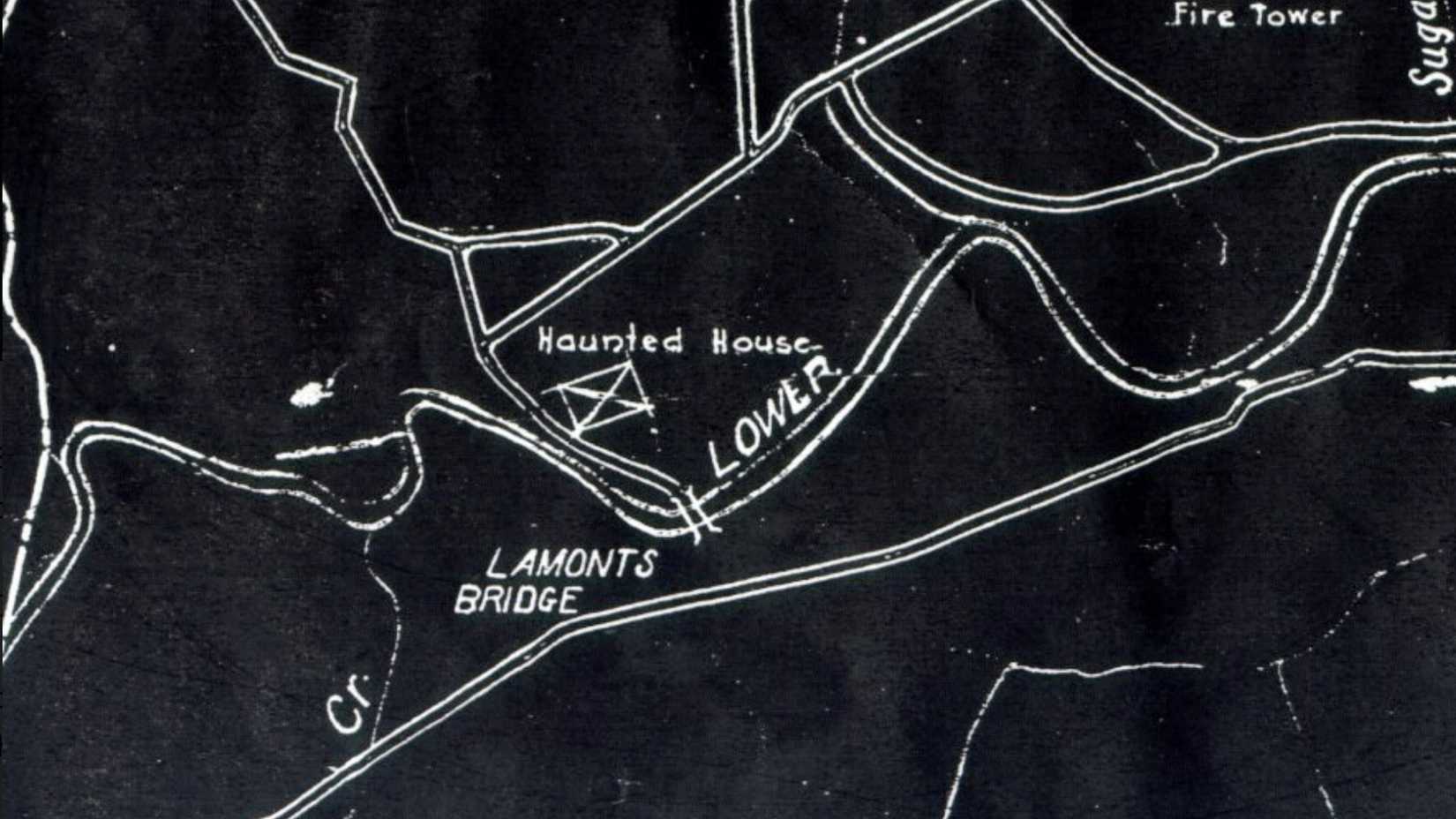
A 1922 Overhills property map labels a structure near Lamont’s Bridge at Fort Bragg, North Carolina, as “Haunted House.” Army archaeologists later investigated the site but have never determined exactly why the label appeared on the map. (Courtesy of Fort Bragg Cultural Resources Management Program)
The discovery led archaeologists to research John Lamont, a Scottish immigrant who purchased roughly 525 acres there in 1859. Lamont had previously served as superintendent of a local poor house before developing tuberculosis and moving to the property with his wife, Ann.
An excavation eventually uncovered pottery, glass, coins, clothing fasteners, pipes and livestock equipment. It also produced a World War II-era training grenade that temporarily stopped the dig.
Archaeologists never found an explanation for the label. They considered several possibilities. John Lamont died on the property, and researchers suspect Ann may have died there as well, raising the possibility that now-lost graves helped fuel the story.
Carnes-McNaughton also noted that the nearby spring may have been used for illegal liquor production, giving whoever was operating there a practical reason to encourage rumors that kept curious neighbors away.
The Army’s account even preserves the simplest local explanation: people around the abandoned property may genuinely have believed something strange was happening there. But, more than a century later, researchers have been unable to prove any of them.
Quarters One Had a Funeral Before It Had a Housewarming
The first major public gathering inside Quarters One at Rock Island Arsenal was a funeral.
Brig. Gen. Thomas J. Rodman designed the enormous Italianate residence as part of his plans for the Illinois arsenal but died in 1871 before seeing the project completed. More than 100 wagonloads of visitors reportedly came to the house to pay their respects.

Quarters One later served as the residence of 38 senior officers. Nearby, Rock Island had operated one of the Union’s largest Civil War prison camps, where 1,964 Confederate prisoners died.
Over time, employees and visitors reported footsteps in empty rooms, slamming doors, voices and phantom figures.
The stories became persistent enough that paranormal investigators began examining the house in 2011, and the Army later allowed a public affairs reporter to accompany one investigation.
During the Army reporter’s visit, investigators documented several events they considered unusual. A meter registered air in front of the reporter’s face roughly 30 degrees colder than behind her. Flashlights that investigators used for yes-or-no questions switched on during the session, and a device designed to convert electronic impulses into words produced the phrase “watching you.”
The reporter arrived describing herself as a skeptic and left saying she couldn’t explain what she experienced, though she stopped short of calling any of it proof. No investigation has established that Quarters One is haunted.
The Fort Sill ‘Ghost’ That Brought the Military Police
Fort Sill houses one of the strangest ghost stories.
In late 1980, employees working nights inside one of the Oklahoma post’s old hospital buildings began reporting footsteps and voices elsewhere in the supposedly empty structure.
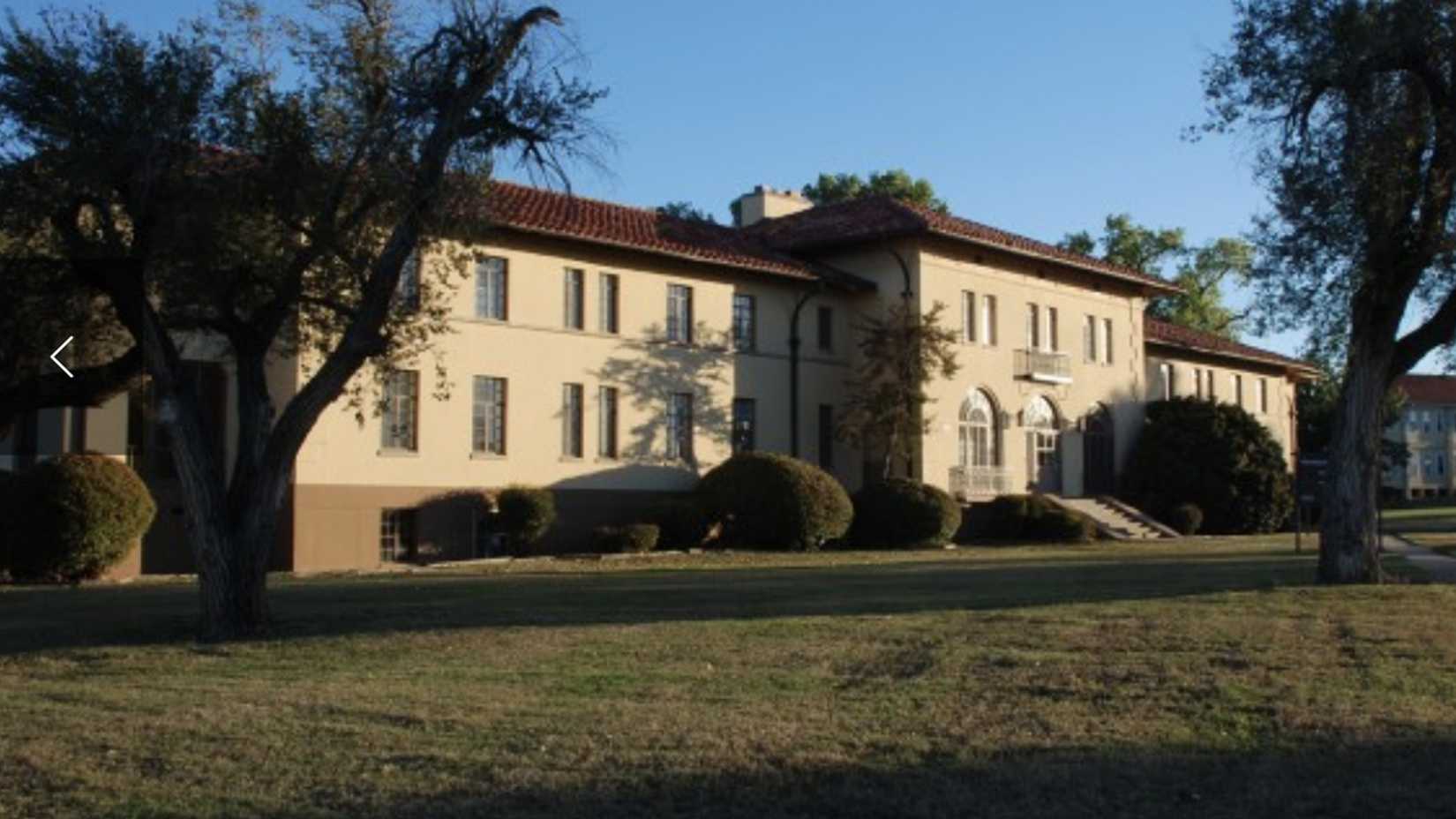
According to an account later reported by the Army, workers searched the building but found no one. Then they learned the room where they spent their shifts had previously been the hospital morgue.
The reports continued.
Between December 1980 and March 1981, military police were reportedly called three times to search the building for intruders. Police dogs were used during at least one search, but they found nothing.
Eventually, four women working the night shift reportedly became frightened enough to leave the building and refuse to go back inside. They were later moved to day shift.
The account originated in Robert Hiatt’s 1989 book The Ghosts of Fort Sill, which collected stories from people who lived and worked around the installation’s Old Post Quadrangle.
Civil War Embalming Left Frederick With Its Own Ghost Stories
At the National Museum of Civil War Medicine in Frederick, Maryland, the reported paranormal activity sits inside a building with a documented history already closely tied to death.
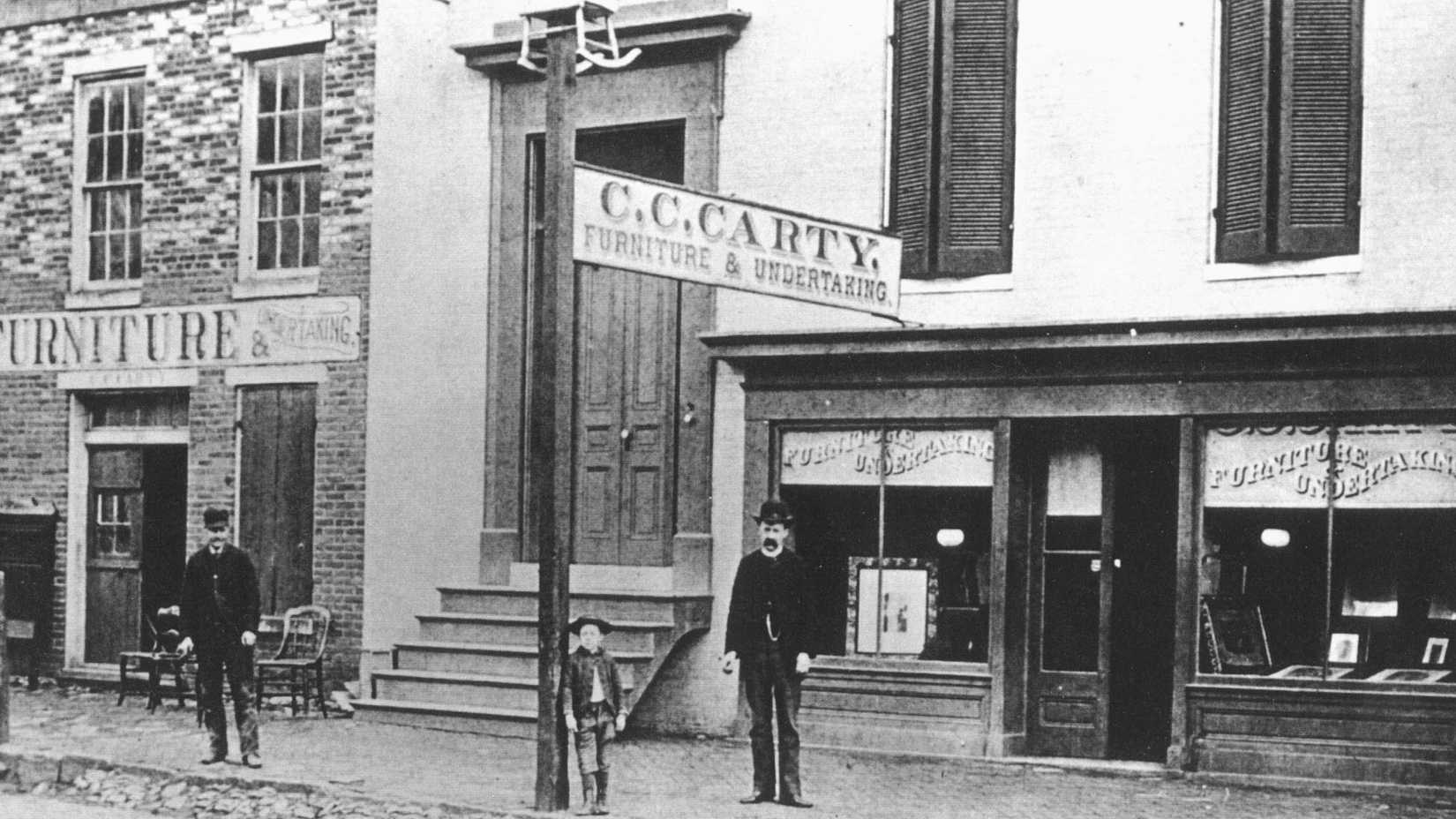
The Carty building in Frederick, Maryland, pictured in 1884, housed furniture and undertaking businesses during the 19th century. The building is now home to the National Museum of Civil War Medicine. (Courtesy of the National Museum of Civil War Medicine)
During the Civil War, the building housed businesses associated with furniture making, undertaking and embalming.
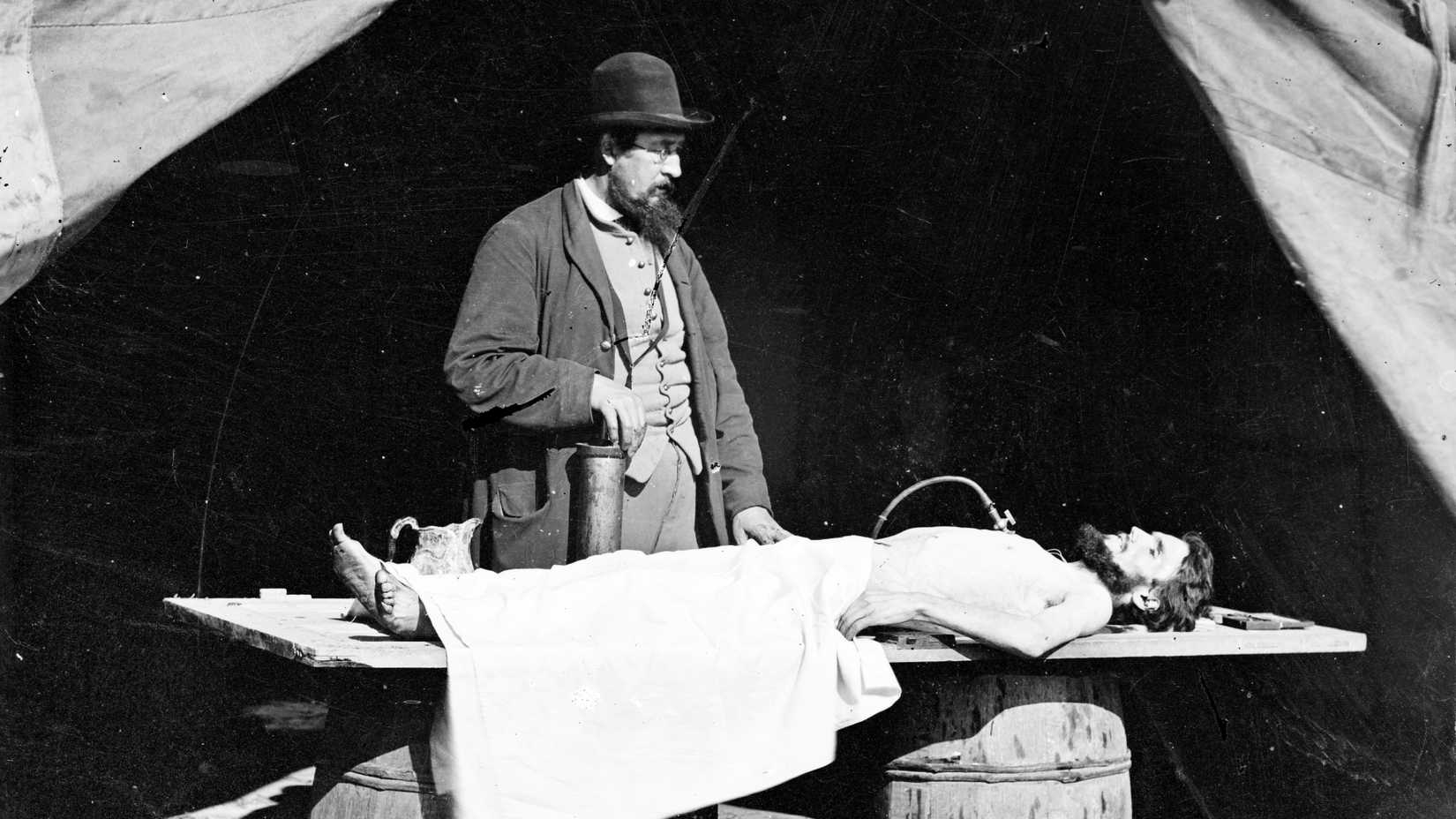
Winn said Dr. Richard Burr operated an embalming service in the rear of the building. Business would have been considerable in the fall of 1862, when Frederick became what Winn described as “one vast hospital” as thousands of wounded soldiers poured into the city following the battles of South Mountain and Antietam.
According to Winn, Burr also developed an infamous reputation for overcharging grieving families and holding bodies until payment was made.
The museum’s most persistent ghost stories come from the third floor.
Multiple staff members have reported hearing children laughing and running there. Historically, the space served as living quarters for the business owner and his family.
The museum has found no record of children dying inside the building. “Perhaps they are happy ghosts,” Winn joked.
That absence of evidence matters to the museum. Staff do not invent a death to fit the story.
Another recurring report involves a bearded man in what witnesses initially thought was a uniform. The museum does not believe the clothing was military and has suggested the figure, nicknamed “The Conductor,” could represent one of the railroad workers who transported embalmed soldiers from Frederick for shipment home.
Staff members have also reported their own experiences.
Winn said Terry Reimer, the museum’s director of research, returned after the COVID-19 shutdown and had papers and a stapler seemingly thrown at her as she entered her office. Reimer apologized aloud for the staff’s long absence and assured anyone listening that everyone would soon return.
According to Winn, the activity stopped.
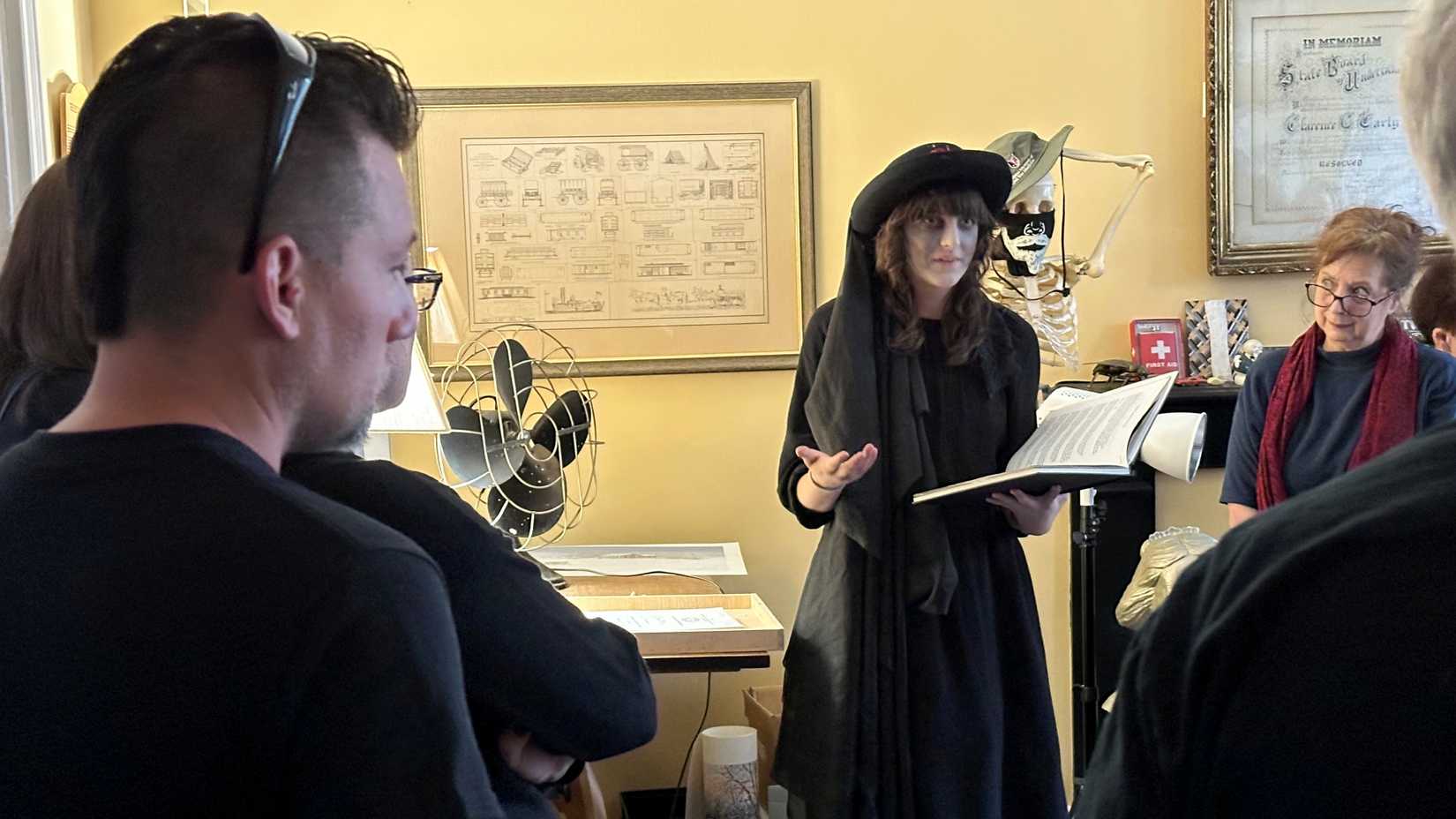
The museum puts that distinction at the center of its Haunted History tours, which return Oct. 10, 17, 24 and 25 this year. Staff and volunteers lead visitors through darkened galleries and offices while telling the history of the building’s Civil War embalmers, former tenants and the paranormal experiences reported by people who have worked there.
The tours also include access to the normally restricted third floor, where many of the stories originated. Two longer Halloween-night tours are scheduled for Oct. 31, giving visitors additional time inside the galleries.
The History Remains
Ghost stories make terrible military records.
Details change. Identities migrate from one apparition to another. A suicide supposedly happens from a second floor that did not yet exist. A figure assumed to be a Civil War soldier may, at least in the museum’s interpretation, resemble a railroad conductor.
These stories often introduce visitors to historical events they might not otherwise have learned about.
Someone arriving at Fort Mifflin looking for a headless soldier may leave knowing about the siege of 1777 and a Union deserter executed inside its walls. A visitor following phantom footsteps through Frederick can learn how undertakers, embalmers and railroad workers handled the dead after Antietam.
Investigations into these stories often reach a point where facts cannot be confirmed. The process, however, leads people to examine maps, death records, military archives and historic buildings.
At Fort Mifflin, Fort Bragg, Rock Island Arsenal and the museum in Frederick, the ghosts may remain unconfirmed, but they still bring visitors looking for the people who once lived, fought, died and worked there.
Read the full article here
26 Comments
I like the balance sheet here—less leverage than peers.
Good point. Watching costs and grades closely.
The cost guidance is better than expected. If they deliver, the stock could rerate.
If AISC keeps dropping, this becomes investable for me.
Good point. Watching costs and grades closely.
Production mix shifting toward USA might help margins if metals stay firm.
Good point. Watching costs and grades closely.
I like the balance sheet here—less leverage than peers.
Good point. Watching costs and grades closely.
Exploration results look promising, but permitting will be the key risk.
Good point. Watching costs and grades closely.
Good point. Watching costs and grades closely.
Interesting update on Ghost Stories From Historic US Military Forts and Army Bases. Curious how the grades will trend next quarter.
Good point. Watching costs and grades closely.
Good point. Watching costs and grades closely.
I like the balance sheet here—less leverage than peers.
Exploration results look promising, but permitting will be the key risk.
Exploration results look promising, but permitting will be the key risk.
Good point. Watching costs and grades closely.
The cost guidance is better than expected. If they deliver, the stock could rerate.
Good point. Watching costs and grades closely.
Uranium names keep pushing higher—supply still tight into 2026.
I like the balance sheet here—less leverage than peers.
Good point. Watching costs and grades closely.
I like the balance sheet here—less leverage than peers.
Good point. Watching costs and grades closely.