

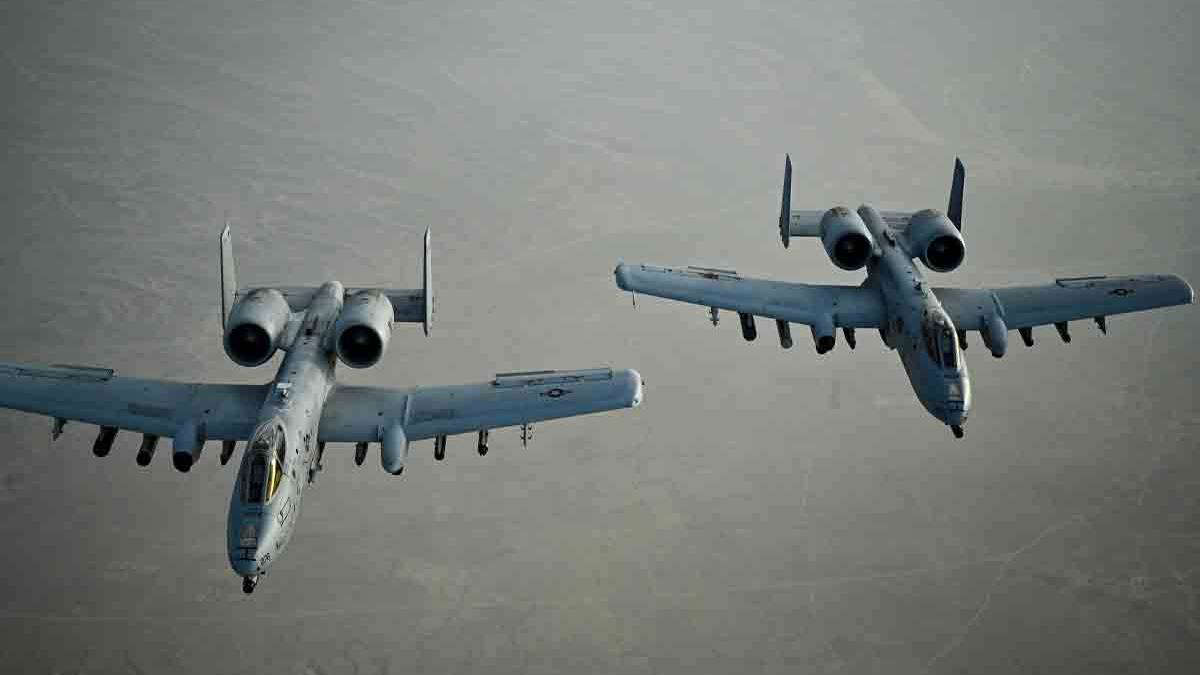
The Warthog, Hawgs, Thunderbolt II: Whatever you call it, it’s the Air Force’s flying tank. It’s both beloved by ground forces and often resented by the Air Force brass.
The Air Force graduated its “last” class of new A-10 pilots in April 2026, but in keeping with tradition, a proposal in Congress, as of this writing, would extend the A-10’s mission once again.
Developed during the Cold War to tear through Soviet tanks trying to make their way through the Fulda Gap between East and West Germany, the A-10 was a vital component of the AirLand Battle doctrine. The idea was to maintain the balance of forces, use technology to overcome the Warsaw Pact’s numerical superiority and be an effective deterrent to aggression.
Failing that, the U.S. should quickly win the first battle of the next war. The means to do that was to create a low-flying tank killer to work in tandem with ground troops and disrupt enemy formations at the front while the rest of the Air Force hit the reserves and supply lines in the rear.
Read: A-10 ‘Warthog’ Thunderbolt II
The A-10 ‘Warthog’ Gun
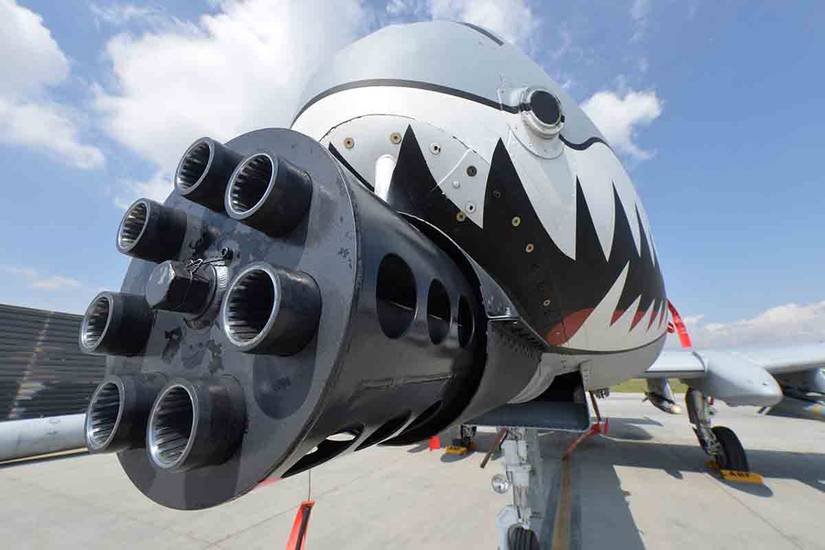
Even before the plane’s design really began, planners built the A-10 Thunderbolt II around its main armament, the GAU-8 Avenger. The Avenger is a powerful, seven-barrel, hydraulic-driven Gatling gun that fires PGU-14/B Incendiary rounds with a depleted uranium armor piercing core or PGU-13/B High Explosive Incendiary rounds, each longer than 11 inches. It fires the projectiles at a rate of 2,100 to 4,200 rounds per minute.
The gun is roughly 16% of the aircraft’s body weight, so when it’s removed, the A-10 needs to be counterbalanced to keep it from tipping over. The ammo drum is the largest part of the gun and features a chute system that not only keeps the ammo flowing but also keeps the expended shells from having to shoot out and potentially damage the plane.
How Much Does an A-10 ‘Warthog’ Cost?
The A-10 was designed to be inexpensive and take a lot of damage. Because of this, the Air Force knew parts had to be easily obtainable. The result of that kind of engineering made for a plane that cost $1.4 million per unit in 1970 (just under $10.1 million today). That may not sound cheap, but compared to other aircraft with close-air support capabilities, like the F-35 Lightning II ($82.4 million in 2025) or F-15EX Eagle II ($94 million in 2023), it seems more like a bargain.
The A-10, of course, isn’t designed for stealth or air superiority, so it is also more susceptible to incoming enemy aircraft. You get what you pay for.
A-10 Warthog Sound: The BRRRRRT
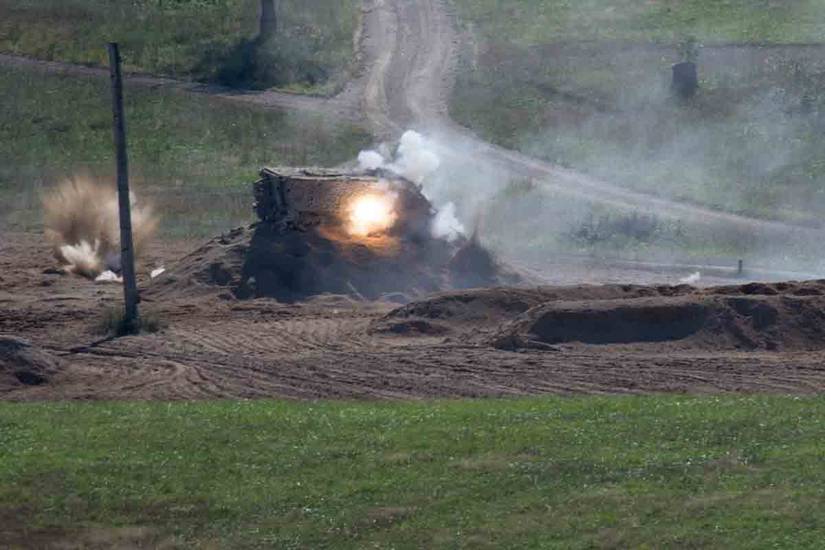
It’s a sound that’s become so iconic, it’s now an internet meme. Few things are more satisfying than watching a target getting demolished to the sound of the “BRRRRRT.” The sound comes from the GAU-8 Avenger, which is so powerful that the plane was actually designed around its recoil.
The gun sits in the middle of the plane so that the Avenger’s recoil has a minimal effect on the plane’s flight path. The A-10’s engine and tail design were intended to keep the aircraft stable when firing the massive cannon in its nose. Despite these considerations, firing the BRRRRRT decreases its forward thrust by half.
A-10 Warthog Top Speed
Most new aircraft in the past few years have been supersonic fighters, capable of Mach 1.6 (F-35C), Mach 1.5 (F-22 Raptor) or Mach 2.5 (F-15EX). Meanwhile, the A-10 Warthog’s top speed is just 420 mph, a fraction of those incredible speeds. Close-air support like the kind the A-10 was supposed to provide meant the Warthog needed to be protected while fighting close to the enemy’s small arms.
This means the A-10 needs to be able to fly low and slow, so supersonic speeds make little sense for its mission. Often, it also means getting close enough to the action that the airplane takes a powerful amount of damage from the ground, which it was also designed for.
The aircraft is so survivable, it can land without its gear down, without hydraulic assistance to the pilot (who sits in a titanium tub), and that its fuel tanks are protected by a layer of foam to prevent explosives.
Interested in Joining the Military?
We can put you in touch with recruiters from the different military branches. Learn about the benefits of serving your country, paying for school, military career paths, and more: sign up now and hear from a recruiter near you.
A-10 Warthog Replacement
The Air Force argues that such a slow-moving and single-role aircraft is not necessary for today’s battlefields. The A-10 wasn’t built to fly against today’s air superiority fighters like China’s J-20. The Air Force would much prefer to free up the funds used to maintain 45-year-old fighters such as the A-10 to use on its newer aircraft, airframes it believes have a much bigger role in the long run.
In a “historic moment,” the 357th Training Squadron at Davis-Monthan Air Force Base conducted a graduation ceremony for its “last A-10C Thunderbolt II student pilots” on April 3, 2026, with the F-35 and F-16 Fighting Falcon tapped to take on the A-10’s support role by 2029.
However, later that same month, Air Force Secretary Troy E. Meink announced, on X, the A-10’s intended extension through 2030 as the defense industrial base “works to increase combat aircraft production,” he said in the post. A proposal in a draft of the fiscal 2027 National Defense Authorization Act supports the extension.
— Additional reporting by Amanda Miller
Want to Learn More About Military Life?
Whether you’re thinking of joining the military, looking for post-military careers or keeping up with military life and benefits, Military.com has you covered. Subscribe to Military.com to have military news, updates and resources delivered directly to your inbox.
Read the full article here
26 Comments
Silver leverage is strong here; beta cuts both ways though.
Good point. Watching costs and grades closely.
Good point. Watching costs and grades closely.
Interesting update on Here’s What You Need to Know About the A-10 ‘Warthog’ Thunderbolt II. Curious how the grades will trend next quarter.
If AISC keeps dropping, this becomes investable for me.
Nice to see insider buying—usually a good signal in this space.
Good point. Watching costs and grades closely.
Silver leverage is strong here; beta cuts both ways though.
Production mix shifting toward USA might help margins if metals stay firm.
Good point. Watching costs and grades closely.
Silver leverage is strong here; beta cuts both ways though.
Good point. Watching costs and grades closely.
Good point. Watching costs and grades closely.
Nice to see insider buying—usually a good signal in this space.
Nice to see insider buying—usually a good signal in this space.
Good point. Watching costs and grades closely.
Good point. Watching costs and grades closely.
I like the balance sheet here—less leverage than peers.
I like the balance sheet here—less leverage than peers.
Good point. Watching costs and grades closely.
Good point. Watching costs and grades closely.
Exploration results look promising, but permitting will be the key risk.
Exploration results look promising, but permitting will be the key risk.
Exploration results look promising, but permitting will be the key risk.
Good point. Watching costs and grades closely.
Good point. Watching costs and grades closely.