

Congressional leaders unveiled a sweeping bipartisan veterans package Thursday that combines more than 60 separate bills into a single legislative effort, potentially delivering one of the largest expansions of veterans benefits, survivor support and VA reforms in years.
The newly introduced Take Care of America’s Veterans Act (H.R. 9237) includes the Major Richard Star Act, the Love Lives On Act, expanded benefits for Gold Star families and catastrophically disabled veterans, reforms to VA health care and community care programs, and measures aimed at improving access to housing and benefits.
The package includes more than 60 bipartisan bills negotiated by leaders of the House and Senate Veterans’ Affairs Committees and is expected to serve as Congress’ signature veterans legislation ahead of America250, the nationwide commemoration of the nation’s 250th anniversary.
The legislation brings together proposals that have individually generated years of advocacy from veterans organizations, survivor groups and lawmakers, including the Major Richard Star Act, the Love Lives On Act and measures aimed at increasing compensation for catastrophically disabled veterans and Gold Star families. By combining them into a single package, congressional leaders hope to improve the bill’s chances of becoming law.
Committee leaders in both chambers have indicated they intend to move the package in the coming weeks, giving it a realistic chance of becoming one of the most consequential veterans bills of the current Congress.
More Than 60 Veterans Bills Combined Into One Package
“This legislation represents our nation’s sacred promise to those who serve and those they leave behind,” Bonnie Carroll, president and founder of TAPS, said in a statement.
The legislation combines dozens of standalone measures that have circulated through Congress in recent years, many of which enjoy broad bipartisan support but have struggled to advance individually.
Supporters say packaging them together increases the likelihood that Congress can deliver a significant legislative victory for veterans and military families as the nation prepares to celebrate its 250th anniversary.
For veterans advocates, the significance extends beyond any single provision.
As the nation approaches its 250th birthday, supporters argue the legislation serves as a reminder that honoring military service requires more than ceremonies and commemorations.
Richard Star Act Would Restore Retirement Pay for Combat-Injured Veterans
One of the most closely watched provisions is the Major Richard Star Act, which would allow approximately 54,000 combat-injured veterans who were medically retired before reaching 20 years of service to receive both military retirement pay and VA disability compensation.
Under current law, many of those veterans see their retirement pay reduced because they receive disability benefits.
The provision has been a top priority for veterans groups and lawmakers for years and is widely viewed as one of the most significant pieces of the package.
 Benefits Expansion Targets Gold Star Families and Catastrophically Disabled Veterans
The package also includes the Sharri Briley and Eric Edmundson Veterans Benefits Expansion Act, legislation championed by Rep. Tom Barrett, R-Mich., that would provide the first meaningful increase in decades for some of the nation’s most severely disabled veterans and surviving military families.
In a recent interview with Military.com, Barrett said the legislation is about honoring the nation’s obligation to those who sacrificed the most.
The people who’ve made the highest level of sacrifice, either from their family as a surviving family member of someone lost in the line of duty, or for those that are thankfully alive but have truly catastrophic injuries, are deserving of the greatest consideration, Barrett told Military.com.
The legislation would increase compensation for catastrophically disabled veterans who require extensive attendant care and provide additional support to surviving spouses and families.
“It’s really a reflection of that commitment,” Barrett said. “When we tell young people joining the military that we are asking them to make great sacrifices for us, there is an understanding that should something happen, our country will step in to take care of them or their surviving family.”
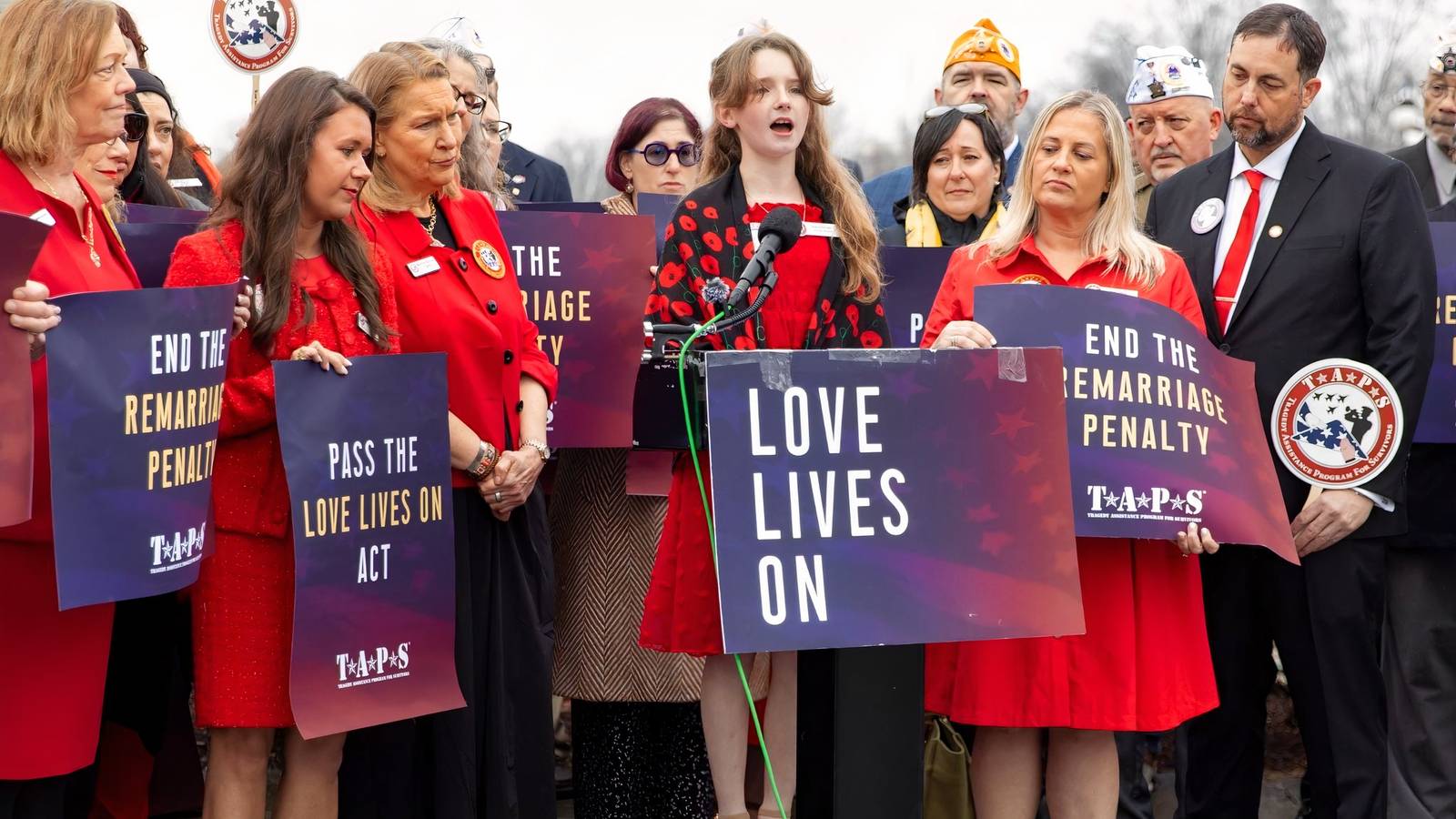
The package also incorporates the Love Lives On Act, legislation long championed by TAPS.
Under current law, surviving spouses can lose certain benefits if they remarry before age 55. The bill would eliminate that penalty, allowing surviving spouses to remarry without forfeiting key benefits such as Dependency and Indemnity Compensation and Survivor Benefit Plan payments.
“TAPS believes that surviving spouses of fallen service members should not have to choose between another chance at love, a stable home life for their children, and financial security,” Carroll said.
Additional provisions would increase Dependency and Indemnity Compensation payments by 3% over three years beyond normal cost-of-living adjustments and address a long-standing gap affecting surviving spouses of veterans who died from ALS-related service-connected conditions.
 VA Reforms Reflect Priorities Highlighted by Collins and Bost
The legislation also contains several health care and benefits reforms, including efforts to improve VA scheduling systems, strengthen community care access, modernize information technology systems and expand eligibility for VA home loans.
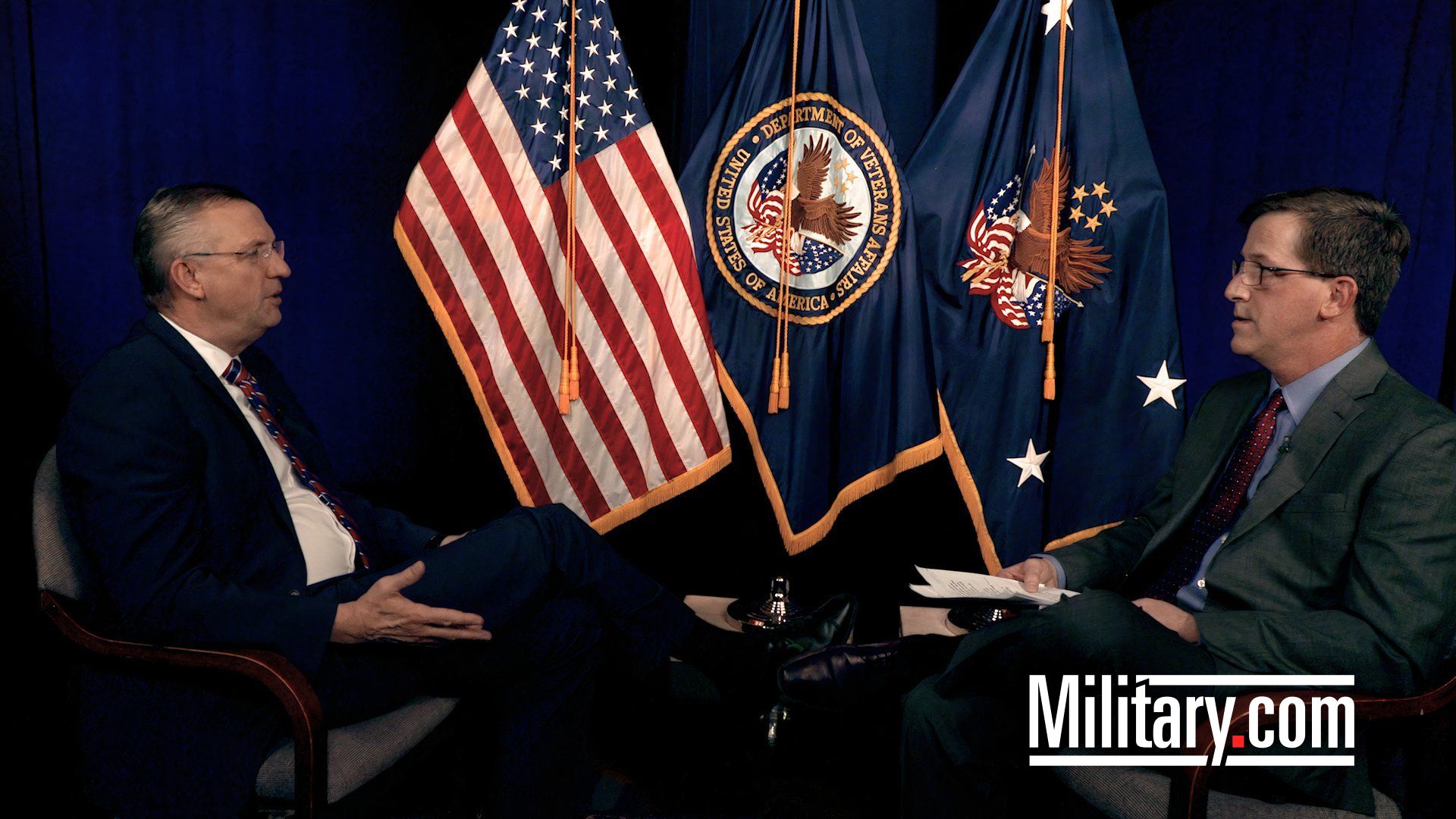
Those reforms align closely with priorities highlighted in separate Military.com interviews over the past several months with VA Secretary Doug Collins, House Veterans’ Affairs Committee Chairman Mike Bost and Barrett, all of whom pointed to the need for improved access, stronger support for military families and survivors, and greater accountability across the veterans’ benefits system.
In an exclusive interview with Military.com earlier this year, Collins said the Department of Veterans Affairs had reduced its claims backlog from more than 260,000 cases to fewer than 100,000 while processing more than 3 million claims annually.
The VA now has a focus, Collins told Military.com. The first thing we’re going to do is put veterans first at the VA.
Collins said the department’s long-term goal is to make benefits easier to access while simplifying the often-complex processes veterans must navigate.
“We’re going to make it easier to get the benefits you’ve earned,” Collins said.
The package also includes provisions designed to improve access to community care, an issue that has become a major priority for House Veterans’ Affairs Committee Chairman Mike Bost.
In a recent interview with Military.com, Bost argued that VA policies should be driven by veterans’ needs rather than bureaucratic processes.
“These services are not there to protect the bureaucracy. They’re there to provide services to the veteran,” Bost said.
Bost has repeatedly emphasized that reforms should focus on improving access rather than protecting systems that make it harder for veterans to receive care.
The VA was created not for the bureaucrats, but for the veterans, he said.
What Happens Next
Beyond the headline provisions, the package includes legislation to expand VA home loan eligibility for Guard and Reserve members, streamline vehicle adaptation benefits for disabled veterans, improve communication regarding benefits claims, modernize VA acquisition systems and enhance scheduling capabilities across VA and community care networks.
The package represents months of negotiations between House and Senate Veterans’ Affairs Committee leaders and brings together legislation that, in many cases, has been debated for years as standalone bills.
“We’ve said we’re going to take care of your widows and orphans,” Bost told Military.com while discussing survivor benefits legislation. “This is fulfilling that mission.”
Whether Congress can move the sprawling package through both chambers remains to be seen. But if enacted, the legislation would affect veterans, survivors, caregivers, Guard and Reserve members, and military families across the country, making it one of the most significant veterans legislative efforts in recent memory.
Read the full article here
41 Comments
Nice to see insider buying—usually a good signal in this space.
Nice to see insider buying—usually a good signal in this space.
Uranium names keep pushing higher—supply still tight into 2026.
I like the balance sheet here—less leverage than peers.
Interesting update on Historic Veterans Package Rolls 60 Bills Into One Congressional Push for Veterans and Military Families. Curious how the grades will trend next quarter.
Good point. Watching costs and grades closely.
Good point. Watching costs and grades closely.
Nice to see insider buying—usually a good signal in this space.
If AISC keeps dropping, this becomes investable for me.
Good point. Watching costs and grades closely.
Good point. Watching costs and grades closely.
Nice to see insider buying—usually a good signal in this space.
Good point. Watching costs and grades closely.
I like the balance sheet here—less leverage than peers.
Production mix shifting toward USA might help margins if metals stay firm.
Good point. Watching costs and grades closely.
Silver leverage is strong here; beta cuts both ways though.
Good point. Watching costs and grades closely.
Good point. Watching costs and grades closely.
Nice to see insider buying—usually a good signal in this space.
Good point. Watching costs and grades closely.
Good point. Watching costs and grades closely.
Production mix shifting toward USA might help margins if metals stay firm.
Good point. Watching costs and grades closely.
The cost guidance is better than expected. If they deliver, the stock could rerate.
Good point. Watching costs and grades closely.
Good point. Watching costs and grades closely.
Interesting update on Historic Veterans Package Rolls 60 Bills Into One Congressional Push for Veterans and Military Families. Curious how the grades will trend next quarter.
Production mix shifting toward USA might help margins if metals stay firm.
The cost guidance is better than expected. If they deliver, the stock could rerate.
Good point. Watching costs and grades closely.
Good point. Watching costs and grades closely.
If AISC keeps dropping, this becomes investable for me.
Good point. Watching costs and grades closely.
Silver leverage is strong here; beta cuts both ways though.
Good point. Watching costs and grades closely.
Exploration results look promising, but permitting will be the key risk.
The cost guidance is better than expected. If they deliver, the stock could rerate.
Good point. Watching costs and grades closely.
Good point. Watching costs and grades closely.
Uranium names keep pushing higher—supply still tight into 2026.