

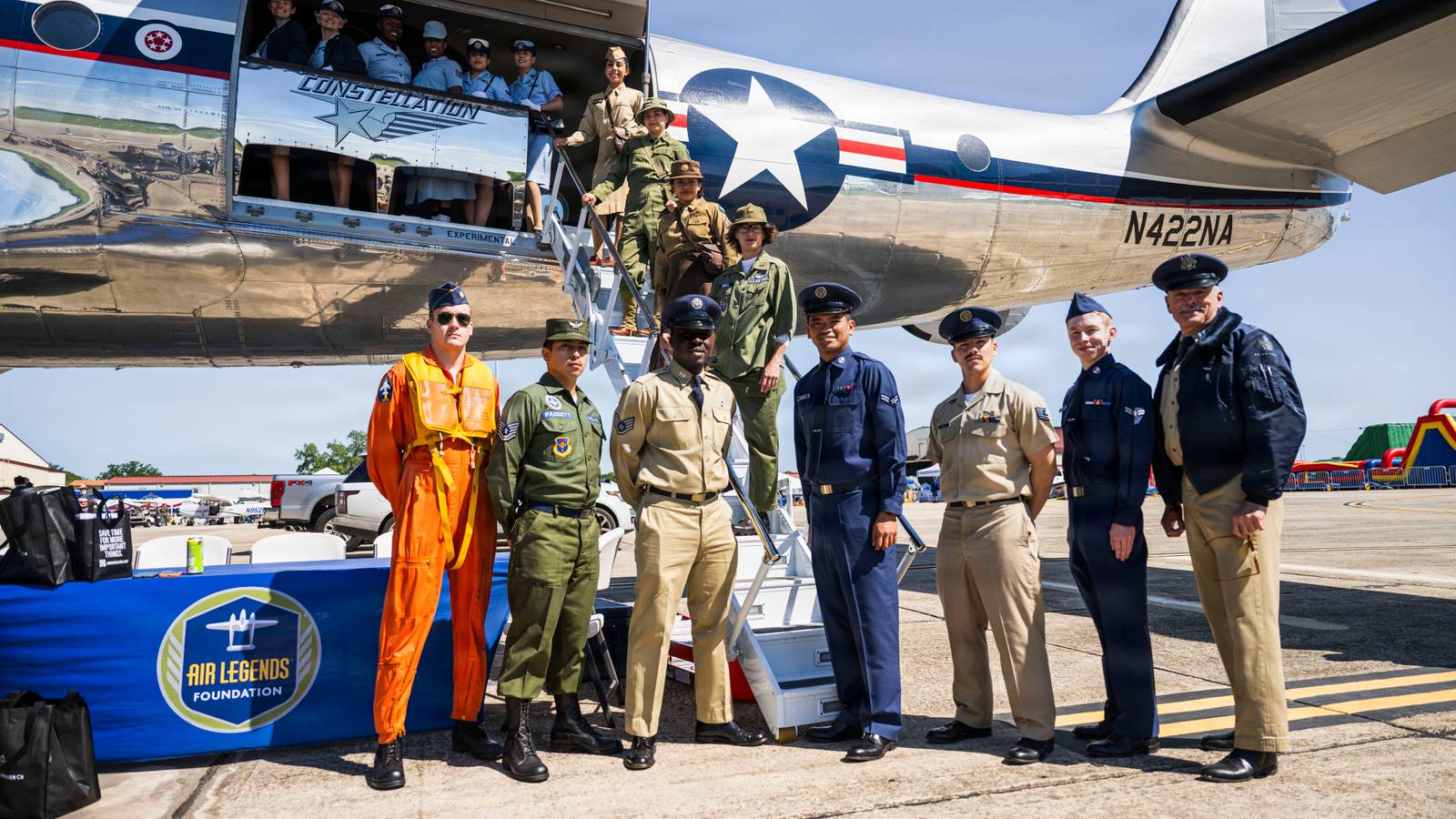
The Air Force did not officially become its own branch of the military until 1947, but distinct uniforms were being designed as early as 1945. By 1946, the leaders of the fledgling organization determined that Air Force uniforms would be blue. Although President Truman approved the plan in 1948, Congress struck down the idea, citing expenses as a primary concern.
Initial plans for the Air Force uniform included a preference for minimalism. According to a memo from the Office of Air Quartermaster in 1946, “Insignia and accessories of all types [shall] be limited to an absolute minimum. … To keep the [esprit] de corps of the Air Force at top level … all personnel [should] be permitted to wear the same uniform with only the necessary military command requirements.”
This caused some pushback from others within the Air Force. Many wanted the uniforms to feature similar iconography and distinctions as other branches of the U.S. military. During the initial debates, then-Maj. Gen. Hugh J. Knerr is quoted as asking, “Does the Air Force want a uniform … decorated with devices and gadgets … traditional to the military service of the past, or … a more subdued uniform … adapted to a technical future?”
It wasn’t until 1950 that the distinctive Air Force blue cloth was introduced. Before an official pattern was designed, Air Force personnel wore an olive green drab uniform and were allowed to do so until 1952.
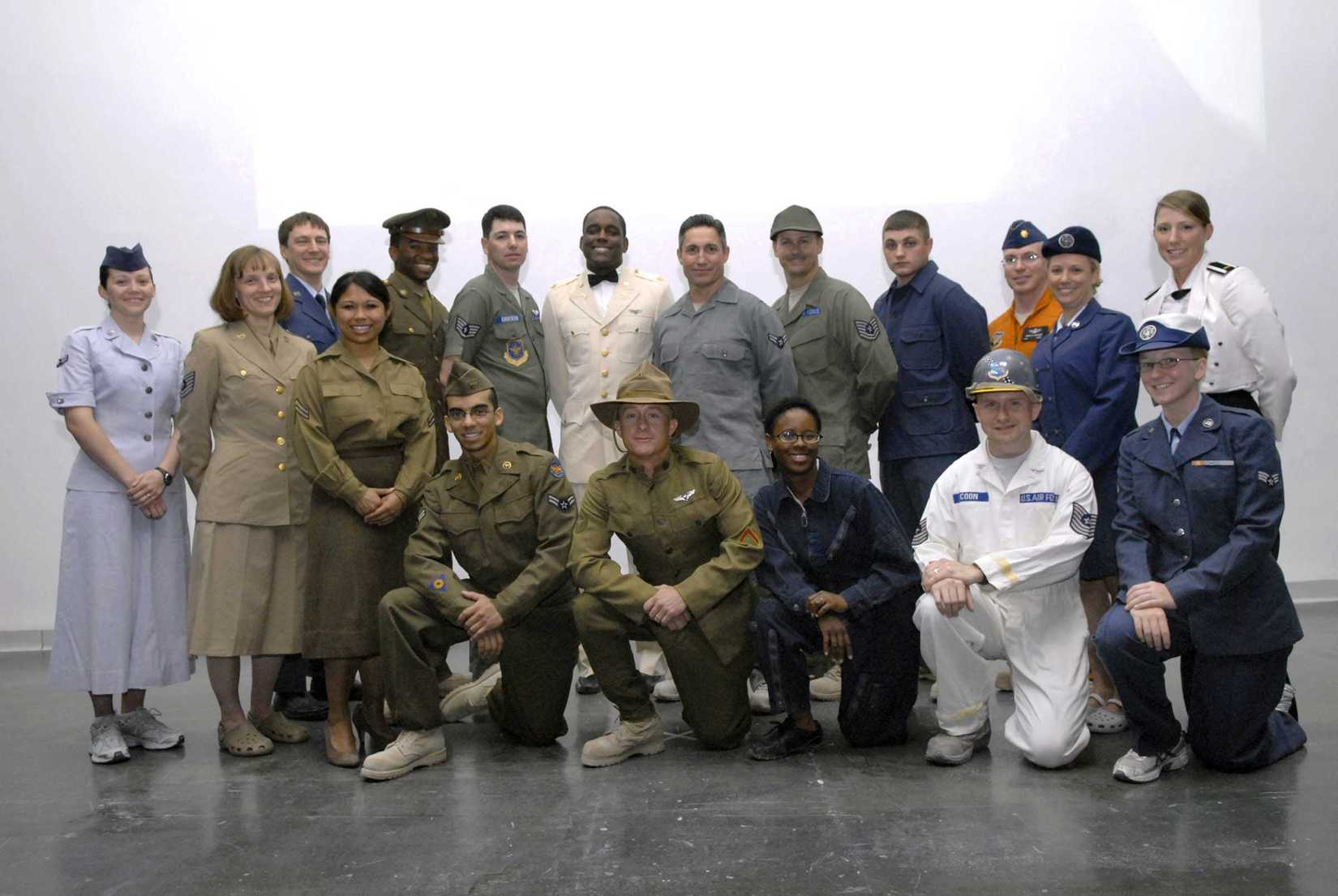
In 1969, the Air Force uniforms switched over to the Gen. John P. McConnell pattern. It differed little from its predecessor but underwent small changes during its 25 years in service. Notable changes included slight color adjustments, insignia modifications and changes in the uniform’s material.
The so-called “clean uniform” aesthetic wavered little even into the 1960s. Debates continued, and different movements to allow for more distinctions and honors were formed, but little changed. During a graduation ceremony in 1962, then-General Curtis LeMay awarded ribbons to NCO graduates, but warned that the move “should not be interpreted as a departure from a clean uniform policy.”
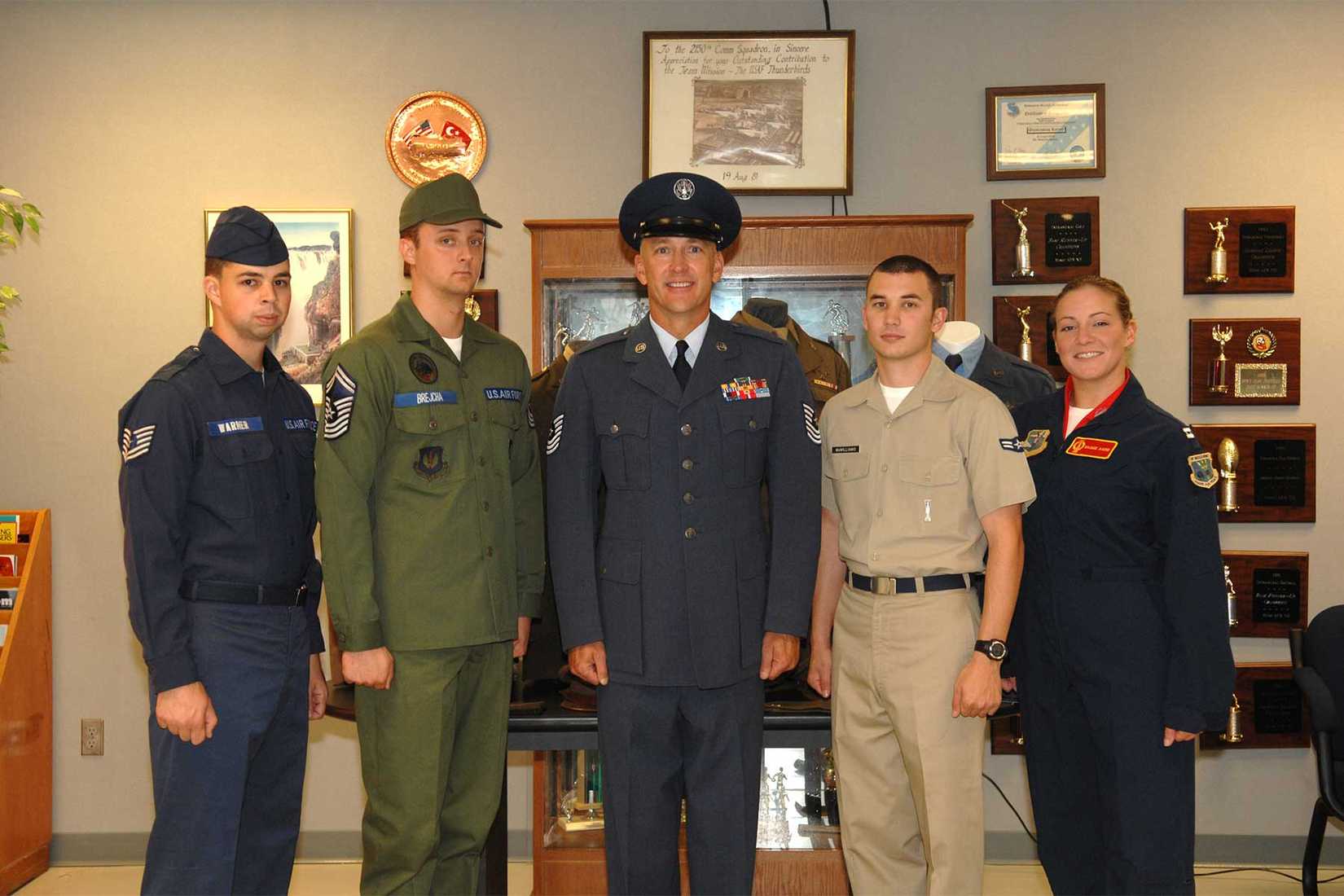
One of the most striking changes in Air Force uniforms came in 1991 under the authority of Gen. Merrill A. McPeak. The new jacket featured three buttons instead of four, epaulets removed, and only a single breast pocket remained. This version lasted only three years until the modern version was issued for general use.
Considered to have been implemented in 1991 as well, the modern Air Force dress blues have endured.
The Airman Battle Uniform or “Tiger Stripe,” which replaced the Battle Dress Uniform and the Desert Camouflage in 2011, was retired effective April 1, 2021, and replaced with the Operational Camouflage Pattern uniform, or OCP.
In recent years, the Air Force has also updated other facets of its uniform policy several times, such as recently revealing its new PT uniform that is expected to be available in 2022. And, in 2020, a new state-of-the-art flight suit was introduced.
New guidance for Dress and Personal Appearance standards for airmen in 2025 set out regulations for a minimum height for combat boots, outlawed eyelash extensions under most circumstances, required officers to have at least one set of an OCP uniform and clarified folding or cuffing sleeves on OCPs.
Follow other changes in Air Force uniform policy.
Want to Know More About the Air Force?
Be sure to get the latest news about the Air Force as well as critical info about how to join and all the benefits of service. Subscribe to Military.com and receive customized updates delivered straight to your inbox.
Read the full article here
44 Comments
If AISC keeps dropping, this becomes investable for me.
Good point. Watching costs and grades closely.
Good point. Watching costs and grades closely.
Interesting update on History of US Air Force Uniforms. Curious how the grades will trend next quarter.
I like the balance sheet here—less leverage than peers.
I like the balance sheet here—less leverage than peers.
Good point. Watching costs and grades closely.
Uranium names keep pushing higher—supply still tight into 2026.
Good point. Watching costs and grades closely.
Good point. Watching costs and grades closely.
I like the balance sheet here—less leverage than peers.
Good point. Watching costs and grades closely.
Good point. Watching costs and grades closely.
Exploration results look promising, but permitting will be the key risk.
Good point. Watching costs and grades closely.
Uranium names keep pushing higher—supply still tight into 2026.
Good point. Watching costs and grades closely.
Good point. Watching costs and grades closely.
Silver leverage is strong here; beta cuts both ways though.
Good point. Watching costs and grades closely.
Good point. Watching costs and grades closely.
The cost guidance is better than expected. If they deliver, the stock could rerate.
Good point. Watching costs and grades closely.
Good point. Watching costs and grades closely.
Silver leverage is strong here; beta cuts both ways though.
Interesting update on History of US Air Force Uniforms. Curious how the grades will trend next quarter.
Good point. Watching costs and grades closely.
Good point. Watching costs and grades closely.
Production mix shifting toward USA might help margins if metals stay firm.
Good point. Watching costs and grades closely.
Good point. Watching costs and grades closely.
Production mix shifting toward USA might help margins if metals stay firm.
The cost guidance is better than expected. If they deliver, the stock could rerate.
Good point. Watching costs and grades closely.
Good point. Watching costs and grades closely.
The cost guidance is better than expected. If they deliver, the stock could rerate.
Nice to see insider buying—usually a good signal in this space.
Good point. Watching costs and grades closely.
Silver leverage is strong here; beta cuts both ways though.
Good point. Watching costs and grades closely.
Good point. Watching costs and grades closely.
Interesting update on History of US Air Force Uniforms. Curious how the grades will trend next quarter.
Good point. Watching costs and grades closely.
Good point. Watching costs and grades closely.