

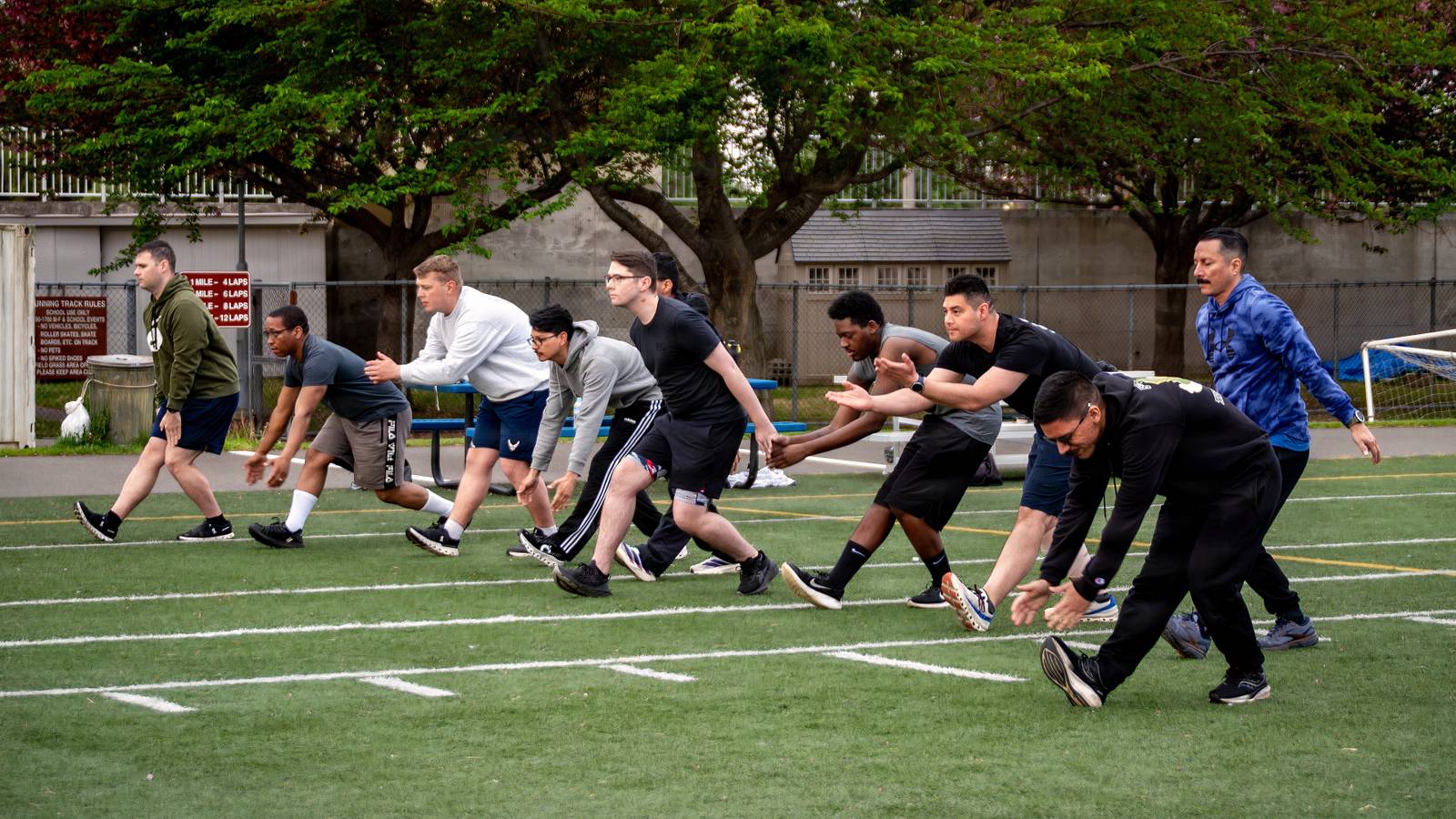
Avoiding injury is something all exercisers should be concerned about — but not so overly concerned that they stop training altogether.
Health and wellness outcomes are significantly worse for those who do not exercise. While common aches and pains occur with age and with any physical fitness training, the key has always been continued movement for both longevity and improving fitness performance. Here is an email question coming in from an active-duty member getting ready to retire from service:
Hi Stew. I have been following your articles for nearly 20 years. I appreciate your evolving efforts each year you write. I am now 44 years old, getting ready to retire, but looking at the next decade (and longer) to keep training for general health and wellness more than anything. I am not good with injuries and try to prevent them as much as possible. Any advice to go into my 40s and 50s injury-free? Thanks Jim
Jim, thanks. I still like to work out several times a week, but I’ve changed my training each decade after 40. The addition of mobility days has been the most significant change and the most life-changing workout I have ever done. In fact, I now coach it with my younger athletes, as it helps with their high-level athletic performance and injury prevention, and it produces better results in the water with faster swims (streamlined glides), better treading and more powerful kicks due to improved mobility of the hips, knees and ankles.
But the most important realization I made in training after age 45 is the simple saying,“80% is the new 100%.” I did a historical assessment, and all my injuries came from running too fast, running too far, lifting too much, doing too many reps, and not warming up enough before working out. By simply pulling back on the last rep of a set, reducing miles and intensity a bit, and adding more warmup movements, I have not been injured in the past 15 years. I still lift, run, swim, do calisthenics and stretch every week of the year.
Injury Prevention Methods and Why You Need to Consider the Adjustments
The workouts you do now will determine how you will live in your 50s, 60s, 70s and beyond. Continuing to add workouts and daily physical activity to your schedule will be like putting fitness into a savings account.
Injury Prevention for Aging Adults
Injury prevention in older adults involves reducing the risk of injuries such as falls, fractures, strains and sprains by proactively engaging in strength, mobility and balance training. As we age into our 40s, 50s and beyond, this becomes increasingly vital because each decade is associated with lower bone density, loss of muscle mass (sarcopenia), decreased tendon elasticity and joint deterioration, which heighten the likelihood of injury from falls.
Warmups / Cooldowns
Do not confuse the difference between the warmup and the cooldown or skip these important parts of the exercise. A warmup should be movement: walking, jogging, or biking, mixed with calisthenics such as pushups, squats, and lunges. You can also do dynamic stretches, but save the low-intensity and static stretches for the cooldown.
Motion is Lotion
When you move with any physical activity, you counteract natural physical decline. In our 40s and 50s, our bodies tend to lose flexibility and strength. Engaging in proactive measures such as strength training helps preserve muscle mass, which supports our joints, while flexibility exercises help prevent tendon and joint tightness.
Maintaining Independence
This involves avoiding injuries so that individuals can keep working, traveling and engaging in hobbies without needing assistance with everyday tasks. Walking is the No. 1 ability to ensure independence as we age. Do not neglect it.
Protecting Bone Density
After age 40, the body slowly loses bone mass and muscle each year, with the rate accelerating in the 50s, especially for women. Preventive measures, such as weight-bearing exercise, can help mitigate this risk. Focus on building muscles, particularly in the legs and core, to improve strength and stability. The basics such as standing up and sitting down (squatting) and lunges will build strength and balance. Add weight when those get easy.
Preventing Catastrophic Falls
Falls are the leading cause of injury-related deaths for people over 65, making prevention in the years leading up to that age crucial. Adding strength, balance and quick-reaction training against tripping can be part of a training program. Practicing hopping, standing on one leg, and rising and sitting (squats) can help prevent these types of falls, which often result in serious injury. When these get easy, try standing on one leg with your eyes closed. You immediately feel the muscles you need to work to keep you from falling.
You Get Good at What You Do
If you sit all day, you get good at sitting, being stiff and looking like a chair when you stand. Falling is easier when you are not good at standing. If you move throughout the day and sit down and stand up often, you get better at standing and balance, and you strengthen the muscles that keep you independent.
Prioritizing injury prevention during the midlife decades is essential to maintaining mobility, independence and long-term quality of life over the next 20-30 years. The quick answer is to never stop moving and to adjust as you desire. You’re still young enough to compete in races and athletic competitions and to enjoy pushing the limits of your age group. But do not ignore the basics of mobility, balance and maintaining a moderate weight. This is how you age well and reduce your risk of injury. See more ideas on training smart in the Military.com Fitness Section, including articles on longevity, health and wellness, and advanced athletic performance.
Read the full article here
31 Comments
The cost guidance is better than expected. If they deliver, the stock could rerate.
Uranium names keep pushing higher—supply still tight into 2026.
Good point. Watching costs and grades closely.
Interesting update on How Can Older Adults Prevent Injuries While Working Out?. Curious how the grades will trend next quarter.
Interesting update on How Can Older Adults Prevent Injuries While Working Out?. Curious how the grades will trend next quarter.
Good point. Watching costs and grades closely.
Good point. Watching costs and grades closely.
Production mix shifting toward USA might help margins if metals stay firm.
Good point. Watching costs and grades closely.
Interesting update on How Can Older Adults Prevent Injuries While Working Out?. Curious how the grades will trend next quarter.
Good point. Watching costs and grades closely.
I like the balance sheet here—less leverage than peers.
Good point. Watching costs and grades closely.
Production mix shifting toward USA might help margins if metals stay firm.
The cost guidance is better than expected. If they deliver, the stock could rerate.
Good point. Watching costs and grades closely.
If AISC keeps dropping, this becomes investable for me.
Production mix shifting toward USA might help margins if metals stay firm.
Good point. Watching costs and grades closely.
Good point. Watching costs and grades closely.
Nice to see insider buying—usually a good signal in this space.
Good point. Watching costs and grades closely.
Good point. Watching costs and grades closely.
Uranium names keep pushing higher—supply still tight into 2026.
Good point. Watching costs and grades closely.
Good point. Watching costs and grades closely.
Interesting update on How Can Older Adults Prevent Injuries While Working Out?. Curious how the grades will trend next quarter.
Good point. Watching costs and grades closely.
Good point. Watching costs and grades closely.
Exploration results look promising, but permitting will be the key risk.
Good point. Watching costs and grades closely.