


The United States’ military operation against Iran cost American taxpayers roughly $38 billion, with costs continuing to increase due to a prolonged conflict.
The Congressional Budget Office (CBO) on Tuesday released a 19-page report estimating the costs of U.S. combat operations against Iran, prepared in response to a request from Rep. Brendan Boyle (D-Pa.), the ranking member of the House Budget Committee, in addition to other congressional Democrats.
The latest financial report comes as the Pentagon seeks billions’ more dollars as part of a hoped $1.5 trillion defense budget still being debated in Congress for Fiscal Year 2027, which Defense Secretary Pete Hegseth described in a U.S. Senate hearing as the “greatest threat” the U.S. faces should the budget not be approved at that cost level.
Analyzing the Department of Defense’s (DOD) operational, logistical and sustainment costs, the CBO estimates that as of Aug. 1, the department spent approximately $38 billion between Feb. 28 and the end of July. The budgetary watchdog said the amount reflects the costs of replacing expended munitions and equipment lost in battle, increased flying hours, other operations, and increased fuel costs.
Also, in June, the Trump administration requested $87.6 billion in supplemental appropriations, of which $67.1 billion would go to DOD directly in correlation to the Middle East conflict. CBO said that the $42.3 billion “directly related” to Iran equates to an estimate of DOD’s costs roughly 10% higher than CBO’s estimate.
“We have everything required to strike at the time and place of the President’s choosing,” chief Pentagon spokesperson Sean Parnell told Military.com. “Across multiple combatant commands, we have already executed successful operations while maintaining a deep, ready arsenal to defend our people and our interests.
“Any adversary who confuses media noise with American weakness will discover the truth the hard way.”
How Much Costs Could Increase Over Time
CBO noted that the initial, “intense phase” of the ongoing conflict lasted just over a month while less intense combat operations remain ongoing. Also, relatively few U.S. forces have been involved compared to broader previous operations in Iraq and Afghanistan.
No U.S. boots have been put on the ground in Iran, though 18 service members have died since Operation Epic Fury was launched earlier this year.
CBO’s $38 billion estimate does not include the increased cost of fuel used by the Postal Service, for example, or already accounted for costs previously approved for federal budgeting like basic military operating costs.
“As the conflict persists, DOD’s costs will continue to increase—slowly if the level of violence remains low and sporadic (as it did in May and June) and rapidly if the intensity of the conflict escalates (as it did in July),” the report suggests.
CBO estimates that if the level of violence remained as low as it was in May and June, an additional month of conflict would cost $2 billion. But if the intensity of the conflict increased to roughly the level experienced in July, the cost per month would increase to $3 billion. Monthly costs could be higher if violence escalated.
Pentagon Responds to Report, Munitions Claims
Military.com asked the Pentagon whether it refutes the CBO report, if it has concerns regarding reports of diminished munitions, or is apprehensive regarding the $1.5 trillion desired defense budget.
“Claims of U.S. munition shortages are false,” Parnell told Military.com. “When the Fake News media irresponsibly amplifies these lies, the real-world consequence is clear: our enemies are emboldened to provoke—or attack—American troops. America’s military remains the most powerful fighting force on earth.”
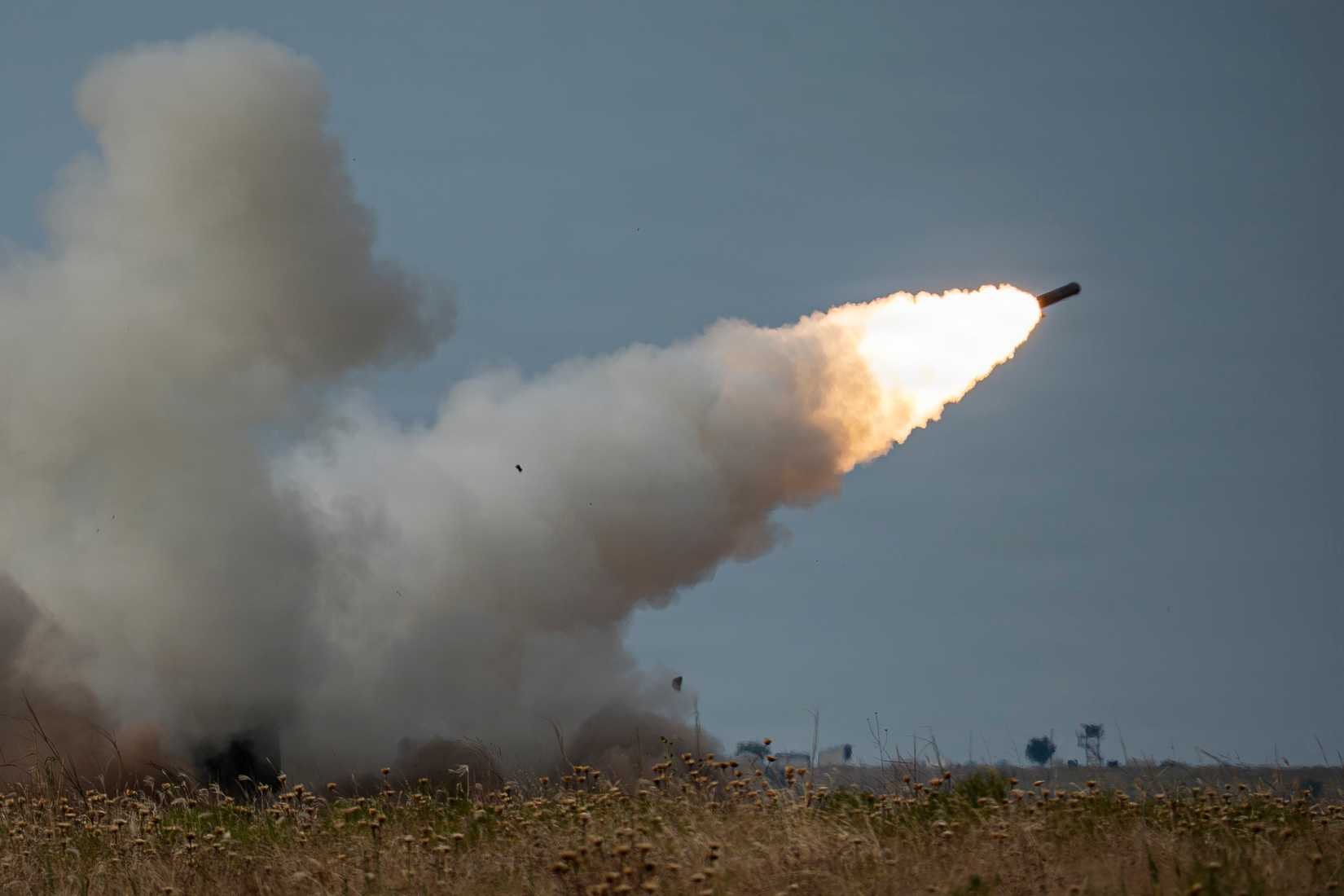
CBO estimates in its report that the cost to replace the munitions expended through Aug. 1 is $21.7 billion, plus $7.3 billion for land-attack cruise missiles, $13.1 billion for missile defense interceptors, and $1.2 billion for other munitions.
The figures follow myriad reports of decreased munitions on the U.S. military’s behalf. In August, the Council on Foreign Relations wrote that the munitions shortage is “real” but limited to hi-tech defensive interceptors and stand-off offensive weapons. Similar concerns have been conveyed by the Center for Strategic and International Studies and Wall Street Journal.
Sen. Tammy Duckworth (D-Ill.), who has previously called for a financial analysis into the Pentagon’s spending on the Iran War, said in a statement that the CBO report is “jaw dropping.”
“Our service members are exhausted, our munitions are depleted, our diplomatic capabilities have been wrecked and 18 of our troops will never come home,” Duckworth said. “The American people deserve transparency about how their taxpayer dollars are being spent and how their national security is being weakened by this quagmire that is leaving them worse off.
“No matter how hard the administration tries to keep us in the dark, I will keep demanding answers, accountability and an end to Trump’s costly war of choice.”
Read the full article here
30 Comments
Uranium names keep pushing higher—supply still tight into 2026.
Good point. Watching costs and grades closely.
I like the balance sheet here—less leverage than peers.
Good point. Watching costs and grades closely.
Good point. Watching costs and grades closely.
The cost guidance is better than expected. If they deliver, the stock could rerate.
Good point. Watching costs and grades closely.
Good point. Watching costs and grades closely.
If AISC keeps dropping, this becomes investable for me.
Silver leverage is strong here; beta cuts both ways though.
Good point. Watching costs and grades closely.
Good point. Watching costs and grades closely.
Interesting update on Iran War Cost US Taxpayers $38 Billion From February to July: CBO Report. Curious how the grades will trend next quarter.
Silver leverage is strong here; beta cuts both ways though.
Good point. Watching costs and grades closely.
Good point. Watching costs and grades closely.
Nice to see insider buying—usually a good signal in this space.
Good point. Watching costs and grades closely.
If AISC keeps dropping, this becomes investable for me.
Good point. Watching costs and grades closely.
Good point. Watching costs and grades closely.
Silver leverage is strong here; beta cuts both ways though.
If AISC keeps dropping, this becomes investable for me.
Good point. Watching costs and grades closely.
Good point. Watching costs and grades closely.
Exploration results look promising, but permitting will be the key risk.
Good point. Watching costs and grades closely.
Good point. Watching costs and grades closely.
If AISC keeps dropping, this becomes investable for me.
Good point. Watching costs and grades closely.