

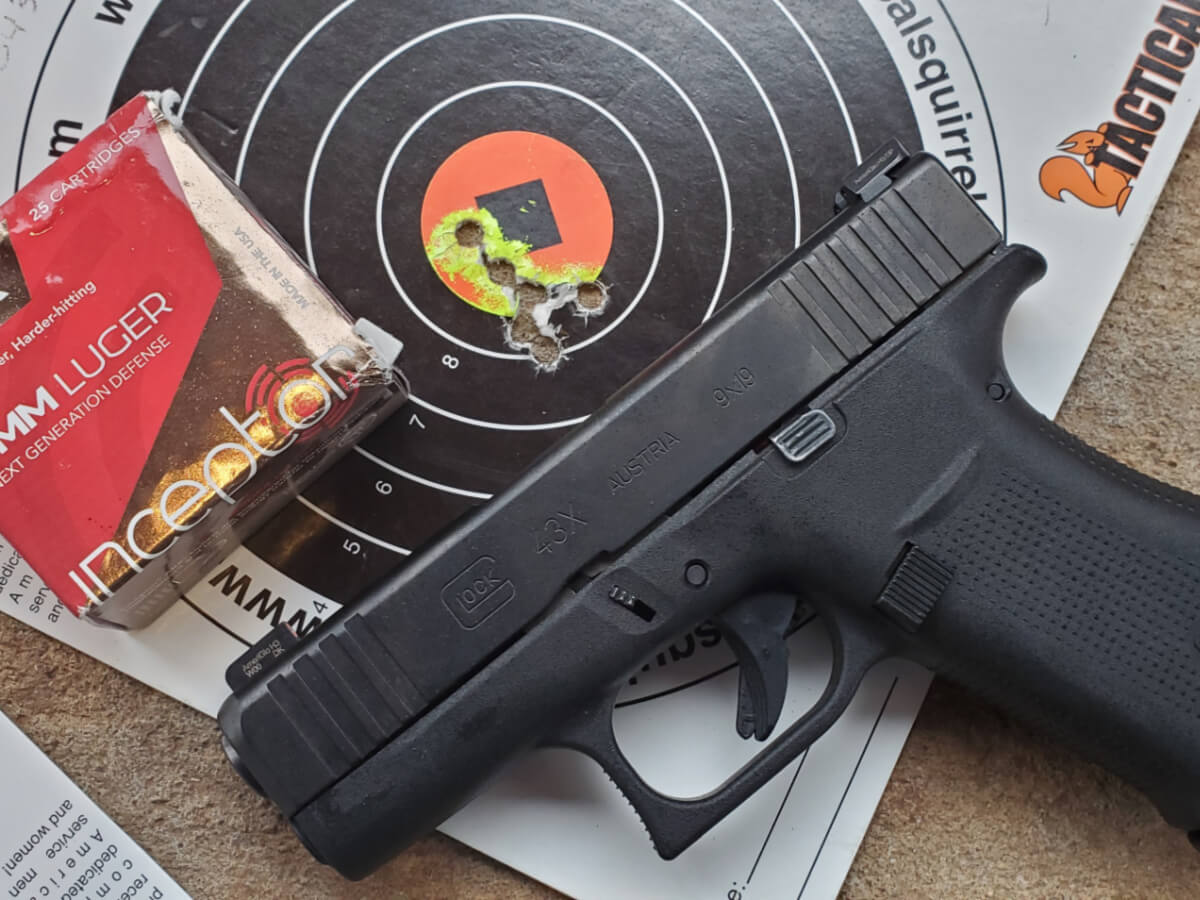
Red dots are fast and trendy, but irons are simple, durable, and always there. Master both, carry with confidence, and stop arguing past the target.
Red Dots Went Mainstream. Here’s Why Shooters Fell In
Something that’s going on is a cultural shift in the gun world. Technically, I’m part of the generation of shooters leaning into red dots as the way to go, it’s just something that doesn’t appeal to me. This gets extra entertaining when you consider the fact that I was using red dot sights on my hunting handguns long before they became a thing among defensive shooters. That’s the thing, guys: red dots aren’t new; it’s just their application that’s shifted. Where they were once the purview of hunters and competition shooters, they’re now, well, everywhere.
Perceived ease of use, convenience, and shaving seconds off the draw stroke are all reasons red dots are popular. There’s also less alignment necessary, unlike iron sights. Sure, there’s a bit of a learning curve, but once you master finding the dot visually and getting on target, there’s no denying dots are fast.
When Electronics Fail, Irons Keep Working
It’s definitely a cliché, but I’ll say it anyway: red dots die. Batteries die, glass shatters, housings bend, and dots are randomly rendered useless. Is it common? No, not at all. Is it possible? Yes. I’ve crushed a few over the years, obviously not intentionally. Of course, I’ve also had a half-crushed dot stay zeroed and continue to function (it was a Burris for those who are curious). But regardless of the frequency of potential failures, the fact remains that irons are less prone to damage.
Modern Iron Sights Are Faster Than You Think
This isn’t the part where I say iron sights are great because they’ve been around a long time. It also isn’t where I shame anyone who prefers their red dot, because guess what, we all have different preferences. However, it’s important to understand that it does benefit you as a shooter to be equally proficient with iron sights on your defensive handgun.
When I got into handguns, red dots weren’t really a thing. They existed, but that’s about it. The first red dot was produced back in 1975 thanks to Aimpoint, but it wasn’t until the 1990s that a decent push started in the American market. Hunters were the early demographic, and among hunters, red dots were a slow but sure hit. Fast forward to around 2015-ish, and red dots were still a rarity on the firing line at handgun classes. In fact, as recently as 2019, it was still common to see only one or two students running red dots (depending on location and class, obviously). Today, it’s common for the entire firing line to run red dots with only a few holdouts. Spoiler alert: I am a holdout.
Iron sights aren’t what they were decades ago: hard to visualize and line up. Gone are the admittedly awful white three-dot style irons found on GLOCKs. We now have fiber optics, tritium, and a vast array of sizes and styles. The iron sights you get now are made to draw the eye and make getting on target fast and accurate. And, big bonus, all handguns come straight from the factory with iron sights in place. Not so for red dots.
Why Irons Still Win for Day-One Reliability
Iron sights are no muss, low fuss. That’s low-fuss rather than no-fuss because irons do require adjusting at times. Sometimes they come from the factory not quite aligned, and others you bash them against a barrier and end up forced to fix the sights. Although a lot of irons are fixed, there are also adjustable rear sights, which can be great depending on the application.
The customization options for iron sights are a great factor as well. Unless you own some random, absurdly weird model of handgun, there are going to be a ton of options for aftermarket iron sights. If you don’t like the irons your pistol came with, replace them. It’s not an arduous task; usually, all you might need is a punch and whatever size key or screwdriver is needed to remove the front sight post from inside the slide (the punch is to drift a dovetailed rear sight in and out of its groove). Typically, there’s zero need for a gunsmith.
You’ll also find that iron sights aren’t as pricey as red dots. You can swap your sights out at prices that won’t make you cry. In fact, you could have multiple sets depending on your whims, if you’re so inclined.
A handgun with iron sights is a functional, easy-to-aim gun. Iron sights require no batteries, contain no glass parts, and are difficult to destroy. They’re also a largely integral part of the gun that’s streamlined enough not to create a large footprint on top of the slide. Standard iron sights are unlikely to snag or catch on clothing during the draw stroke.
Because Skills Matter: Learn Irons Even If You Carry a Dot
Look, learning to run iron sights is part of being a gun owner. If you don’t love them and want to use a red dot, fine, but at least know how to use them (and be at least passingly competent). There could easily come a time when you need those iron sights, and if you’re woefully incapable of using them quickly, it could be a major problem.
A lot of people run both. And, as Firearms Academy of Seattle instructor Tom Walls says, “Shooting targets is fun. Hunting is fun. But protecting me and mine ups the stakes, and I want the most reliable sights invented. Self-defense encounters aren’t scored in points. Self-defense encounters are measured in heartbeats. I won’t have a dot without irons, too.”
Run Both for Smart Backup
Irons when you have a dot might seem redundant, but it’s a necessary and smart redundancy. Take care to ensure your irons are functional with the red dot in place. Irons won’t do you any good if you can’t see them.
So, Irons or Red Dots? Choose What Wins Your Fight
There’s a lot to be said for sticking to irons, and there’s truth to the fact that trends come and go. Plain irons, tritium, red dots, now a blue dot, there’s a lot out there that enjoys popularity before use slows down. That doesn’t mean red dots will ever go away, because they probably won’t, but more that the needs of shooters vary, and people tend to figure that out. Your eyes might work better with irons than with a dot, or vice versa. Just don’t outright dismiss iron sights because they’re supposedly antiquated and not tactical enough. My handguns run the gamut for sights and optics, and that’s how I like it. As for my daily carry, it does indeed only have irons. Feel free to fight in the comments.
Want to find some great iron sights? Check out XS Sights.
Read the full article here
29 Comments
I like the balance sheet here—less leverage than peers.
Good point. Watching costs and grades closely.
The cost guidance is better than expected. If they deliver, the stock could rerate.
Good point. Watching costs and grades closely.
Silver leverage is strong here; beta cuts both ways though.
Good point. Watching costs and grades closely.
Interesting update on Iron Sights vs Red Dots for Handguns. Curious how the grades will trend next quarter.
Good point. Watching costs and grades closely.
Interesting update on Iron Sights vs Red Dots for Handguns. Curious how the grades will trend next quarter.
Good point. Watching costs and grades closely.
Silver leverage is strong here; beta cuts both ways though.
Good point. Watching costs and grades closely.
Uranium names keep pushing higher—supply still tight into 2026.
If AISC keeps dropping, this becomes investable for me.
Good point. Watching costs and grades closely.
Good point. Watching costs and grades closely.
Silver leverage is strong here; beta cuts both ways though.
Good point. Watching costs and grades closely.
Silver leverage is strong here; beta cuts both ways though.
Silver leverage is strong here; beta cuts both ways though.
The cost guidance is better than expected. If they deliver, the stock could rerate.
Good point. Watching costs and grades closely.
The cost guidance is better than expected. If they deliver, the stock could rerate.
Exploration results look promising, but permitting will be the key risk.
Good point. Watching costs and grades closely.
Good point. Watching costs and grades closely.
Interesting update on Iron Sights vs Red Dots for Handguns. Curious how the grades will trend next quarter.
Nice to see insider buying—usually a good signal in this space.
Good point. Watching costs and grades closely.