


The House of Representatives voted 245-175 on Veterans Day to force consideration of the Major Richard Star Act as a standalone piece of legislation, with a floor vote scheduled for Thursday, Nov. 12.
The same day, to the chagrin of some veterans and veterans’ service organizations, the House passed the sweeping Take Care of America’s Veterans Act (TCAVA) that includes 60-plus provisions addressing retirement compensation, survivor benefits, caregiver assistance, health care access and improvements to the Department of Veterans Affairs. It also includes the Major Richard Star Act.
The legislation, H.R. 9237, passed by voice vote Wednesday at approximately 2:46 p.m. E.T., according to the official House Clerk’s floor record. Because the measure passed by voice vote, individual lawmakers’ positions were not recorded.
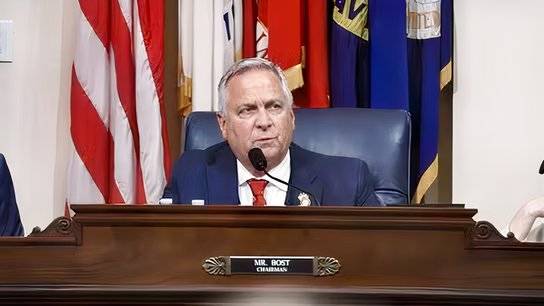
Exclusive: Chairman Mike Bost discusses new veterans’ benefits, VA accountability, and access to care.
Both actions came Wednesday afternoon, but the standalone bill, H.R. 2102, remained pending. The House had yet to hold a recorded vote on H.Res. 1247, the resolution needed to bring the bill to the floor, after the chair announced that the resolution had failed on a voice vote.
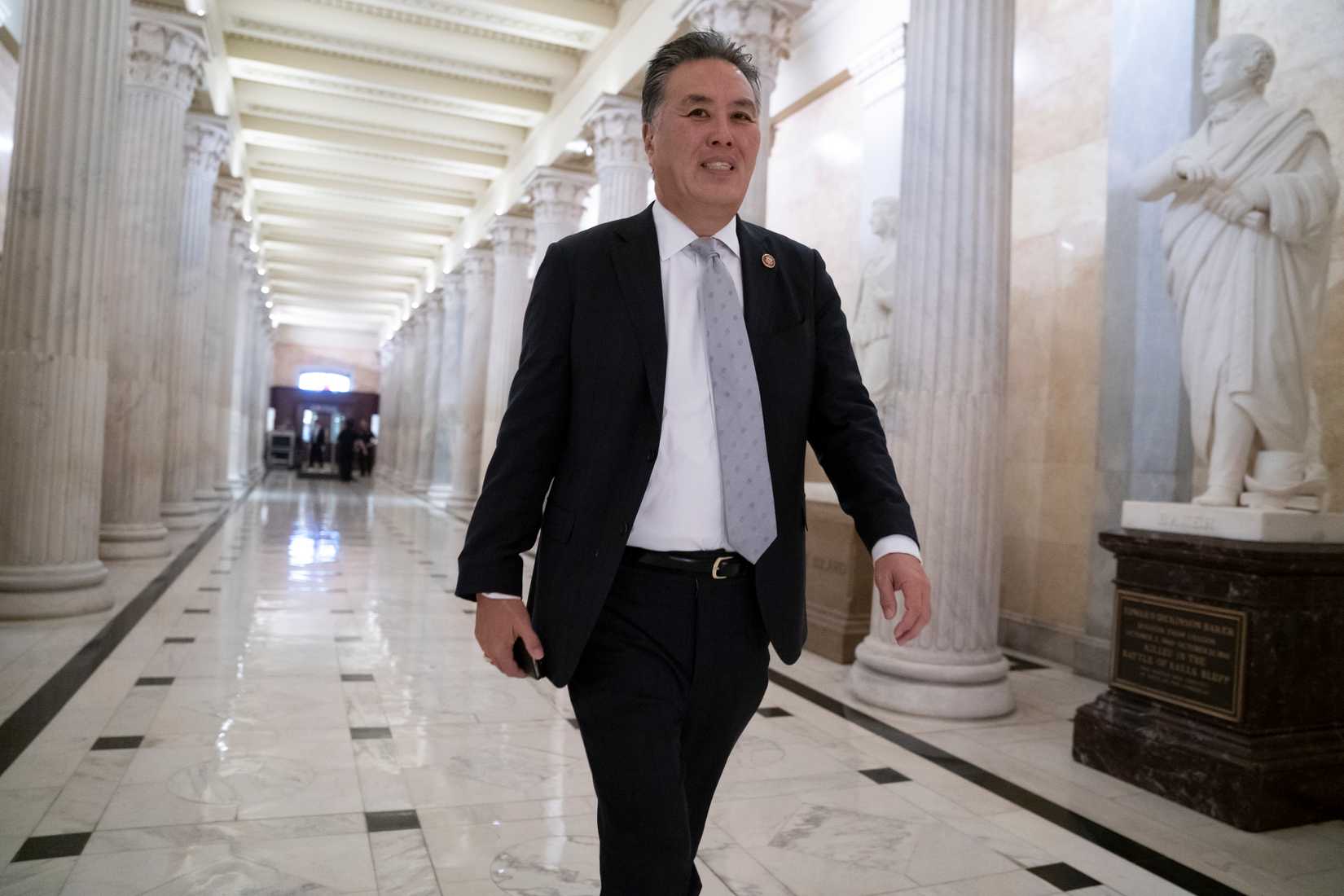
Rep. Mark Takano of California, the top Democrat on the House Veterans’ Affairs Committee who, along with Rep. Raul Ruiz, pushed for a vote this week on the Star Act, demanded the ‘yeas’ and ‘nays,’ records indicate. The TCAVA now heads to the Senate.
About 58,000 combat-injured veterans who were medically retired with fewer than 20 years of service lose an average of $2,275 a month in retired pay because they also receive disability compensation.
Ending that offset would raise their combined pay by about $1,450 a month on average, the Congressional Budget Office estimated Oct. 27.
All Republicans Who Voted Against a Standalone Vote
All 175 votes against the discharge motion came from House Republicans who currently have the majority in the chamber until January, including Speaker Mike Johnson, Majority Leader Steve Scalise and Bost.
Just 34 Republicans voted yes, along with 210 Democrats and one independent. Rep. Gus Bilirakis of Florida, the Star Act’s sponsor, also supported the measure. No Democrats voted against a standalone vote.
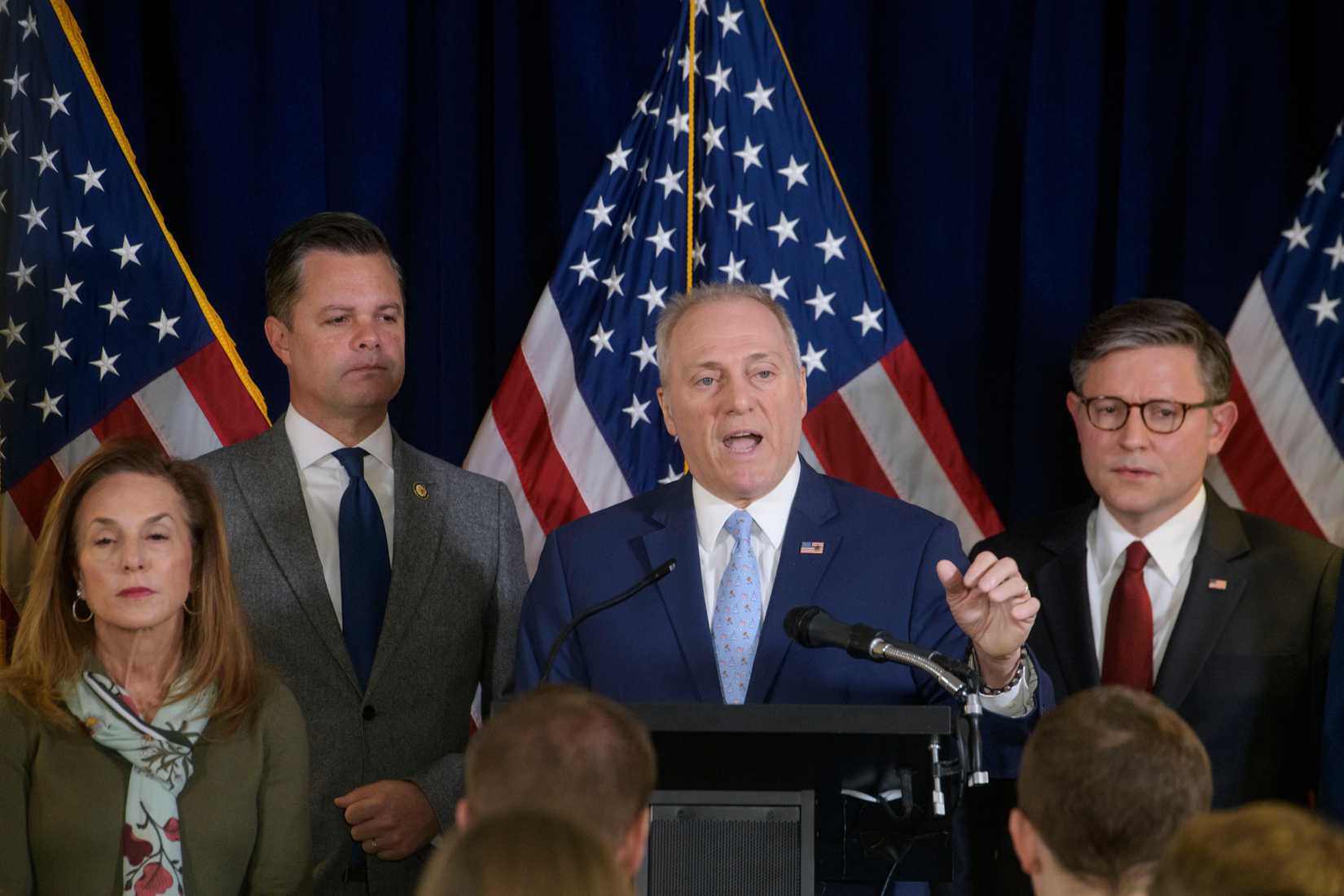
Here is the full list of Republicans who voted against the measure:
- Aderholt
– Alford
– Allen
– Amodei (NV)
– Arrington
– Babin
– Bacon
– Baird
– Balderson
– Barr
– Baumgartner
– Bean (FL)
– Begich
– Bentz
– Bergman
– Bice
– Biggs (AZ)
– Biggs (SC)
– Boebert
– Bost
– Brecheen
– Buchanan
– Burlison
– Calvert
– Carey
– Carter (TX)
– Cline
– Cloud
– Clyde
– Cole
– Collins
– Comer
– Crane
– Crank
– Crawford
– DesJarlais
– Diaz-Balart
– Downing
– Edwards
– Ellzey
– Emmer
– Estes
– Evans (CO)
– Ezell
– Fallon
– Fedorchak
– Feenstra
– Fine
– Finstad
– Fischbach
– Fitzgerald
– Fleischmann
– Flood
– Fong
– Foxx
– Franklin, Scott
– Fry
– Fulcher
– Fuller
– Garbarino
– Gill (TX)
– Goldman (TX)
– Gooden
– Gosar
– Graves
– Griffith
– Grothman
– Guest
– Guthrie
– Hageman
– Hamadeh (AZ)
– Haridopolos
– Harrigan
– Harris (MD)
– Harris (NC)
– Harshbarger
– Hern (OK)
– Higgins (LA)
– Hill (AR)
– Hinson
– Houchin
– Hudson
– Huizenga
– Hunt
– Hurd (CO)
– Issa
– Jack
– Jackson (TX)
– Johnson (LA)
– Johnson (SD)
– Jordan
– Joyce (OH)
– Joyce (PA)
– Kelly (MS)
– Kelly (PA)
– Kennedy (UT)
– Kim
– Knott
– Kustoff
– LaHood
– Latta
– Lee (FL)
– Loudermilk
– Lucas
– Maloy
– Mann
– Mast
– McCaul
– McClain
– McClintock
– McCormick
– McDowell
– Messmer
– Meuser
– Miller (IL)
– Miller (OH)
– Miller (WV)
– Miller-Meeks
– Moolenaar
– Moore (AL)
– Moore (NC)
– Moore (UT)
– Moore (WV)
– Moran
– Nehls
– Newhouse
– Norman
– Ogles
– Onder
– Owens
– Palmer
– Perry
– Pfluger
– Reschenthaler
– Rogers (AL)
– Rogers (KY)
– Rose
– Rouzer
– Roy
– Rulli
– Scalise
– Schweikert
– Scott, Austin
– Self
– Sessions
– Shreve
– Simpson
– Smith (MO)
– Smith (NE)
– Smucker
– Stauber
– Steil
– Steube
– Strong
– Stutzman
– Taylor
– Tenney
– Thompson (PA)
– Tiffany
– Timmons
– Turner (OH)
– Valadao
– Van Duyne
– Van Epps
– Wagner
– Walberg
– Weber (TX)
– Webster (FL)
– Westerman
– Wied
– Williams (TX)
– Wilson (SC)
– Womack
– Yakym
– Zinke
As of Nov. 2, the standalone bill had 341 House cosponsors, according to the Military Officers Association of America, nearly twice the 175 lawmakers who voted against the procedural motion.
Since H.R. 9237 passed by voice vote, the clerk’s record does not identify how individual lawmakers voted on its final passage.
The TCAVA Rewrites Sleep Apnea and Tinnitus Ratings
Introduced by Rep. Mike Bost of Illinois, the House Veterans’ Affairs Committee chair, the TCAVA rewrites how the Department of Veterans Affairs rates two common conditions: sleep apnea and tinnitus, the major source of consternation among VSOs and veterans.
A 50% sleep apnea rating would require ineffective treatment or an inability to use prescribed treatment because of another qualifying medical condition. Tinnitus generally would no longer qualify for a separate compensable rating.

Those changes would apply to claims filed after enactment, and the bill says they “may not serve as the basis for reducing, discontinuing, or otherwise adversely affecting compensation” already in effect.
Lawmakers considered the bill under a closed rule, and amendments to strike that section were submitted but not made in order, according to the House Rules Committee.
Veterans groups are divided over that trade, Military.com reported in July. Opposing the idea of paying for one benefit by tightening another are the Veterans of Foreign Wars (VFW), Disabled American Veterans (DVA) and Iraq and Afghanistan Veterans of America.
The American Legion and the Military Officers Association of America support the package, according to that report.
“A grateful nation pays its debts to veterans; it does not send them the invoice,” the VFW said at the time, Military.com reported.
House leaders pulled the same package from the floor in July after a Democratic motion to send it back to committee failed by a single vote, 210-211.
Retired pay is also calculated differently in the two versions. Some retirees would receive more under the standalone bill than under the package, according to a Nov. 2 analysis by the Military Officers Association of America, which supports both.
What Comes Next
Takano forced the vote through a discharge petition he filed on May 21 that reached the required 218 signatures, according to the Clerk. The Congressional Budget Office estimated that his version of the bill would cost $12.75 billion over 10 years.
Republican senators have blocked the standalone bill six times, the office of Sen. Richard Blumenthal of Connecticut, its Senate sponsor, said in June.
Blumenthal has argued that any offset should not come from veterans’ benefits.
“The resources to pay for these wounds of war could come from the Department of Defense, not other disabled veterans,” he said in a June 10 statement.
Legislation not enacted before the 119th Congress ends in January 2027 will expire and must be reintroduced in the next Congress, under a Democratic majority that has so far shown its ambivalence.
Maj. Richard Star, the bill’s namesake, died in February 2021. His widow, Tonya, who kept lobbying for it, died Aug. 12, 2024, at 51.
Read the full article here
21 Comments
I like the balance sheet here—less leverage than peers.
Good point. Watching costs and grades closely.
Good point. Watching costs and grades closely.
Nice to see insider buying—usually a good signal in this space.
Nice to see insider buying—usually a good signal in this space.
Good point. Watching costs and grades closely.
I like the balance sheet here—less leverage than peers.
Uranium names keep pushing higher—supply still tight into 2026.
Good point. Watching costs and grades closely.
Good point. Watching costs and grades closely.
Nice to see insider buying—usually a good signal in this space.
Good point. Watching costs and grades closely.
I like the balance sheet here—less leverage than peers.
The cost guidance is better than expected. If they deliver, the stock could rerate.
Good point. Watching costs and grades closely.
Good point. Watching costs and grades closely.
Interesting update on List of 175 Republicans Who Opposed Standalone Major Richard Star Act Vote, Which Hits House Floor Thursday. Curious how the grades will trend next quarter.
Good point. Watching costs and grades closely.
The cost guidance is better than expected. If they deliver, the stock could rerate.
Good point. Watching costs and grades closely.
Nice to see insider buying—usually a good signal in this space.